
























International to Domestic Connection at ORD after Arrival from a PreClearance Airport
 Jul 2, 2019 | 6:57 am
#1
Original Poster


Join Date: Jul 2009
Location: ORD
Programs: American Airlines EXP, Marriott Titanium, Hyatt Globalist
Posts: 413
International to Domestic Connection at ORD after Arrival from a PreClearance Airport
Hi All,
Can anyone provide insight into how the ORD Terminal 5 process works for someone traveling AUH-ORD, and then connecting to AA in Terminal 3? Since the passenger has cleared US customs and immigration in AUH, what do they need to do in ORD T5 -
- is there a way to bypass immigration / customs (i.e. get treated as a US domestic passenger)?
- what happens with baggage? do they need to pick it up and re-check?
TIA!
tomsam
Can anyone provide insight into how the ORD Terminal 5 process works for someone traveling AUH-ORD, and then connecting to AA in Terminal 3? Since the passenger has cleared US customs and immigration in AUH, what do they need to do in ORD T5 -
- is there a way to bypass immigration / customs (i.e. get treated as a US domestic passenger)?
- what happens with baggage? do they need to pick it up and re-check?
TIA!
tomsam
 Jul 2, 2019 | 8:15 am
#2

Join Date: Aug 2005
Location: Chicago
Posts: 5,356
Hi All,
Can anyone provide insight into how the ORD Terminal 5 process works for someone traveling AUH-ORD, and then connecting to AA in Terminal 3? Since the passenger has cleared US customs and immigration in AUH, what do they need to do in ORD T5 -
- is there a way to bypass immigration / customs (i.e. get treated as a US domestic passenger)?
- what happens with baggage? do they need to pick it up and re-check?
TIA!
tomsam
Can anyone provide insight into how the ORD Terminal 5 process works for someone traveling AUH-ORD, and then connecting to AA in Terminal 3? Since the passenger has cleared US customs and immigration in AUH, what do they need to do in ORD T5 -
- is there a way to bypass immigration / customs (i.e. get treated as a US domestic passenger)?
- what happens with baggage? do they need to pick it up and re-check?
TIA!
tomsam
However, I believe you will need to reclear security at T3, because there is no direct connection post-security from T5 to T3. Going from T3 to T5 there is a shuttle bus behind security, but as far as I can tell the shuttle bus does not transport passengers in the other direction because the assumption is that most people arriving in T5 are going through customs and thus need to reclear security anyway; Etihad passengers lose out because of this rule. Also, the train between T5 and T3 is closed for maintenance right now, so assuming you're traveling in the near future you'll need to take a landside bus from T5 to T3; many people make this connection so it should be signed clearly in the arrivals area of T5.
Jul 2, 2019 | 8:47 am
#3
Join Date: Dec 2004
Location: Under the Cone of Silence
Programs: UA Gold; AA Dirt; HH Diamond; National Emerald; CONTROL SecretAgent Platinum; KAOS EvilFlyer Gold
Posts: 1,679
Hi All,
Can anyone provide insight into how the ORD Terminal 5 process works for someone traveling AUH-ORD, and then connecting to AA in Terminal 3? Since the passenger has cleared US customs and immigration in AUH, what do they need to do in ORD T5 -
- is there a way to bypass immigration / customs (i.e. get treated as a US domestic passenger)?
- what happens with baggage? do they need to pick it up and re-check?
TIA!
tomsam
Can anyone provide insight into how the ORD Terminal 5 process works for someone traveling AUH-ORD, and then connecting to AA in Terminal 3? Since the passenger has cleared US customs and immigration in AUH, what do they need to do in ORD T5 -
- is there a way to bypass immigration / customs (i.e. get treated as a US domestic passenger)?
- what happens with baggage? do they need to pick it up and re-check?
TIA!
tomsam
I posted about this exact issue a couple of years ago in the EY forum: (ORD transit to AA, arriving from AUH).
Assuming things still operate the same way, passengers that are connecting to domestic flights are bussed directly from the plane to airside T3, so no need to reclear security, and checked baggage is transferred automatically.
For passengers ending travel at ORD, I believe they simply go to a special domestic baggage claim in T5.
Jul 2, 2019 | 9:26 am
#4
Moderator: Travel Safety/Security, Travel Tools, California, Los Angeles; FlyerTalk Evangelist


Join Date: Dec 2009
Location: LAX
Programs: oneword Emerald
Posts: 24,796
The flight will arrive like a US domestic flight (behind security). No one will be sent to immigration/customs. Bags will be checked through as long as they are tagged to your final destination when you first checked them.
However, I believe you will need to reclear security at T3, because there is no direct connection post-security from T5 to T3. Going from T3 to T5 there is a shuttle bus behind security, but as far as I can tell the shuttle bus does not transport passengers in the other direction...
However, I believe you will need to reclear security at T3, because there is no direct connection post-security from T5 to T3. Going from T3 to T5 there is a shuttle bus behind security, but as far as I can tell the shuttle bus does not transport passengers in the other direction...
 Jul 5, 2019 | 9:38 am
#6
Moderator: Travel Safety/Security, Travel Tools, California, Los Angeles; FlyerTalk Evangelist
Join Date: Dec 2009
Location: LAX
Programs: oneword Emerald
Posts: 24,796
Jul 5, 2019 | 9:49 am
#7

Join Date: Sep 2011
Posts: 27
Thanks. Couple of posts above mentions this service near gate M1 at T5. Is it still there? Would I need to re-clear security even though I am arriving on a Preclearance Etihad flight.
Last edited by nate79; Jul 5, 2019 at 9:56 am
Jul 5, 2019 | 10:11 am
#8
Moderator: Travel Safety/Security, Travel Tools, California, Los Angeles; FlyerTalk Evangelist
Join Date: Dec 2009
Location: LAX
Programs: oneword Emerald
Posts: 24,796
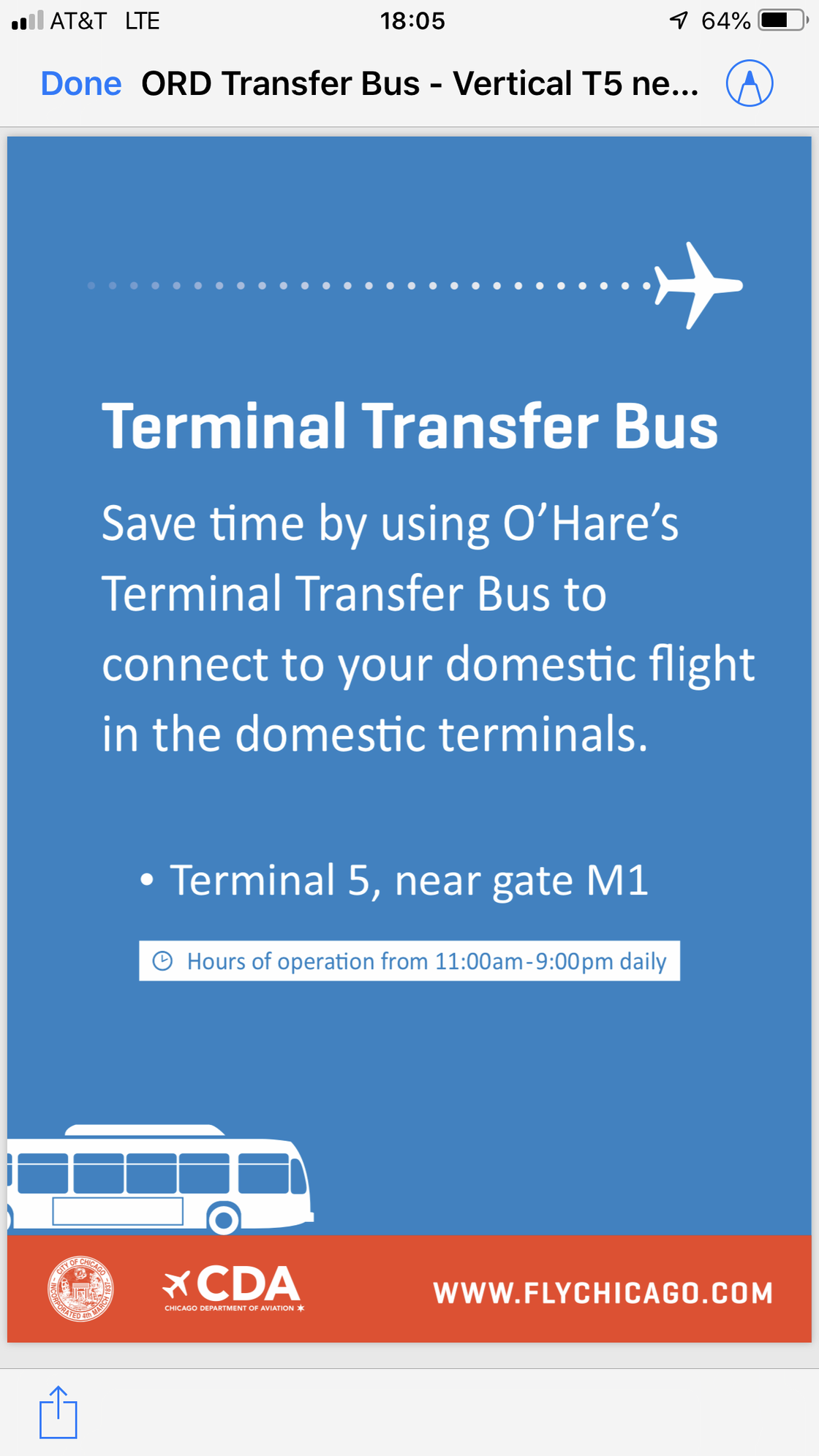
Your arrival from a pre-clearance airport is identical to an arrival on a flight which departed from a domestic airport. You exit the airplane at a normal (that is non-sterile) gate in the terminal. You do not have to pass through security before proceeding to another gate, including the one where the Terminal Transfer Bus is located.
Jul 8, 2019 | 10:55 am
#9
Join Date: Nov 2007
Location: WAS
Programs: enjoyed being warm spit for a few years on CO/UA but now nothing :(
Posts: 2,825
Your arrival from a pre-clearance airport is identical to an arrival on a flight which departed from a domestic airport. You exit the airplane at a normal (that is non-sterile) gate in the terminal. You do not have to pass through security before proceeding to another gate, including the one where the Terminal Transfer Bus is located.
The area into which a a non-preclearance international passenger arrives in the US is known as the CBP security zones or security areas (the customs security area and the inspection area). Because these passengers underwent TSA approved/supervised screening before boarding the flight this area is sometimes also referred to as "sterile."
Jul 8, 2019 | 12:55 pm
#10
Moderator: Travel Safety/Security, Travel Tools, California, Los Angeles; FlyerTalk Evangelist
Join Date: Dec 2009
Location: LAX
Programs: oneword Emerald
Posts: 24,796
That is accurate but the highlighted term is not used quite correctly. The "sterile" area is where passengers access aircraft after having gone through TSA controlled/supervised screening. So a pax arriving from a pre-clearance airport arriving at a "normal" gate in the terminal is actually in the sterile area. This is different from a secured area which is an area of airport where specific measures defined in the airport security program are carried out (ie. where access is controlled but persons do not necessarily undergo TSA passenger checkpoint screening before entering). So a sterile area is a secured area but a secured area is not necessarily a sterile area.
From the United States Government Accountability Office Report to Congressional Requesters:
CBP’s Inspection Process for International Arrivals
Travelers undergo a multi-step inspection process upon arrival at U.S. international airports. After a plane from a foreign airport arrives at a U.S. airport terminal, the plane blocks, or parks at a terminal gate, and travelers exit the plane into a sterile corridor that may include other gates for international arrivals but is generally separate from travelers arriving on domestic flights. At the end of the sterile corridor, travelers enter the Federal Inspection Service (FIS) area, which is a secure area of the airport where CBP inspects travelers applying for admission to the United States. Once in the FIS area, travelers are generally directed by signage and officials from the airport, an airline, or CBP officers who work in the FIS area to queue for inspection by CBP. The manner in which travelers proceed through the FIS area varies by airport, but generally travelers are queued by immigration or citizenship status type, such as U.S. citizens, Lawful Permanent Residents, Canadian citizens, and B1/B2 visa holders.
<snip>
Travelers undergo a multi-step inspection process upon arrival at U.S. international airports. After a plane from a foreign airport arrives at a U.S. airport terminal, the plane blocks, or parks at a terminal gate, and travelers exit the plane into a sterile corridor that may include other gates for international arrivals but is generally separate from travelers arriving on domestic flights. At the end of the sterile corridor, travelers enter the Federal Inspection Service (FIS) area, which is a secure area of the airport where CBP inspects travelers applying for admission to the United States. Once in the FIS area, travelers are generally directed by signage and officials from the airport, an airline, or CBP officers who work in the FIS area to queue for inspection by CBP. The manner in which travelers proceed through the FIS area varies by airport, but generally travelers are queued by immigration or citizenship status type, such as U.S. citizens, Lawful Permanent Residents, Canadian citizens, and B1/B2 visa holders.
<snip>
Jul 8, 2019 | 2:02 pm
#11
Join Date: Dec 2004
Location: Under the Cone of Silence
Programs: UA Gold; AA Dirt; HH Diamond; National Emerald; CONTROL SecretAgent Platinum; KAOS EvilFlyer Gold
Posts: 1,679
I beg to differ.
From the United States Government Accountability Office Report to Congressional Requesters:
From the United States Government Accountability Office Report to Congressional Requesters:
So I think you arrive at a sterile (in the post-security sense) gate, but one that is also non-sterile (in the domestic arrival sense).
Jul 8, 2019 | 2:04 pm
#12
Join Date: Nov 2007
Location: WAS
Programs: enjoyed being warm spit for a few years on CO/UA but now nothing :(
Posts: 2,825
Yes, see my last two sentences - I completely agree that area is sometimes referred to as a/the "sterile" area/corridor.
Regardless of how a civilian agency (GAO) colloquially refers to the area, we have very specific, technical definitions for the "sterile" and "secure" areas (a little like how one says "make me two xerox copies" even though it is a canon photocopier in use....) What I was addressing was the use of the term "non-sterile." Any area in which the pax have access after going through TSA screening is, technically, the sterile area. Even though the walkways an international pax traverses on the way to the inspection is point is segregated from other pax in the same terminal building both (or all) of the areas are, from the technical ASP standpoint, "sterile." The segregated area for int'l arriving pax are technically referred to as the "CBP security zones/areas."
Even airport workers with the appropriate SIDA badge that allows entry into the sterile areas without going through PSC screening may not enter the CBP security zone without special additional credentials or special escort.
See also these sources for definitions of "secure" area and "sterile" area - they are all consistent even as SFO is a bit more, um, liberal in its language.
https://www.dhs.gov/sites/default/fi..._sida_sw_0.pdf
1 The Security Identification Display Area (SIDA) refers to portions of an airport, specified in the airport security program, in which security measures required by regulation must be carried out. This area includes the security area and may include other areas of the airport. The “Sterile Area” refers to portions of an airport defined in the airport security program that provides passengers access to boarding aircraft and to which the access generally is controlled by TSA, an aircraft operator, or a foreign air carrier. [highlight added]
See also this document:
http://media.flysfo.com/media/sfo/ab...egulations.pdf
https://www.mwaa.com/sites/default/f...017_signed.pdf
Regardless of how a civilian agency (GAO) colloquially refers to the area, we have very specific, technical definitions for the "sterile" and "secure" areas (a little like how one says "make me two xerox copies" even though it is a canon photocopier in use....) What I was addressing was the use of the term "non-sterile." Any area in which the pax have access after going through TSA screening is, technically, the sterile area. Even though the walkways an international pax traverses on the way to the inspection is point is segregated from other pax in the same terminal building both (or all) of the areas are, from the technical ASP standpoint, "sterile." The segregated area for int'l arriving pax are technically referred to as the "CBP security zones/areas."
Even airport workers with the appropriate SIDA badge that allows entry into the sterile areas without going through PSC screening may not enter the CBP security zone without special additional credentials or special escort.
See also these sources for definitions of "secure" area and "sterile" area - they are all consistent even as SFO is a bit more, um, liberal in its language.
https://www.dhs.gov/sites/default/fi..._sida_sw_0.pdf
1 The Security Identification Display Area (SIDA) refers to portions of an airport, specified in the airport security program, in which security measures required by regulation must be carried out. This area includes the security area and may include other areas of the airport. The “Sterile Area” refers to portions of an airport defined in the airport security program that provides passengers access to boarding aircraft and to which the access generally is controlled by TSA, an aircraft operator, or a foreign air carrier. [highlight added]
See also this document:
http://media.flysfo.com/media/sfo/ab...egulations.pdf
https://www.mwaa.com/sites/default/f...017_signed.pdf