




















Long flight? Over 60? Avoid First Class!
 Nov 13, 2006 | 5:52 pm
#16
Join Date: Dec 2005
Location: Detroit
Programs: Northwest Platinum
Posts: 1,533
Originally Posted by Dovster
For me, the story is not second hand. I also know that many doctors have advised me not to smoke but I have never seen heaps of dead people inside the smoking lounges at airports.
I still smoke (although I acknowledge the risks) and I am certainly not in a position to debate this with a hematologist -- although I would not hesitate for a second to take the upgrade.
I still smoke (although I acknowledge the risks) and I am certainly not in a position to debate this with a hematologist -- although I would not hesitate for a second to take the upgrade.
While you may not see heaps of dead people inside the smoking lounges at airport, you will certainly see heaps of dead people from smoking. I have never seen a heap, let alone a single person, who died because they sat in first class. Frankly, lying down is the best thing you can do besides being constantly active, because it allows proper blood flow.
 Nov 13, 2006 | 6:47 pm
#17
Join Date: Aug 2006
Location: MUC (home), DUS (office), XXX (customer)
Programs: LH, AB, SPG, CC, Sixt, EC
Posts: 6,332
Originally Posted by etch5895
I'm going to go ahead and keep trying to sleep on flights. If I die up there due to sleeping, c'est la vie (actually c'est la mort). At least I'll go painlessly. All in all, though, I'm not too worried about it.
It's more a coach class problem because people sit all the time, the blood is running into your legs and feet and it's hard for your heart to pump through the whole body... So move you muscles, stand up, walk around and help your body to keep running...
I know that at least some European airlines like LH show movies during the flight to avoid having a thrombosis...
Nov 13, 2006 | 7:36 pm
#18
FlyerTalk Evangelist


Join Date: May 2000
Location: أمريكا
Posts: 26,931
I think DVT is more likely in coach than in first. At least for me it would be. In either case I'd be asleep most of the time, but coach offers little opportunity to move around and you sleep upright.
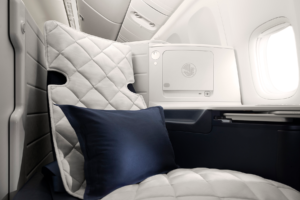
In first, you're flat, which should improve circulation in your legs. You also have more space in your seat/bed to move around in.
In first, you're flat, which should improve circulation in your legs. You also have more space in your seat/bed to move around in.
Nov 13, 2006 | 9:03 pm
#19

Join Date: Aug 2005
Programs: TK*G, UA*S, PC Diamond Amb, Marriott Life Platinum
Posts: 4,717
Originally Posted by supermasterphil
It's more a coach class problem because people sit all the time, the blood is running into your legs and feet and it's hard for your heart to pump through the whole body... So move you muscles, stand up, walk around and help your body to keep running...
I always try to stretch, move, get up and walk around every so often on long flights. No matter in which class I'm sitting.
HTB.
Nov 13, 2006 | 10:21 pm
#20


Join Date: Aug 2005
Location: SAN
Posts: 2,426
I'm not the world's expert in this, but I think I have a pretty good idea.
DVT is caused by some combination of immobility and hypercoagulability (increased tendency for blood clotting).
Both of these are important, so most people, who do not have a reason to by hypercoagulable, probably would not be prone to DVT in the course of normal events. This includes long airplane flights, but probably not a few weeks immobile in the ICU with a life-threatening disease.
There is a subset of people who may be prone. The most important factor is genetics, but other factors, including illness, some medications, and smoking, may play a role. (Of course, most people will not know if they are prone or not.)
Immobility is important. Obviously, sitting without moving for long periods of time will be a factor leading to development of DVTs in some people.
What is really happening with DVT formation with immobility, however, is restriction of blood flow in the legs. With normal walking and movement, blood is actively pumped in the veins; the veins are designed that way. Immobility prevents normal pumping.
Factors that restrict blood flow include:
-Dehydration: less blood volume = slower flow; also, "thicker" blood promotes clotting (makes it hypercoagulable).
-Bent legs: this actually constricts the veins in the back of the knees. If the veins are constricted, more blood can pool in the calves, thus promoting DVT. Obviously more of a problem in economy.
-Dependent legs: with the legs down, the blood has to fight more against gravity. Elevating the legs will protect against DVT. Again, seems to be more of a problem in economy.
Regarding low air pressure or air quality, there is really no evidence of this. As far as I know, there's only one very poorly designed study in humans and one tiny study in rabbits which barely meets statistical significance. Highly dubious.
So, take the first-class seat, drink lots of water, and try to walk around. I actually doubt there's much difference between a zero-degree first-class suite and your bed at home.
By the way, TED hose compress the calves and prevent blood from accumulating in the veins as well.
DVT is caused by some combination of immobility and hypercoagulability (increased tendency for blood clotting).
Both of these are important, so most people, who do not have a reason to by hypercoagulable, probably would not be prone to DVT in the course of normal events. This includes long airplane flights, but probably not a few weeks immobile in the ICU with a life-threatening disease.
There is a subset of people who may be prone. The most important factor is genetics, but other factors, including illness, some medications, and smoking, may play a role. (Of course, most people will not know if they are prone or not.)
Immobility is important. Obviously, sitting without moving for long periods of time will be a factor leading to development of DVTs in some people.
What is really happening with DVT formation with immobility, however, is restriction of blood flow in the legs. With normal walking and movement, blood is actively pumped in the veins; the veins are designed that way. Immobility prevents normal pumping.
Factors that restrict blood flow include:
-Dehydration: less blood volume = slower flow; also, "thicker" blood promotes clotting (makes it hypercoagulable).
-Bent legs: this actually constricts the veins in the back of the knees. If the veins are constricted, more blood can pool in the calves, thus promoting DVT. Obviously more of a problem in economy.
-Dependent legs: with the legs down, the blood has to fight more against gravity. Elevating the legs will protect against DVT. Again, seems to be more of a problem in economy.
Regarding low air pressure or air quality, there is really no evidence of this. As far as I know, there's only one very poorly designed study in humans and one tiny study in rabbits which barely meets statistical significance. Highly dubious.
So, take the first-class seat, drink lots of water, and try to walk around. I actually doubt there's much difference between a zero-degree first-class suite and your bed at home.
By the way, TED hose compress the calves and prevent blood from accumulating in the veins as well.