
























 Feb 13, 2024, 5:50 pm

Japan Luxury Ryokans - A Primer + Impressions
Dec 20, 2025 | 7:21 pm
#721


Join Date: May 2008
Programs: AS MVP Gold, HH Dia, Bonvoy Gold, National EE
Posts: 65
Does anyone know what is the status for atami-so? On the reservations page, it says that the ryokan will be closed till late Nov 2025 for renovation and repair works but it does not seem that reservations has reopened for booking in early 2026 yet?
Are the renovation and repair works delayed?
Are the renovation and repair works delayed?
 Dec 29, 2025 | 10:49 pm
#722
Original Poster


Join Date: Jan 2005
Location: Everywhere
Programs: UA GS 3MM, NH PLT
Posts: 992
Does anyone know what is the status for atami-so? On the reservations page, it says that the ryokan will be closed till late Nov 2025 for renovation and repair works but it does not seem that reservations has reopened for booking in early 2026 yet?
Are the renovation and repair works delayed?
Are the renovation and repair works delayed?
UPDATE: Just spoke with the Okami. She says that the plumbing work and renovations are still a work-in-progress, but is hopeful to accept guests by around February 2026. They intend to eventually host 5 group of guests per day (up from the 2 groups when we were there), meaning they are definitely revamping (and maybe expanding?) some of the other rooms for this purpose.
She said they are unlikely to have all 5 rooms operational from the outset. Their plan moving forward is to close on Mondays through Wednesdays for repair/refurb work, and open up for guests from Thursdays through Sundays, at least for the near term. The guest experience won't be impacted during this time, according to the Okami.
Finally - if you have specific dates in mind, she said she could hold rooms on those desired dates right now if you contact her. If you need my help, let me know.
Last edited by KI-NRT; Dec 29, 2025 at 11:27 pm
Jan 2, 2026 | 9:22 am
#723

Join Date: Mar 2016
Posts: 94
As a follow up to my last post, we have done another Ryokan trip for Xmas 2025. We have now become almost addicted to it, and to which we place our blame squarely on Keita for getting us hooked 
Having such good experiences with Fufu last time round, we set off to try another couple of Fufu hotels, alongside with some of KI-NRT's suggestions here and a new Ryokan near Hiroshima.
Fufu Nara (2 nights) - 5/5
We started the last with the holy grail of Fufu hotels, Fufu Nikko, and we tried our best to keep the expectations low since it's pretty hard to top that.
As we arrived at the hotel, the staff at reception already came out to welcome us just like the Nikko one. And as the parking lot is quite a bit smaller, the staff here also double up as a valet as well. Since we were a big group of 6 adults, after the staff unloaded our bags, they attentively checked with us which bags belong in the same room.
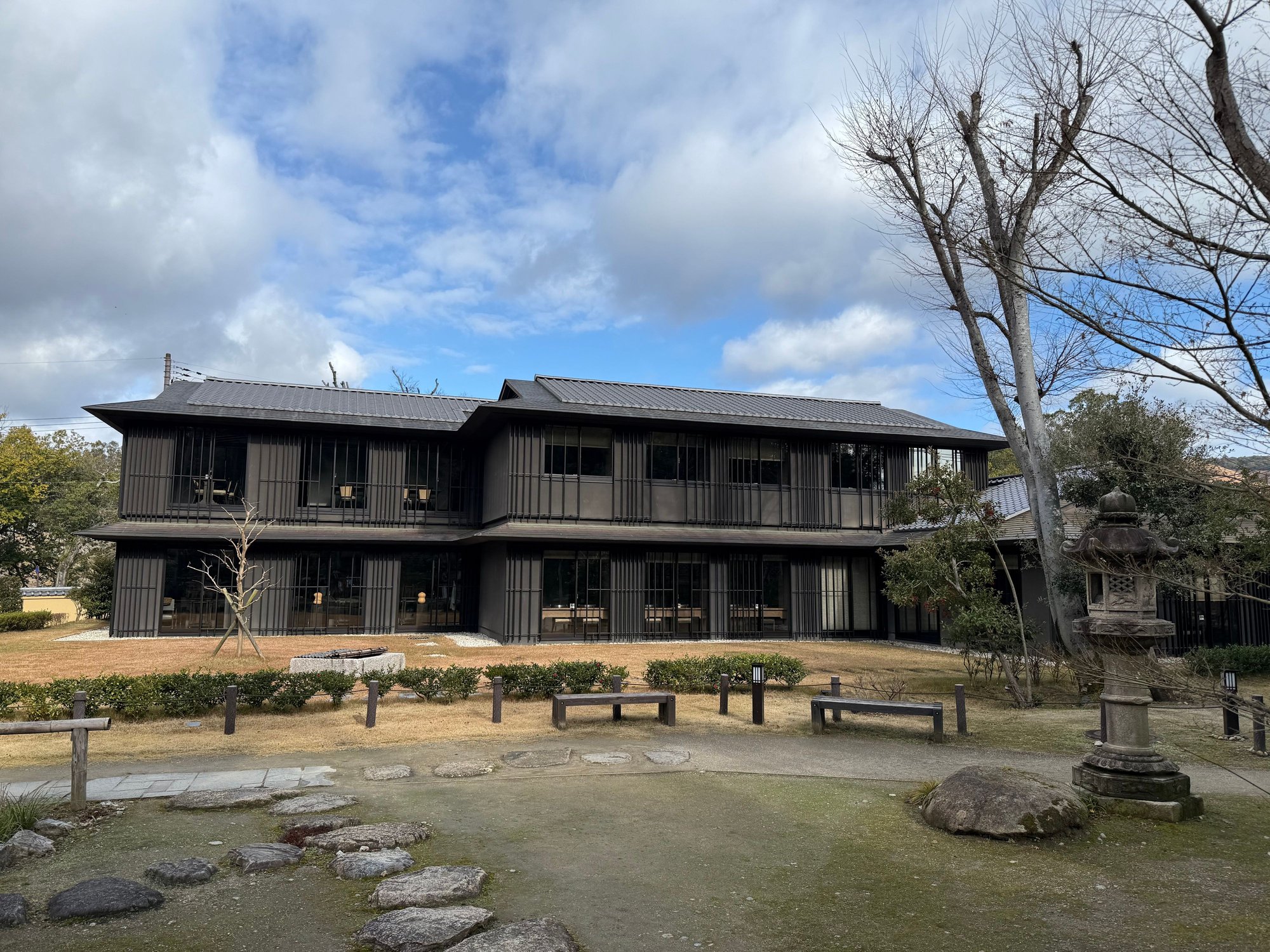
Check-in was done in the privacy of a big cubicle in the bar area. We were promptly shown to our rooms and given the room tours, and our luggage was already correctly set up in the rooms (you will see why this is important later). We booked for the lowest category stylish suites, and they were all spacious and each could seat 6 adults in the sitting room comfortably. The outdoor free-flowing onsen was great as well.
Getting to the restaurant requires a 5-minute walk downhill, which could be slippery in rainy conditions especially in the Japanese Geta and socks. But worry not, they had an Alphard that would chauffeur you to and from the restaurant. And given the high standards here, they have staff waiting for you with umbrellas to ensure not a single drop of rain will land on you. We had opted for Kaiseki on the first night and Teppanyaki on the second night, and both were equally delicious. I would say we prefer the decor and food at Fufu Nikko slightly, but still everything here is of very high standard. We had a Taiwanese staff, Miss Lin, on the last day, and she was one of the best hotel staff we have ever had. She was proactive, attentive, considerate and friendly and made sure we were all comfortable, happy and well taken care of.
Another example of great service would be the front desk staff, who are always polite and smiley to greet anyone who came in or left the hotel. When I left my room key in the car, I explained my stupidity to the staff. I was expecting to be given the car key so I could go retrieve it myself. Instead she ran out to the carpark in the rain to fetch the key for me before I could even react.
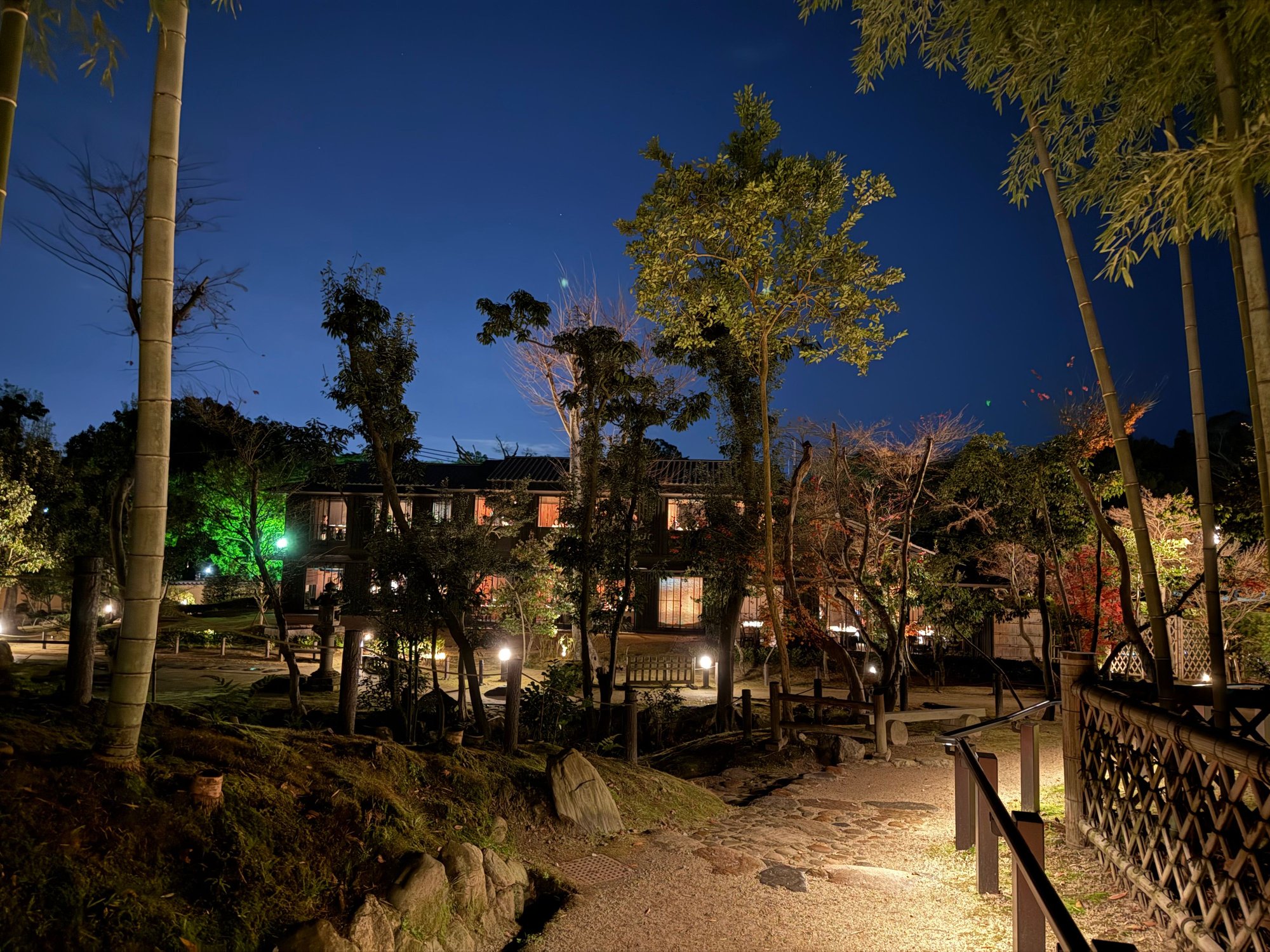
We did wonder why the restaurant was a bit removed from the hotel, and as it turned out, the restaurant area was a historic garden with a very nice tea-house. When me and my partner ventured in, just so happened a very kind Japanese lady was also touring the house. She translated the whole tour to us and explained the historical stories about the design of the tea house. If you visit here and if the tea house is open for visit, I’d highly recommend a visit.
All-in-all we absolutely loved our time here and would rank it as one of the top Fufu hotels, perhaps just a touch below Nikko, but still very high up there nonetheless. Everyone here tried very hard.
Room tips: IMO any room here is fine, there’s no bad room to be had. We had stylish suites 104-106 and they all enjoyed different designs and are all superb in their own way.

Yunohana Suisen Resort (1 night) - 4/5
We always consider going to Fufu hotels a quasi-ryokan, it’s more of an hotel that had the features and characteristics of an onsen ryokan in an unique but fun way. The next hotel we visited was a delightful traditional experience.
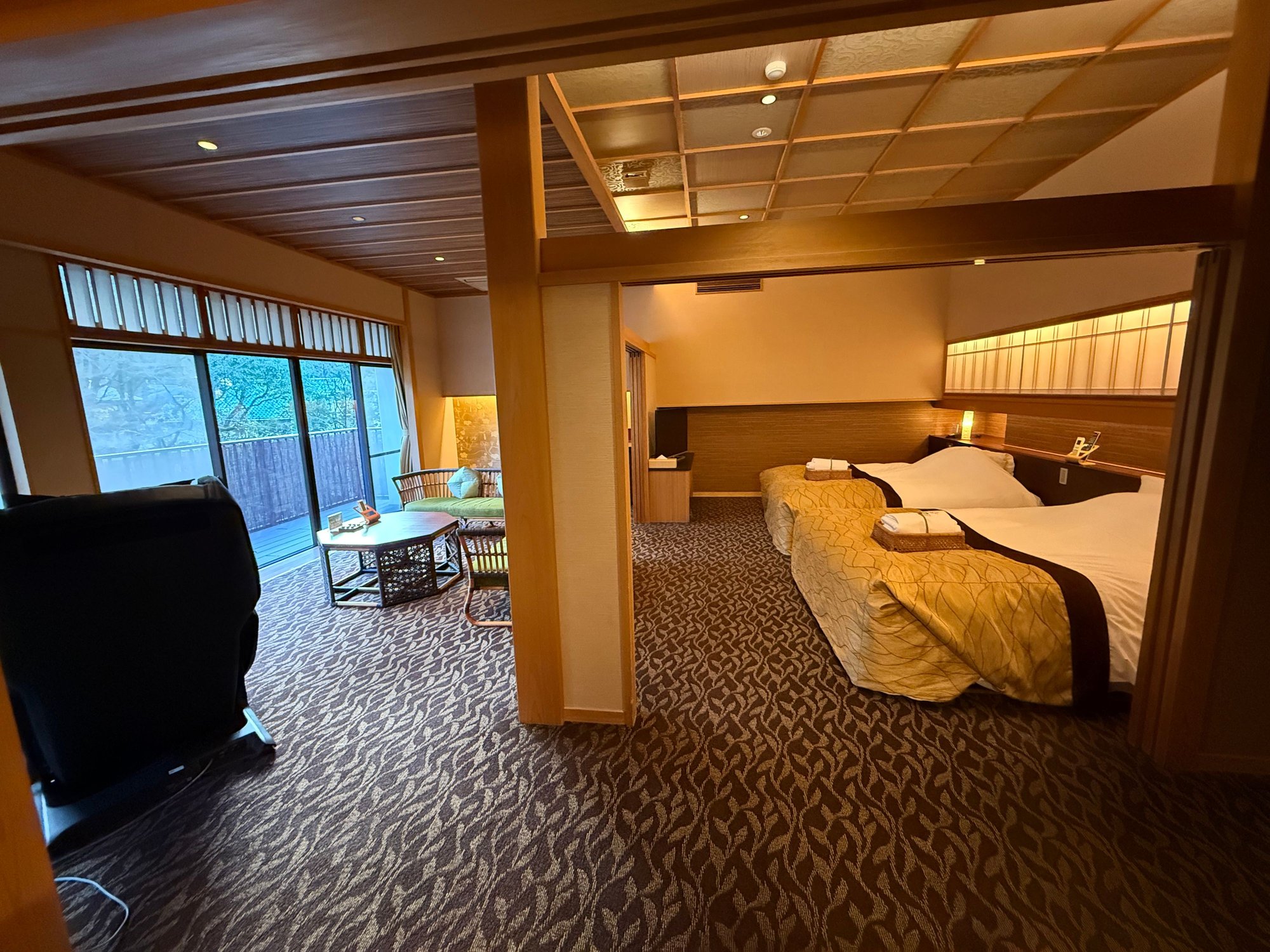
Upon arrival, we were greeted with Matcha and Wagashi and a choice of Yukata. The staff here are all very experienced, and the fact that not all of them have a good command of English, added to the authentic feeling to it. The service here was fantastic and the staff do try very hard and are very warm. We loved the traditional design of the rooms, we stayed at the top level Suite suite which was spacious and came with a massage chair, and two of the western style room with open-air bath. Since we are a big group, the top level suite made sense, but otherwise I think any room with an open-air bath would suffice. The food was more to our liking, especially my wife’s, as it contained more vegetables and was of the right quantity. We had a lovely stay here and think this is a great option to experience an onsen ryokan that is very close to Kyoto.



Fufu Kyoto (1 night) - 3/5
If Fufu Nara was close to Fufu Nikko in experience, then Fufu Kyoto would be similar to Fufu Kyu-Karuizawa, which was on the opposite end.
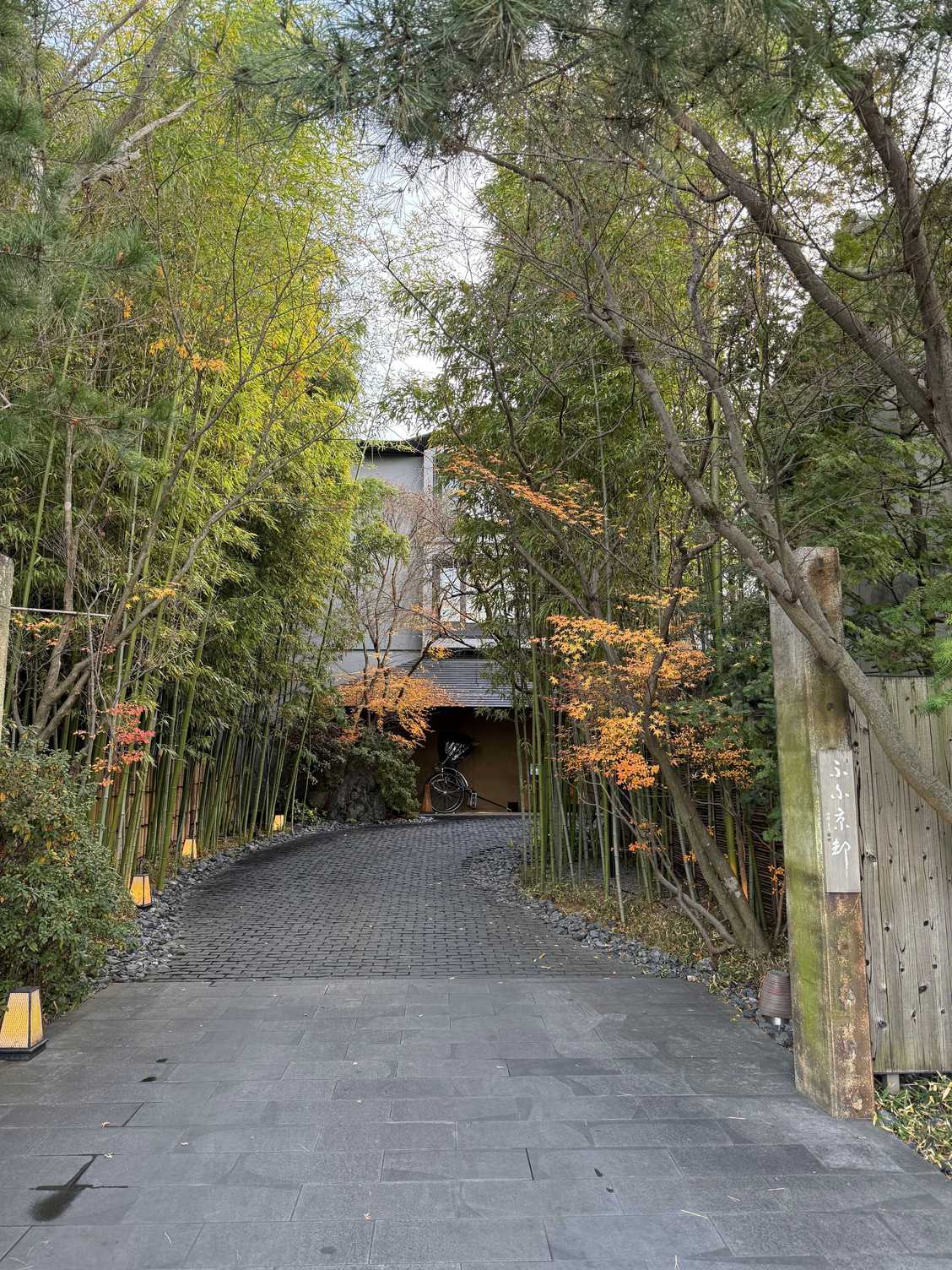
Upon arrival, there was no one to be found. We had to go inside to flag someone down to help with our luggages, and out came a skinny young lady staff. Being the gentlemen we were, we opted to handle the unloading ourselves. As it was 14:35, we were told check-in wasn’t ready, which was fair enough, so we went for a stroll at the Heian Shrine nearby. When we came back for the check-in, all the luggages disappeared and when we got to the room, they were just randomly distributed. How this could have happened is beyond me, and to make matters worse, the staff who showed us the room could not understand English. So we ended up moving all the luggages ourselves, which usually isn’t bad, but since we were very careful not to roll them onto the in-room area (where you have to take your shoes off), carrying them into and out of different rooms was extra troublesome.
Okay, onto the room itself. In true Asian style, we again cheap out and booked the cheapest rooms available to us, which were two Stylish Suites and one Comfortable Suite. How do i put it….since 1st floor was actually underground, the rooms were quite dark and the ceiling was very low, so it was in fact not very comfortable to lounge in. Both the bathroom and the toilet area was also very small, which made us felt right back at home like the tiny apartments in HK! Bonus points for nostalgia but probably not what we were after. To their credit, shower, bath and bed were very comfortable and for the very low price it charged it was certainly acceptable in a city like Kyoto. We only stayed for bed and breakfast here and the food we had was decent.
Room Tips: Having said that, I took a look again at KI-NRT's top level suite, and it looked infinitely better. Unlike most other Fufu hotels, I think room category really matters a lot here a LOT. Make sure you don't skimp out and make the same mistake I did!
we had comfortable suite 101 and stylish suites 102-103. Do NOT book rooms on the 1st floor, unless you love living in the basement

Ryokan Nishiyama, Onomichi, Hiroshima (1 night) - 5/5
Being out in a suburban area with not a lot of famous sites nearby, we did not know what to expect for this one. Pre-arrival communications were however great and emails were always promptly replied to.
Upon arrival, we were warmly received by the manager, Son. He led us to the reception area which doubled up as a lounge for guests. The design here is stunning. Again matcha and snacks were provided. In the lounge, snacks, juices, sake, beer, whisky, gin were all complimentary all day. So we helped ourselves to a self organised sakes tasting here at the Ryokan!
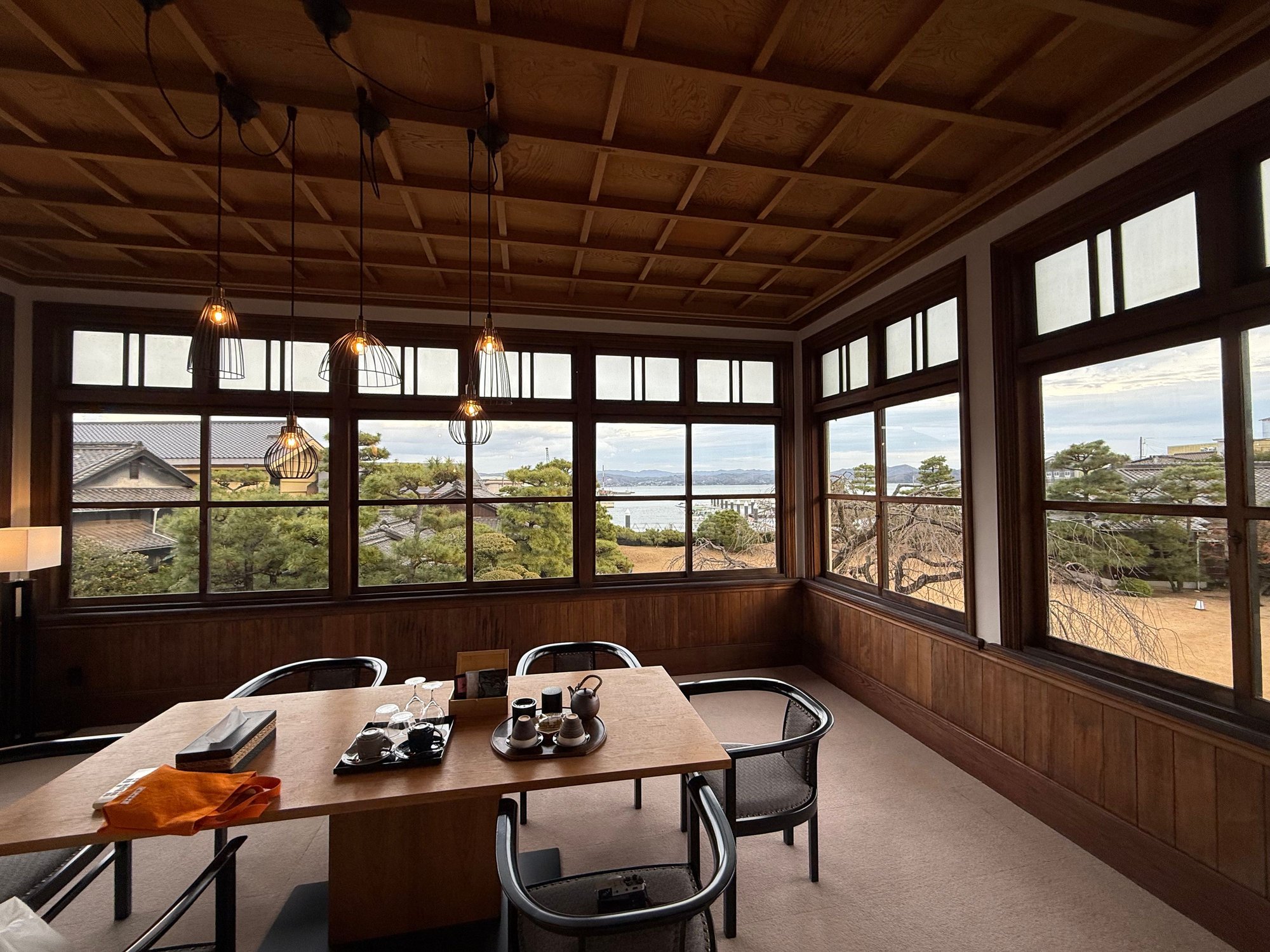
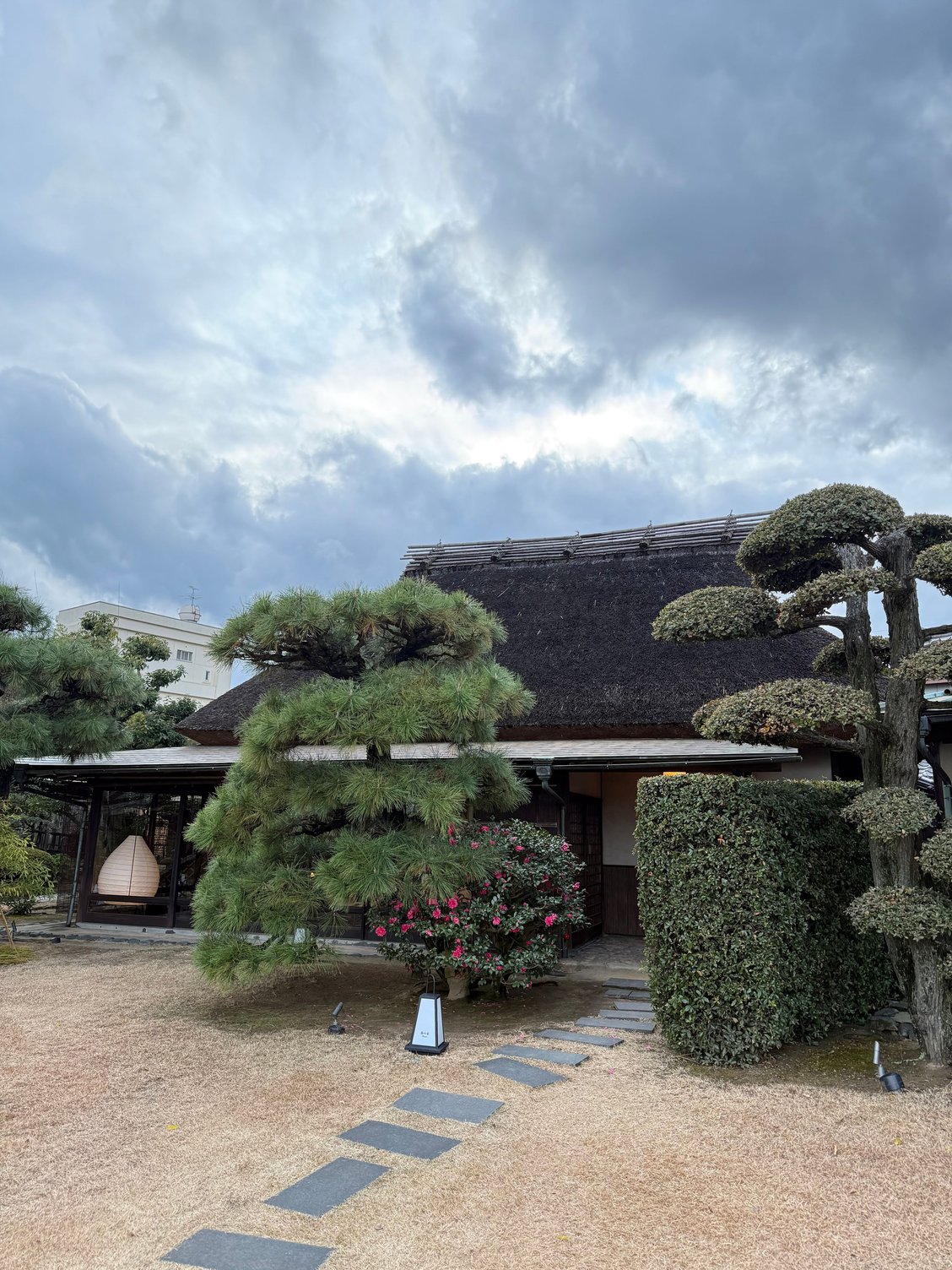
For the rooms, we booked 4 different room types - Wara, Matsuzake, Asahi, Sakura. Wara and Matsuzake were standalone houses, and were my wife’s favourite room type. They were extremely spacious at 81 and 63 sqm each. Asahi and Sakura are both in the same building, and the connecting door can be opened upon request. I personally loved Asahi, the 1st floor room the most, as the sitting room had a great view of the hotel’s lovely garden. Sakura downstairs had the best layout and bathroom though.
For meals, since we are a group of 10, our dinner was served in a private room in their banquet hall in the old wing. The food was modern Japanese French cuisine, and they even provided wine pairing for the menu! All the drinks were free of charge, unless you went for the wine menu. I did not get to see the wine list, but I saw some Cristal, Gaja, some Burgundy and Bordeaux in the wine cellar, so it was surprisingly quite well stocked. I was a big fan of the food, but my wife who is a more picky eater, didn’t enjoy it as much somehow. Breakfast was served in the main restaurant and was a more traditional fanfare.
This is one of the highlight ryokan of the trip to our surprise, and I would highly recommend anyone who is in the area or is travelling through the area to stay at least a night here. Service was extremely high level and F&B was equally great. The rooms are in immaculate conditions and I would not hesitate to return.



Now that this trip is done, I shall get onto the planning on Xmas trip for this year. While I am at that, I wish everyone here at FT a very happy new year and all the best in 2026
Having such good experiences with Fufu last time round, we set off to try another couple of Fufu hotels, alongside with some of KI-NRT's suggestions here and a new Ryokan near Hiroshima.
Fufu Nara (2 nights) - 5/5
We started the last with the holy grail of Fufu hotels, Fufu Nikko, and we tried our best to keep the expectations low since it's pretty hard to top that.
As we arrived at the hotel, the staff at reception already came out to welcome us just like the Nikko one. And as the parking lot is quite a bit smaller, the staff here also double up as a valet as well. Since we were a big group of 6 adults, after the staff unloaded our bags, they attentively checked with us which bags belong in the same room.
Check-in was done in the privacy of a big cubicle in the bar area. We were promptly shown to our rooms and given the room tours, and our luggage was already correctly set up in the rooms (you will see why this is important later). We booked for the lowest category stylish suites, and they were all spacious and each could seat 6 adults in the sitting room comfortably. The outdoor free-flowing onsen was great as well.
Getting to the restaurant requires a 5-minute walk downhill, which could be slippery in rainy conditions especially in the Japanese Geta and socks. But worry not, they had an Alphard that would chauffeur you to and from the restaurant. And given the high standards here, they have staff waiting for you with umbrellas to ensure not a single drop of rain will land on you. We had opted for Kaiseki on the first night and Teppanyaki on the second night, and both were equally delicious. I would say we prefer the decor and food at Fufu Nikko slightly, but still everything here is of very high standard. We had a Taiwanese staff, Miss Lin, on the last day, and she was one of the best hotel staff we have ever had. She was proactive, attentive, considerate and friendly and made sure we were all comfortable, happy and well taken care of.
Another example of great service would be the front desk staff, who are always polite and smiley to greet anyone who came in or left the hotel. When I left my room key in the car, I explained my stupidity to the staff. I was expecting to be given the car key so I could go retrieve it myself. Instead she ran out to the carpark in the rain to fetch the key for me before I could even react.
We did wonder why the restaurant was a bit removed from the hotel, and as it turned out, the restaurant area was a historic garden with a very nice tea-house. When me and my partner ventured in, just so happened a very kind Japanese lady was also touring the house. She translated the whole tour to us and explained the historical stories about the design of the tea house. If you visit here and if the tea house is open for visit, I’d highly recommend a visit.
All-in-all we absolutely loved our time here and would rank it as one of the top Fufu hotels, perhaps just a touch below Nikko, but still very high up there nonetheless. Everyone here tried very hard.
Room tips: IMO any room here is fine, there’s no bad room to be had. We had stylish suites 104-106 and they all enjoyed different designs and are all superb in their own way.
Yunohana Suisen Resort (1 night) - 4/5
We always consider going to Fufu hotels a quasi-ryokan, it’s more of an hotel that had the features and characteristics of an onsen ryokan in an unique but fun way. The next hotel we visited was a delightful traditional experience.
Upon arrival, we were greeted with Matcha and Wagashi and a choice of Yukata. The staff here are all very experienced, and the fact that not all of them have a good command of English, added to the authentic feeling to it. The service here was fantastic and the staff do try very hard and are very warm. We loved the traditional design of the rooms, we stayed at the top level Suite suite which was spacious and came with a massage chair, and two of the western style room with open-air bath. Since we are a big group, the top level suite made sense, but otherwise I think any room with an open-air bath would suffice. The food was more to our liking, especially my wife’s, as it contained more vegetables and was of the right quantity. We had a lovely stay here and think this is a great option to experience an onsen ryokan that is very close to Kyoto.
Fufu Kyoto (1 night) - 3/5
If Fufu Nara was close to Fufu Nikko in experience, then Fufu Kyoto would be similar to Fufu Kyu-Karuizawa, which was on the opposite end.
Upon arrival, there was no one to be found. We had to go inside to flag someone down to help with our luggages, and out came a skinny young lady staff. Being the gentlemen we were, we opted to handle the unloading ourselves. As it was 14:35, we were told check-in wasn’t ready, which was fair enough, so we went for a stroll at the Heian Shrine nearby. When we came back for the check-in, all the luggages disappeared and when we got to the room, they were just randomly distributed. How this could have happened is beyond me, and to make matters worse, the staff who showed us the room could not understand English. So we ended up moving all the luggages ourselves, which usually isn’t bad, but since we were very careful not to roll them onto the in-room area (where you have to take your shoes off), carrying them into and out of different rooms was extra troublesome.
Okay, onto the room itself. In true Asian style, we again cheap out and booked the cheapest rooms available to us, which were two Stylish Suites and one Comfortable Suite. How do i put it….since 1st floor was actually underground, the rooms were quite dark and the ceiling was very low, so it was in fact not very comfortable to lounge in. Both the bathroom and the toilet area was also very small, which made us felt right back at home like the tiny apartments in HK! Bonus points for nostalgia but probably not what we were after. To their credit, shower, bath and bed were very comfortable and for the very low price it charged it was certainly acceptable in a city like Kyoto. We only stayed for bed and breakfast here and the food we had was decent.
Room Tips: Having said that, I took a look again at KI-NRT's top level suite, and it looked infinitely better. Unlike most other Fufu hotels, I think room category really matters a lot here a LOT. Make sure you don't skimp out and make the same mistake I did!
we had comfortable suite 101 and stylish suites 102-103. Do NOT book rooms on the 1st floor, unless you love living in the basement
Ryokan Nishiyama, Onomichi, Hiroshima (1 night) - 5/5
Being out in a suburban area with not a lot of famous sites nearby, we did not know what to expect for this one. Pre-arrival communications were however great and emails were always promptly replied to.
Upon arrival, we were warmly received by the manager, Son. He led us to the reception area which doubled up as a lounge for guests. The design here is stunning. Again matcha and snacks were provided. In the lounge, snacks, juices, sake, beer, whisky, gin were all complimentary all day. So we helped ourselves to a self organised sakes tasting here at the Ryokan!
For the rooms, we booked 4 different room types - Wara, Matsuzake, Asahi, Sakura. Wara and Matsuzake were standalone houses, and were my wife’s favourite room type. They were extremely spacious at 81 and 63 sqm each. Asahi and Sakura are both in the same building, and the connecting door can be opened upon request. I personally loved Asahi, the 1st floor room the most, as the sitting room had a great view of the hotel’s lovely garden. Sakura downstairs had the best layout and bathroom though.
For meals, since we are a group of 10, our dinner was served in a private room in their banquet hall in the old wing. The food was modern Japanese French cuisine, and they even provided wine pairing for the menu! All the drinks were free of charge, unless you went for the wine menu. I did not get to see the wine list, but I saw some Cristal, Gaja, some Burgundy and Bordeaux in the wine cellar, so it was surprisingly quite well stocked. I was a big fan of the food, but my wife who is a more picky eater, didn’t enjoy it as much somehow. Breakfast was served in the main restaurant and was a more traditional fanfare.
This is one of the highlight ryokan of the trip to our surprise, and I would highly recommend anyone who is in the area or is travelling through the area to stay at least a night here. Service was extremely high level and F&B was equally great. The rooms are in immaculate conditions and I would not hesitate to return.
Now that this trip is done, I shall get onto the planning on Xmas trip for this year. While I am at that, I wish everyone here at FT a very happy new year and all the best in 2026
Last edited by RichardInSF; Jan 2, 2026 at 10:10 am Reason: No need to quote in full your long earlier post, so deleted.
Jan 3, 2026 | 12:10 am
#724


Join Date: Jan 2020
Programs: SQ Gold, Marriott Lifetime Platinum, Caesars Diamond, Hilton Diamond, Atmos Silver, IHG Platinum
Posts: 2,217
Fufu Kyoto (1 night) - 3/5
Okay, onto the room itself. In true Asian style, we again cheap out and booked the cheapest rooms available to us, which were two Stylish Suites and one Comfortable Suite. How do i put it….since 1st floor was actually underground, the rooms were quite dark and the ceiling was very low, so it was in fact not very comfortable to lounge in. Both the bathroom and the toilet area was also very small, which made us felt right back at home like the tiny apartments in HK! Bonus points for nostalgia but probably not what we were after. To their credit, shower, bath and bed were very comfortable and for the very low price it charged it was certainly acceptable in a city like Kyoto. We only stayed for bed and breakfast here and the food we had was decent.
Room Tips: Having said that, I took a look again at KI-NRT's top level suite, and it looked infinitely better. Unlike most other Fufu hotels, I think room category really matters a lot here a LOT. Make sure you don't skimp out and make the same mistake I did!
we had comfortable suite 101 and stylish suites 102-103. Do NOT book rooms on the 1st floor, unless you love living in the basement
Okay, onto the room itself. In true Asian style, we again cheap out and booked the cheapest rooms available to us, which were two Stylish Suites and one Comfortable Suite. How do i put it….since 1st floor was actually underground, the rooms were quite dark and the ceiling was very low, so it was in fact not very comfortable to lounge in. Both the bathroom and the toilet area was also very small, which made us felt right back at home like the tiny apartments in HK! Bonus points for nostalgia but probably not what we were after. To their credit, shower, bath and bed were very comfortable and for the very low price it charged it was certainly acceptable in a city like Kyoto. We only stayed for bed and breakfast here and the food we had was decent.
Room Tips: Having said that, I took a look again at KI-NRT's top level suite, and it looked infinitely better. Unlike most other Fufu hotels, I think room category really matters a lot here a LOT. Make sure you don't skimp out and make the same mistake I did!
we had comfortable suite 101 and stylish suites 102-103. Do NOT book rooms on the 1st floor, unless you love living in the basement
Jan 4, 2026 | 9:02 pm
#725
Join Date: May 2008
Programs: AS MVP Gold, HH Dia, Bonvoy Gold, National EE
Posts: 65
On their blog page dated September 8th, they claim to have hopes to to complete the repair work by late January 2026, although that's subject to change - I wouldn't hold my breath!
UPDATE: Just spoke with the Okami. She says that the plumbing work and renovations are still a work-in-progress, but is hopeful to accept guests by around February 2026. They intend to eventually host 5 group of guests per day (up from the 2 groups when we were there), meaning they are definitely revamping (and maybe expanding?) some of the other rooms for this purpose.
She said they are unlikely to have all 5 rooms operational from the outset. Their plan moving forward is to close on Mondays through Wednesdays for repair/refurb work, and open up for guests from Thursdays through Sundays, at least for the near term. The guest experience won't be impacted during this time, according to the Okami.
Finally - if you have specific dates in mind, she said she could hold rooms on those desired dates right now if you contact her. If you need my help, let me know.
UPDATE: Just spoke with the Okami. She says that the plumbing work and renovations are still a work-in-progress, but is hopeful to accept guests by around February 2026. They intend to eventually host 5 group of guests per day (up from the 2 groups when we were there), meaning they are definitely revamping (and maybe expanding?) some of the other rooms for this purpose.
She said they are unlikely to have all 5 rooms operational from the outset. Their plan moving forward is to close on Mondays through Wednesdays for repair/refurb work, and open up for guests from Thursdays through Sundays, at least for the near term. The guest experience won't be impacted during this time, according to the Okami.
Finally - if you have specific dates in mind, she said she could hold rooms on those desired dates right now if you contact her. If you need my help, let me know.
Jan 5, 2026 | 12:08 am
#726
Original Poster
Join Date: Jan 2005
Location: Everywhere
Programs: UA GS 3MM, NH PLT
Posts: 992
Thank you @KI-NRT for the information. I was planning for an April 2026 trip but with the possibly restrictive dates open each week, it might be tough to fit into the route that I have planned. Based on travel route, the only night I would be able to slot it in would be to give up staying at Tsuchiyu Bettei Sato-no-yu. Perhaps if I am unable to secure the desired room at Tsuchiyu, I might pivot to Atami-so instead.
Minahada is a pretty decent private onsen as well, FYI.
Jan 6, 2026 | 2:53 am
#727
Original Poster
Join Date: Jan 2005
Location: Everywhere
Programs: UA GS 3MM, NH PLT
Posts: 992
Takayamaso Hanano (高山荘華野) - Arima Onsen, Hyogo Prefecture

View from the Oyama Renge premium suite, 100m²
Our original New Year’s plan was to spend two nights visiting relatives in Tokyo. When those arrangements unexpectedly fell through, we made a quick pivot and combined a stay at Arima Onsen’s Takayamaso Hanano with a night in Kyoto at Hiiragiya. Availability on January 1st and 2nd aligned perfectly, and the trip to Hiiragiya (she did not join us in Arima Onsen) also gave Mrs. KI-NRT’s mother a chance to see her grandchildren. It helped that both places were local to us, and Arima Onsen is a mere 30 minutes by car from our Japan home. Naturally, prices at both properties were about 30% higher than during shoulder season, though the menus reflected the festive season with special celebratory dishes. We had initially hoped to stay at Hatago or Arima Onsen Kinzan, but both were fully booked - as was Arimasansoh Goshobessho, where we had our eye on the new treehouse villa featuring an open-air kinsen (gold) bath on the deck. That said, Takayamaso Hanano’s recently rebuilt Oyama Renge suite, unveiled in January 2025 and equipped with both the gold and silver onsen baths, looked enticing.

Lounge and bar

Hallway to 1F rooms
I’ve touched on Arima Onsen before in my Nakanobo Zuien review, but here’s a recap. Arima is Japan’s oldest recorded hot spring, mentioned in Nihon Shoki, the nation’s second-oldest chronicle. Sei Shōnagon, in The Pillow Book (written in year 1002), named it among Japan’s three finest springs—alongside Tamatsukuri Onsen in Shimane and Sakakibara Onsen in Mie. By the Edo period, Arima was firmly established as Japan’s most prestigious hot spring, frequented by emperors, nobles, and samurai alike. Today, it’s grouped with Kusatsu and Gero as part of the “big three” onsen. Its mineral-rich waters - loaded with iron, salt, and metaboric acid - are prized for their therapeutic benefits.


As anyone who knows Japan will attest, the Japanese love ranking things. And while Arima’s kinsen in particular deserves its reputation, purists might quibble that only a handful of facilities draw water directly from the source, with no recirculation. According to my own digging (and from conversations with a few experts), only Hashinoya Bekkan Ransui, Hotel Hanakoyado, Tocen Goshoboh, and its sister property Arimasansoh Gosho Bessho enjoy this distinction. Tocen Goshoboh, notably, has one of the seven onsen sources on-site. None are truly “luxury” by this forum’s standards - except perhaps Gosho Bessho, which recently underwent a renovation. Tocen Goshoboh’s top villa-style suite, remodeled in April 2025 and measuring 125m², also looks worth exploring in the future.

Oyama Renge premium suite's Kinsen (gold) and Ginsen (silver) onsen baths
Like most ryokans in Arima, Takayamaso Hanano’s baths aren’t fed directly from the source. Water is delivered by truck, filtered, and temperature-controlled before reaching the tubs. The kinsen (golden spring), a sodium chloride source drawn from Gokuraku Spring, emerges at just 19°C and must be heated on-site, while the ginsen (silver spring) flows at 69°C and requires cooling. Thankfully, no cold tap water is added to the ginsen, suggesting Hanano uses a non-diluting cooling method to preserve the spring’s purity.

Oyama Renge premium suite, 100m²

Oyama Renge premium suite, 100m²
Established in 1956 as a five-room inn, Hanano was rebuilt and reopened in July 1993 and remains a family-run property to this day. Despite its age, it feels well cared for - tasteful, serene, and finished in warm beige tones that create an airy atmosphere. The chairman appears to have stepped back from daily operations, which is now led by his capable daughter, though his influence is visible in the property’s refined décor: exquisite Ikebana and Kusamono arrangements crafted by artisans across Japan. Hanano lacks a traditional garden due to its compact site, but there’s a cozy lounge, a restaurant, and a modest daiyokujō (communal bath) area. That’s perfectly fine - Arima itself is a delightful destination for leisurely walks, browsing local shops, and sampling regional treats like carbonated onsen rice crackers. The only potential challenge is the entrance: 20 stone steps lead up to the lobby, which could be tricky for anyone with limited mobility.

Oyama Renge premium suite, 100m² - Japanese Tatami room

Panorama view of Arima Onsen from Oyama Renge premium suite, 100m²
Hanano offers a range of accommodations for different budgets. The entry-level rooms are simple, with futon bedding laid out after dinner, while the top-tier suites approach true luxury. The flagship 100m² Oyama Renge Suite, revamped in 2025, features both kinsen and ginsen baths and a panoramic view over the town. Its fresh, modern interpretation of Japanese aesthetics surpasses what some high-end ryokans attempt. From the balcony, I could spot three of Arima’s seven hot spring sources and enjoyed watching tourists meander through the streets below. Bathing with the sliding glass window open brought a true open-air sensation.

LEFT: Clear dashi soup with Cod Milt Shinjo (savory cake), carrot, daikon radish, yuba (tofu skin) and uguisu-na (young greens of Mizuna, a Japanese mustard spinach). RIGHT: Pressed young red sea bream sushi

Kohada kinuta-maki: Gizzard Shad (a fish), egg, carrots and green beans wrapped in daikon radish with vinegared lotus roots, ostrich fern, kingyoso (dragon flowers), brussels sprouts and wasabi jelly
Hanano’s stay plans are flexible - room-only, breakfast-only, or half-board - and dinner options range from standard to upgraded kaiseki. Various Kobe beef enhancements can be added, from shabu-shabu and filet steak to a decadent beef-and-lobster course or even Kobe beef chateaubriand. The upgrade for the latter adds about ¥40,000 for two people, which seems reasonable given the quality of A5‑grade Kobe beef. Since I’d recently overindulged in steak and the weather was bitterly cold, I chose the shabu-shabu this time. Meals here exceeded expectations: thoughtfully prepared, beautifully plated, and distinct from the typical ryokan fare. We were especially taken by the cold milt shinjo (savory fish cake) served in a suimono (clear broth) - a surprising and skillful twist, as shinjo is usually made with shrimp or crab.

Kobe beef loin shabu shabu (hot pot)
Another standout was the kuwai manjū with sobagara ankake and wasabi. Kuwai is a Japanese aquatic plant (a cultivar of Sagittaria trifolia) whose edible tuber was wrapped here in a soft, steamed manju bun. The dish was topped with ankake, a glossy kudzu-thickened dashi sauce mixed with sobagara (buckwheat husks). It’s a humble but deeply traditional creation - one of those understated kaiseki moments that remind you how complex Japanese haute cuisine can be. It’s far more layered than the standard lineup of sushi, tempura, or tonkatsu, many of which trace their roots to foreign influences.

Breakfast at Takayamaso Hanano
Breakfast was a more restrained affair - thankfully so after the indulgent dinner - but still festive. It featured elements of osechi ryōri (the New Year’s spread) such as ozōni, the mochi soup made in Kansai with a white miso base. The local koshihikari rice from Sanda was so fragrant and fluffy that even someone usually carb-conscious like myself couldn’t resist a second bowl. Service-wise, our attendant - a polite, reserved young woman - handled both dinner and breakfast. She answered questions plainly but without elaboration; I later learned she’s a longtime part-time staff member who assists mainly on weekends and during peak seasons, which explains her matter-of-fact manner.

The owning family, by contrast, were fully engaged. The daughter, clearly in charge, was ever attentive and efficient, with a warmth that made her presence felt. Her younger brother, while earnest, seemed less at ease in guest interactions. Though tradition often dictates that the eldest son inherits the reins, I have a feeling this family might make an exception – it’s obvious who’s best suited to keep Hanano’s spirit alive.

View of Arima Onsen (including one of the hot spring sources) from our Oyama Renge premium suite at night
We went to Takayamaso Hanano with modest expectations, given its mixed reviews, and simply hoped for a peaceful New Year in a spacious suite with a private bath and good food. The ryokan delivered exactly that - and then some. In a place where room choice makes all the difference, Hanano ensured our stay was quiet, comfortable, and memorable.
Jan 6, 2026 | 10:32 pm
#728
Original Poster
Join Date: Jan 2005
Location: Everywhere
Programs: UA GS 3MM, NH PLT
Posts: 992
Hiiragiya Ryokan (柊家旅館) – Kyoto, Kyoto Prefecture

A tale of two ryokans: Tawaraya on the left, Hiiragiya on the right
Our third stay at Hiiragiya was the best yet, and the reason now feels obvious to me. This is a place where the appeal lies not in overt opulence, but in depth. Much like Tawaraya, the more closely one looks, the easier it becomes to lose oneself in layers of detail that are usually overlooked. Nothing about Hiiragiya shouts for attention the way a grand dame like the FS George V in Paris or some of the palace properties in India might. Instead, its charms reveal themselves gradually, and that is precisely the point.

Hiiragiya - view from the outside
Hiiragiya was founded in 1818 as an upscale inn for dignitaries, notable writers, and daimyo - feudal lords who travelled to Kyoto to pay their respects to the Emperor while he still resided in the Kyoto Imperial Palace before the Meiji Restoration of 1869. This beloved ryokan is one of Kyoto’s original “big three”” alongside Tawaraya and Sumiya, both of which are, remarkably, even more storied. Tawaraya dates back to 1707, while Sumiya’s iconic sukiya-style building began life around 1641 as an elite geisha entertainment house and did not become a ryokan until 1920. All three share another trait: they are clustered within a few blocks of each other, with Hiiragiya and Tawaraya directly facing each other across a narrow one-way street. The reason for their location has to do with its accessibility to the Imperial Palace, Gion entertainment district and Heian Jingu Shrine, which are all about 20 minutes away by foot and were likely the three most prominent places for dignitaries to visit when coming to Kyoto back in the day.

Front entrance

Inner walkway to the lobby
The name “Hiiragiya” comes from a sub-shrine within Shimogamo Shrine, a UNESCO World Heritage Site, known as Hiiragi Shrine. Hiiragi – holly trees - has long been believed to ward off evil spirits, and one of the priests who blessed the inn recommended the name, giving rise to “Hiiragiya,” or “house of holly.” Motifs of holly leaves, now the inn’s emblem, appear everywhere: in the carpets, carved into alcove woodwork, and woven into table linens and lacquerware. These small, repeated details give the property a sense of quiet coherence.


Library

Over the centuries the ryokan has grown, most notably in 2006 with the opening of the concrete-built annex (Shinkan), adding seven accommodations and bringing the total to 24 (Tawaraya, by comparison, has 18). The Shinkan is linked to the original Honkan (main building) via a short internal corridor. It feels noticeably more modern and less traditional than the Honkan, though its aesthetic is beautiful in its own right. The presence of an elevator is a practical blessing for older guests and those with mobility issues, allowing easy access to upper floors. For those seeking the quintessential old Kyoto experience, the Honkan is the obvious choice: slightly dark, richly atmospheric, and imbued with a strong sense of history, as if one had slipped back into the Edo period. The Ms. Mai Nishimura, the Okami (proprietress), described the new wing as a way to both preserve tradition and leave something of the present era for the future. The lacquered floors inlaid with jewel-like beetlewing patterns and the luminous, contemporary Japanese spaces feel like they could stand the test of another two centuries.

One of the numerous decorative installations at Hiiragiya

Stained glass artwork of a Maiko
Some visitors might feel apprehensive about staying at such a venerable establishment, especially when greeted by staff in exquisite silk kimono - the Okami and her mother in particular look as though they possess a museum’s worth of timeless garments. Yet the atmosphere is far from intimidating. A calligraphy panel at the entrance reads “Kairaisha nyoki,” which roughly means, “May arriving guests feel as if they are coming home,” and the staff echo this sentiment out loud as guests step inside. There is not a trace of snootiness or self-importance, even from the Okami and her mother Akemi Nishimura (the previous Okami, who still plays an active role). Both women are dignified yet disarmingly charming, and from our very first stay they made us feel entirely at ease. Any stiffness we expected simply never materialized.

Modern art gallery

Dining hall. Only used for breakfast (you can also choose to have breakfast in your own guest room)
Within, Hiiragiya is saturated with traditional craftsmanship and artistic flair. There are see-through wall openings with hand-carved wooden railings, different woods harmoniously combined around the tokonoma, dazzling stained glass in one of the two family baths, and distinctive geometric and floral patterns on sliding fusuma and ceilings - some woven with wisteria. Shoji-style paper panels in the lounge ceiling softly filter daylight. Gardens, both large courtyard spaces and miniature pocket gardens, appear throughout the property, even on upper floors. The result is an environment that feels subtly overwhelming in a very calm, almost zen way.

Shinkan (new wing) room (#63), 62m². They installed a dining table and chairs at our request

Shinkan (new wing) room (#63), 62m²
Decoration is largely ephemeral, in tune with the seasons and occasions. Our stay coincided with the New Year holidays, so the styling centered on Oshogatsu traditions. Kadomatsu (pine and bamboo arrangements) and shimekazari (sacred straw ropes) adorned the doors of every room, while sprigs of senryo (red berries symbolizing longevity, endurance, and prosperity) appeared throughout the inn. In the entrance hall, a display of mochibana - willow branches decorated with tiny red and white rice cakes - symbolized fertility and a bountiful harvest. At the table, every piece of ceramic, lacquer, and glassware differed from our previous visits, with winter and New Year themes prominent in many designs. As with Tawaraya, Hiiragiya manages to feel new each time, consistently offering fresh experiences and sensations.

Shinkan (new wing) room (#63), 62m²
This time we chose two rooms in the Shinkan facing Tawaraya. On our previous visit, Mrs. KI‑NRT and her mother had stayed in the top Honkan room and, while they appreciated the sweeping garden views, they ultimately prefer newer, more modern spaces. As Mrs. KI‑NRT’s mother memorably put it, “I grew up in an old house in rural Japan; why should I go out of my way to stay at a place like that?” Different strokes indeed. Availability was limited by the time we booked, but they were content with the arrangement and stayed in Shinkan room 63, a 62 m² suite with two distinct areas. My room was cozier at 49 m² and better suited to those who like a sofa-centric layout.

Shinkan (new wing) room (#53), 49m²

Shinkan (new wing) room (#53), 49m²
The Shinkan rooms lack the deep historical ambiance of the Honkan, but their modern Japanese aesthetic may appeal to guests who prefer a cleaner, more contemporary look. That said, by current luxury standards they do show their age. There is only one sink, the Toto toilet is at least two generations behind the times, and the humidifier in my room was both dated and non-functional. The small LCD television, maybe 20 inches at most, was politely hidden under a cloth cover so it wouldn’t disrupt the room’s aesthetic. Futons are laid out at night in both our rooms. Ultimately, room appeal is subjective, but it’s worth emphasizing that all 24 rooms are distinct and thoroughly traditional in their own way, built with excellent craftsmanship and decorated with works by master artisans - stained glass, fine woodwork, and kakejiku scrolls among them.
Dinner is served in the guest rooms, while breakfast can be taken either in-room or in a dining hall; we opted to have both meals in our rooms. Once again, the culinary experience was superb. Kyoto is the cradle of kaiseki, so it makes sense that a revered ryokan like Hiiragiya would devote immense effort to its cuisine. Some dishes were New Year-specific, but the overall structure and spirit remained distinctly kaiseki, and a creative one at that. A standout was the clear soup with hamaguri shinjo, a clam-based fishcake. Shinjo is more commonly made with shrimp or crab, so reworking the usually chewy clam into an airy, umami-rich ball was a small stroke of genius.

Fried abalone, Yuba soy milk tofu skin, sea urchin, broad beans, jellied bonito & vinegar broth

Fugu puffer fish from Shimonoseki, Fugu skin, Fugu Milt, Asatsuki chives, Cayene Peppers, Jellied ponzu sauce containing soy sauce and citrus juice
Sashimi focused on fugu (puffer fish), with fugu skin and a luscious sauce incorporating ponzu and fugu milt. The nimono (simmered course) was “shrimp taro” with snow crab and ginger ankake—a glossy, kudzu-thickened dashi sauce seasoned with soy and other elements. The humble shinogi (a small “intermission” dish) was a savory mochi rice cake paired with dried mullet roe, wrapped in nori. It was satisfying yet impressively light. Breakfast was more restrained, with fewer dishes but consistently high quality. The ozoni, made with white miso as is typical in Kansai, was remarkable despite our usual preference for the clear-soup version, and the mochi was sculpted into a perfect sphere. There was also the customary kazunoko (salted herring roe) and a selection of tsukudani, those soy- and mirin-simmered morsels that serve as flavorful rice accompaniments. In many places strict adherence to tradition can stifle the food, but Hiiragiya managed to honor the occasion while still offering memorable cuisine.

Ebi-imo "shrimp" taro, snow crab, ankake sauce with ginger. Ankake is a starchy dashi broth that contains kudzu and soy sauce, among other things

Breakfast at Hiiragiya. The white miso Ozoni with mochi not shown.
Service, however, is where Hiiragiya truly distinguishes itself. The level of omotenashi is as high as anything experienced in Japan. They remembered our preferences from our two previous stays in impressive detail: Mrs. KI‑NRT’s need for two extra-large bath towels to support her neck and shoulders while sleeping, the various dietary quirks of both her and her mother, and the request for an additional air purifier. All were ready in the room when we arrived. They also thoughtfully arranged a dining table and chair in the living space for her mother, who struggles to sit on the floor for extended periods - a request that Tawaraya, incidentally, does not accommodate. Hiiragiya provides complimentary valet parking for guests arriving by car, and the care extends even to luggage and mobility aids. Before bringing our bags to the room, they quietly wiped down our rollaboards and her mother’s wheelchair wheels until everything was spotless. And when they noticed Mrs. KI-NRT’s mother had left an item in the room, they shipped it to her without asking for a single yen for the trouble. These are the kind of details that no one demands yet everyone remembers.

View of the main building rooftops from the third floor of the Shinkan (new wing)
Planning a stay at Hiiragiya is also far easier than organizing one at Tawaraya. Tawaraya has essentially no public-facing online presence, no floor maps, no room photos or descriptions available in advance, and only a handful of booking channels. Specific room requests are generally reserved for repeat guests. Hiiragiya, by contrast, offers an excellent English website with photos, detailed room descriptions, and precise sizes for every accommodation. The difference, I believe, likely stems from two factors: Tawaraya’s slightly higher profile (with four fewer rooms) and its deliberate positioning as a ryokan that caters heavily to repeat guests, using scarcity and opacity as part of its mystique.
The contrast continues once you are inside. Tawaraya’s interiors, in my view, are more atmospheric, and its meals are more rigidly traditional - though, to my palate, not quite as memorable as Hiiragiya’s. The Okami at both ryokans speak decent English, and they and their staff are more than happy to engage in conversation and walk guests through the property and explain its history and artistic details. Both inns are extraordinary in their own ways, and anyone with a serious interest in Japanese culture will be best served by experiencing each of them.

Back left: Mai Nishimura, 8th generation Okami. Back right: Akemi Nishimura, 7th generation (former) Okami
That certainly applies to me. The more idiosyncratic and traditional the setting, the more it tends to resonate - compromises such as dated fixtures or the absence of Western beds bother me far less than they do Mrs. KI‑NRT. She, on the other hand, is far less forgiving when it comes to old toilets and sleeping on futons. As a result, for next New Year’s we have booked two rooms at The Shinmonzen, a new Tadao Ando-designed luxury property in the heart of Gion that promises modern comforts and Japanese-French fusion cuisine. We'll be back at the Kyoto "big three" before too long; just not right away. As the saying goes, happy wife, happy life!
P.S. - I've had a few requests for photos of our most recent prior stay in the Honkan (main building) room, so here they are. We stayed in the Tokubetsu Shitsu (special room) - each room is different, so YMMV.

Honkan (main building) Tokubetsu shitsu (special room)

Honkan (main building) Tokubetsu shitsu (special room)

Honkan (main building) Tokubetsu shitsu (special room)

Honkan (main building) Tokubetsu shitsu (special room)

Honkan (main building) Tokubetsu shitsu (special room) - View of garden
Last edited by KI-NRT; Jan 7, 2026 at 2:49 am
Jan 8, 2026 | 6:49 pm
#729
Original Poster
Join Date: Jan 2005
Location: Everywhere
Programs: UA GS 3MM, NH PLT
Posts: 992
Jusandi (ユサンディ) - Ishigaki Island, Okinawa Prefecture

Jusandi front entrance
Jusandi was not originally part of our Christmas Okinawa itinerary. The plan was to spend six days on the main island, visiting World War II sites and enjoying nature in the mangrove forests of Yanbaru National Park in the north. While staying at One Suite The Grand, an excellent 22-room boutique hotel on Kouri Island, we had dinner at La Bombance (yes, the same La Bombance as in Tokyo and at Sowaka ryokan in Kyoto), where our waiter on the first night, Mr. Hiroya Hayakawa, turned out to be our butler from five years ago at Jusandi. He told us he had recently left Jusandi to join One Suite The Grand and mentioned that Jusandi's chef, Takumi Hirose, had reached mandatory retirement age (60 or 65, depending on the employer) and would soon be leaving. I asked if he knew whether Chef Hirose was still there; after exchanging messages, Hiroya confirmed that he was, and that his last day would be at the end of March. A quick availability check on my phone showed that both a standard one-bedroom villa and the two-bedroom villa at Jusandi were free. I told Hiroya we would see if we could shuffle flights and car rentals to squeeze in an overnight side trip to Ishigaki instead of heading straight home, and he later relayed a message from the chef saying he would love to see us again and would prepare some memorable dishes.

Jusandi's main building, which mainly consists of the dining room

Dining room at Jusandi
The following morning, we took the one-hour flight from Naha Airport to Ishigaki and, after picking up a rental car, drove about 15 minutes to Jusandi. To our surprise, we were the only guests staying at the five-room property. Given that it was the day after Christmas, we had expected far more people. In reality, Japan is still very much "business as usual" at that time of year, schools are in session, and most foreign tourists avoid Okinawa's islands in December because the weather is historically unreliable. It tends to be chilly, windy, and damp - hardly beach weather. For a proper winter beach vacation in this part of the world, you really need to head to Southeast Asia. Peak travel periods here are summer holidays, as well as spring and fall.

Lush vegetation from Jusandi to the nearest beach

The Blue Cave is reached by swimming or wading around the coastline to the left (how you get there depends on tidal conditions)
Although it belongs to Okinawa Prefecture, Ishigaki sits in the Yaeyama archipelago, the most remote part of Japan from the main islands. The region includes Japan's southernmost inhabited island (Hateruma) and westernmost (Yonaguni), and Ishigaki itself is closer to Taiwan than to Naha. Ishigaki has lovely beaches, coral reefs, and tranquil mangrove forests, but many of the surrounding islands are equally, if not more, compelling. Because Ishigaki Airport is the only airport serving the Yaeyama chain and the port is the hub for ferries, many travelers use the island as a base for visiting Hateruma, Iriomote, Kohama, and Taketomi by jetfoil. That is exactly what we did five years ago: we split our time between exploring Ishigaki and taking day trips to Iriomote (our favorite) and Kohama. We prefer the wild, lush nature of Iriomote to Ishigaki and would have divided our nights between the two if Iriomote had any truly appealing accommodations - unfortunately, aside from a large, rather tired resort with "Hoshino" in its name, it does not.

"Yarabu" 2 Bedroom Villa with Pool, 100m²

"Yarabu" 2 Bedroom Villa with Pool, 100m²

"Yarabu" 2 Bedroom Villa with Pool, 100m²
We would not have returned to Jusandi if not for the chance to experience Chef Hirose's cooking one last time before his departure from Jusandi. Some memories are best left untouched, but after having dinner there four nights in a row on our previous stay, we were confident that the food had genuinely been exceptional and not just colored by nostalgia.
Jusandi occupies a plot of land not far from the sea - only a few hundred meters from the nearest beach - but from anywhere on the property, including the villas, there is essentially no sea view. The resort is surrounded by dense, jungle-like vegetation, which has been left intact rather than cleared to open up vistas. This is probably for the best, as the property faces north, where winds can be fierce; the thick greenery likely provides a natural buffer from the elements. On our first visit, our villa had a partially obstructed ocean view, but this time there was none to speak of. That said, we enjoyed the short walk through the jungle to a small, secluded beach in a nearby cove. It is also the starting point for swims to the so-called "blue cave," where, in ideal conditions, the water glows a deep blue. We have never actually gone into the cave - time constraints, often-rough seas on the island's northern side, and the fact that we have already visited plenty of brilliant blue waters in places like Belize, the Philippines, and the cenotes of Mexico made it easy to pass this up.

"Yarabu" 2 Bedroom Villa with Pool, 100m²

"Yarabu" 2 Bedroom Villa with Pool, 100m² - Backyard and pool
One of Jusandi's most appealing visual elements is its architecture. The structures are predominantly white, evoking Mediterranean villages and lending the property a soothing, minimalist feel. More wood might have added warmth, but the simple white concrete has aged gracefully, reminiscent of certain properties in Santorini or along the Amalfi Coast. Each of the five villas has a slightly different layout dictated by the land, and on our first stay we found Maani, our one-bedroom villa, narrower and more constricted than its 60m² footprint suggested. This time we stayed in the 100m² two-bedroom pool villa, Yarabu, which addressed some of those spatial issues - even if much of the additional area is devoted to the second bedroom. The squarer configuration makes the living room, which is probably not dramatically larger than those in the one-bedroom units, feel brighter and more open. It is also worth noting that Ishigaki has virtually no natural hot springs, due to geological conditions that do not favor onsen formation. In any case, Okinawa's generally warm climate means that bathing culture here leans far more toward showers than soaking tubs.

Tuna and Ruby Snapper carpaccio with red turnip, umi budo (sea grapes), okra, daikon, radish, spinach and shikuwasa, a sort of Okinawan lime

Spaghettini with Tomato sauce; sausage and ham
Our main reason for returning, however, was the food, and on that front the experience sadly did not live up to the high standard we remembered from five years ago. The menus felt short on imagination, and both the selection and quality of certain ingredients were underwhelming. The pasta course, for example, was a simple tomato sauce with sausage and ham. This was followed by sautéed leopard grouper with bagna cauda, and then panko-crusted pork with mustard sauce. The progression was heavy and not especially creative. For the fish, something like an acqua pazza preparation would have been preferable - lighter yet still full of umami. Looking back at photos from our previous stay only highlighted the gap: fried whitebait and cabbage with karasumi (salted mullet roe), ravioli with snow crab in a delicate dashi sauce, spaghetti with oysters and rape blossoms in a minimalist but outstanding salt-and-dashi broth, and a superb cold pasta of capellini with fresh tomato sauce, spicy cod roe, and caviar. By contrast, the squid ink risotto with thin strips of squid on this visit was good but hardly original.

Panko-crusted island pork with mustard sauce, shiitake, Japanese turnip, snap endo, mashed potatoes & cauliflower

Okinawan breakfast in our villa at Jusandi
To be fair, there were bright spots. A dish of blackspot tuskfish and potato brandade, served with tuskfish jelly, caviar from Gifu Prefecture, and scallions, all tied together with kelp stock, was a terrific way to begin dinner. A carpaccio of tuna and ruby snapper with assorted land and sea vegetables also did a fine job of whetting the appetite. Breakfast was another high point: an Okinawan spread of island fruits, cold noodles with mozuku (brown seaweed) in a vinegar dressing, Ishigaki pork with poached eggs and long onions, and a clear soup with aosa seaweed showcased local ingredients in a way that was satisfying and flavorful without being heavy.
Was the detour worth the extra flight, car rental, and accommodation costs, plus the time required to fit Jusandi into our itinerary? The experience did not quite match our hopes, but it was not a major ordeal to bolt on an extra day at the end of our Okinawa trip, and we enjoyed the chance to relax at Jusandi and wander around the surrounding area.

"Yarabu" 2 Bedroom Villa with Pool, 100m² - Backyard & pool at night
As for what comes next, both for Jusandi and for Chef Hirose, the future is uncertain. He mentioned having a son in Fukuoka and hinted that he might relocate there, perhaps to open a restaurant in the city. Jusandi, meanwhile, has yet to find his successor, and there is no clarity about what sort of cuisine will be offered going forward. That single decision will likely shape Jusandi's prospects more than any other factor.
Jan 18, 2026 | 2:11 pm
#730
Join Date: Jan 2026
Posts: 1
Hi, I'll be visiting mid-March with a group of 6 with half our time in Kyoto/Osaka and the other half in Tokyo. We are considering taking one day to do some light sightseeing with a ryokan stay while we are traveling between Tokyo and Osaka, ideally within a 60-90 min detour of the shinkansen travel between Tokyo and Osaka. There's so much information here and I'm still sifting through it, but I was wondering if anyone had a couple of recommendations to consider based on our plans and amount of people. Thank you!
Jan 18, 2026 | 3:50 pm
#731
FlyerTalk Evangelist


Join Date: May 2015
Location: BOS, YVR, ZRH
Programs: *G
Posts: 18,125
Hi, I'll be visiting mid-March with a group of 6 with half our time in Kyoto/Osaka and the other half in Tokyo. We are considering taking one day to do some light sightseeing with a ryokan stay while we are traveling between Tokyo and Osaka, ideally within a 60-90 min detour of the shinkansen travel between Tokyo and Osaka. There's so much information here and I'm still sifting through it, but I was wondering if anyone had a couple of recommendations to consider based on our plans and amount of people. Thank you!
Jan 18, 2026 | 6:51 pm
#732


Join Date: Oct 2008
Location: YVR
Posts: 647
I sent this thread to one of my friends who is heading to Japan soon for his first trip to the country. He made a reservation for 2 nights at Wanosato. Is mid March a good time of year to visit Wanosato? We were a bit concerned if it's in between seasons and the scenary wouldn't be as ideal as during the full winter or lush spring/summer.
Jan 19, 2026 | 11:30 am
#733
Original Poster
Join Date: Jan 2005
Location: Everywhere
Programs: UA GS 3MM, NH PLT
Posts: 992
I sent this thread to one of my friends who is heading to Japan soon for his first trip to the country. He made a reservation for 2 nights at Wanosato. Is mid March a good time of year to visit Wanosato? We were a bit concerned if it's in between seasons and the scenary wouldn't be as ideal as during the full winter or lush spring/summer.
Feb 1, 2026 | 2:09 pm
#735
Join Date: Aug 2022
Posts: 48
Does anyone have any recommendations for a ryokan that allows babies and would be accessible from Kyoto, Tokyo, and/or Kanazawa? We stayed at Beniya Mukayu a couple years ago and loved it and loved being able to walk down to Yamashiro Onsen to explore the town and the shops within. Looking for a ryokan that is somewhat similar - has private onsens in room, and is located near an onsen town that we can easily pop over to to explore.