A super quiet and comfortable sleep at the Hotel Ohana (not be confused with the Hostel Ohana, which our taxi driver the first night brought us to - on the opposite side of town, a whole 4 minutes away!). Rapa Nui is not really in the correct time zone for its longitude, so sunrise and sunset are a bit later than they might be elsewhere. This picture of the stars and Milky Way was out front of the hotel at 6:15 am. Not really even that early! I chatted with another two ladies who were friends from Brazil and Chile respectively, who were heading out for sunrise at Tongariki. For us, we're going to have a slow moving morning with late breakfast and then head out around 10:30 again with Tito to see some different areas.

One of the most exciting things of the day was up on the chalkboard after breakfast.

Tito picked us up and brought us over to Tahai, which is in town, and is open to anyone (no pass check or guide required). It was really beautiful in the crisp morning sun.
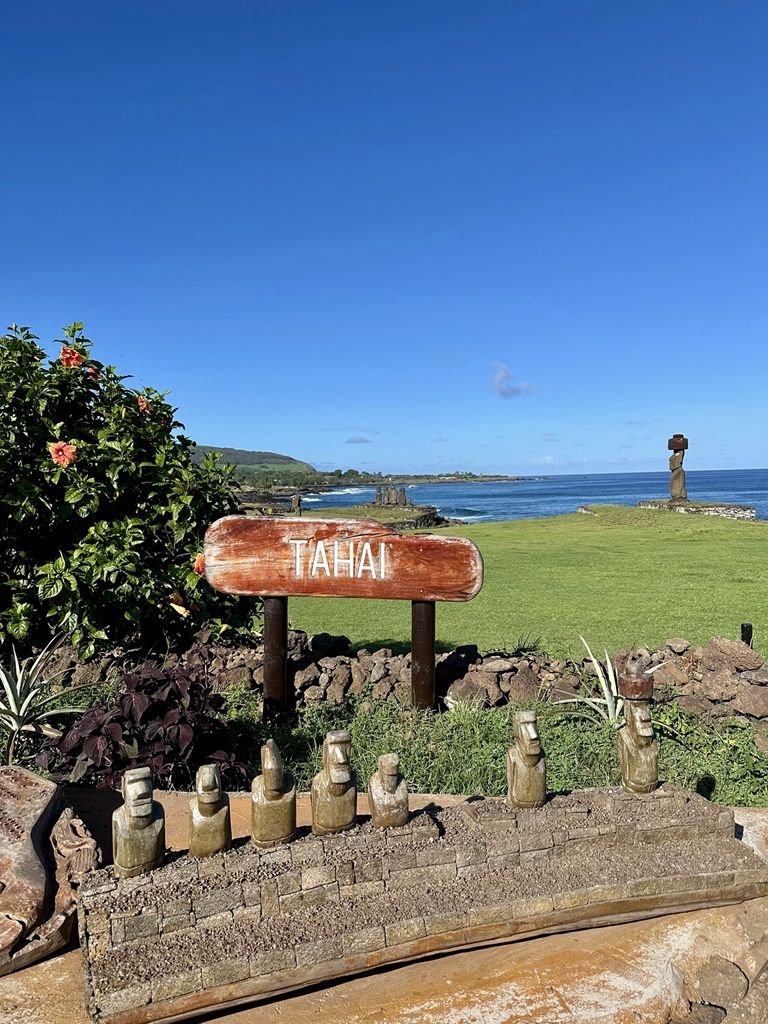
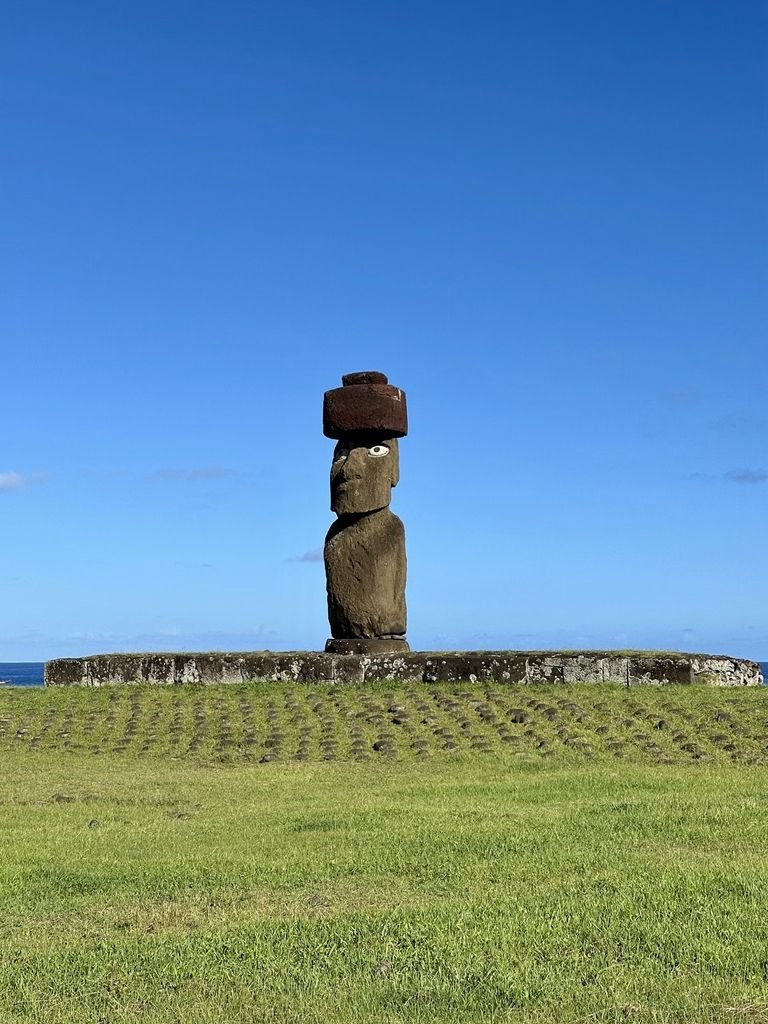
One of the moai here has eyes, the only one on the island, which are made from white coral and obsidian pupils.


There were more foundations of houses long gone to the elements.

We then moved on, into the interior of the island to check out Ana Te Pahu. This was a protected site with pass and guide required.


See, they're everywhere. I don't think they have to show a pass.

This shows how much of the island looks - gently rolling terrain with low shrubs and volcanic rock scattered everywhere.

The main attraction here is the lava tubes. The sunken areas where the tubes collapsed to be open to the air make fantastic natural greenhouses. The banana plants were flourishing in here.

But the fun part lies down in the dark...


There was a huge honeycomb on the underside of one of the cave entrances. Wouldn't want to bump into that as it was buzzing furiously with bees.

We saw another group who'd been on a trip with helmets, headlamps, and boots to venture further down this tube into the watery darkness.

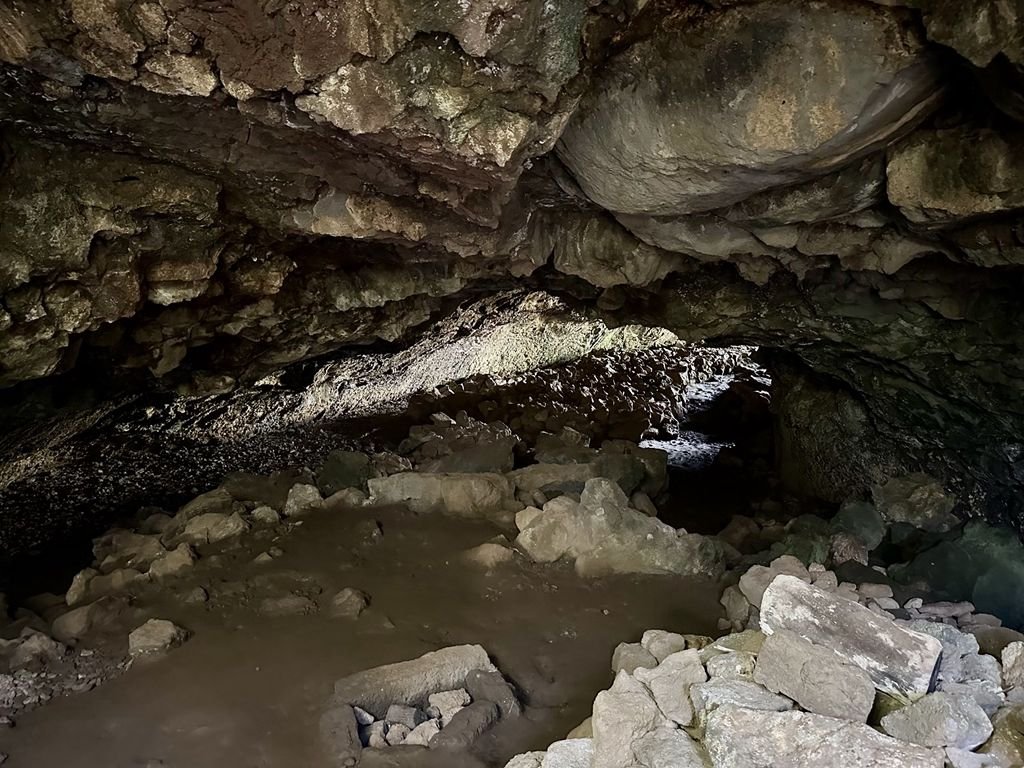
We walked in the dark carefully down the tube, using phones as flashlights. I knew about this and brought a headlamp all the way from home but stupidly forgot it in the room. Just like forgetting the swimsuits yesterday! We arrived at another opening which was full of vegetation.

Tito pointed out a petrified tree in the solidified lava above our heads.
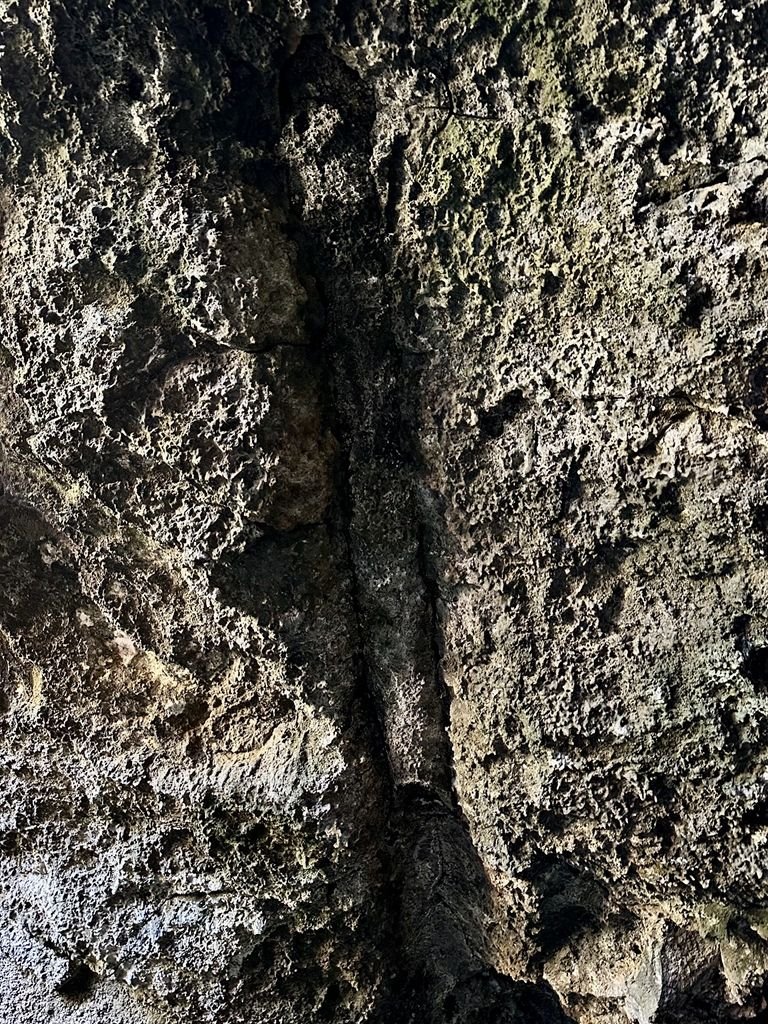
More views in the tube. It was actually completely dark in here.

My daughter pops out of another opening...the lava tubes were without question her favorite part of the day.

This part was pretty low and required crouching but not crawling. I forgot that I had my sunglasses on my head and got up too quickly at the end, giving one of the lenses a nice scrape. Ouch.


Finally, we pop out at the end of the walkable part of the tube, and there are some guava trees in the depression. Tito picked a bunch of ripe ones for us to try. My daughter didn't like it, too many seeds!

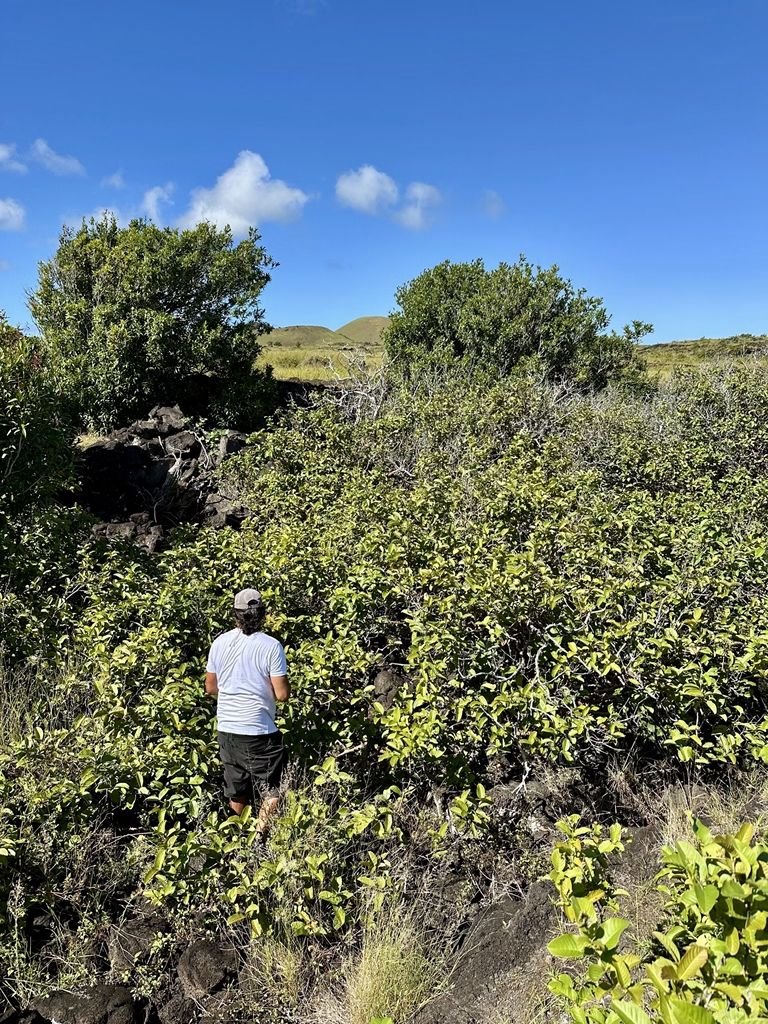

We encountered another opening to the tube system. This one you'd need a rope to get in or out of.

It's hard to tell the distance from this perspective, but we went underground from here to the two low clusters of trees in the center of the photo. Not sure exactly how far it was - maybe 300-400 metres?

More local residents kept a watchful eye on us as we walked back to the car. It was getting hot out.
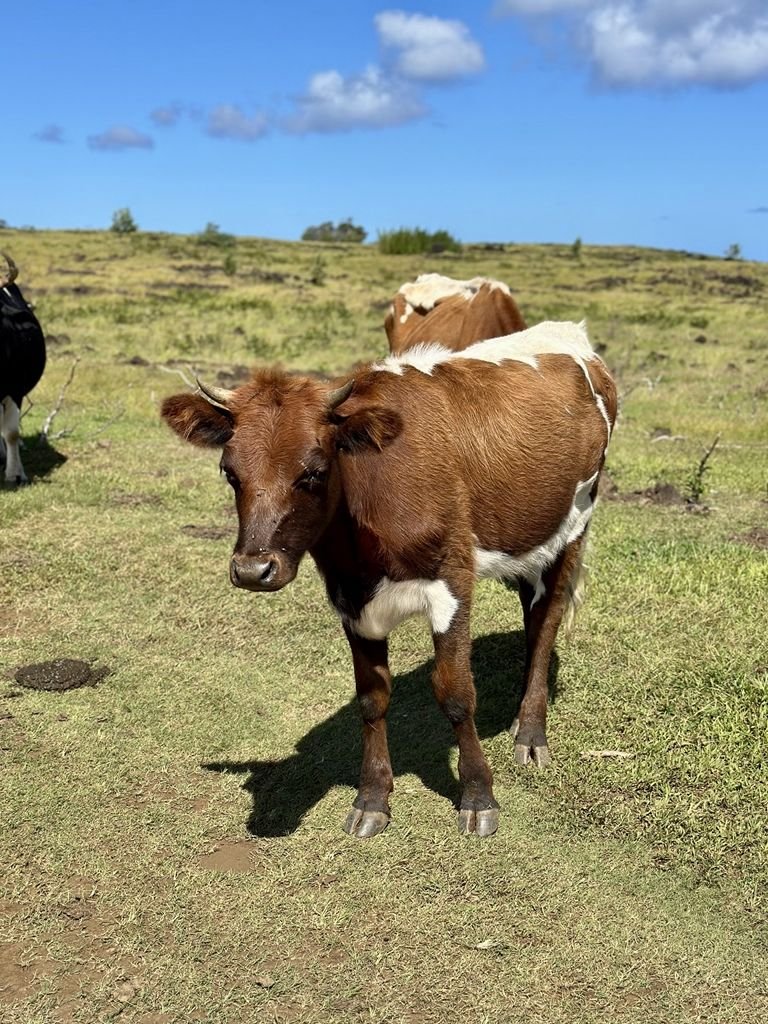
Next stop - Ahu Akivi. This is the only moai site on the island that had the moai facing towards the ocean, instead of inland. It's unclear if this was intentional or whether they were simply aligned this way to watch over a village that just happened to be in the direction of the sea. As well, the statues exactly face sunset at the Spring Equinox and have their backs exactly to sunrise at Autumn Equinox. Here we're more than 15 km from the quarry at Rano Raraku. Just imagine people having to bring these statues all the way over here without machinery.


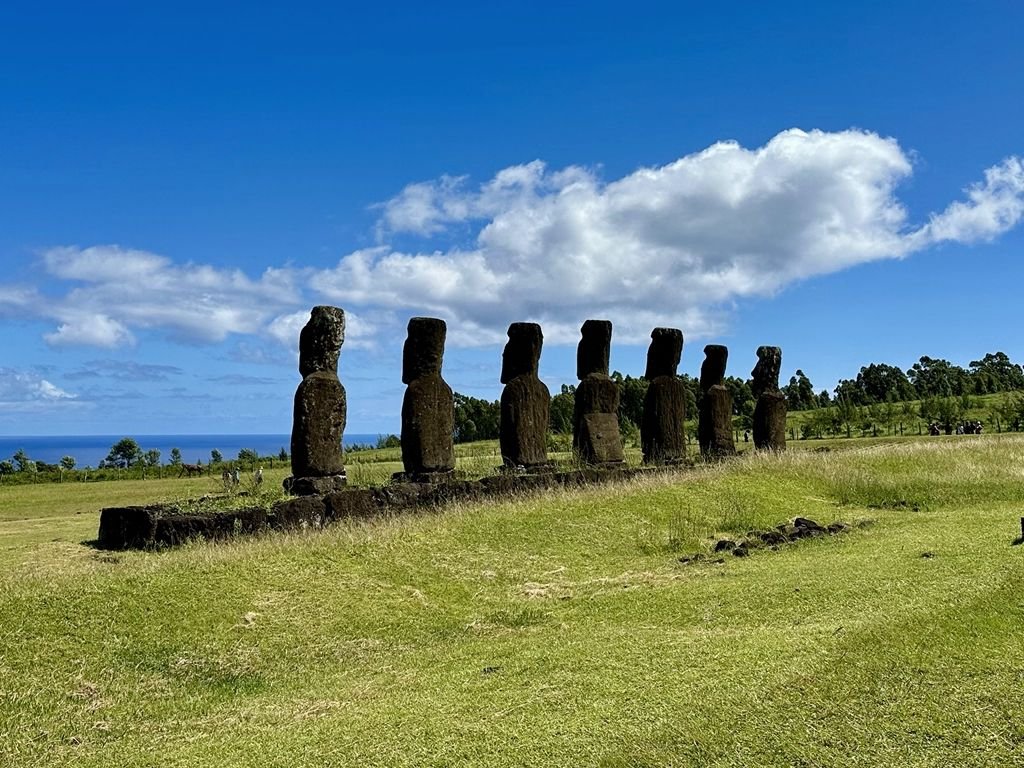
Ellie was getting hungry and tired in the sun so we didn't stay too long at Ahu Akivi, and headed back into town for lunch.

Here's another pic of the coastline right in town. Idyllic.

The main harbor.
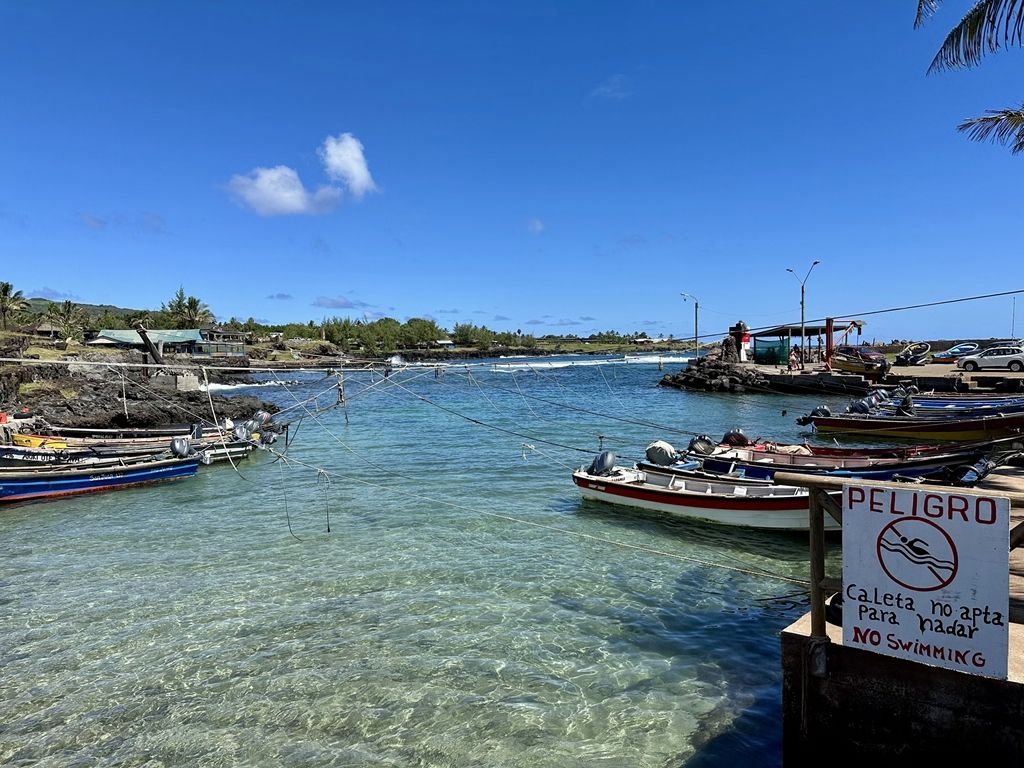
A moai right beside the harbor on the coastal road.

We had a few attempts to find ice cream. Tito had recommended a place right beside the harbor but unfortunately, they were closed on Sundays. Then he suggested an alternative just down the road, but they weren't open until 3. So the last place we went to was successful. It was just Nestle ice cream, not homemade like the other places, but it still did the trick to perk us up on this hot afternoon.
Some more pics around town, including an enormous satellite dish at the telecom company's office. Almost everywhere we went was using Starlink for internet, so this probably isn't receiving a lot of data these days.


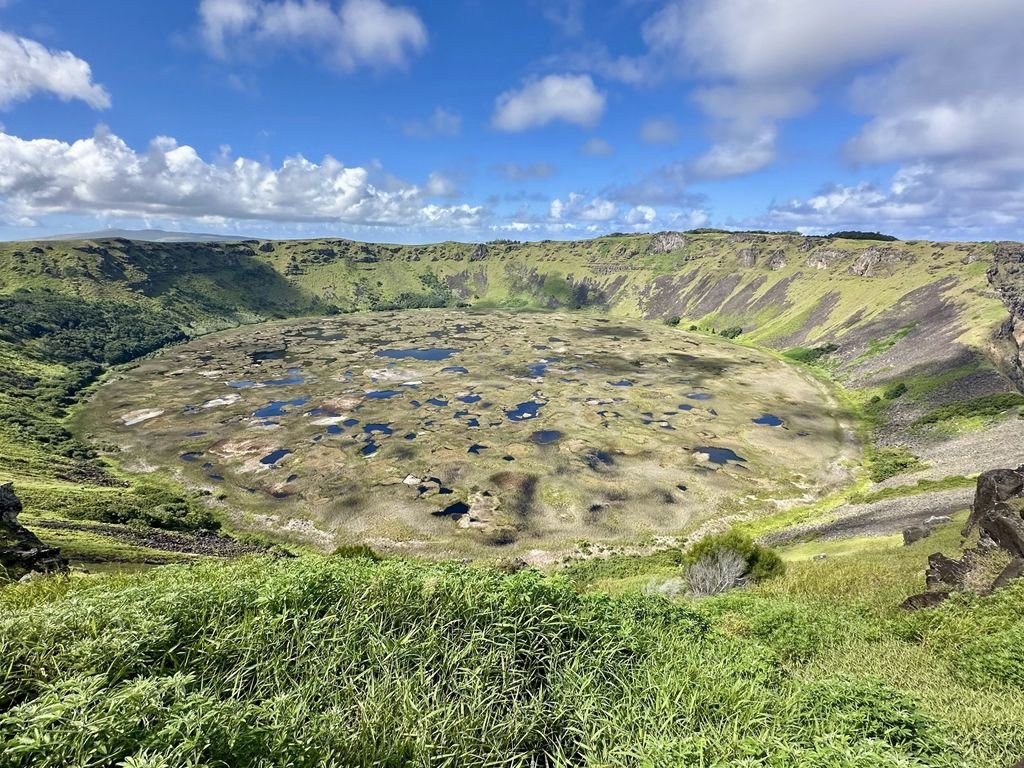
Up and up we go to Rano Kau, the stunning volcano on the southwest corner of the island. Remember how Rano means "volcano with a lake in the crater"? Well, this one was really quite interesting, as it wasn't that deep and there were all sorts of patterns of reeds and other grasses growing in the very shallow sections.


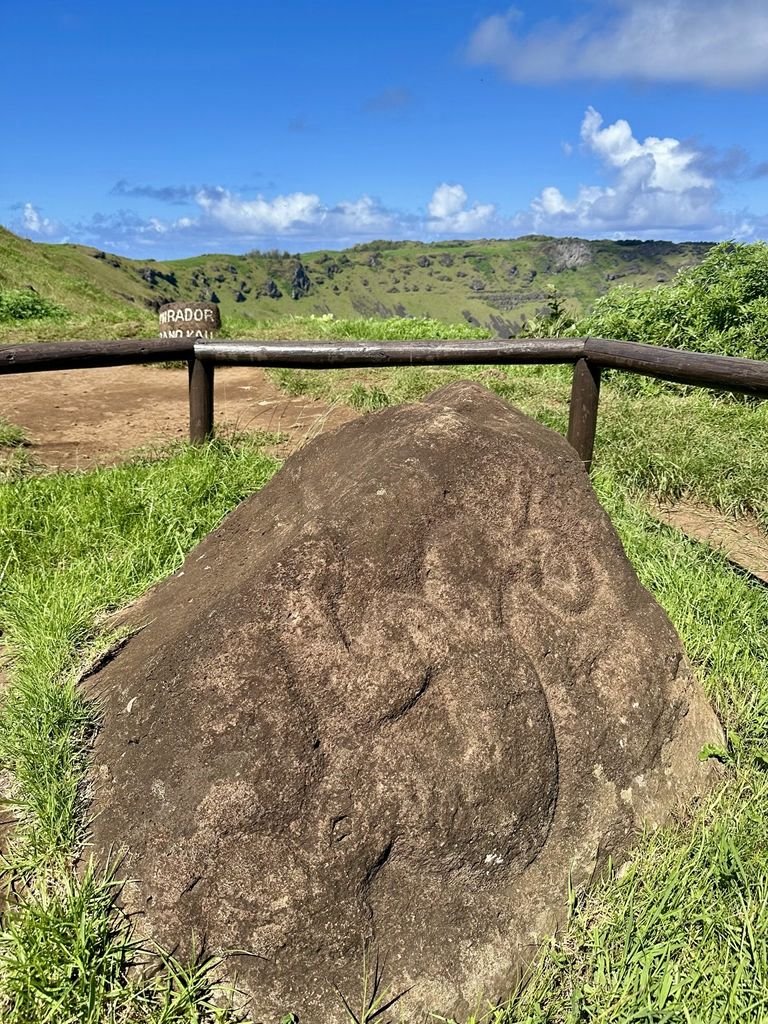
There were some petroglyphs up here, too.
A view of the road up the mountain. To our right, the next closest inhabited land is French Polynesia, almost 6 hours of flying away.

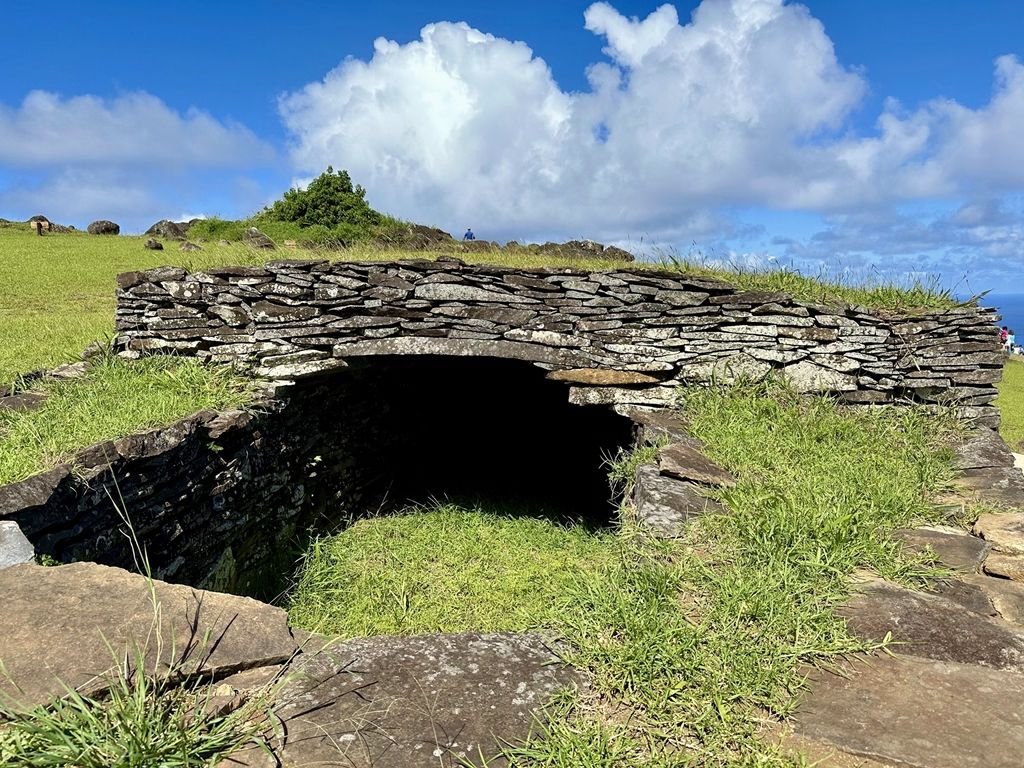
Orongo, the site at the very top of the hill, will be our last stop today. Orongo was a village and ceremonial center of Rapa Nui in the 18th and 19th centuries; while it had no permanent inhabitants, there were houses up here that were occupied for several months a year.

Didn't see any moo cows but there seemed to be a resident horse.

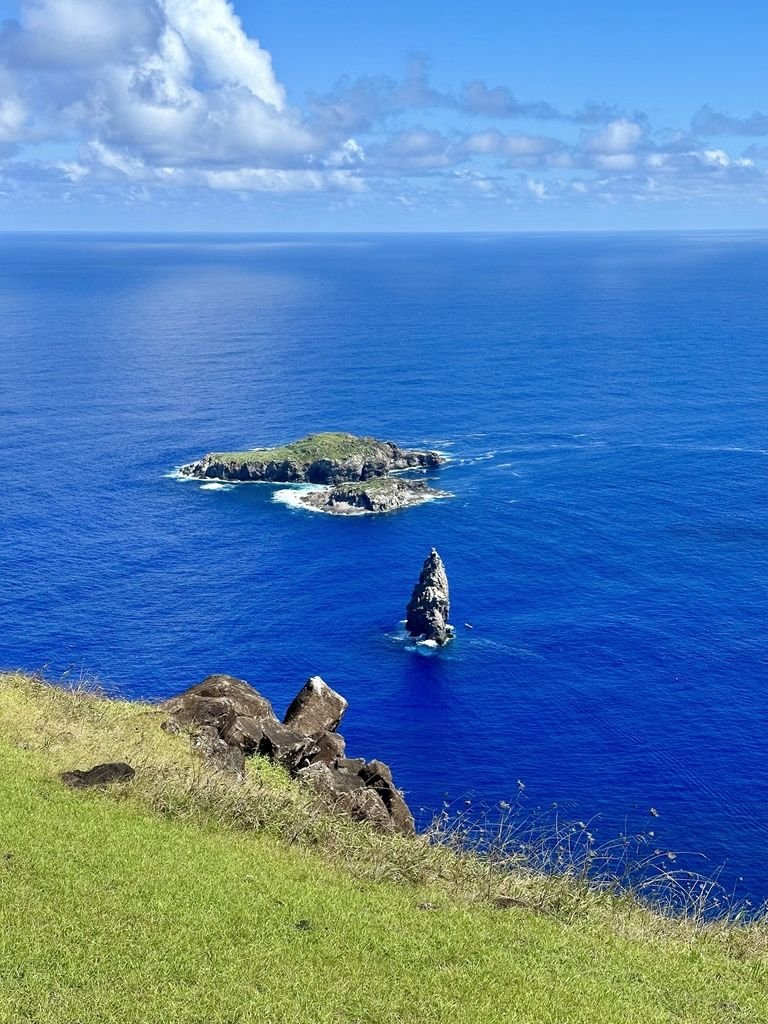
The walking trails up here had an amazing view.

These rugged islands off the coast are named Motu Kao Kao, Motu Iti and Motu Nui (the large one) and had a very special meaning to the Rapa Nui people late in the period. It's a story about the Birdman cult. During this period, the leaders was chosen not by decree, appointment, or bloodline, but by a special challenge. This happened every year and involved aspiring men to hike up to Orongo, stay in the houses, and then when the time was right, descend to the crater lake and retrieve reeds and wood for building bodysurfing type rafts. Next, they would climb down (hopefully without plummeting to their death) to the ocean shore, swim across the strait to the island on the raft, and find an egg from the manutara bird (a white tipped tern) who nests there annually. The first one to make it back up to Orongo with the egg was named tangata manu "birdman", the representative of the God Make Make for the next year.
A look at some of the houses of Orongo. What an amazing view they had.


Now a look down into the crater. The first viewpoint (mirador) we stopped at is basically on the opposite rim now.
More views up here. It's so peaceful. What a magical place.

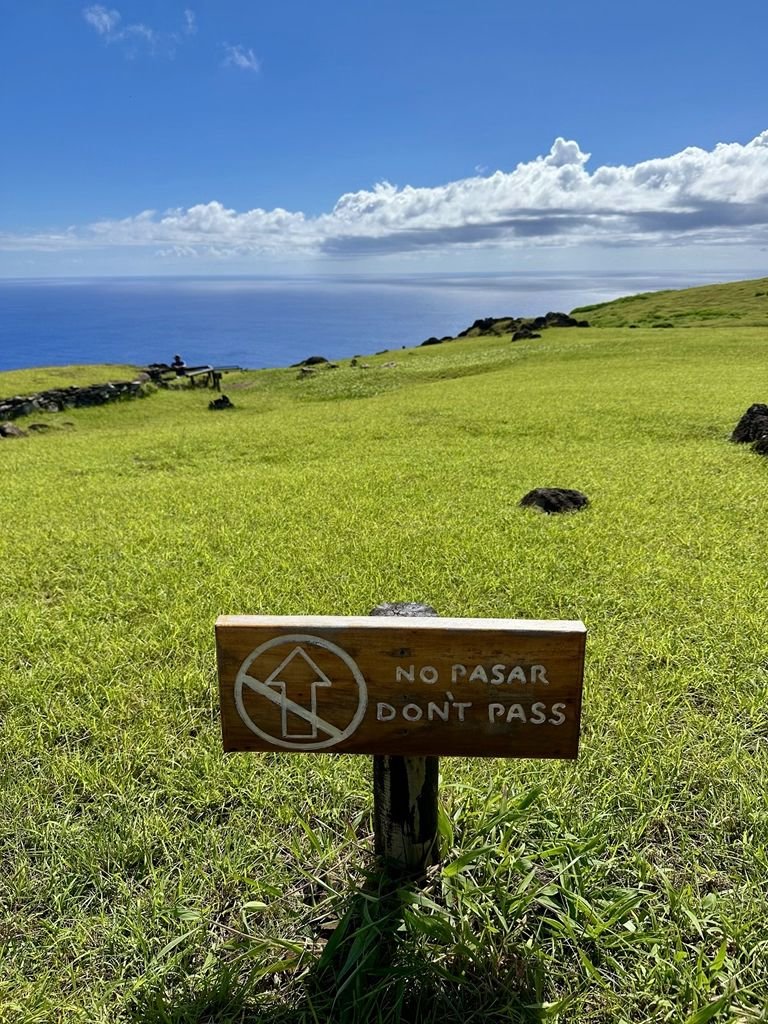
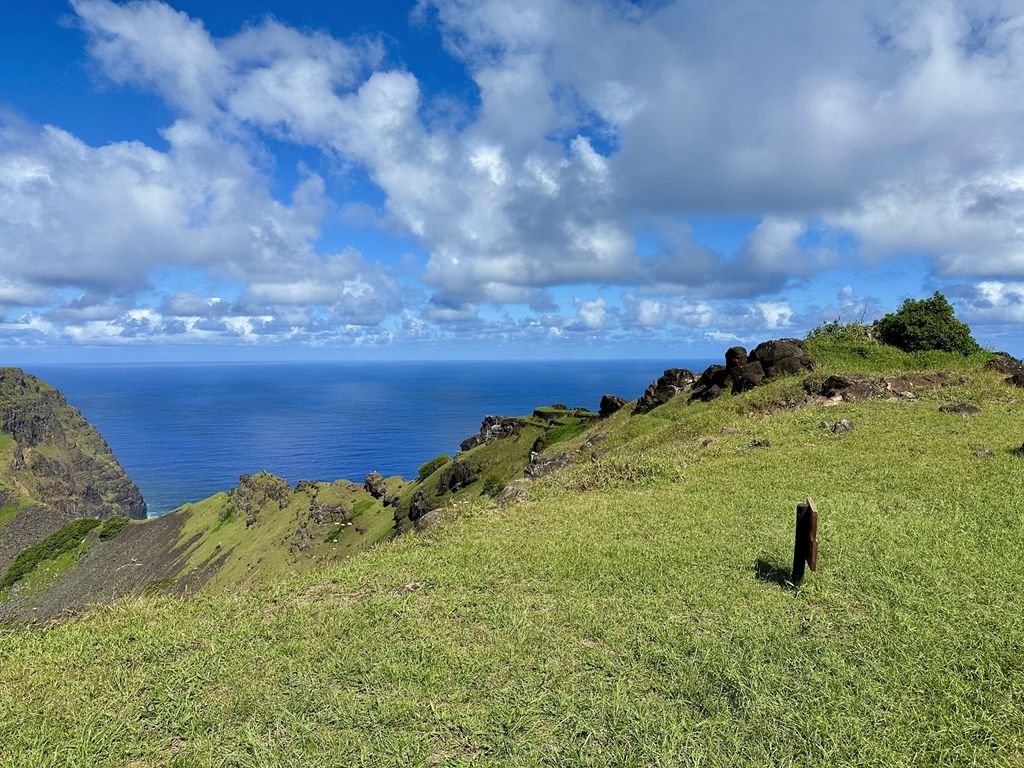

We stopped again on the way down the hill to take a look at town and the beautiful sky. That means it's going to be a great sunset tonight for our last night here.
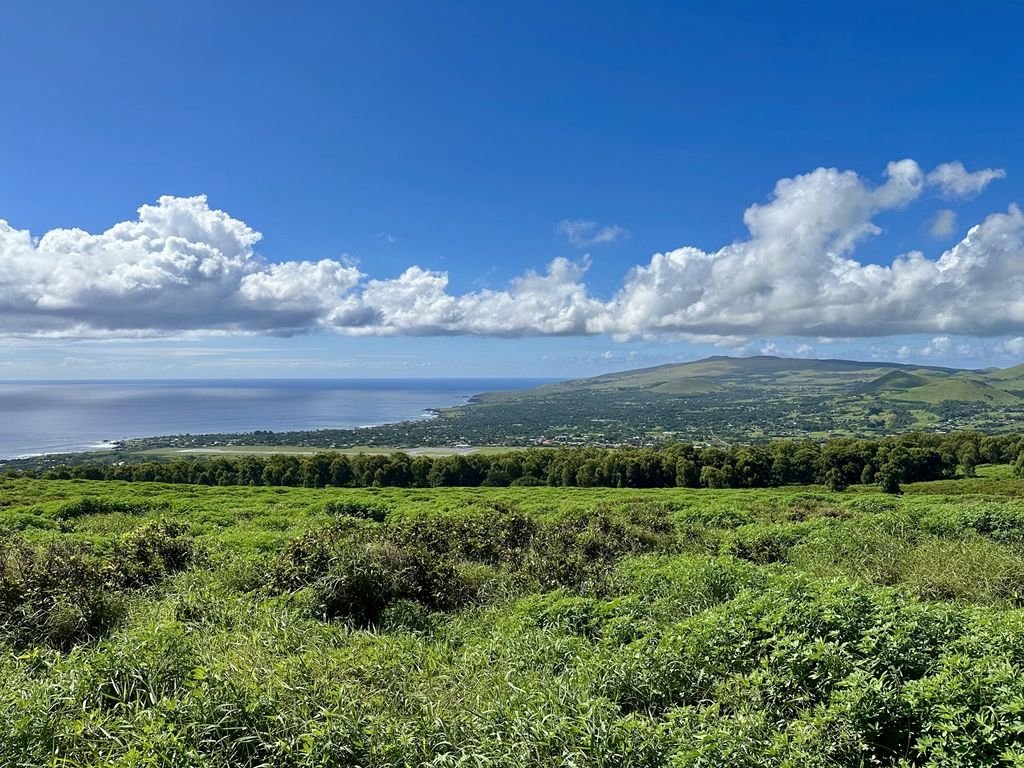
We were thirsty after being out in the hot sun all afternoon, so stopped at a mini market to get some Gatorade and chips. The prices in here were even cheaper than at home and we're literally in the middle of nowhere in the ocean!

Oh yeah, now that we're back in town, we get the random dogs again. Siesta time.

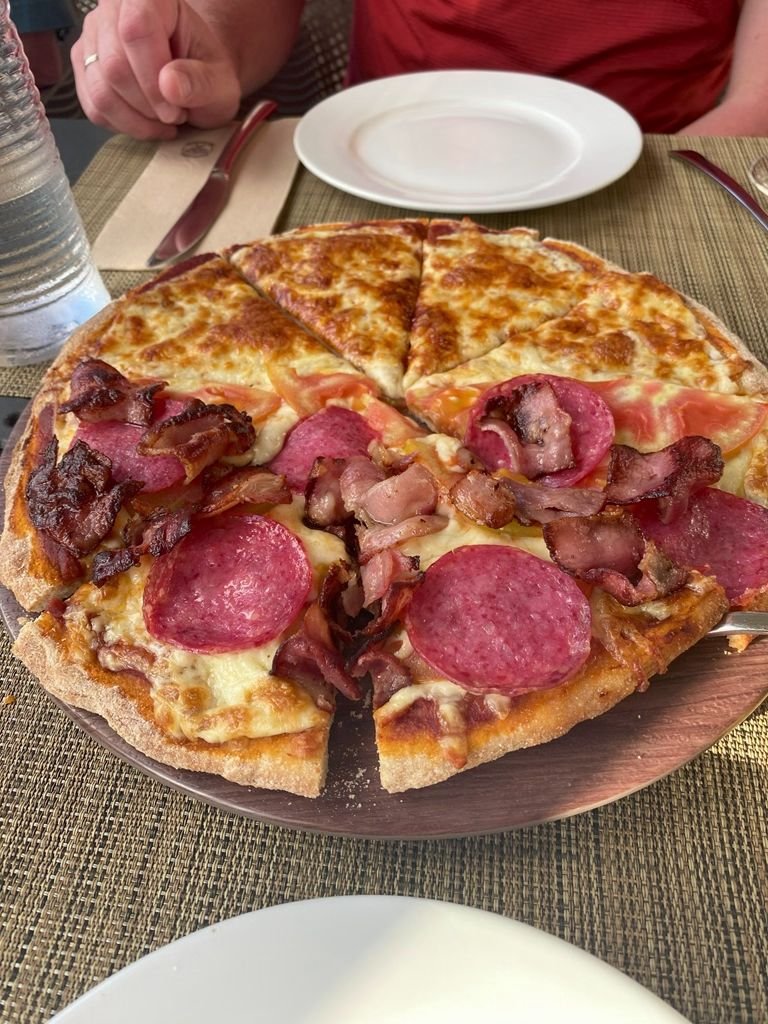
We had another brief but refreshing dip in the chilly pool that worked great for cooling us down quickly. Then it was pizza night! Woohoo! We got half and half since my daughter's only into cheese these days.
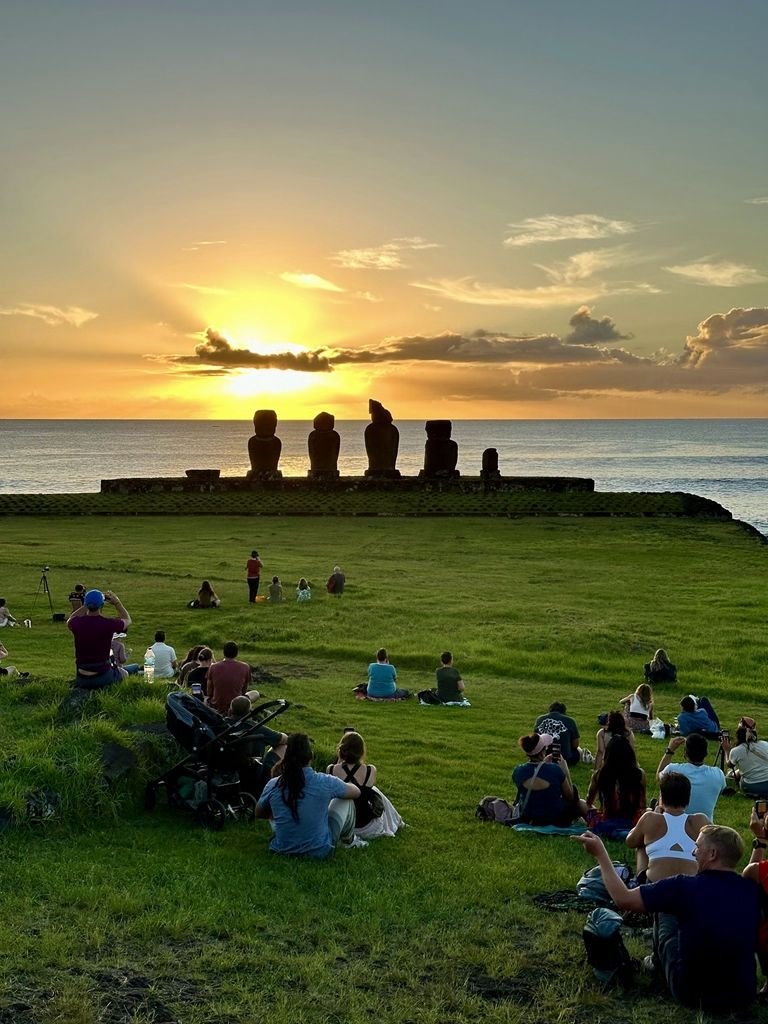
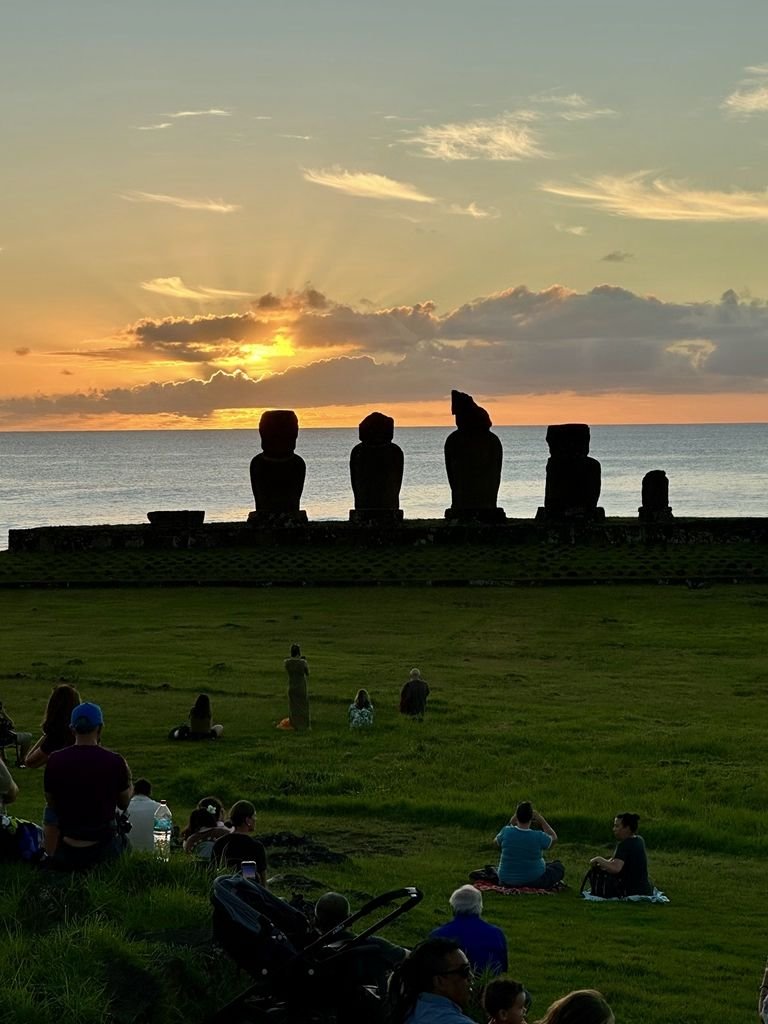
After dinner, we went with some fellow Canadians that we met at the hotel, back to Tahai, where we will watch a magnificent sunset with dozens of others. It did not disappoint.

\


A lone surfer catches the last of daylight to get in a few rides.


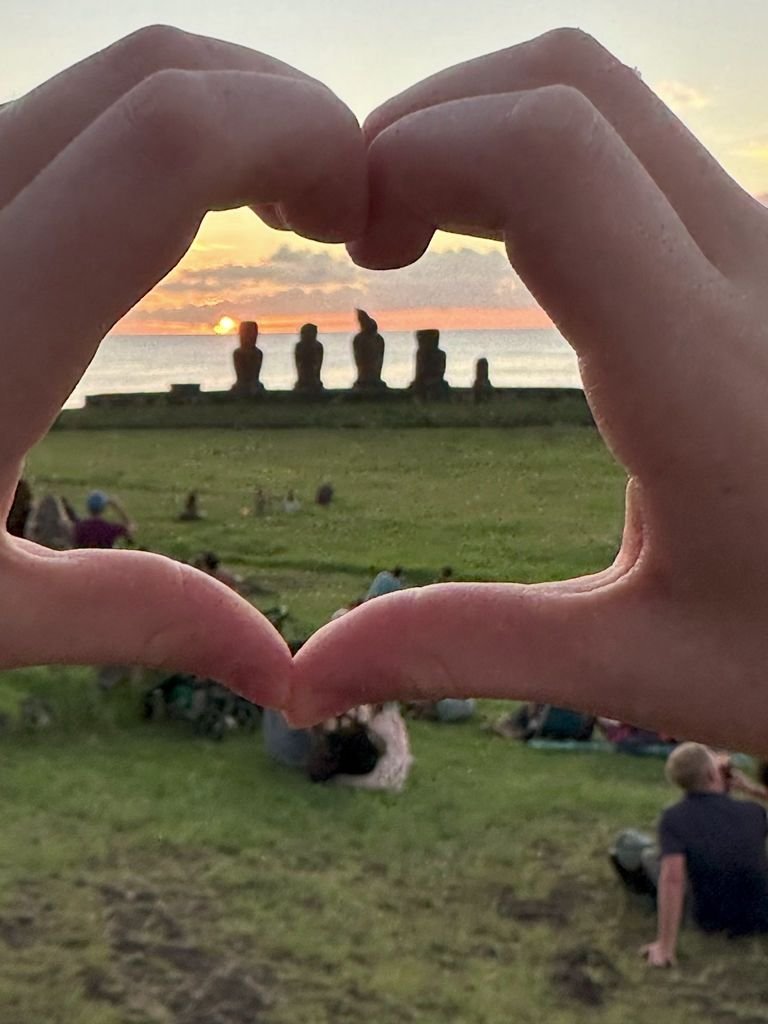


What a perfect end to a lovely day.