Yes, the missing paint patches all over the wing were a bit disconcerting, but there are several LATAM Dreamliners in this state... must be a bad paint application or something? Anyway, we got there in one piece... :-)
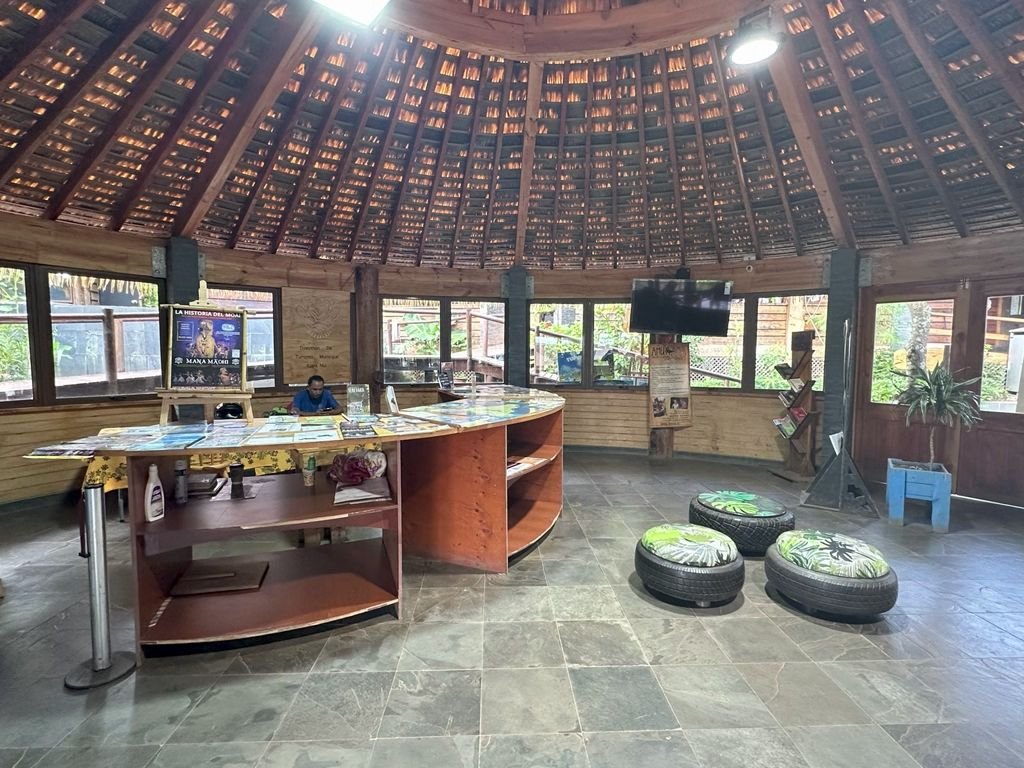
We are going out all day today on a tour of some of the national park sites. Since COVID, it is mandatory not only to have a park pass, but a licensed guide (which has to be a local) to enter most of the best sites. It is definitely expensive to have to do it this way, but I can see why they want to ensure that people living there are the ones financially benefitting from the unique tourism opportunities, rather than foreign owned tour companies. We picked up our park passes at the visitor center on one of the main streets in town.
We went down the seaside road in town, where our guide Tito pointed out a small swimming area that was known for plentiful sea turtles that you can swim with. We saw a few of them swimming around from the rocky shore, but the lighting wasn't good enough for any pictures.

Going through town, we saw the main sports field which was busy on this Saturday morning.

And one of the schools.

Passing by the airport again, there was this National Geographic livery 757 being packed up. The plane actually belongs to Icelandair but after looking up its history it must be chartered for long periods of time by National Geographic as it had been to many exotic places in the southern hemisphere recently. A couple hours later when we were out at one of the moai sites, we saw this plane departing and turning back to the west, presumably en route to Tahiti.

Here's a typical road view in the interior of Rapa Nui.

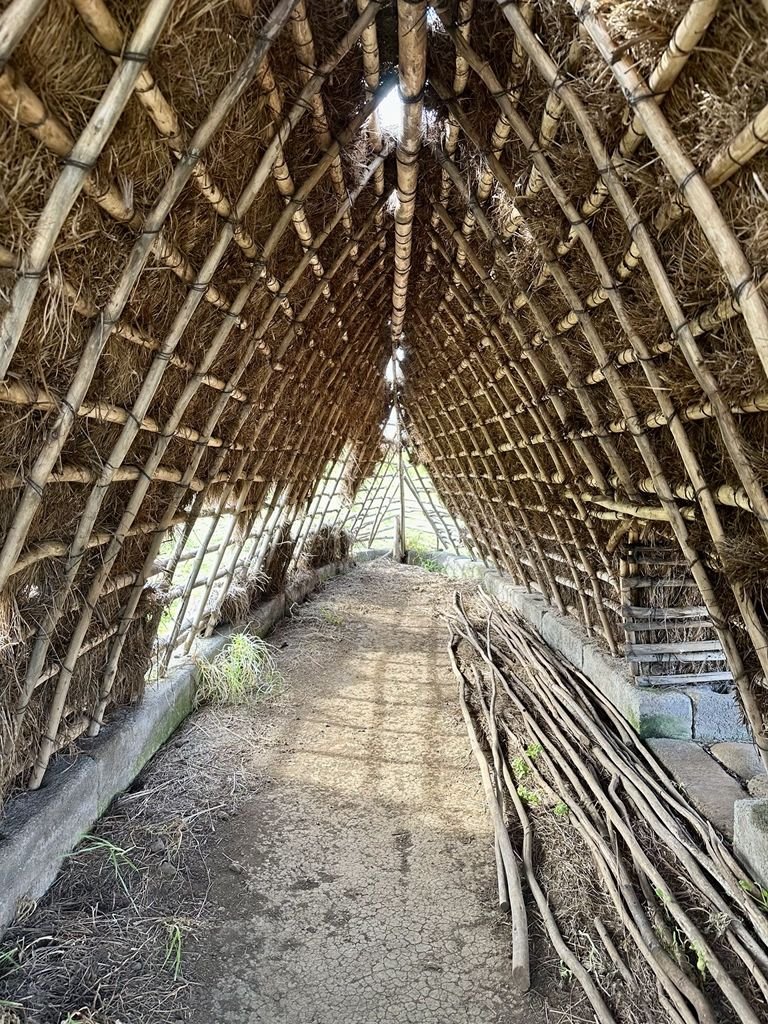
Our first stop - Vaihu at Hanga Te'e. There was an entry office where the park staff will check and stamp your pass and verify that you're with a guide. This stop is a restored small settlement, with these rock greenhouses, built to protect crops from both wind and salt spray.
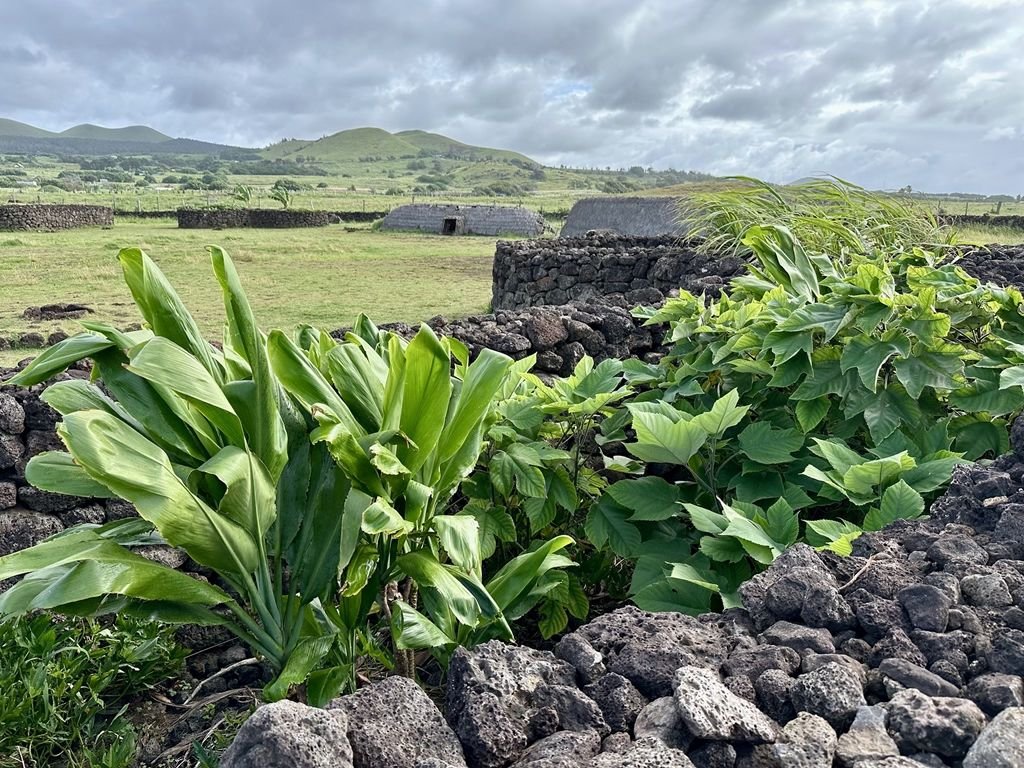

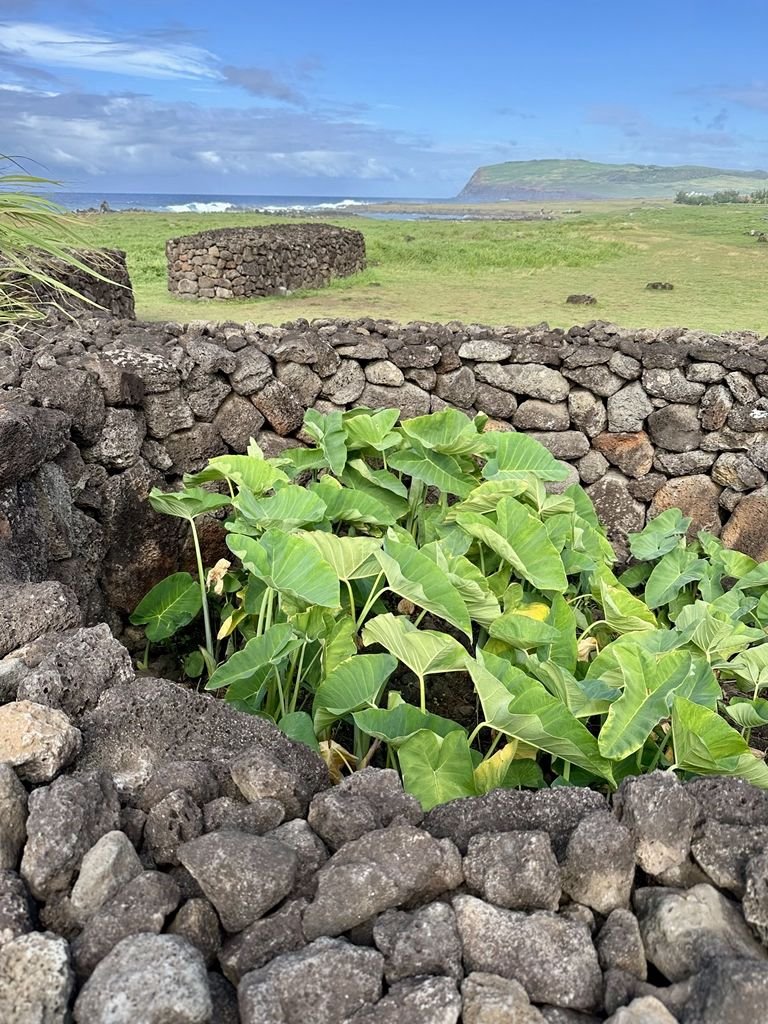
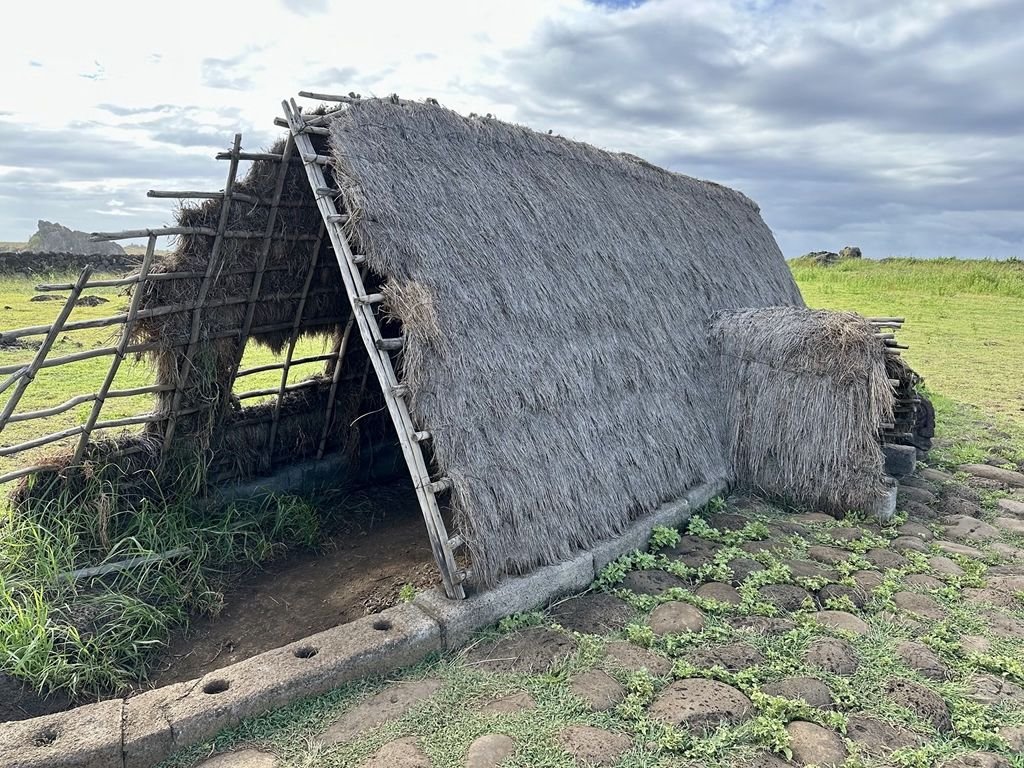
And rebuilt traditional, upside down canoe shaped houses - hare paenga.

There are a bunch of moai still laying face down here. This platform (ahu) has not been restored and it is how it was found. There are pukao (the headdresses made from red volcanic rock) laying on the ground as well. These are remnants of the Huri Moai period around the year 1700 when Moai culture came to an end, with much internal fighting and toppling of the statues at various places.

This circular area was a "paina" where ceremonial rituals were held.

The waves were crashing on the shore and it was easy to just sit and watch them for a long time. It felt super isolated out here.

Next stop - Akahanga.

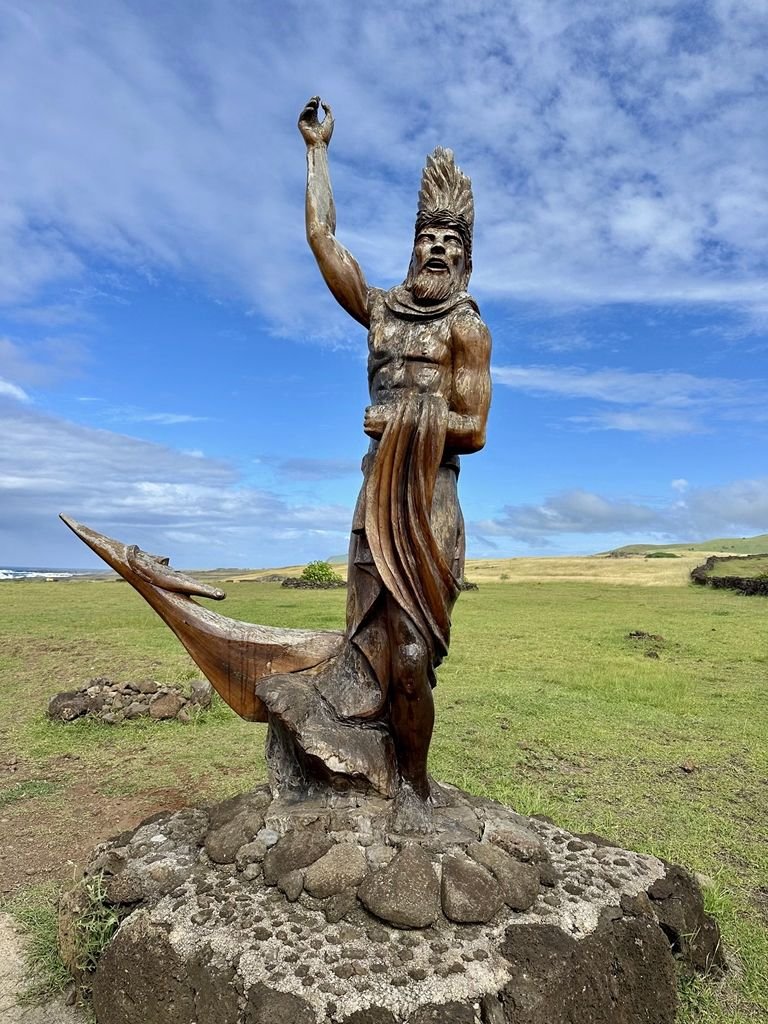
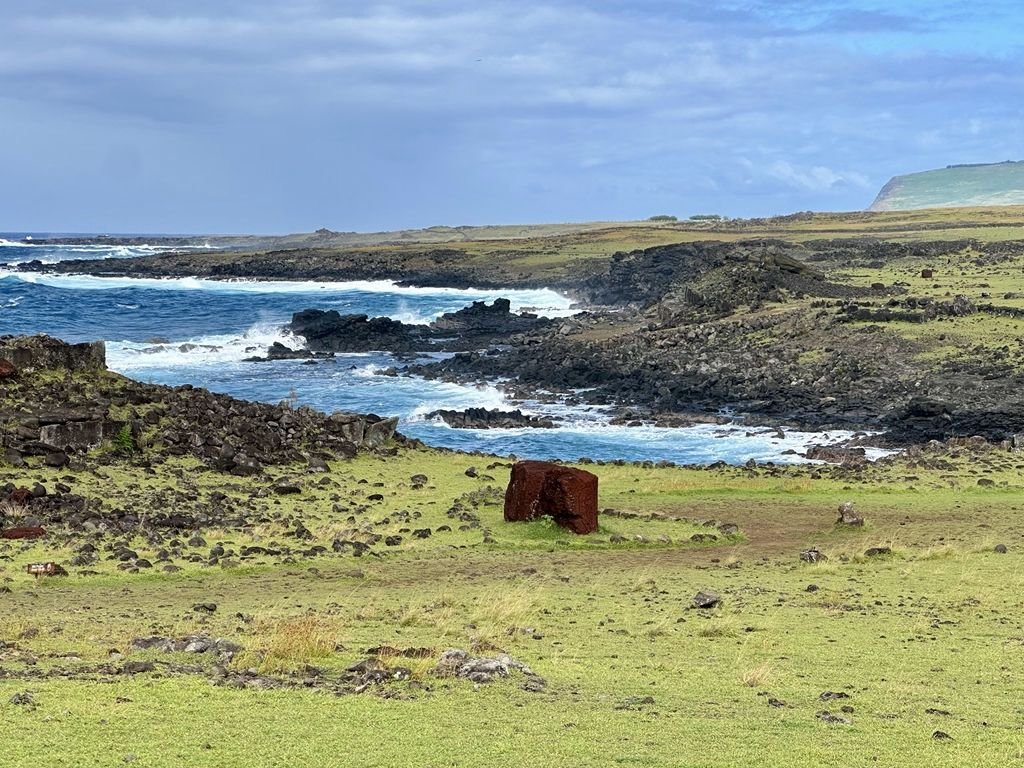
All of the moai were knocked down here, as well.

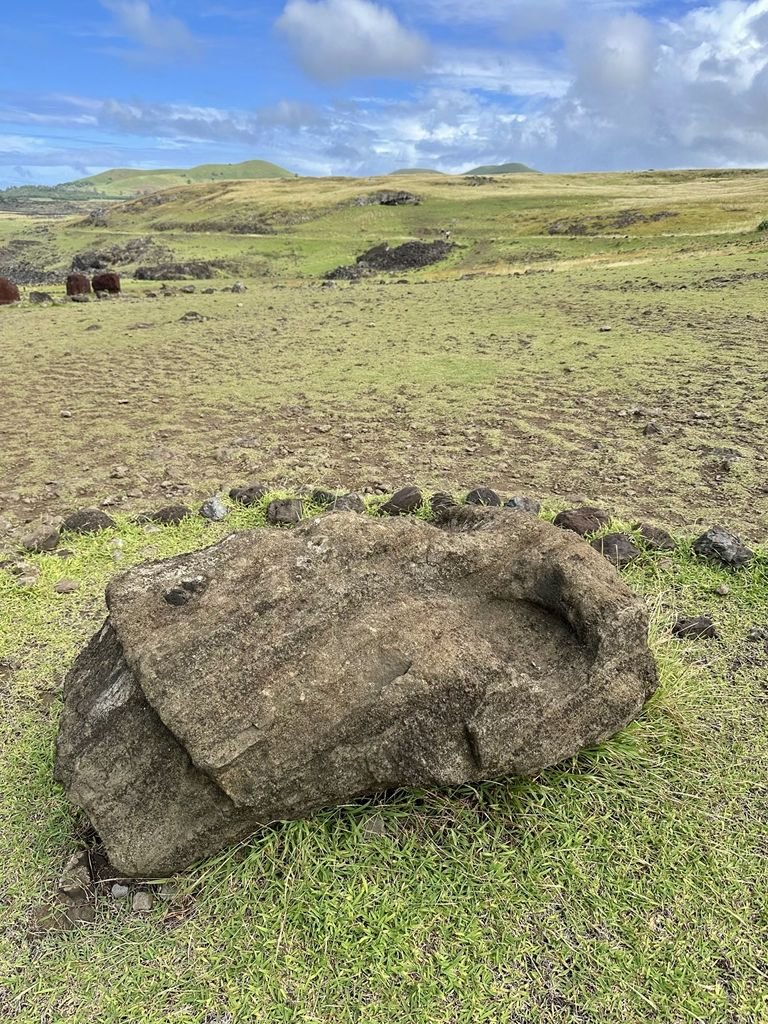
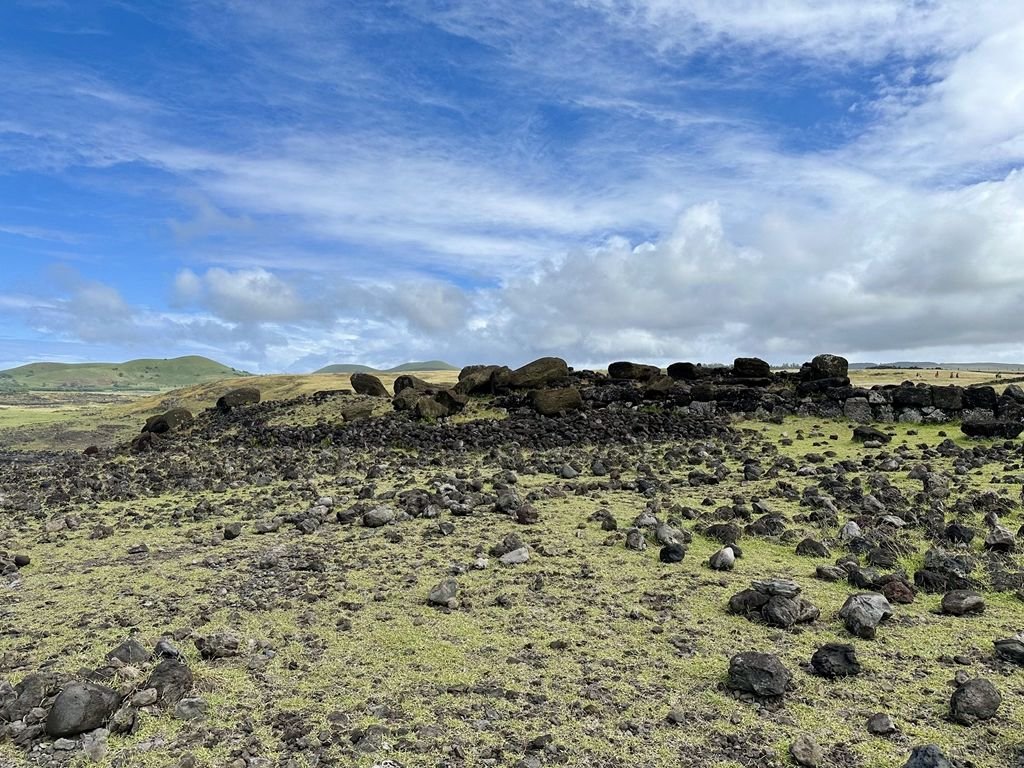

Close to the sea, there were the remains of an umu pae - a stone oven.

This poor moai is face up, probably for the rest of time.

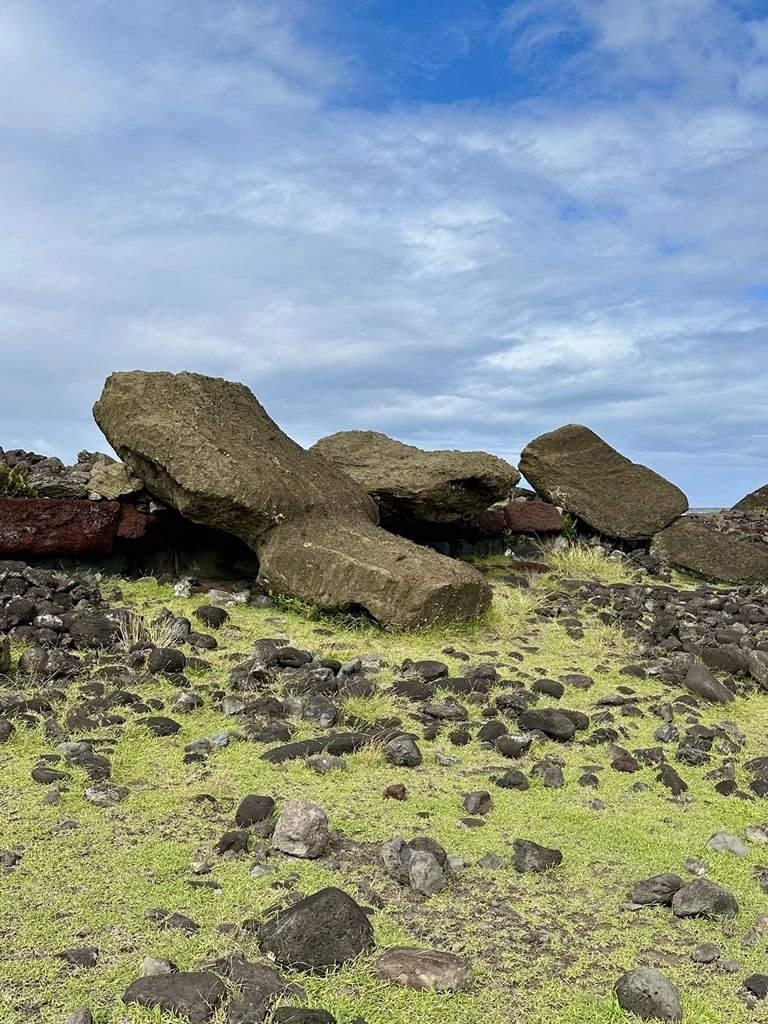

The pukao over here have some beautiful petroglyphs.

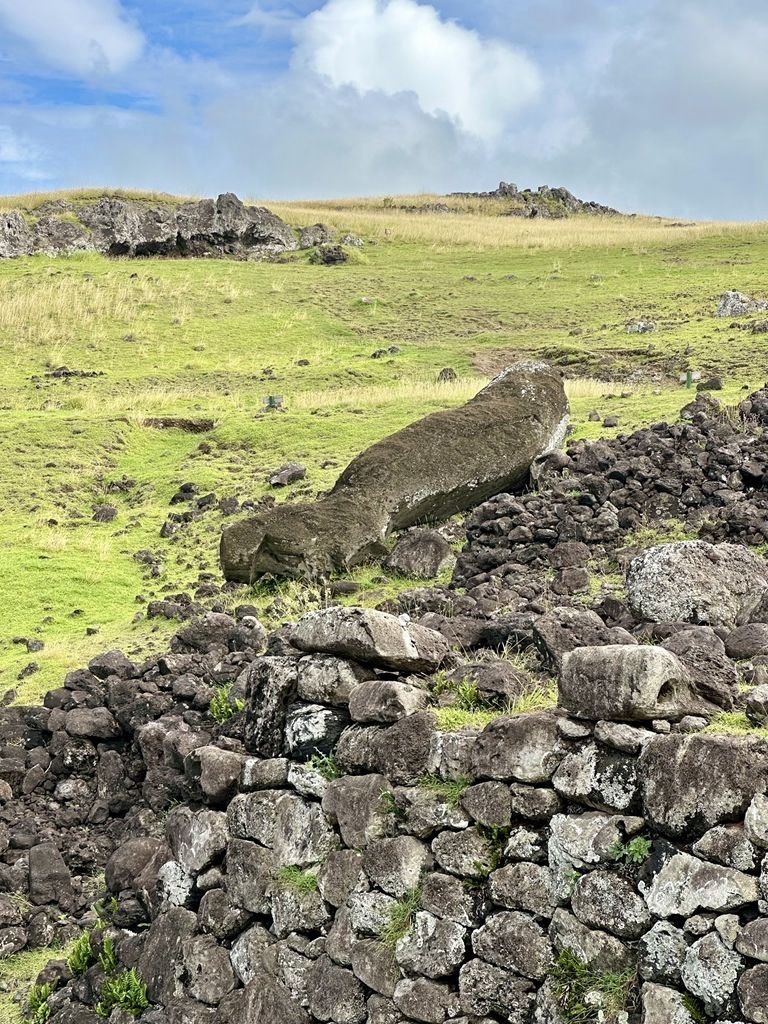
Another fallen giant, face down, as most of them were left.

We ventured into the cave Ana Akahanga to check it out, that was used as a temporary refuge from the elements, but not a permanent home.

Back on the road, and we see one of the other prolific local groups: moo cows (not to be confused with pukaos)

Next stop is one of the coolest ones on the island. The quarry where all of the moai were manufactured: Rano Raraku. Rano Raraku is an old volcano. Rano is the Rapa Nui word for a volcano with a lagoon or lake within the crater. The volcanic rock created by this volcano is called Lapilli tuff, and it is the only place on the island with this type of rock, which was perfect for crafting the moai. It is estimated that this moai factory was in operation for approximately 500 years, ending in the mid-1700s; and 1200 moai were carved during this time.

There are still many unanswered questions about the moai, but it is believed that they were created to represent deceased elites, rulers, and other important Rapa Nui ancestors.

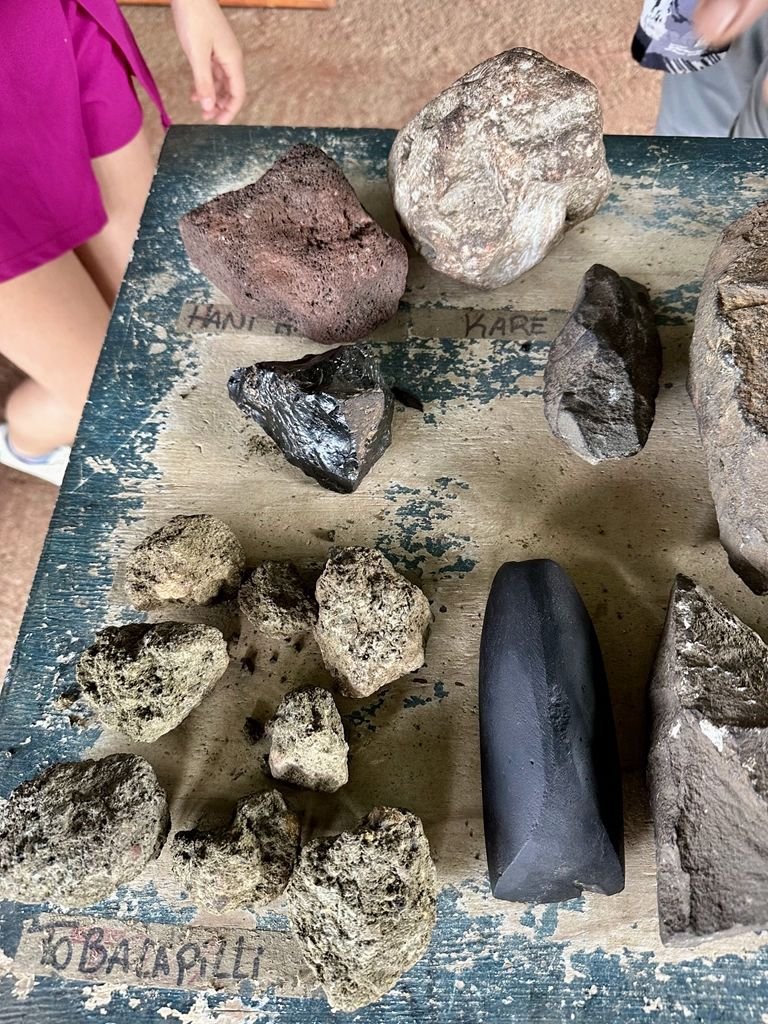
There was a display table with various types of volcanic rock at the site gate.
Moments after walking towards the hill, we saw a huge moai laying on its back for eternity.

And then into the field of moai. Some were standing.


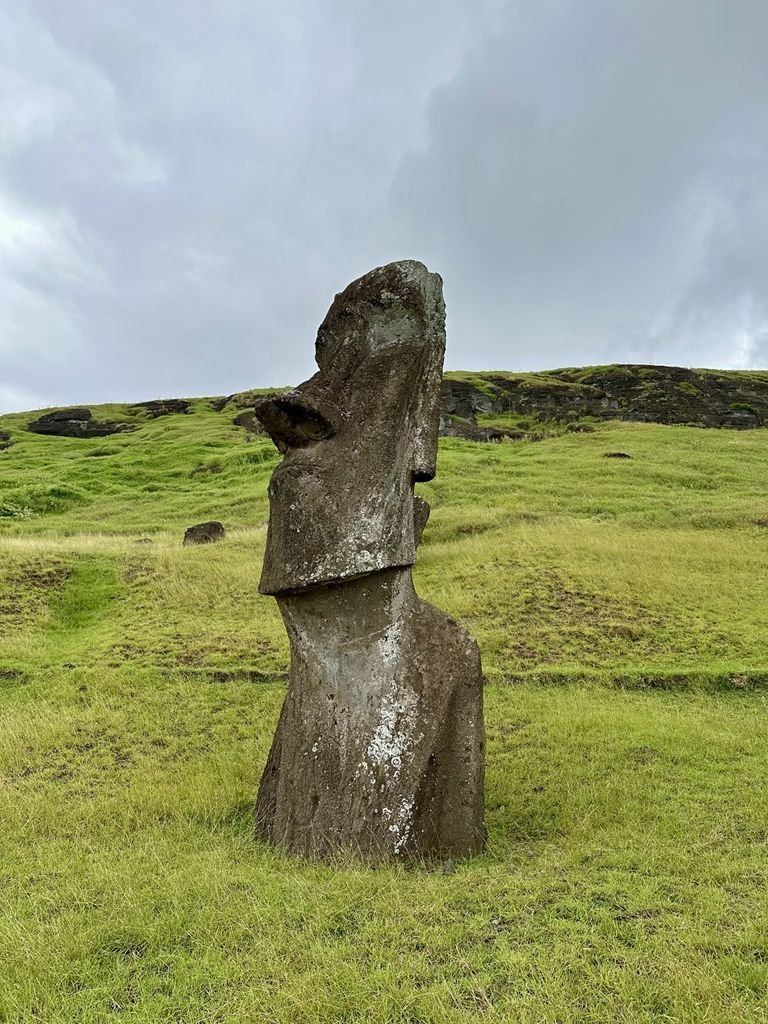
Some were leaning.
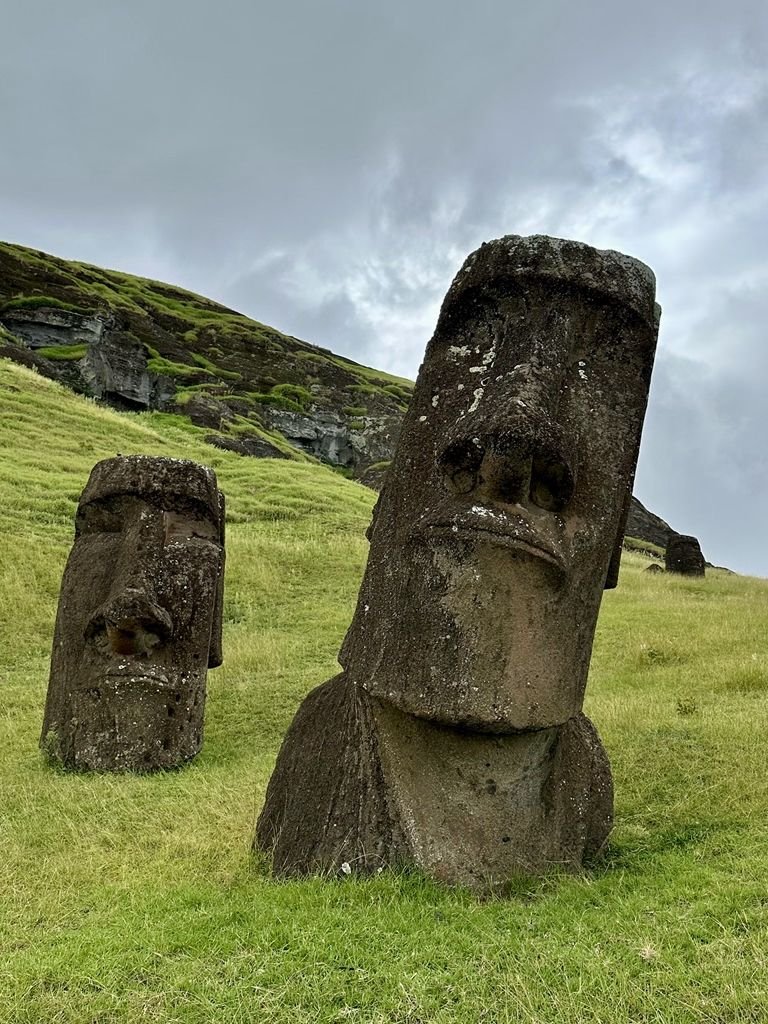
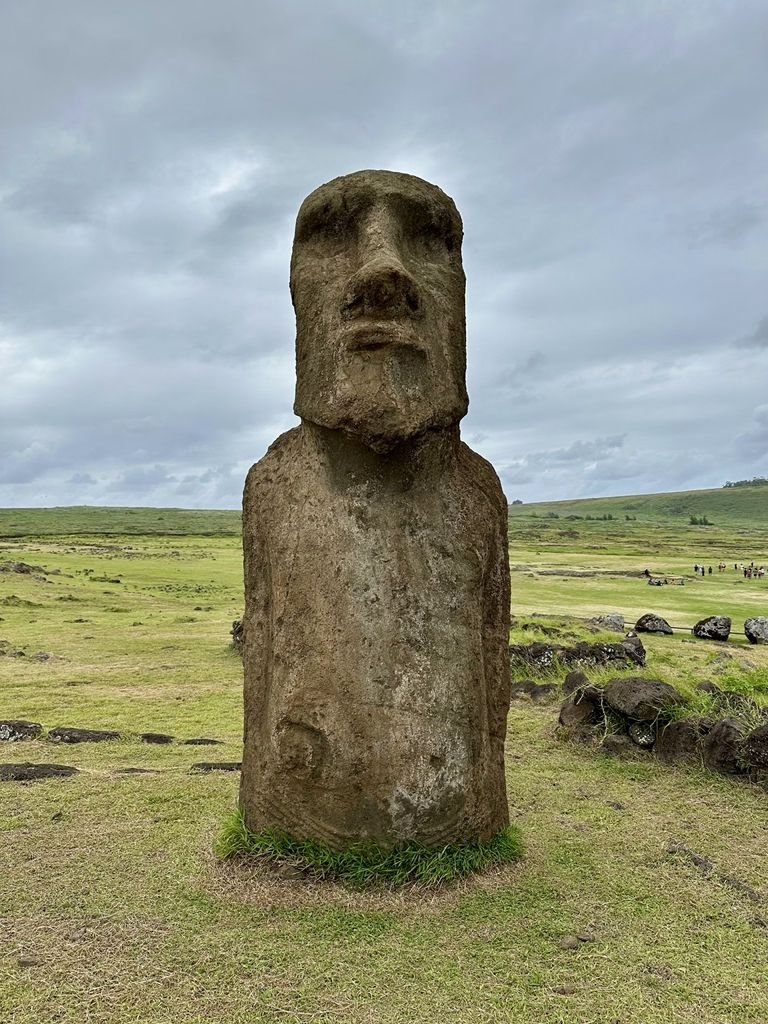
Many were buried most of the way up to their necks from years of slope erosion. It's a common misconception that the moai are simply heads, but the head is only 1/3 of the total size.
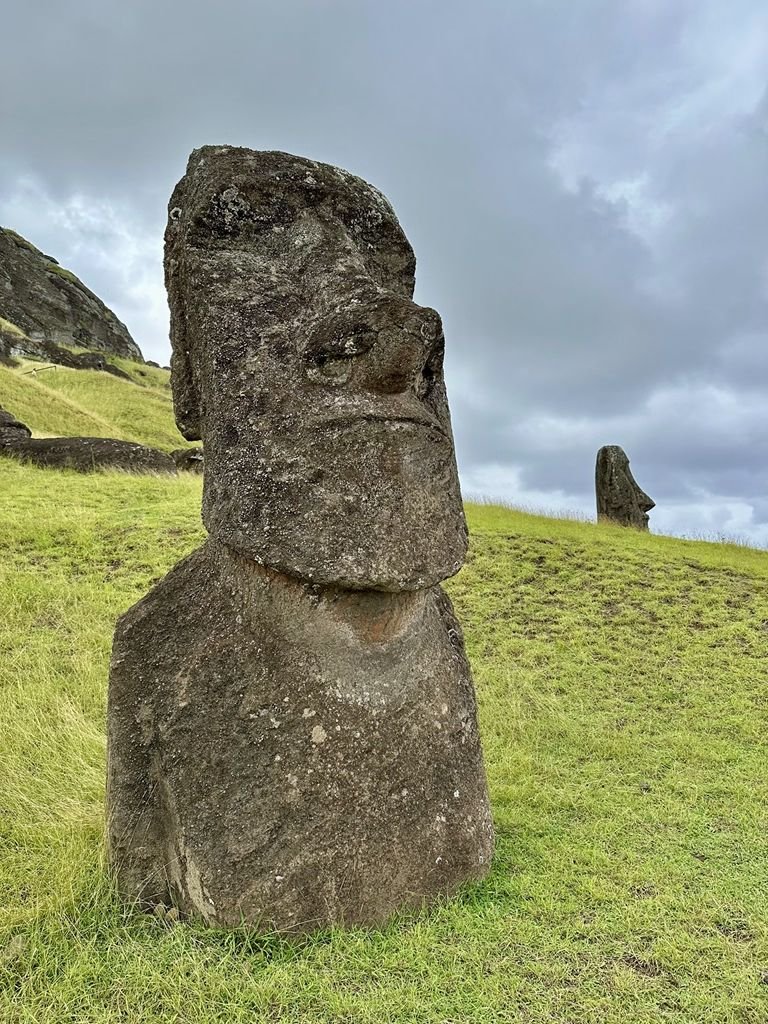
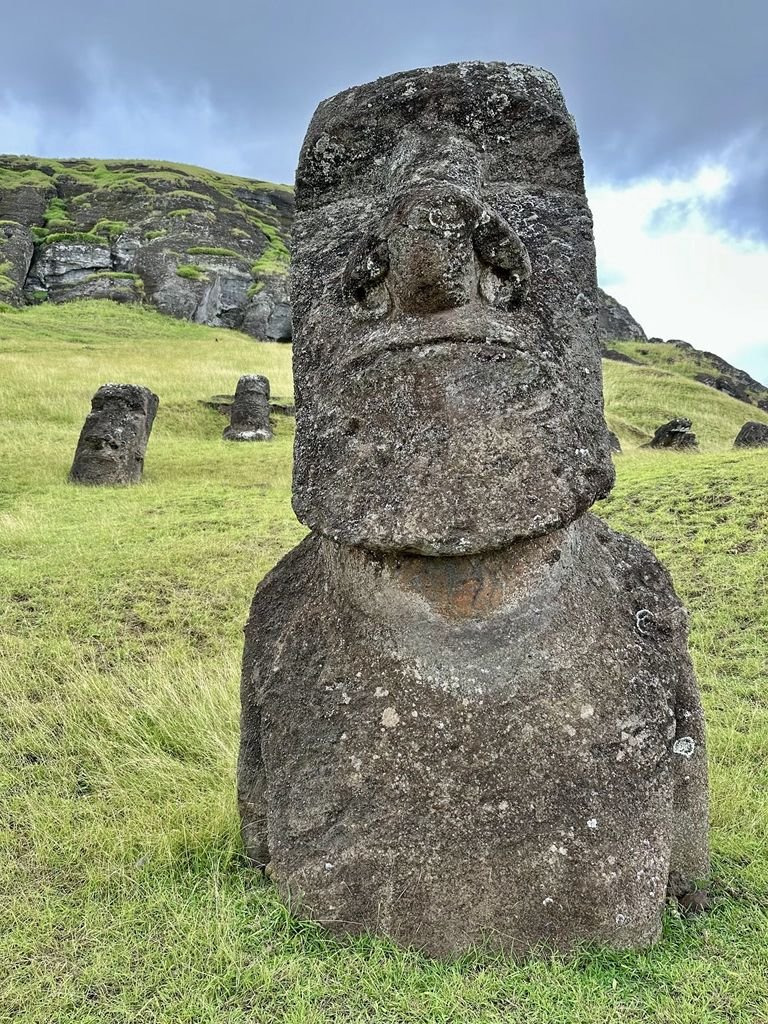
Even more were left under various stages of construction. In the center of this photo you can see a head looking up under the cliff face.

This slope was seaside when the volcano was active, but lava flows extended the land out to the present coastline we see in the distance.

Here is the largest moai which was never finished. His name is Te Tokanga, 22 metres long, and weighing 200 tons. Theory is that this one was left in place because they never would have been able to move the statue. Remember, literally everything was done by hand.

Here is another moai that was closer to completion. You can see how they started with the head and then moved on to the rest of the body. All of the moai were carved like this - on their backs, with the head done first. We can see now how small the head is compared to the body.

Ahu Tongariki is visible on the shores below.

This one is Tukuturi Moai, the kneeling one.
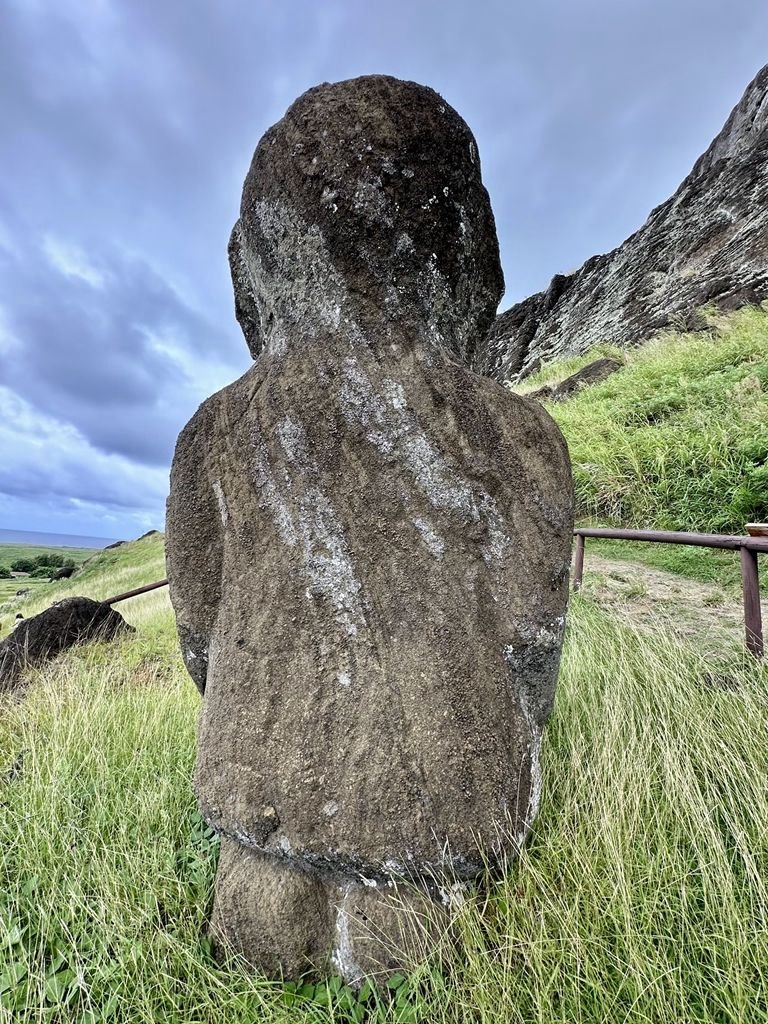

There are 397 visible moai at Rano Raraku, and it was hard not to linger just looking at all of them with wonder. This is also the only site that was found with standing moai. All of the others were knocked down during the Huri Moai period.


More moo cows.
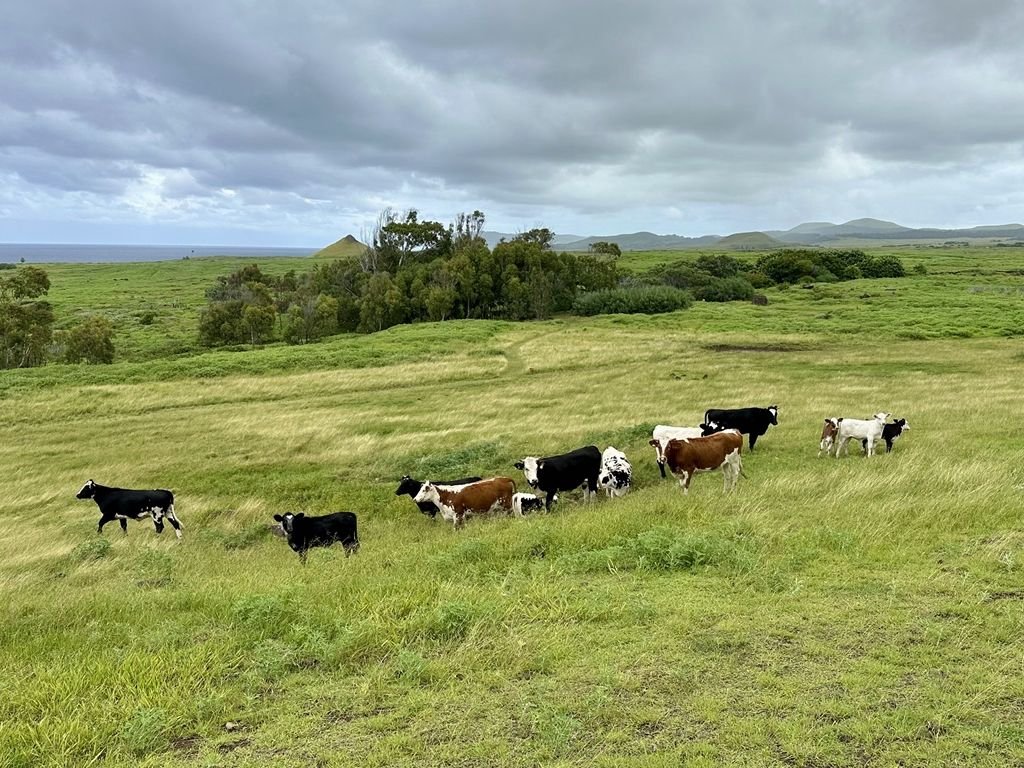
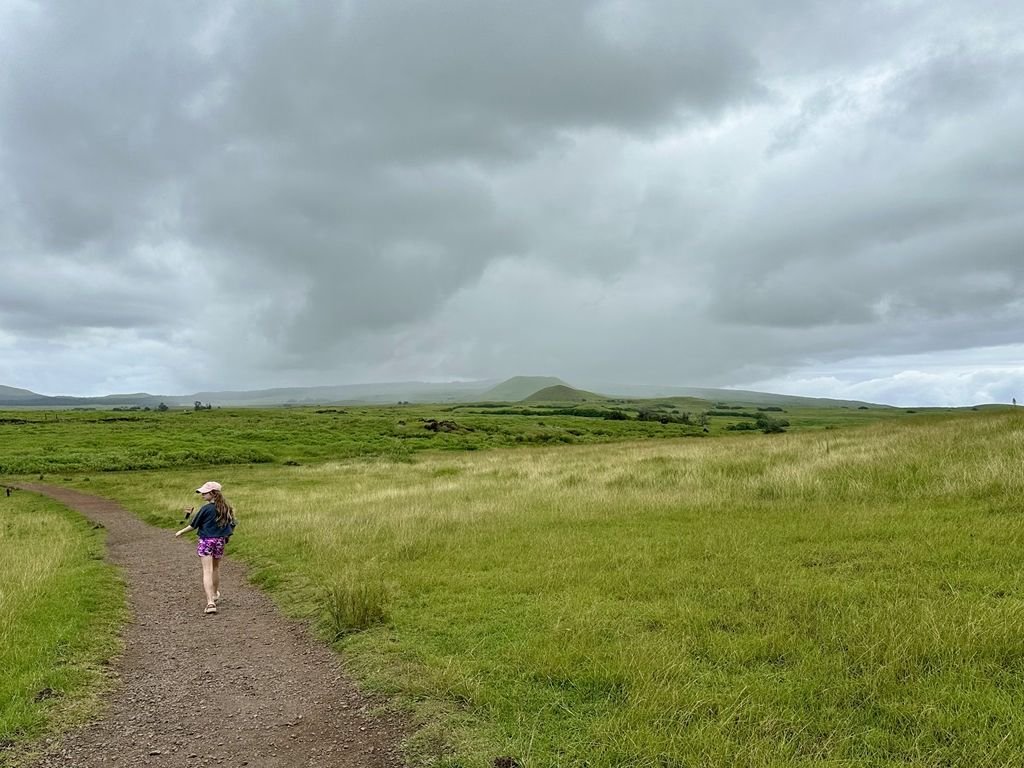
A rain shower passes to the south of us... let's get some lunch!

I had a ceviche platter - yum! My daughter had a huge grilled chicken sandwich, and Kem soda.

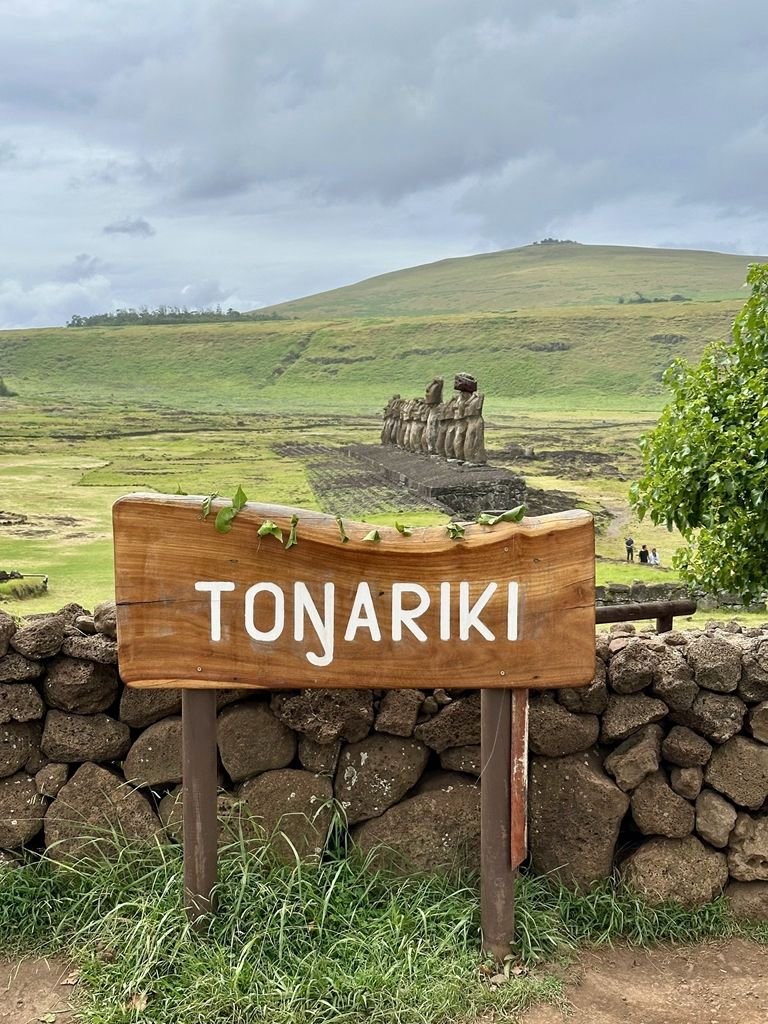
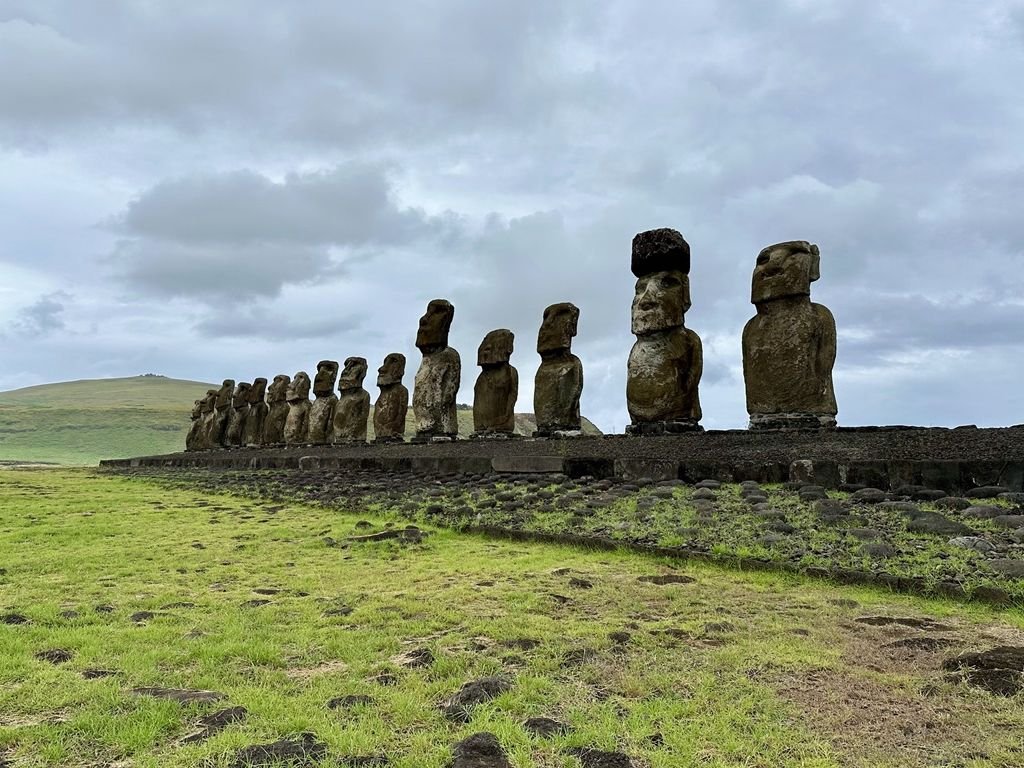
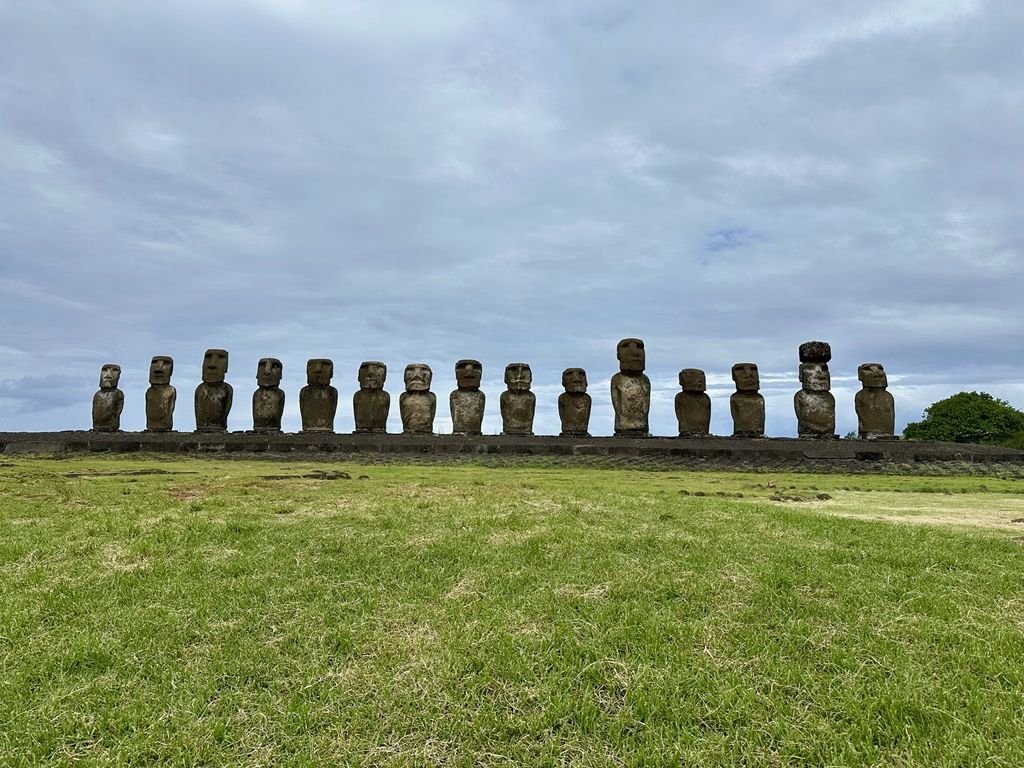
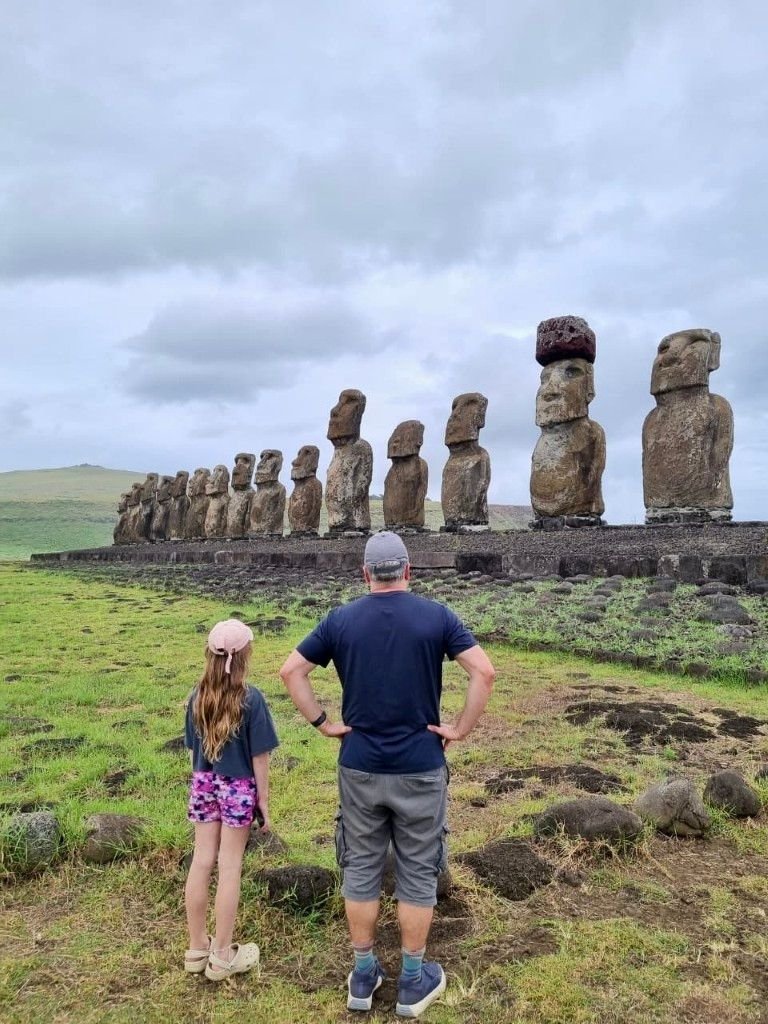
After lunch, back on the road down to Ahu Tongariki with its platform of 15 moai backdropped by the sea.

This beautiful spot, one of the most important ceremonial sites on Rapa Nui, was nearly completely destroyed by a tsunami in 1960, generated by a magnitude 9.5 earthquake in Chile. The Japanese government became a partner in restoring this site to its former glory in the early 1990s.
The "travelling moai" welcomes visitors to the site at the gate. It is known as such as it was sent to Japan for an exhibition in 1982.


Just imagine having to move these statues down here from the hill above using only people and ropes. The moai were moved all over the island from the quarry, walked like bowling pins.
Our last stop for the day will be Anakena. Not only a gorgeous sand beach with moai keeping guard, but the birthplace of Rapa Nui culture. It was the landing site of the first settlers of the island, who travelled by canoe from one of the more central Polynesian islands around 1500 years ago. Rapa Nui is the eastern extent of Polynesia.
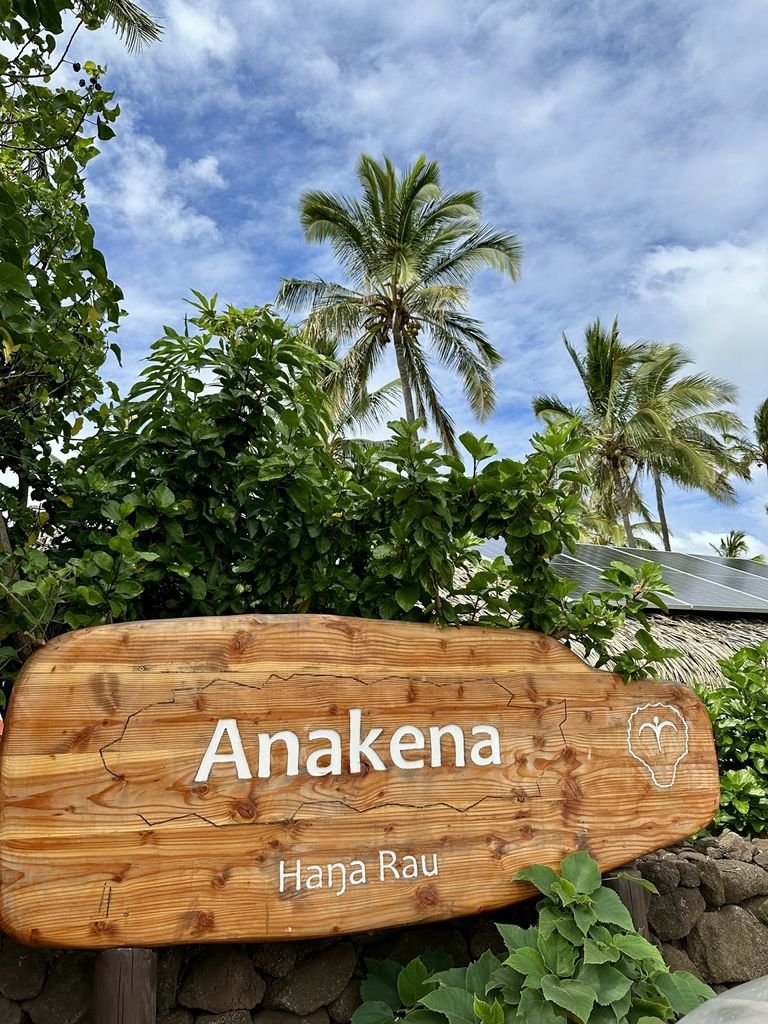
Anakena is a public site, although it's in the park, a guide is not required, and there are several food and drink establishments. Many people were out enjoying the day, on the beach, barbecuing, or just relaxing.
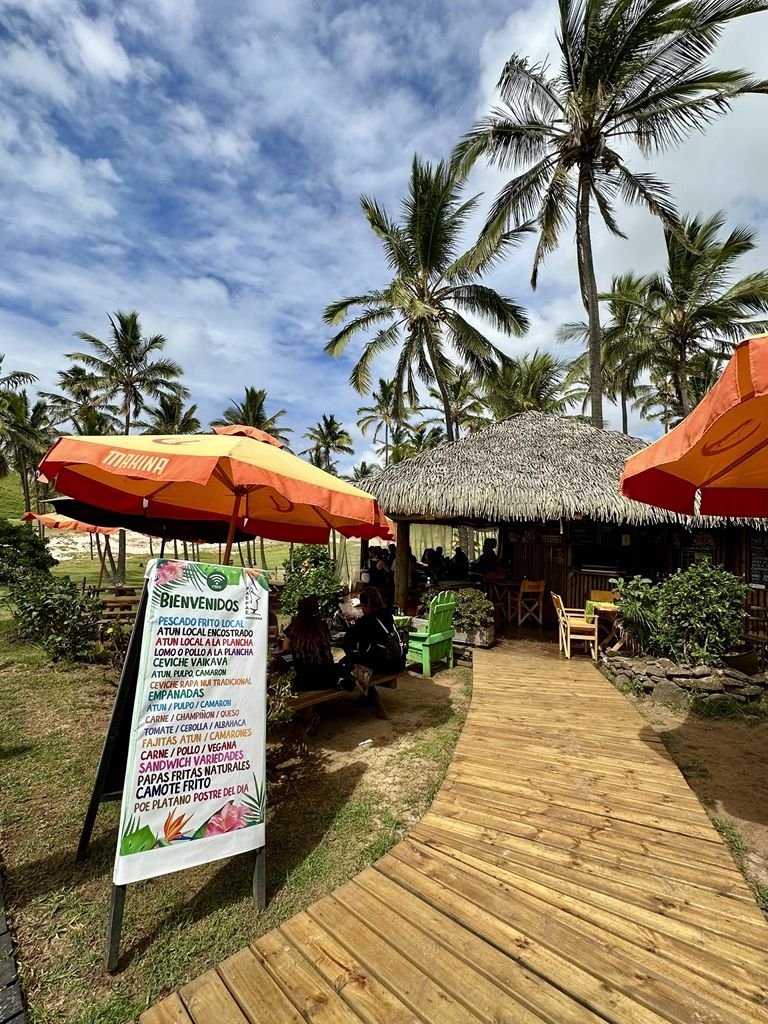


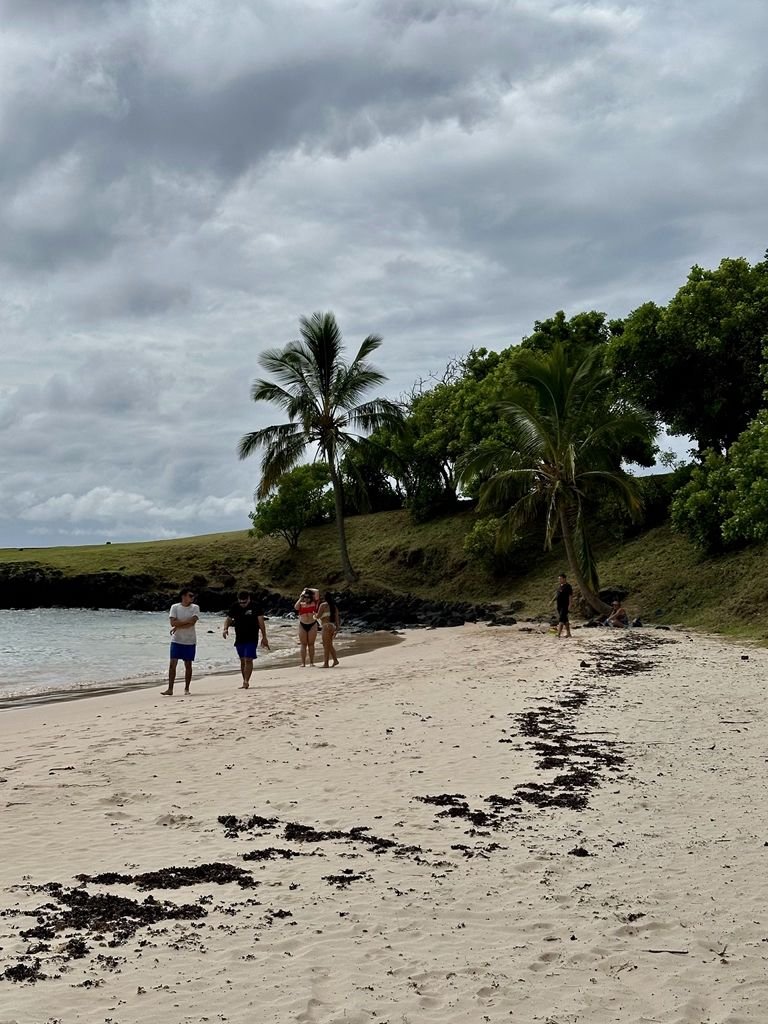

Even some roosters. But no dogs here! Too far from town?


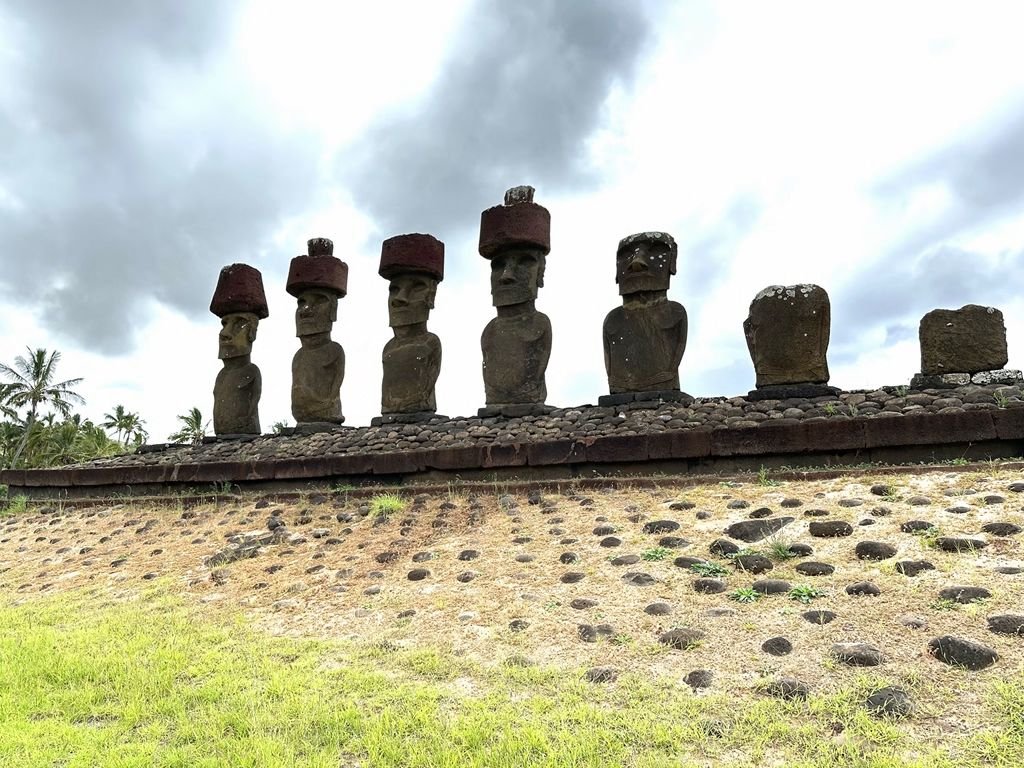

After too short of a time at Anakena, wishing we'd remembered our swimsuits to go more than knee deep in the ocean, we headed back to the hotel and took a dip in the pool.

The hotel although tiny does have a dinner offering. Only one choice, but I want to try it. Squid ink pasta with shrimp. It was delicious. The hotel staff ordered a pizza for delivery to Ellie, and we were both totally satisfied with the end of our amazing day on Rapa Nui.


