Part 2: The Animal Part
We rented a Toyota Hilux for our trip, the preferred vehicle of terrorists worldwide (if you don’t get that joke, just Google “Hilux terrorist car” and see how many results there are). The truck bed, which had a lockable cover over it, was full of camping gear and there were two tents on top that we folded out over the side of the truck when we stopped for the night. The tents had a reasonable mattress pad in them and we provided the other bedding ourselves. It was a great set-up for our family. Little boys like nothing better than sleeping on top of the car.
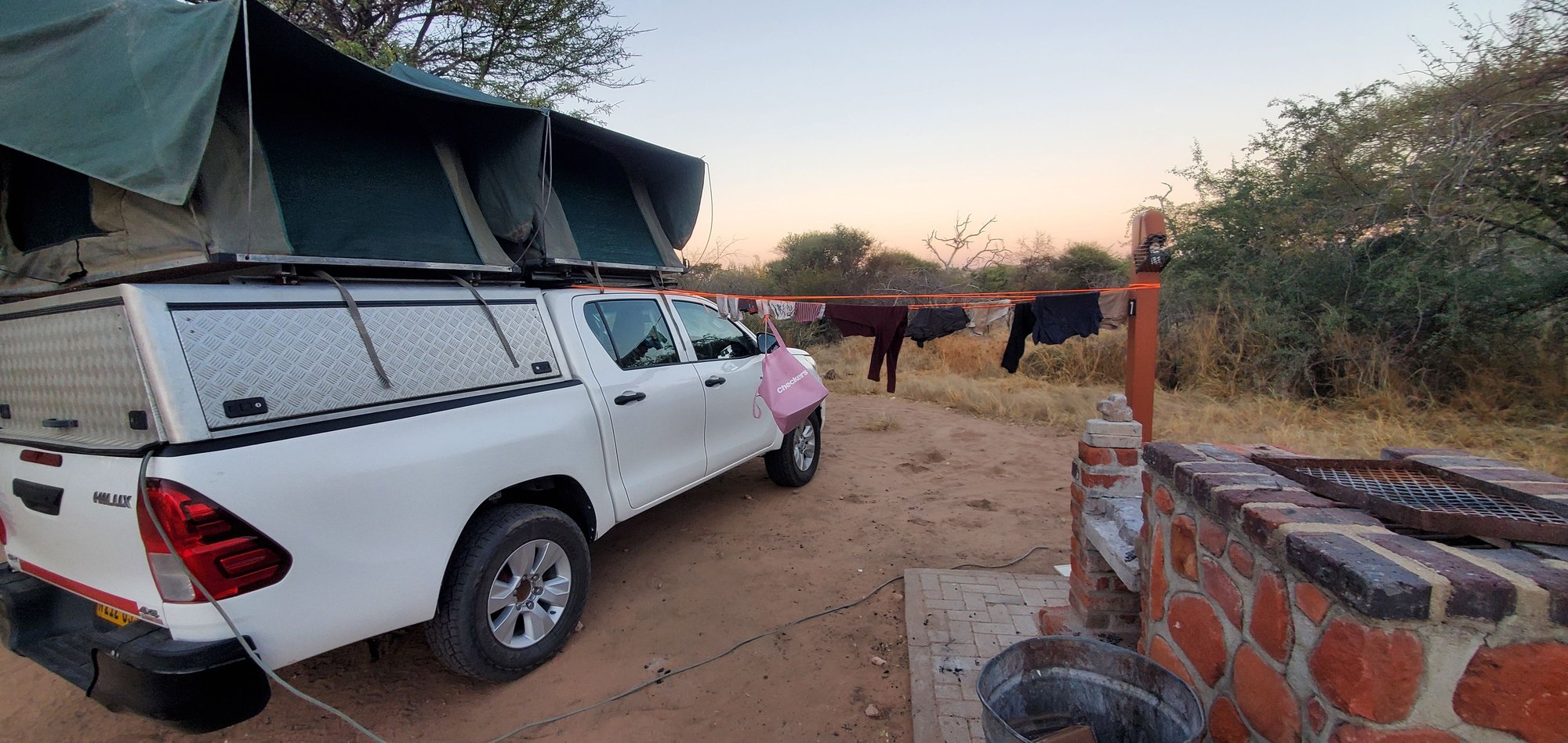 A view of the camping set up. The tents are folded out of the other side of the car.
However, we spent our first night in Windhoek, the capital of Namibia, in a nice Airbnb, and thus had no need of tents. We enjoyed driving around town, past the National Council and Tintenpalast (government buildings), past the Independence Museum (designed and built by a North Korean company (not a joke)), visited the famous Christuskirche, saw the Gibeon meteorites, and enjoyed a viewpoint of town. Downtown Windhoek seemed fine. It doesn’t have the safest reputation, but we had no problems, though we went in right around the time it got dark.
 Panorama of Windhoek
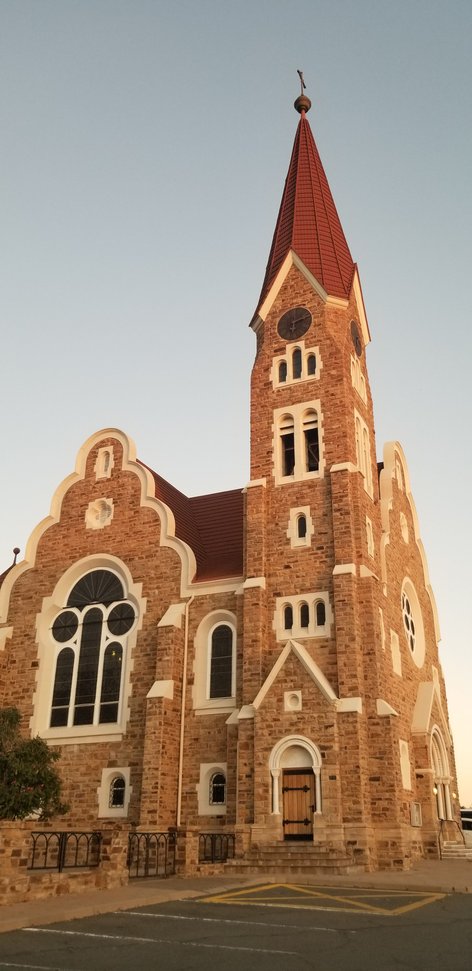 The Christuskirche, in the middle of a round-a-bout in downtown Windhoek.
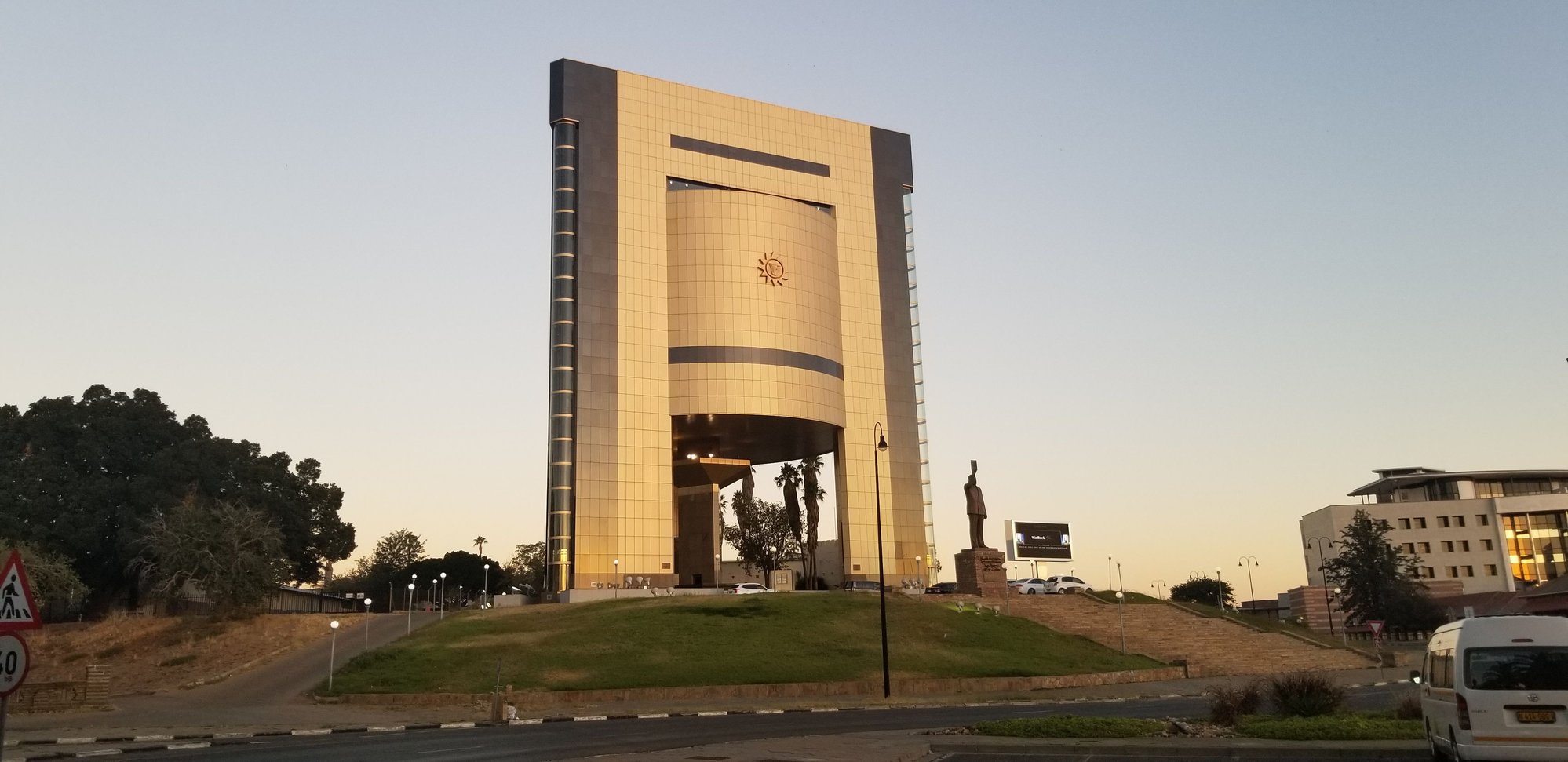 The Independence Museum.
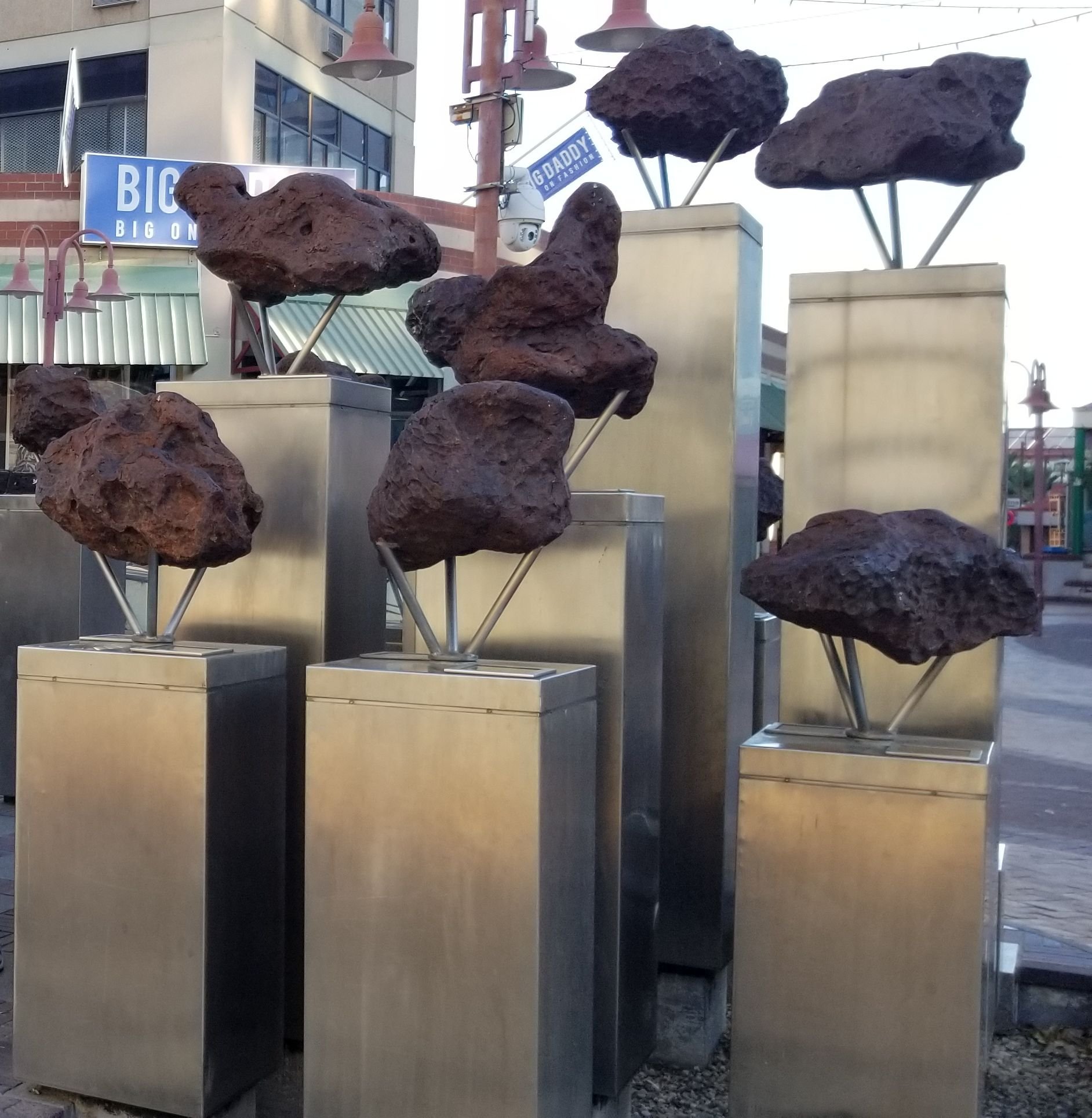 The Gibeon Meteorites, proudly displayed in downtown Windhoek.
The next morning, we headed north toward Waterberg Plateau. But first: Namibia has a lot of variation in road quality and lots of things about a road trip there depend on the roads one is driving. At the very basic level it should say something that our rental car, which, again, was a car made for the rough roads of Kandahar, came with not one but two spare tires. Within Namibia, the A roads are modern-style freeways. There aren’t many of them. B roads are (typically) two-lane paved roads, generally of good quality. C roads are either dirt or, along the coast, salt roads. These are generally pretty good but can get really corrugated (in parts of the US we call these “washboards”) if they haven’t been graded in a while. Most of the ones we drove had not been graded in a while. The D roads cover a wide range of quality – some were not much worse than C, others were very rough. I didn’t see any E roads, but I did see the turnoff for a few F roads while we were driving, nearly all of which were gated, as if to say “no, tourist, this is not the road you’re looking for”. I can only imagine how rough they must be. The quality varies so much that lots of rental companies give instructions for adjusting your tire pressure based on the road you’re driving on. They encourage you to let out the pressure by as much as 25% when driving on dirt roads, then provide a compressor to fill them back up when you get back on the pavement. I’m told that there are places on earth where that’s common, but this was a first for me.
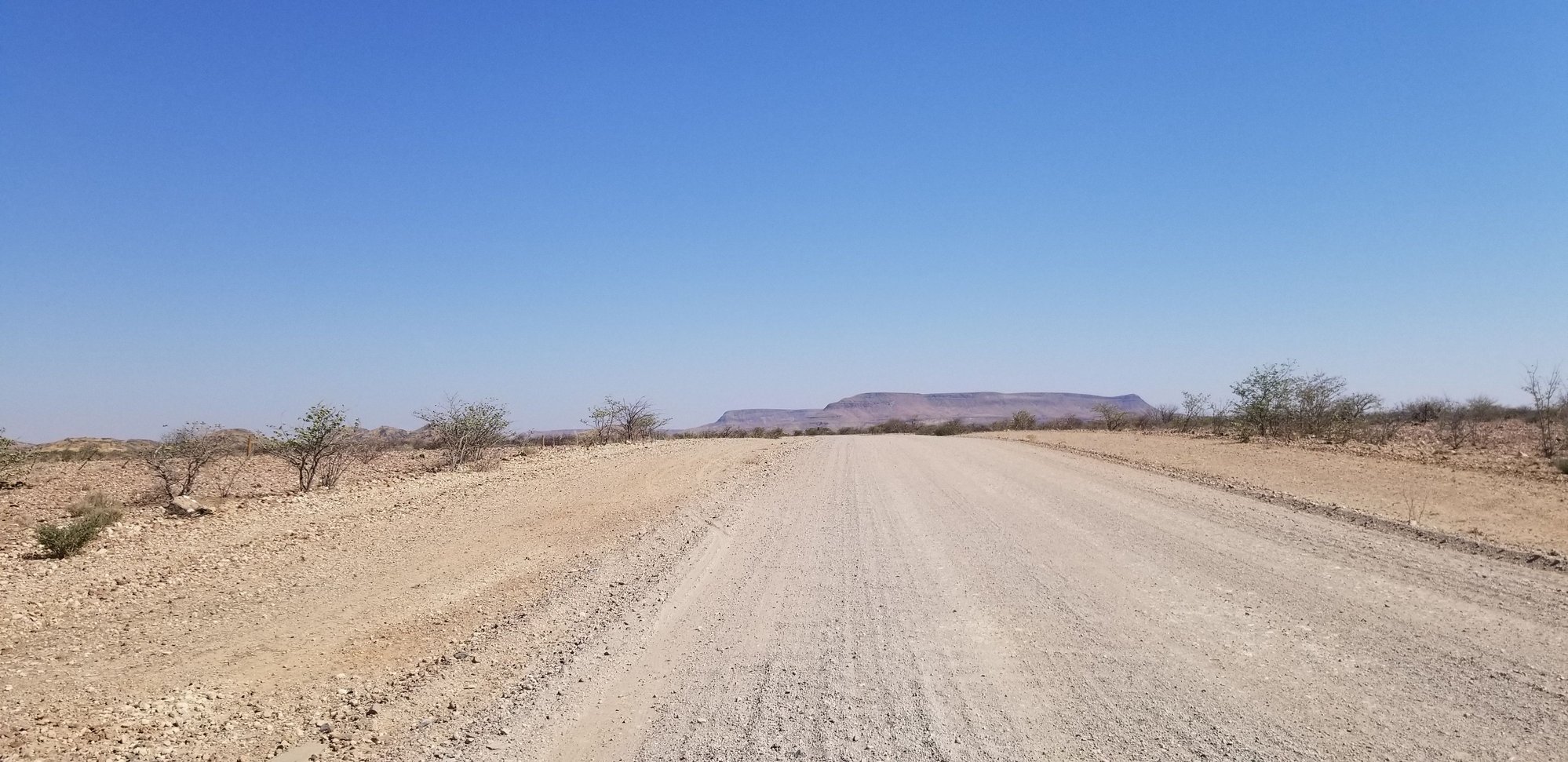 A pretty typical C road out in the middle of nowhere, which is most of everywhere.
But on to Waterberg. The Waterberg Plateau is a red-cliff outcropping that rises out of north-central Namibia. There’s a national reserve with a campground on its southern edge. When we checked-in we were given explicit instructions to camp on a specific side of the campground so we wouldn’t have any problems with the baboons. All righty, then – welcome to Africa! There was even a park ranger with a slingshot patrolling camp to make sure they didn’t stir up any trouble. We did, however, see a huge troop of them when we went to start our hike up the plateau. Fortunately, they wanted trouble even less than we did (which was already a very low level of trouble-wanting) and wandered off, loudly, possibly even more loudly than my children, who can drown out a Rolls-Royce jet engine test if they really want to say something, and they always really want to say something. The hike up the plateau was short and very fun. Young kids are often lukewarm on hiking, but nearly universally love climbing on rocks. Most of the hike was on rocks, so they were all-in. The Engineer wanted his picture taken on top of every rock, which we usually obliged. The Observer was happy as long as he was in the front. The Anarchist did an incredibly good job hiking compared to the length of his stubby legs but ended up needing to be carried near the end. The views from the top were fantastic, as you can see below.
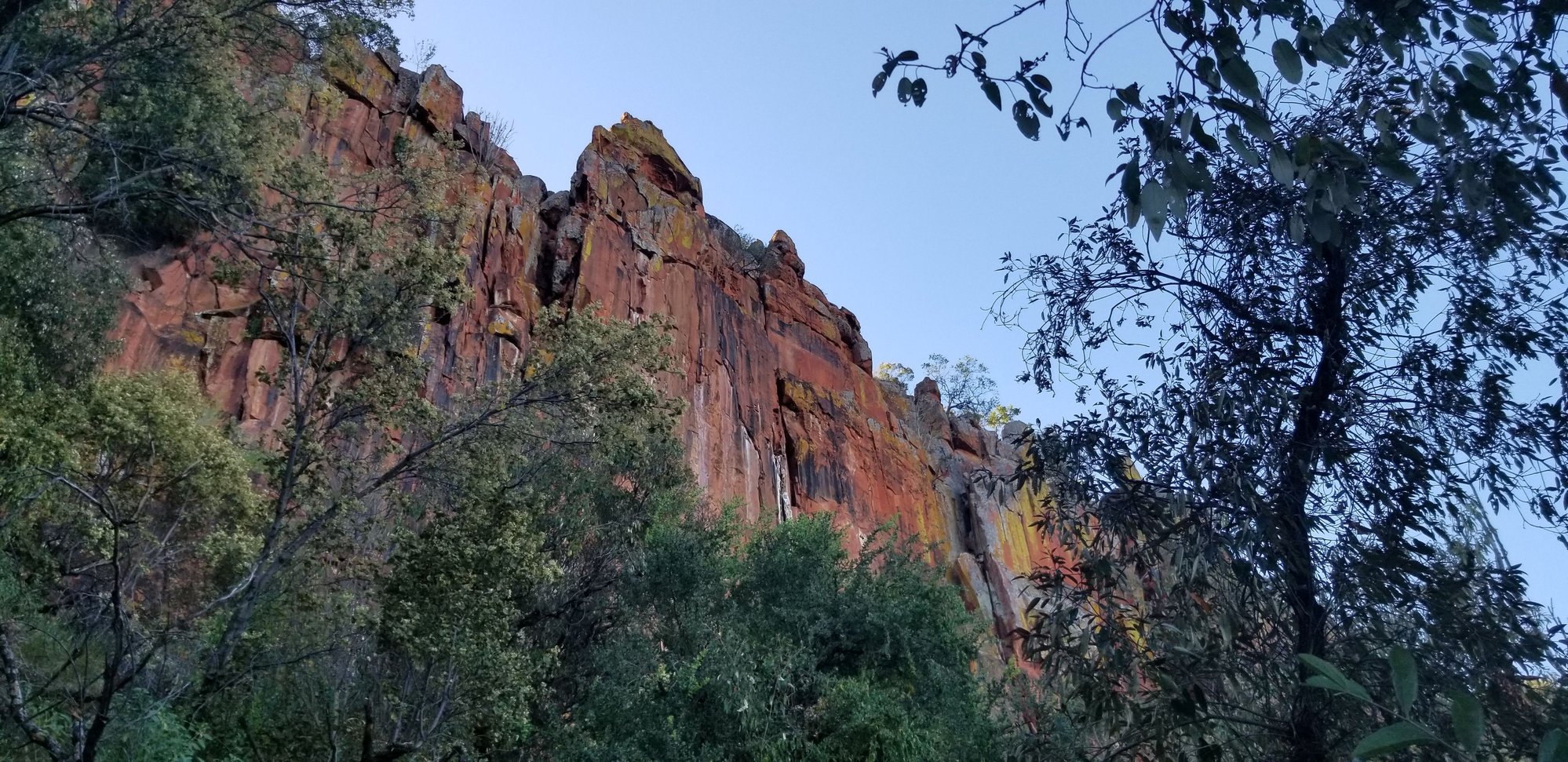
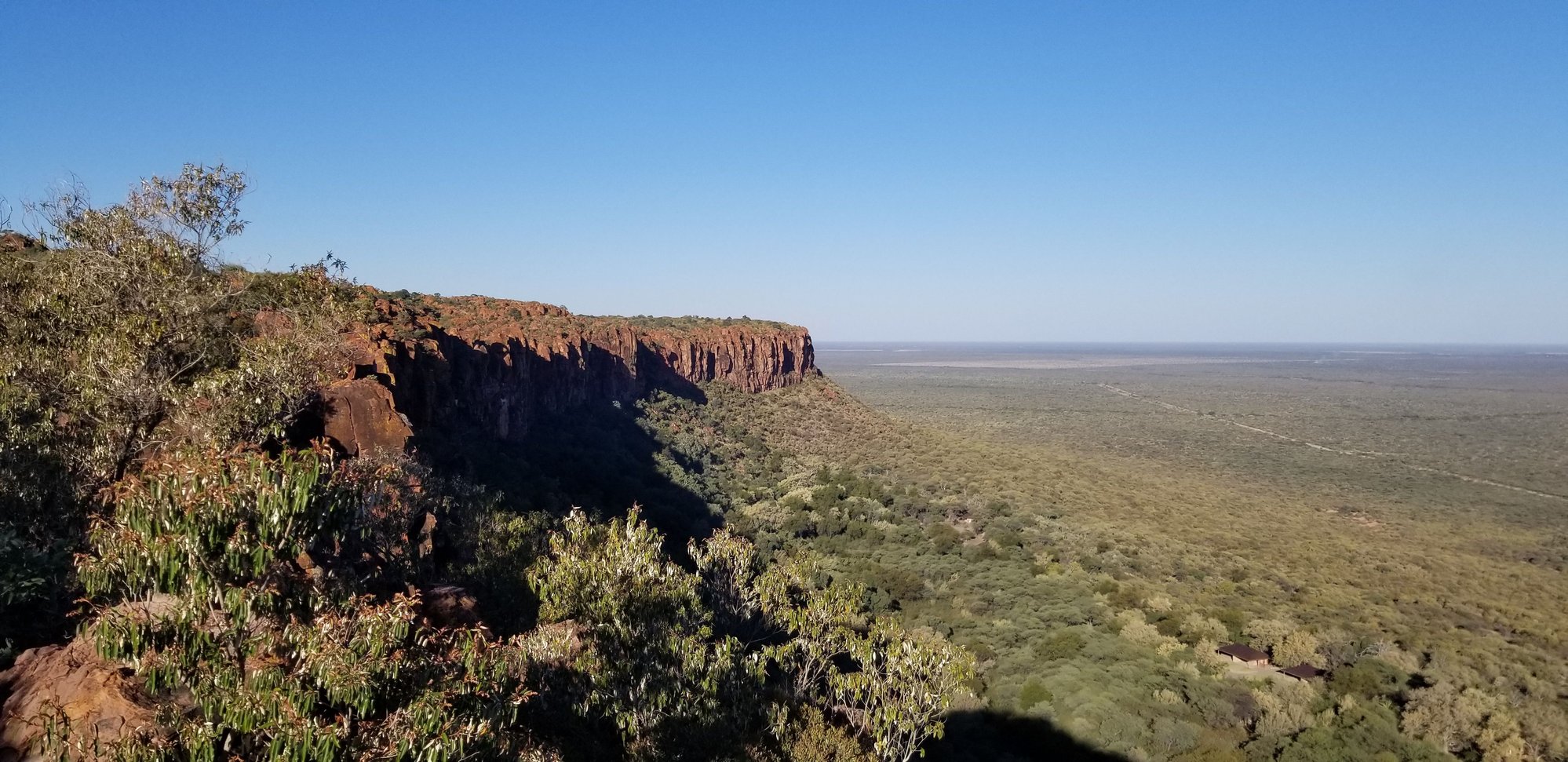
The campground itself was fairly basic, with a nice flat parking area (essential to getting a good night’s sleep on the roof) a picnic table, and a nice set of restrooms with running water. We weren’t the only ones there, but we were among the few, which made for a quiet evening.
The next day we made a pit stop in Otjiwarongo to see the Nile crocodiles. There are no crocodiles in that part of the county because there’s no water (there’s no water in the vast majority of the country), but in the far northeast there are some areas that are wet enough for crocs to survive. The animals we saw lived on a farm that holds a mere 2,500 of them, with most being raised for meat and leather and some being used for breeding. The tour was interesting; I won’t bore you with all the details I learned, but merely mention two things:
- Mother crocodiles lay eggs in September. However, to ensure survival, the employees raise the eggs in incubators. To accomplish this, there’s a crew of men who go out with sticks to poke the moms in the nose, which they abhor, so they’ll back off, allowing other employees to dig up the eggs and move them. I’ve always been grateful for my office job, but now I have another horrible job to add to the list of jobs I’m glad I don’t have. Intentionally ticking off mother crocodiles, in two different ways, sounds like a good way to lose a few limbs.
- The best part of the tour, by far, was when we walked over to the baby crocodile pen. Our guide reached in, picked up a six-month-old croc, and, without a single word to my wife or me and with only a single sentence on the correct way to hold it, handed it to the Anarchist. He looked equal parts fascinated and terrified, with a glint in his eye that said: “Go ahead, brothers, mess with me now, I dare you”.
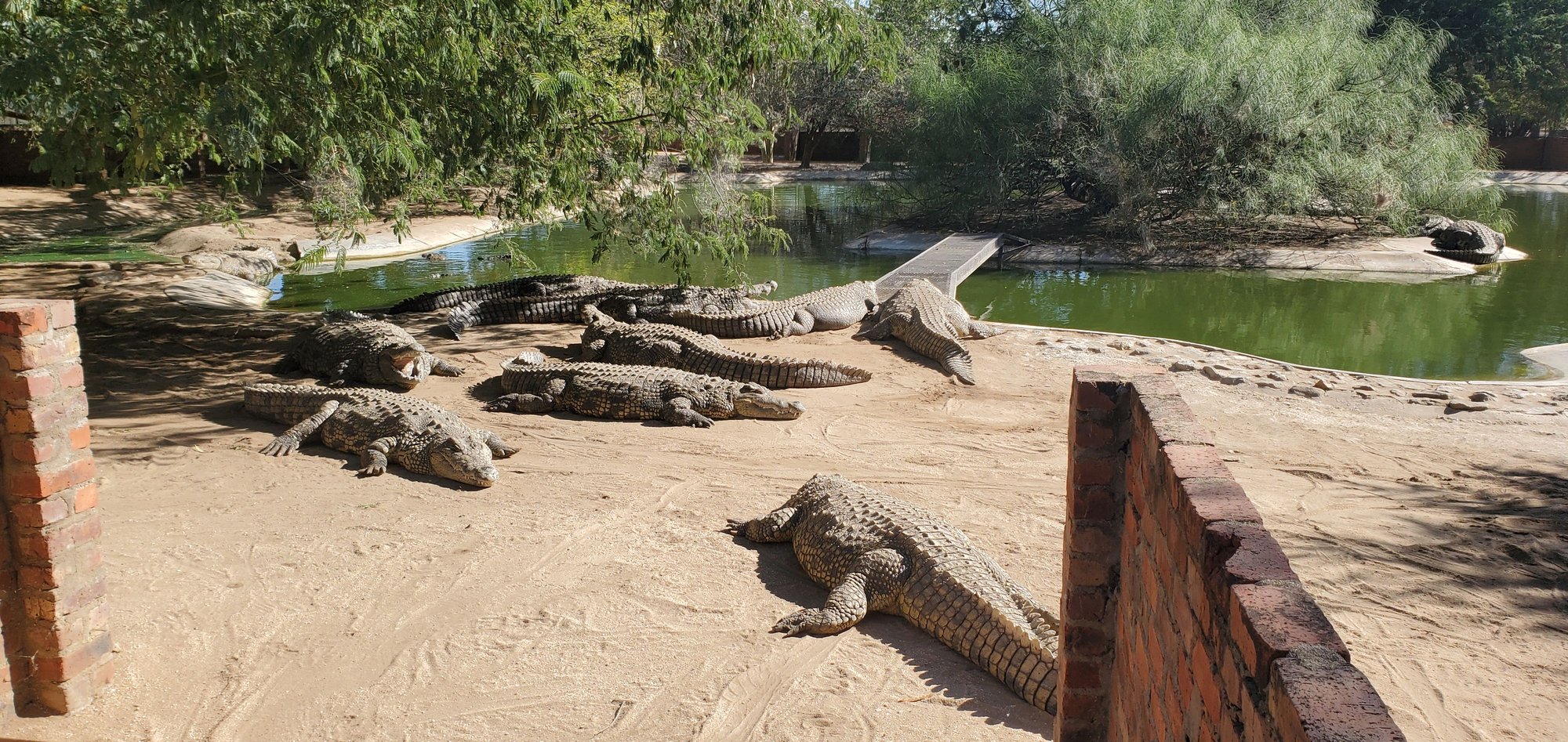 I realize there's no scale, so you'll have to trust me that these creatures were massive.
Another few hours of driving brought us to Etosha National Park, the popular self-drive safari location of Namibia. Unlike in some countries, Namibia actually built a reasonable set of dirt roads through their national parks so adventurous visitors can drive themselves on safari (to be fair, it’s a lot easier to build a road in the desert than in the bush). While guided and professional safaris exist, they aren’t required. This was a huge selling point for us, since we didn’t know what kind of attention span the kids would have for hours of driving during the day. We ended up doing a day and a half of safari, the half day being after we arrived and the mostly full day the day after.
The park is based around the Etosha pan, an extensive salt flat a hundred kilometers long and half as wide. During the dry season its watering holes provide the only moisture for miles around. Hence, most visitors drive from watering hole to watering hole, looking for animals that have come for a drink. Fortunately for us, there were critters everywhere. During our time there we saw plenty of elephants, dozens of giraffes, lots of ostriches, a handful of lions, myriads of oryxes, several hartebeest, troops of kudu, and hundreds of zebras, wildebeests, and springboks. The kids loved it. The Engineer and the Observer understood how neat it was to see animals in their native habitat while the Anarchist probably thought we were in an oversized zoo, but still enjoyed himself. The lions were definitely the highlight, as we saw three of them lazing around one evening. The only large animals we missed were the cheetah and the rhinoceros, though not for lack of trying.
We camped just outside the park at the Etosha Trading Post. This campsite was quite nice and featured a large, walled-in, and covered cooking area and bathroom at each site, complete with warm water. We had similar set-ups at a few campsites and really appreciated the space and the chance to scrub dirt off our kids, who are, like most children, basically dirt magnets.
That evening we actually ate out for dinner, one of the few times we did that on the trip (there aren’t many restaurants in the middle of nowhere). One of the nearby campsites had a restaurant where they served wild game, including many of the animals that we had seen that day, such as springbok, oryx, kudu, and hartebeest. The Engineer will try anything, which makes him fun to travel with, as he had us all rank the game in order of which we preferred as part of his thorough analysis.
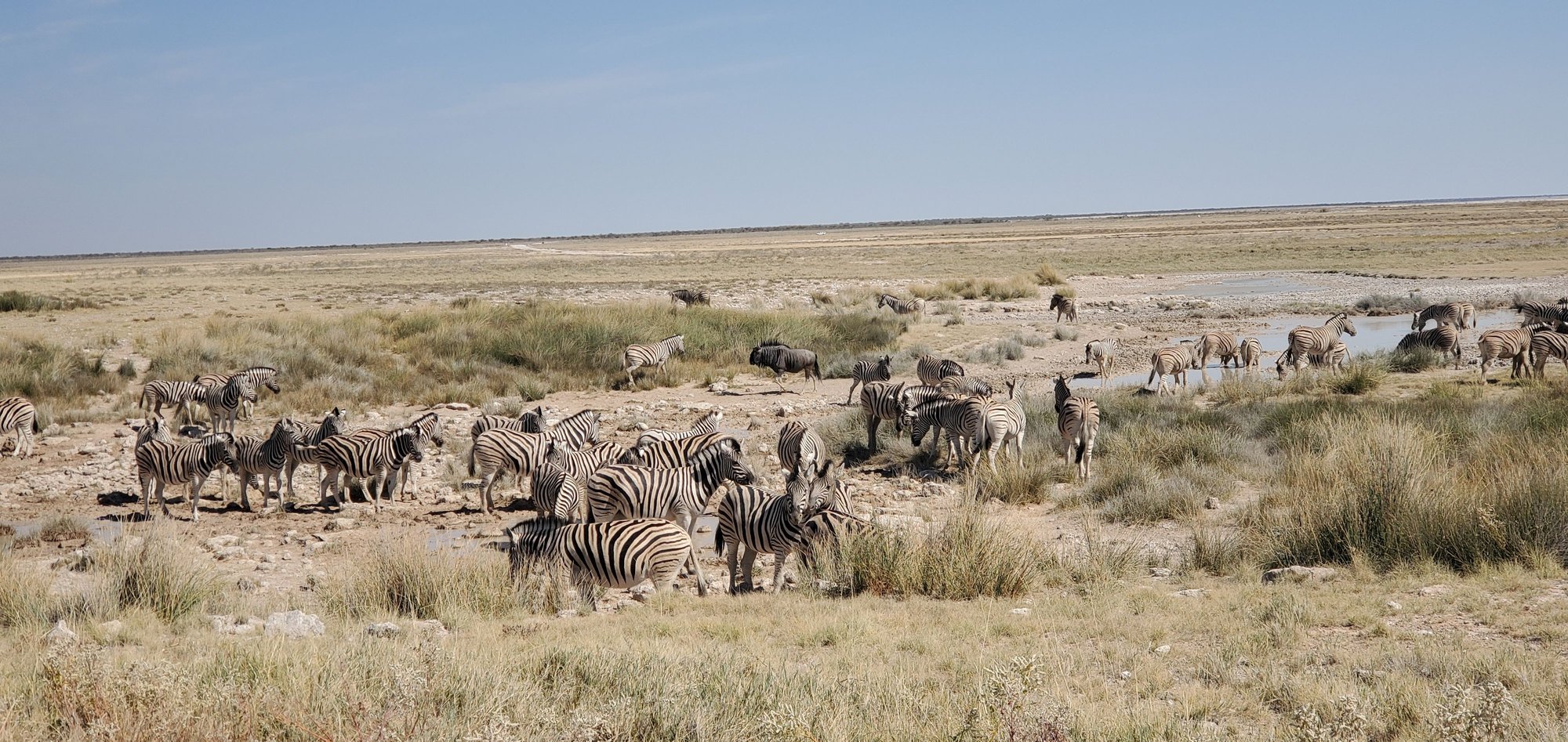 A herd of zebras
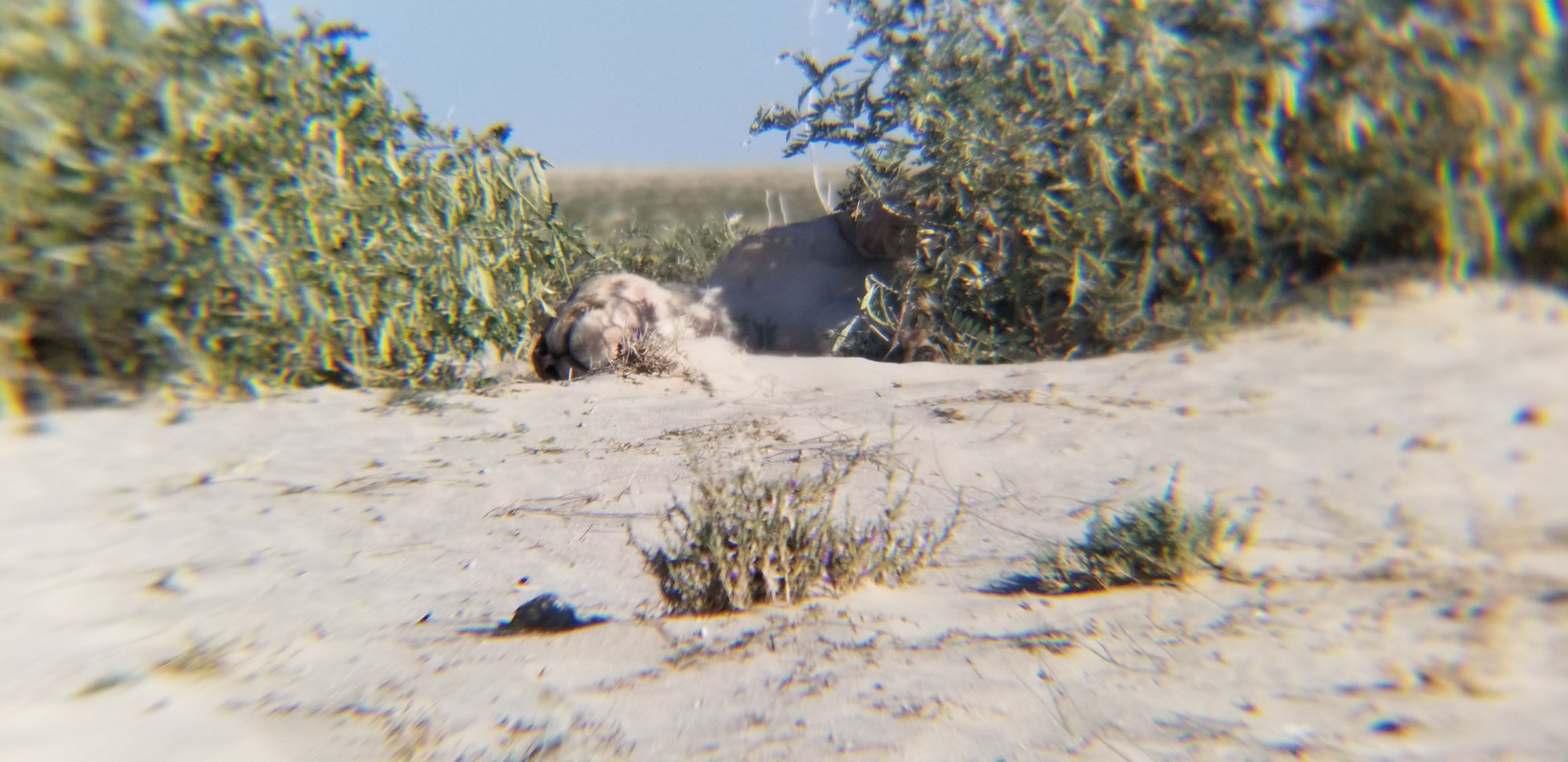 I apologize for the zoom quality, but that's a lioness sleeping under a bush
 More zoom issues, but some wildebeest and zebras at a watering hole
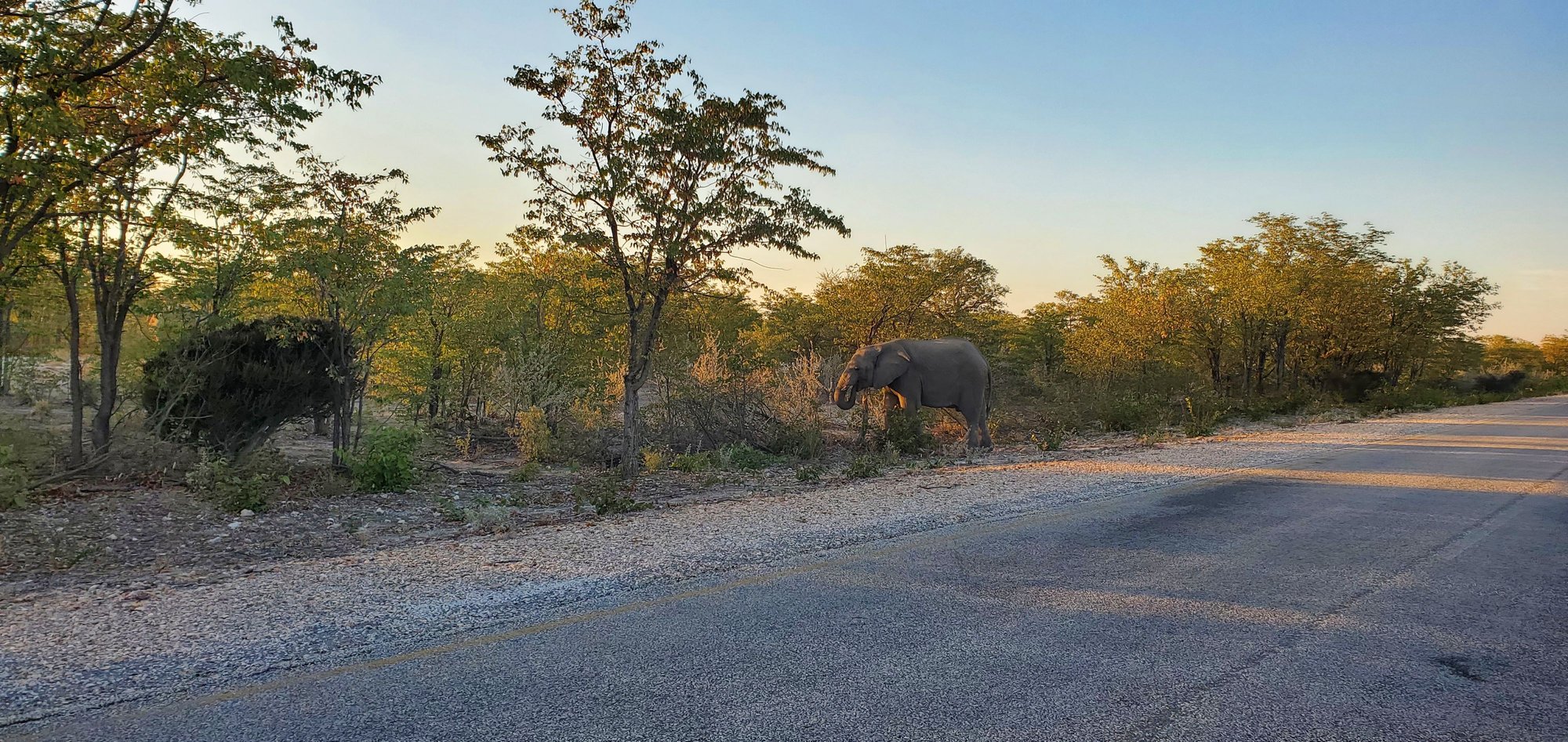 The Anarchist's favorite animal, an elephant just chilling by the road
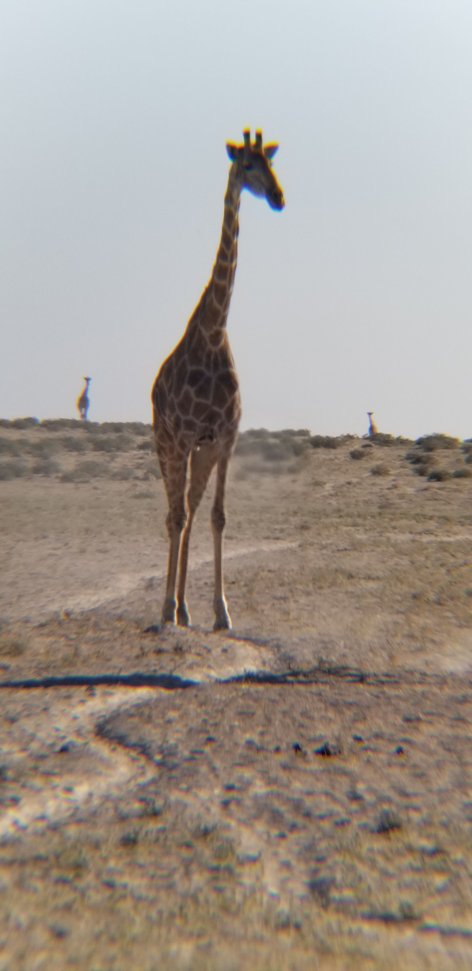 The Engineer's favorite animal, a giraffe. Since you were about to ask, the Observer's favorite animal is the penguin, which do live in Namibia, but we didn't make it to that part of the coast.