Heading off to Matongo village.
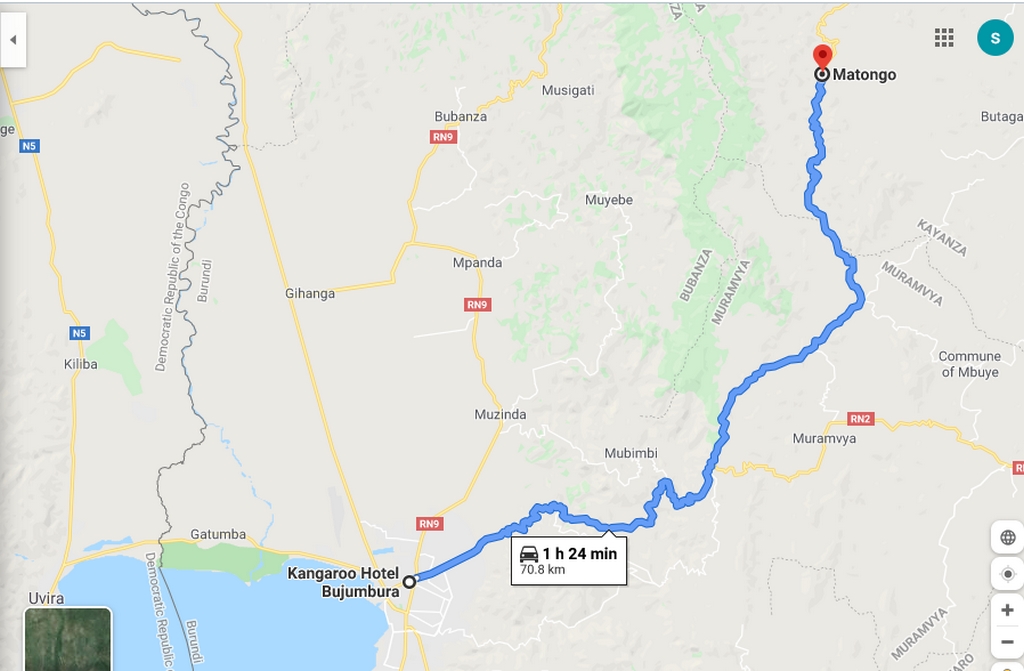
20 min away from Bujumbura: the Harroy seat, named after
Jean Paul Harroy.
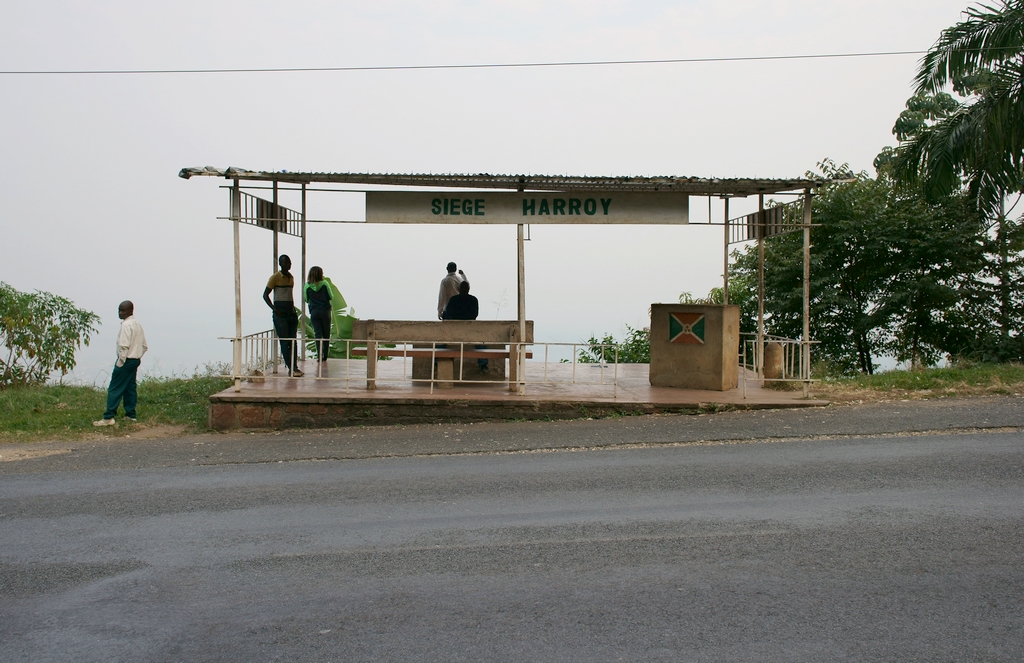
The site exhibits, on a clear day (bad luck

), a breathtaking view of the city, Lake Tanganyika and the mountains of Congo.
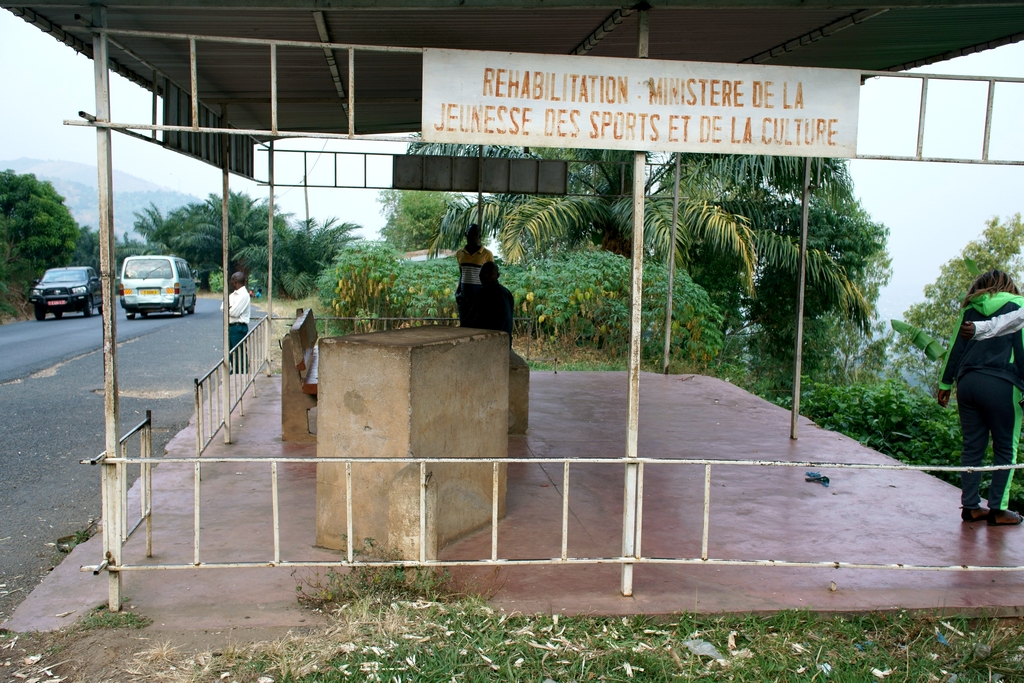
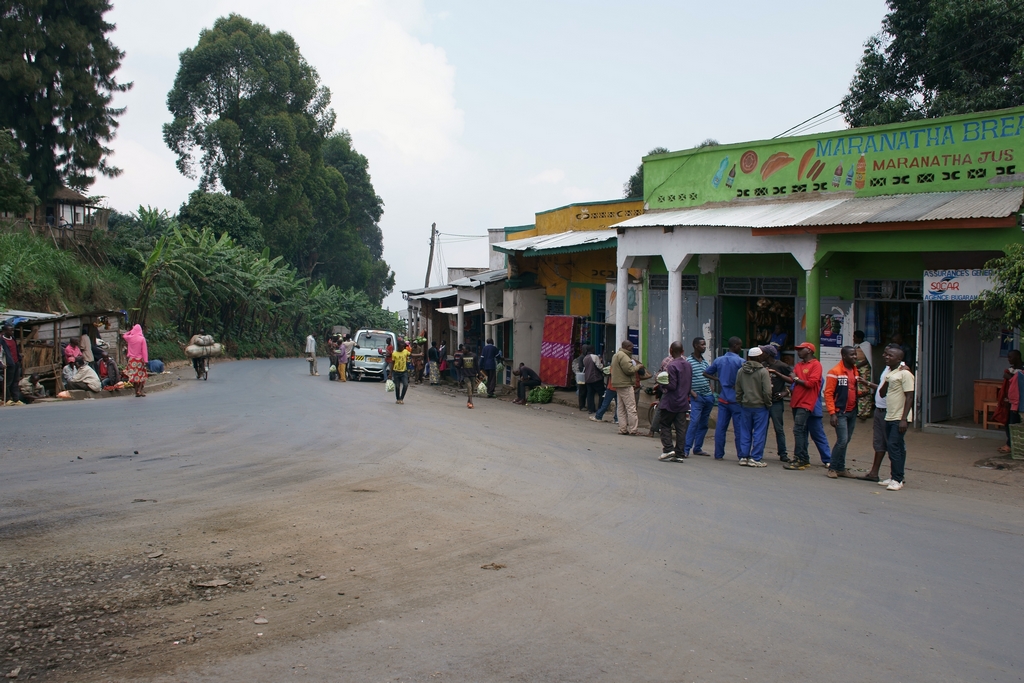
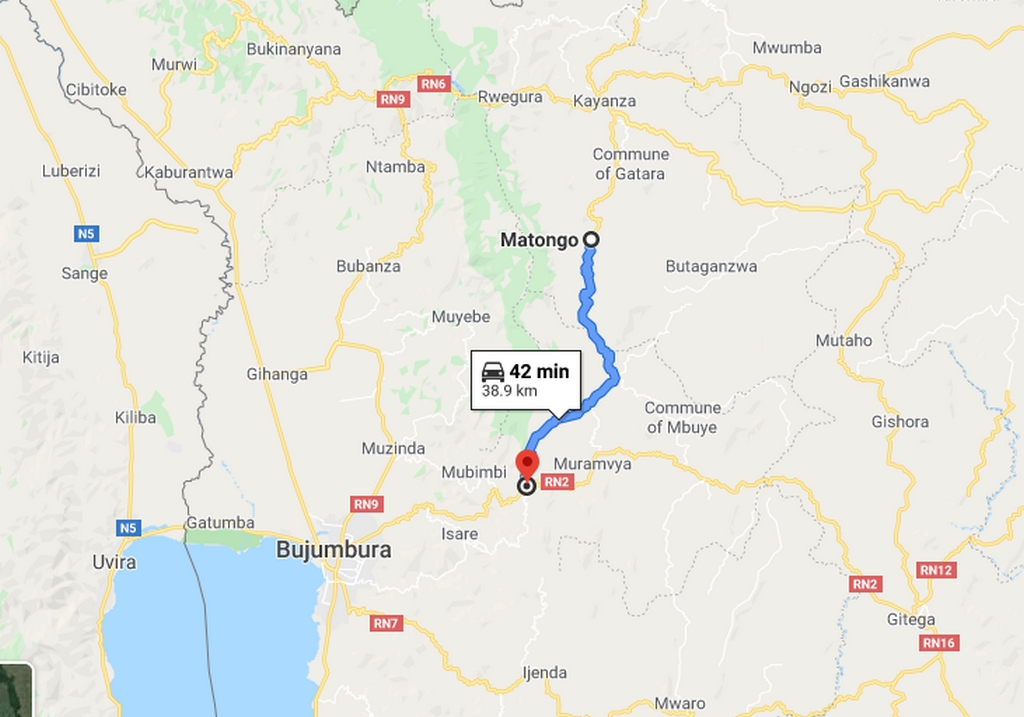
At the crossroads of RN1 and RN2 at Bugarama.
The Batwa ethnic minority of Matongo, the third Bantu group in Burundi representing 1% ( Hutu 85%, Tutsi 14%), are historically marginalised both politically and socially in Central Africa.
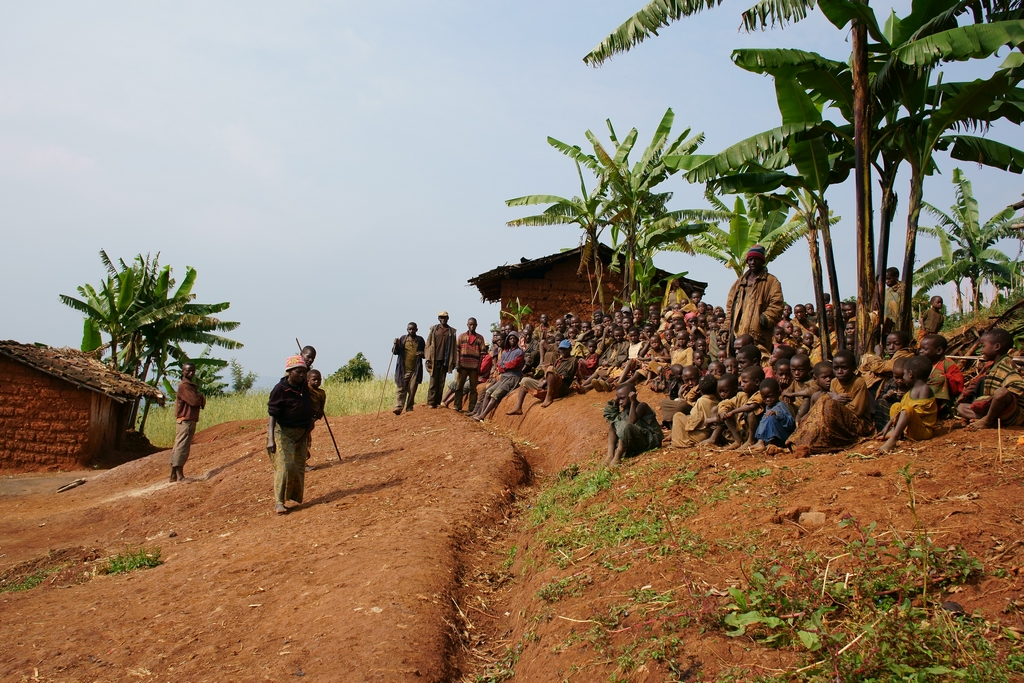
Former hunter/gatherers, pygmies were gradually expelled from their forests following different waves of deforestation and forestry protection over the centuries. These phenomenons pushed so many Batwa to become dependent on pottery. During the first part of the 20th century, emerging industrialisation in Burundi, the gradual opening up of the country to international trade and greater access to clay products resulted in a considerable weakening of their pottery trade. The main economic activity of the Batwa was thus again undermined,
turning them into servants or some of the most vulnerable people in Burundi.
Most Twa do not have a national identity card and are thus not included when drawing up the census. The lack of identity documents (national identity cards, marriage or birth certificates, etc.) prevents some Twa households from accessing the rights that are guaranteed, by ministerial order, to all Burundian citizens, such as free health care for the under-fives. Since 2005, following the establishment of ethnic statistics, these indigenous now enjoy representation in the country’s main decision-making bodies. However, the vast majority of Twa households continue to face social stigma, severe economic vulnerability and are only partially represented in the political arena.
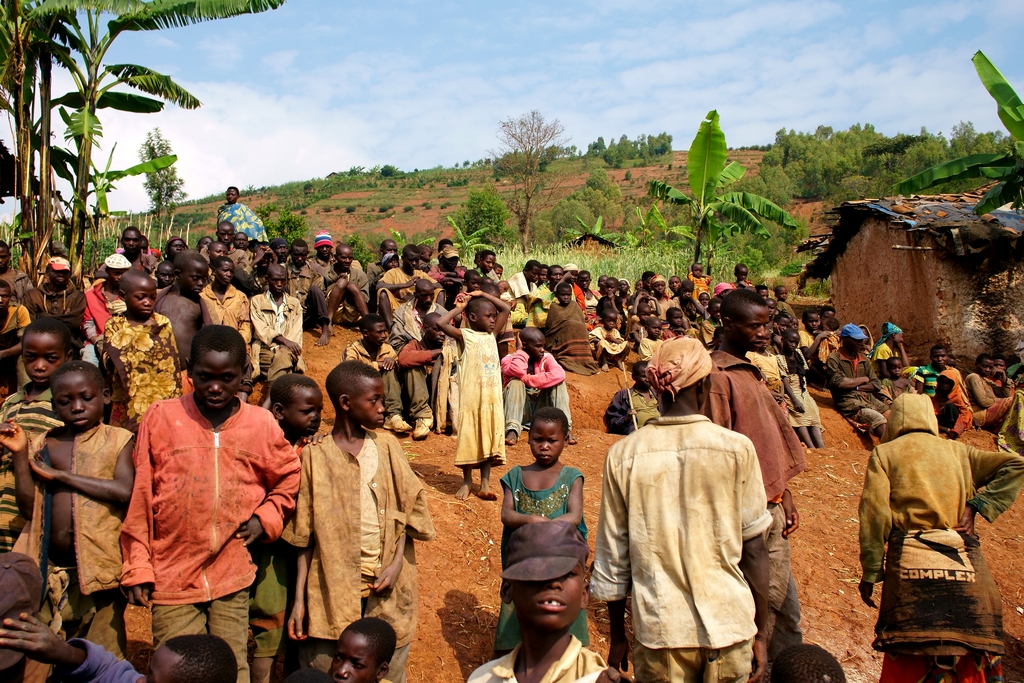
Nearly 500 Batwa living on the (too limited farmland) Kabuye hill, near Matongo.
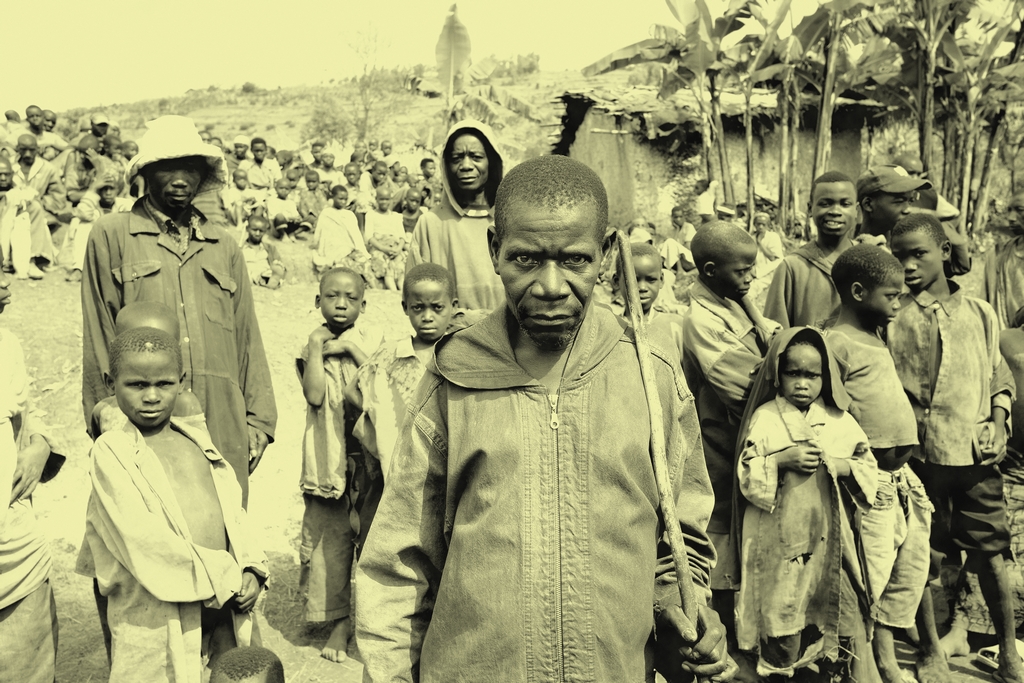
Most families live in very small primitive clay hut, about 4 sqm, without windows. Some homes have no doors, just torn loincloths. For other houses, the roof is made of banana leaves or shabby wooden planks. Inside, we saw a small area reserved for rabbits and rodents (guinea pigs mostly) next to where they sleep. ( If you guys really insist, I can include my video of the house visit).
Back to Bugarama.
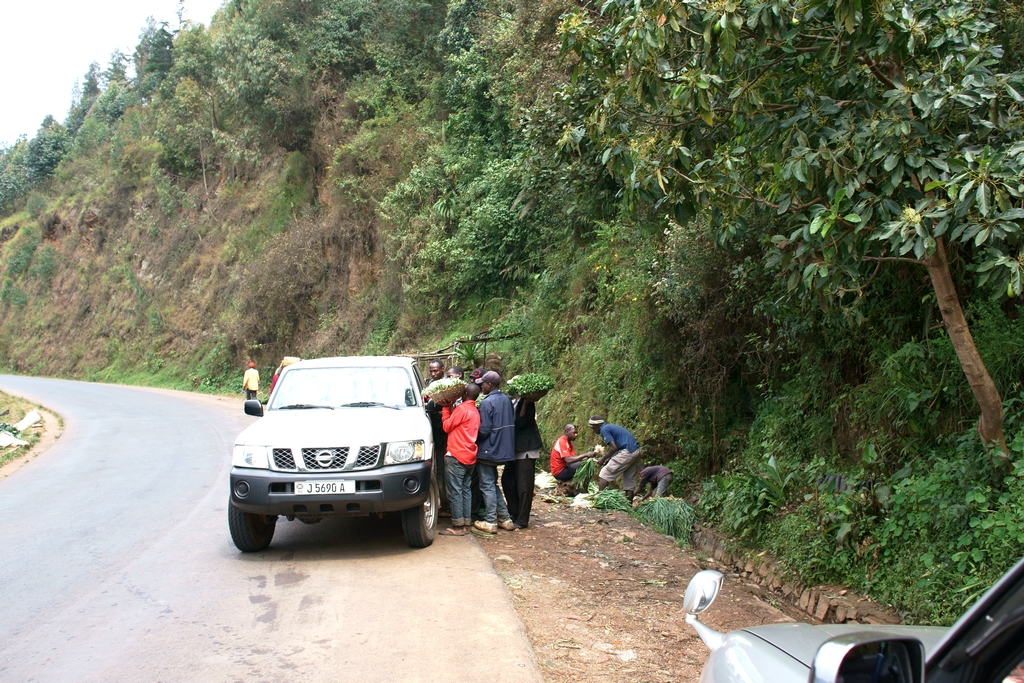
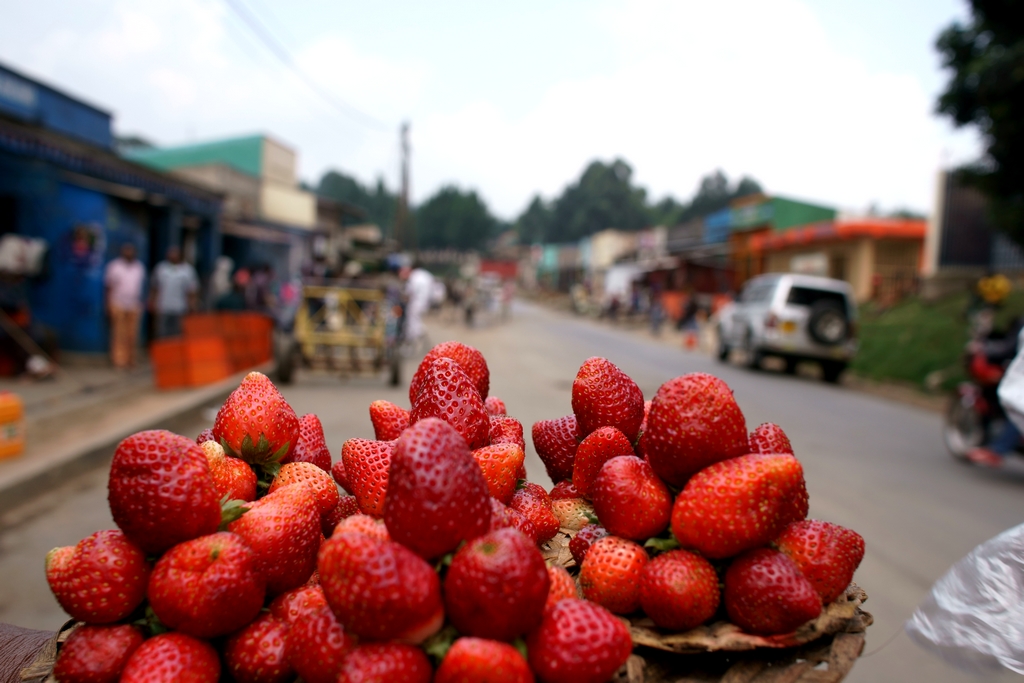
Nearby Bugarama, which has been renowned for its fresh fruits and vegetables.
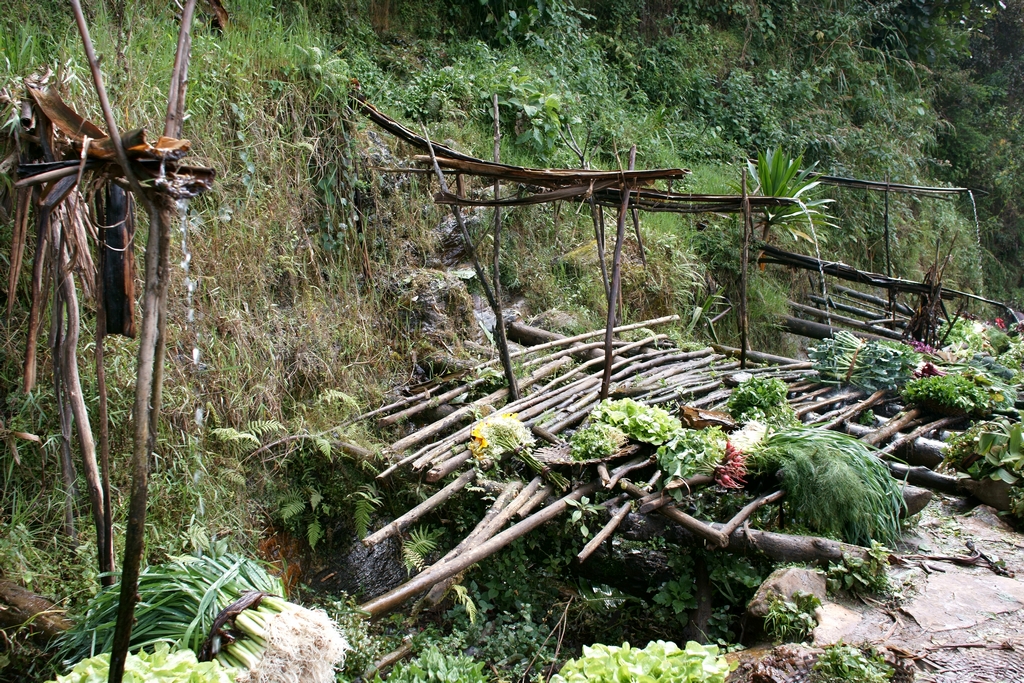
Fresh water from natural spring above the stall. (Picture shows a limited fruits/vegs choice)
Mojito, anyone?

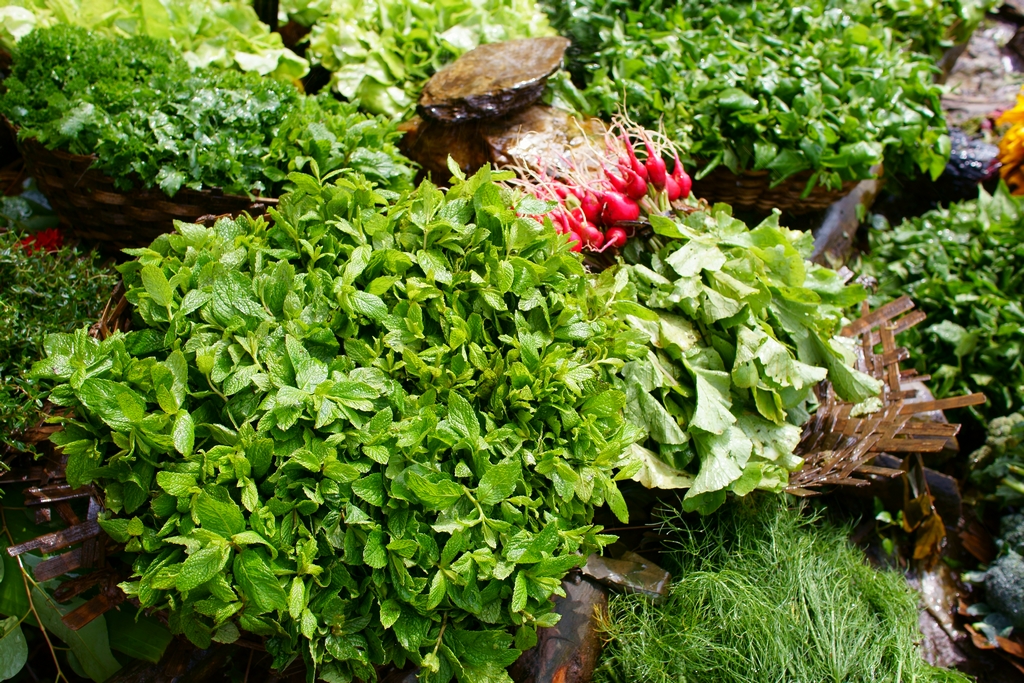
Anyone romantic?
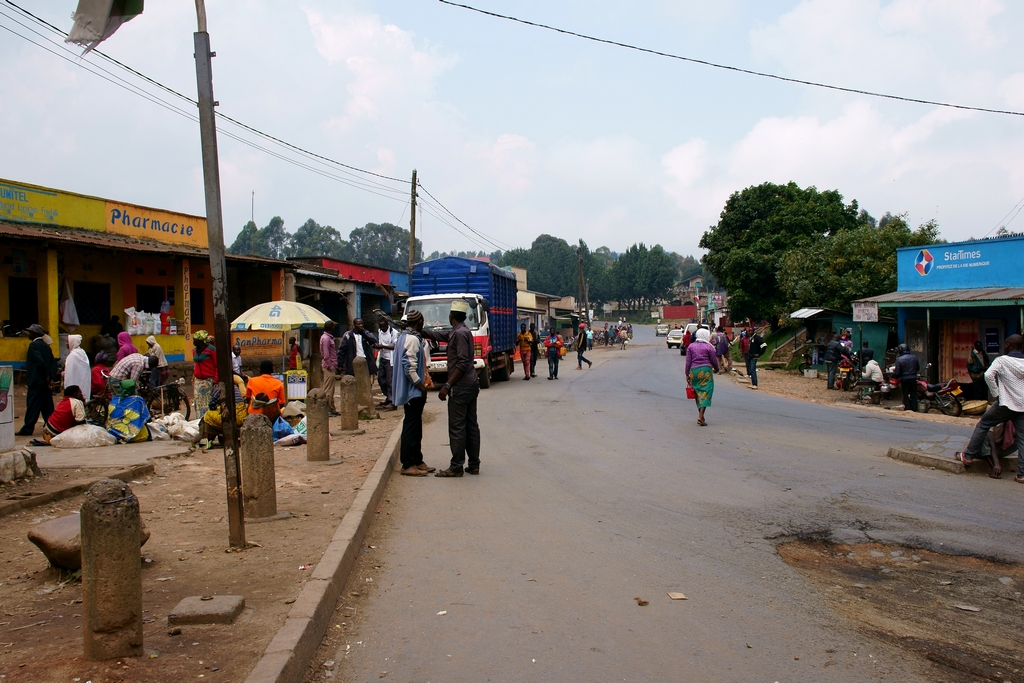
The center of Bugarama, 40 km from Bujumbura on the
Congo-Nile Divide, is a compulsory crossroads for people departing to different provinces of Burundi and neighboring countries like Rwanda, Uganda and Kenya.
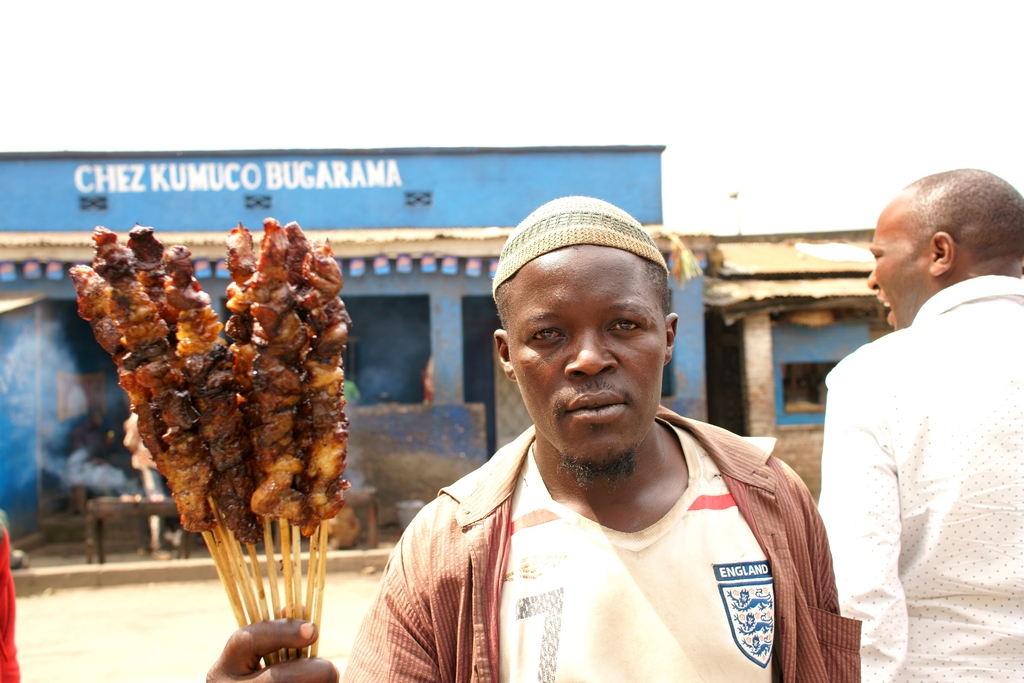
But for some time now, Bugarama has also managed to estabish reputation with its skewers of goat and beef with special names.
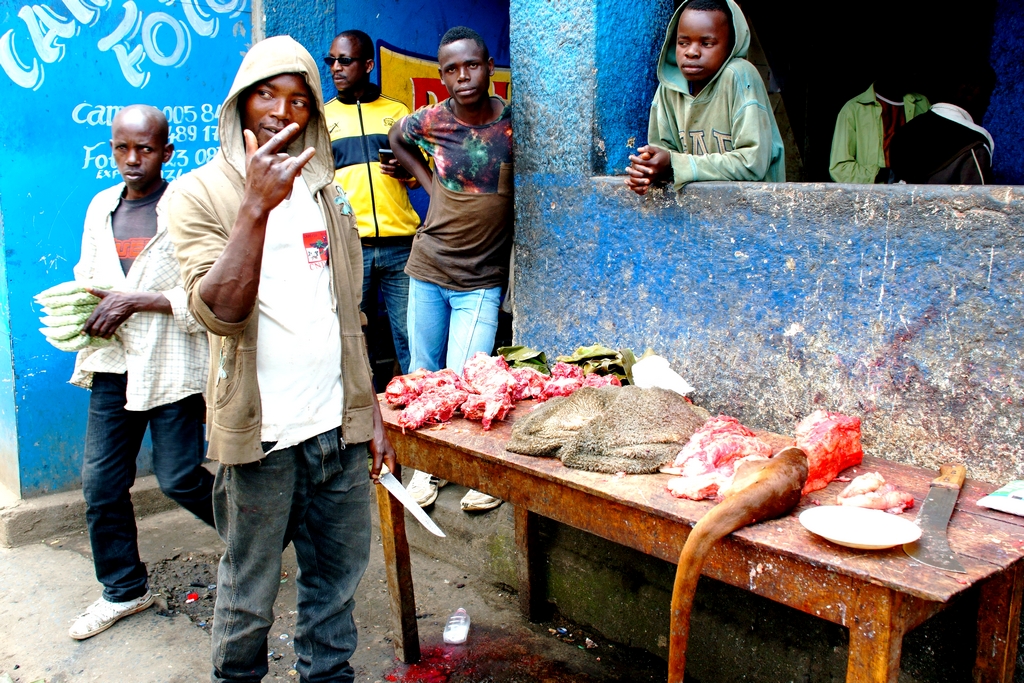
The bistros lined up along the road suggest skewers, but with unexpected names to say the least. Would you order some
"Volkswagen", some
"CEPGL" or
"I could not care less" brochettes?

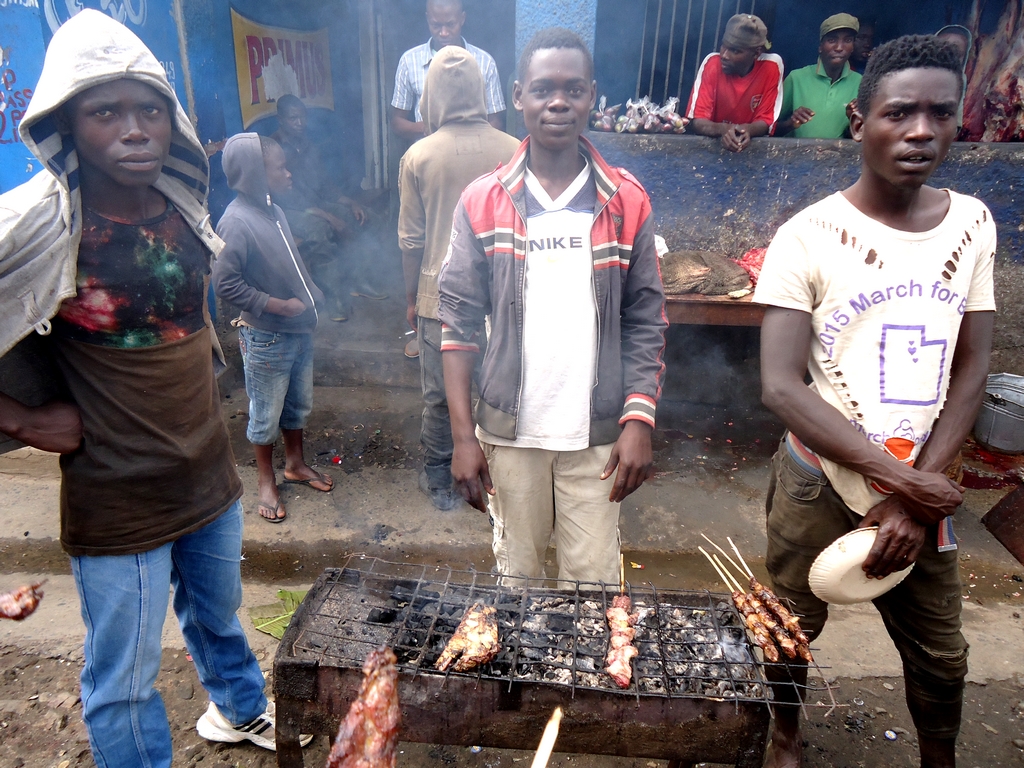
Let's go for the
"I could not care less" goat skewers...
Typically, Burundians used to call "I could not care less" the big military trucks that usually drove without insurance. Victims were therefore not compensated in the case of an accident. Hence today everybody discerns this skewer moniker.
1 of your 5 a day.
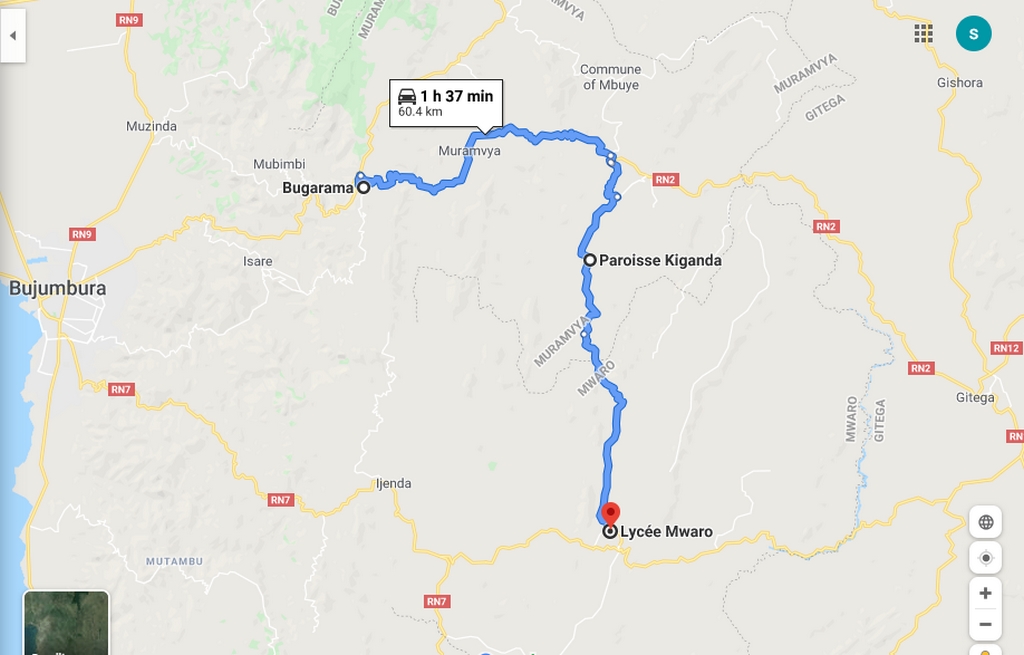
Next stop : Rubumba Tourist and Cultural Village.
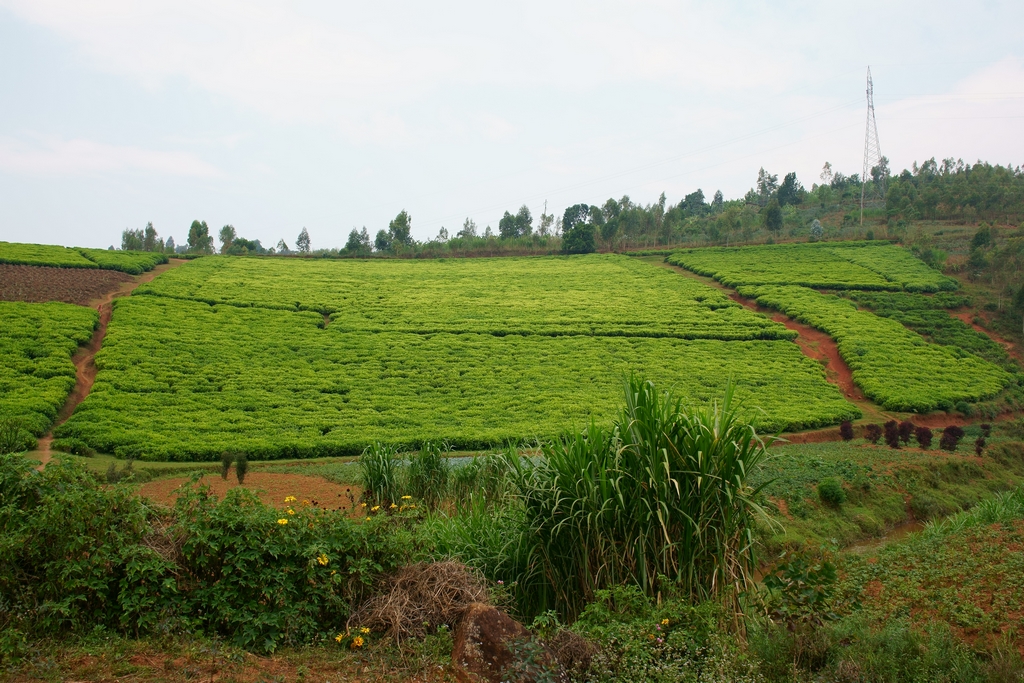
Tea is Burundi's second largest cash crop after coffee.
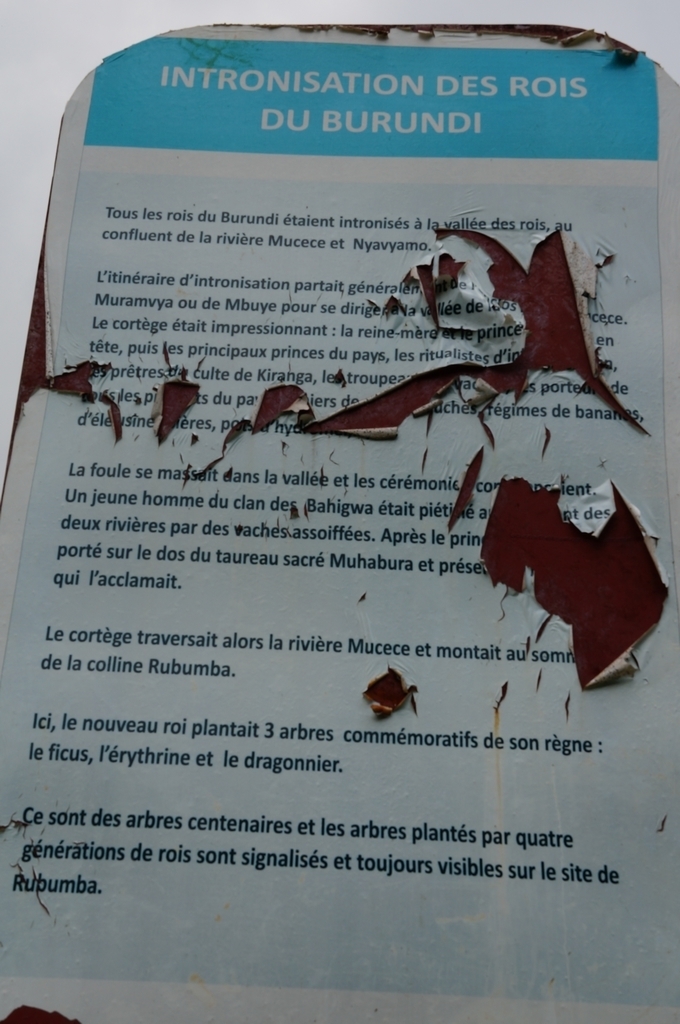
The successor of the king was to be enthroned following a specific ritual. Indeed, after the death of the ruler, while the Biru ritualists dealt with the royal remains, the court staff had to organize a mourning in Mwihangarizo where the chiefs flocked and stayed until the enthronement of the new king. The Mwihangarizo site (Shombo area, Muramvya commune) was the starting point for the procession route of the new king's enthronement. The end of the mourning was at the watering hole in the Gahororo stream of Musongati Hill, located near the confluence of the Mucece and Nyavyamo rivers: the future king, the court staff, the princes, the chiefs, the sub-chiefs and cattle came down from Mwihangarizo to this confluence zone where the induction ritual was performed.
The sacred natural landscape of Muramvya with Mucece river down there.
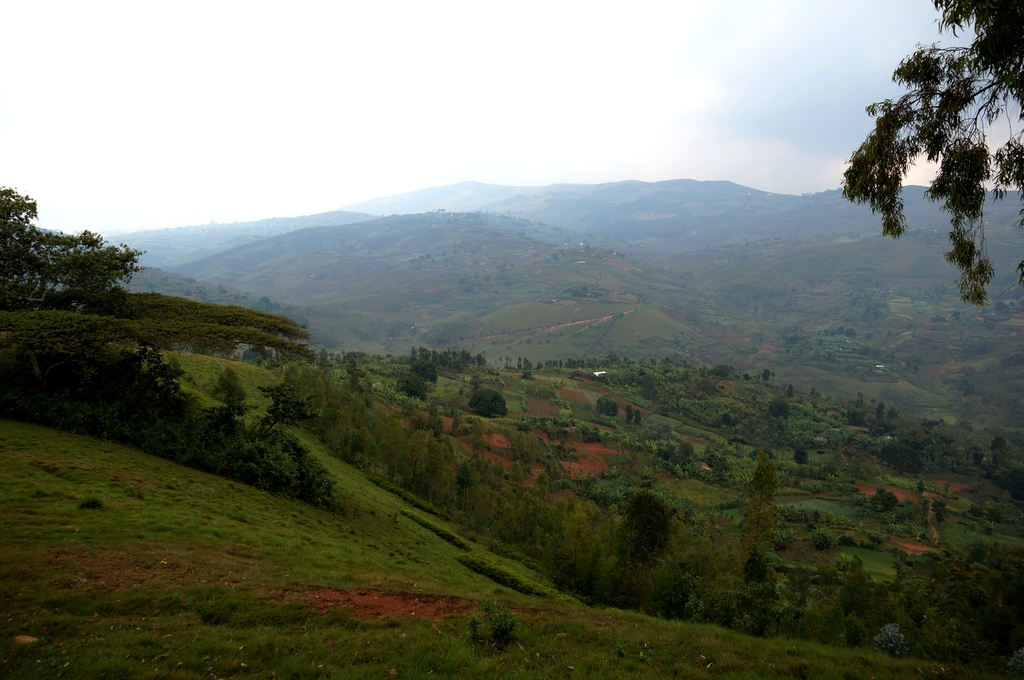
After the lifting of mourning, the new sovereign crossed the Nyavyamo river seated on the Muhabura bull, and was thus proclaimed King of Burundi.The enthronement of a king thus allowed the country to revive because, with the death of such an authority, all activities were stopped. This ritual brought joy to the country.
The village consists of 4 traditional thatched roof huts with, inside, original lays out, interesting artifacts and fashion accessories. Also the ruins of a nice belvedere where (partial) view is shown above. Here the Burundian ancient royal walk on elegant, well kept royal grounds.
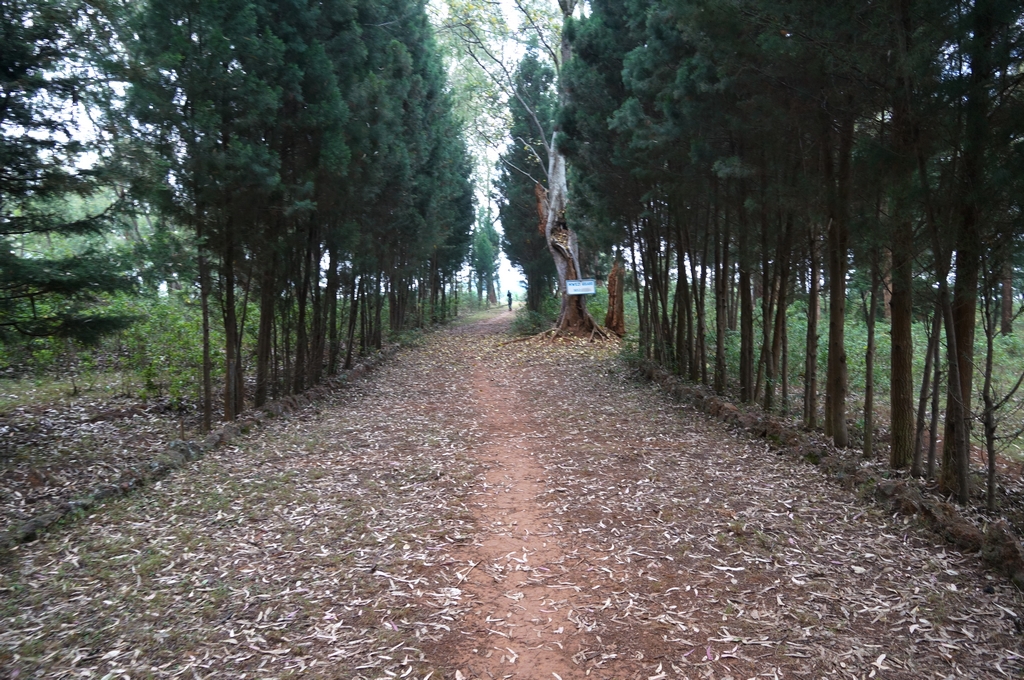
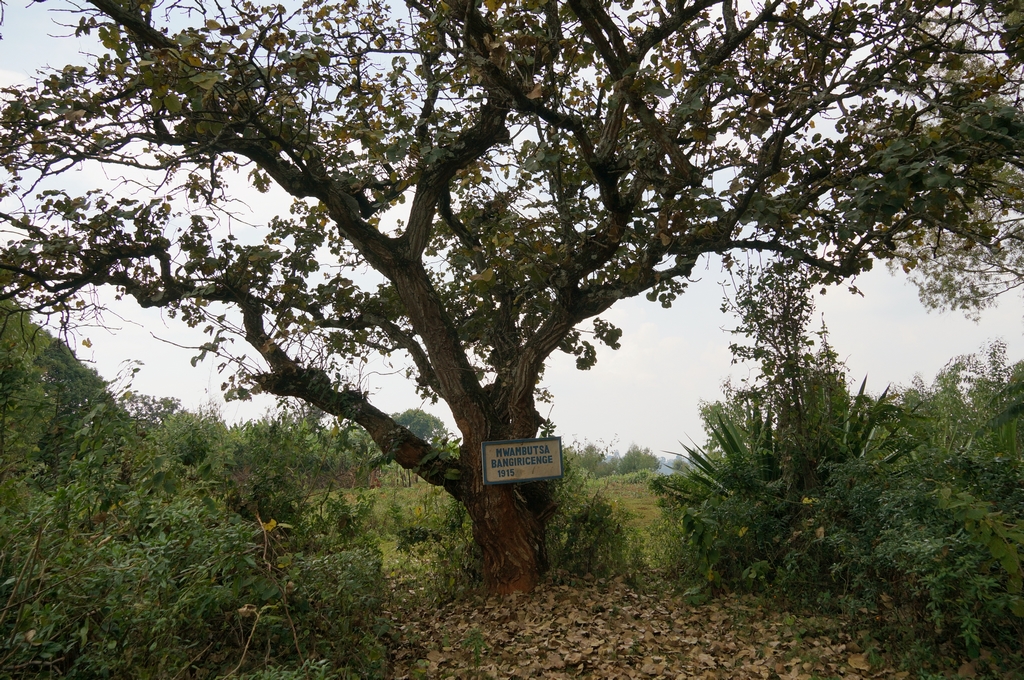
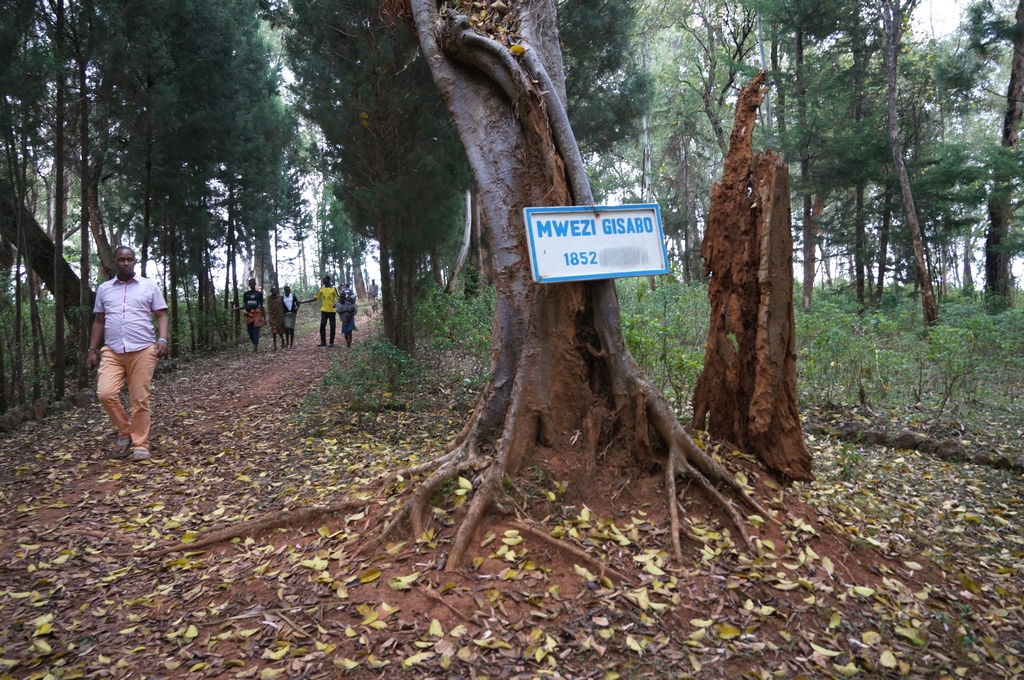
They are centenary trees ! The trees planted by four generations of kings are signposted and still visible.
Mwezi Gisabo signed the Treaty of Kiganda with German in June 6th, 1903. Burundi submitted this historical site for inscription on the UNESCO World Heritage List.
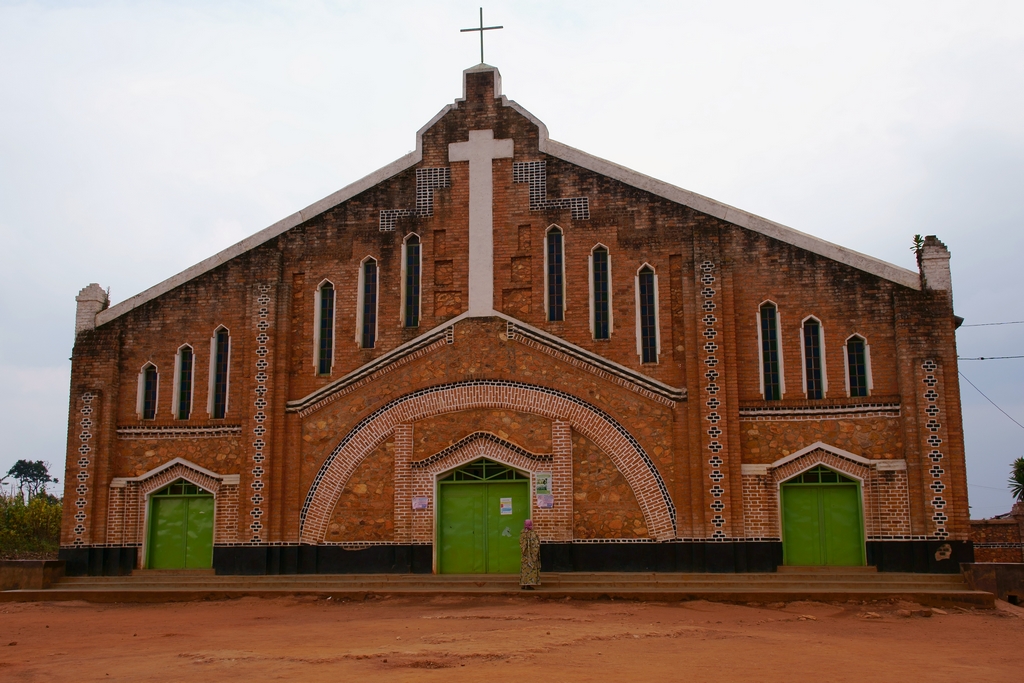
The catholic church of Kiganda parish.
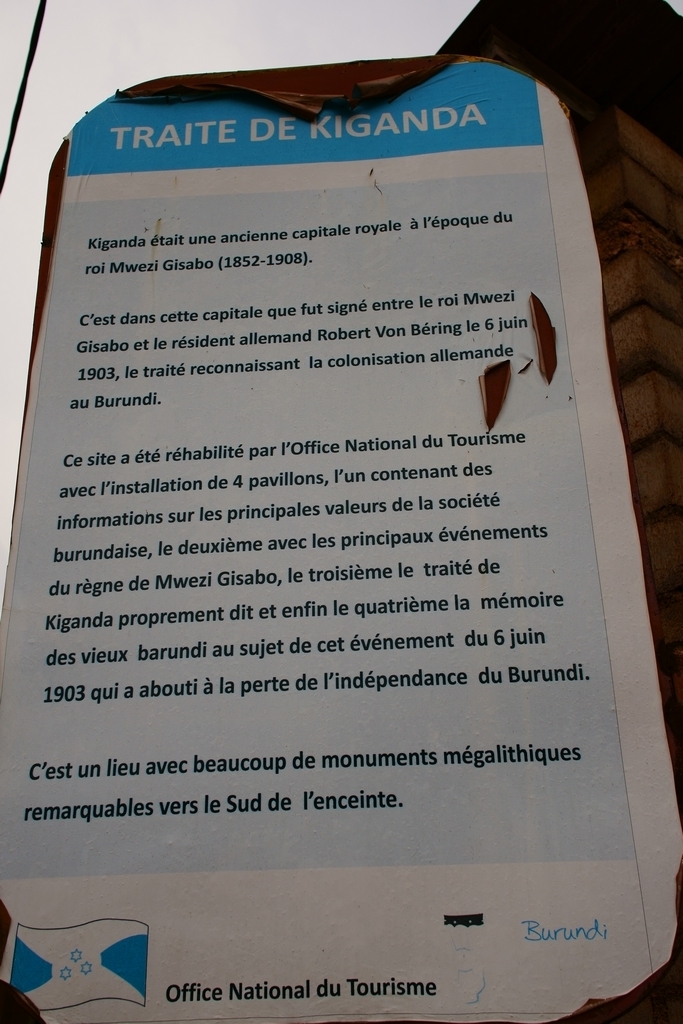
The historical sanctuary containing all details about signing the Treaty between Germans and King Mwezi Gisabo who was the traditional ruler during that colonial era.
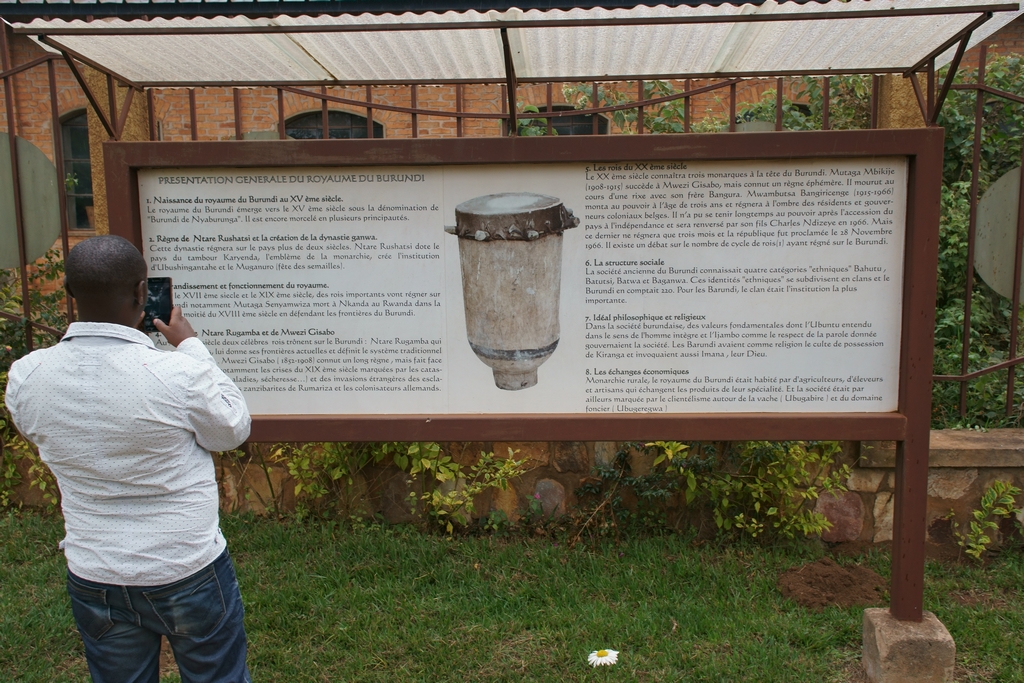
The rocky site of Kiganda : the Treaty coincided with the start of the effective administrative installation of the Germans in Burundi.
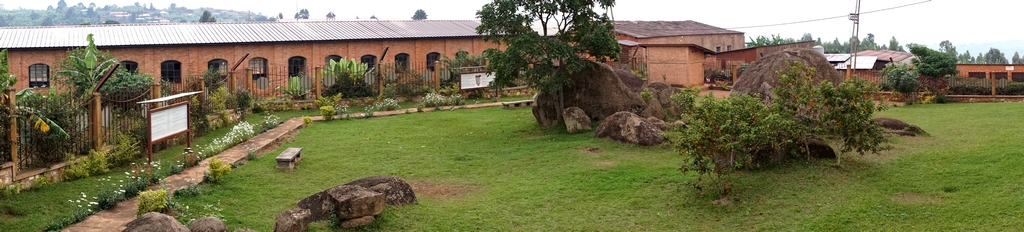
Agasumo ka Mwaro.
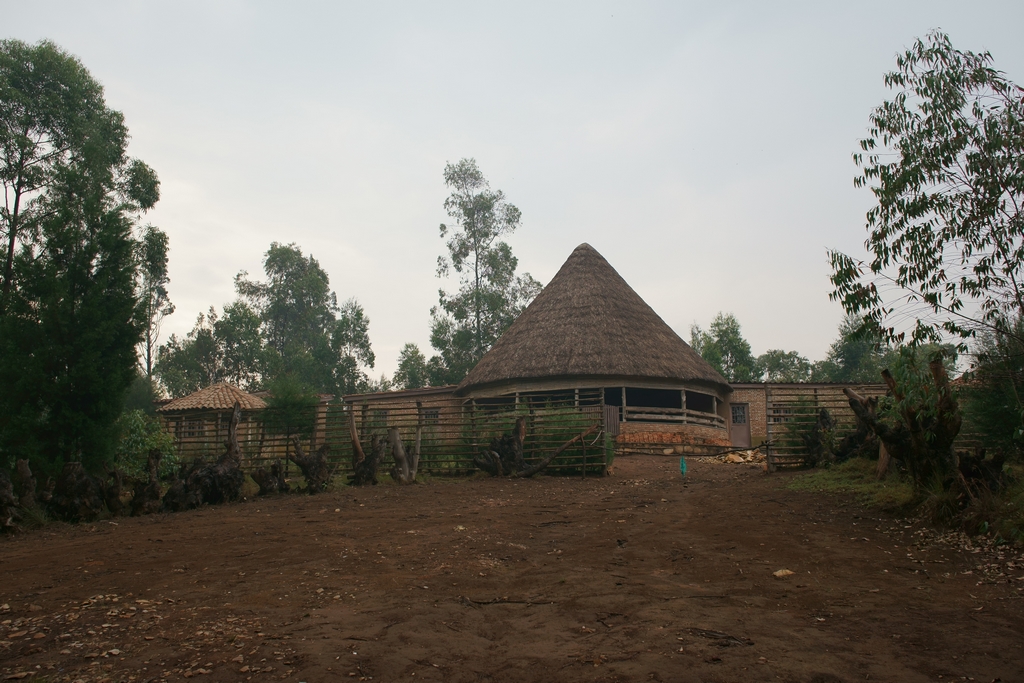
A resort should open soon.
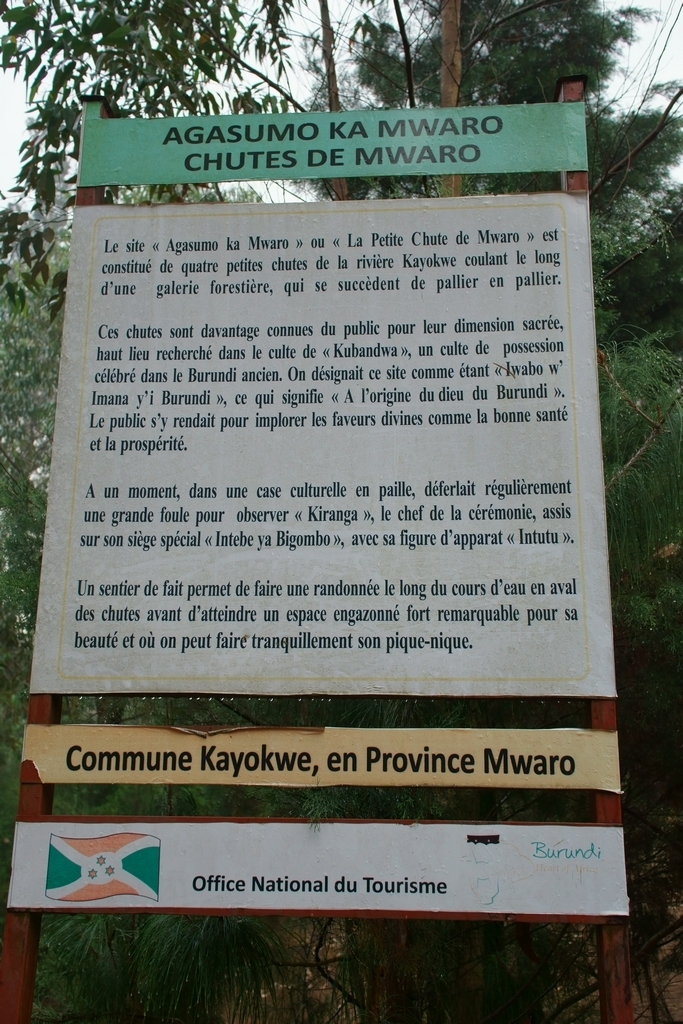
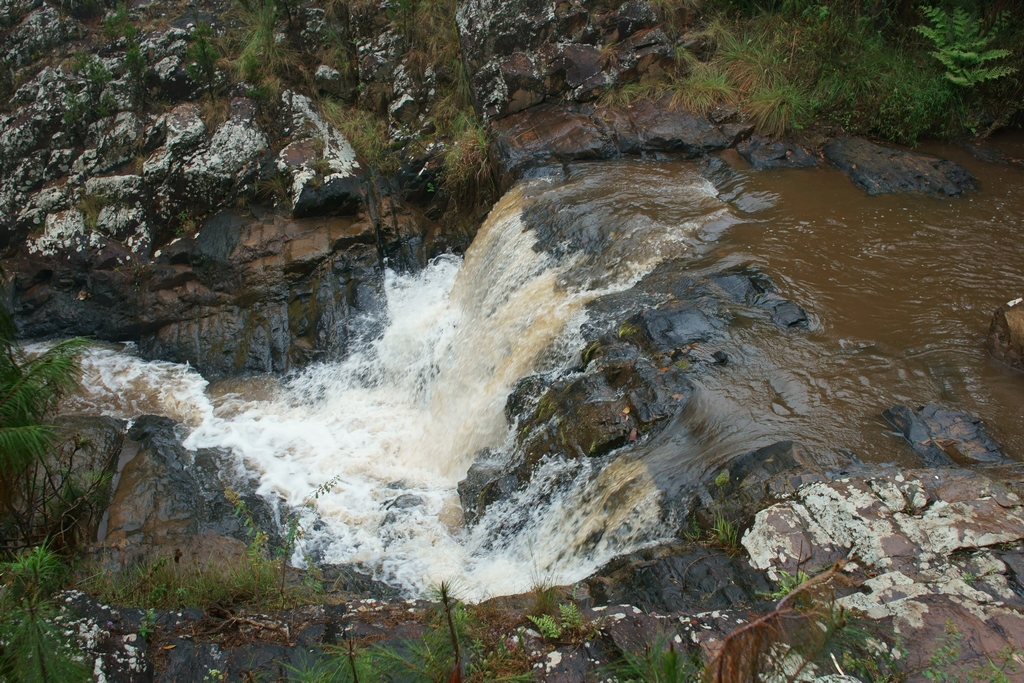
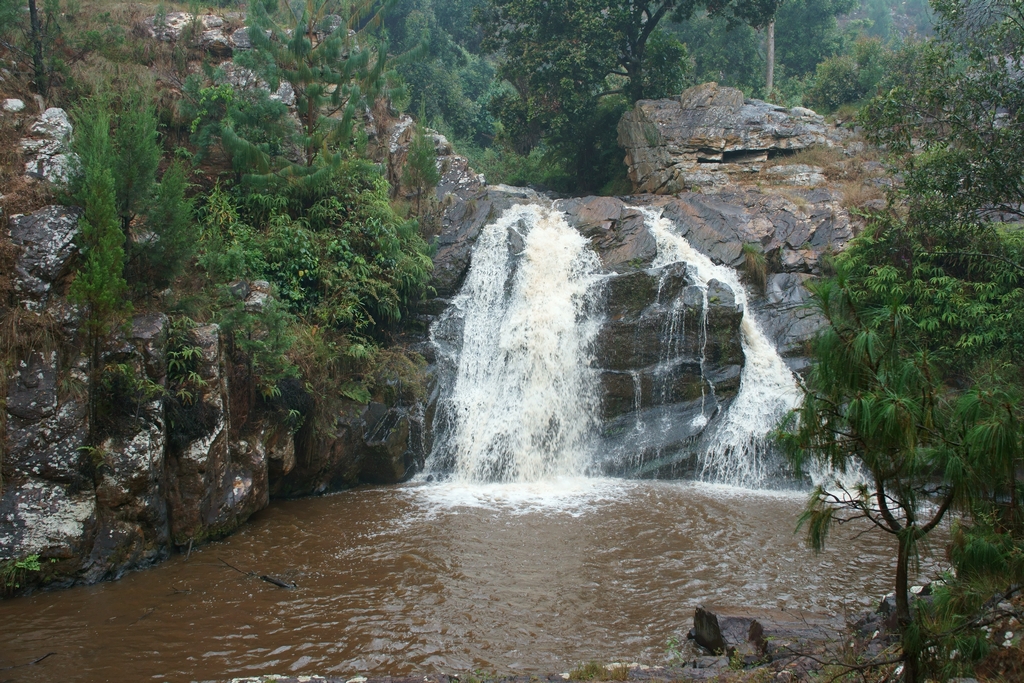
In this natural environment, trails along the Kayokwe River lead to a series of high cascades offering a fascinating spectacle, which gave the name to this site ‘Agasumo (= falls). It is in this isolated and secret corner that the neighboring population but also people from distant areas, come to carry on the cult of Kiranga, ‘Kubandwa’.
Burundians consider ‘Agasumo ka Mwaro’ as a historic place that served and still serves as the centre of worship interest for the followers of this belief that has resisted the ages. Tourists who want to meditate on the site, by formulating the wishes which will be, apparently, granted soon or later, will deposit money in the form of offerings. It is very common to find on the place coins, even bits of bank notes, having been used as offerings during the rituals.
Next stop : UNESCO Royal Drum of Gishora.
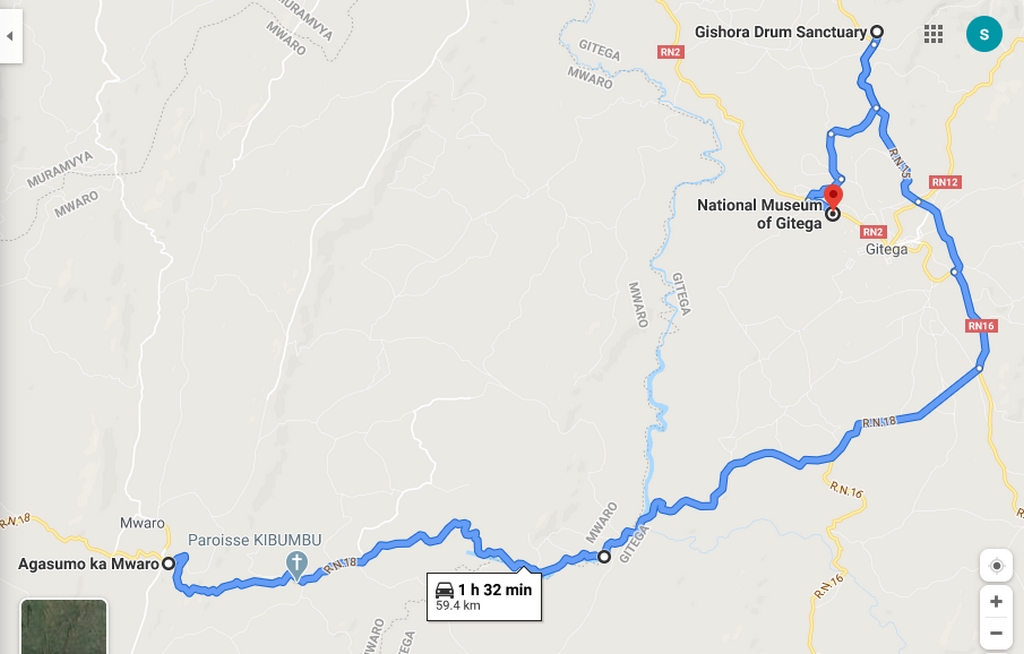
Rest area on RN18 at Kayokwe.
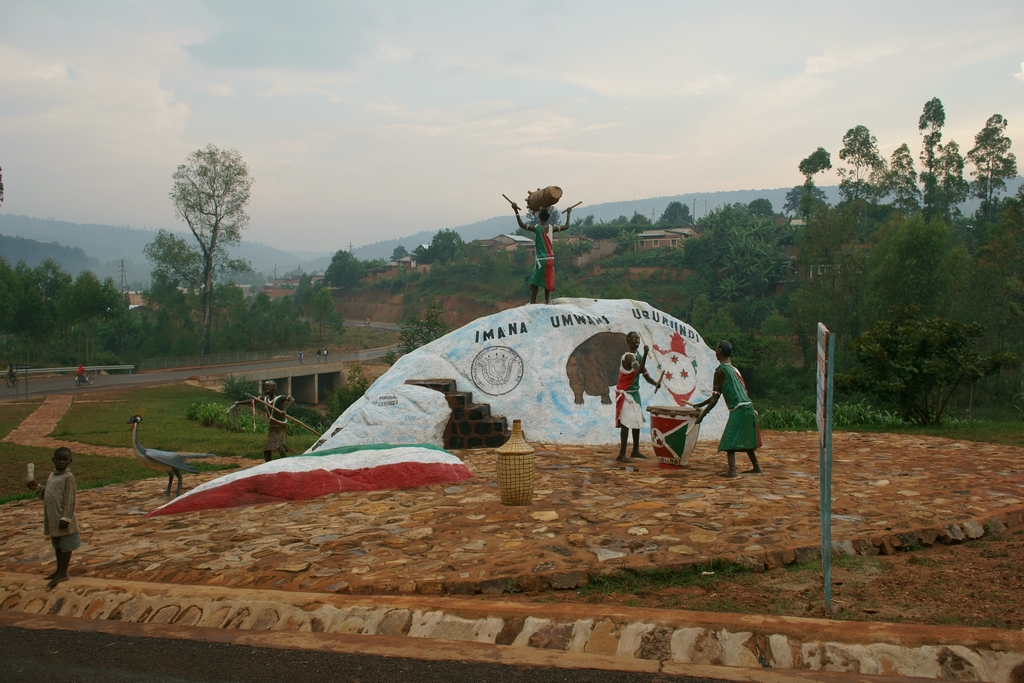
Burundi’s sacred drum heritage was acknowledged by UNESCO in 2014. The United Nations cultural and heritage arm extended Intangible Cultural Heritage status to
the drumming tradition practiced at Gishora.
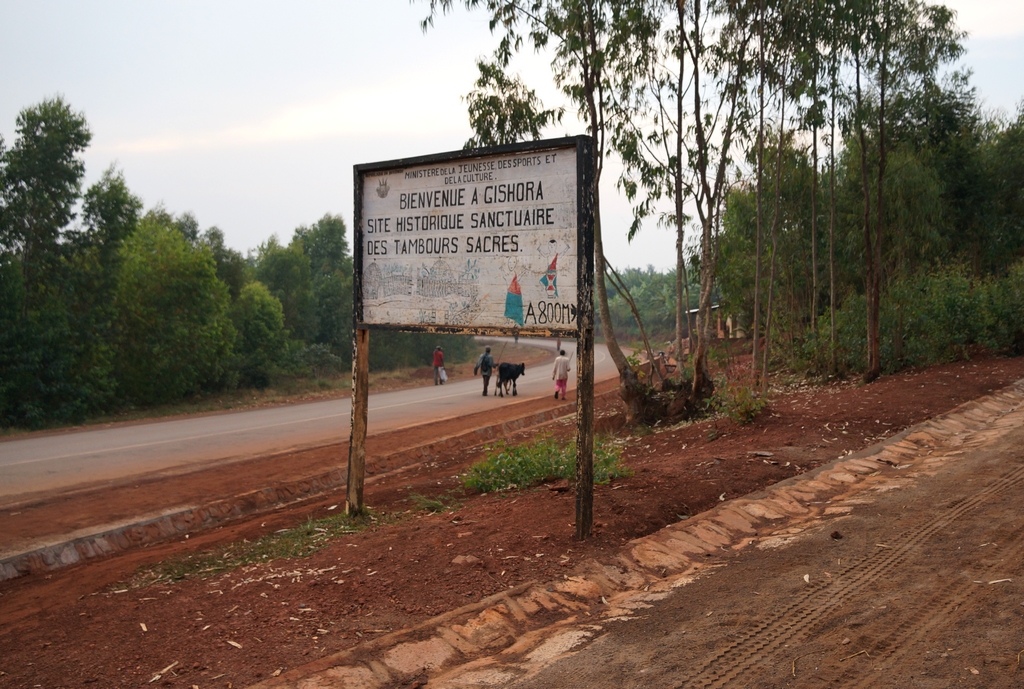
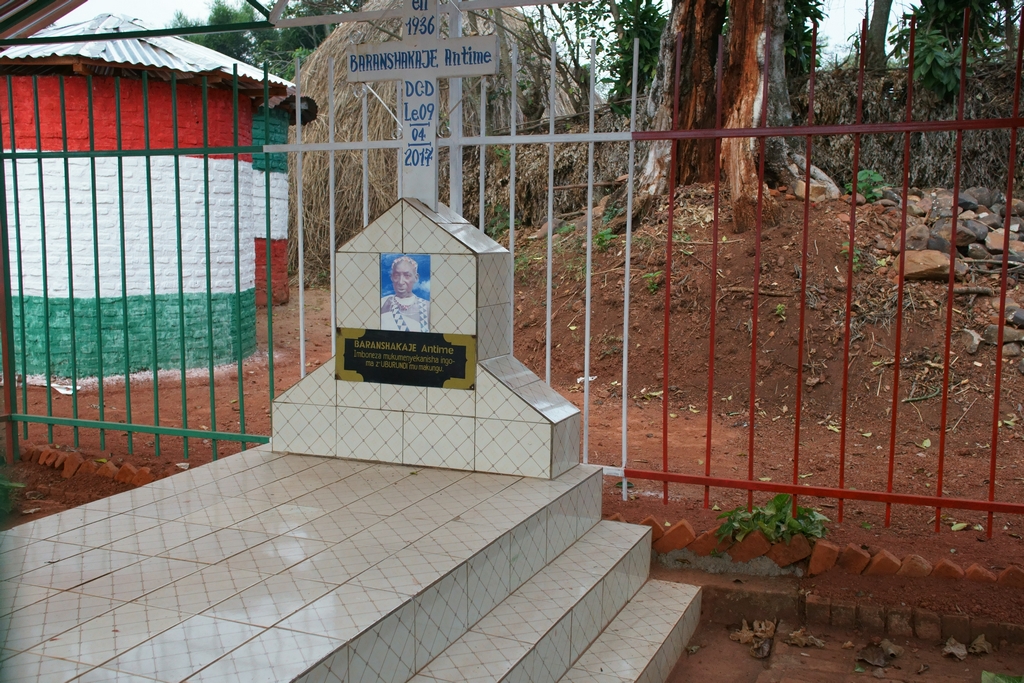
A cultural icon :
Antime Baranshakaje, the 81-year-old guardian of the nation’s sacred Gishora drum tradition. Now ex-President Pierre Nkurunziza hailed the drummer as a national treasure who left his mark on the history and culture of Burundi, and inspired generations to connect with the heritage expressed through traditional drumming.
Take a look at these 3 videos showing you the amazing performance:
# Drummers arriving:
# Lively atmosphere with crowd roaring
# End of the show inside the Royal Palace Court
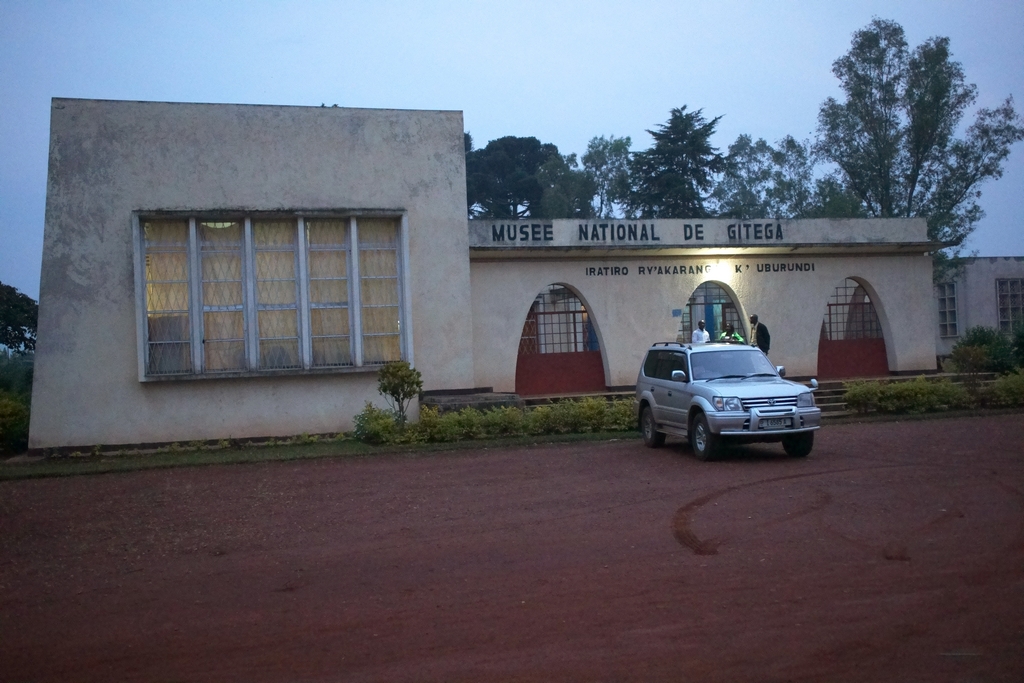
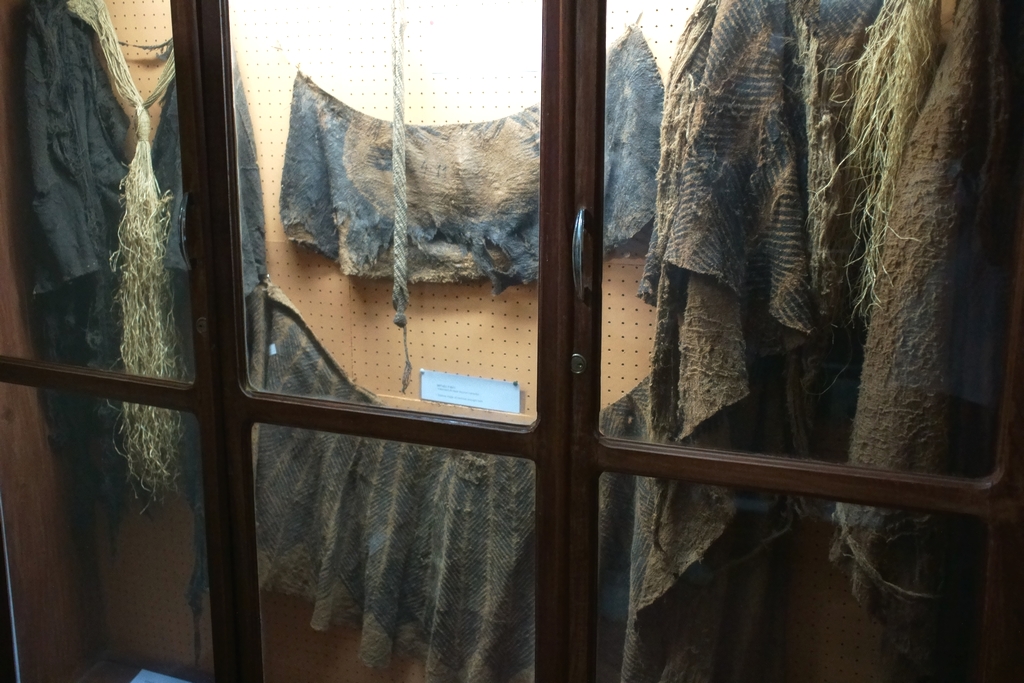
Gitega National Museum was established in 1955 and is located in Gitega a small central city which was declared country's new political capital in December 2018, in line with a presidential promise made a decade ago. The museum presents various collections of musical instruments, weapons as well as witchcraft tools.
The outside part is not very attractive and the aesthetics are not great in general although the content and information you will get here is very relevant and legendary.
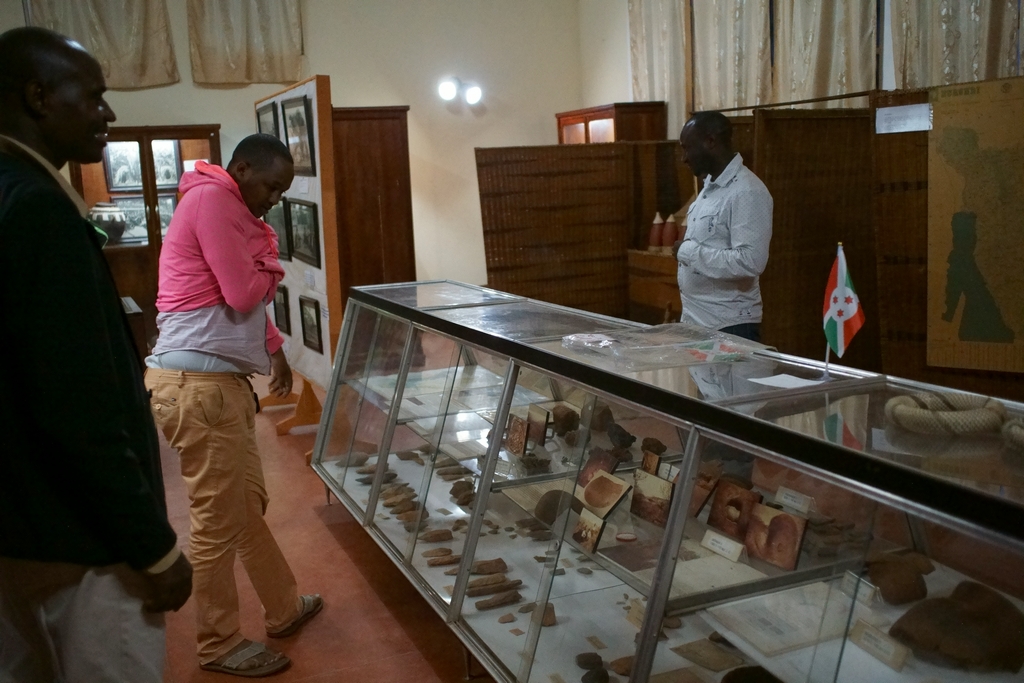
You can view the photographs of Burundi’s monarchies and learn about their modern struggles with the ethnic wars as well as the Genocide.
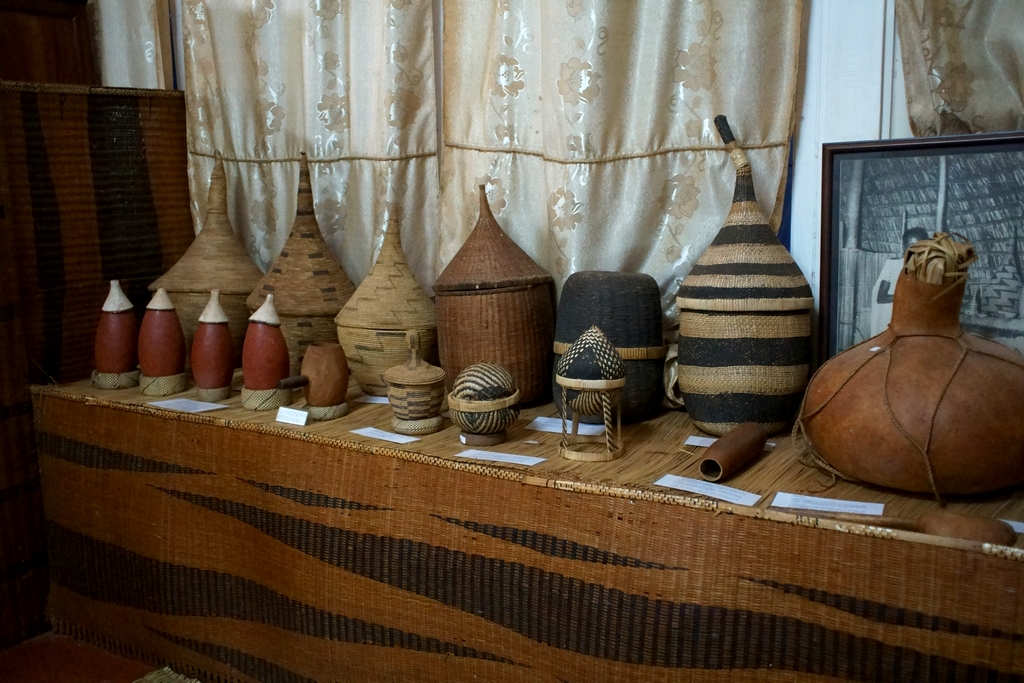
Agaseke : handcrafted baskets have been part of the Burundi culture for centuries. But today, its popularity has found its way internationally, through cultural tourism. Various types of baskets served various roles. For instance Nyabitabo, a kind of basket weaved by a girl and offered to her mother-in-law before the marriage ceremony. Others included Agaseke k’urukundo (Love basket), mostly offered to the married and Agaseke k’amahoro (Peace basket), which today dominates the market. The cost of the baskets range between BIF20,000 and 600,000 (€10 to €300) depending on the size and make.
Our home for tonight: Helena Hotel at Gitega