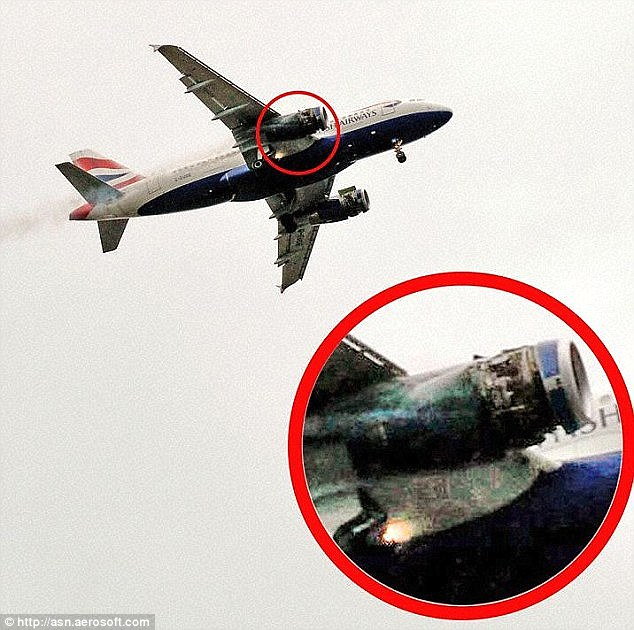
The remarkable part about this situation is that the nose cowl broke away, which is suggestive of some sort of internal failure, as evidenced by the photographs of the engine showing several broken/missing fan blades. In more innocuous cases, cowling doors along the sides of the engine have been known to blow off if improperly secured, but the nose cowl remains in place, looking more like this:
The loss of cowling doors will degrade aerodynamics, but will not cause nearly the vibration of what was documented in this instance. The loss of virtually the entire nacelle will cause significant vibration because of the disrupted airflow, as will the effect of a windmilling unbalanced fan (missing a few blades).
I don't want to go too far into speculation, but the outward appearance of the engine based on photos and videos posted online is suggestive of an uncontained blade failure which compromised the integrity of the nose cowl, causing it and the rest of the cowling the separate from the engine. In this case, the engine was most likely shut down.
As far as the engine shearing off, again, that's an extreme failure mode, but the engine is mounted to the airframe with shear pins that are designed to fail at lesser loads than will the structure of the pylon.
Edit to add:
Just to touch on your reference to AA191, in that case, the engine sheared off because of cracks which developed in the pylon due to an improper engine change technique. This failure occurred at a much lower load than was designed (using hollow fuse pins at the time) and caused part of the pylon and wing to come off with the engine. This damaged two of three hydraulic systems and caused the left wing slats to retract (fail-safe mode), which you correctly note, caused a stall which the crew could not diagnose and recover from in time, given the limited altitude and the fact that they were proceeding with an extensively-drilled engine-out climb procedure.