
























New Japanese currency notes will be issued starting first half of 2024. The websites are in Japanese but have a lot of pictures of new notes.
New 10000 yen note
New 5000 yen note
New 1000 yen note
New 10000 yen note
New 5000 yen note
New 1000 yen note

Are the older notes still valid , or invalid after a certain date only can only be exchanged for new ones at a bank?
Yes, old notes remain as legal tender in Japan. For example, one yen note which was issued in 1885 still remains legal tender as far as the Japanese government is concerned. As far as the Japanese government is concerned, the 1885 one yen note is still valued as one yen. However, among collectors, the 1885 one yen notes are valued at 35000 yen for an average condition and 120000 yen for a pristine condition. 
Talk about old notes no longer vaild... Earlier this year I had a transit at LHR, transit was about four hours. I had British Pond notes left over from my travel to the U.K. back in 2016. I was thinking I can buy shortbread, tea, etc. at LHR Terminal 5 during my transit using the British Pond I had. Well..., during the transit I found out that I can no longer use the British Pond notes I had. Currency exchange at the terminal said they do not exchange old British Pond notes.
Talk about old notes no longer vaild... Earlier this year I had a transit at LHR, transit was about four hours. I had British Pond notes left over from my travel to the U.K. back in 2016. I was thinking I can buy shortbread, tea, etc. at LHR Terminal 5 during my transit using the British Pond I had. Well..., during the transit I found out that I can no longer use the British Pond notes I had. Currency exchange at the terminal said they do not exchange old British Pond notes.
Quote:
Yup, i have some old £20 notes that aren't valid, need to go to Bank of England or post office to change(when i go back to London). Hence curious about the Japanese yen.Originally Posted by AlwaysAisle
Talk about old notes no longer vaild... Earlier this year I had a transit at LHR, transit was about four hours. I had British Pond notes left over from my travel to the U.K. back in 2016. I was thinking I can buy shortbread, tea, etc. at LHR Terminal 5 during my transit using the British Pond I had. Well..., during the transit I found out that I can no longer use the British Pond notes I had. Currency exchange at the terminal said they do not exchange old British Pond notes.
Thanks


Japan has perhaps the cleanest currency in the world. Finding a ripped/worn-out note is pretty rare.
They have had problems with the currency though. The ¥2,000 note was issued but retailers were reluctant to use it. A bit like the $2 in the USA, only a lot more valuable.
There was also the issue with ¥500 coins. The Korean 500 won coins (worth 10% of the yen) were being used by scammers in Japanese vending machines, so Japan came out with a new ¥500, only it wouldn't (and still doesn't) work in many machines.
They have had problems with the currency though. The ¥2,000 note was issued but retailers were reluctant to use it. A bit like the $2 in the USA, only a lot more valuable.
There was also the issue with ¥500 coins. The Korean 500 won coins (worth 10% of the yen) were being used by scammers in Japanese vending machines, so Japan came out with a new ¥500, only it wouldn't (and still doesn't) work in many machines.


Quote:
Glad to hear about the value of these old notes as I have a bunch of 100-yen notes at home along with a few 1-yen notes and a 10-yen note (photographed below). I'll have to have the value of these assessed, as they could be worth a pretty penny with the right dates on them. The U.S. government also recognizes all circulating notes issued from 1861 to the present at face value as legal tender. When I was a kid, my grandparents gave me silver dollars as presents on birthdays and on Christmas. I had collected 30 of them over the years but my parents were unwise and deposited them in a bank account for me and all I could get back were relatively worthless federal reserve notes or silver certificates (supposedly redeemable in silver, but no longer so since the 1960s). Originally Posted by AlwaysAisle
Yes, old notes remain as legal tender in Japan. For example, one yen note which was issued in 1885 still remains legal tender as far as the Japanese government is concerned. As far as the Japanese government is concerned, the 1885 one yen note is still valued as one yen. However, among collectors, the 1885 one yen notes are valued at 35000 yen for an average condition and 120000 yen for a pristine condition.

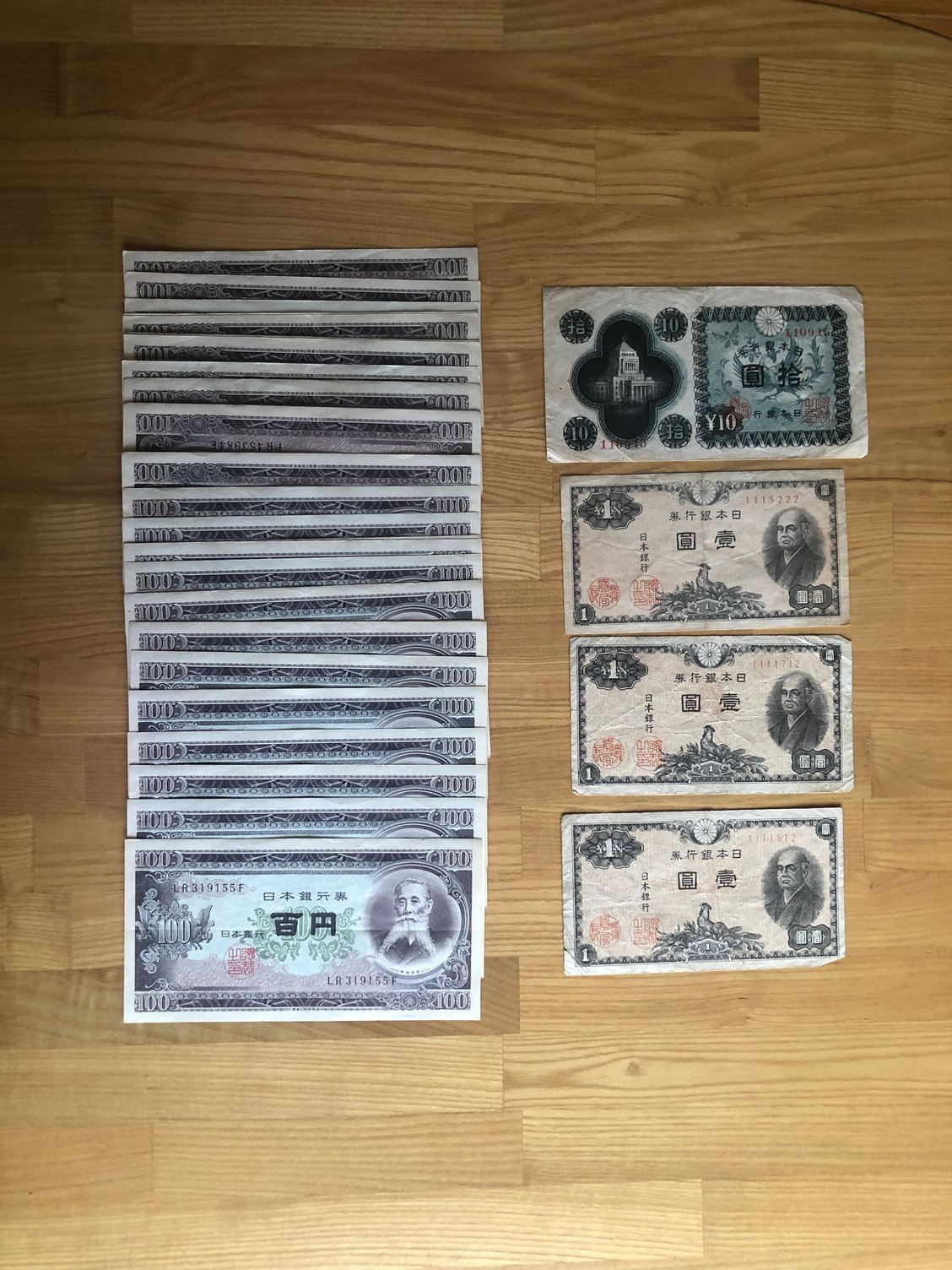
Old Japanese currency notes
After a little searching, I also found this Japanese-Malaya occupation currency (sometimes called "Banana Money") from the first half of the 1940s, a $10 bill printed in English and curiously denominated in "Japanese dollars." I don't think the Japanese government accepts this as legal tender in Japan, but it apparently has some small collector value.
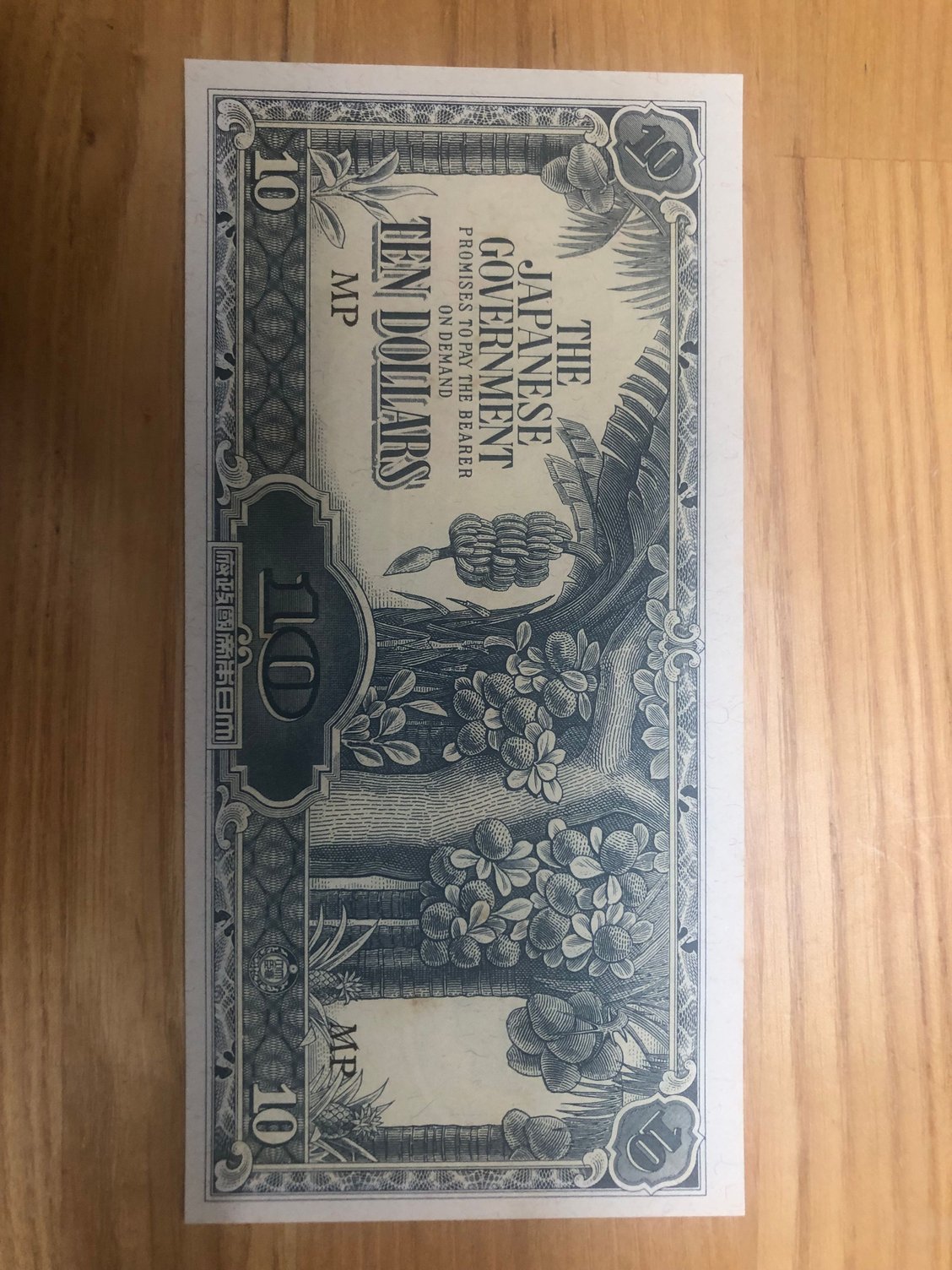
Japanese-Malaya $10 bill printed in English
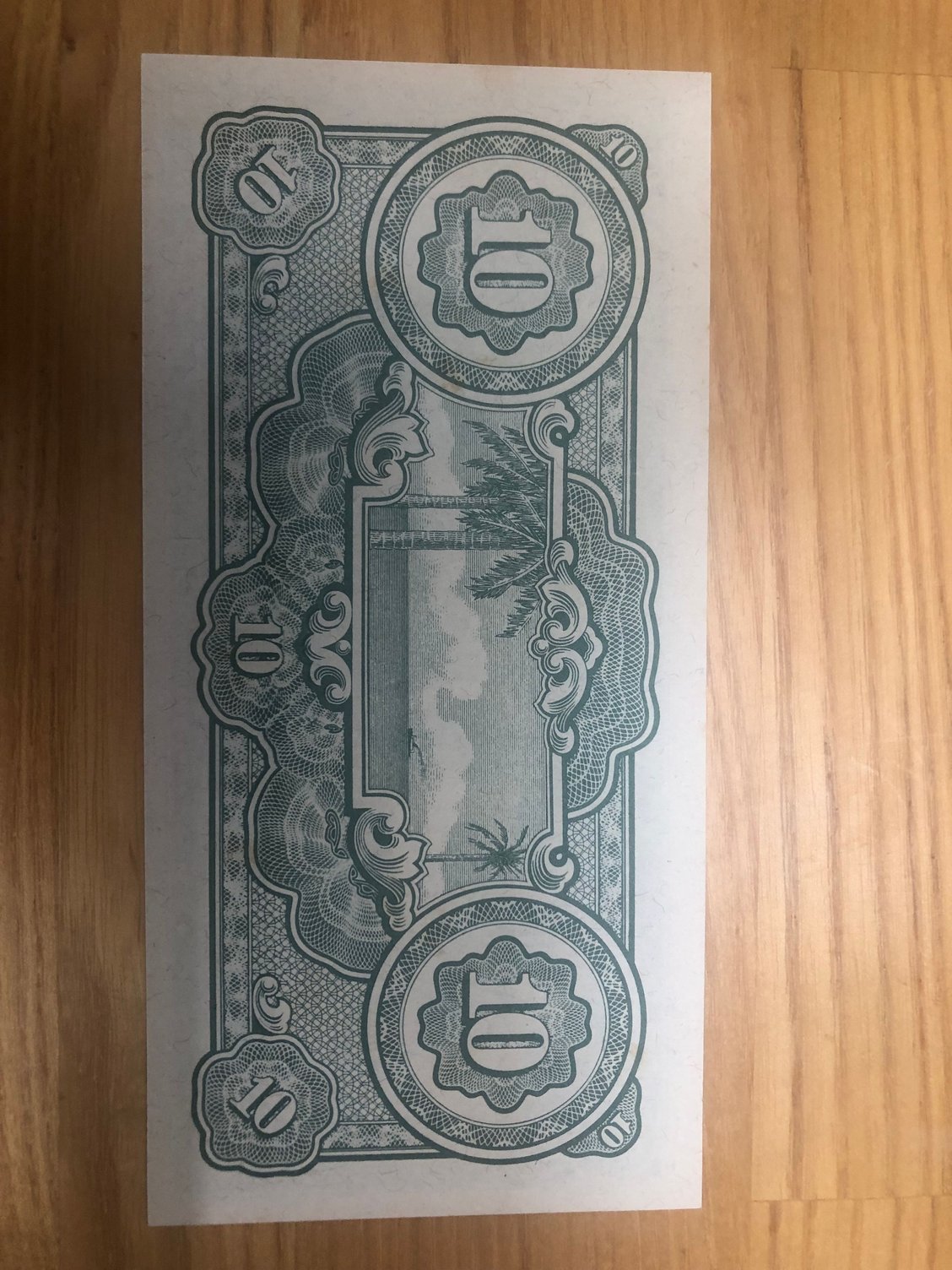
The reverse side of the $10 bill
Quote:
Old Japanese currency notes
After a little searching, I also found this Japanese-Malaya occupation currency (sometimes called "Banana Money"), a $10 bill printed in English and curiously denominated in "Japanese dollars." I don't think the Japanese government accepts this as legal tender in Japan, but it apparently has some small collector value.
Japanese-Malaya $10 bill printed in English The reverse side of the $10 bill
Some of those are in nice shape!Originally Posted by Nagasaki Joe
Glad to hear about the value of these old notes as I have a bunch of 100-yen notes at home along with a few 1-yen notes and a 10-yen note (photographed below). I'll have to have the value of these assessed, as they could be worth a pretty penny with the right dates on them. The U.S. government also recognizes all circulating notes issued from 1861 to the present at face value as legal tender. When I was a kid, my grandparents gave me silver dollars as presents on birthdays and on Christmas. I had collected 30 of them over the years but my parents were unwise and deposited them in a bank account for me and all I could get back were relatively worthless federal reserve notes or silver certificates (supposedly redeemable in silver, but no longer so since the 1960s). Old Japanese currency notes
After a little searching, I also found this Japanese-Malaya occupation currency (sometimes called "Banana Money"), a $10 bill printed in English and curiously denominated in "Japanese dollars." I don't think the Japanese government accepts this as legal tender in Japan, but it apparently has some small collector value.
Japanese-Malaya $10 bill printed in English The reverse side of the $10 bill
I worked at a bank in uni and once someone dumped a dozen silver dollars (from early 1960s) in front of me. I could tell by the sound they were real. Needless to say I swapped them with my own personal cash later that day.


Quote:
New 10000 yen note
New 5000 yen note
New 1000 yen note
You can be sure that North Korea either has or soon will have the new currency plates so they can wage a communist-style "war by other means" against Japan just as they have against the US by counterfeiting large quantities of high-quality US$100 bills over the years.Originally Posted by AlwaysAisle
New Japanese currency notes will be issued starting first half of 2024. The websites are in Japanese but have a lot of pictures of new notes.New 10000 yen note
New 5000 yen note
New 1000 yen note
Quote:
The Japanese-Malaya "banana money" is in uncirculated condition, so it has some but limited value, the others are in very good condition but none of them are from the late 1800s, so their value to collectors is probably low. Therefore, I've toyed with the idea of using one of the 100-yen notes at a convenience store just to see the reaction I'd get. Although the government accepts it as legal tender, shops do not have to and probably won't.Originally Posted by JapanFlyerT
Some of those are in nice shape!
Quote:
Yes, that's probably what happened to my silver dollars too. So that could have been you who swapped them out with cash, no? Originally Posted by JapanFlyerT
I worked at a bank in uni and once someone dumped a dozen silver dollars (from early 1960s) in front of me. I could tell by the sound they were real. Needless to say I swapped them with my own personal cash later that day.


Quote:
Legal tender means that it must be accepted for the payment of a debt. Conbini can just refuse service - leaving no debt to be settled and no need for them to take your legal tender. A better place to test your 100-yen note might be a family restaurant after you have already eaten.Originally Posted by Nagasaki Joe
Therefore, I've toyed with the idea of using one of the 100-yen notes at a convenience store just to see the reaction I'd get. Although the government accepts it as legal tender, shops do not have to and probably won't.
Some places near me don't take cash these days ... but they all require payment up front. So ... no debt to be settled. No arguments over legal tender.
Quote:
Some places near me don't take cash these days ... but they all require payment up front. So ... no debt to be settled. No arguments over legal tender.
I'm only interested in seeing the reaction, I don't care if they reject it, as I'd like to keep the paper money, assuming it's not spectacularly valuable and worth selling. I imagine that if I tried your suggestion, some restaurants still might not accept it and might call the cops on me, who would have to back me up if they are to uphold the law. If I do anything like this, I'll report back on how it goes.Originally Posted by jib71
Legal tender means that it must be accepted for the payment of a debt. Conbini can just refuse service - leaving no debt to be settled and no need for them to take your legal tender. A better place to test your 100-yen note might be a family restaurant after you have already eaten.Some places near me don't take cash these days ... but they all require payment up front. So ... no debt to be settled. No arguments over legal tender.
Here is a link to a page in English from the Bank of Japan with further links to PDFs describing each bill and security details.