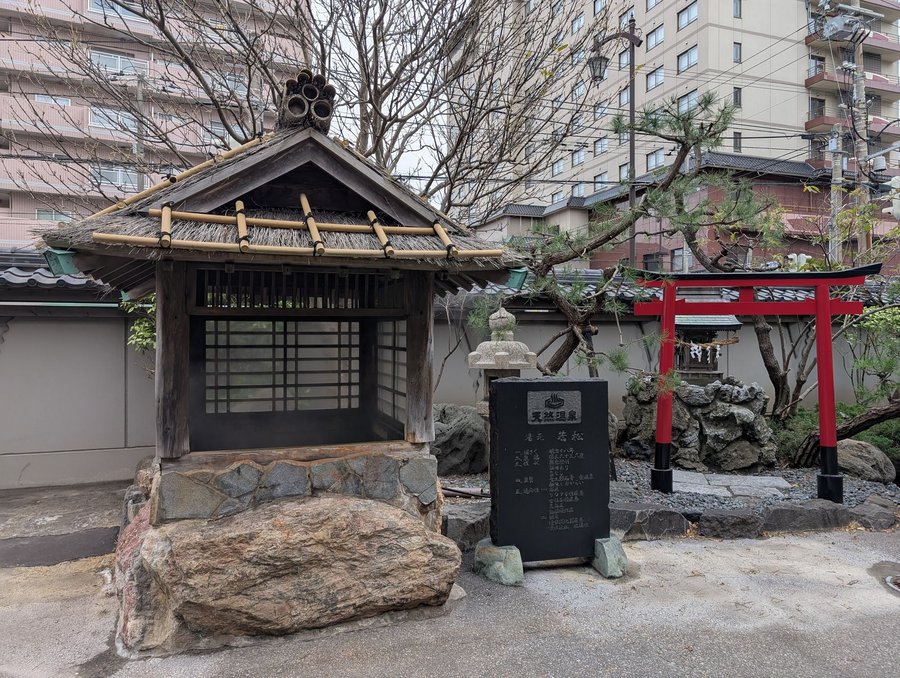
We have fond memories of our previous stay at Kappo Ryokan Wakamatsu (known as Yunokawa Onsen Wakamatsu back in the day), the most famous onsen ryokan in Hakodate. However, it’s been nearly two decades since our one and only visit to this property, so our impressions are admittedly somewhat hazy. We recall Wakamatsu offering awe-inspiring cuisine, bespoke service (in-room dining with a server specifically assigned to us and clad in an elegant kimono), and high-quality onsen that mitigated the somewhat dated hard product. For our second go-round, we wondered: would Wakamatsu offer a similarly magical experience, despite us becoming dramatically more discerning ryokan aficionados over the ensuing years?
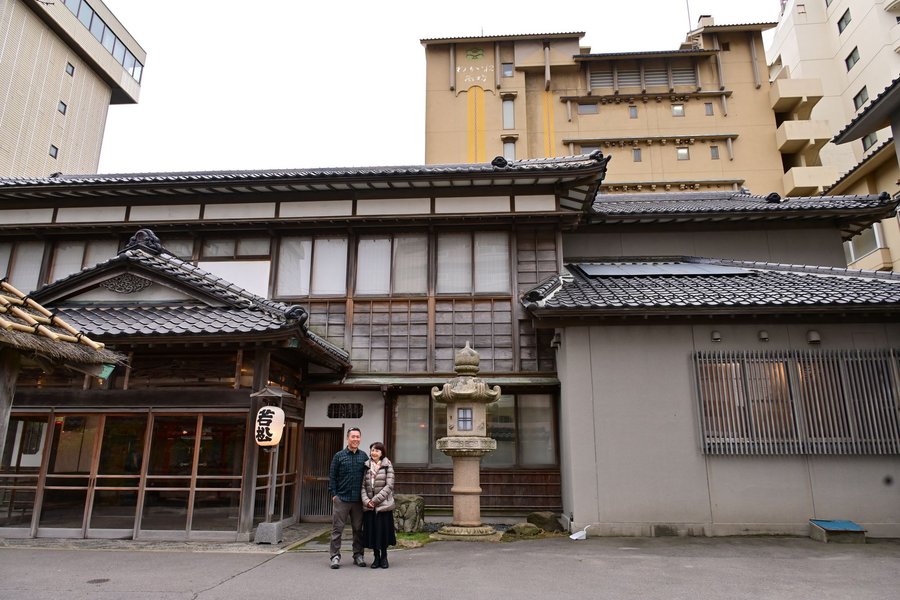 The original building with the Shinkan (new wing) in the background.
We had wanted to return for quite some time, but Wakamatsu had been closed during the pandemic and even for a few years afterwards. There were rumors that Wakamatsu would never reopen; to the surprise of many, it came back to life a few years ago and has garnered extremely positive guest feedback ever since. The property was established in year 11 of the Taishō era (1924) as a small ryokan with just a handful of rooms, but expanded with a Shinkan (new wing) in 1994, where the majority of the rooms currently reside. For nearly a century, it has been beloved as a long-established inn offering the finest hospitality in Hakodate, and in 1954 it even had the privilege of hosting the Emperor during his tour of Hokkaido.


Wakamatsu is located just five minutes from Hakodate Airport and is situated along the Tsugaru Strait, which bisects northern Aomori Prefecture (the northernmost part of Honshu) and southern Hokkaido. All rooms have unobstructed views of the Tsugaru Strait and Aomori’s Shimokita Peninsula, and the property features free-flowing hot springs straight from its own on-site source. In fact, the area around Wakamatsu - Yunokawa Onsen - is well regarded among those in the know for its healing properties.
 Private rental bath
Upon arriving at the ryokan, we felt as though we had been teleported back to 2006 - the original building and its front entrance, along with the display of the onsen source, were just as we remembered them. The adjacent “new” wing (21 of the 23 rooms are located there) still looked like a bubble-era building in need of a fresh coat of paint. Inside the common areas, it was as traditional as ever - I’d call it tastefully timeless rather than outdated, due largely to the attention to small details in its construction, adornments, and the quality of the furnishings. It’s not as avant-garde as Asaba, but Wakamatsu is nonetheless charming in its own special way.
 Special Room Yachiyo, 90m²
 Special Room Yachiyo, 90m²
 Special Room Yachiyo, 90m²
The rooms, however, are a mixed bag. We stayed in Yachiyo, the top accommodation at Wakamatsu and one of the three rooms in the original building. Yachiyo is a reproduction of the suite where Emperor Shōwa stayed in 1954 (the original room was razed to make way for the construction of the new wing, but many of the items in that suite were moved to Yachiyo). It’s 90m² in size, with a tatami room, a small Western-style sitting area, and a dedicated bedroom with two Western beds. While the tatami room is classic Japanese, the sitting area is Taishō-era Western, and the bathroom features an outdated Toto toilet and a urinal. We found the mix a bit odd, though acceptable for history’s sake, even if the yellowish tatami and walls in the Japanese room are not our style. The bathroom - except for the shower and bath area - felt particularly outdated. I doubt there were washlet toilet seats and urinals in 1954, so the fact that it hasn’t been updated is unacceptable. Yachiyo really should have two sinks as well. Another technological shortcoming was the very slow Wi-Fi; it felt as though we were on a 14.4k-baud dial-up connection from Japan’s economic heyday. We were fine with the aesthetics of the shower and bath, though we wished the latter was onsen (unfortunately, it’s basic tap water that you need to fill yourself). On the bright side, the panoramic views from the room made up for some of Yachiyo’s shortcomings. You wouldn’t mistake it for Amanpulo or even Amanoi - in this part of the country, you’re confronted with rough waters and gloomy skies most days of the year.
 View from Special Room Yachiyo, 90m²
We got our hot-spring fix via visits to the gender-segregated daiyokujo (communal bath) as well as Azumaya, the one private rental bath on site. Both are straight-from-the-source, free-flowing, and never recirculated. We went on an unusually cold day for early November, so taking dips in the onsen was a heavenly experience. Both baths had views of the sea, with the daiyokujo offering the bonus of ocean views in an open-air setting.
We were prepared for accommodation compromises; what surprised us, however, was the underwhelming cuisine. Before our second stay, I had Wakamatsu in my personal top-10 list of favorite kaiseki experiences. Either the food quality has taken a dive over the years, our palate has become more refined, or what was considered good then simply isn’t top-notch now. My guess is that it’s a combination of the three, though I believe the executive chef is the same person as before. Mrs. KI-NRT firmly believes that Wakamatsu has stood still, unable or unwilling to refine its culinary craft, which is likely a big part of the problem. A perfect example was the zensai (medley of appetizers): among the offerings were
matsukaze (chicken savory cake),
jikasei karasumi (homemade salted mullet roe dehydrated for three months),
mukago (Japanese yam bulb), and smoked bacon rolled with squid. The first two are cheap and available at low-end izakayas, the mukago lacked imagination, and the bacon-and-squid dish was a weird combination. Regardless of whether these items were homemade, seasonal, or locally produced/caught, none of them were pleasing to our taste buds. One other word of caution to those who care: Wakamatsu is known to serve whale meat, and this time was no exception. There were chunks of it in the miso soup (served at the end, just prior to dessert); if you’re against the idea of eating whale, you should either let them know in advance or avoid staying here altogether.
 Appetizers at Kappo Ryokan Wakamatsu
A big bummer - though not Wakamatsu’s fault: I was hoping they’d serve a fish we enjoyed last time,
Tokishirazu. It’s a type of premature chum salmon caught from spring to summer in Hokkaido. Salmon is usually caught in autumn, but tokishirazu are caught in spring or summer as if at the wrong time - hence the name, which literally means “unaware of time,” referring to the unseasonable catch. As they are young salmon before spawning, they have a very high fat content, resulting in a rich, buttery, umami-infused fish. They are highly prized but rarely found in high-end supermarkets and department stores because of their limited quantity. Unfortunately, we weren’t at Wakamatsu during peak tokishirazu season, and even if we were, the chef let it be known that their numbers have plummeted in recent years to the point that having it on the menu during peak periods is no longer a guarantee. Climate change is supposedly the culprit.
 Kappo Ryokan Wakamatsu dinner. The whale meat is being held up by the chopsticks
As before, the service level was exceptionally high at Wakamatsu. We had a personal server - Ms. Sasaki - for both dinner and breakfast, a rarity these days since dealing with both evening and morning meal shifts is physically taxing. All room attendants and meal servers are clad in elegant kimonos and exude graceful charm, and Ms. Sasaki was no exception. She had a strong command of each dish, meticulously going through every offering, and was engaging in conversations about the local area, its history, and sightseeing tips. Another surprise: we showed her some photos of our previous Wakamatsu stay and noticed the room attendant in one of the old images. “That’s Ms. Kobayashi from Matsumae!” she gleefully remarked, then quickly ran off and returned to our private dining room with Ms. Kobayashi in tow. She was the same charming person we remembered, and we enjoyed chatting with her and catching up on two decades’ worth of her fascinating life stories.
Our second Wakamatsu experience reinforced our general belief that Hokkaido is lacking in the quality and quantity of top-notch ryokans relative to other regions in the country. For all we know, Wakamatsu may still be the top ryokan in Hakodate, but it’s far from being a destination property. Which is a shame, as the Hakodate area (and all of Hokkaido) has much to offer seasoned Japan travelers, with an abundance of natural, cultural, and historical sightseeing spots.