I stayed at the
eriro at the end of August for two nights, and as I had already mentioned in a previous post, I consider this one of my best hotel stays ever, as well as one of the most rewarding uses of points.
BOOKING
The idea behind this trip was to spend a couple of days with my wife in complete and total relaxation in an exclusive mountain location, and we chose this Adults Only property. I booked the stay in May, using 300,000 points for two nights. At the time of booking, the minimum stay required was two nights, which was later increased to three nights during the high season. Now that we’re back in the low season, a minimum stay of two nights is once again possible.
During my stay, the daily rate was €1,980 (approximately $2,350), which translates to a value of about 1.56 cents per point. Not the best redemption in the world, but still a very solid one, especially considering this is an All Inclusive property, and by all-inclusive, I don’t just mean food and drinks, but a wide range of activities as well.
A few days after booking, I received an email from the hotel host (the same person I would later meet during my stay), inviting me to share any allergies, food intolerances, or dietary preferences. At the same time, they outlined the activities available during the stay, included in the price, as well as those that were more demanding and organized upon request, such as mountain ascents, via ferrata routes, tandem paragliding or helicopter tours.
LOCATION
The
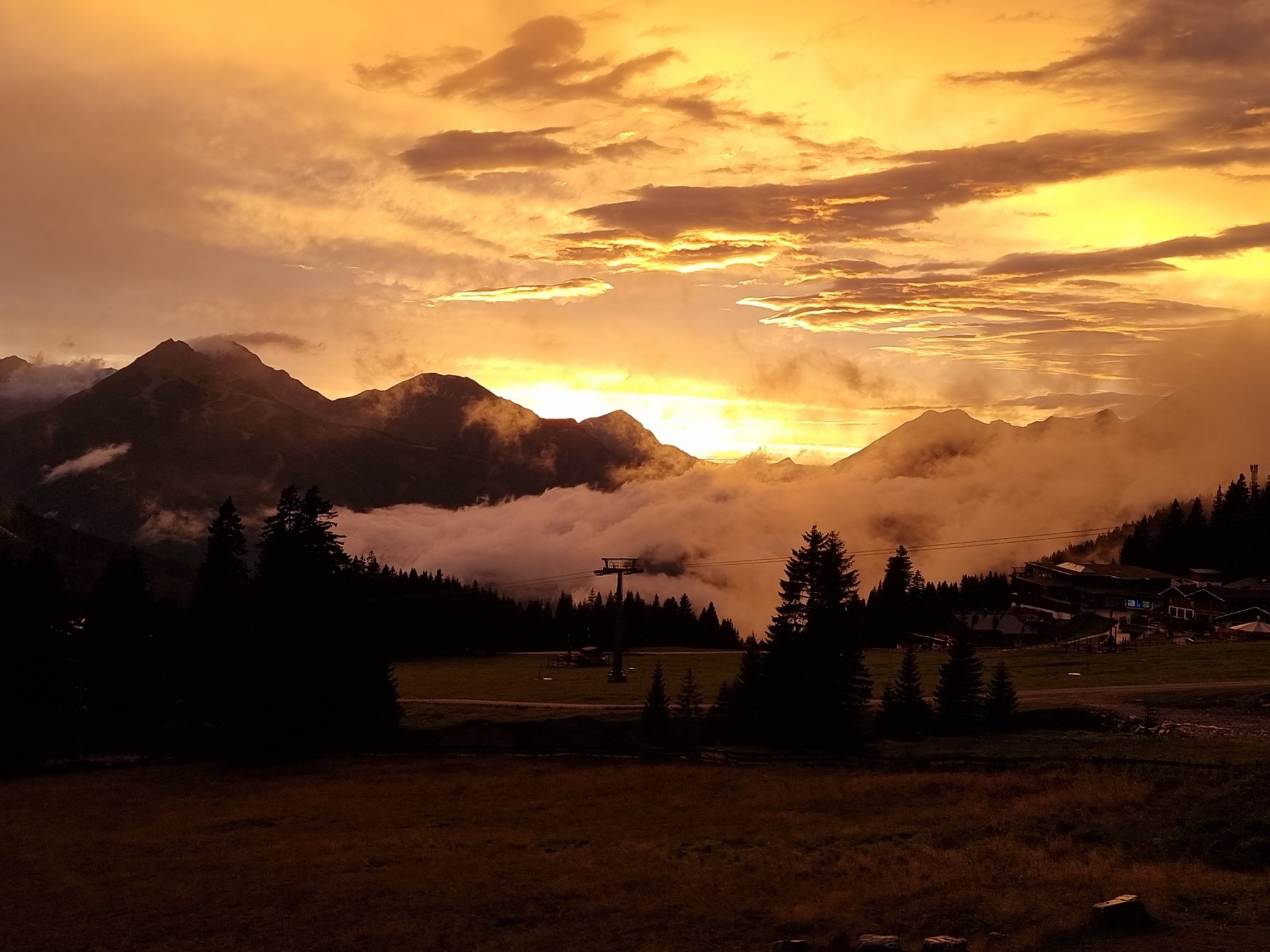
eriro is located in Ehrwald, a town in western Austria about 75 km from Innsbruck, near the German border and not far from Garmisch-Partenkirchen. It’s reached via a scenic 20-minute cable car ride and sits at 1,550 meters above sea level, at the foot of the Zugspitze, Germany’s highest mountain. The border between Austria and Germany is less than two kilometers from the hotel, and many hikes naturally cross into German territory.
The best way to reach the Ehrwald area is by car. The nearest airport is INN, which has limited direct connections, while MUC is about 150 km away and ZRH around 260 km. I drove from Milan in just over four hours, skirting the eastern shore of Lake Como and passing through St. Moritz and Switzerland. Ehrwald also has a train station (Ehrwald Zugspitzbahn Bahnhof) on a regional German line that briefly crosses into Austria.
ARRIVAL
A few days before arrival, I received another email with instructions on how to reach the meeting point: the base station of the Ehrwalder Almbahn cable car.
Upon arrival, I was greeted by the hotel representative, a lady who assisted with parking (in their private covered garage) and the transfer to the hotel via cable car. For those arriving by train at Ehrwald station, bus lines 1, 2, and 3 connect to the cable car station (be sure to check the direction, as some lines lead to a different lift).

During the cable car ride, the hotel representative shared the story behind the creation of Eriro, which opened about a year ago, and the philosophy that guides their guest experience.
Upon arrival at the upper cable car station, another hotel representative was waiting to transport our luggage, while we reached the hotel with a pleasant 10-minute walk along a wide and comfortable trail, surrounded by grazing cows, sheep, and horses.


 HOTEL
HOTEL
From the outside, it doesn’t look like a hotel at all (although we were told that about 50 years ago it was a guesthouse called Gasthof Alpenglühm), but rather a typical high-altitude mountain residence. There are no signs, except for a discreet and minimalist wooden “
rir” inscription on a side wall and the word “
eriro” on the entrance door.

Guests enter by typing a secret code (provided in advance), and once inside, they find themselves in a single open-plan space entirely furnished in wood, which houses the lounge area, bar, and restaurant.

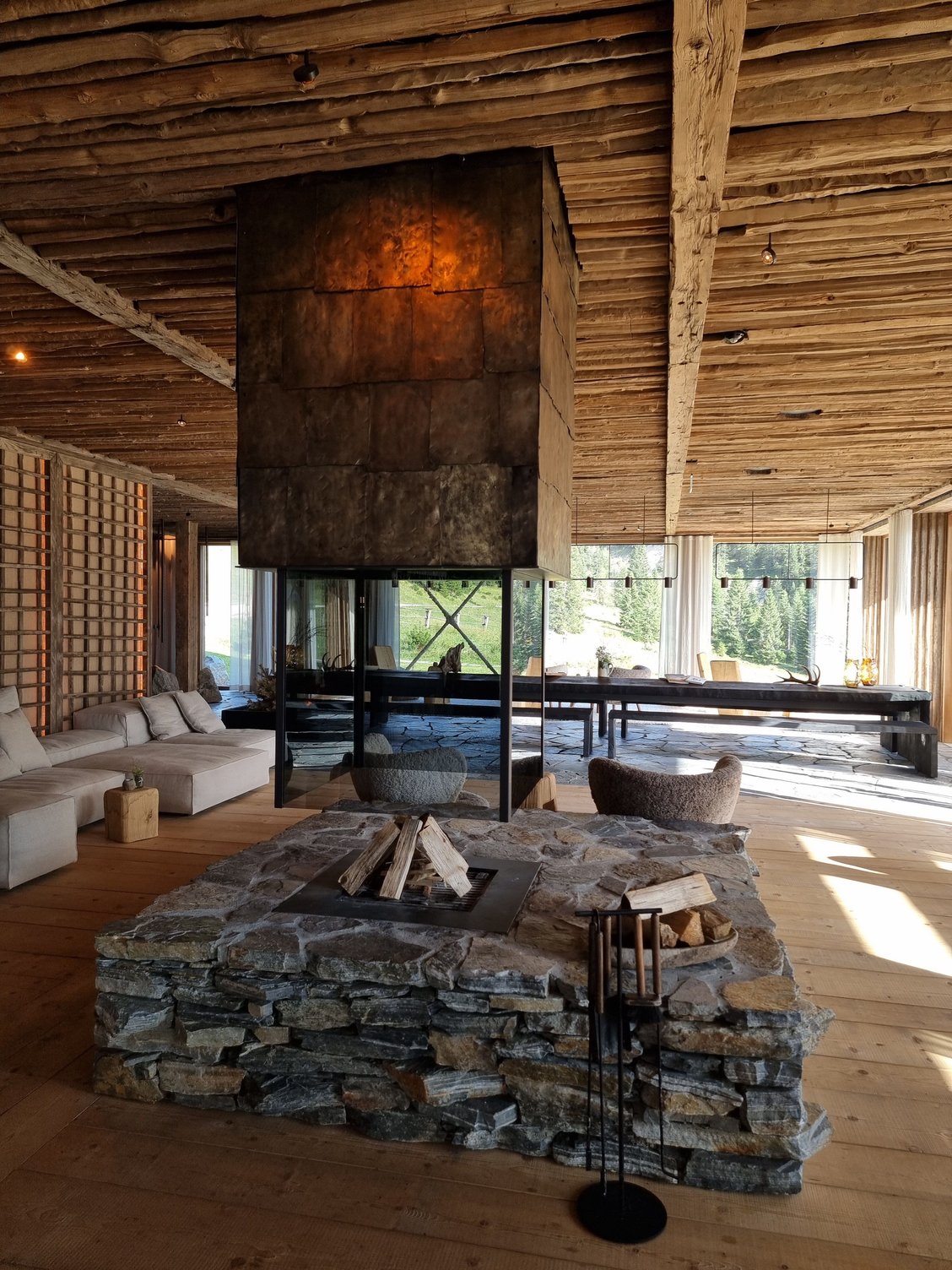
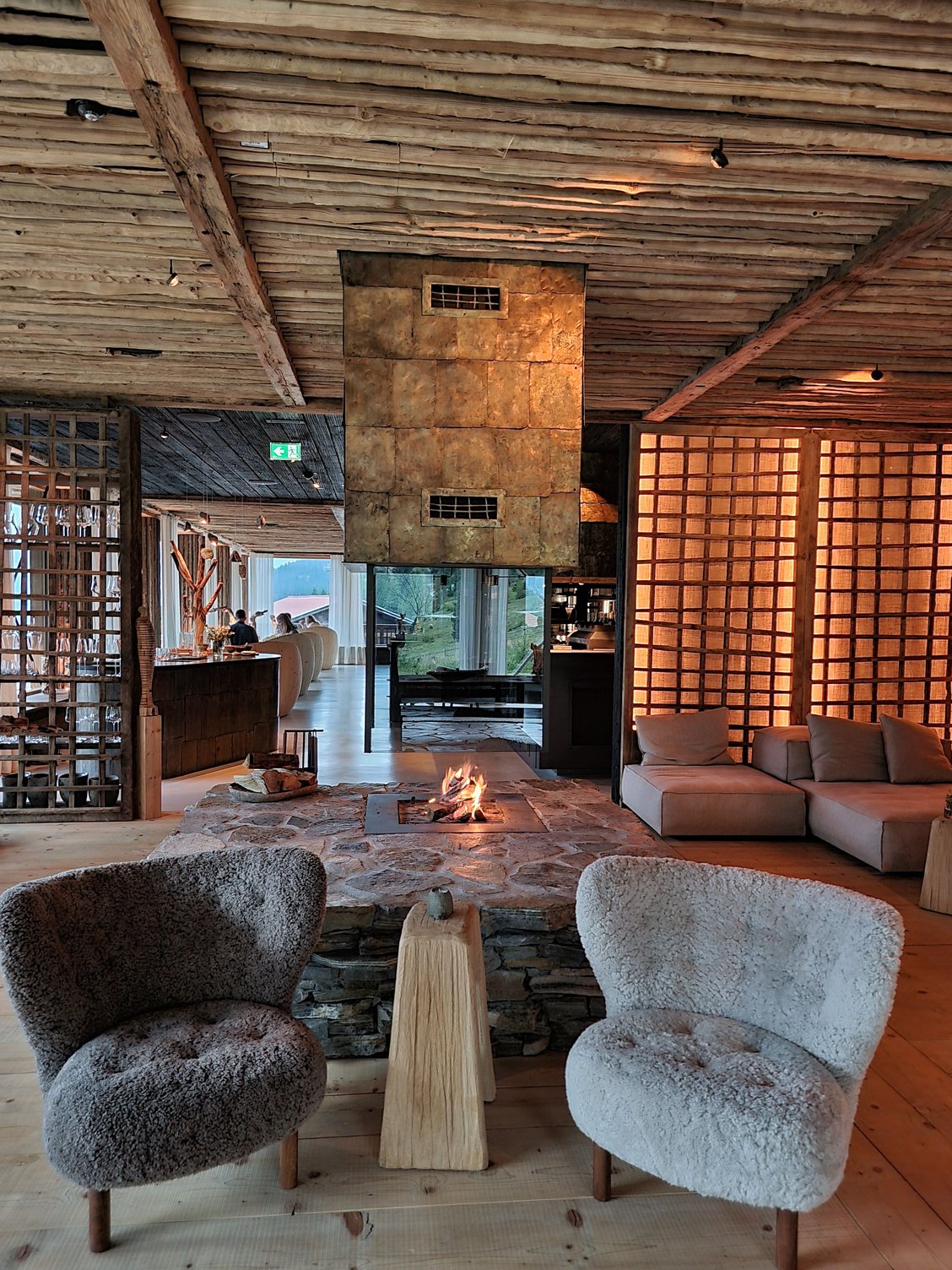
There is no reception desk, and no one will ask for your credit card (which isn’t needed since everything is included in the rate). The only extra charge is the city tax of €3 per person per day.
The interiors are luxurious, but in a subtle and non-opulent way, what I would call
understated luxury, with extensive use of wood, stone, and natural materials. Our host then gave us a tour of the building and the spa before accompanying us to our suite, where our luggage was already waiting for us..
 ROOMS
ROOMS
More than rooms, these are true suites: there are only nine in total. Two are located on the lower level, where the spa is also found, and feature a terrace and garden. Six are on the first floor, all with balconies, and one occupies most of the second floor. Don’t expect upgrades, they don’t offer them (and honestly, you won’t miss them), nor any form of status recognition, as all guests are treated equally.
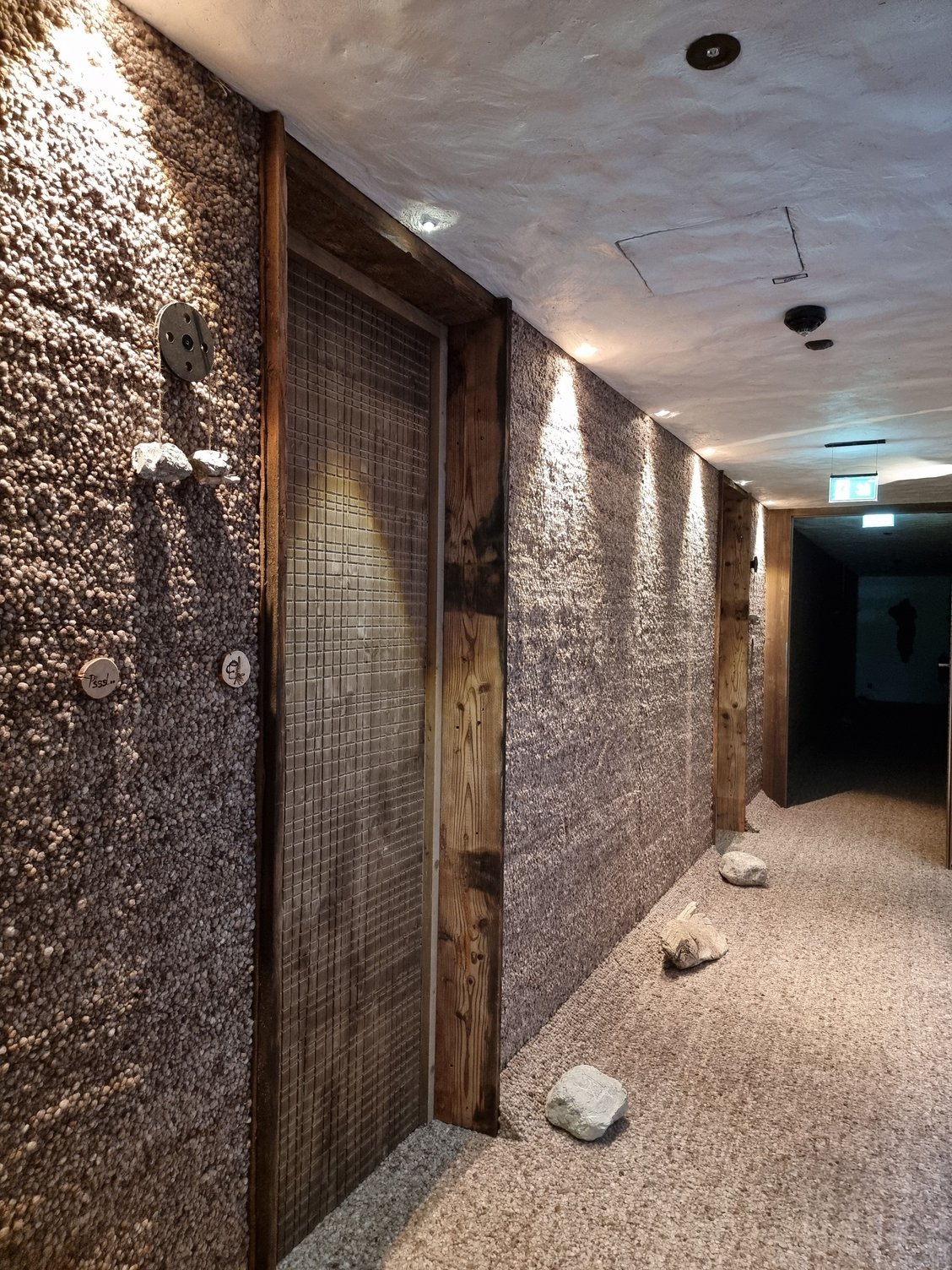
The corridors have floors and walls covered with raw wool and natural materials. The room number is engraved on a stone next to the door. Instead of traditional door signs, a clever balancing system is used: guests simply shift a stone downward beside the door to signal whether they wish privacy or room serviced.
All suites feature a king-size bed and accommodate only two guests, except for their “top” Himil suite on the second floor, with a private sauna and a fireplace, which can host up to four.
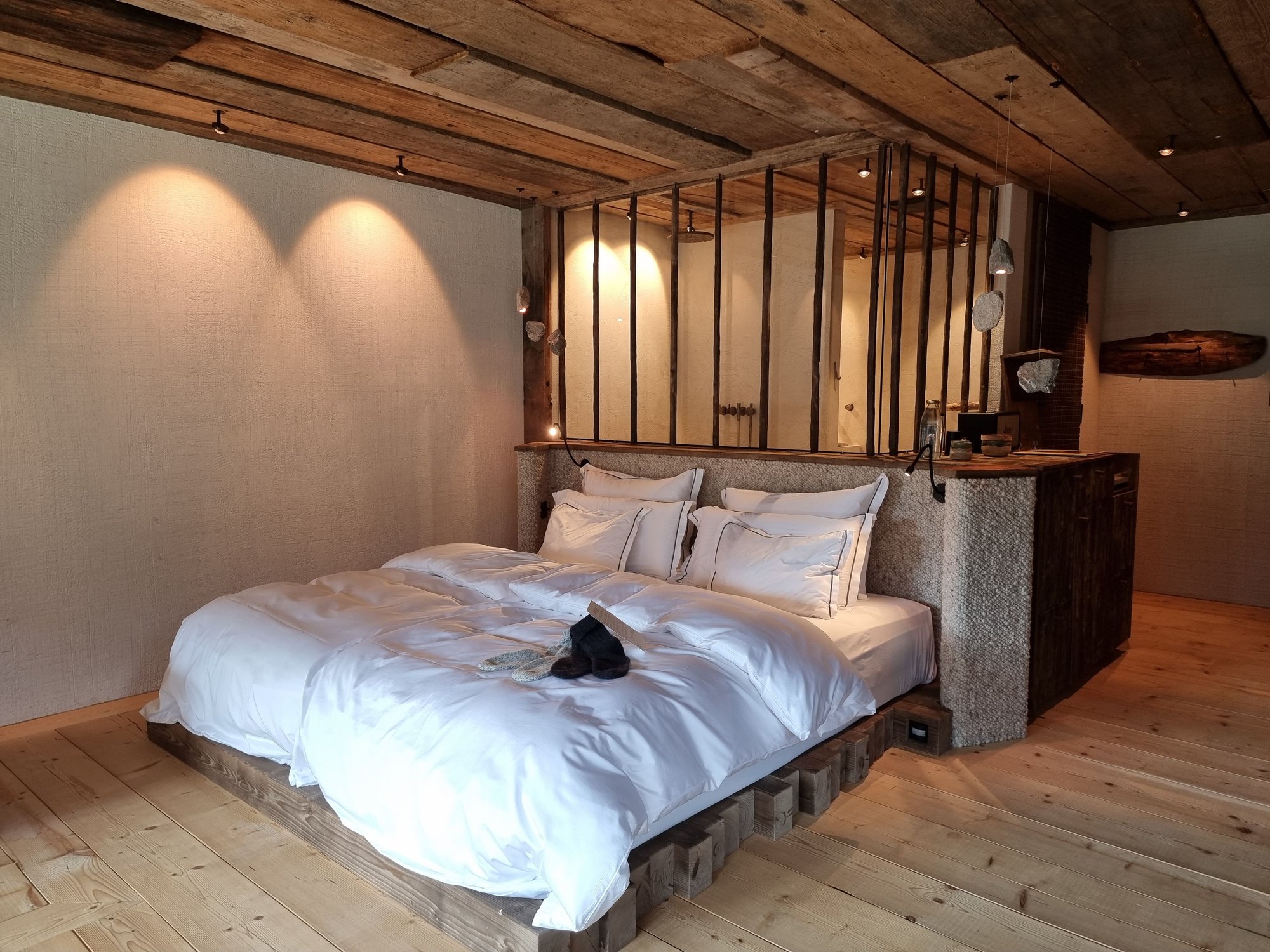

On the spacious balcony, there’s an additional bed for those who wish to sleep outdoors (weather permitting). I tried it one night, and it was truly magical to fall asleep under the stars with the sound of cowbells echoing through the night. The bed linens are of high quality, and each guest gets three pillows, all fairly firm (I can’t stand the overly soft pillows most hotels offer), including one filled with wood shavings (I didn’t open it up, but it felt like shavings, and it was surprisingly comfortable).

The room was impeccably clean, and set on the bed was a welcome note and gift of thick woolen socks, which we were encouraged to wear all around the property. On the table another gift: a small guidebook, and a notebook branded with the
eriro logo.

A lovely touch in the room was the bathtub carved from a tree trunk, along with a spacious glass-walled rain-shower and washroom, and a separate toilet area. There’s also a large walk-in closet with a built-in safe.
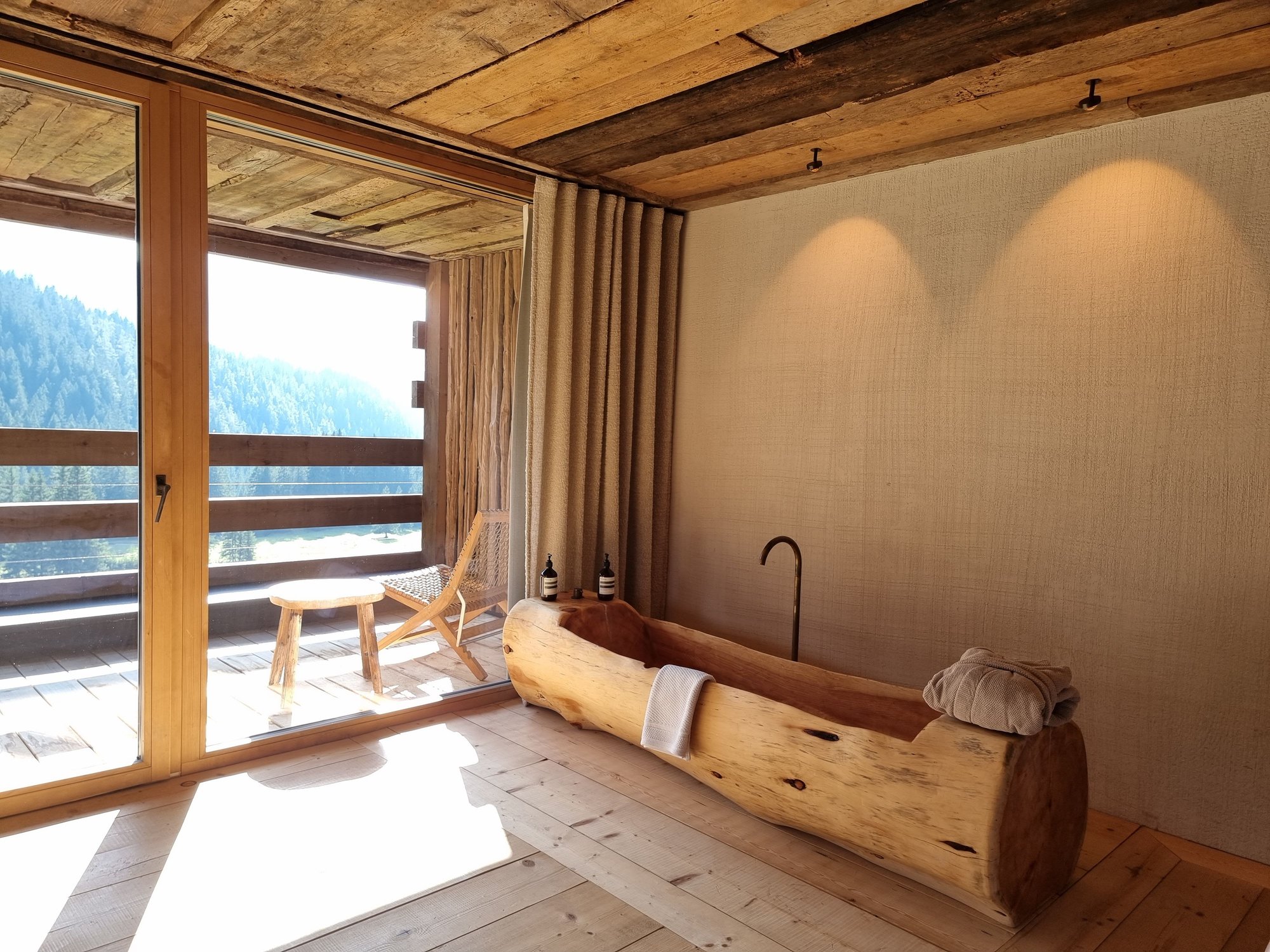

The suites are entirely wood-furnished (also the ceiling), yet equipped with a sophisticated, state-of-the-art lighting system. There is no air conditioning, and the suites have been intentionally designed without a television. Wi-Fi (which is actually discouraged) is available only upon request and only in the rooms. I personally didn’t use it, having deliberately left my laptop at home and relied on my smartphone’s data plan during the excursions to use the GPS.
Each room includes board games, a turntable with a selection of records (more records and books can be borrowed from the lounge area), a coffee kit, and a minibar (with complimentary items). For those who wish, room service is also available, always as part of the all-inclusive offering.
 SPA
SPA
Open 24 hours and located on level -1, the spa is intimate and cozy, featuring three small indoor pools (one kept in darkness to encourage meditation) and two saunas.
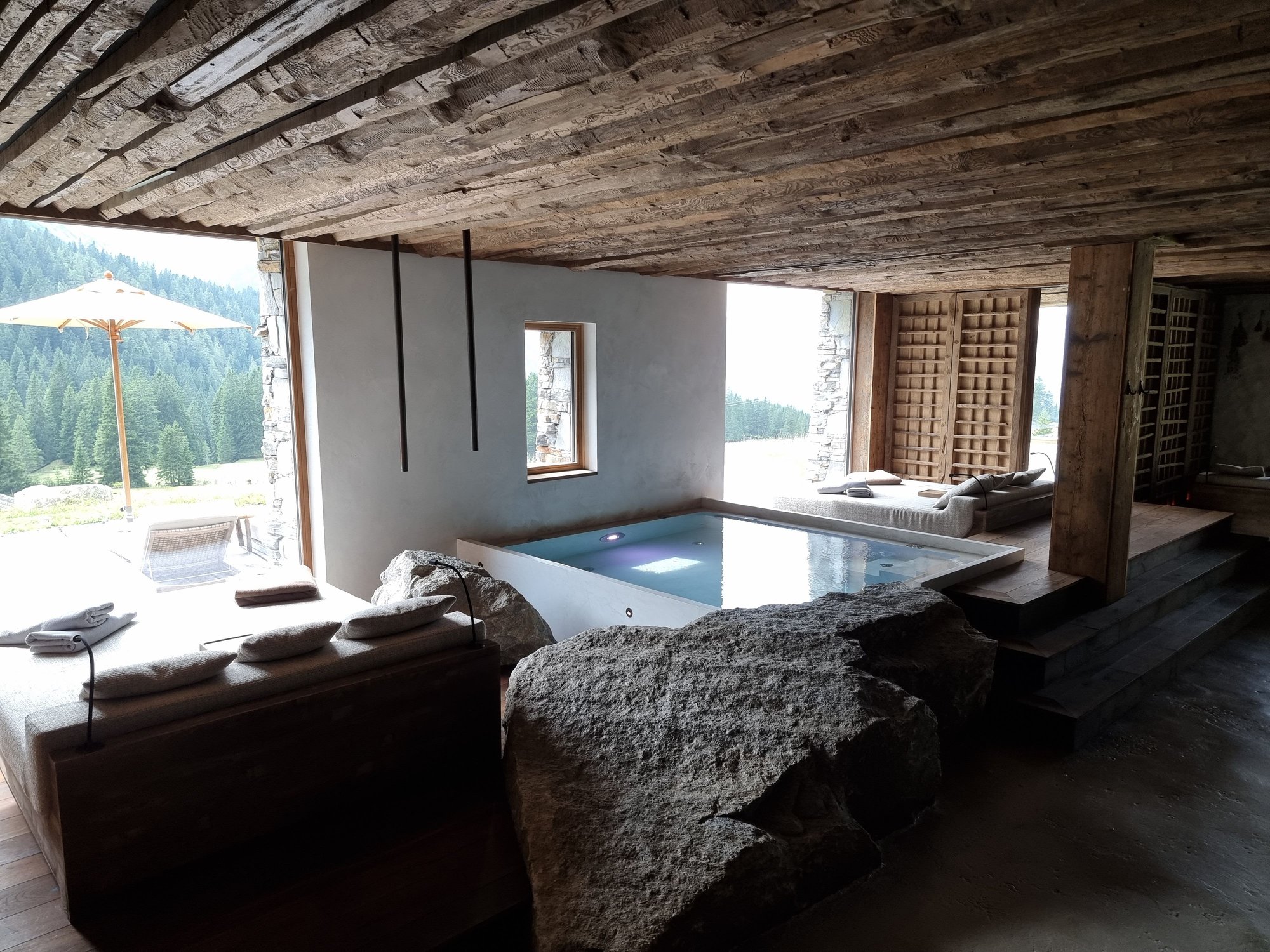


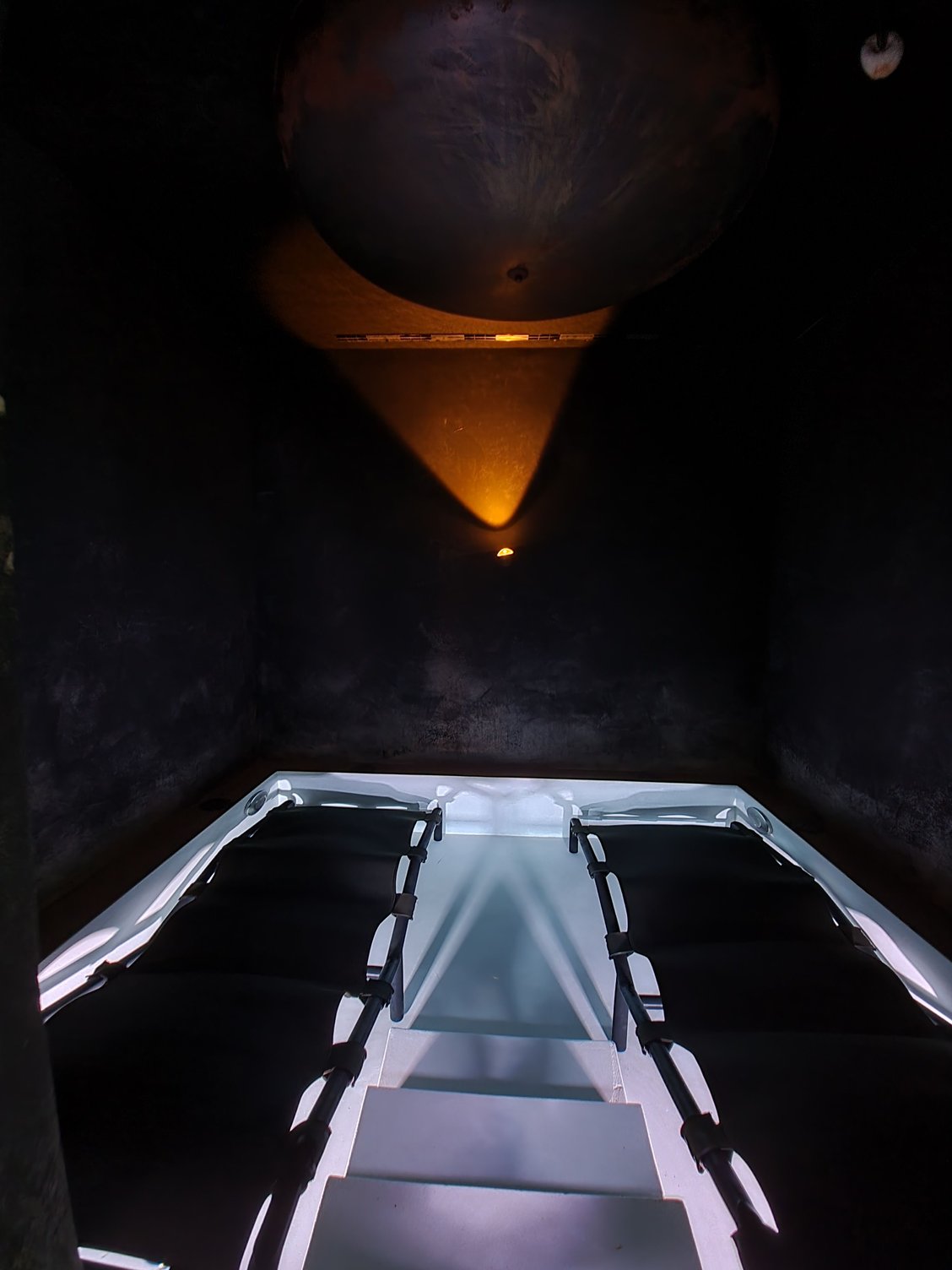
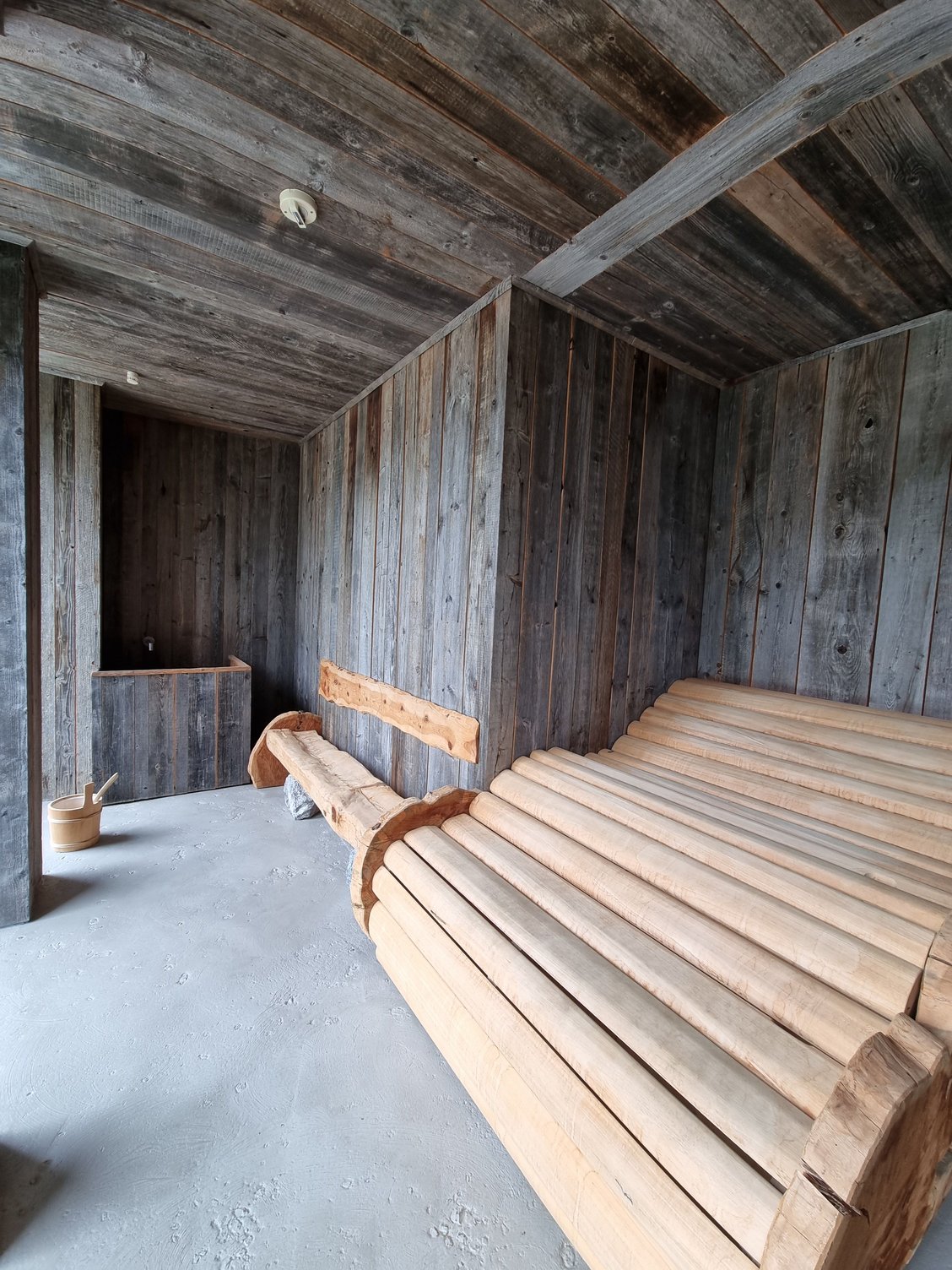
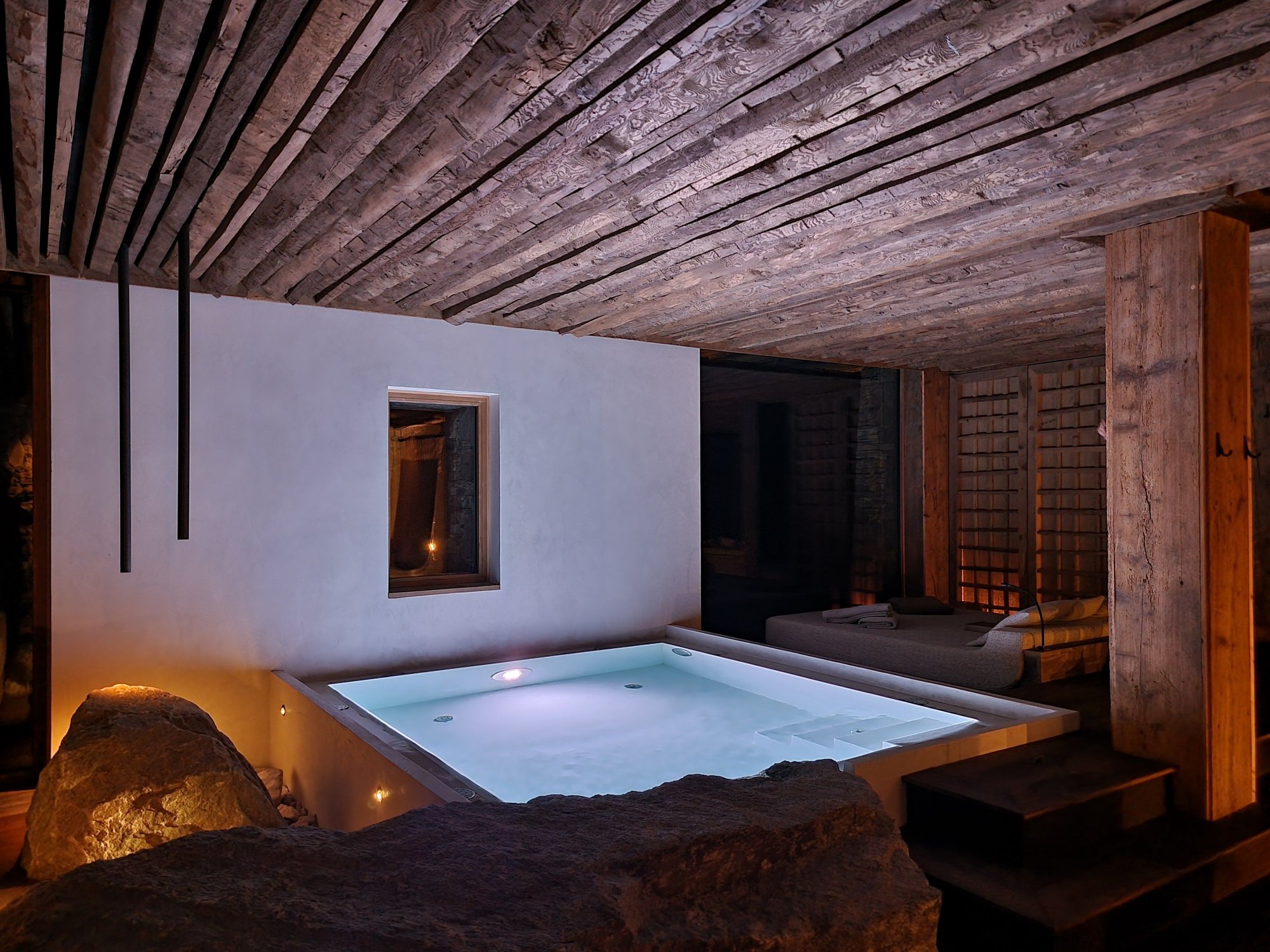

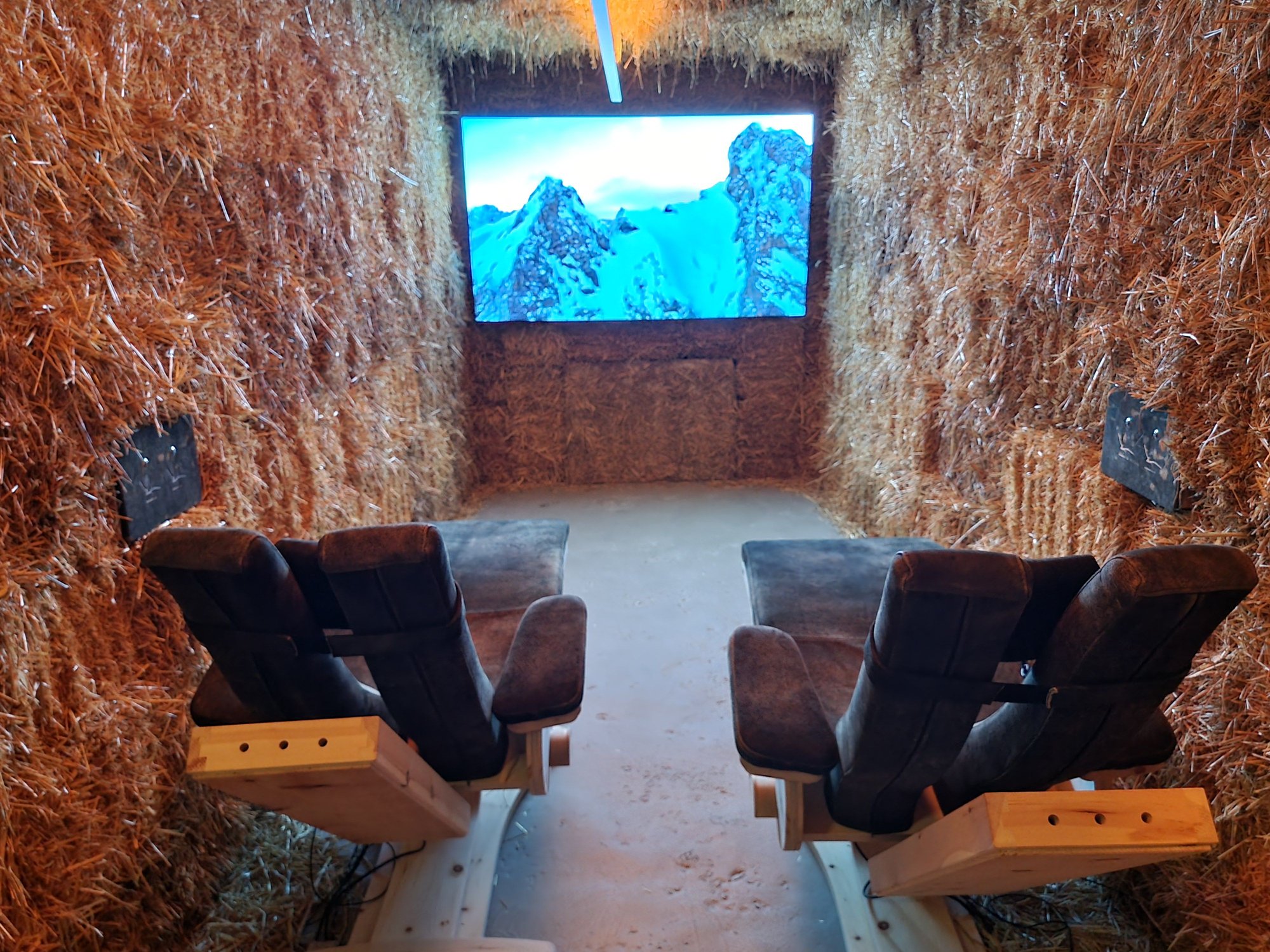
There’s also a relaxation room with hay-covered walls.
During my stay, I visited the spa frequently and never encountered another guest, giving me the delightful impression of having a private spa entirely to myself.
RESTAURANT
The restaurant is intimate, with only nine tables, one for each suite, and can accommodate up to 20 guests. There’s no dress code; in fact, guests are encouraged to dress as comfortably as possible, even in tracksuits if they wish.


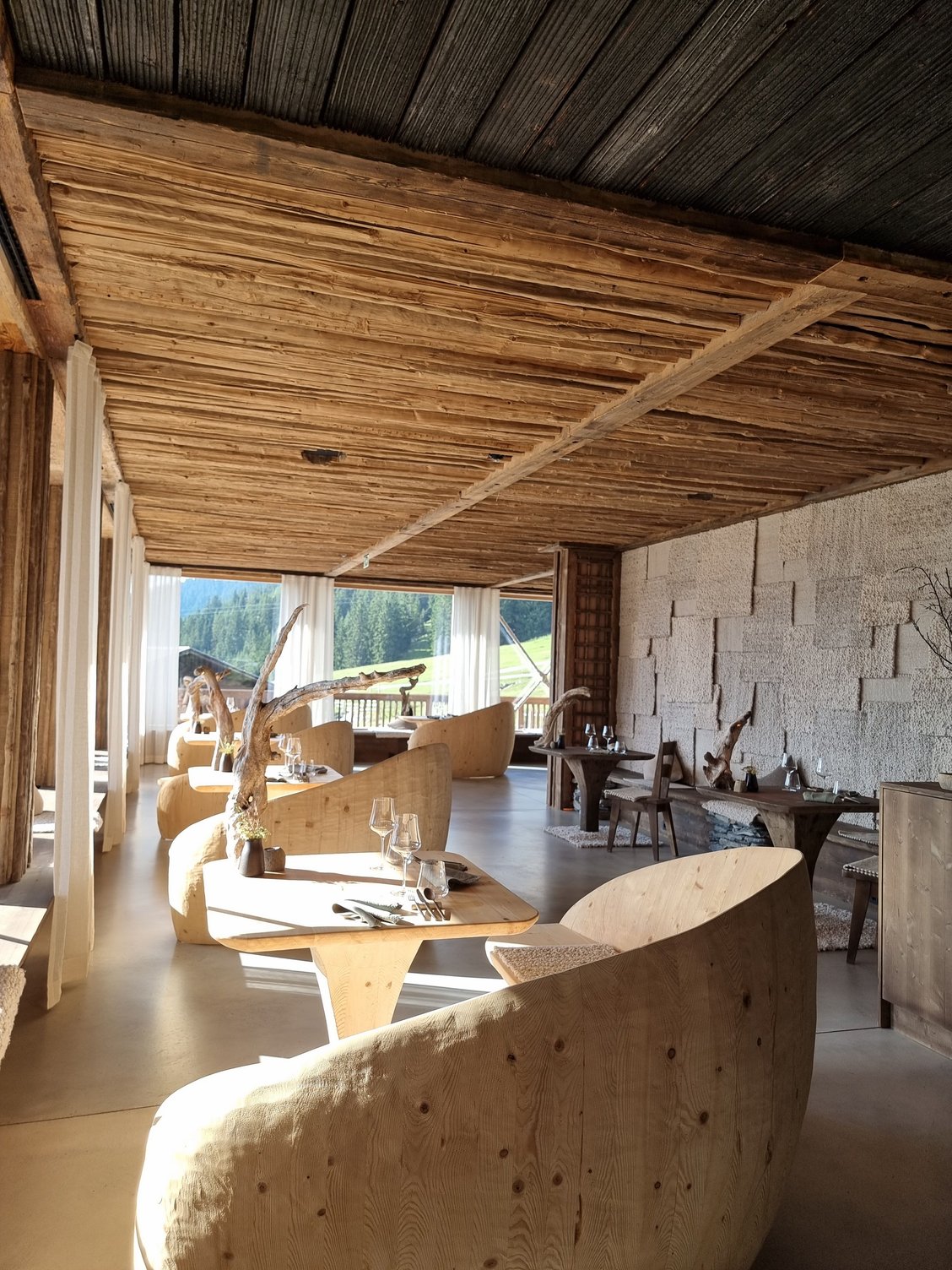

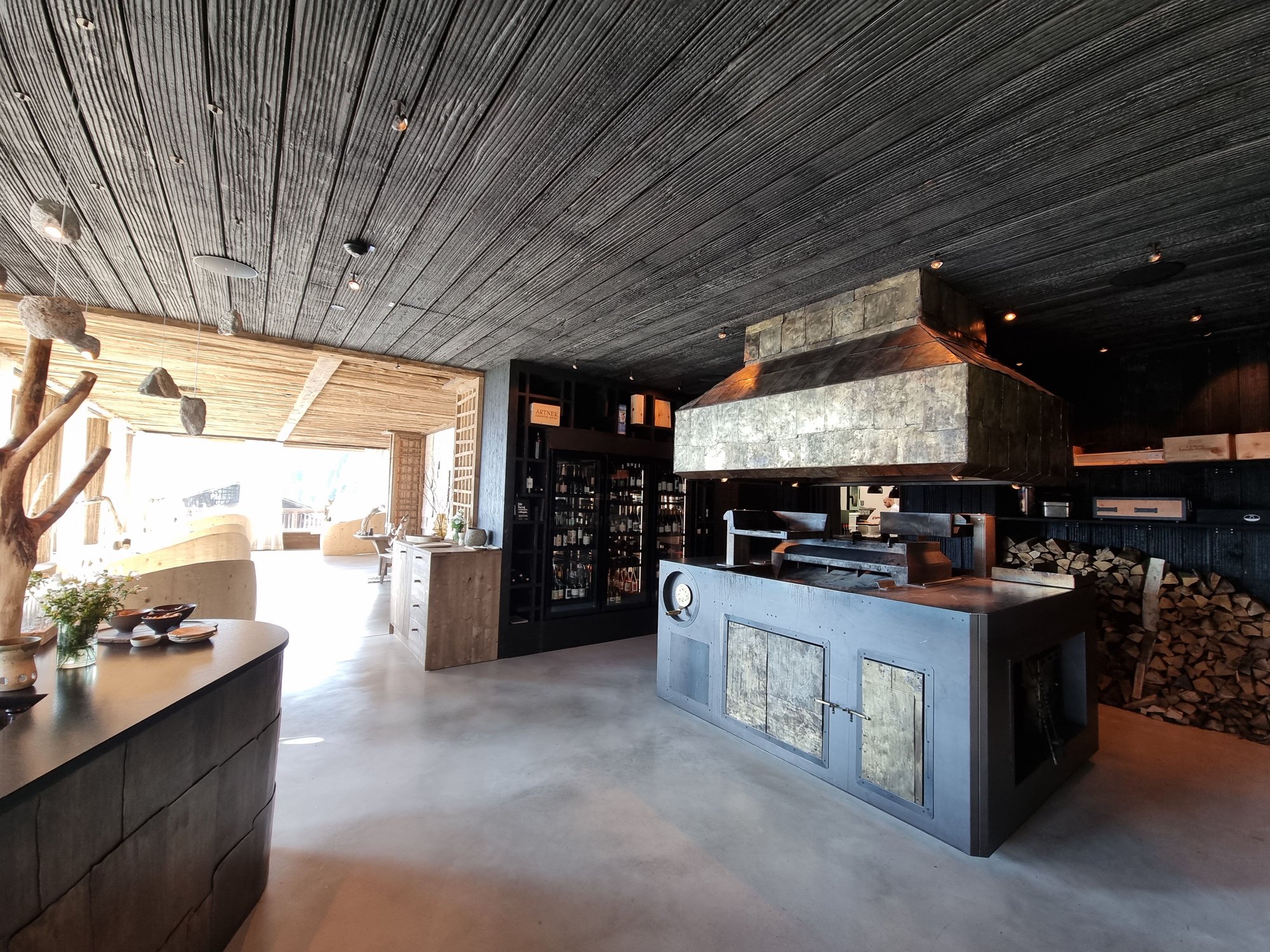
Breakfast, lunch, and dinner are served in the restaurant, while in the afternoon, snacks and sweets are available on the large table in the lounge area. Meal times are flexible to suit guests’ preferences. All food and beverages come from the surrounding region or, at most, from within Austria: the kitchen is zero-waste and higly seasonal and with ingredients sourced from local farms and foraged from the surrounding landscape.
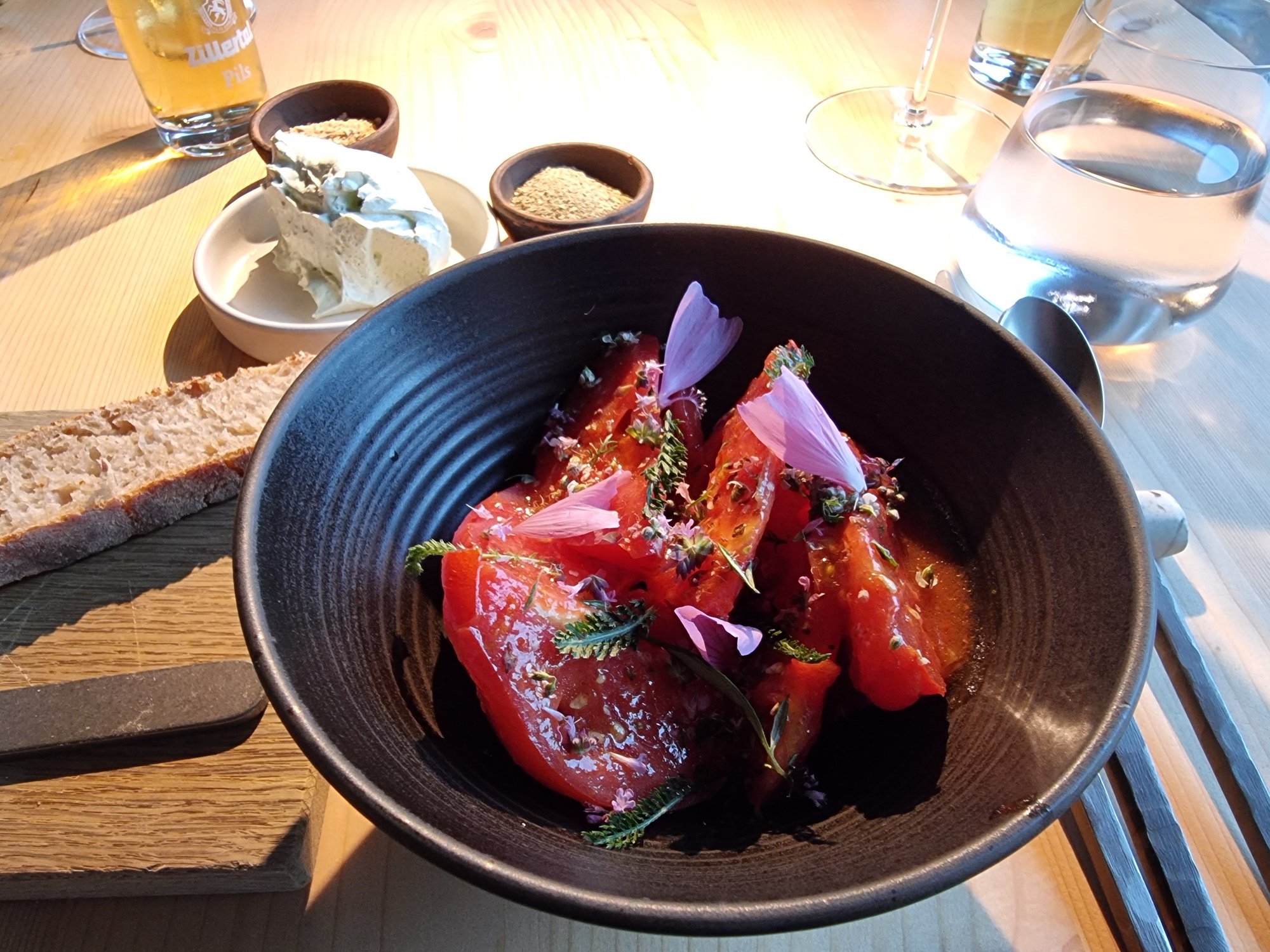


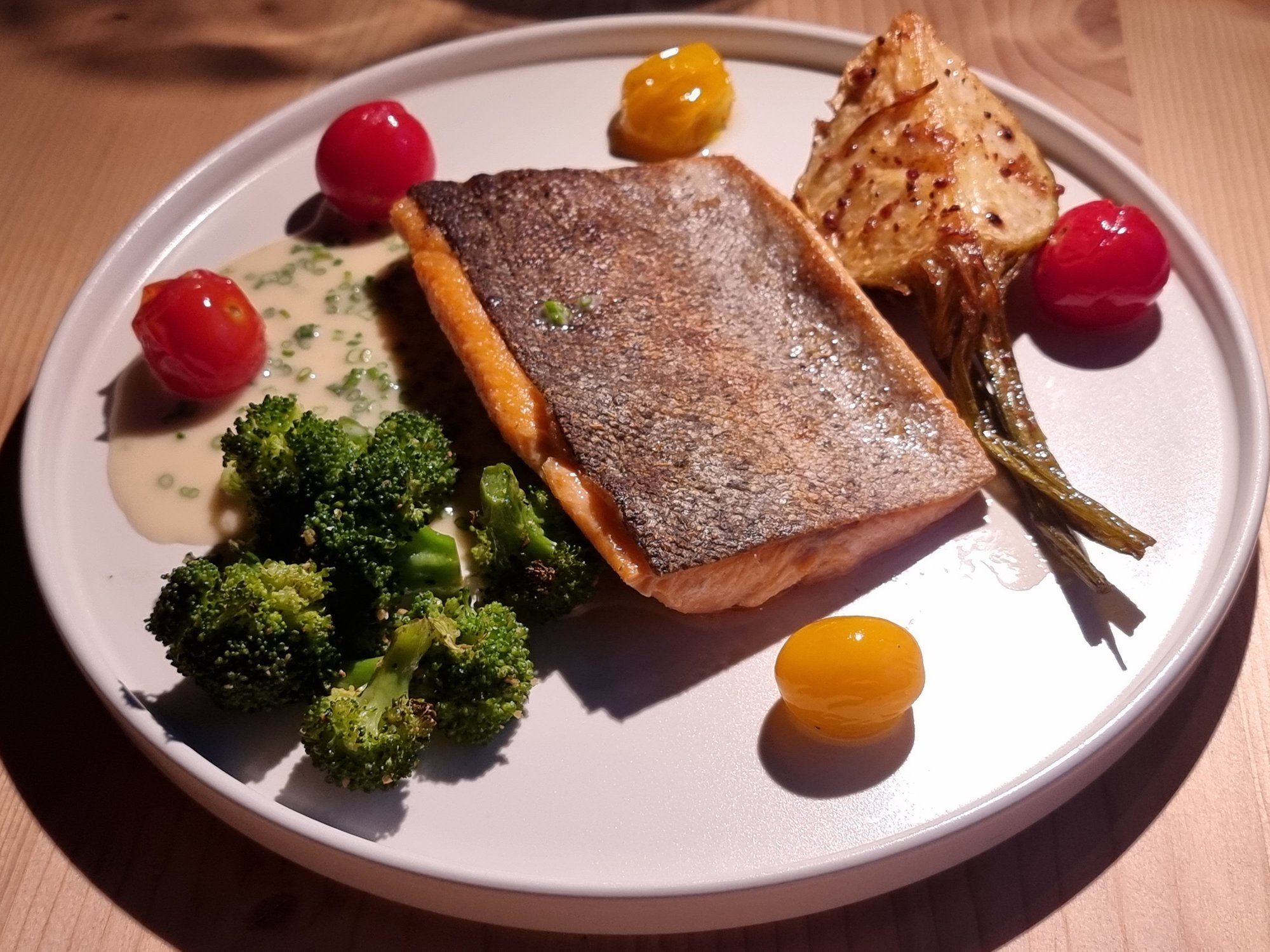

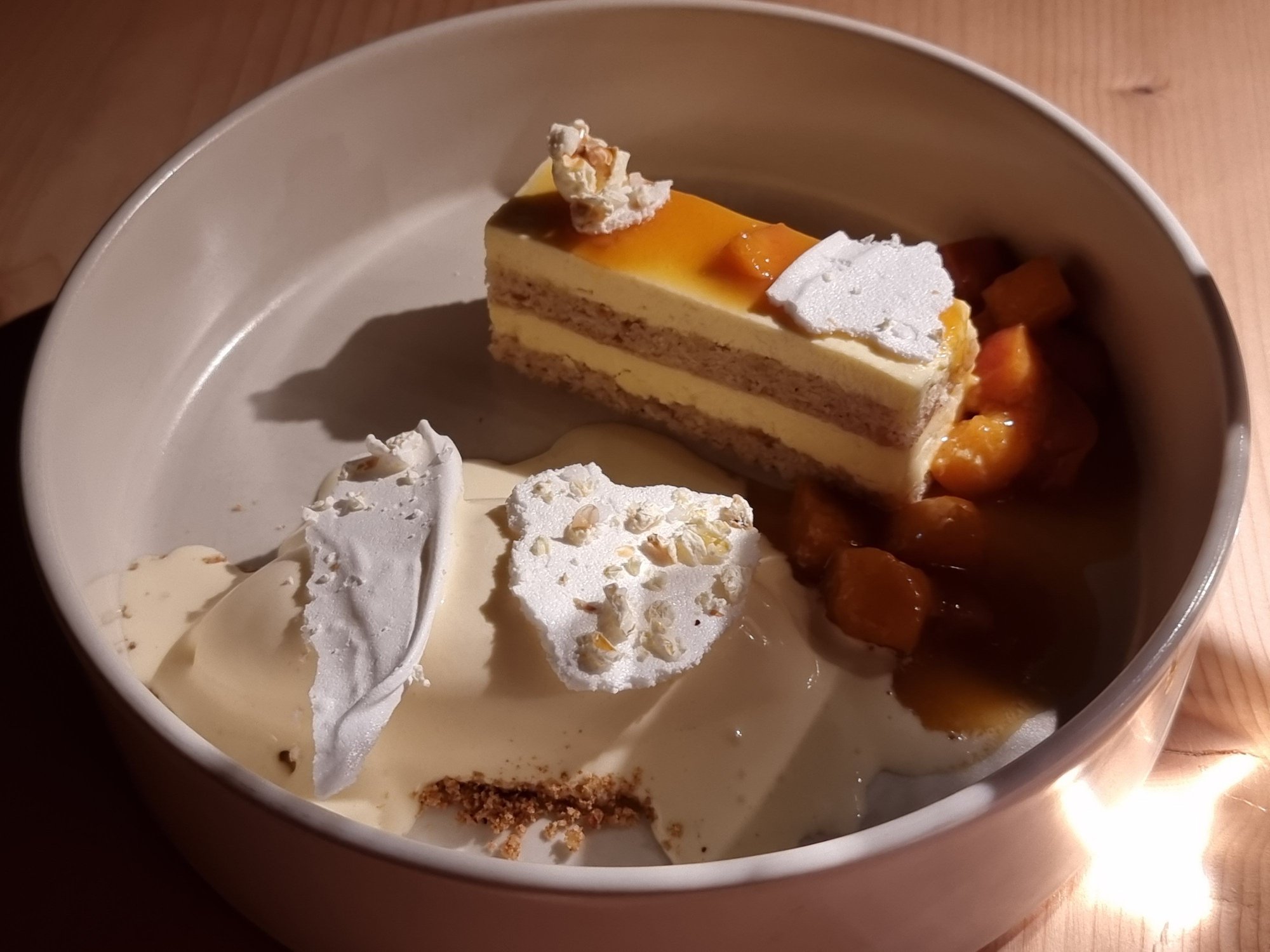


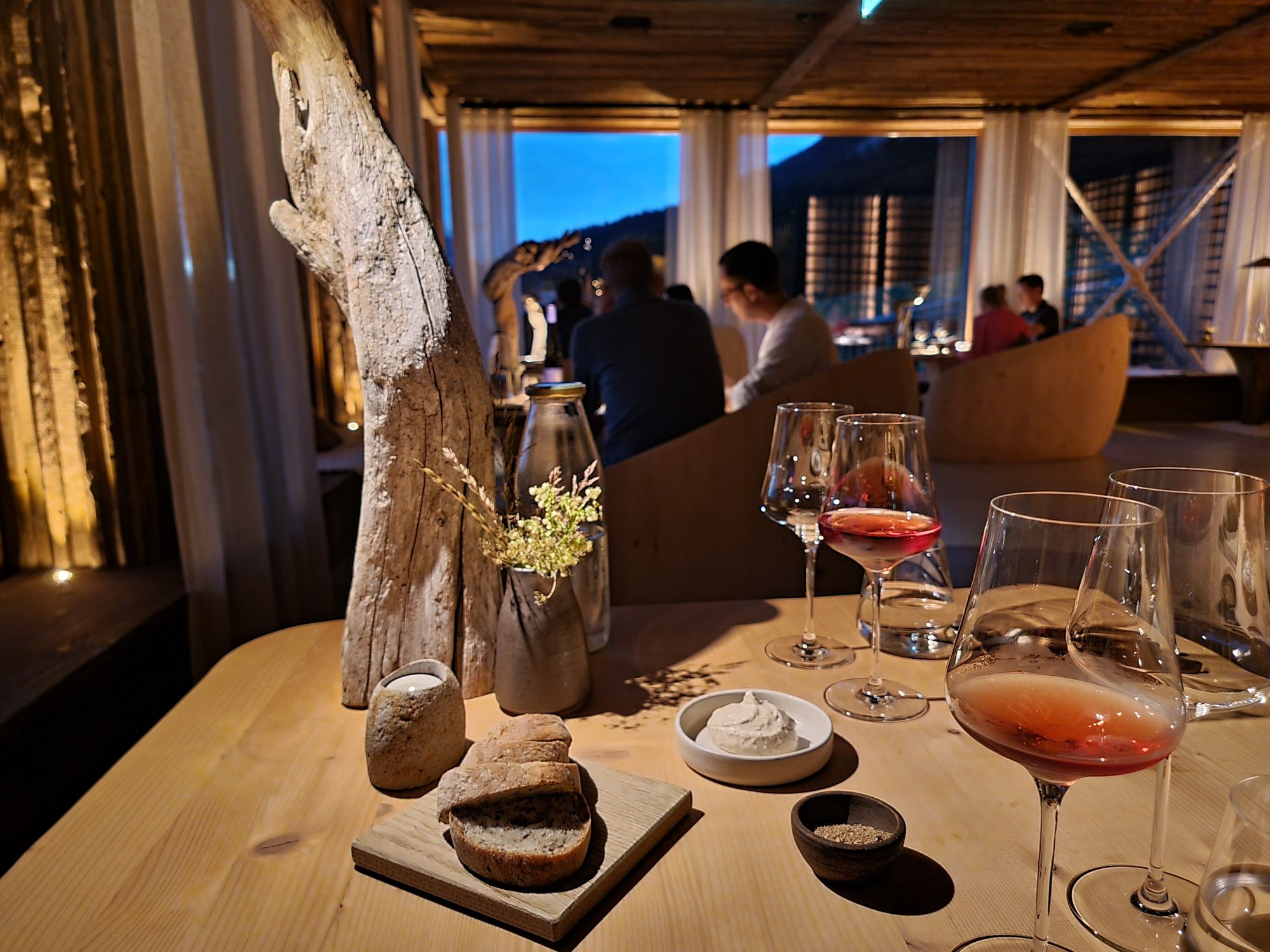
The only exceptions are a few wines, such as Champagne or Prosecco, while the rest, including wines, digestifs, and spirits, are locally produced. Don’t expect to find Coca-Cola, which is replaced by the regional Tirola Cola. Even the bottled water, for those who prefer it (though tap water is perfectly drinkable), is locally sourced.
The restaurant offers a fixed menu featuring only regional products. Some dishes may seem unusual, like goat tongue, for example, but the chef is always available to prepare alternative options upon request.
There’s also a sommelier who serves wine to guests, who can either select one or more bottles from the well-stocked display at the restaurant entrance or opt for wine pairing with the dishes served. Naturally, all of this is included in the All-Inclusive service.
Breakfast is truly excellent and features only local products. Don’t expect orange juice—it’s replaced by apricot or apple juice from small local producers.


Next to the restaurant, there's a lounge bar area with a fireplace at its center. Guests can help themselves to their favorite drinks, or rely on the staff for a crafted cocktail.
 ACTIVITIES
What sets the All-Inclusive formula apart is the wide range of both outdoor and indoor activities, all detailed on their website. In fact
eriro offers a range of guided (or not) experiences including barefoot hiking, mountain biking, skiing, snowshoeing, climbing and more (the property can set you up with all the equipment you need).
In our case, we chose a mountain hike to watch the sunrise: departure at 5:30 AM, after a freshly brewed coffee prepared just for us, accompanied by the hotel guide for a one-hour walk to the base of the Zugspitze to admire the sunrise. There, we enjoyed a light breakfast with hot tea and cookies, followed by wildlife observation (ibex, chamois, and marmots), and returned to the hotel by 10 AM for the full breakfast.
Guests can also use mountain bikes and eMTBs (with optional guide accompaniment), as well as a range of mountain gear for those who didn’t bring their own (hiking boots, raincoats, backpacks, water bottles, binoculars, etc.). In winter, numerous ski and snowshoe excursions are available.
Additionally, all guests receive an electronic card for free access to public transport and cable cars in the area (I didn’t use it myself, but it’s good to know it’s available).
Among the indoor activities, my wife and I chose the
pottery class, where, with the help of a ceramicist, we learned to make cups and bowls (which, once dried and painted according to our instructions, will be shipped to our home next month). Other activities that could be arranged included woodcarving, yoga lessons, and foraging with cooking lessons.
On the second floor, where the pottery and woodcarving classes are held, there’s also a small gym with no more than 2–3 machines and some weights. I don’t consider this a limitation, as the mountain itself offers plenty of ways to stay active.

Now, a key reflection on the activities we experienced: in other All-Inclusive resorts I’ve visited around the world, activities were usually limited to canoe rentals, small boat outings, or group tennis or archery lessons. Here, my wife and I had a guide dedicated solely to us for five hours during the sunrise hike, and the same goes for the pottery class, where a ceramicist spent two full hours teaching just the two of us.
STAFF
One of the hotel’s greatest strengths. A team of 15 staff members (essentially one per guest) is ready to fulfill—and often anticipate—every guest’s needs. Nothing is impossible for them. For example, while the spa is open 24/7, the sauna normally operates until 10 PM. But if a guest wants to use it at 3 AM, they simply need to notify the staff half an hour in advance, and everything will be prepared accordingly.
To avoid any awkwardness for North American guests, it’s worth noting that tipping is not customary due to local culture and traditions, and staff do not expect it.
CONCLUSION
I count this stay among the best I’ve ever had, in every respect. If you decide to go, I highly recommend leaving your laptop and tech gadgets at home to fully reconnect with nature. In this case, the hotel itself becomes the centerpiece of the vacation, which is why I suggest a stay of 2–3 days at most, with only short excursions or activities (one in the morning and one in the afternoon), so you can truly savor your time at the hotel. For more demanding hikes, you can always plan a few extra days at other hotels in the area.
I’ll gradually fill this post with some of the many photos I took during my stay. In the meantime, if you have any questions, I’m happy to help.