I just completed a one-night stay (Jan. 1 to 2) for a layover at PVG. I had a good stay, and I would stay again if I had another PVG layover. I found
thereisnoaddress' review (and this thread) very helpful, and I had a similar experience.
The hotel is remote. I don't recommend taking public transportation; take Didi or a cab. My Didi ride from PVG to Urcove took about 35 minutes at 5:30 p.m. and cost ¥50. Didi to the airport took about 30 minutes at 10 a.m. and cost ¥40. The hotel is behind a manned security box with a road barrier, but the road before it is lined with trees (and no streetlights!) I didn't have any issues getting Didi drivers to take me past the barrier or picking me in front of the hotel after the security gate.
If you really want to save money, take the metro to Chuansha (line 2) from PVG (¥4) and get a Didi or a cab the rest of the way (Didi should be about ¥15 to ¥17). Apple Maps says you can take the metro to Chuansha (¥4) and transfer onto a local Pudong city bus (¥2), but the trip would take about an hour and 15 minutes.
I booked a business deluxe king the morning of my arrival in the Hyatt app for the "special rate" of ¥373. The standard rate on the app was something like ¥639. The special rate should be widely available. I didn't put in a corporate code or try to apply the AAA rate.
Check-in was easy. They knew how to check in foreigners. I didn't use the check-in machine or undergo any facial recognition. The front desk agent didn't speak much English, but my basic Mandarin worked. I asked if many foreigners stayed at the hotel, and she said only a few. She said most of the staff doesn't speak much English, so they get embarrassed and have to use a translation app to make do.
Maybe it's a Chinese hotel standard, but the front desk at check-in and check-out seemed not to know what a hotel folio was. I didn't get one at check-out, even after asking, and when I used a translation app, it must've said receipt because she said OK, and then proceeded to give me the copy of the credit card slip after I paid and then immediately print a duplicate. I had to pay for the stay at check-in. She preferred cash, but I asked to pay by credit card instead. She couldn't charge the card I used to reserve the room online. She insisted that I had to tap a card on the payment terminal or pay with cash. I didn't ask, but they probably also accept Alipay or WeChat Pay. (Funny enough, she asked if my rate was ¥373 before entering it into the payment terminal. I wonder what would've happened if I had said no.)
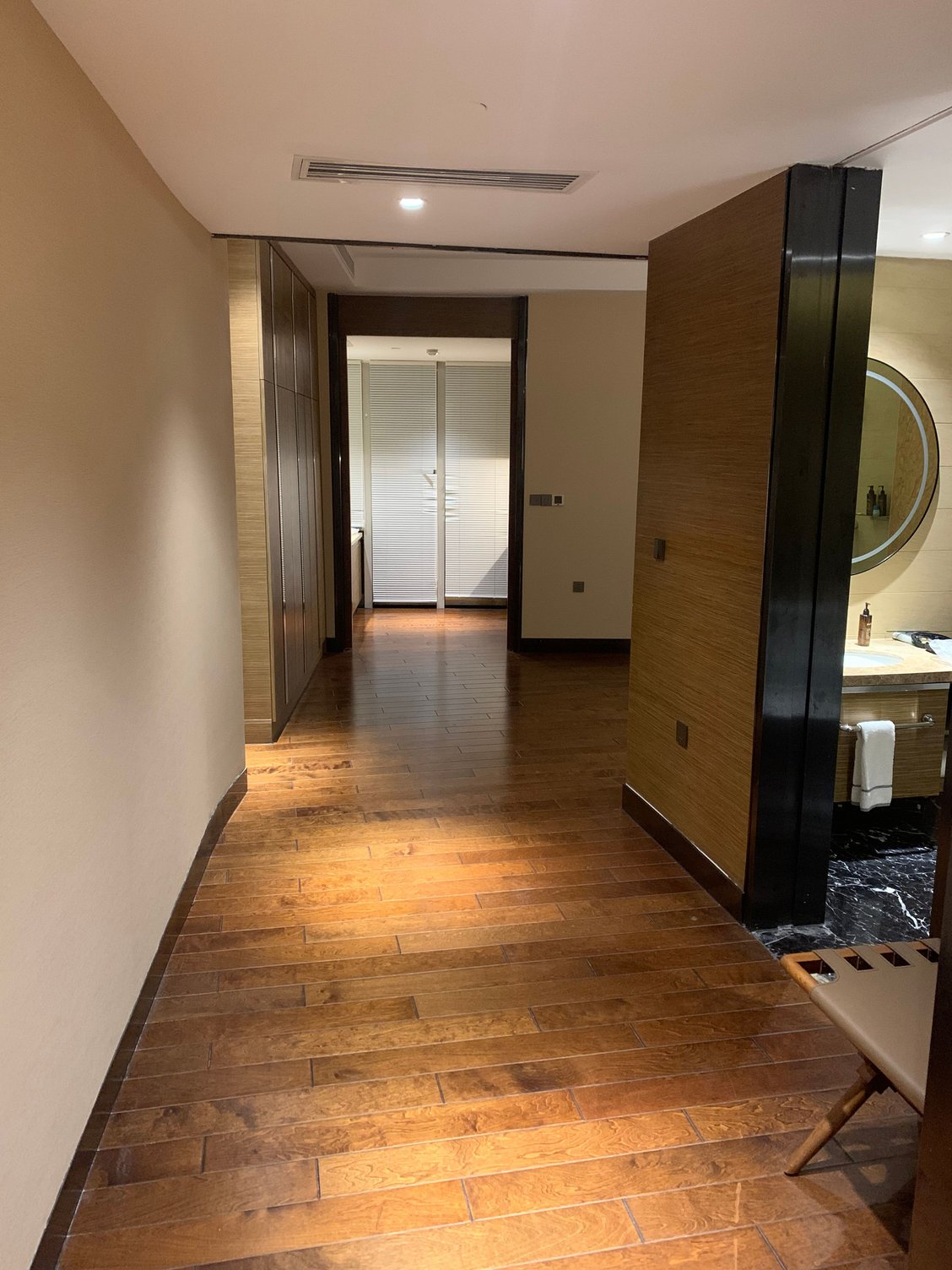
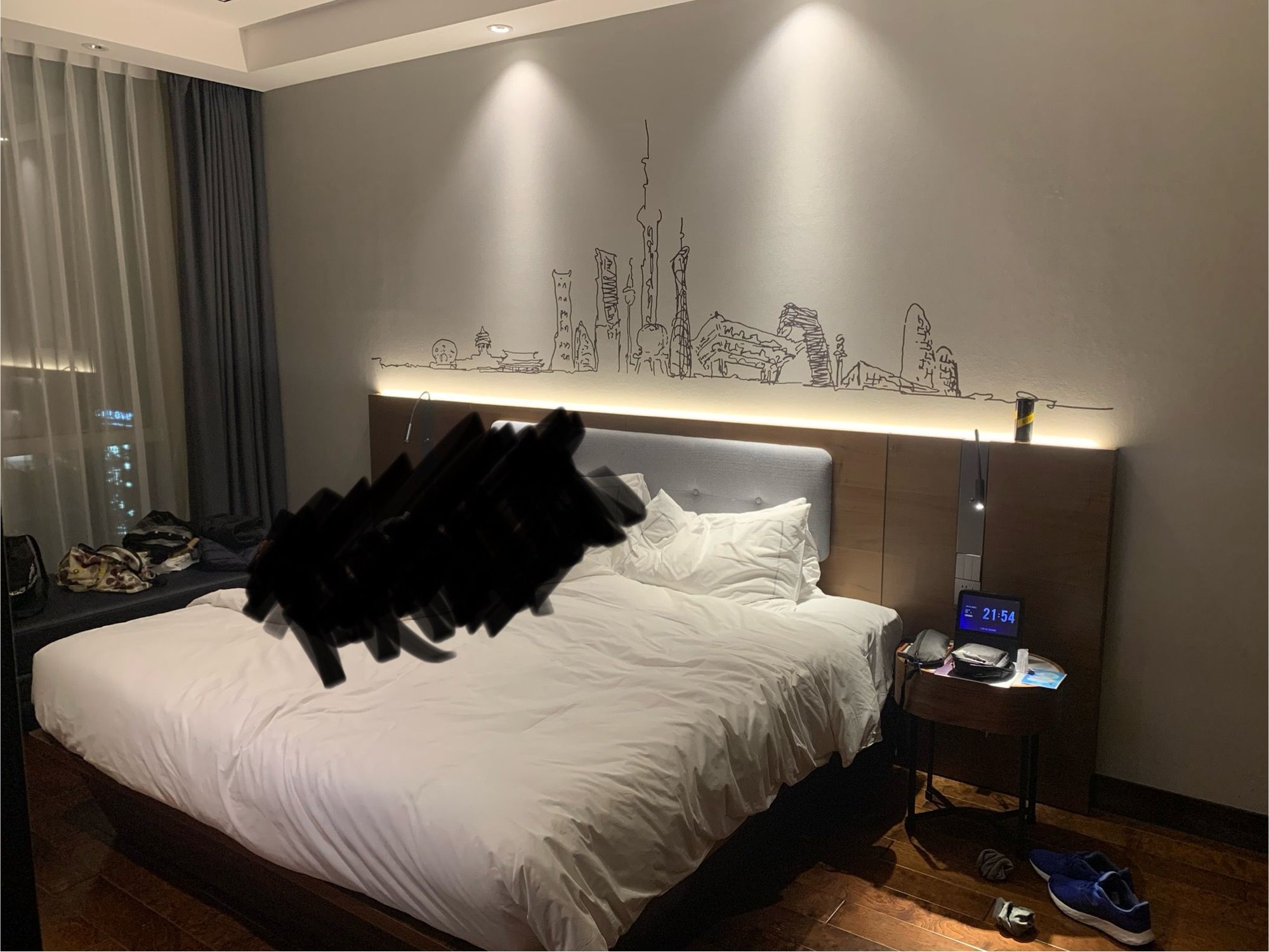
I wasn't recognized as a Hyatt member (I'm Explorist) at check-in, but interestingly, I think I was upgraded to an executive deluxe suite (see photos below). I was surprised as suites weren't available for sale on the Hyatt website or app.
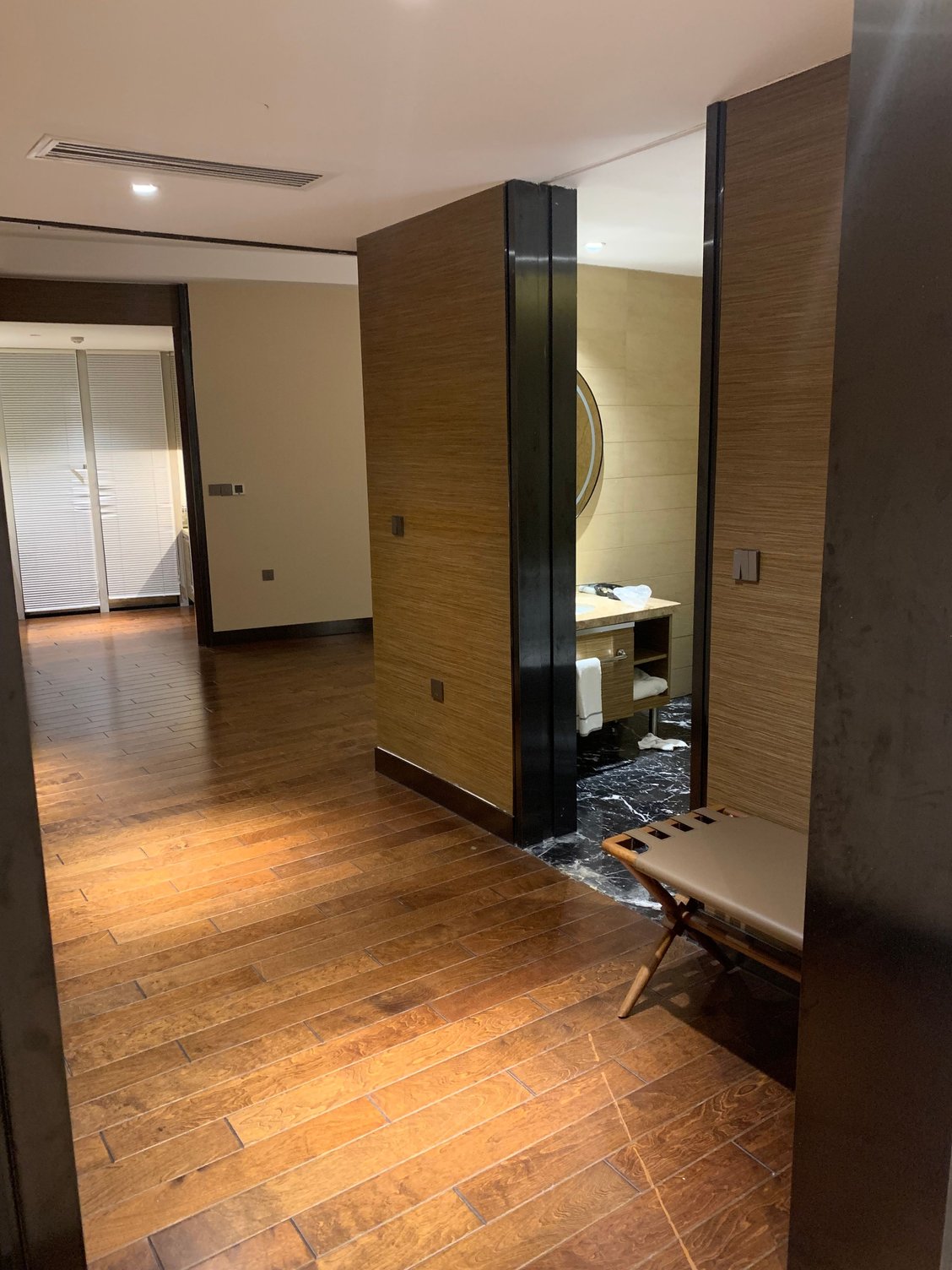
The hallway had a lot of empty closets, including one that is a wardrobe with wooden clothes hangers. The closet closest to the kitchen (the room at the end of this photo) has a full-sized ironing board, laundry bag, slippers and two bathrobes.
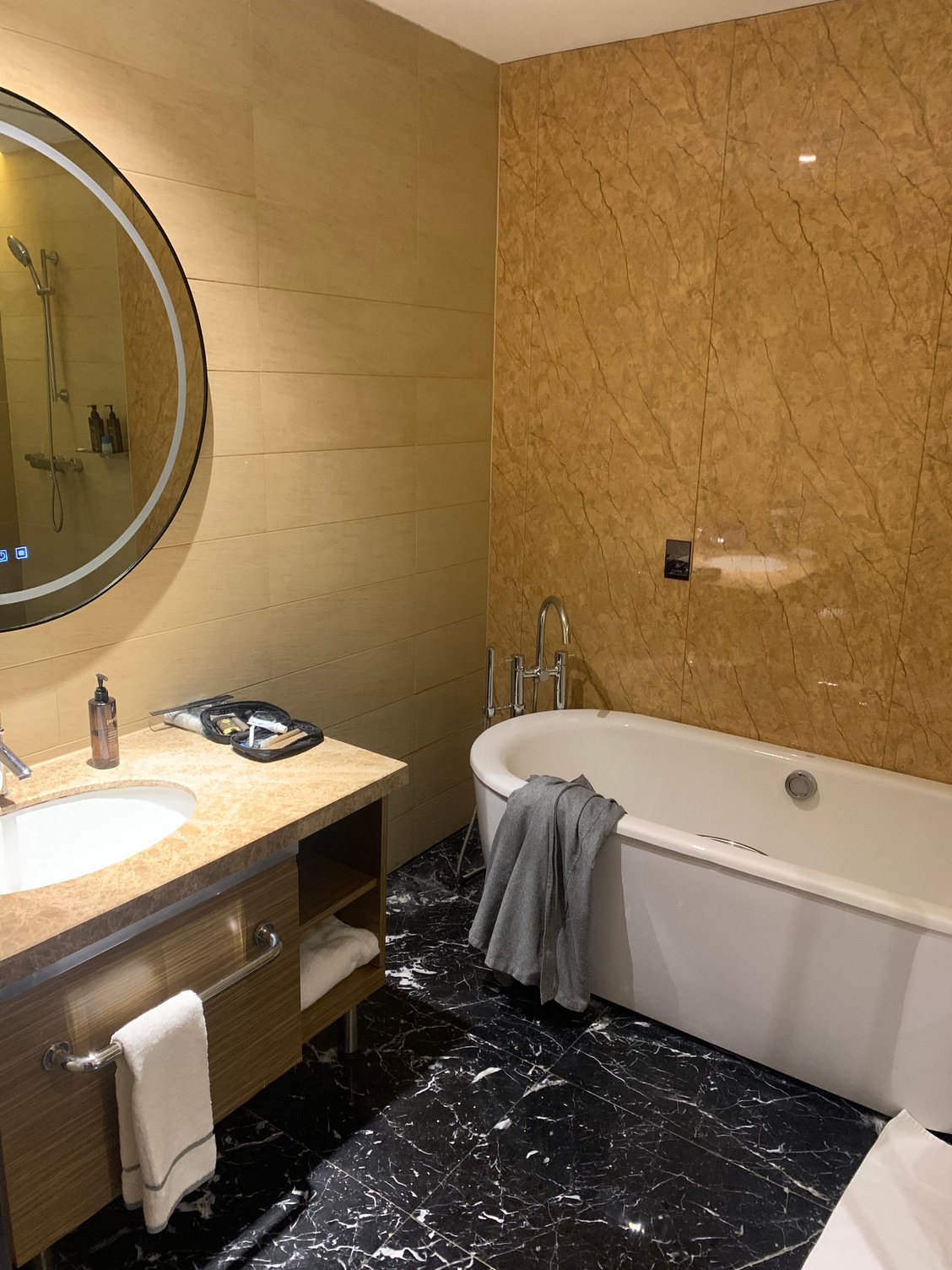
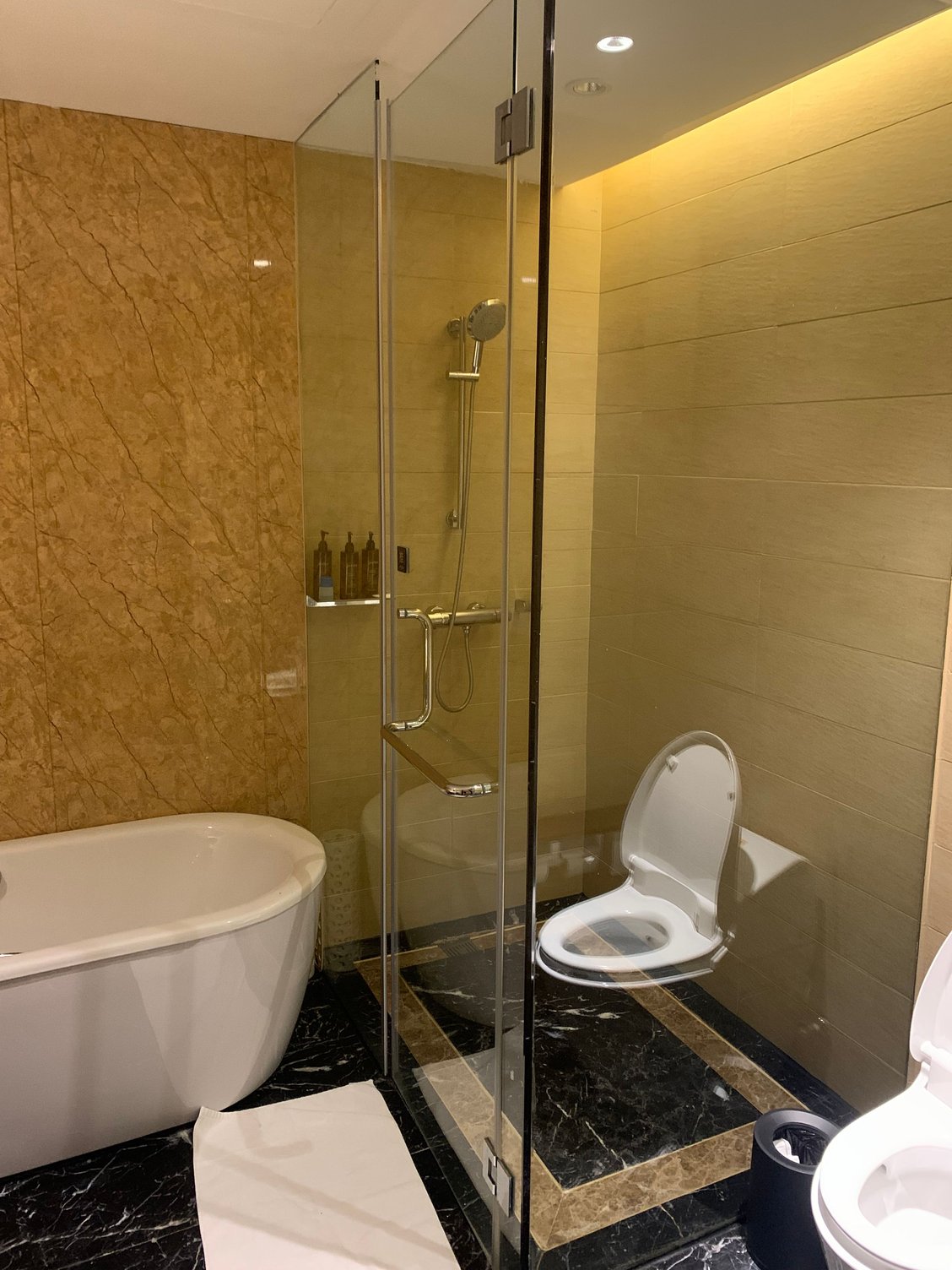
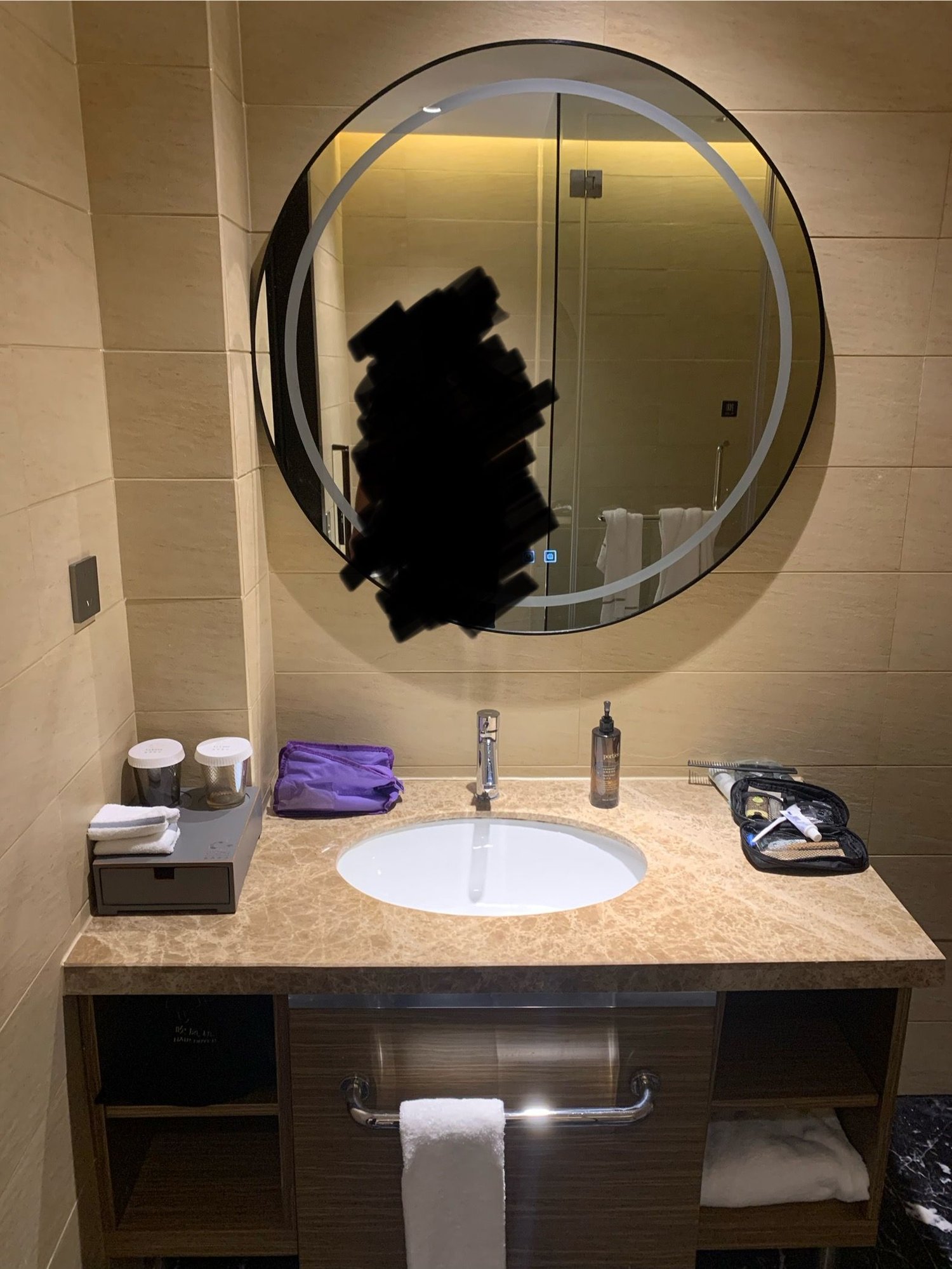
The bathroom had a full-sized tub, separate shower, Toto bidet with automatic seat and flush, a Xiaomi electronic scale under the sink, and a Chinese-branded (not Dyson) hair dryer. The front desk gave me two toothbrushes, two small tubes of toothpaste and a comb at check-in without my asking, but the amenity box in the bathroom has two packets of combo teeth whitening and mouthwash paste, a cotton pad and a shower cap.
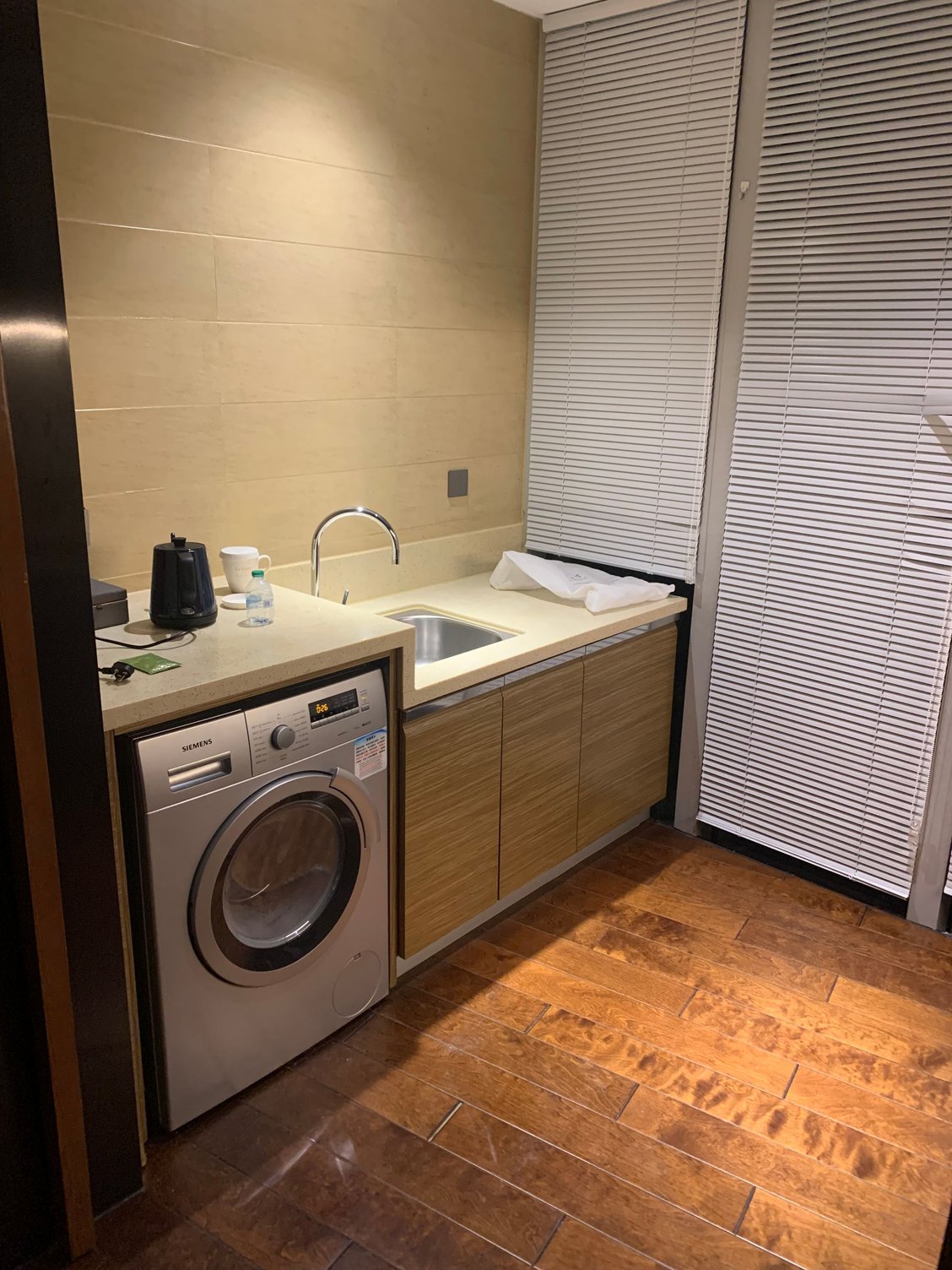
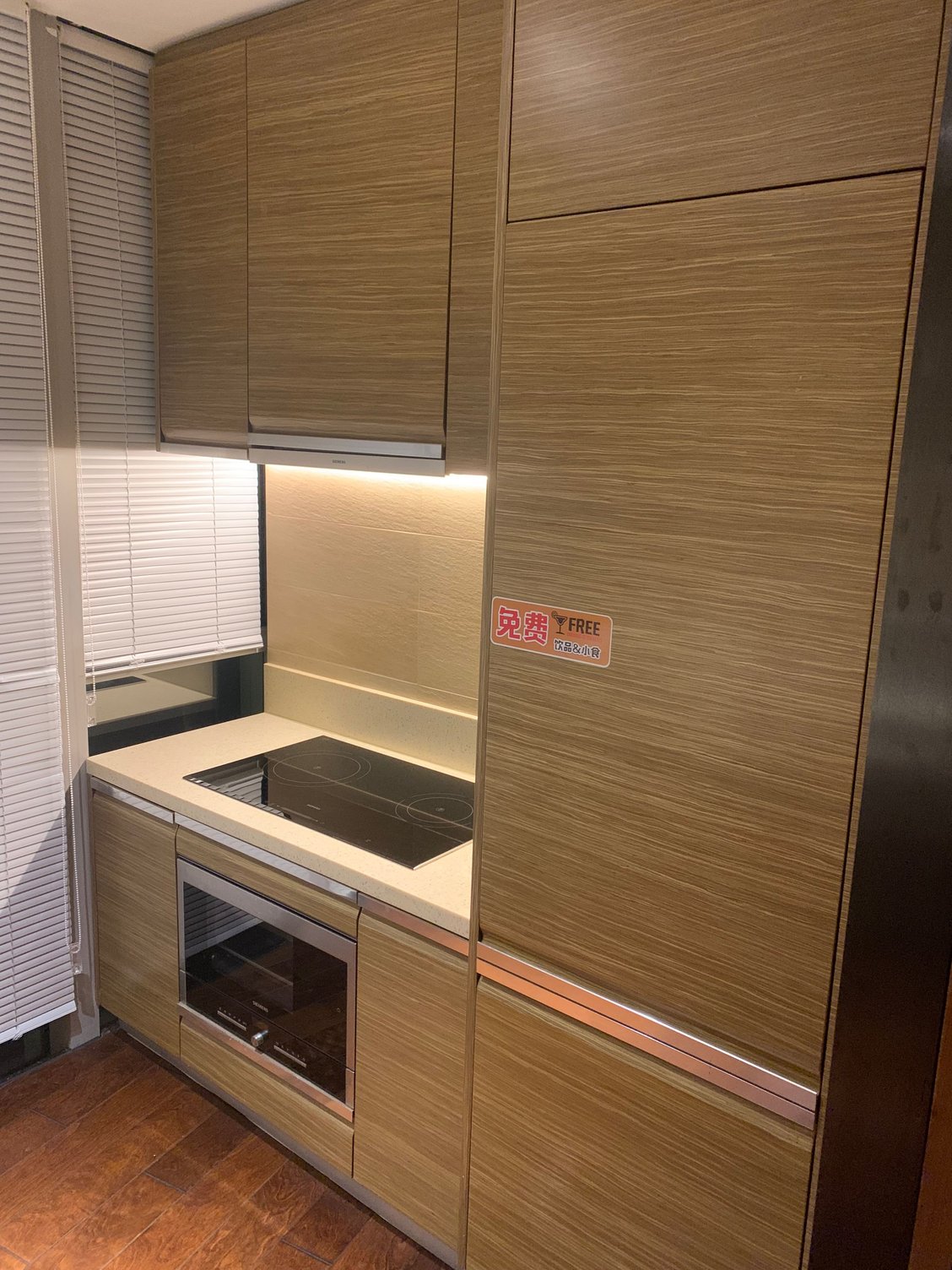
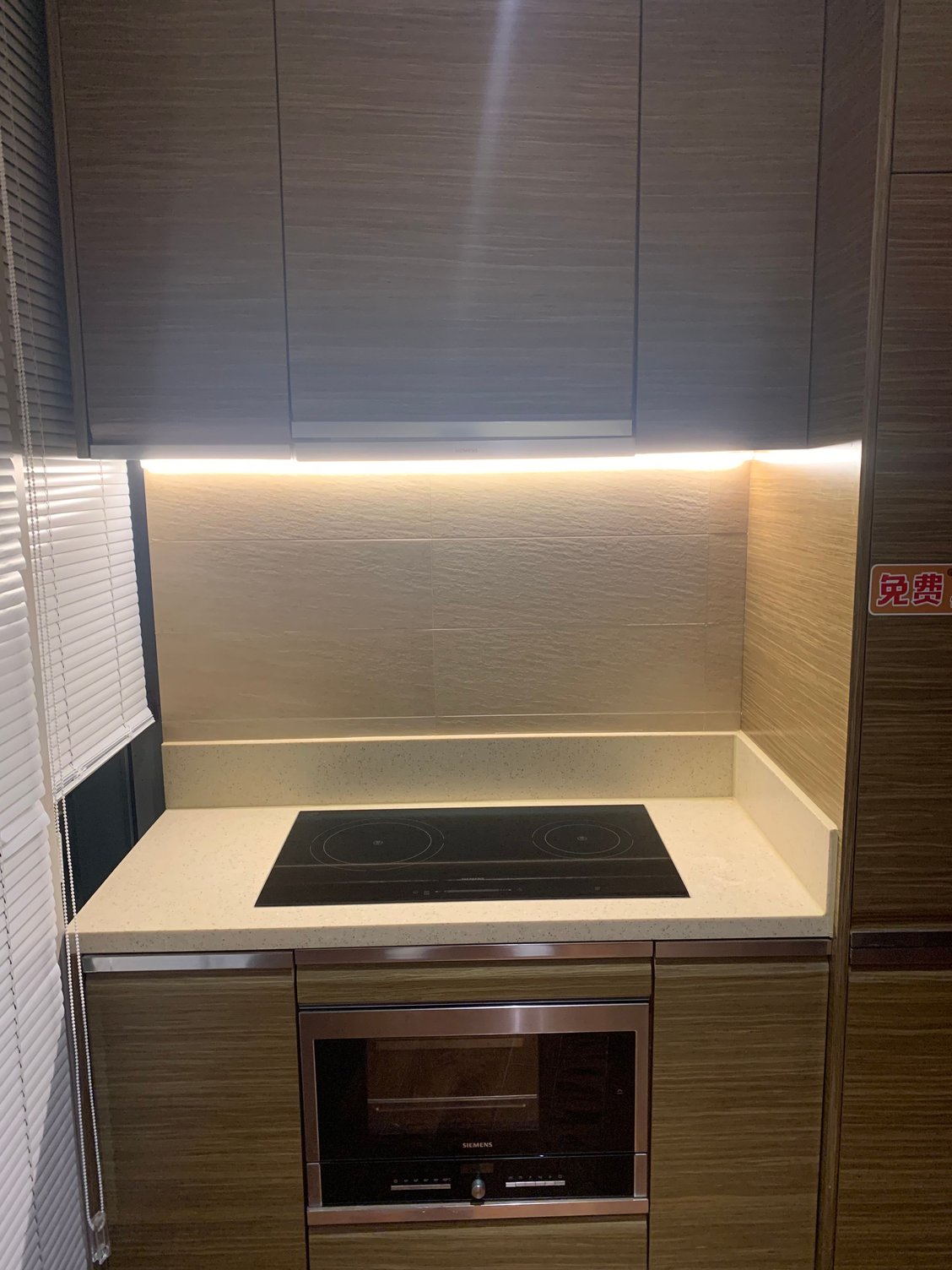
The kitchen has a sink, fridge, freezer, induction stove top and oven. No cooking ware, cooking utensils, flatware or tableware were available—not even a bottle opener or corkscrew. There was a Nespresso machine with four coffee pods, an electric kettle with two packets of tea, and two complimentary bottles of water.
The fridge has free snacks: single cans of Coke, Sprite and Schweppes club soda; a packet of two Oreos; and a packet of two wheat soda crackers.
The room was equipped with a combo washer-dryer, but there was no laundry detergent. The front desk was happy to send up some laundry powder. Washing machines and dryers are available (free!) in a room next to the gym in the lobby. There was a bottle of laundry detergent there if you prefer liquid detergent or your room doesn't have a washing machine.
The room also had a seating area with two couches, a coffee table and TV, alongside a desk in a nook and a separate area with two chairs and a side table.
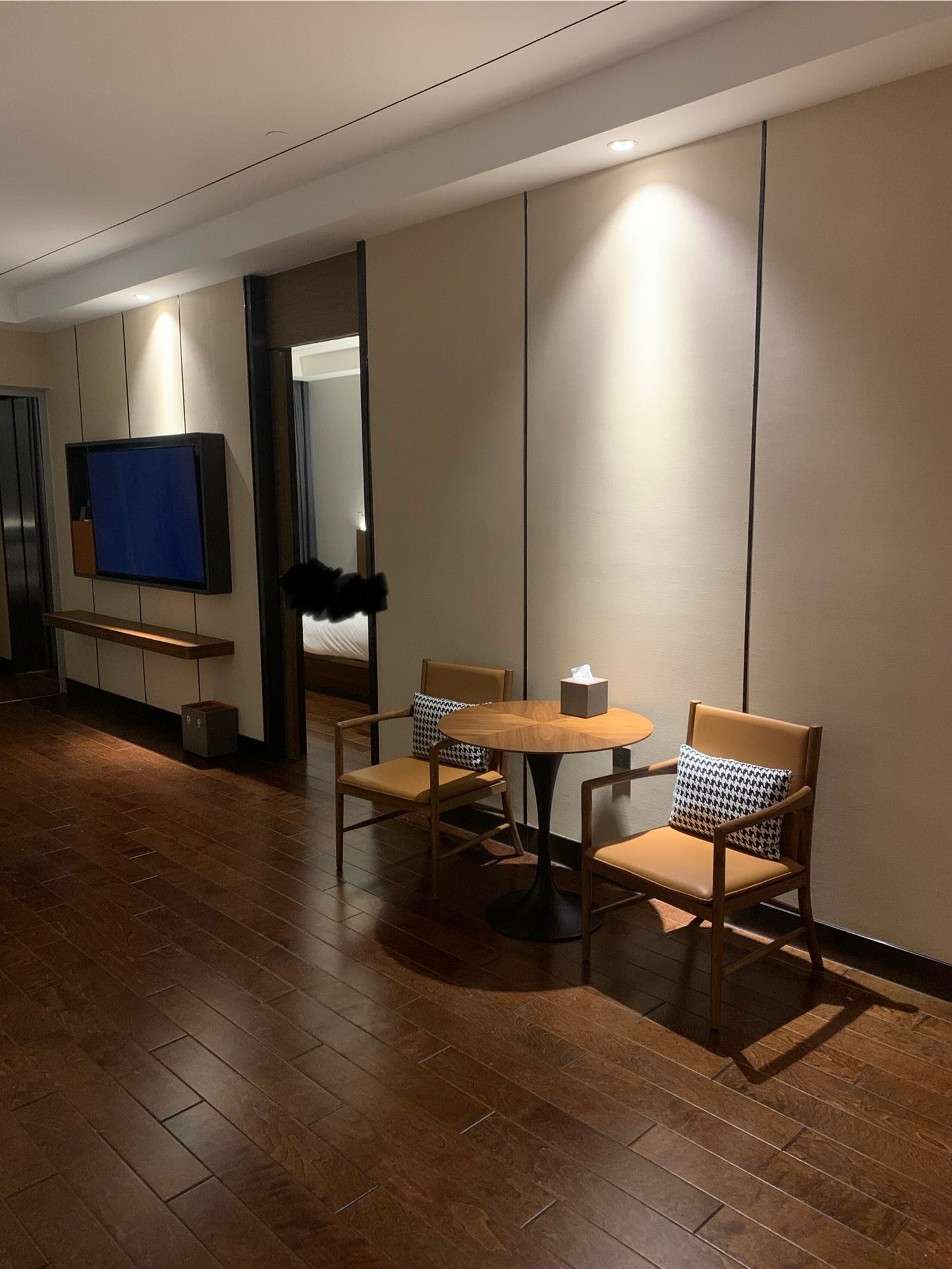
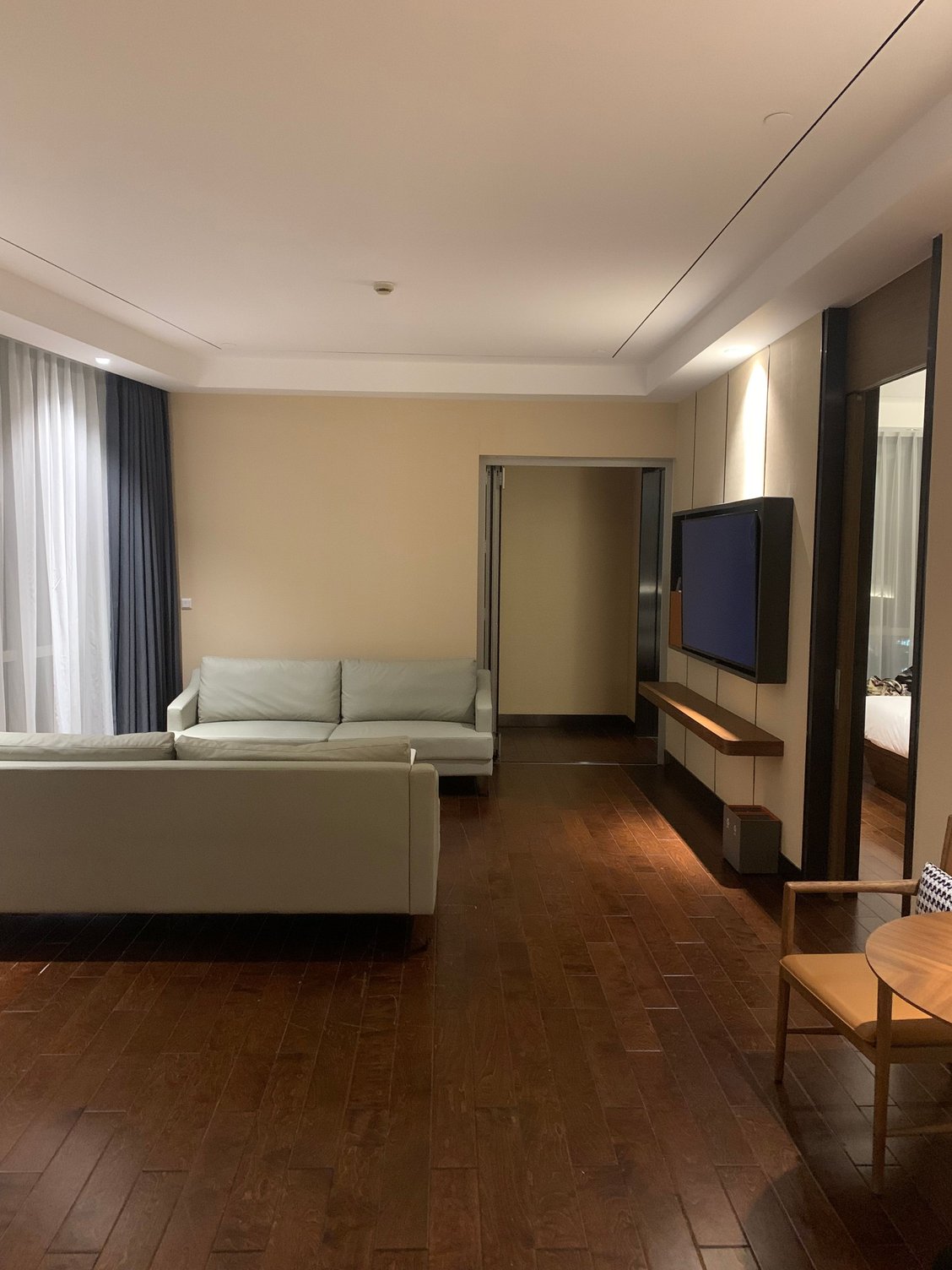
The room wasn't completely clean. There was dried soda or some other liquid that hadn't been cleaned up on the bottom of the coffee table. (You can see the dark spots in the photo.) The room also wasn't completely tidy; it was weird to see the couches not aligned or straight with one another.
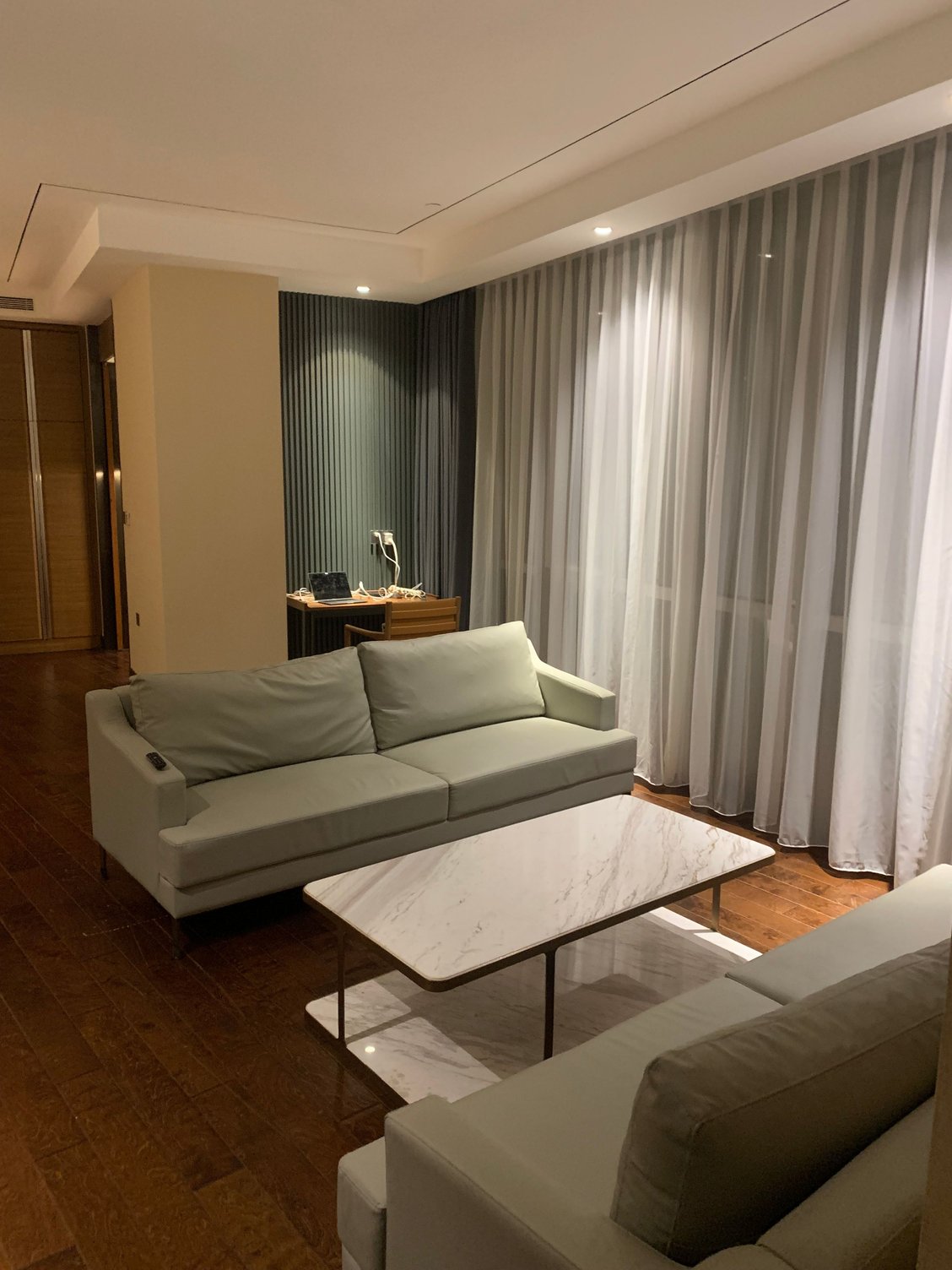

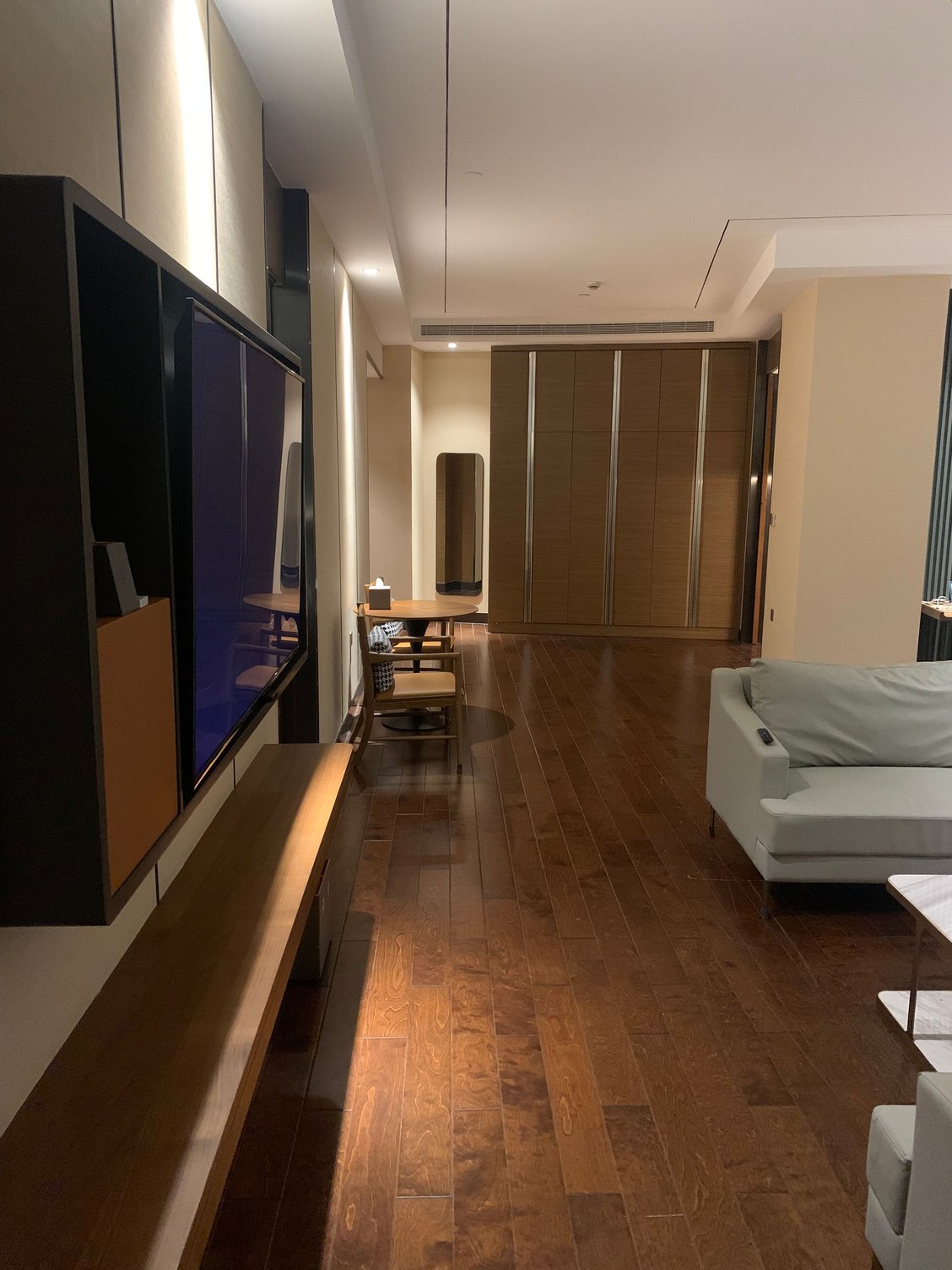
Be warned: The TV has 40 channels, but all of them are Chinese. There are no foreign or English-language channels available—not even the news or a non-Chinese-language sports channel. I didn't try it, but it looked like you could screen cast. The wifi requires WeChat, as I couldn't figure out how to get the log-in portal to recognize my room number and name and didn't want to bother going to the front desk again.
Some advice: Turn off the bedside device before you go to sleep. The device woke me up around midnight when it went off unexpectedly. It spoke in Mandarin, and the screen and control buttons are entirely in Chinese. I pushed the power button, which turned off the voice, but not the device.

I was happy to find the restaurant open (on Jan. 1!), so decided to check it out. The last five or so minutes of my Didi ride were in the dark and on some one-way streets, so I didn't want to venture outside. I also couldn't find any convenience stores or restaurants on Apple Maps, and I didn't want to bother looking up food delivery. (Most guests do food delivery, and there is a counter by the front desk where delivery drivers drop off orders.)
You have to order and pay from your phone using a QR code they place on your table after you sit down. The website has photos of every dish, but everything is in Chinese. Ordering was challenging. I don't read Chinese, and my browser's translation didn't really work. I asked the waitress for help, who pushed me to use my phone, but when I told her I didn't recognize any of the dishes and didn't eat pork, she agreed to take my order outside of the website.
She tried to get me to order the black pepper beef, when I told her I didn't eat pork. Most meat dishes are ¥48, ¥68 or ¥88, but the black pepper beef costs ¥128—the most expensive dish by far (when most things are ¥48 or ¥68). Most vegetarian dishes cost ¥25, ¥35 or ¥38. When I declined the beef, she suggested the kung pao chicken (¥38), which was tasty (unlike any kung pao chicken I've had in the U.S.) and a surprisingly large portion. You have to pay for rice (I declined), but tea is free.
More warnings about the restaurant: Some diners smoke indoors. I also couldn't get the waitress to charge the food to my room. (Because I paid for the stay upfront, and the front desk never took a card for a deposit or incidentals, I wonder if there is no folio for her to charge it to.) She also didn't want to take my credit card. She scanned my Alipay with her payment terminal. Finally, the restaurant closes at 9 p.m., despite there being a sign that advertises late-night eats in the lobby.
Some good news: My rate didn't include breakfast (6 to 10 a.m.), and I'm not a Globalist, but the front desk "gifted" me breakfast. There was a receptionist checking room numbers, but she also had a payment terminal. (I didn't ask how much breakfast cost.)
Breakfast was busy at 7 a.m., so I didn't take photos, but the spread was primarily Chinese. There were boiled Chinese greens, scrambled egg with bell peppers and pork, cauliflower and pork, pork and vegetable stir fry, eggplant with pork, fried dough balls with a slightly salty yellow filling (custard?), fried lotus root (veggie "chicken" nuggets), Chinese fried bread sticks (youtiao), fried noodles, fried rice, steamed pork buns (baozi), plain steamed buns (mantou), vegetarian shumai with sticky rice filling and vegetable potstickers. There was also a cold Chinese appetizer bar with different shredded vegetables and mushrooms and a hot station with cooks making ready-to-order eggs and pork wontons.
Western options included bread (a baguette, mini croissants, small sugar donuts), cereal (corn flakes, chocolate puffs, puffed rice), boiled eggs, chicken sausage, fried McCain smiley-face potatoes, cheddar triangles and cold-cut chicken sandwich meat. Fruits included canned fruit cocktail-style rambutan, lychee and mandarins and fresh watermelon, cantaloupe, honeydew and red grapes. The dessert bar had petit fours (exclusively sponge cakes) and whipped cream-filled mochi covered in coconut flakes.