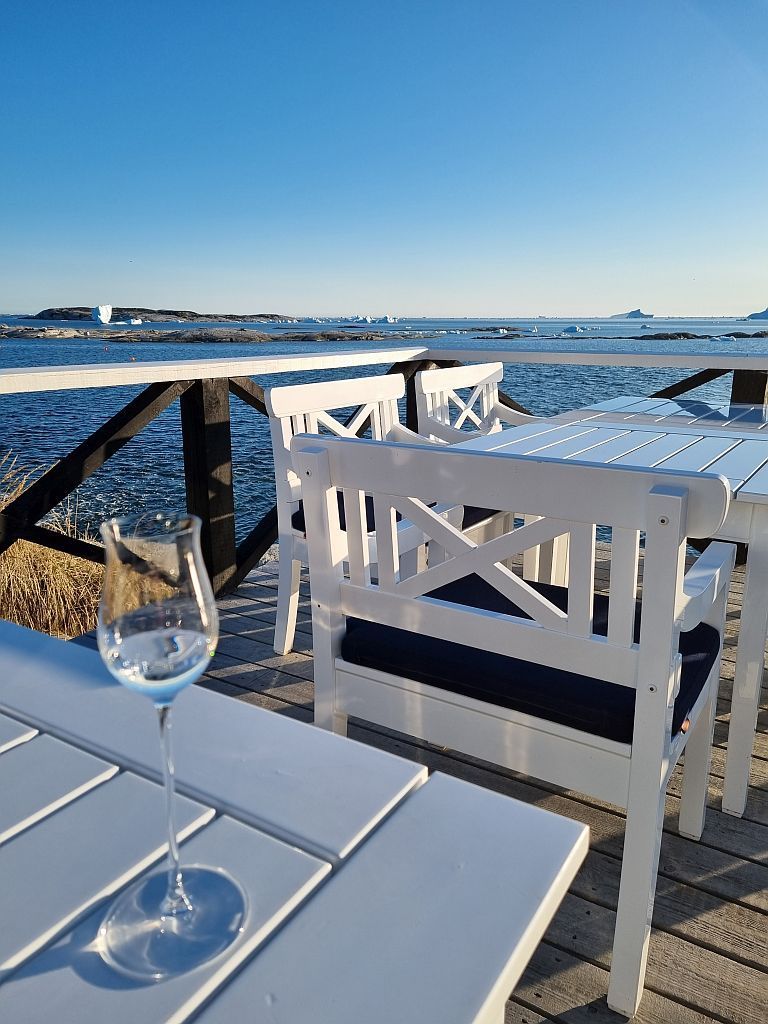
First of all, we had already familiarised ourselves with KOKS and their cuisine beforehand, so we already knew roughly that they don't serve ‘fillet of beef’ or ‘chicken breast’ here, but rather creative and Nordic dishes based on the local flora and fauna, which may not be for everyone.
So you should be open-minded when you go here, because it's far from your average gourmet meal. We would even go so far as to say that we can't imagine that there could be a meal like this anywhere else, because the combination of the journey, the lodges and simply the whole process surrounding the meal are inseparable. And that simply doesn't work anywhere else.
And now the menu, which we will remember for a long time to come.

We had one of the best tables in the restaurant (because of my girlfriends birthday I suppose) but apart from that, the service did not mentioned her birthday all the time which we found very nice.
An appropriate start for this menu:

The restaurant looks a little empty, but it still feels warm and cosy and the guests are distributed across the 3 rooms so that you have peace and quiet everywhere. The super friendly and attentive service was always on hand to help wherever possible. They were also up for a joke or two, which we always like.

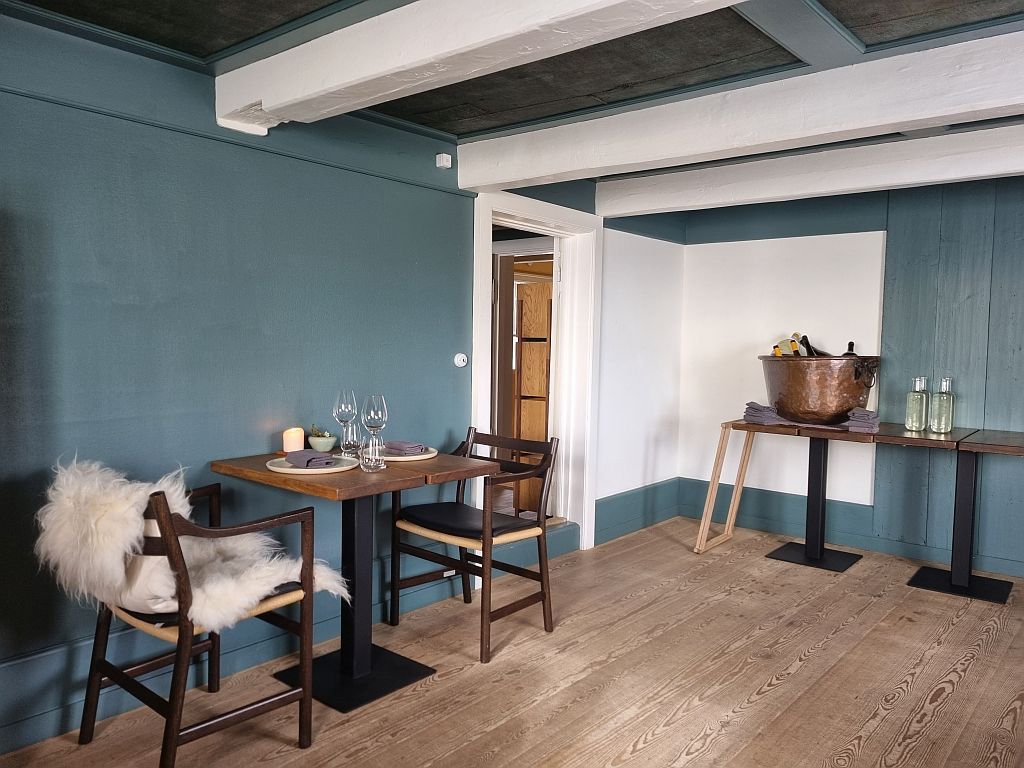
After the meal, it was also confirmed to us that this must have been a good evening for the service, as it was somehow all ‘in the flow’. And somehow you could tell that right from the start, because everyone radiated an inner smile as they walked around the room, there was a lot of non-verbal communication and everyone simply had a good evening.
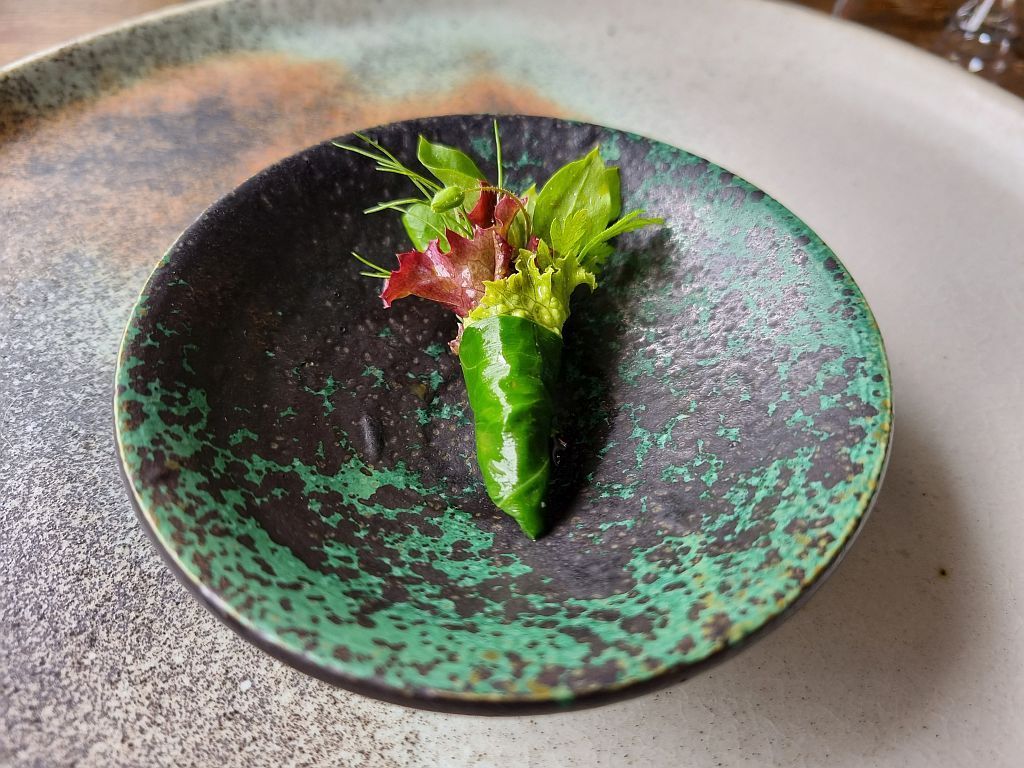
The greetings started in style: with Mattak! Fortunately with only half as thick a layer of fat as in Kangerlussuaq and marinated in blackcurrant leaf oil. This time the whale was one of the few narwhals caught.

Special, slightly firm skin and light berry flavours - it won't be our favourite dish. But it's part of the world here and chef Poul Andrias Ziska, who has held the sceptre or chef's spoon at KOKS since 2014, consistently tries to create it at a gourmet level.
Around the whale there was a herb bourquet with herbs from Nuuk, which was a great refreshment after the Mattak.
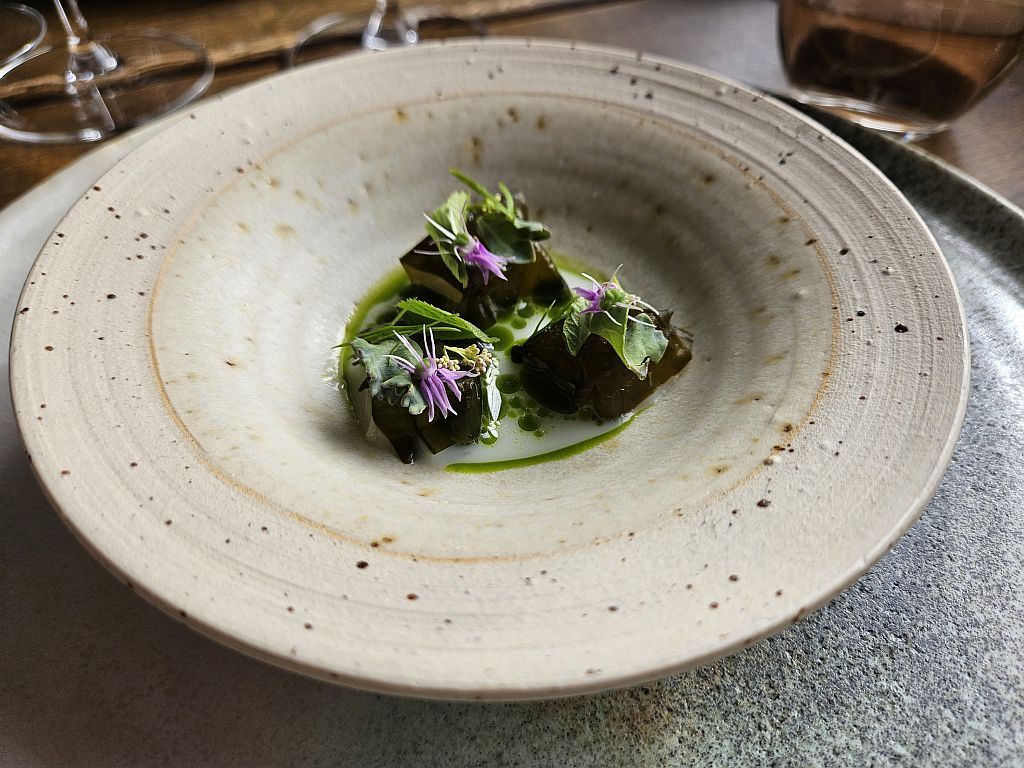
After this greeting to the current home of the KOKS came a second greeting with a beautifully arranged rosette of sea snail, spinach, verbena, cucumber and fermented gooseberry.

Very fine, very Nordic and the sea snail surprisingly firm.
The next dish was also a feast for the eyes with smoked Greenland halibut wrapped in sugar seaweed, mountain herbs, horseradish and a buttermilk sauce.
Small bite, big effect! The herbs in particular rounded off the flavour of the rather lightly smoked halibut and the somewhat firmer seaweed. The buttermilk was used as a carrier for the flavours, a very well-considered combination where you were tempted to eat everything in one bite.
The next plate was a short marinated Arctic char, one of our favourite fish. Underneath a sweet potato gel with strong ginger and a carrot foam and again very intense herbs. This time it was ‘arctic thyme’, an early-flowering thyme, which again added a great herbal note to the savoury and rather sweet and fatty components.
Then it was off to the creative Nordic kitchen with a small bowl of roseroot in which a blob of whale fat prepared with gelatine was placed, on which the deep-fried heads and tails of capelin, a fish native to the Arctic Ocean, were placed.
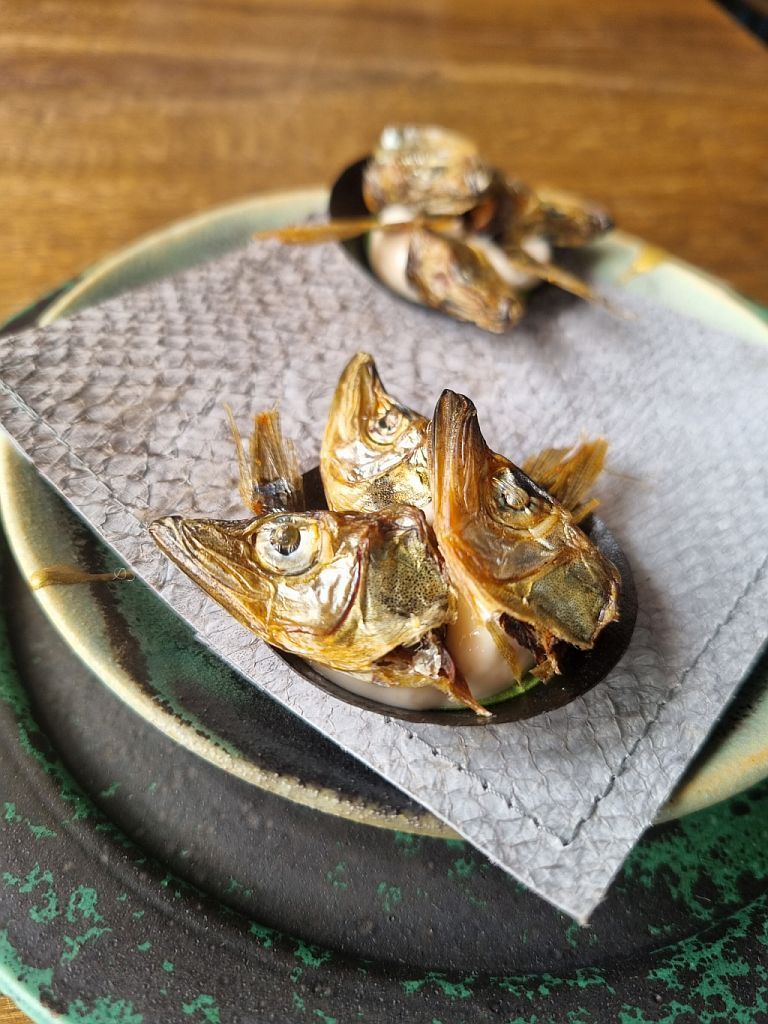
It takes some getting used to, but it was excellent and a wonderful mixture of crispy fish with the melting fat and again the herb.
In general, you could tell that a lot of emphasis is placed on the herbs and that they play a really important role in the combinations.
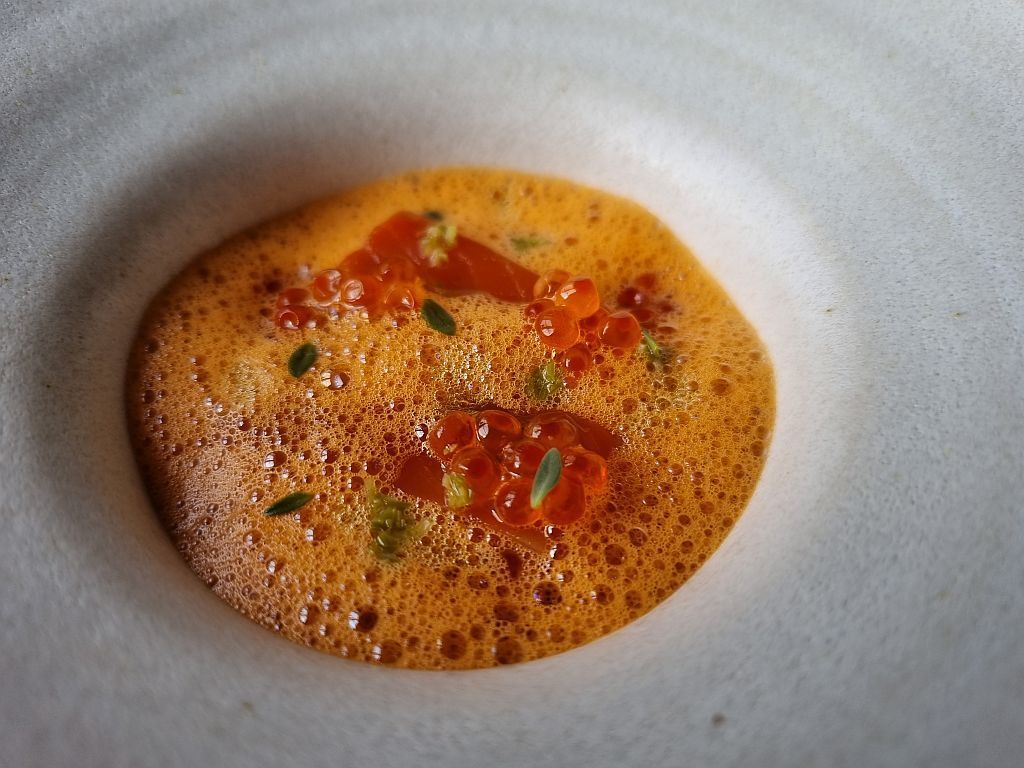
"Nose to tail" is the name given to the complete use of land animals and, accordingly, a kind of ‘gill to tail’ approach was taken with the capelin, as the remaining pieces of fish were then draped raw in a broth of seaweed and mountain sorrel.

At this point at the latest, we were a little sad that we didn't get any bread, but had to scrape the last bits of sauce from the plates with a spoon and our fingers. The combination was incredibly good.
Then a kind of ‘advertising block’, because KOKS is one of the world's few ‘lighthouse’ restaurants allowed to pour a drink from of one of the world's most famous wine estates, Château d'Yquem. This means that one of the best sweet wines in the world is served here, currently the 2013 vintage, and it is a condition that it is not served with dessert.
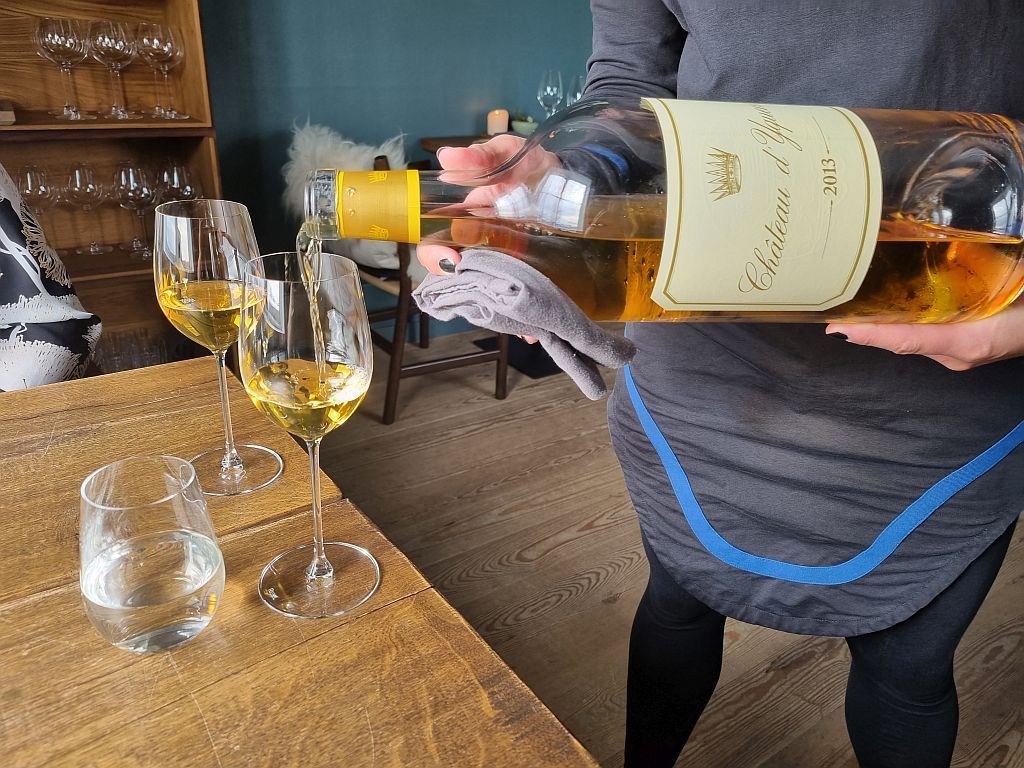
Our Dutch waitress offered us to enjoy the wine in addition to the wine pairing or as a substitute for the next course. Well, we couldn't say ‘no’ to that ...
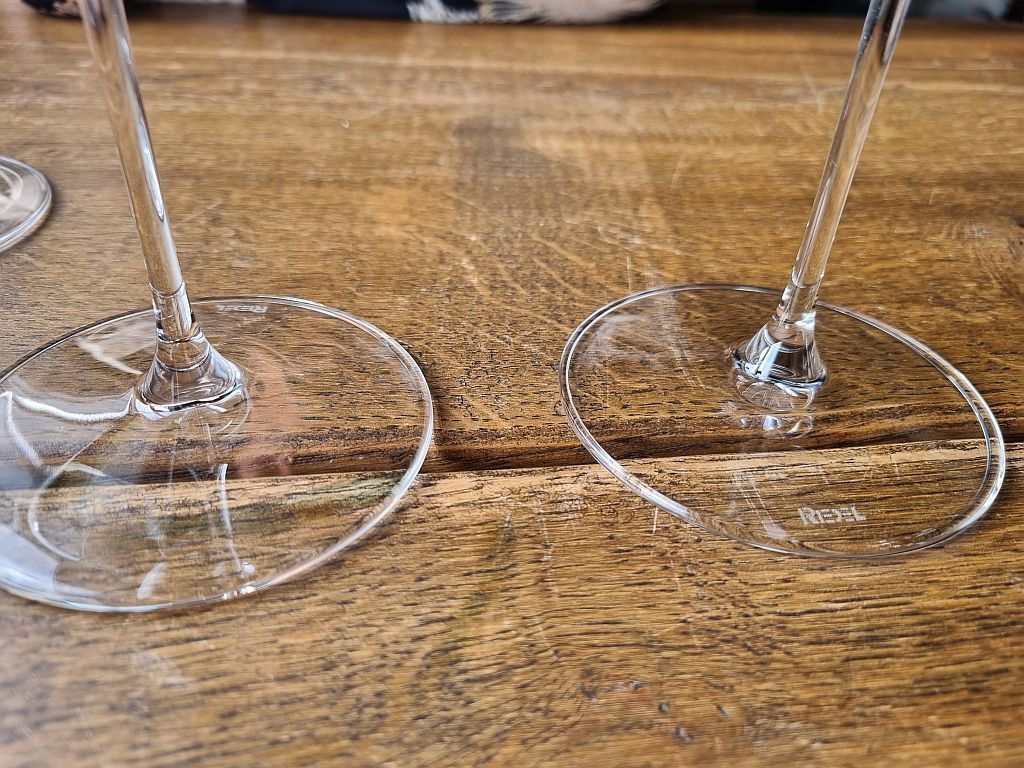
Incidentally, the lady convinced us also, because during the entire wine pairing, she turned every glass so that the manufacturer's logo was facing us. She always placed the bottles so that the label was pointing towards us and everything else was in order. Abolute fantanstic level of service!
She originates from Texel, although we weren't that far away with our guess "Scheveningen" based on a few things she had told us. In general, the service was quite young, fast and super friendly. Almost everyone was willing to chat a little bit and so we were also entertained a little away from the culinary delights. If you wanted to, because of course a conversation wasn't forced on you here.
Greetings at this point to the German waiter from Leipzig, where we still assume that he is only allowed out when there are German guests The dutch waitress promised to make sure that it stays that way ... ;-)
The focus remained on the food, however, and that's when we got a real hit: a grilled shrimp head with just-caught raw shrimps and a tartelette.

OK, we'll never get such good raw shrimps again. This was a dish for the gods!
A farce was stuffed into the head, which was made from the actual head. A Rharbarbar vinegar was added, which with its acidity combines the farce, grilled shrimp and the raw part without overpowering the raw shrimps. They were definitely the hit here.
If it had to be one last time, this course would be there!
This almost Japanese composition was followed by something for the soul: plucked snow crab in a jelly of fermented mushrooms, parsley and small savoy cabbage or cabbage leaves.
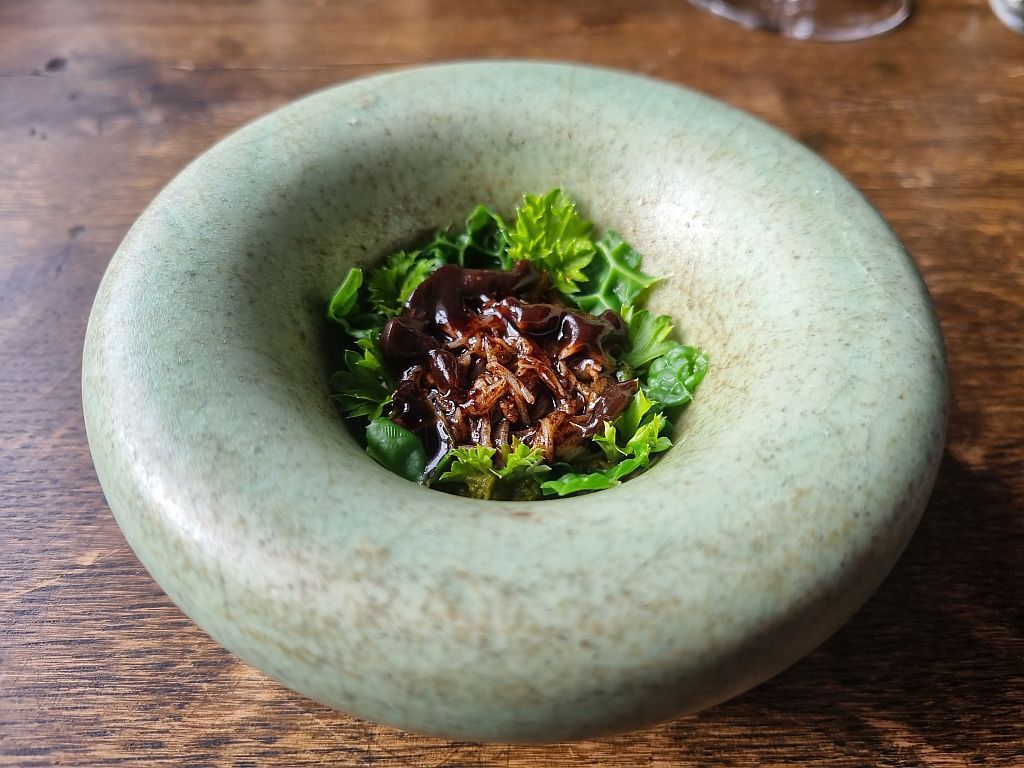
A little piece of some kind of wooly-herbal stuff was placed on the table as well.

Our sceptical looks were recognized and it was explained that this is a type of seaweed that grows here and tastes like truffles when dried.
And what a truffle flavour it was! Incredibly intense, easy to dose (we were a little more hesitant at the beginning, but in the end we poured everything we could fit on the spoon) and with the umami of the mushroom and the crab, an incredibly flavoursome dish.
Next course, the 9th overall: Suaasat - the Greenlandic national dish for which there is actually no recipe.

Whether meat or fish must be included - can be both, but doesn't have to be. Pearl barley? Rice? Potato? It doesn't matter - you take what's available.
In this case, it was boiled whale meat, waxy potatoes, wheat, caramelised onions and a creamy, rather spicy-sweet sauce.
This was followed by a dish that will certainly cause controversy over its presentation. We liked it: The following 3 things were layered 3 times on a prepared ptarmigan wing with a toothpick: Reindeer lardo, black berry puree, with the berries coming from the digestive tract of the shot bird, and oyster mushrooms.

Very creative and really cool presentation, at least we thought so. But you can understand if someone doesn't like it - but here it's just part of it. In a restaurant in a large western city, however, we would also find it out of place.
The next course came from the chef who travelled here with us on the boat. We assume that he didn't decorate it after we arrived.
As we were chatting with everyone and having fun, as we always do, we also got a little more information about the food here and there. For example, we learnt that it was a raviolo made from rice dough, into which a 24-hour boiled reindeer reduction with mushrooms was poured and which was then decorated with cranberries.

This work of art then created the transition to the meat part of the menu. Another clue was the handmade knives in the traditional Faroese style. Which guests probably try to steal from time to time. Which is more of a stupid idea here, where you can't get away.

Simple, easy and yet so difficult: grilled razorbill, a bird native to the south of Greenland, with a syrup made from 2 berries that were reduced together with the bird stock.
The bird itself was marinated in shikoji overnight and then marinated in a BBQ sauce and grilled very briefly and very hot in a green egg.
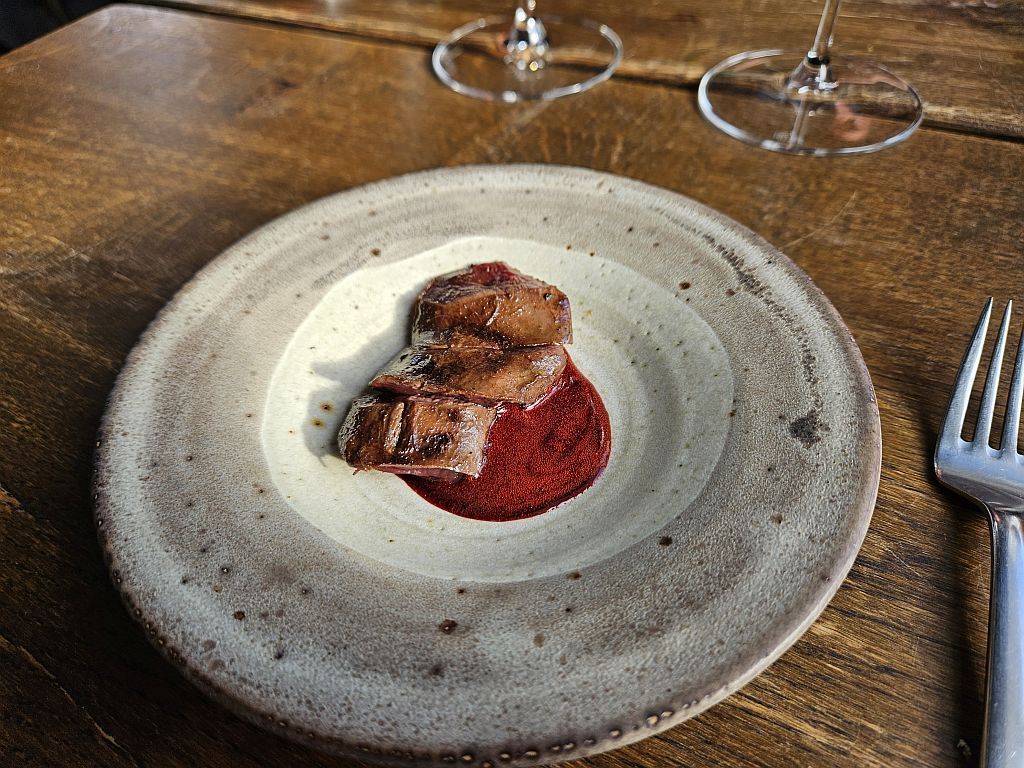
Almost perfect as we tend to think that something perfect is non-existing! But this came damn close ...
The second meat course was no less strong, as we had shoulder meat from musk ox (not a day without musk ox, remember!) with celery, seaweed powder and 3 oils: a crab oil, a parsley oil and an oil from sweet algae.

In the kitchen, meanwhile, the patissiers had taken over and showed ... a white thing in a white plate?
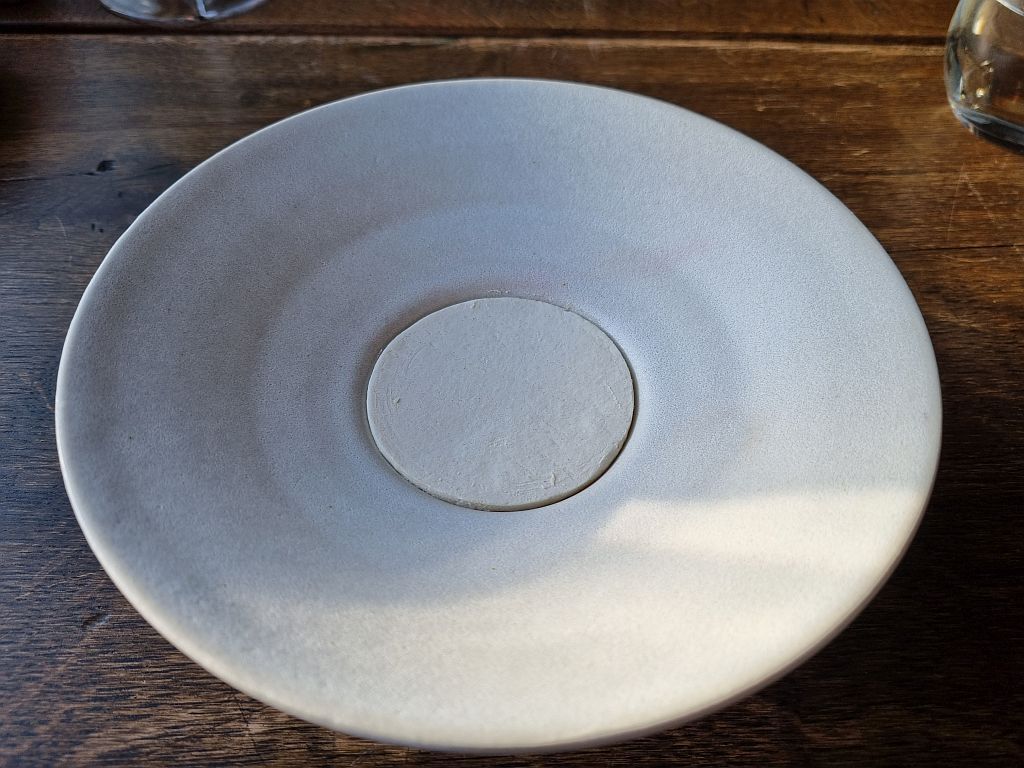
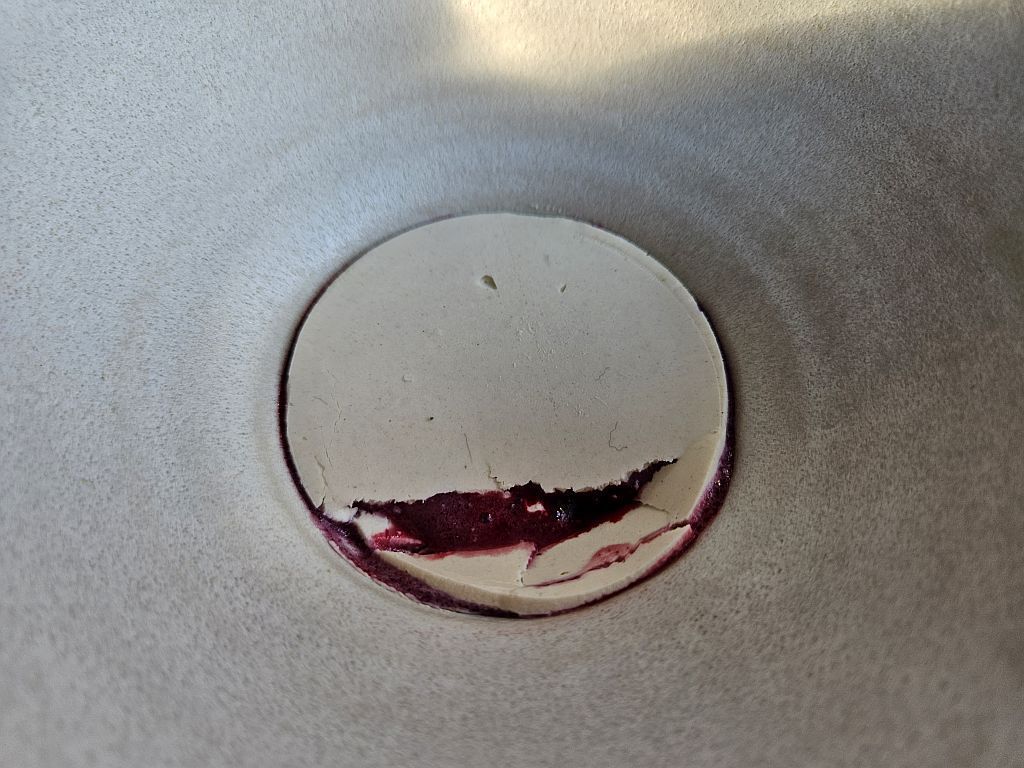
One bite and it became clear that there was much, much more on the plate. There was a milk dish soaked in sheep's wool (the slightly fatter undercoat to be precise) with crowberries and beetroot sorbet.
Last course: Sweet Jerusalem artichoke with rice fermented with koji. Placed in a ring and a sugar glaze and actually spent grains left over from brewing their own beer.

Wasting nothing is becoming increasingly important in this day and age and if it leads to such creativity: So much the better!
The interim conclusion before the 4 desserts was: What a unique meal and dining experience. Both are equally important, because in our opinion the food benefits from the experience created by the service and the surroundings and vice versa.
Unfortunately, it was already time for dessert, of which we had 2 inside and 2 outside.
The first two were a plate of sweetened mussel broth and a slice of flower pollen and fermented honey sandwiched between two carrot cakes.
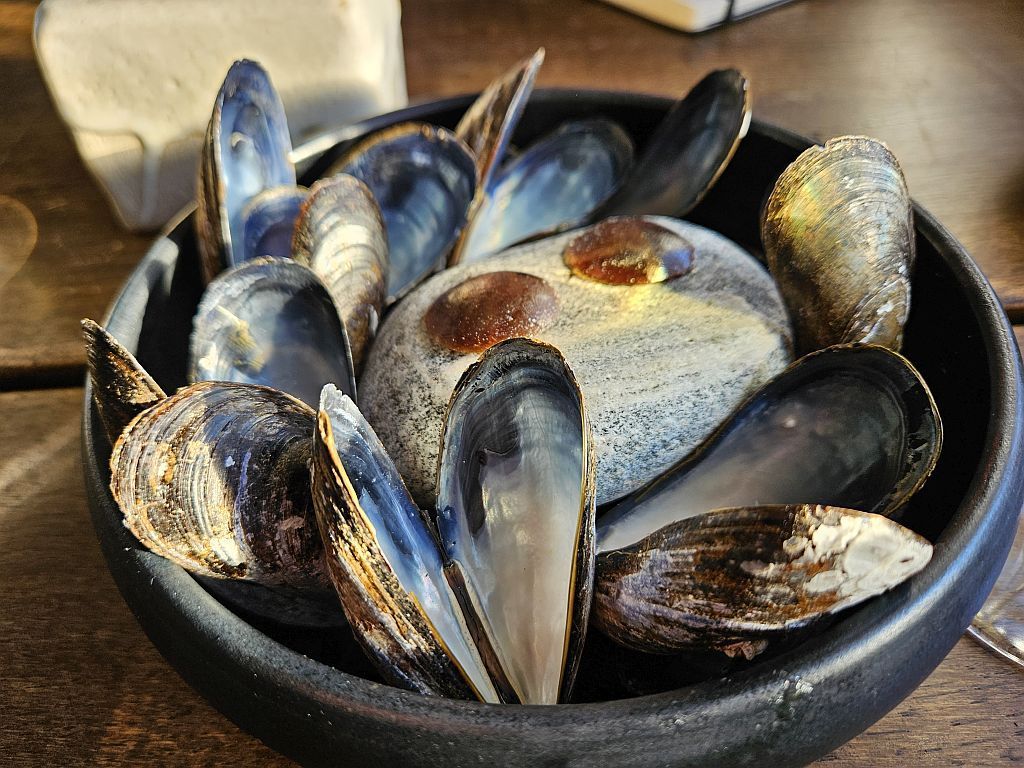

After we had enjoyed the two desserts, the dishes were cleared away and two more works of art were brought to the table.
One was an onion arranged on an onion. You're not supposed to eat the bottom one, although it has probably happened before that a guest didn't wait for the explanations and simply took a hearty bite. And ... was surprised at the bad flavour. If you only eat the upper part, you end up with 7 layers of caramelised onion in your mouth, the preparation of which they tried to explain to us, but we spaced out at the 5th step or so ...

Very technical, just like the final dessert. According to the patissière, this is the most sophisticated dessert they have ever made at KOKS in terms of development and production: A cassis sponge with a cream made from reindeer blood. No egg, no other binding agents - the creamy texture is achieved using only the properties of the blood. Took them 5 months to figure out if it can be done at all.
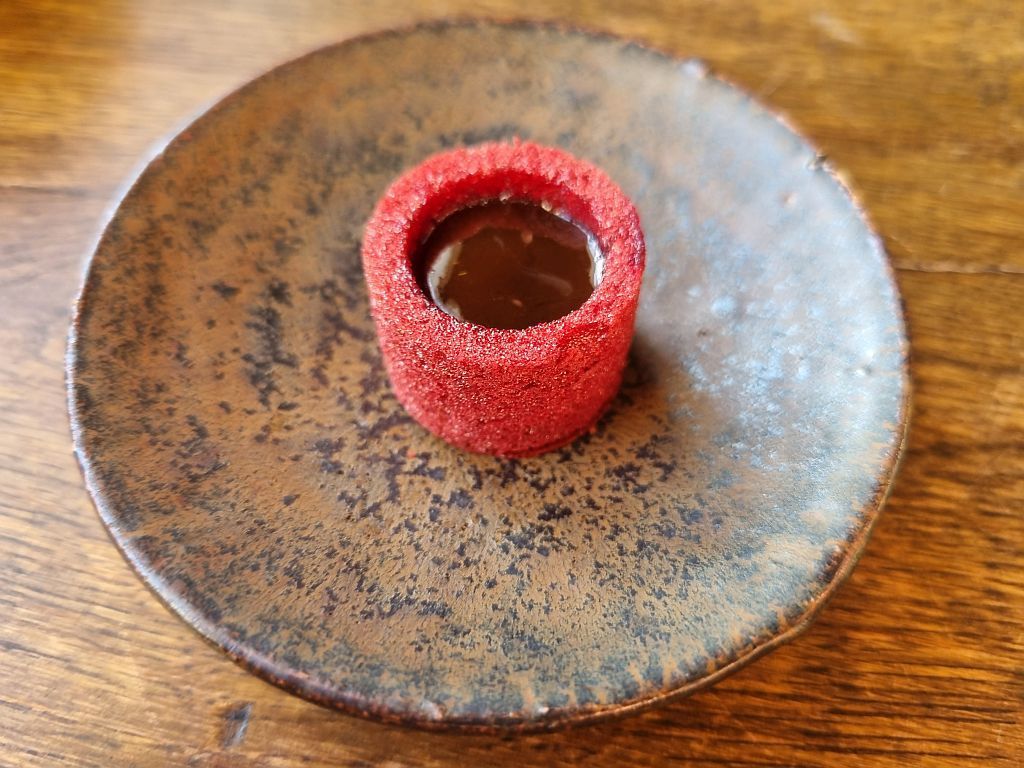
What a fine example of the craft behind such a menu to finish with.
Even chefs in Germany, some of whom have been awarded Michelin stars, who we told about our visit all replied: "Oh wow, I've always wanted to go there!"