After walking from the plane into the building we recognized that the terminal building is very ... practical. You can see that is was build with a military pourpose in mind.
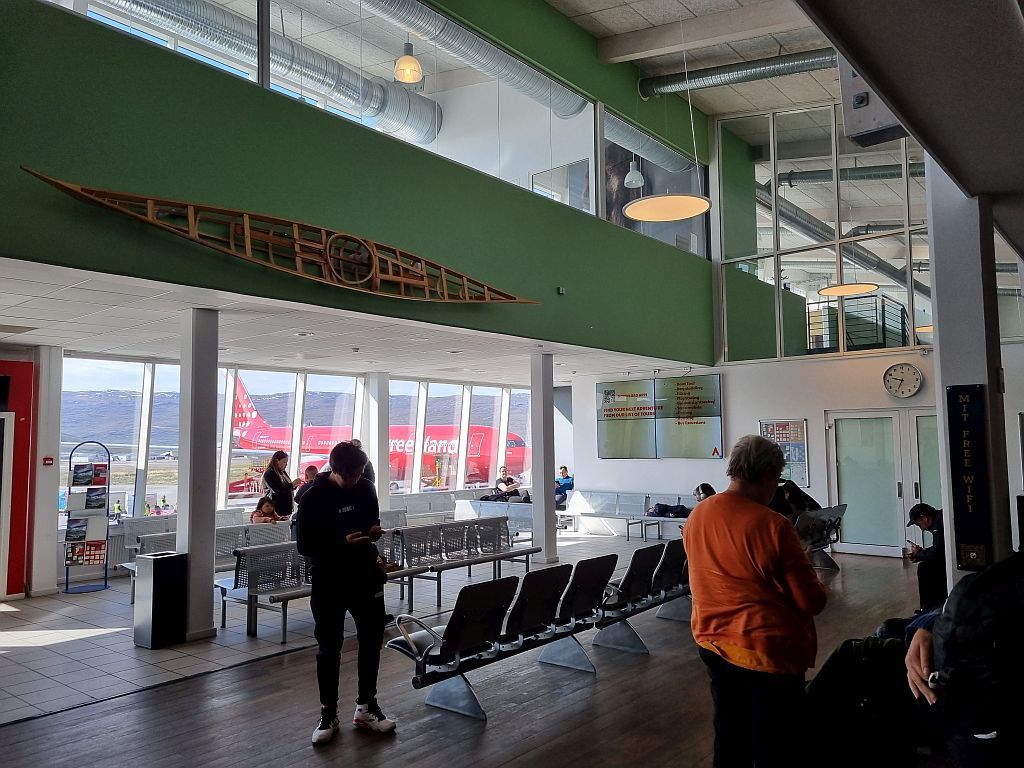
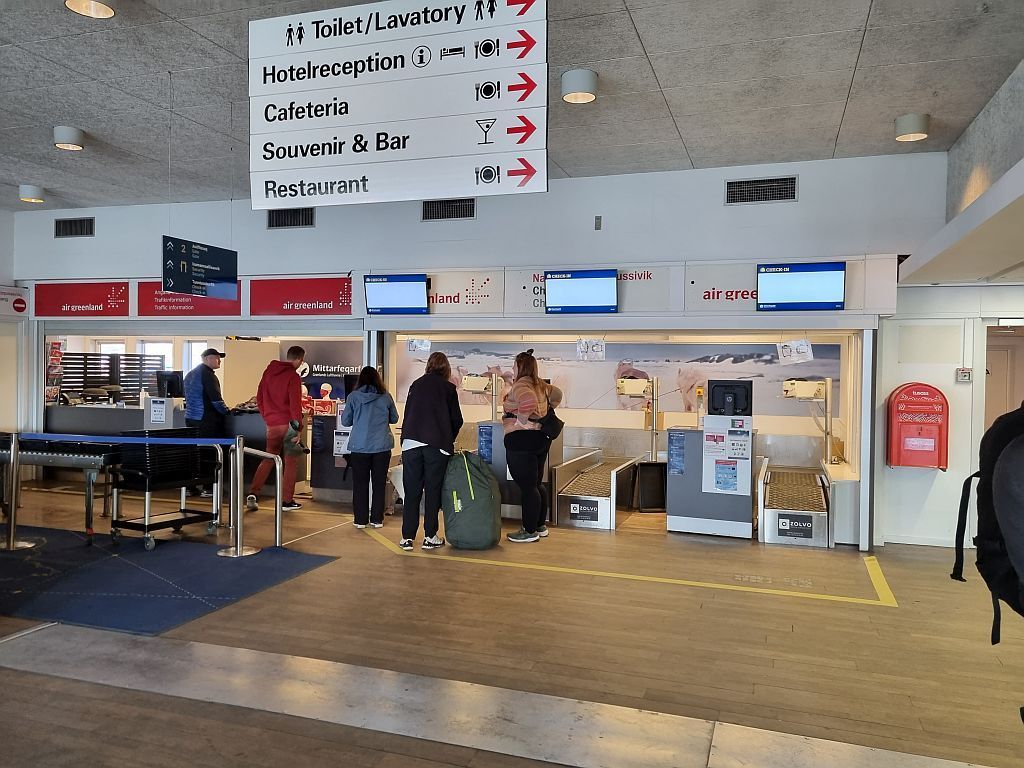
Baggage reclaim is located on the ground floor, where people in outdoor clothing mingle with a few Inuit. Here you immediately notice that the holiday will be different. In Greenland, everything is a little different and not as precisely planned as our little German souls would like it to be.
Speaking of Europe: we have now left the temperatures there behind us and so we headed straight out to the viewing platform. Or the smokers' corner of the terminal. Or the café. Or the restaurant in the airport. It was all the same anyway.

The direction signs were put up for the first SAS flight to North America with a stopover here in Greenland.
The temperature was a pleasant 9 degrees at 10 o'clock in the morning. That's nice.
Our hotel, which is also located directly on the upper floor of the airport and shares a corridor with various companies, the Danish military and air traffic control, did not yet have our room available. So we deposited our suitcases in another room and just went for a walk. Not that we were hoping to see anything here, but we wanted to get some exercise.

A tour to the nearby mainland ice and a glacier was on the programme for today at 1 pm. But there was still some time until then.
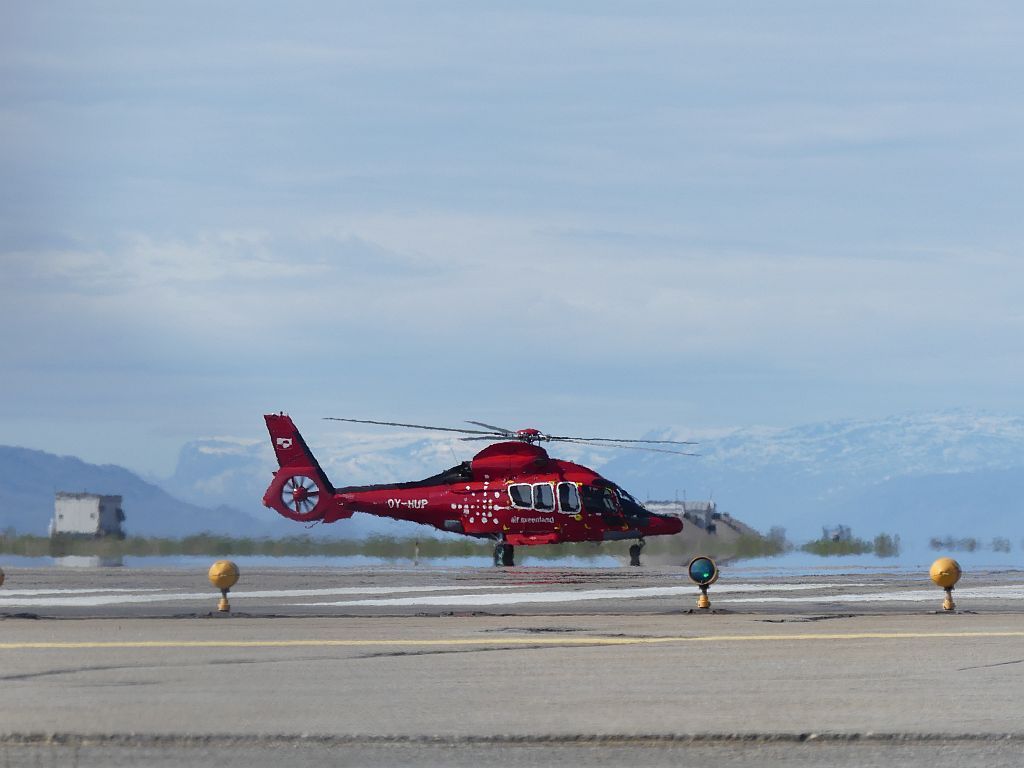
What was particularly exciting for me was the fact that this is basically Greenland's gateway and exit point, which means that everyone who wants to use the A330 gathers here. Which in turn means that the small Dash-8 propeller aircraft were taking off and landing all the time, providing a constant change of scenery.

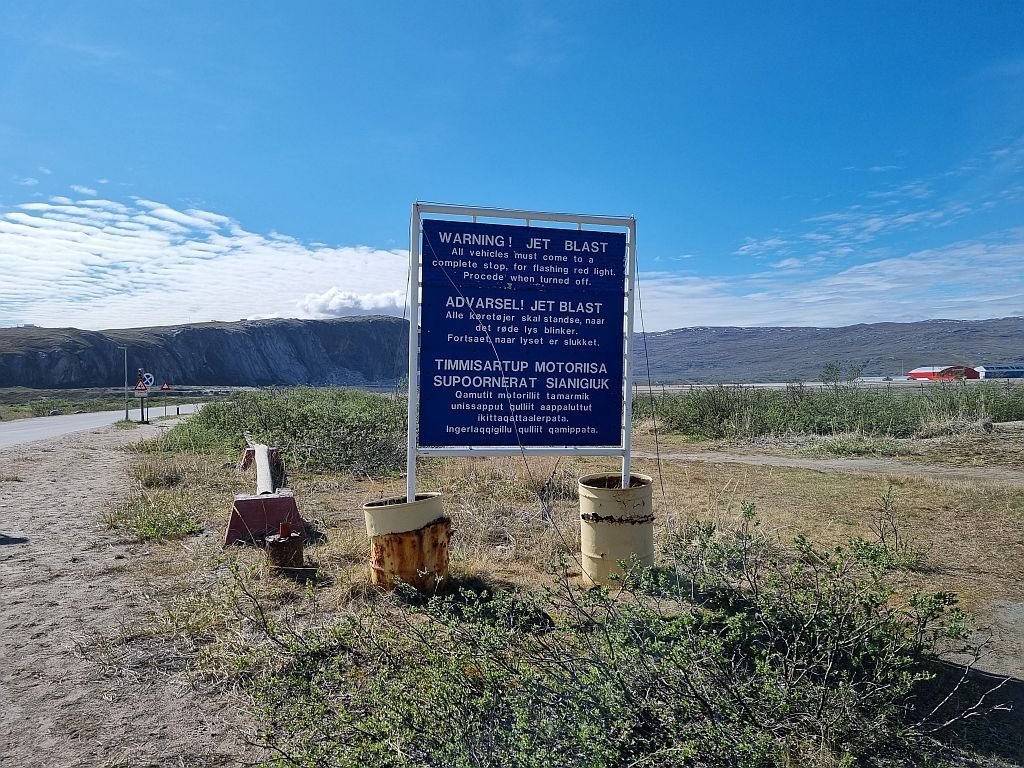
Due to the landing direction, we had no problem here, but a very interesting sign from the time there was a military use here.
Boarding was ongoing for the Copenhagen flight.

So we walked through the silence for a while. Only interrupted by the odd aeroplane or one of the few cars that are here. The town itself looked pretty lost and empty. No wonder, when the largest employer in the region, the American Air Force, is gone and apart from the airport and a few smaller companies, there is actually nothing left here. 491 people live here and only get away by aeroplane. As already mentioned, there is no road to another town. So we returned to watching the airport traffic.

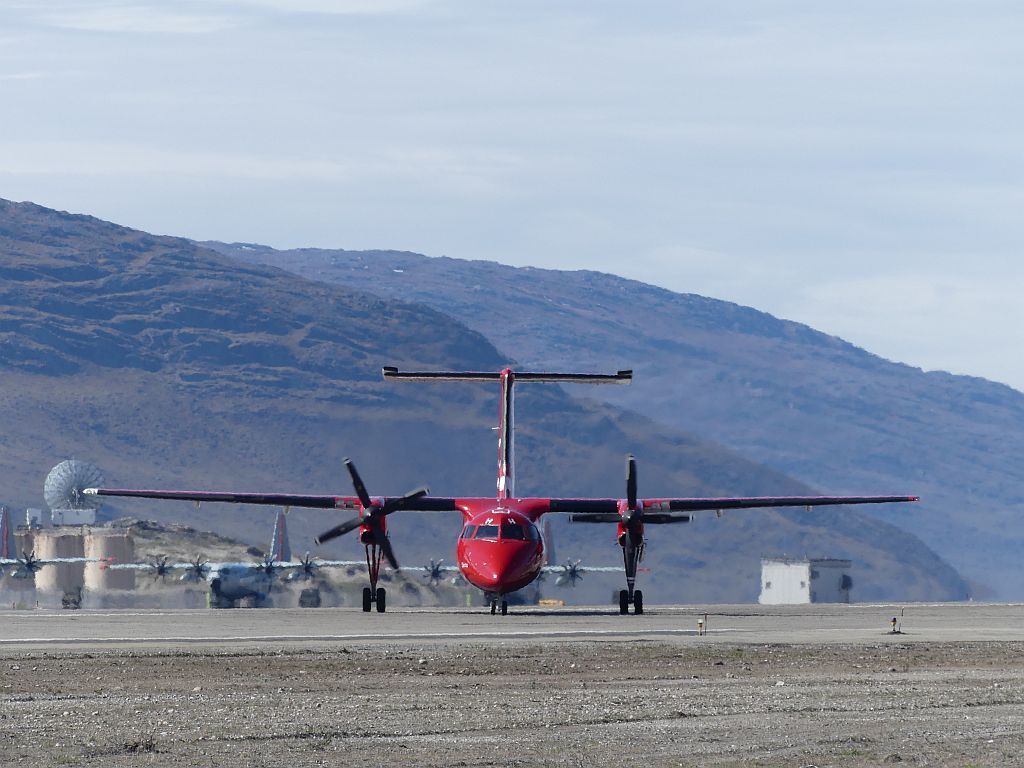
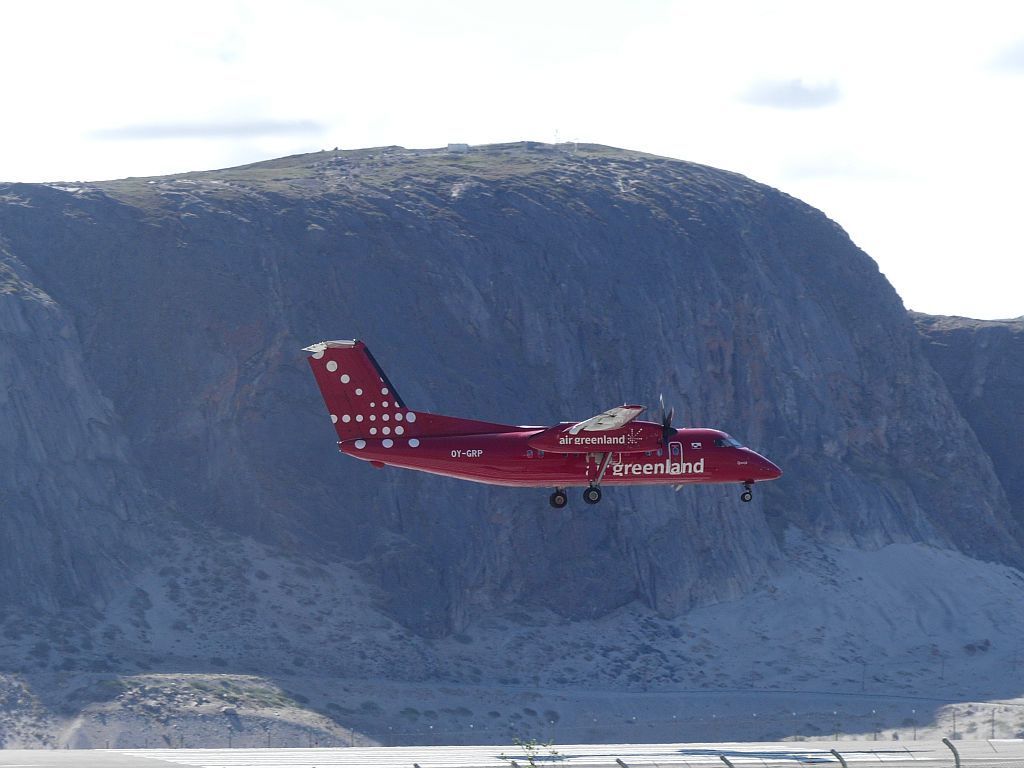
Back in the building we walked into the cafe and read a book. And once the A330 was ready to depart ... back to the viewing platform.
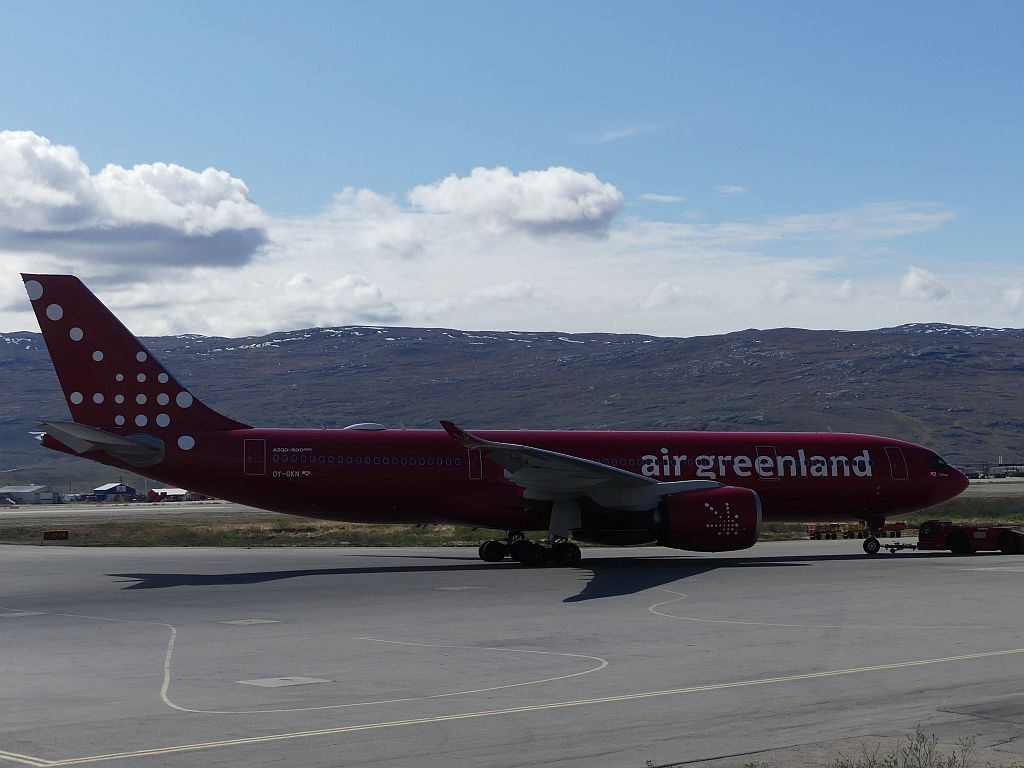

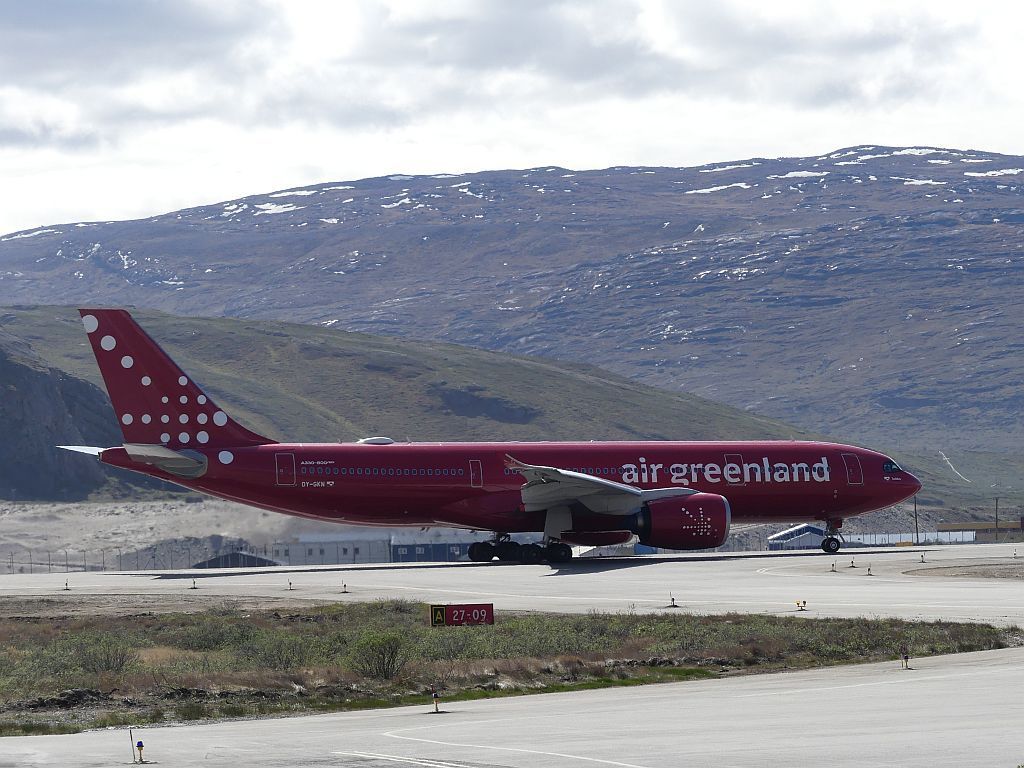
What I did not knew at that moment: My partner was approachd by the hotel personel that our room was indeed ready for us. And so I was unknowingly photographed while I was taking pictures.
What to do now? Kangerlussuaq is the place in Greenland that is furthest inland and therefore logically also on the Greenland ice sheet, often also called inland ice. With an area of around 1.8 million square kilometres, it covers around 80% of Greenland and is the second largest permanently frozen area in the world after the Antarctic ice sheet.
And from where we were staying, you can take a half-day tour to just about any inland ice and pass a glacier on the way. So we stood with a few other tourists in front of the airport on time and waited. And waited. And waited.

Again: Things are different here ...
But not long after the scheduled departure a offroad bus approached us and off we went on our tour.
Things are really different, because about 10 minutes after we started the tour, we saw a ... golf course? What? Well, it was a "golf course", because the American soldiers set it up back then by laying artificial grass under the tees and about 30 centimetres around the holes. The rest is more or less a very, very large bunker. Therefore my personal nightmare in terms of golfing as I absolutely hate using my SW.
To the surprise of our guide, we even saw 2 golfers!
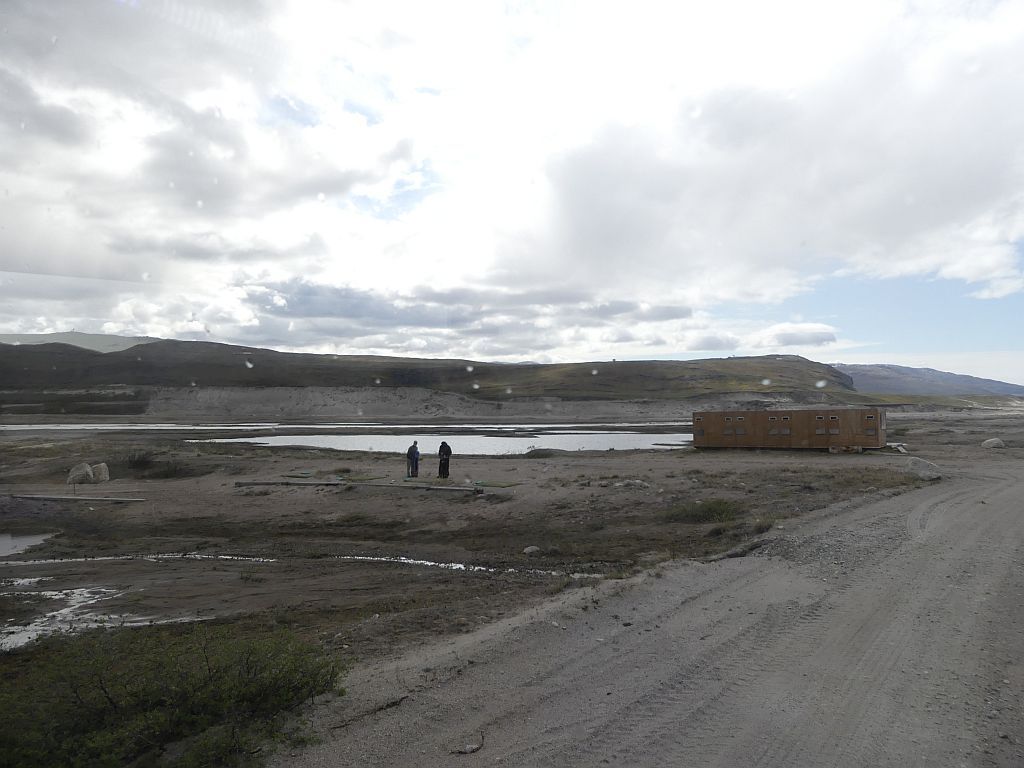
The journey to Russell Glacier and the ice sheet took about 2 hours, depending on the condition of the road. To make the journey not too boring, we stopped here and there when there was something exciting to see. Although our bus was a bit old, it coped well and managed the challenging route without any problems.
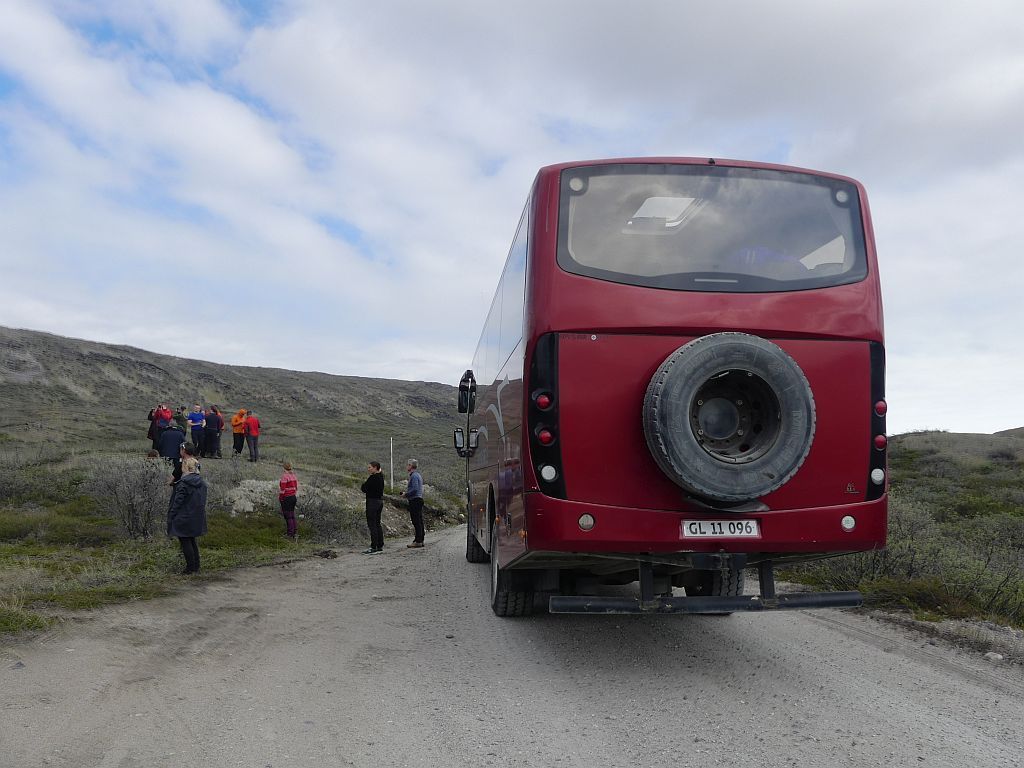
And it was a very beautiful route!

Incidentally, the road was built by Volkswagen. In fact, this was an off-road test track for SUV vehicles in the 00s. Volkswagen brought these prototypes here by plane, tested them on the road and on another test track on the inland ice and then flew them back to Germany. It's actually crazy when you think about it. The project was cancelled in 2006.
After another hour or so, the Russell Glacier came in sight.
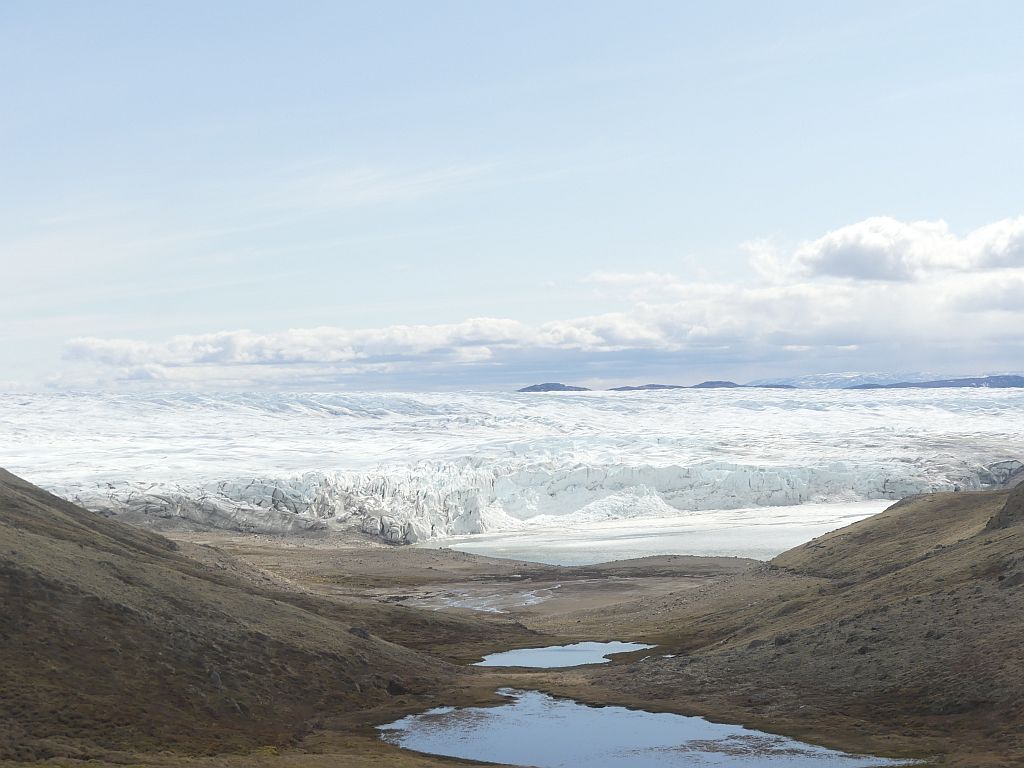
This glacier flows from the ice sheet in a westerly direction and is a fairly active and fast glacier with a speed of around 25 metres per year. It was discovered here that glaciers in general bind a large amount of methane, which makes the melting of glaciers even worse for climate change.
A couple of minutes later we arrived at the inland ice or quite near the inland ice as the bus stopped and we had to walk about one kilometer over quite rough terrain.

Well, and then we were standing on the ice sheet. And it was breathtaking!
The ice sheet stretches in a north-south direction for around 2,500 kilometres. On average, the ice is about 1.5 kilometres thick, in some places even up to 3 kilometres
The volume was once estimated at 2.5 million cubic kilometres. If the remaining ice were to melt away completely, the sea level would rise by 7 metres.
Due to the weight of the ice masses, the underlying earth's crust is sinking into the earth's mantle, which is why Greenland is approximately at sea level, and here and there even below it.

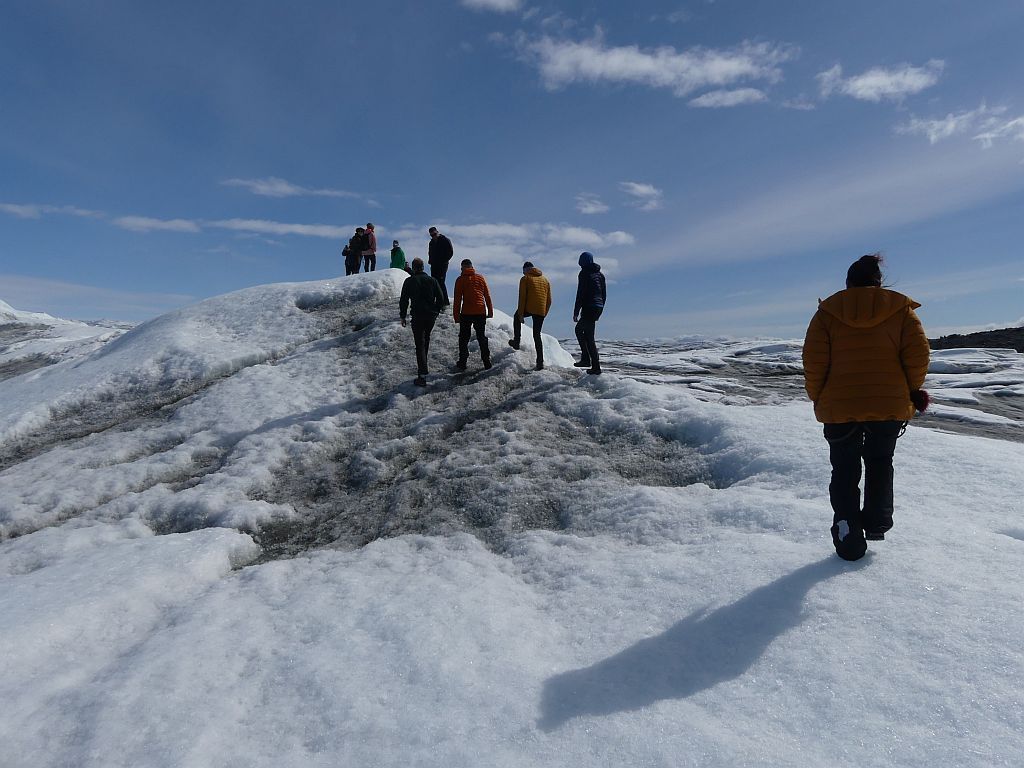
The tour allowed enough time to explore the area on your own, so we walked a bit and enjoyed the silence.

Back to the bus where we got some coffee or hot chocolate. And saw a rather unique road sign ...

The way back to Kangerlussuaq was quick, but we stopped a couple of times for animal sightings. This enourmous musk ox for example looked very surprised about the big bus driving through his dinner ...

Speaking of musk oxen ... dinner time! Dinner in Kangerlussuaq was a topic in itself. Because there isn't much here, especially for tourists. There was the kiosk with sandwiches, the hotel restaurant from our airport hotel, a pub, which is only open on Fridays and Saturdays and presumably sells the sandwiches from the kiosk, and the rowing club.
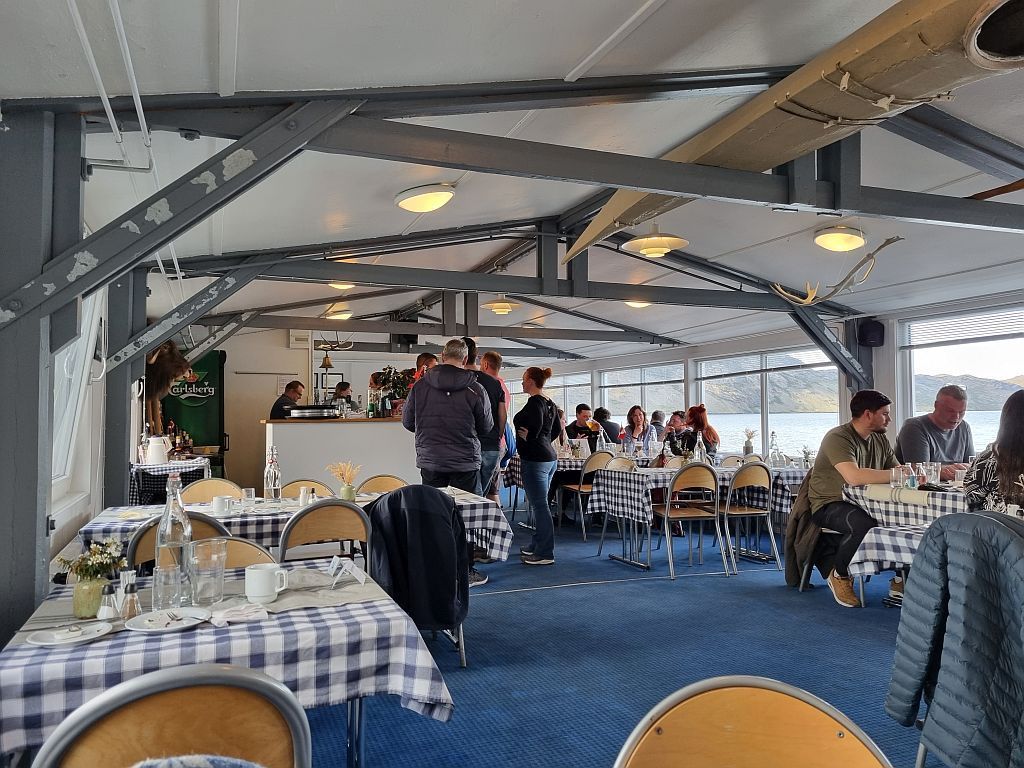
As the rowing club, called ‘Roklubben’ here, offered a Greenlandic buffet, Anders, who organised our trip from Topas Travel, recommended this restaurant to us. So we were collected in an old american school bus and arrived at the barrack of the club. Inside, a buffet was arranged and everyone was seated at pre-reserverd tables.
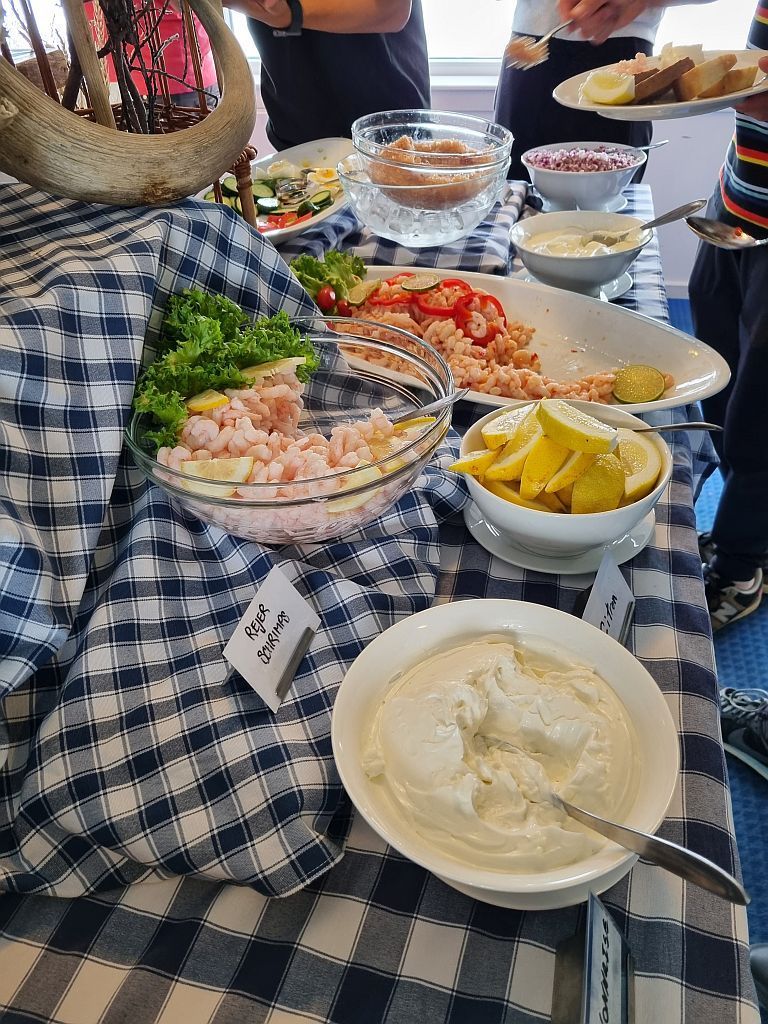
The selection was exciting and fresh. And some of the prawns are very local, as they come from the mouth of the river that flows from the Russel Glacier into the Atlantic. The chilli version was delicious, although we suspect that the asian ladies - who have been serving us - had an influence on the seasoning.

We then discovered and tasted a rather controversial and very special thing: Muktuk, which is a traditional food of the peoples of the Arctic, consisting of whale skin and blubber.

As a rule, bowhead whales are used because they are still the most commonly caught. However, the quotas (which we believe are justified) are being increasingly restricted. On the other hand, one whale supplies an entire settlement for a year.
Muktuk or maktaaq is cut out of the whale skin in blocks and has a higher concentration of vitamin C than all citrus fruits. This is why it used to be a vital source of vitamins for the Inuit. Even today it is still considered a delicacy, although we are not sure why it is often eaten with soya sauce.
In terms of flavour, it was ... not so ours.
As we are Germans, we stuck to what we know.

Dinner was finished quite quickly (nordic people tend to be quite fast while eating in our experience), so at about 11 pm we went back to the hotel. And it was still light - the sun wouldn't set today ...
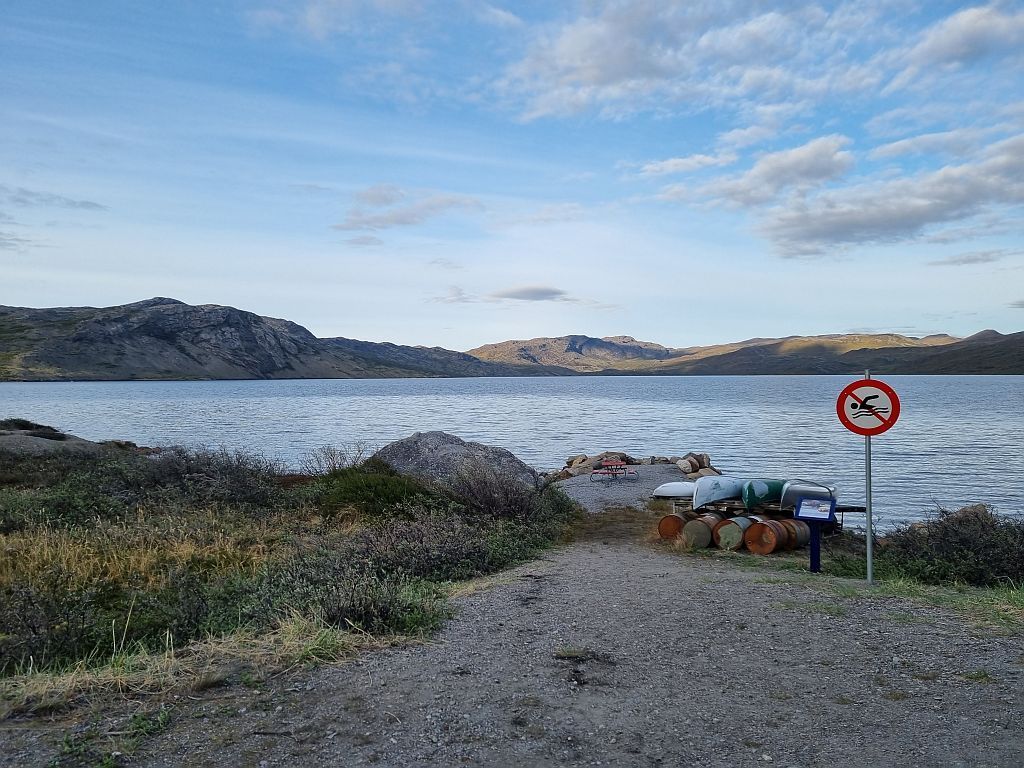
We would find out later what this would do to our biorhythm.