There was a certain logic in my choice of places to visit in Seville that probably would not make much sense if I tried to explain it! The "sites" I visited are listed here:
- Parque Maria Luisa
- Museo de Artes y Costumbres
- Casa de la Ciencia
- Real Fábrica de Tabacos
- Hôtel Alfonso XIII
- Metropol Parasol (Setas de Sevilla)
- Antiquarium
- Palacio Marqueses de la Algaba
- Centro de la Interpretación Mudéjar
 One of the decorative fountains in the Parque Maria Luisa
 Greenery in Parque Maria Luisa; a waterfall cascades down from this small mountain
 Parque Maria Luisa, near the museum buildings
Out of all of these, the Parque Maria Luisa was the clear winner. Despite the late June heat, this park was a haven of peace and cool temperatures, with constant birdsong, duck ponds, flowers and statues. In short, it could only exist in Seville (made me think of
Nights in the Gardens of Spain by Manuel de Falla, an amazing piano concerto type of tone poem for solo piano and orchestra). There is also an artificial mountain in the park, complete with waterfall.
The Museum of Local Arts and Costumes was all about the history of Andalusia and included exhibitions on the art of tailoring, the making of castanets and guitars and tile making, among many others. I was offered free entrance when I said I came from Scotland! The Archaeological Museum is currently closed for renovations.
Just outside the park is the Casa de la Ciencia, the Science Museum (€3). To be honest I've seen better, but I liked the displays of maps and Spanish exploration as well as the recreated whales and dolphins suspended from the ceiling of the main hall. There's also a planetarium, open only at weekends.
 Typical Seville costumes
 Casa de la Ciencia, Science Museum
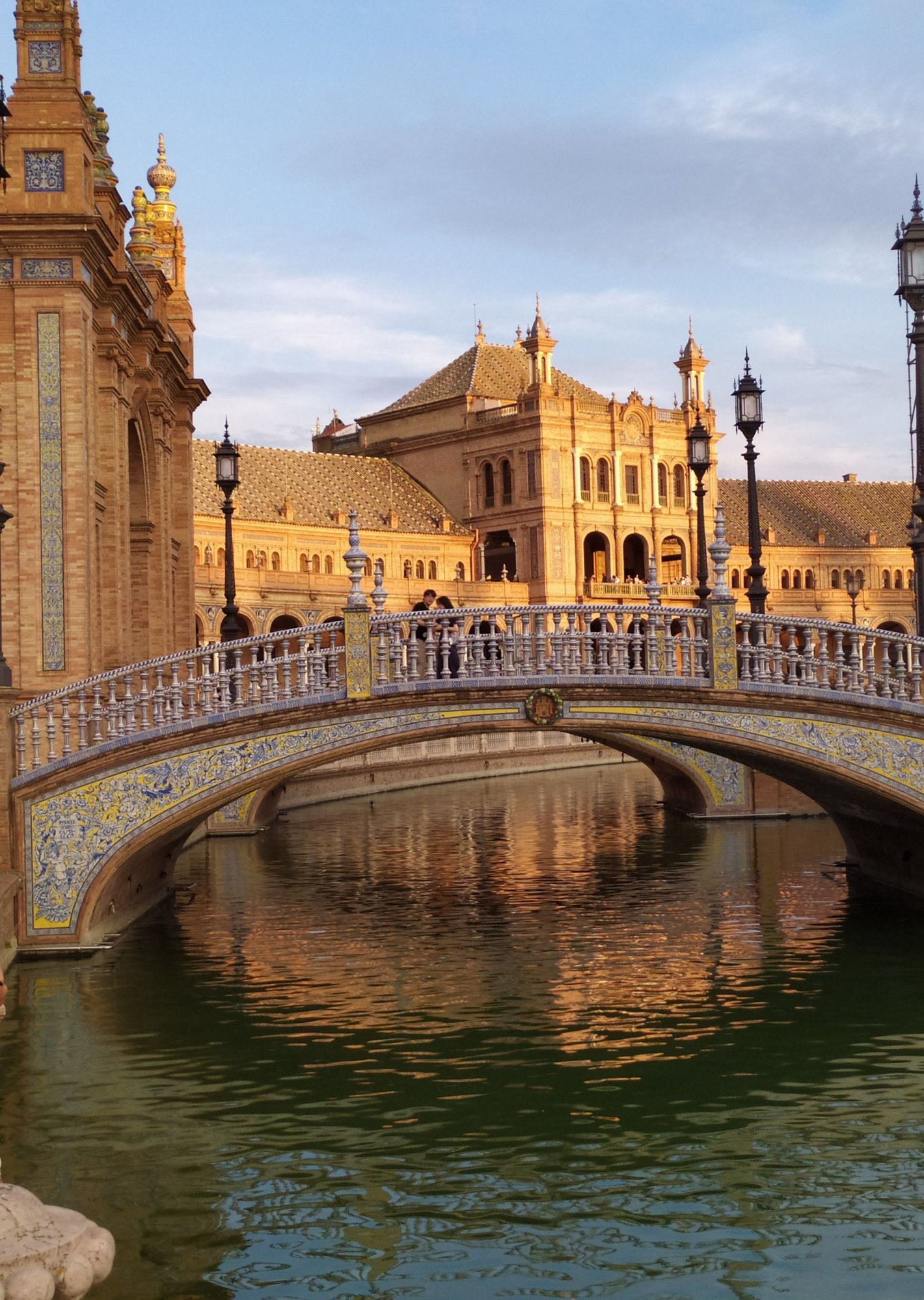 Plaza de Espana, which was built for the Ibero-American Exposition of 1929
The old tobacco factory is where Bizet's heroine Carmen worked and is the second largest single building in all of Spain. You can walk in and wander around, although the building is now occupied by the University of Seville.
Next door is the opulent Hotel Alfonso XIII which you can also wander into and admire the opulence of and even have coffee and cake at Swiss prices!
 Wandering around the University of Seville, which used to be a big tobacco factory
 The Metropol Parasol in central Seville, which shelters archaeological remains and as shopping center
 One of many bookshops in Seville
The Metropol Parasol is indeed impressive and reminds me of similar "modern" structures in Paris. It's quite photogenic and the outdoor platform on top on the shopping mall underneath is called Plaza Major. They want an unbelievable €15 to ride the elevator up to the roof (it's not that high). The blatant greed is bizarre and I wasn't very polite to them about it, offering 15 cents in the process. Luckily, the huge Antiquarium in the basement cost only €2.10. It reveals the extent of the ancient Roman city and Moorish remains that were discovered underneath the site during construction.
Lastly, the Mudéjar style palace of Marqueses de la Algaba was quite attractive, with its Moorish interior courtyard, but it lacked any real atmosphere, so you could skip this one. The garbled Mudéjar exhibition showed examples of Mudéjar work, which apparently was quite complex.