If you look up the name of the station on Kakao Map application, it provides some information for accessibility needs. Going to use Guro Digital Complex station as an example.
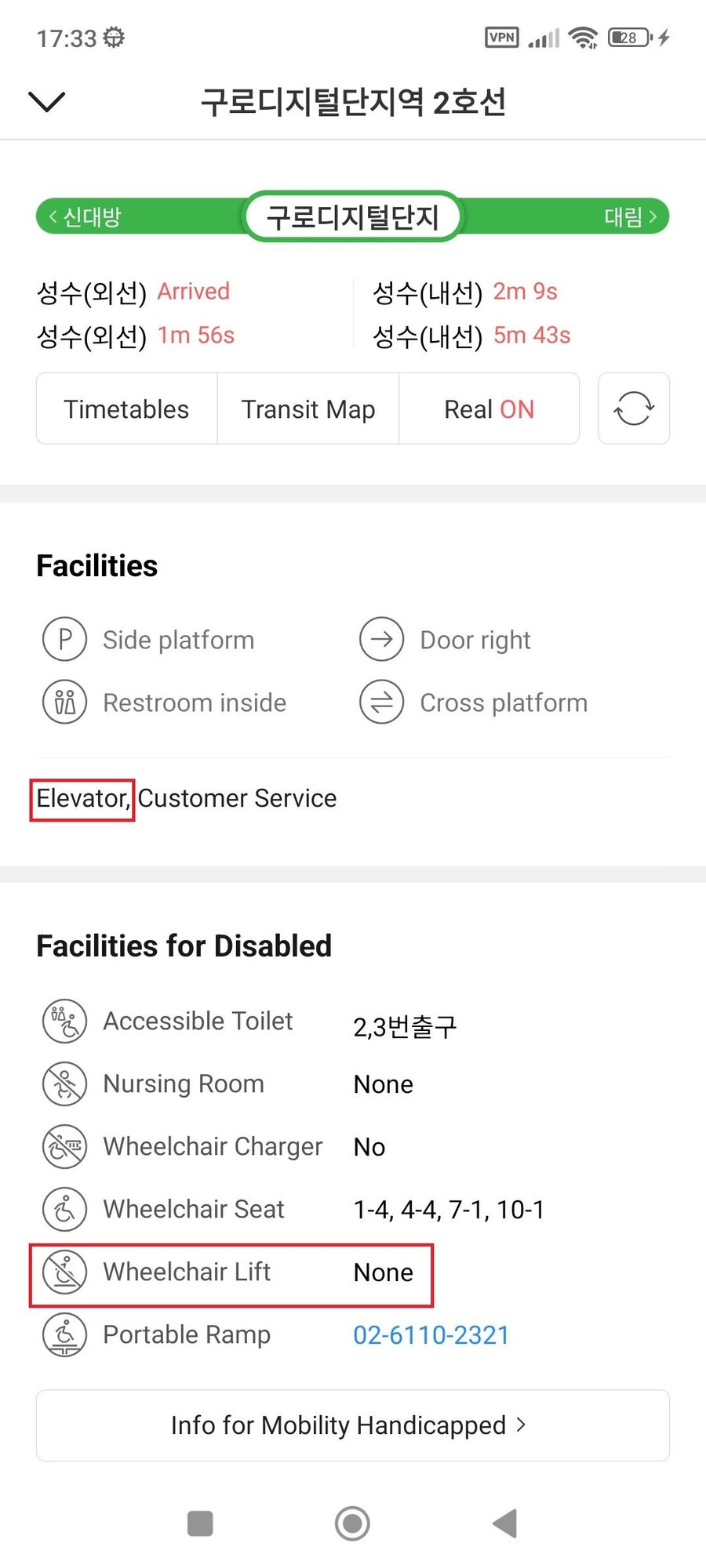
The station has elevator service but no "wheelchair lifts". Wheelchair lifts refers to the the mechanical device that lifts wheelchairs up/down the stairs/escalators.
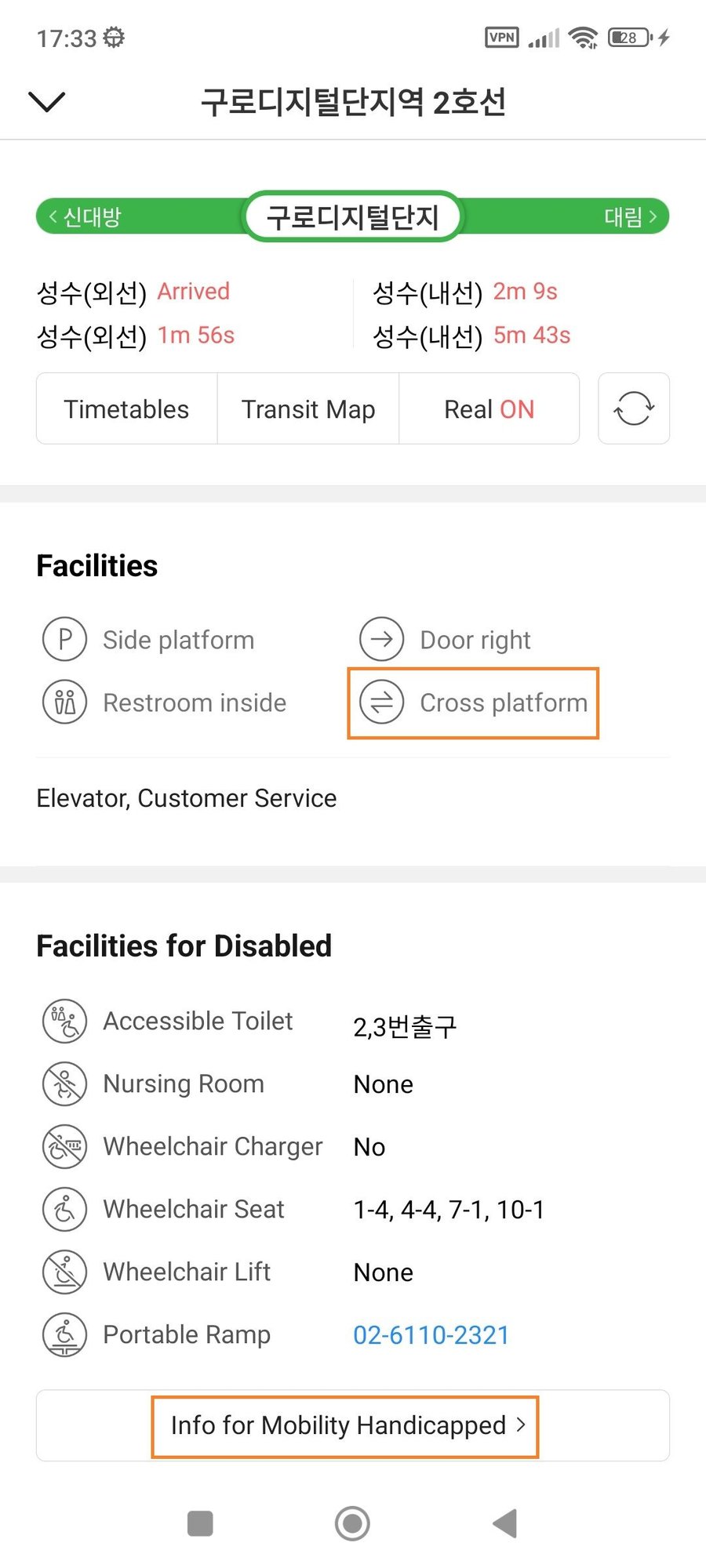
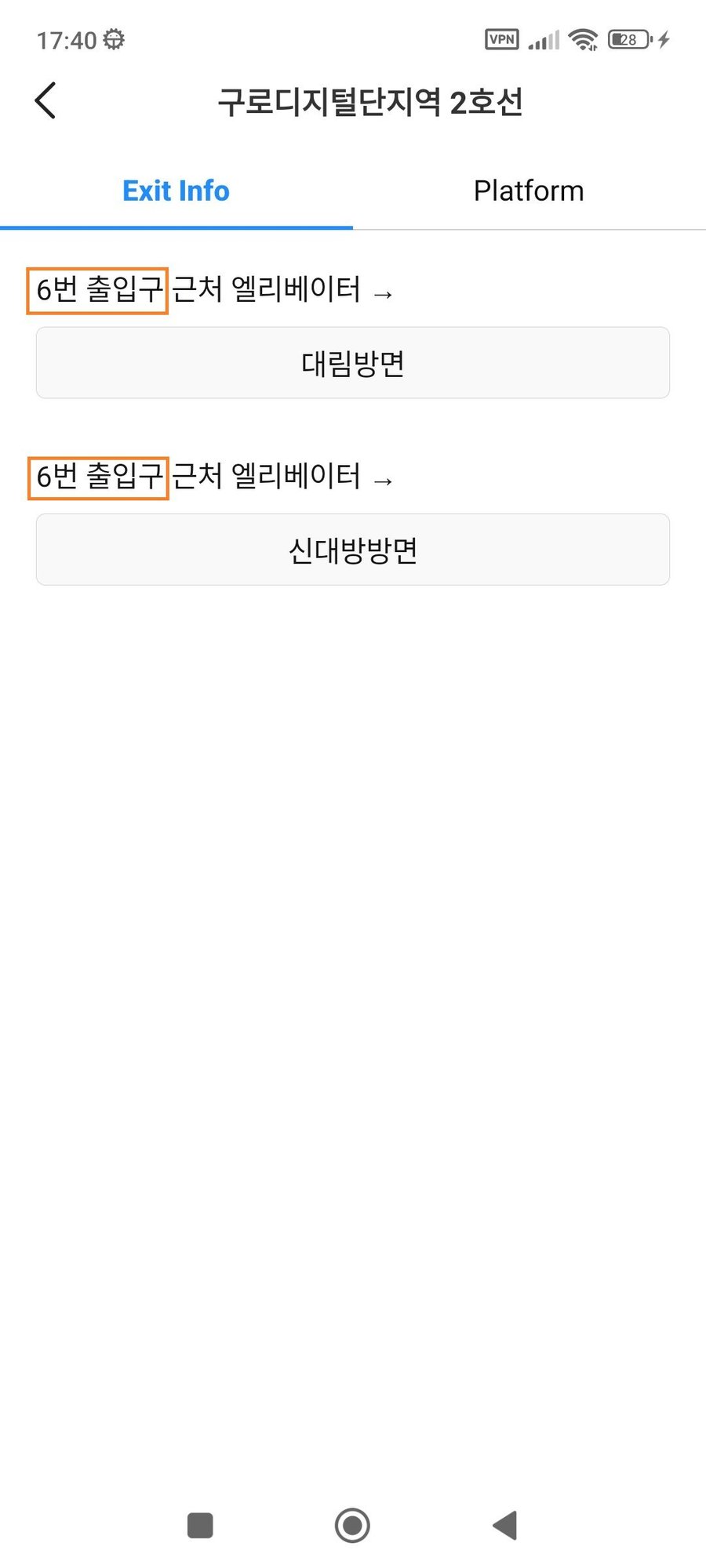
Clicking on "Info for Mobility Handicapped" will tell you which entrances/exits are nearest to the elevator. Unfortunately the information isn't written in English but the information presented will always contain a number, making it somewhat easier. Notice that it said "Cross platform" earlier, this means both directions of the subways are accessible from any entry point. There are some stations where one side of the subway direction is only accessible from specific entrances so be on the look out.
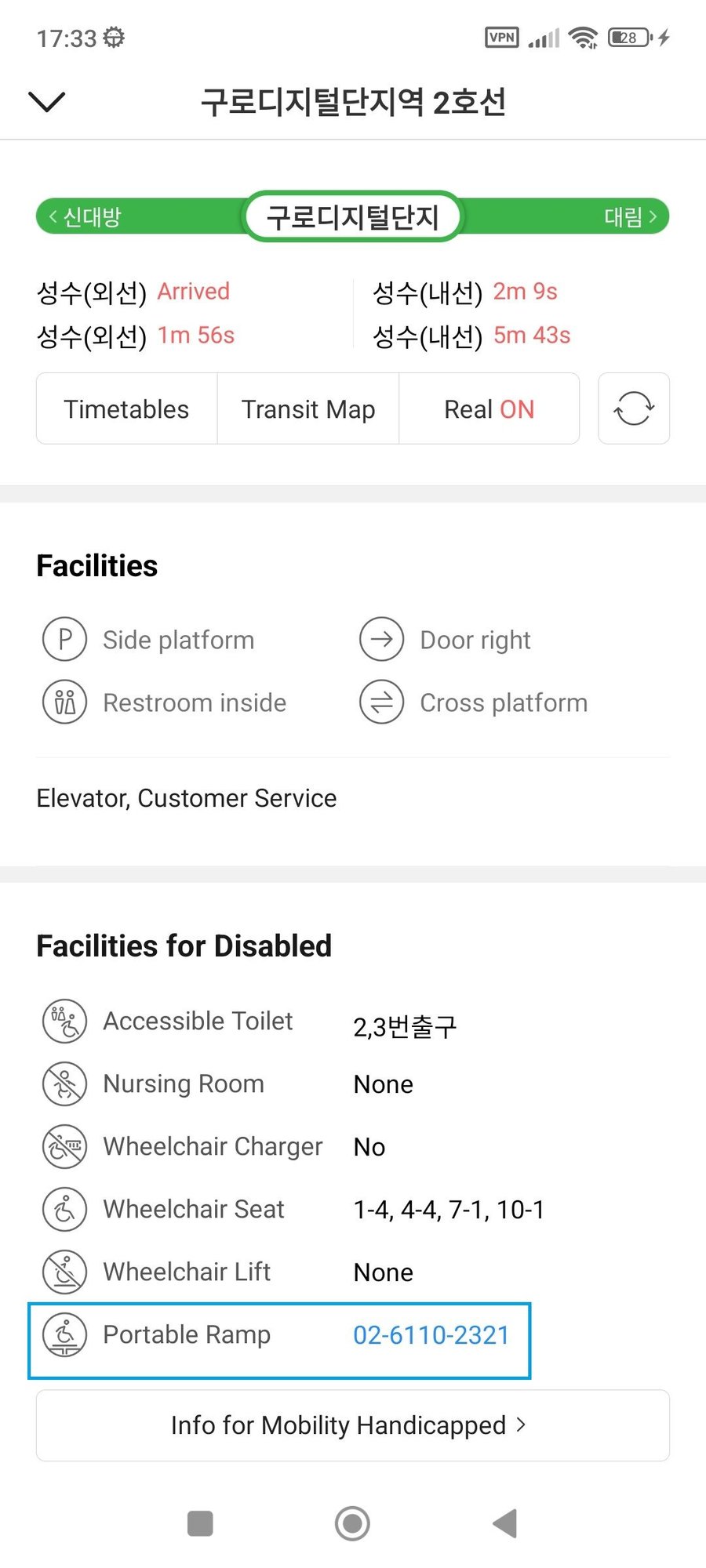

"Portable ramp" refers to the stability platform meant to assist wheelchairs during boarding and disembarking. If you require this service, you can either seek assistance at the subway entrance gate or call the number provided. Hopefully, the person assisting you will be kind enough to ask where you are headed and ensure that someone is prepared to help you upon your arrival. If this isn't offered voluntarily, you may need to explicitly request that this be done for you or (less ideally,) contact your destination station.
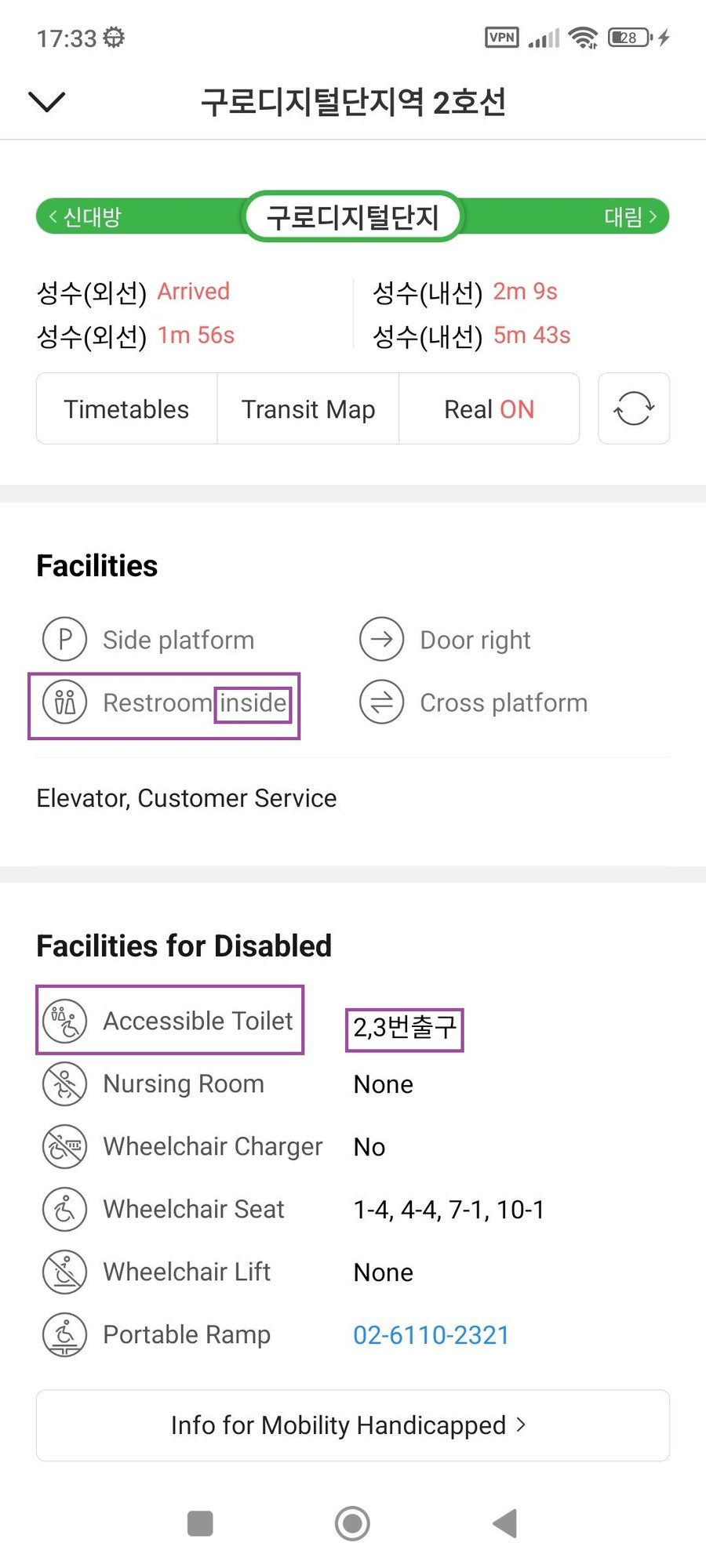
"2,3번출구" translates to 'No.2,3 Entrance/Exit', meaning the accessible bathrooms are located near the No.2 and No.3 exits. Take note that on top that it says the restroom is "inside", this means that the toilet is located 'inside of the subway system' and after the entrance fare gate. In certain stations the restrooms are positioned prior to the gate (which means, should you ever need it, you can make use of the toilet without paying).
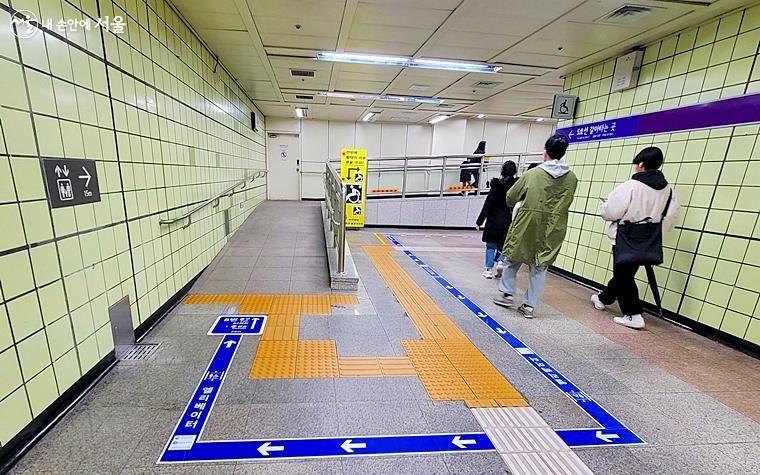
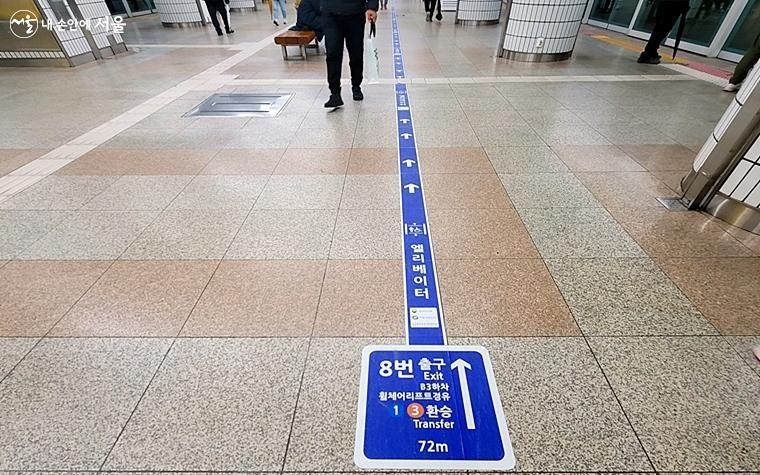

Stations have blue signs that exist to provide directions to those with accessibility needs as well as a train entrances/exits with prioritization for those with wheelchairs or baby strollers. This accommodation is extremely new, most riders are unware of it, and unfortunately will not adhere to the practice but the entrances/exits with these blue signs are usually positioned closer to the platform (minimum space between the platform and the train entrance) and are typically wider than other doors so make use of them anyways.
It was reported back in 2022 that 94.9% of the stations within the Seoul city boundaries were equipped with elevator connections and were working towards making that percentage a 100% by the end of THIS year. I don't know how much of this goal they have accomplished but just scrolling through the subway stations they all appear to offer some form of lifting service. I've been fortunate to live a life where I never required these services so I can't really speak to their actual practical effectiveness. I hope the information I've written are helpful and aren't missing any key information crucial to your needs. I'm very willing to do conduct further research for you if you require any additional details so just let me know.