INTRODUCTION
For many of us the weather reports on the news the day prior to having some flying in our working or leisure schedules can induce a slight sense of dread. Sometimes it is not always apparent why your flight is delayed or why it even should be in the first place. This guide is being written to hopefully answer some of the question and given far more detail as to why flights get delayed and to bust main stream media fed myth with facts. With that aside we need to answer the first question;
What is meant by fog and low visibility in Aviation?
Fog is the suspension of condensed water droplets in a parcel or body of air. For any given air mass there is an amount of water that can be held within it as a clear vapour. The amount of this vapour determines the relative humidity expressed as %RH. Generally speaking, the warmer a parcel of air is the greater its vapour carrying capacity is, and vice versa for cooler air. The vapour within an parcel of air will remain in such a state until it is cooled to what is known as the ‘dew point’ temperature. This temperature is dependant primarily on pressure, the higher the air pressure, the lower the dew point temperature will be. This is why the cloud base on a warm British summers’ day is often at a higher altitude than for a comparable day in the cooler winter months. As a parcel of air cools below the dew point temperature, the water can no longer be held as a vapor, and it condenses into tiny water droplets. This is the formation of a cloud, and the visibility within this cloud of water vapour drops will reduce depending on the density of these droplets. Essentially fog is just a cloud on the ground.
Fog by it’s aviation definition is a reduction in visibility below 1KM in EASA and UK and 1 Mile or 1600ft as per the FAA in the USA, caused by the condensation of water vapour.
Fog can form in a number of ways, these are briefly;
1. RADITION FOG - Forms due to overnight radiational cooling of the Earth’s surface, which in turn cools the adjacent air enough to cause condensation of the water vapour within the air. It is usually less than 300ft thick, localised and dissipates with strong wind or 2-3hrs after sunrise.
2. ADVECTION FOG - Formed when moist air moves over a colder surface. Thicker than radiation fog (>1000’) and more outspread. Wind strengthening may transform it into low stratus.
3. COASTAL FOG - Is a maritime advection fog with sea breeze (think San Francisco/Cape Town).
4. UPSLOPE FOG - Formed on windward slopes by the forced ascent of air causing adiabatic expansion and cooling. (Levante of the Rock of Gibraltar).
5. EVAPORATION FOG - Formed within a cold and stable air mass by rapid expansion from an underlying warm water surface.
6. FRONTAL FOG - Associated with frontal zones/ passages. Rain may fall into cold stable air and moistens it. Fog may also form when cold and warm air mix in the frontal zone or by the sudden cooling of air over a moist surface
There are of course other causes of reduced visibility. Primarily they are
mist which is defined as a visibility of between 1 to 5KMs. Where as Fog exists in a parcel of air comprising 100%RH, Mist is generally with in the 70-100%RH bracket.
Haze is a reduction of visibility due to tiny dust particles suspended uniformly in the air.
Smoke can be formed in many ways any wild fires burning can carry these particles in a stable air mass (think high pressure dominating) with a steady slight breeze for many miles.
Sand can also cause greatly reduced visibility. A sand storm can lift up particles sever thousand feet and reduce the visibility to mere inches.
Any reduction in visibility reduces our ability to navigate using our peripheral and direct vision and can lead to a loss of situational awareness. As anyone who drives a vehicle will know, when the fog rolls in, the traffic flow reduces.
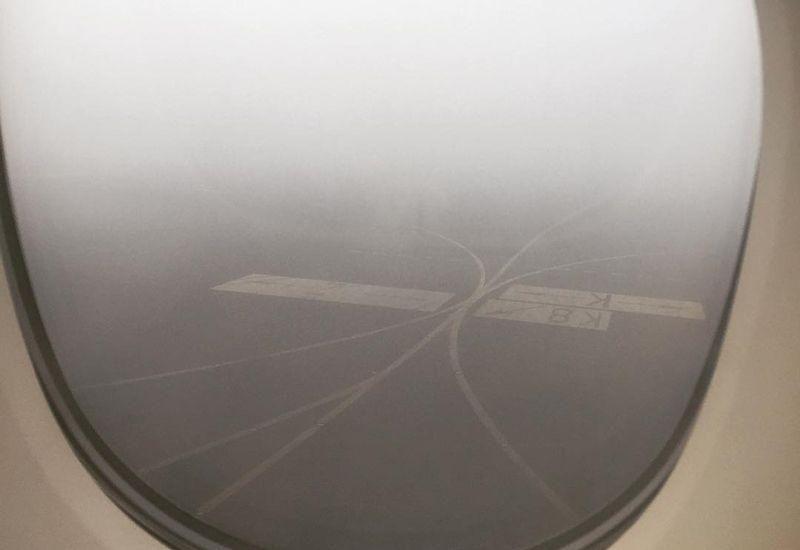 But the airplane lands itself, right?
No, not normally.
Take off and Landing are both visual manoeuvres and as we are about to discover in some greater depth than is normally made available, not all aircraft, crews, and even runways are the same. So whilst on some runways we can have the aircraft Autoland, it isn’t a guarantee and regardless, in any reduction of visibility, we do also need to take-off.
Some History
Implicit in the definition of Aerodrome Operating Minima (AOM) is the notion of an approach ban: if the conditions (usually RVR or Runway Visual Range) are worse than the prescribed minima, the approach must be discontinued. This philosophy arose out of work done following the crash of a BEA Vanguard at Heathrow in October 1965. Before that time the minimum RVR for a Cat I approach was 300 yds and the approach ban was not rigorously enforced. The crash lead to the setting-up of a government working party to consider the whole subject of AWOPS and its report is the seminal work on the subject. The UK also established the Blind Landing Experimental Unit at RAE Bedford whose work laid much of the foundation for the development of Cat III approaches. The application of approach bans was extended to foreign carriers after an accident involving an Afghan 727 at Gatwick in 1972, which crashed while trying to land in 100m RVR.
Some interesting results came out of the government-sponsored work, notably that there is no such thing as uniform, or homogeneous, fog. The conclusion from the report was that AOM should be established to provide safety, not to guarantee the success of an approach. If minima were to be set to ensure that every approach was successful cloudbase would need to be included and there would be no need for any kind of decision point. In fact, approach success is expected to be 99% for Cat III, down to 50% for Cat I and above. Actual go-around rates are very much lower than these numbers would suggest because most approaches do not occur in limiting conditions. Minima of 200 ft/550m for Cat I do not mean that an approach in those conditions will necessarily work, nor that one in less than 550m would definitely NOT work, merely that the balance of risk means that using less than 550m is a poor idea.
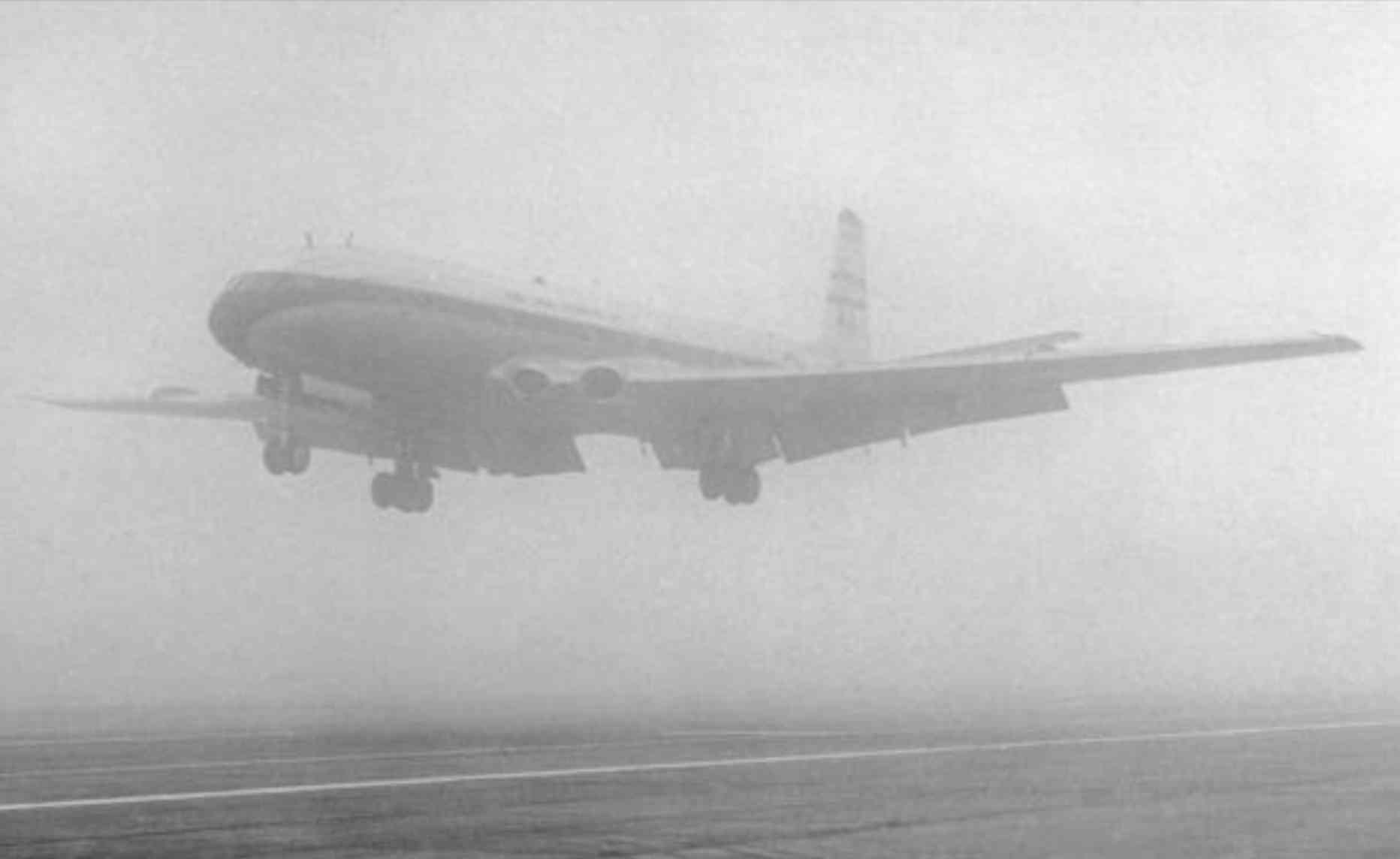 So how do Airports and Airlines keep going?
The answer to this is threefold as it depends on three separate things. Namely these are;
- Airport Facilities
- Crew Qualifications
- Aircraft Capability
Broadly speaking working in low visibility conditions has two distinct elements. Low Visibility Procedures and Low Visibility Operations. Airports liaise with ATC to do the Low Visibility Procedures bit, and Pilots and Airlines do the Low Visibility Operations bit. The concept of Aerodrome Operating Minima, as approved by the regulatory body for the state the airfield is in, is the first basis in maintaining a safe operation.
Firstly, then the Airfield.