Located 62 miles from the port of Nagasaki in the East China Sea on Fukue Island, the largest of the140 Goto Islands, Goto Retreat ray is a modern twist to the traditional onsen ryokan.
https://goto-ray.com/
We stayed there in September, about two weeks after its opening on August 30th. A brief pre-opening article about the hotel recently appeared in the New York Times.
nytimes.com/2022/08/26/t-magazine/wanderlust-hotels-aman-new-york-goto-islands-japan.html
The hotel was designed by Yukio Hashimoto, who also designed The Peninsula Hotel Tokyo, ANA Intercontinental Hotel Beppu Resort & Spa, and Hyatt Regency Seragaki Island Okinawa.
We arrived by plane on a scheduled 30-minute flight from Nagasaki Airport, but thanks to good weather, it only took 20 minutes. The island can also be reached by car ferry from Nagasaki City in just over three hours, or in one-and-a-half hours by hydrofoil. There are also direct flights from Fukuoka Airport that take 40 minutes. Upon arriving, we took a taxi for the 15-minute drive from Goto Tsubaki Airport (also called Goto Fukue Airport) to the retreat/hotel.
 Exterior view of hotel
Check-In
Exterior view of hotel
Check-In
When you enter the lobby, you’re immediately taken by the blue ocean view beautifully framed behind the window covering the entire wall. We were asked to sit on a lobby sofa with table where we were checked in. Since it was shortly after noon time, we decided to look around the area, so we left our luggage with the staff and went sightseeing for a couple of hours.
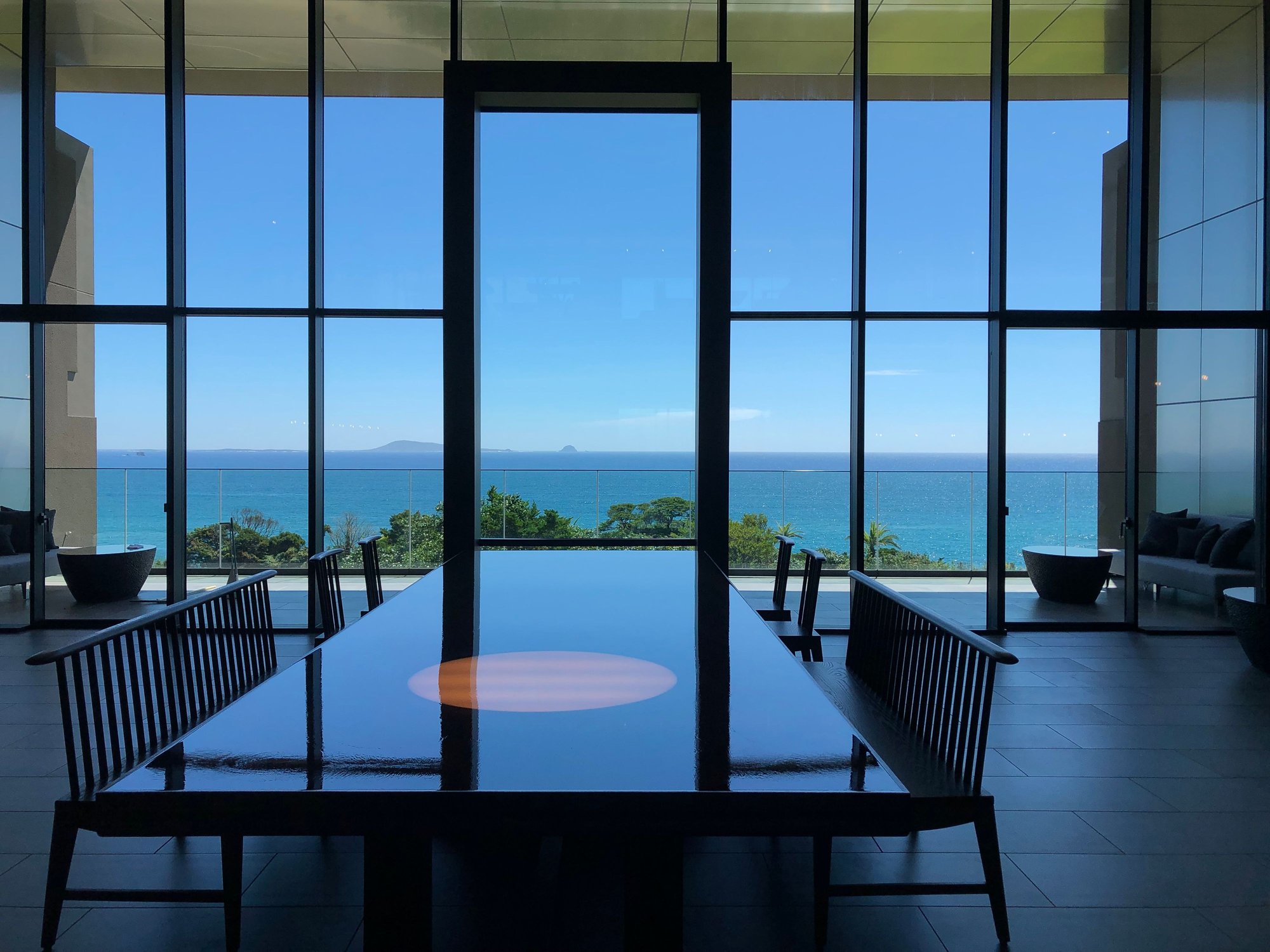 Lobby view upon entry
Room
Lobby view upon entry
Room
We booked a 58 sqm (624 sqf) Superior Twin Room with Sea View. Nineteen of the hotel’s 26 rooms share this same layout but there are also a few rooms at 34 sqm and 70 sqm. All rooms of the hotel have ocean views and outdoor baths (
rotenburo) on their balconies. However, the baths are not onsen baths of natural hot spring water but ordinary tap water, which is a major drawback considering that the outdoor baths are a major highlight of the hotel. We later learned that there are only three natural onsen on the entire island. Still, the bath space is very nicely designed and the view from the bath is wonderful and deeply relaxing. Our room had twin beds, a sofa that converts to a bed for a third person, and a refrigerator stocked with beer, wine, sparkling mineral water from Mount Aso in Kyushu, and cheese. Next to the fridge were drawers containing wine glasses, coffee/teacups, a coffee grinder and maker, and silverware.
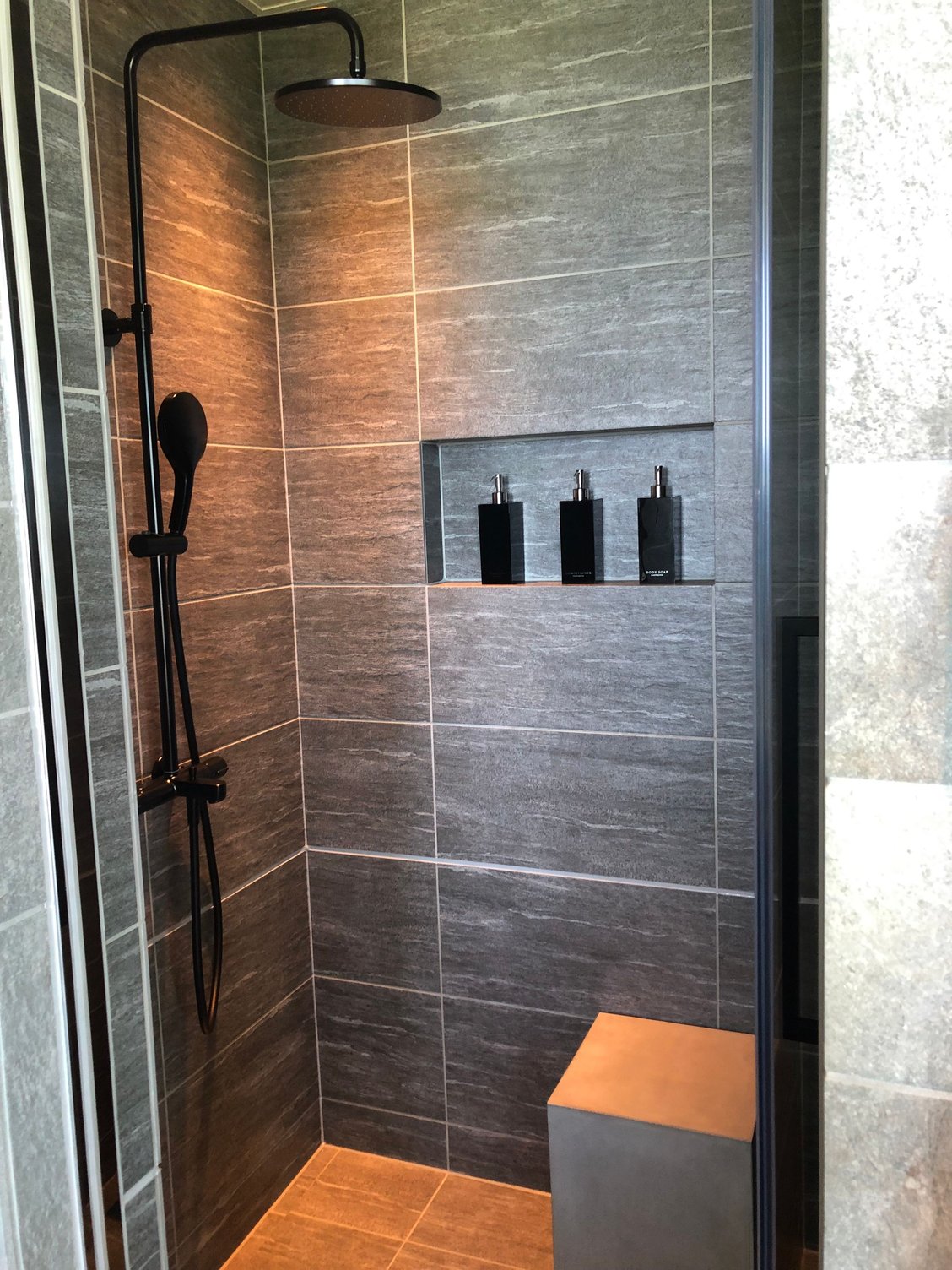
The shower room and wash basin area could be sealed off by a sliding wooden panel for privacy and wooden venetian blinds could also be lowered in front of the window of the outdoor bath on the balcony, as well as the main window with ocean view. The wooden blinds were all manually controlled and time-consuming to raise and lower, and I would have expected electronic control for this level of luxury and price. The room was attractively designed in wood and stone. On the wall on the left side of the room next to the bed was a 60-inch LCD TV, but it could not be pulled out at an angle for better viewing.
Yukatas, pajamas, black robes, and white bath robes were all available in-room. For music, there was a Sonos wi-fi speaker with a nice full sound that filled the room.
The view and abundant natural light made the room comfortable and peaceful and a great place to sit around, talk, and space out at the ocean view while having a drink.
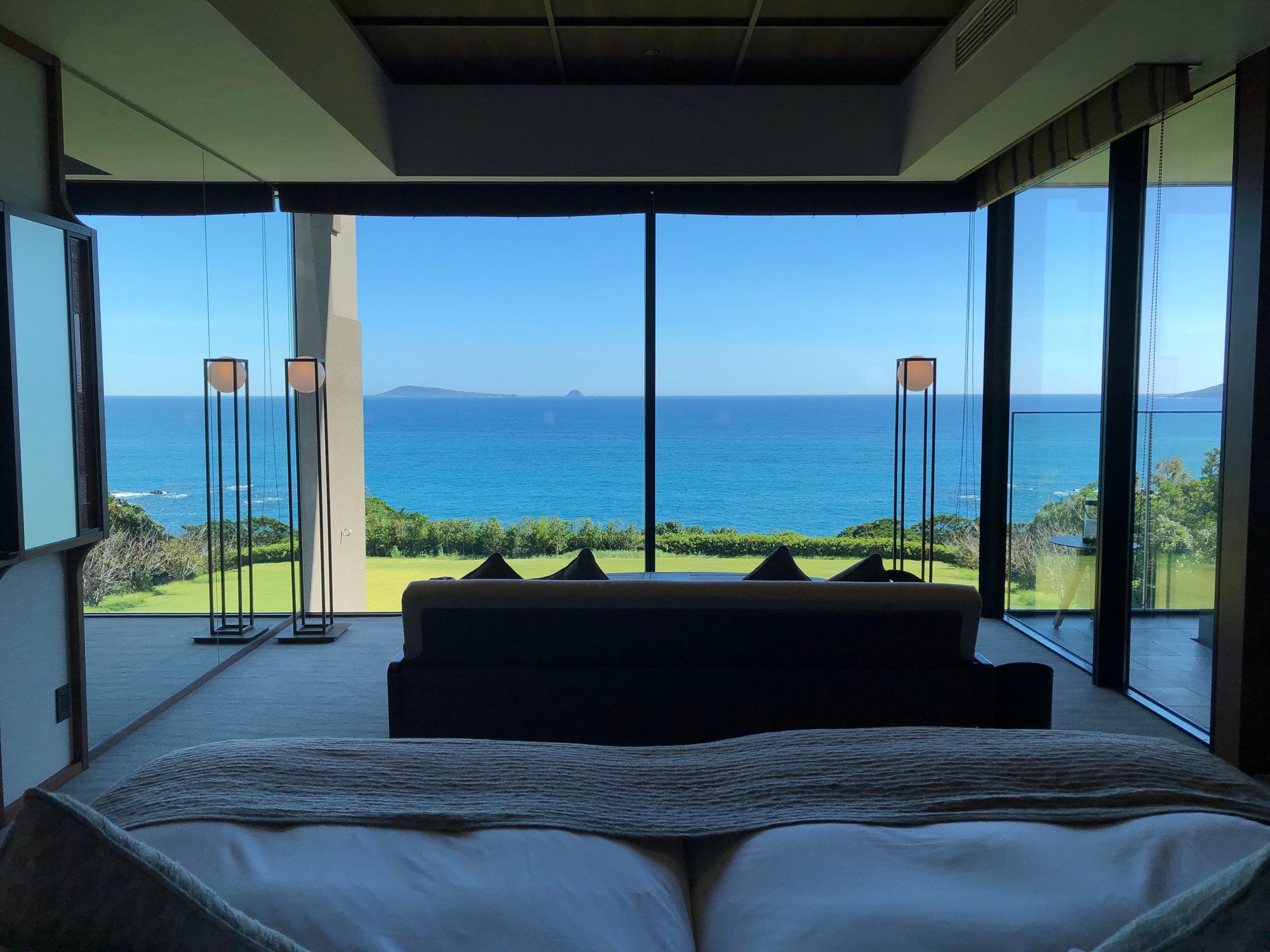 Our room with ocean view
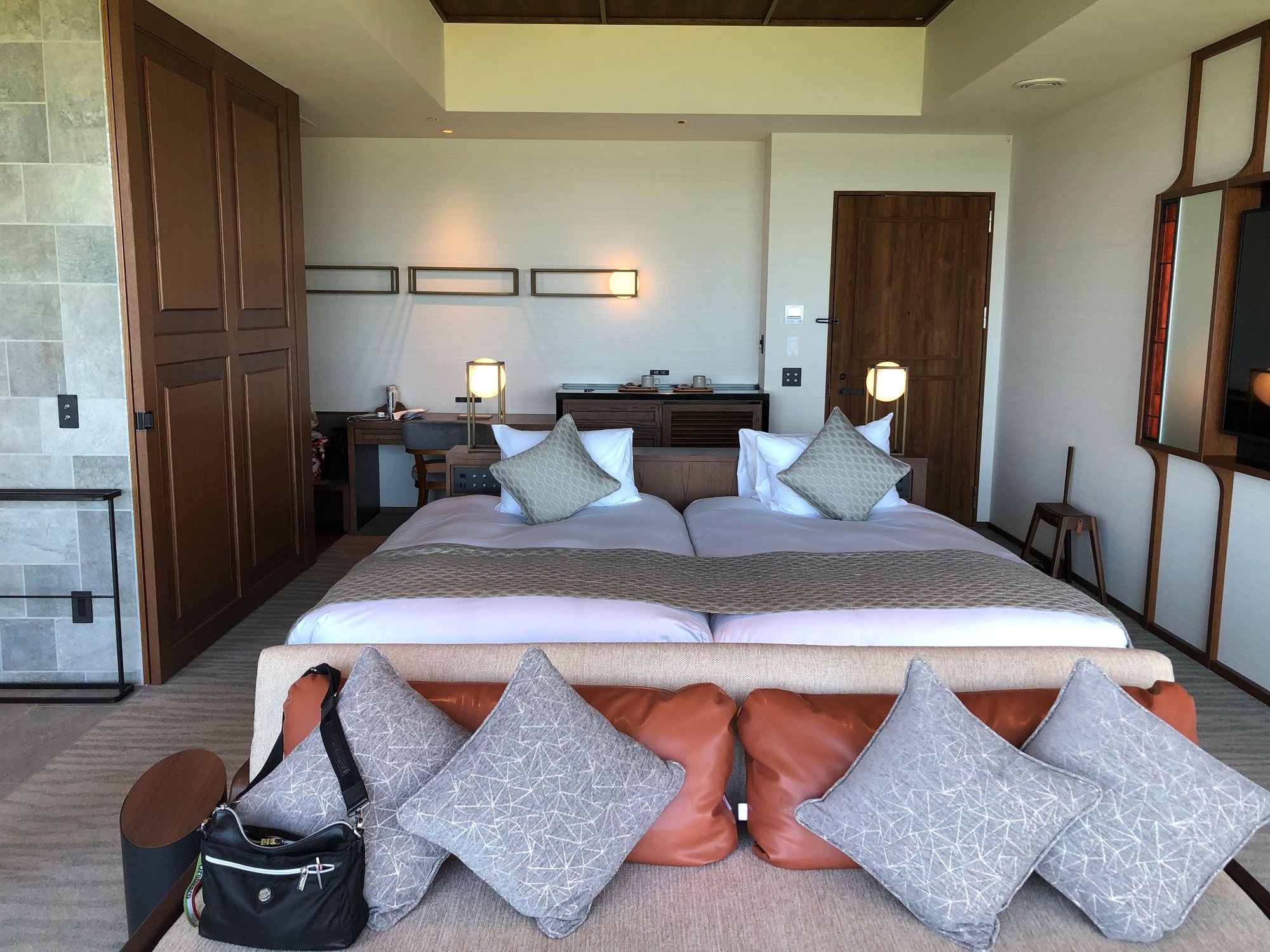
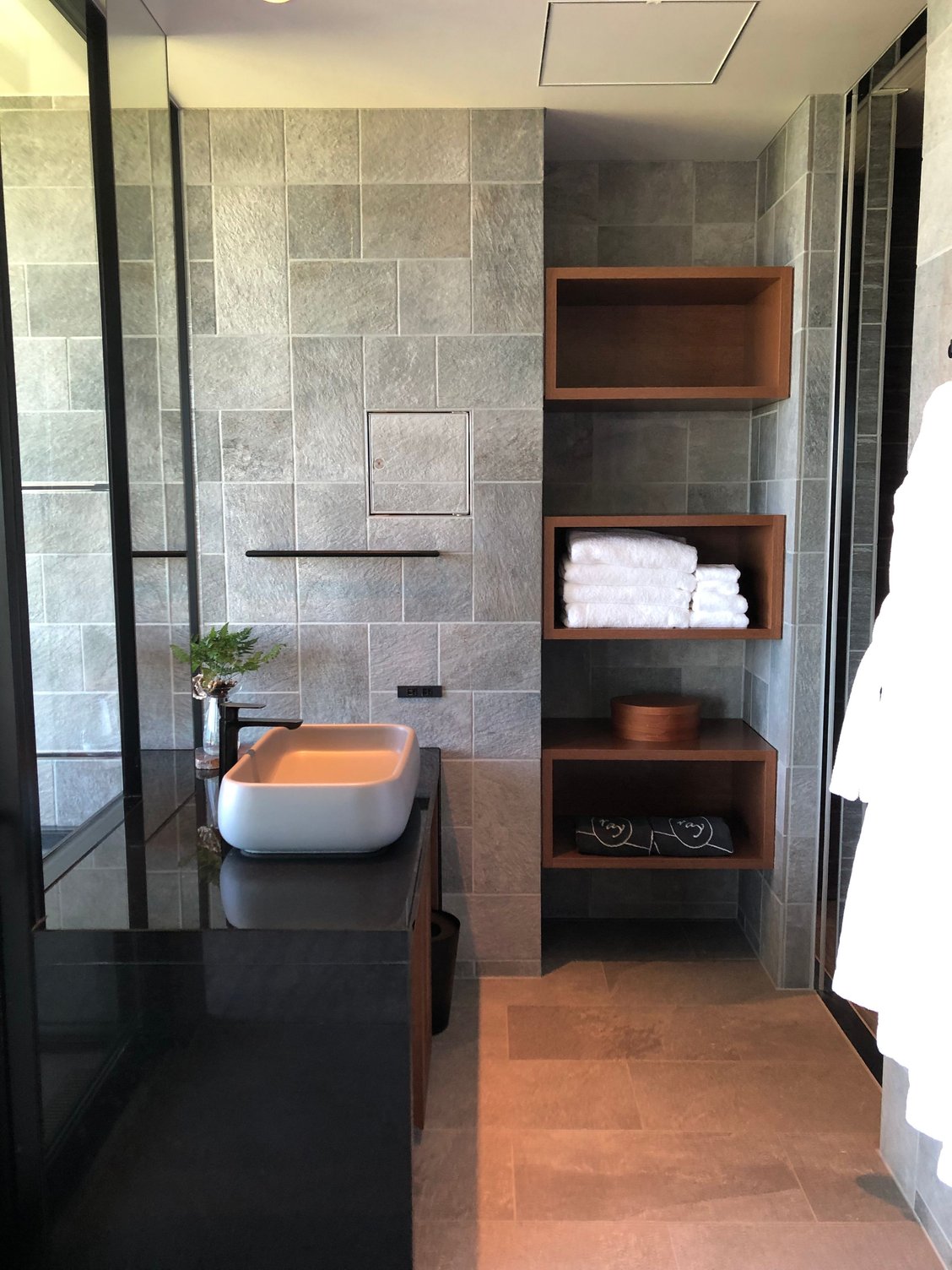
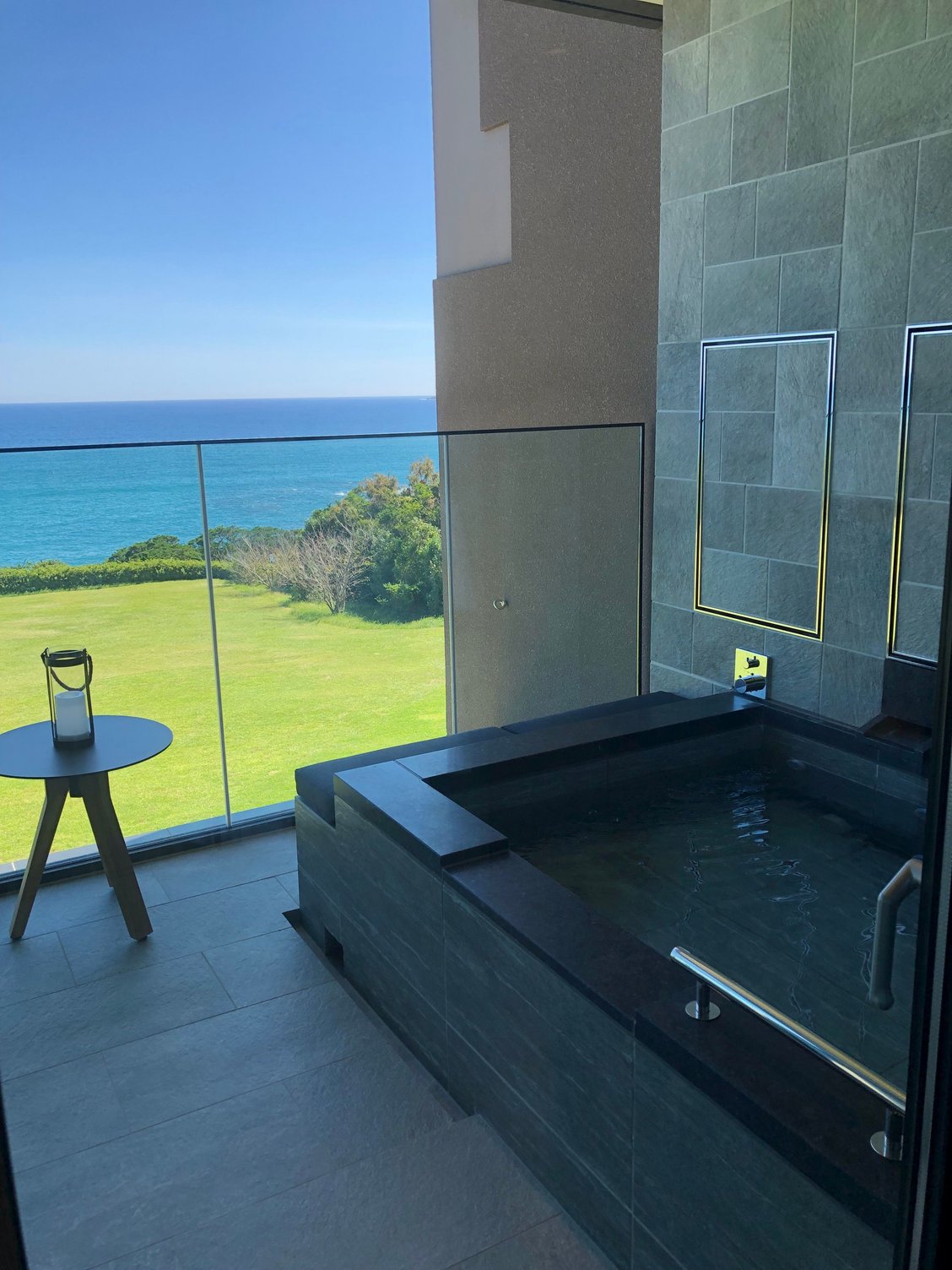 Outdoor bath (rotenburo) on balcony
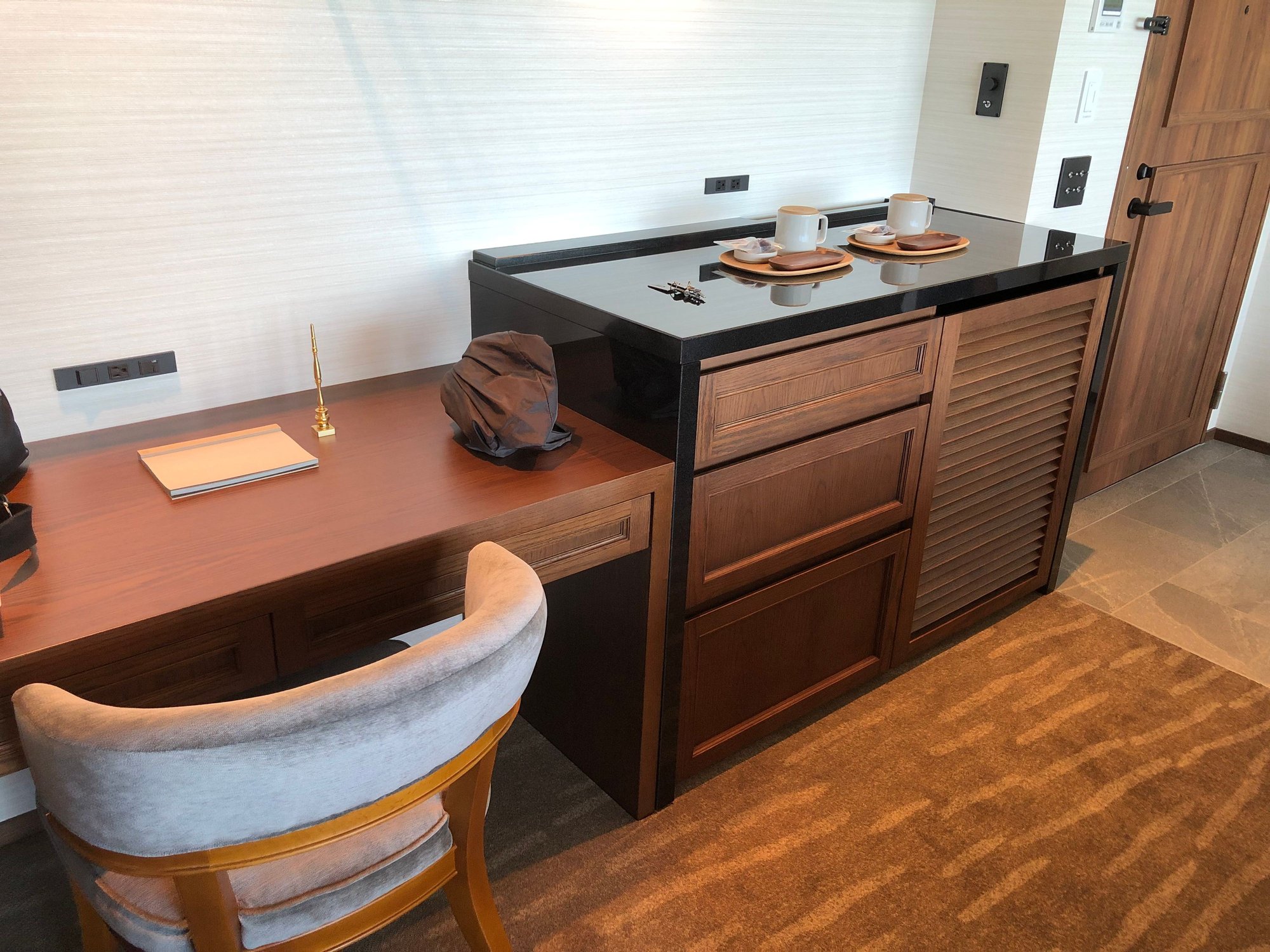 Desk and wet bar
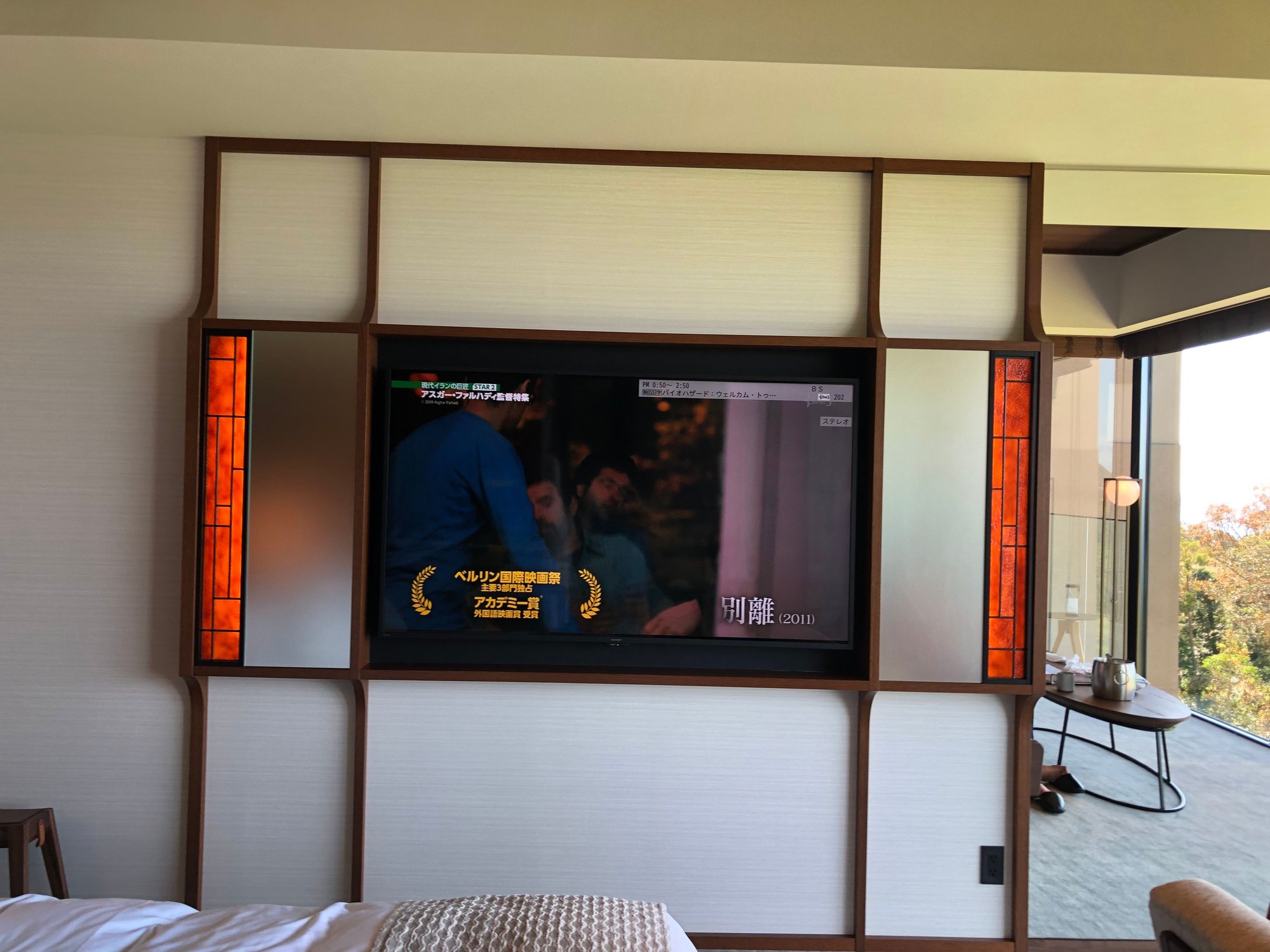 LCD TV with orange stained glass motif on each side
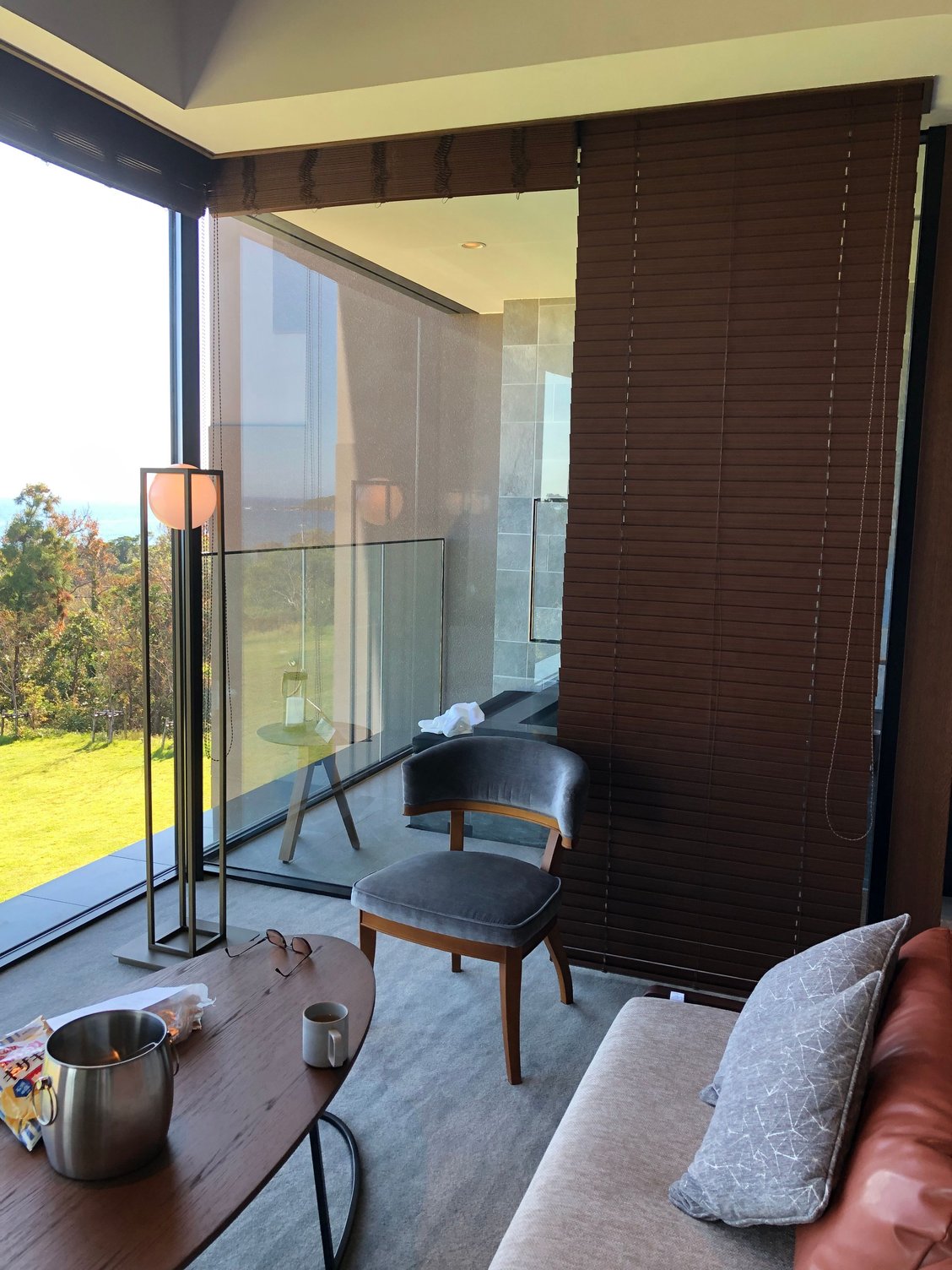 Wooden Venetian blinds
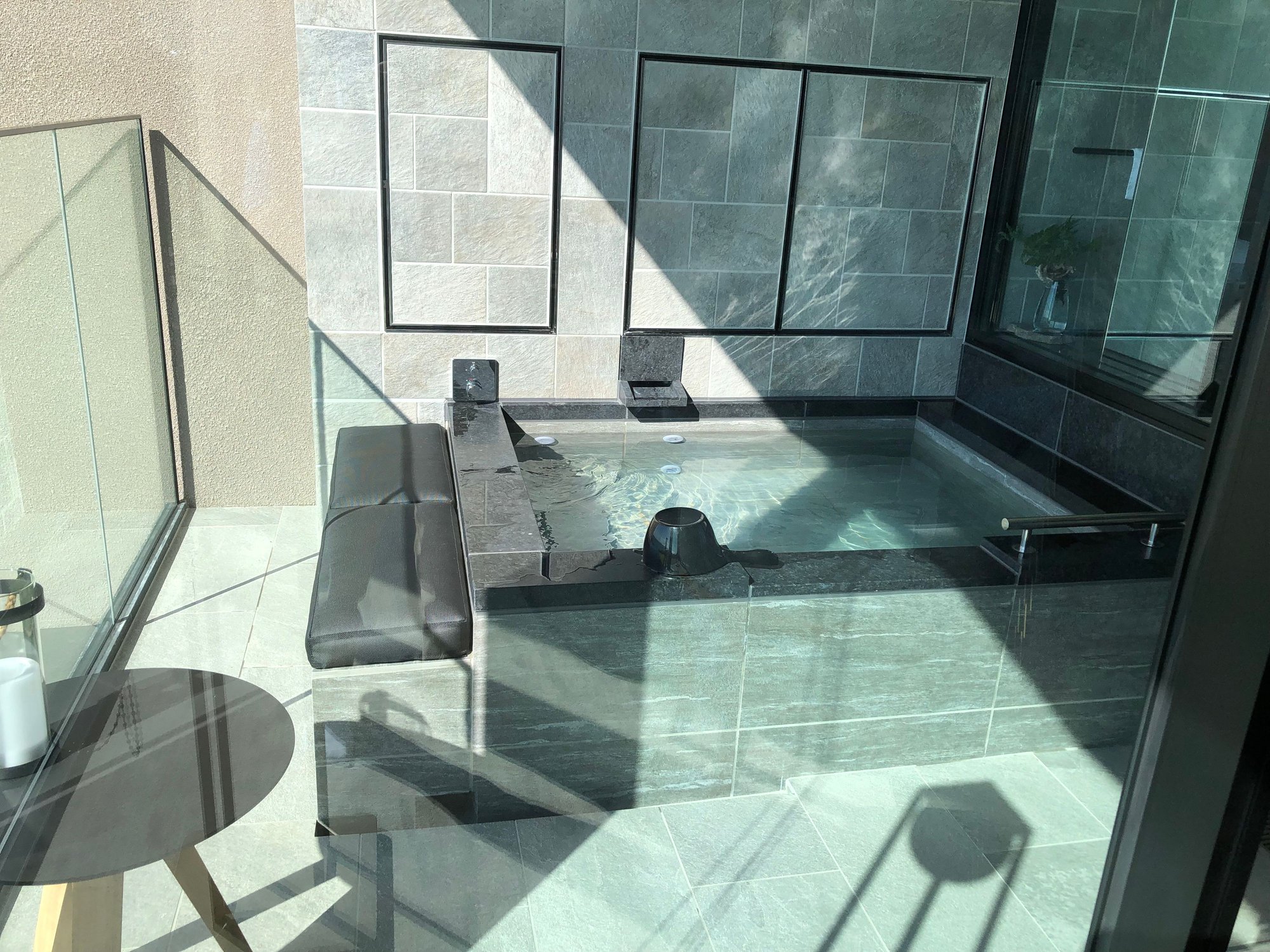
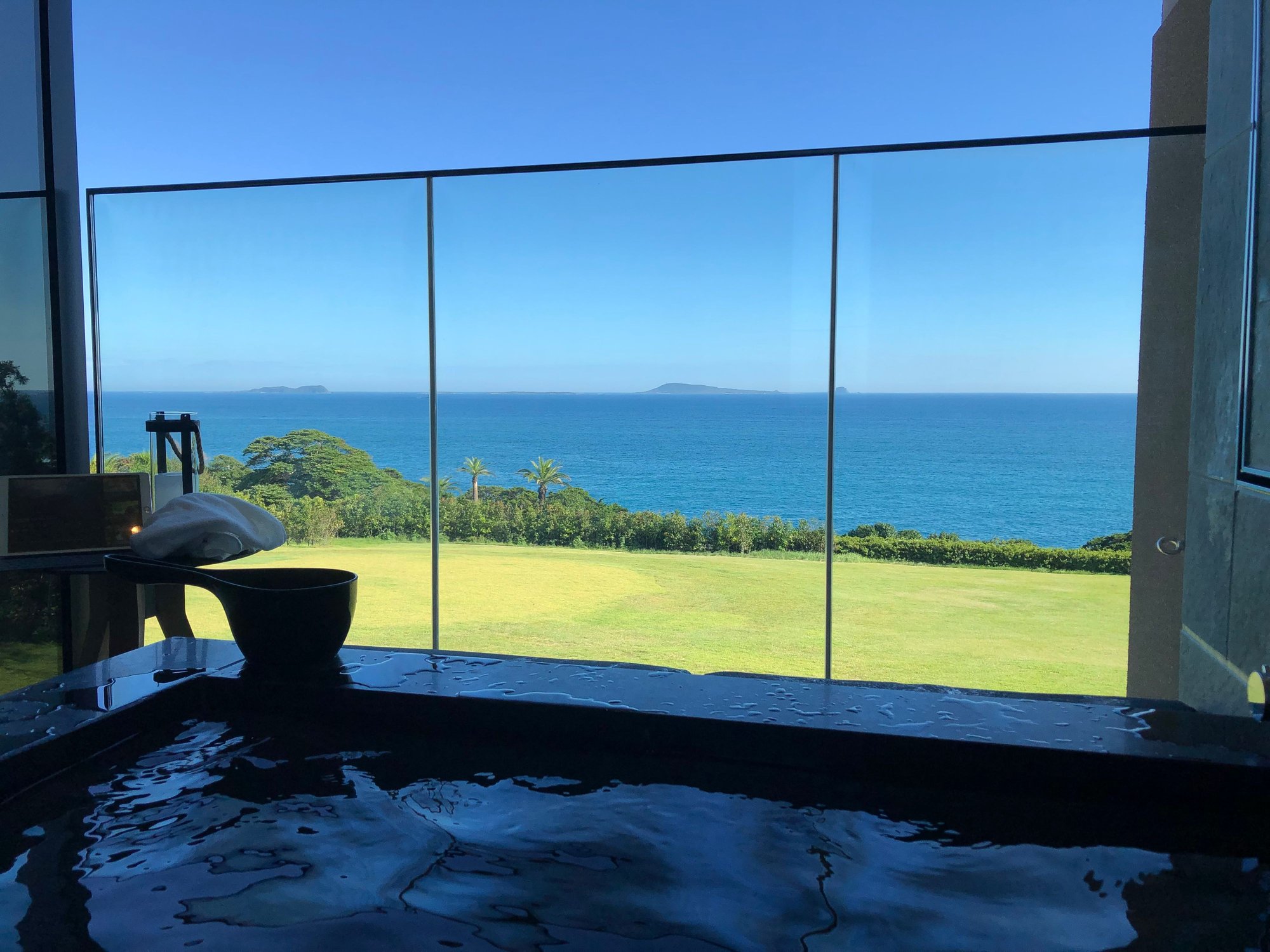 In-bath view
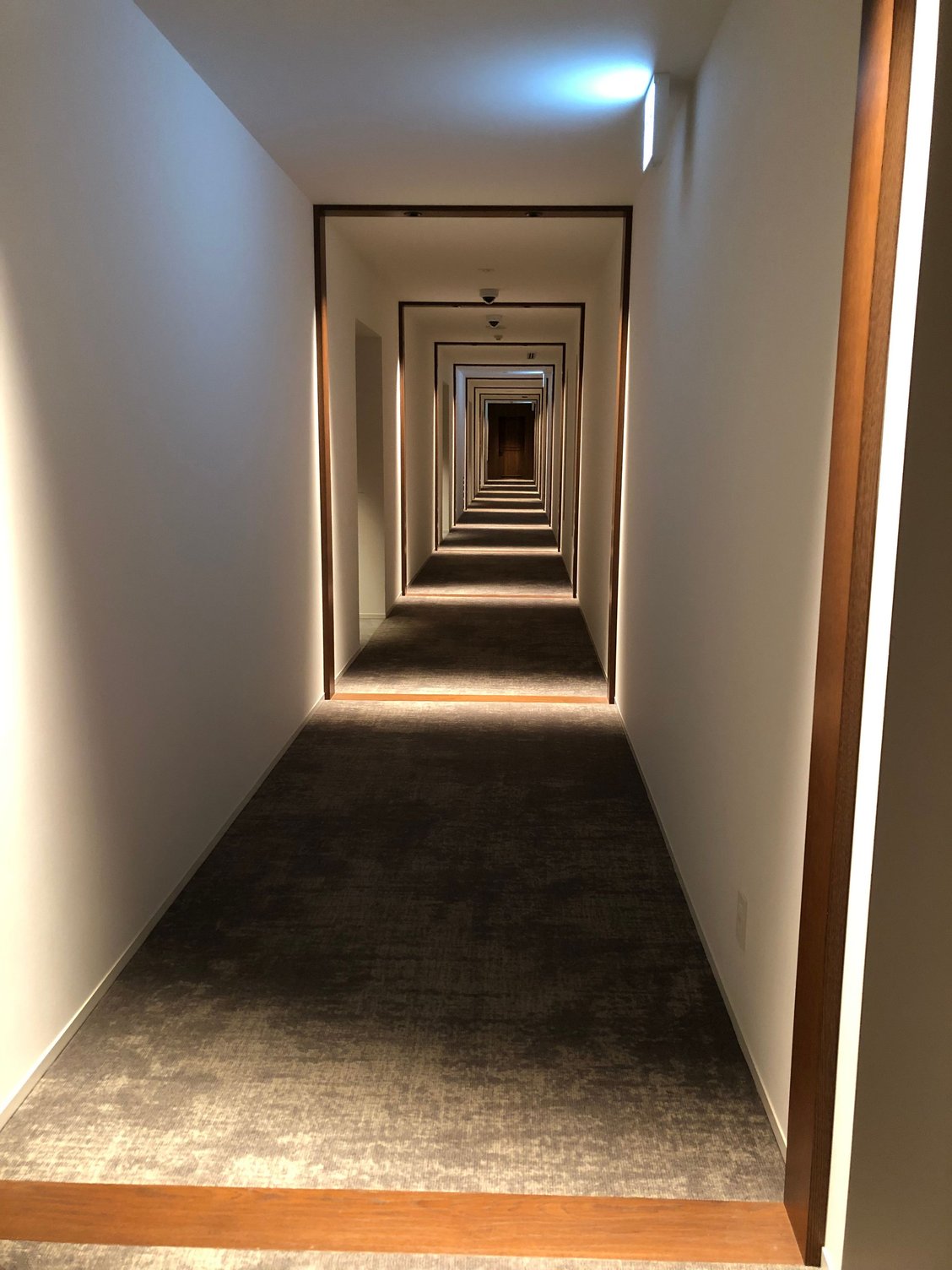 Hallway
Bar
Hallway
Bar
There is a bar in the lobby next to what appears to be the check-in counter. It is oddly situated with stained glass windows on the wall at one end and a meditation room around the corner at the other end, not exactly the associations I find conducive to drinking alcoholic beverages, so perhaps their location at either end of the bar was intended to have a tempering effect on those who might be inclined to overdrink, ha-ha. A bar with a clear ocean view would have been far more inviting, but you’ve got that view in your room. There’s even a bookshelf opposite the bar with Japanese books about the island including some with photos of the many old local churches. With all these churchy influences around me, I felt like asking the bartender to pass me the church key to open a drink with.
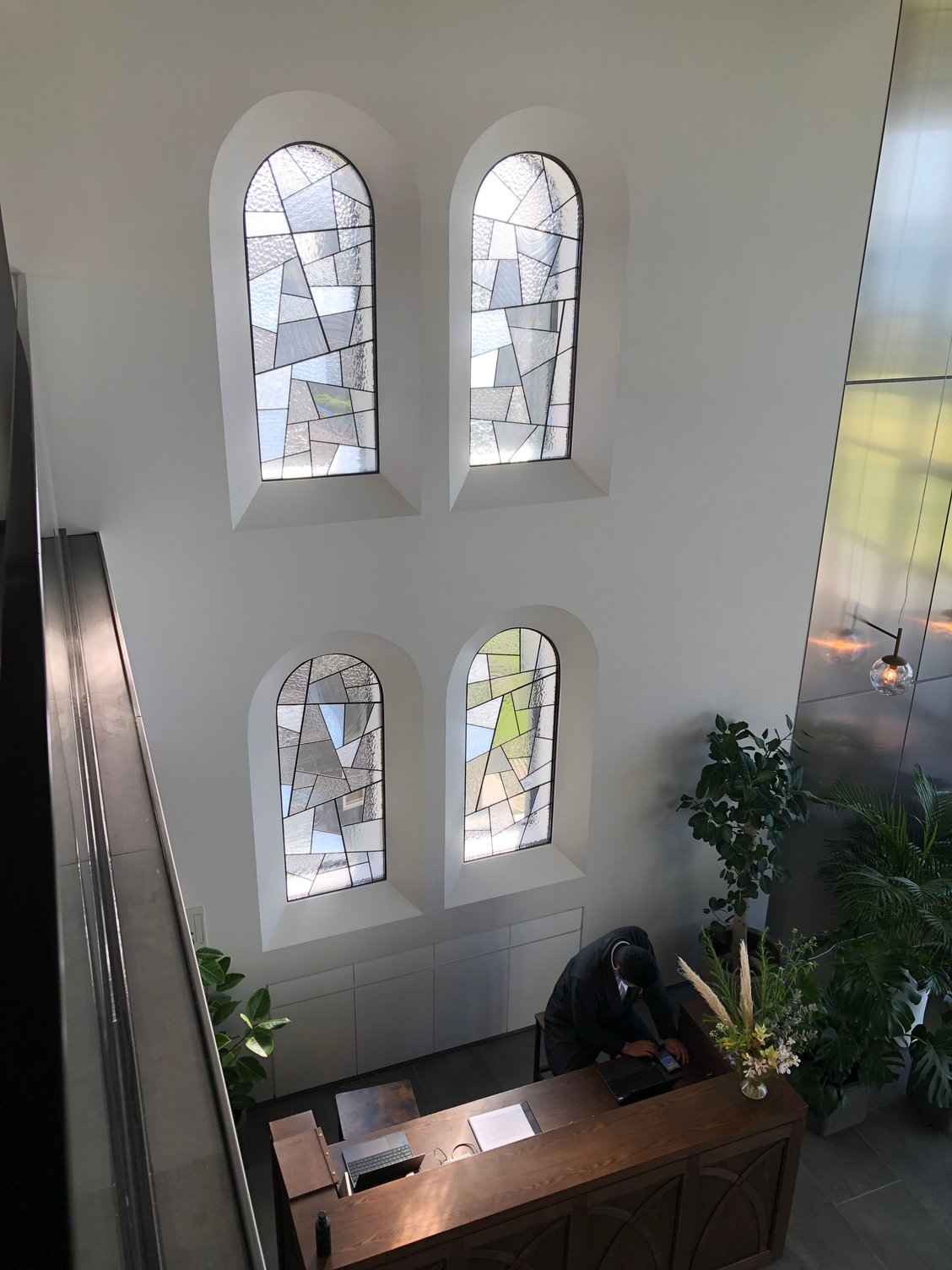 Stained glass windows in lobby next to bar
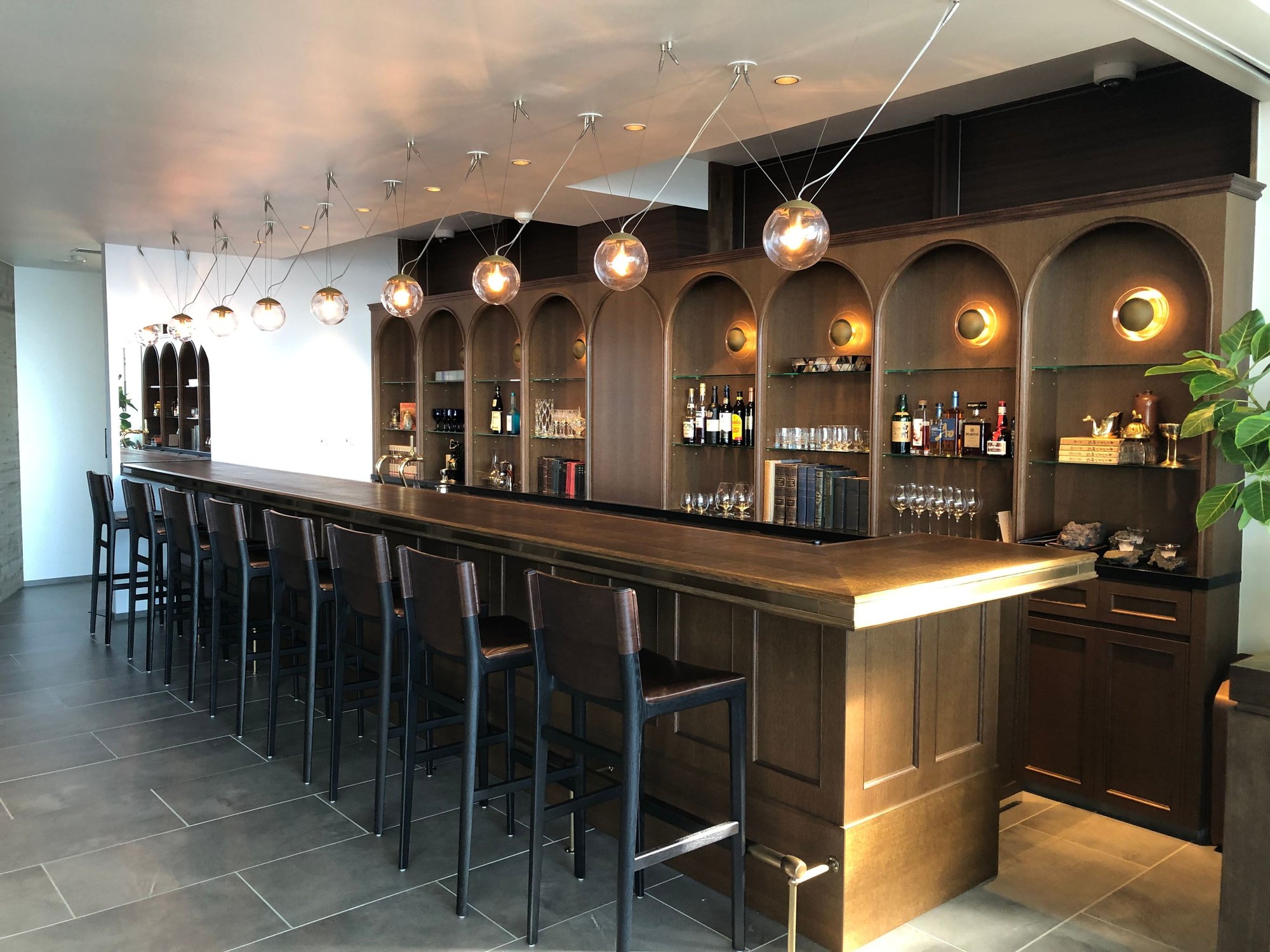 Lobby bar
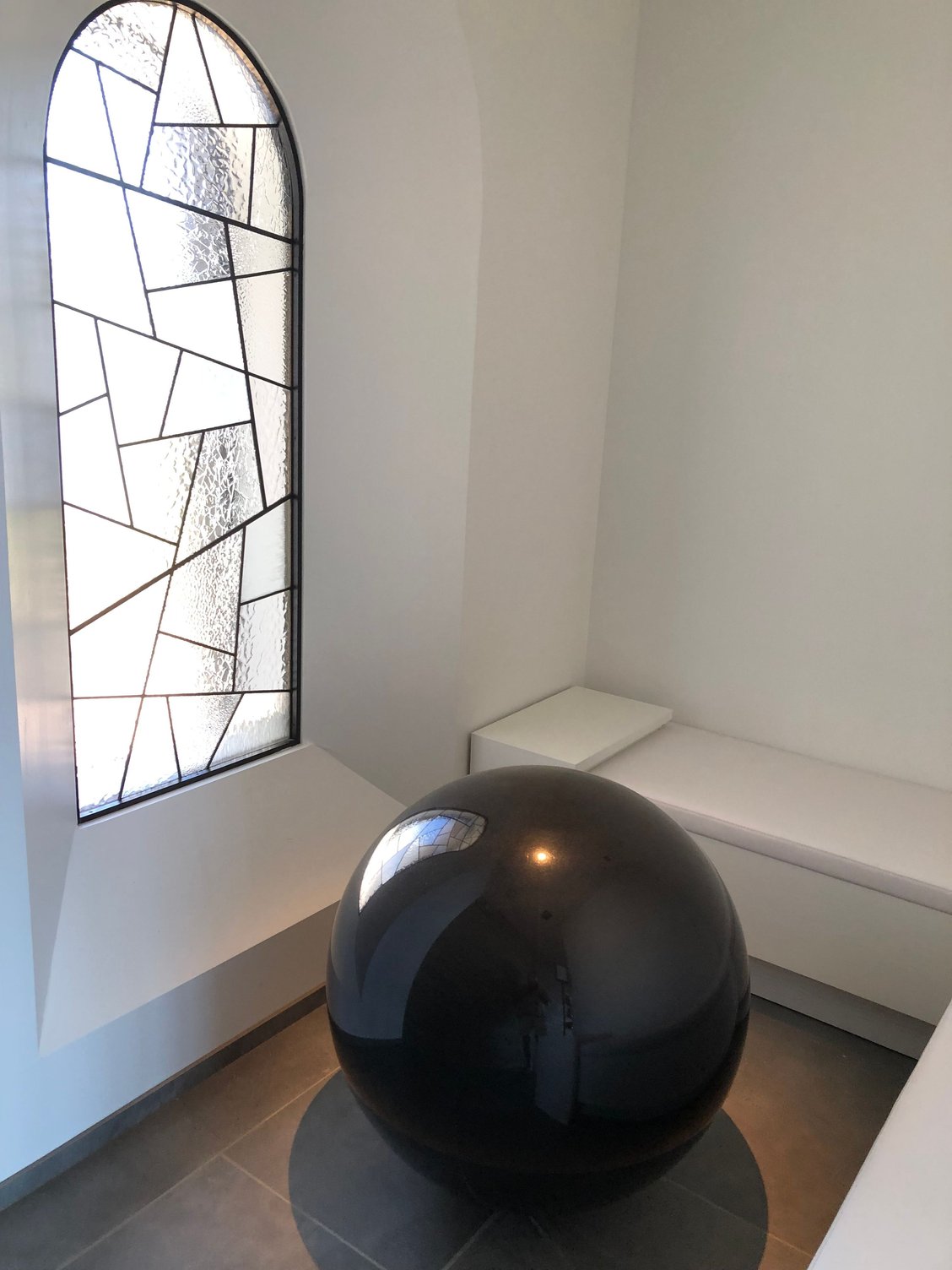 Meditation room next to bar
Dining
Meditation room next to bar
Dining
Breakfast and dinner are served in the third-floor restaurant with tables offering both a landside view of two mounds that we were told are inactive volcanos, as well as an ocean view. Lunch is not served at the restaurant, nor is it open outside of breakfast and dinner time for tea or coffee service. Also, in-room dining is unavailable, so you’ll have to bring food with you if you want to eat in-room or have a snack. We were disappointed by this lack of what many would consider basic services.
When I booked the room, there were various rates that included breakfast only or breakfast and dinner. I booked the breakfast-only rate but changed my mind later and added dinner (about 18,000 yen/person) to our reservation and don’t regret the decision. If you are a foodie, I think you’ll really enjoy dinner as the cuisine was perhaps the highlight of our stay. There are no other restaurants within walking distance, so you should make plans if you wish to eat outside.
Our dinner was a 9-course kaiseki affair that lasted nearly two hours. We arrived early enough so that we could enjoy the ocean view while savoring tasty cocktails and a very nice
karakuchi sake. Although some dishes stood out more than others, the sashimi was perhaps the tenderest and most delicious I’ve ever had and the slices of Goto
wagyu beef with wasabi and salt for seasoning were heavenly! After the completion of our meal, we met and talked with the chef who thanked us and answered our questions. Below are photos of each dish.
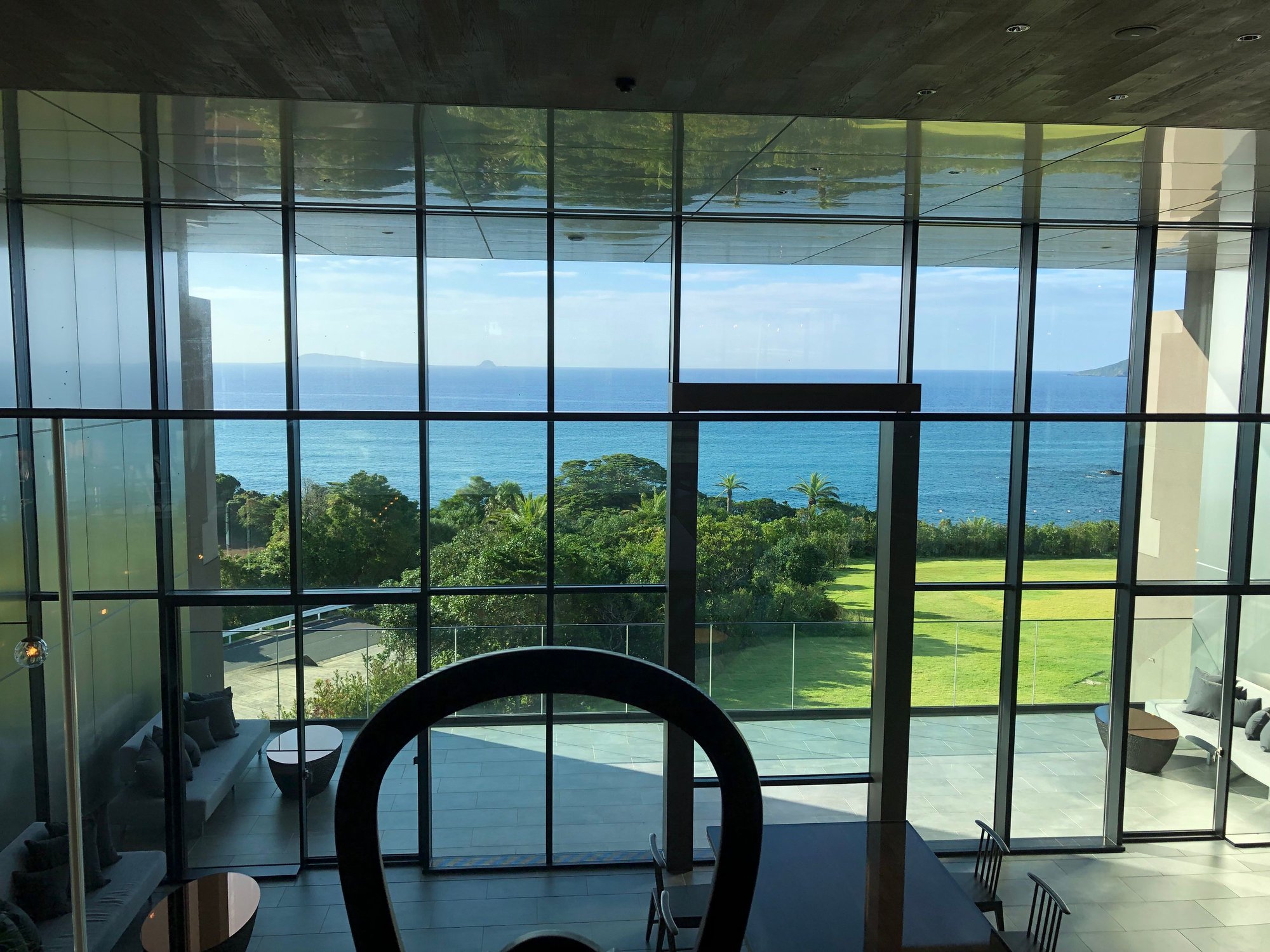 Dinnertime view
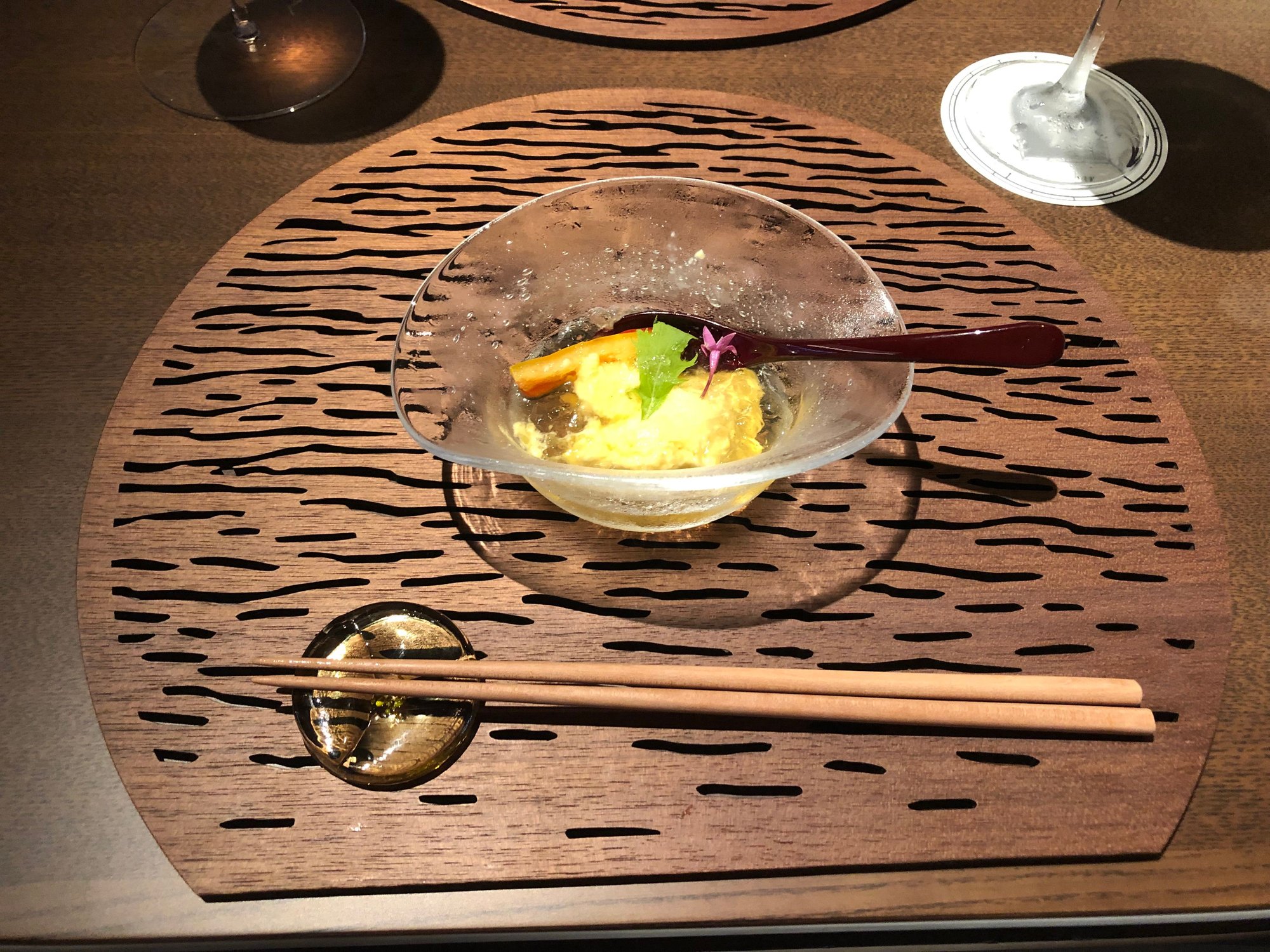
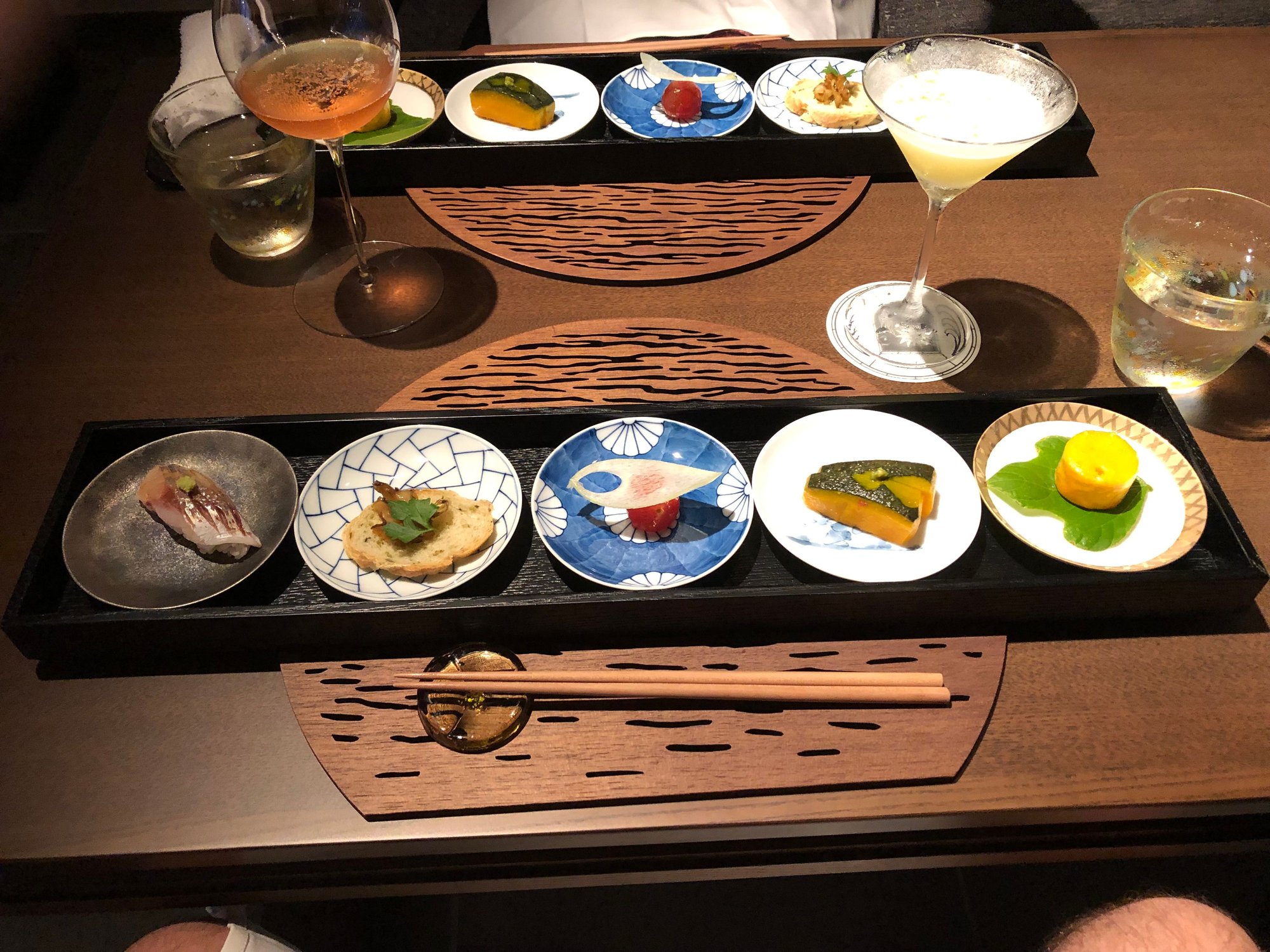
Assorted appetizers
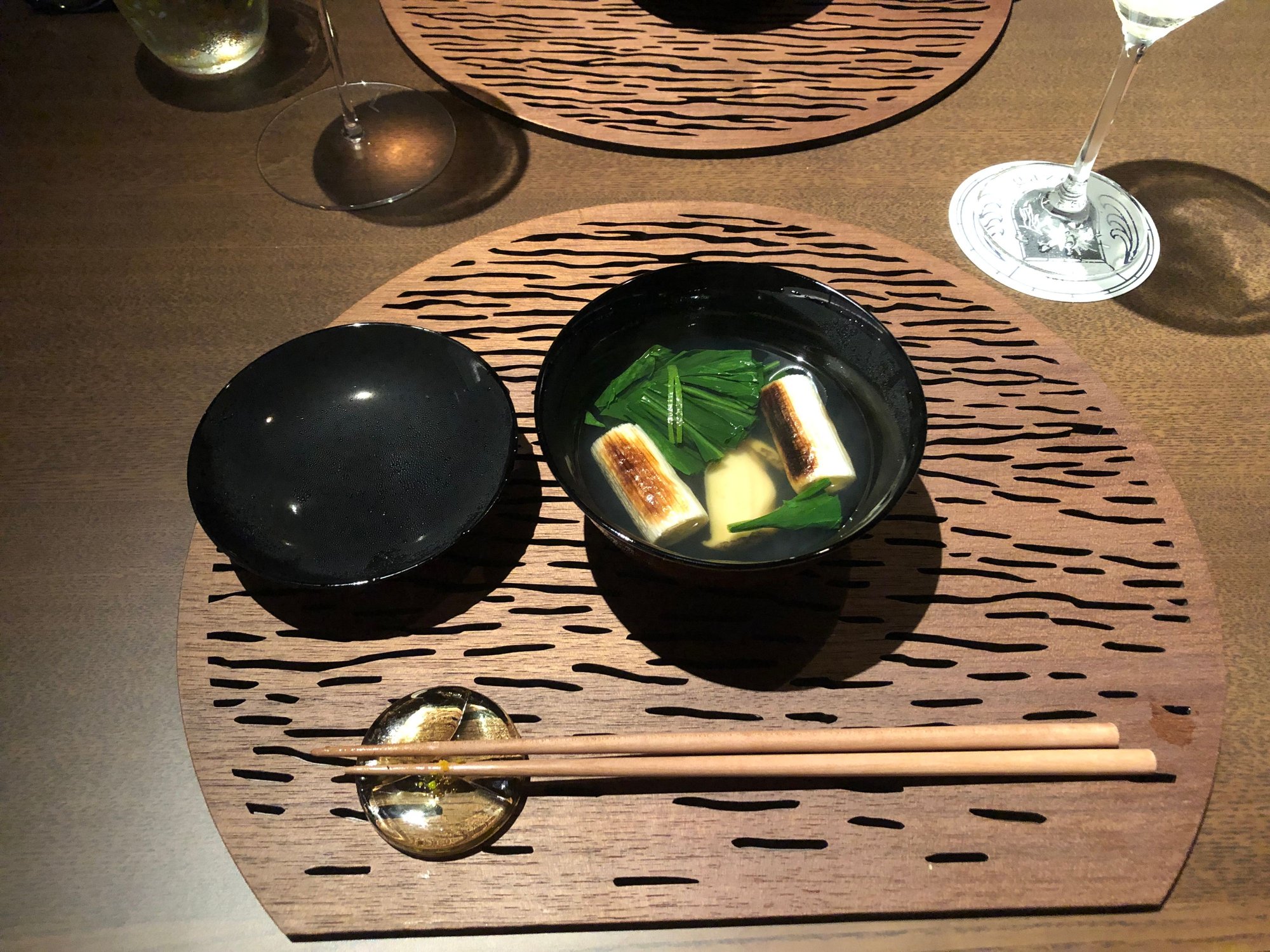
Suimono

Sashimi
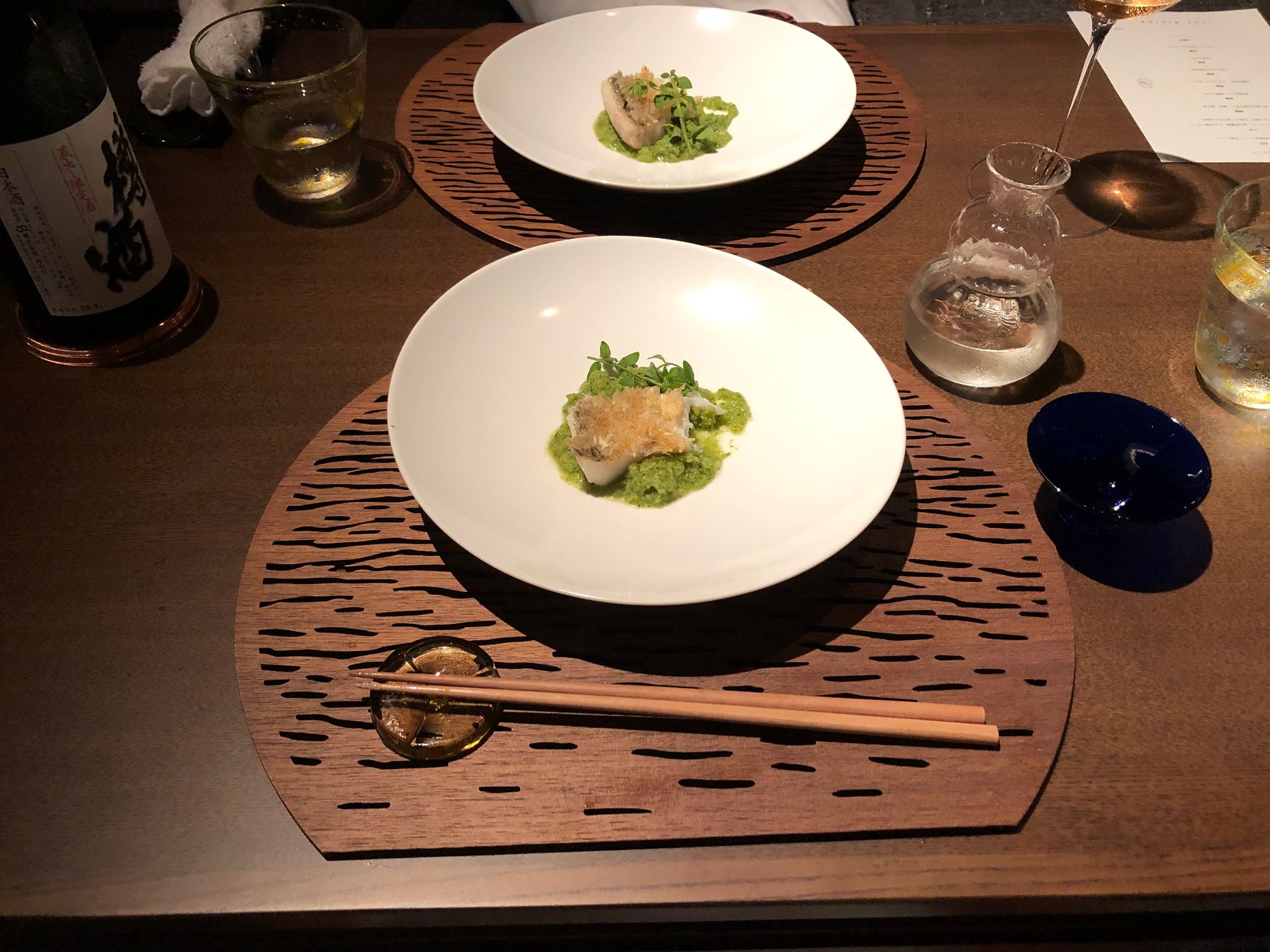
Cooked fish
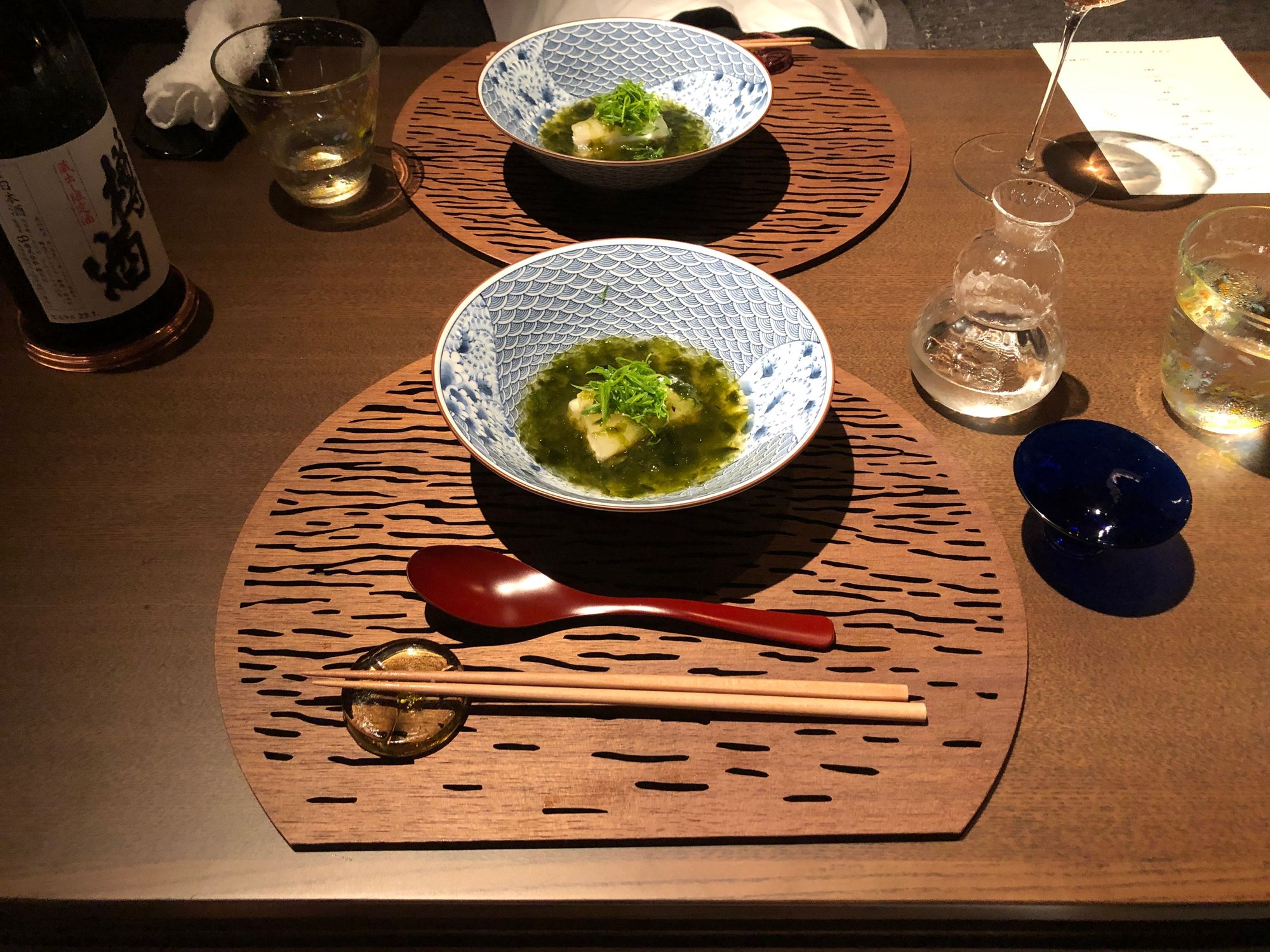
Tofu
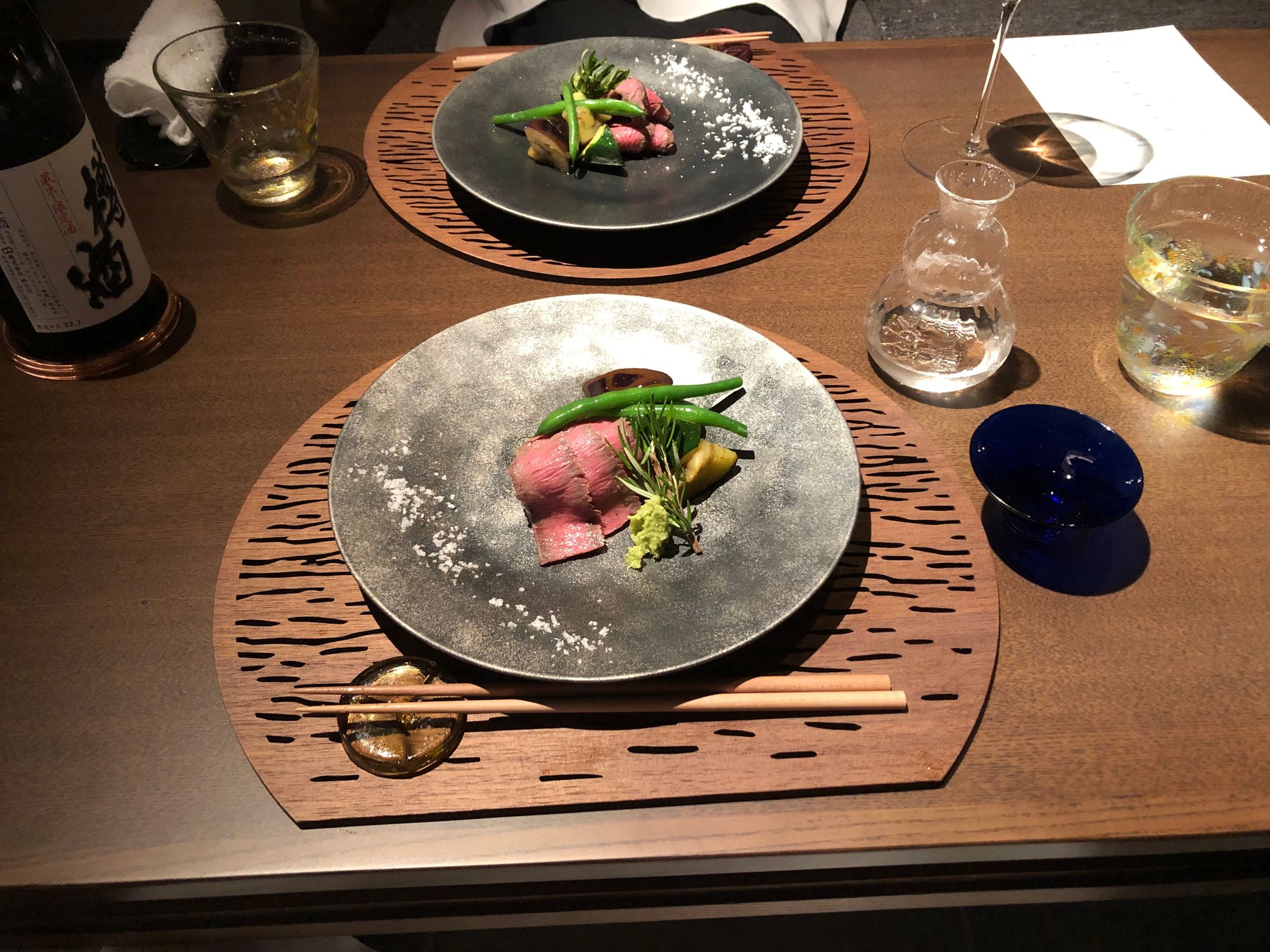 Goto wagyu beef
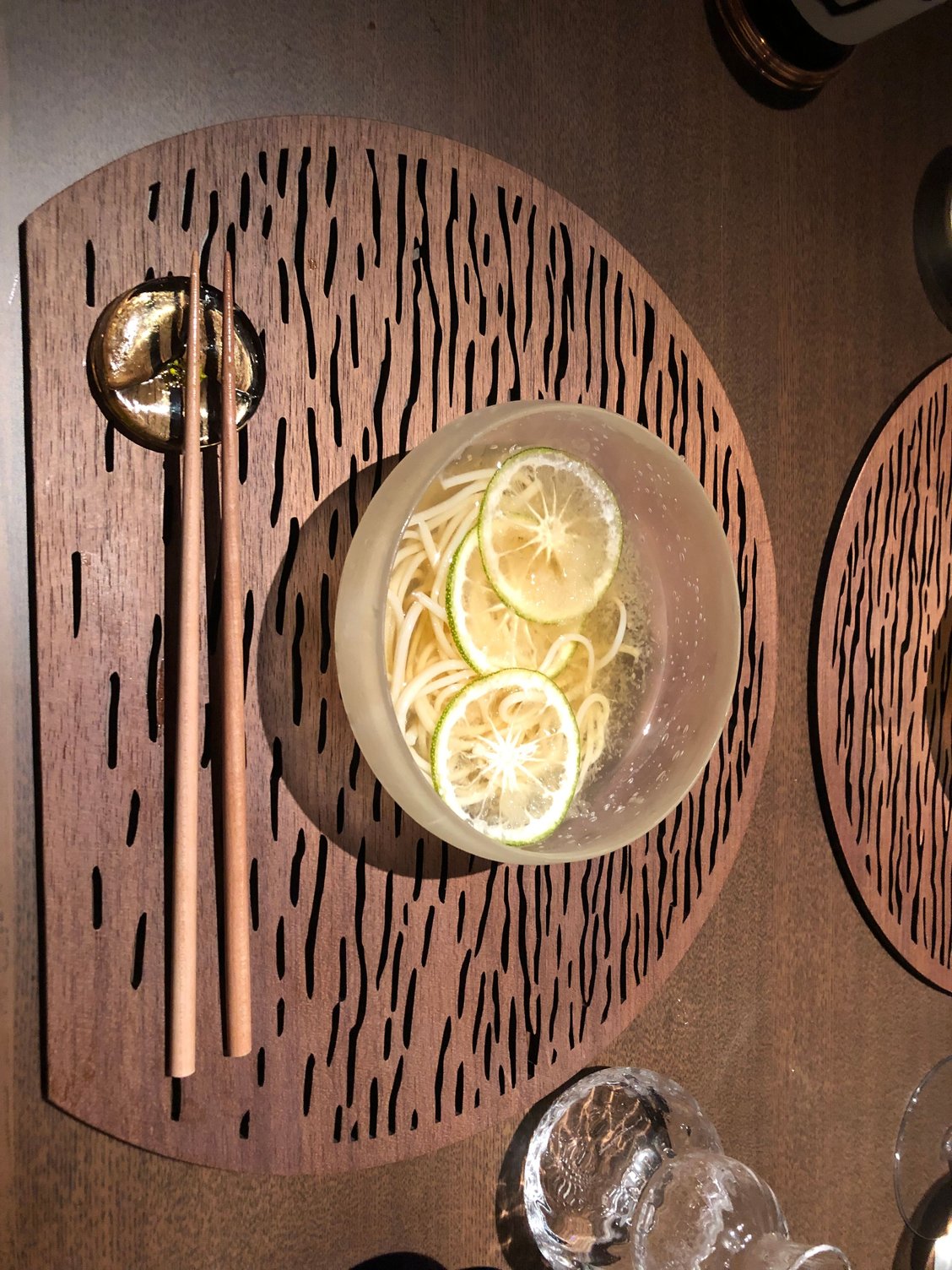 Cold Goto udon with sliced kabosu
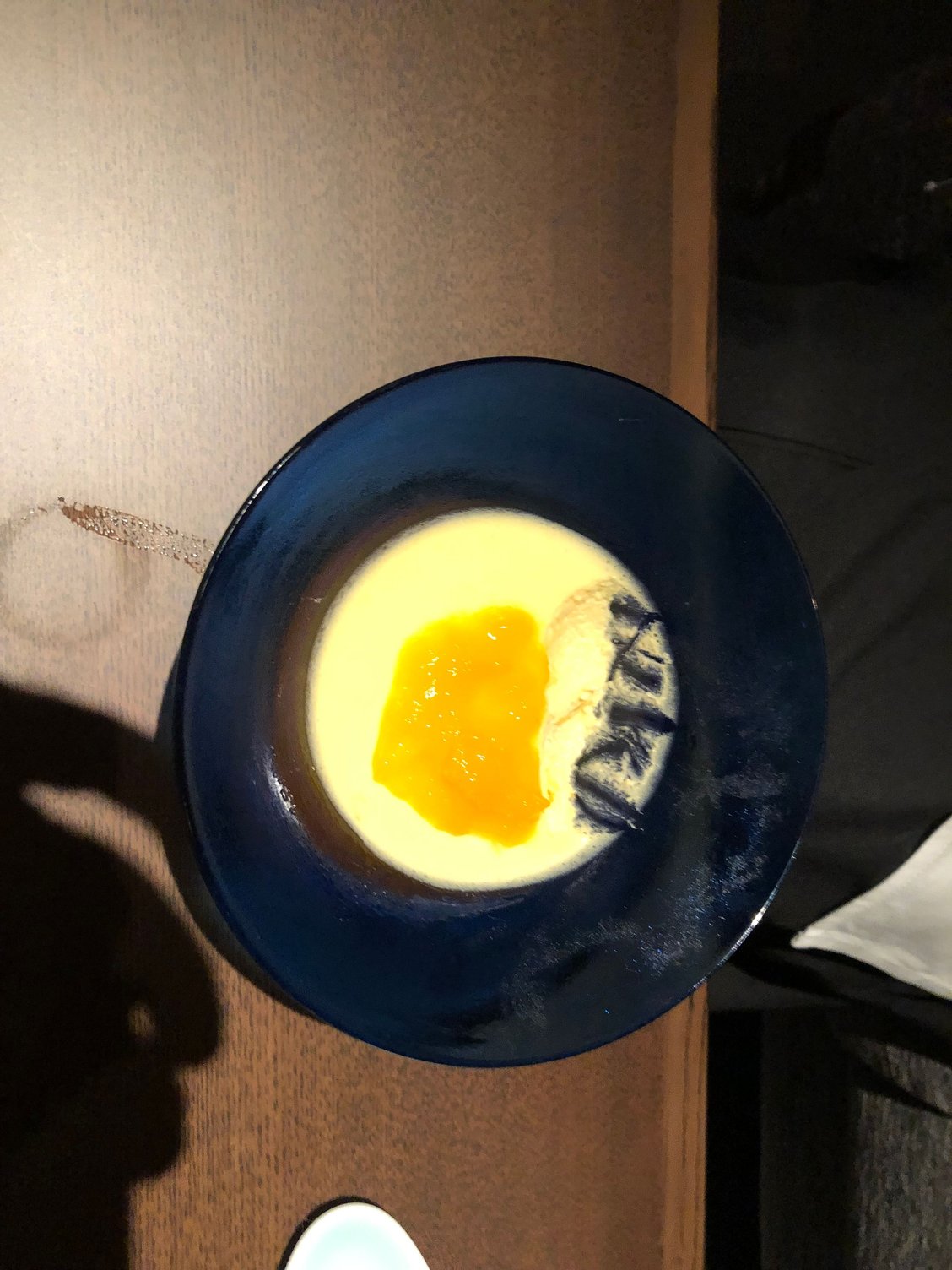 Mango pudding made with Goto Island-grown mango
Breakfast
For breakfast, we ate Japanese, though I read an online review of a guest who claimed to have had a Western breakfast, we were never given such an option. If that’s your preference, you may need to ask. The breakfast was attractively presented, extensive, tasty, and filling.
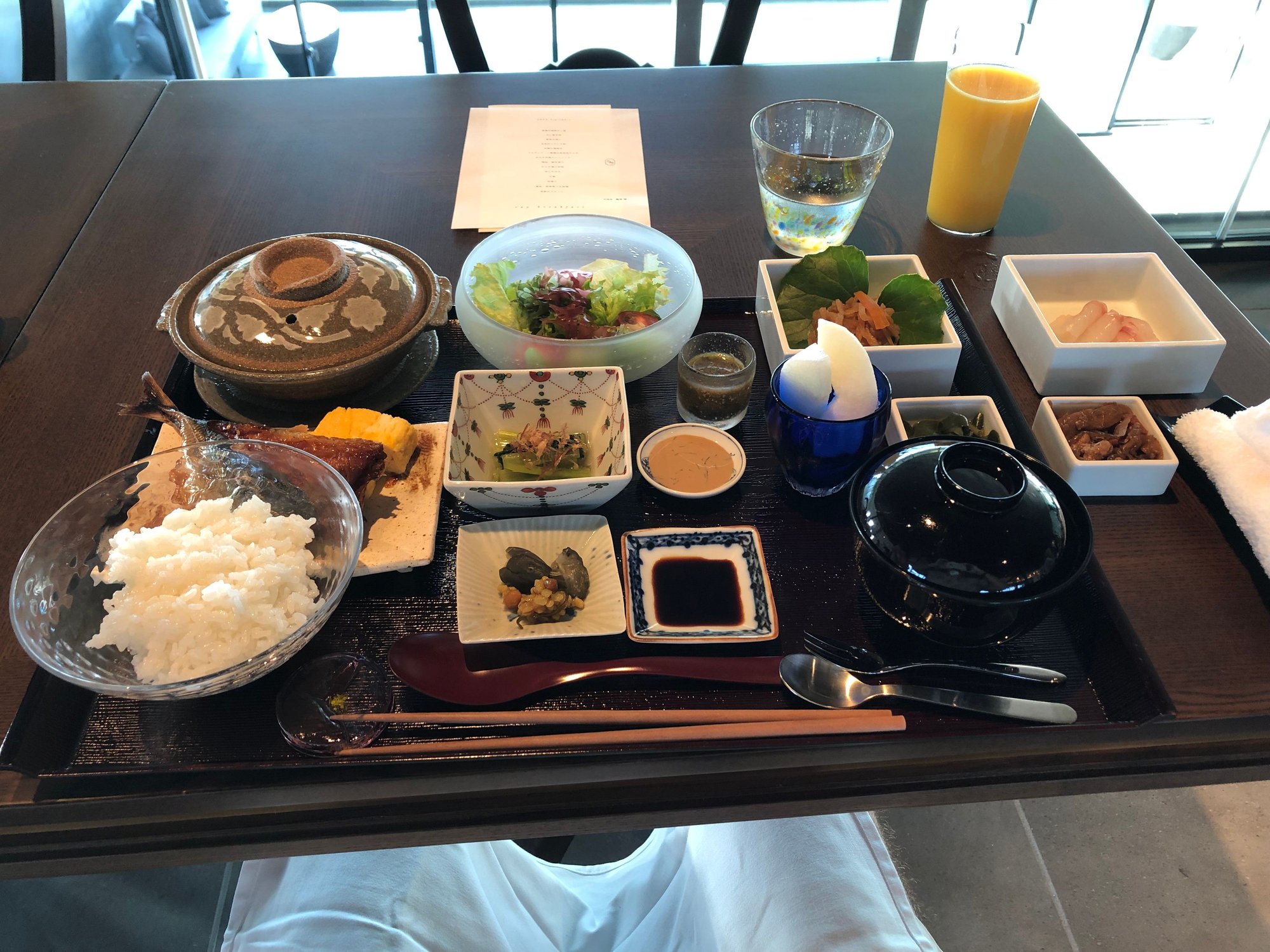 Japanese breakfast
Service
Japanese breakfast
Service
On entry to the hotel and throughout our stay, we saw very few staff, except at dinner time. That said, when I called the operator and asked for help with our room’s wi-fi speaker, and later asked for ice, someone came immediately, so they were responsive when needed, though this could also be due to low occupancy during our weekday stay. The hotel had only been open a couple of weeks when we arrived and the staff was a young group who for the most part did not seem to be hospitality veterans, but I suspect still in training and gaining experience. Since the hotel was newly opened, I think everyone was a little bit nervous, especially at dinner time when they had to explain each dish that was served. But they were polite and friendly and made a good effort.
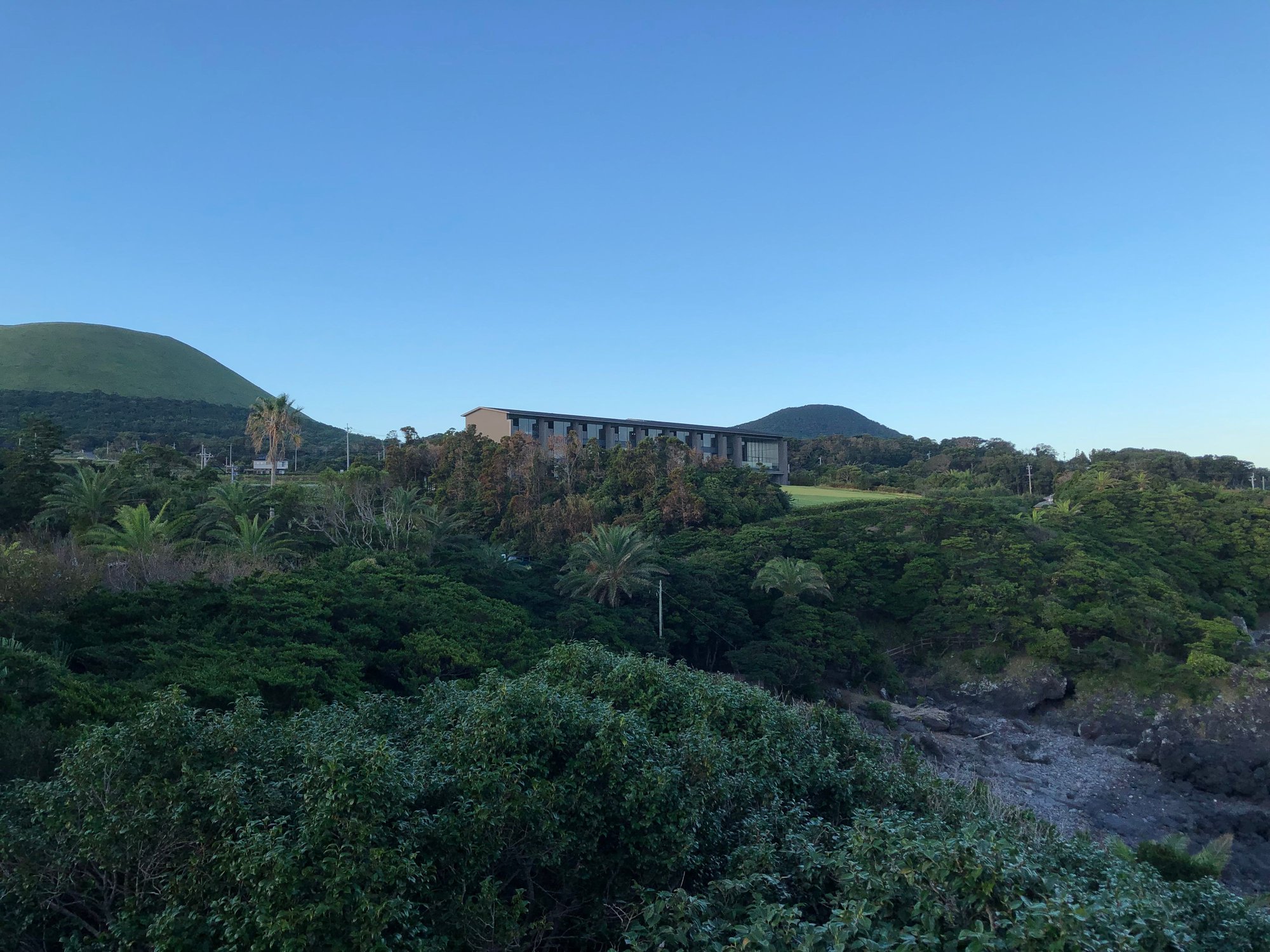 View of hotel from the sea coast (the two mounds in the background are inactive volcanos)
Facilities & Activities
View of hotel from the sea coast (the two mounds in the background are inactive volcanos)
Facilities & Activities
Goto Retreat ray is a boutique hotel with limited facilities. Although there is a spa, we didn’t use it. There’s also no pool or gym but there are various activities such as rental bicycling and many offsite activities including boat cruising, snorkeling, and guided tours for a fee. The hotel has no sandy beach, only one of volcanic rock but we were told that there is a sandy beach a distance away, but you should not expect a Western-style beach scene with concession stands, reclining beach chairs, beach umbrellas, and sunbathers as that is not at all common in Japan, and even less so in the provinces.
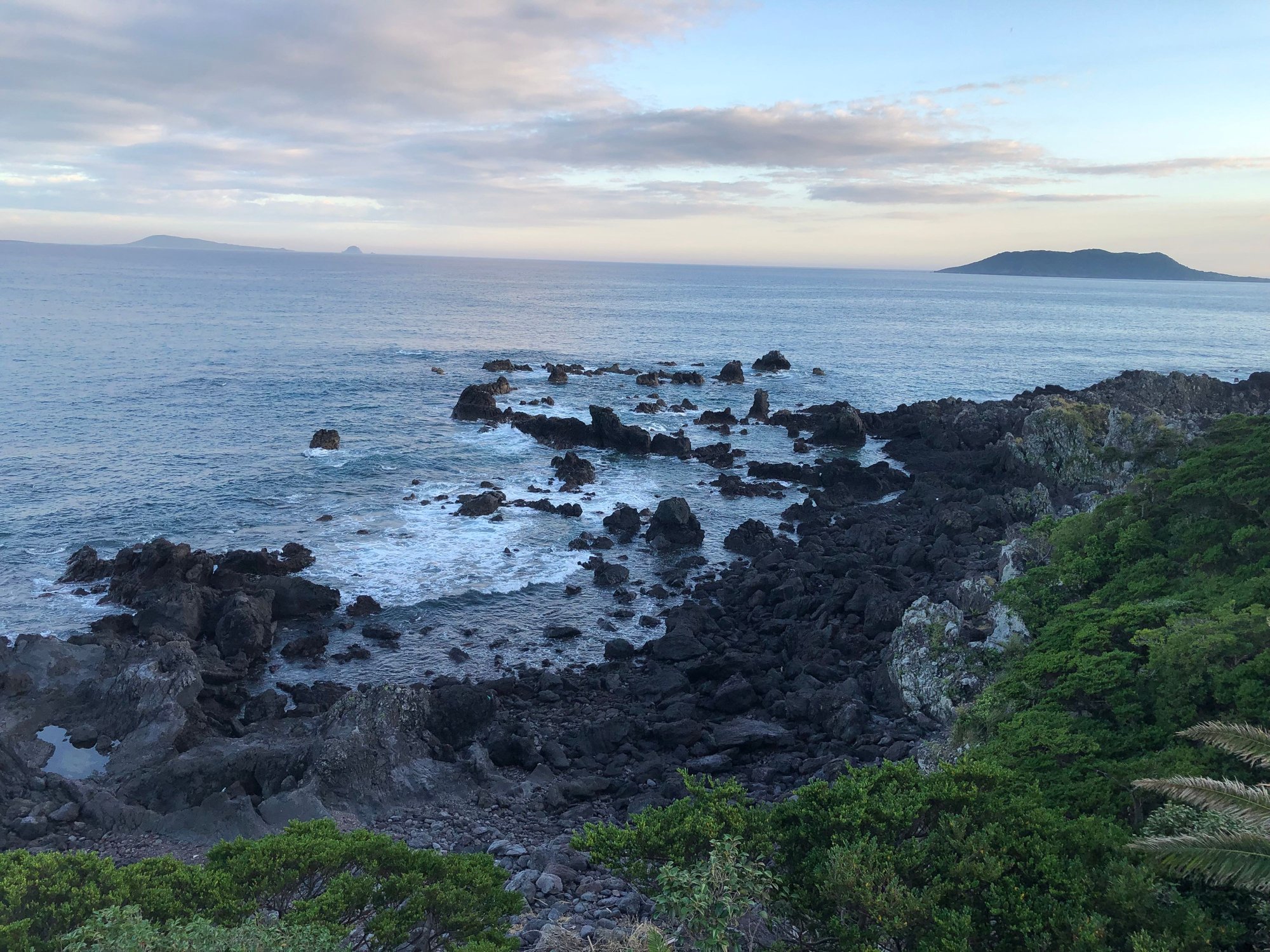 Beach in front of hotel
Location
Beach in front of hotel
Location
The Goto Islands are known for seafood, Goto Udon (thinner udon than is normally served in Japan), natural camellia oil, and
Cankoro-mochi (made of mochi and sliced dried sweet potato), but perhaps it is best known historically as a place where early Christians (who were concentrated mostly in south and west Kyushu) moved to escape repression and persecution by the Tokugawa shogunate for their faith, which was banned in the 1600s. Since they had to hide their religious faith, they were known as
Kakure Kirishitan (Hidden Christians) in Japanese.
https://en.wikipedia.org/wiki/Kakure_Kirishitan
There remain several early churches scattered around the islands that are now tourist attractions. These were all built after 1875 when the ban on Christianity was lifted.
https://en.wikipedia.org/wiki/Egami_Church
Paying homage to its Christian heritage and to reflect it in the hotel design, the architect has used stained glass windows extensively, notably in the lobby, guest room hallways, and even a stain glass motif at either end of the LCD TV that lights up. So, if you come here for a purely Japanese Zen-like experience, you may be surprised at these design flourishes.
The hotel is on the southern coast of Fukue Island and is somewhat isolated, so without a car, your best bet is to spend a few relaxing days bathing, getting spa treatments, bicycling, walking, and participating in other local activities offered by the hotel, or join a guided tour. On the other hand, you could rent a car on arrival at the airport, or transport your car over by ferry, which takes a little over three hours from Nagasaki City.
 Overall
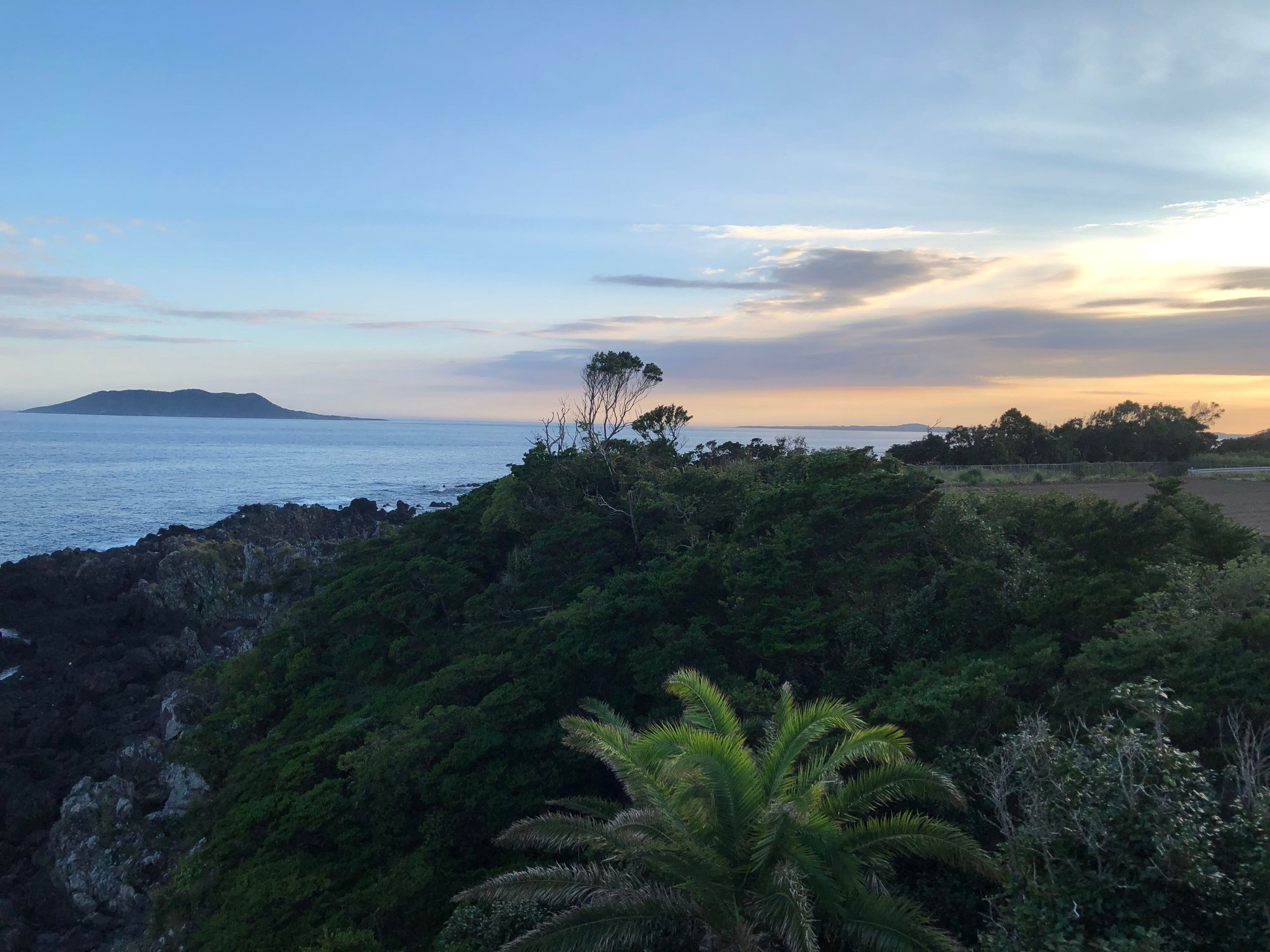
The island has a quiet low-key vibe reminiscent of the outer islands of Hawaii, so if you want to spend a few relaxing days off the beaten path and experience the island’s unusual history in a luxurious setting and eat high-quality kaiseki cuisine made with local seafood and ingredients, I think you’ll enjoy yourself. The hotel calls itself a “retreat,” so that is what you should expect, a laid-back vacation. There are not many luxury hotels in all of Nagasaki Prefecture, so it is quite unusual to find one on this remote island.
Although we liked the room, its view, and the outdoor bath, we anticipated that there would be more to do at the hotel but that was not the case. We would have welcomed an outdoor pool at this property as there was plenty of space for one. Since the weather was hot, we were not into bicycling and other outdoor activities and missed not having a car. If we visit again, we plan to take the ferry and bring our car so that we feel less isolated.
Still, it was fun to visit this island off-the-beaten path and see another part of Japan with an interesting past and do so in a modern, attractive, and quality setting.