The InterContinental London – The O2 Experience
Index to Genius1 Trip Reports

Located adjacent to The O2 on the Greenwich Peninsula opposite Canary Wharf and on the banks of the River Thames, InterContinental London – The O2 is a new-build Arora Group-owned and operated property. Opened in 2016, the property is a rather austere sandy-coloured tower, that has as much architectural merit as a portakabin and Arora’s trademark brash branding plastered as high and as boldly as planning conditions allow. This is one of two ICs in London; having stayed at the better known and distinctly upper-scale InterContinental London Park Lane in the summer, we were keen to try out its East London cousin. Indeed, we had originally planned to stay here in July, but switched to the Park Lane following the O2’s continued use as a quarantine hotel for passengers arriving from Red List countries until well into the autumn.

We arrived on a cold mid-November day via the Jubilee line to North Greenwich station, from where the hotel is not particularly well signed but can be accessed on foot either through the ICON Outlet shopping centre in the O2, or outside via Waterview Drive. As we arrived via the latter route, it was clear that the hotel was mid-way through some construction work around the entrance, with scaffolding erected but clad in a way to make it look like part of the building; this had the effect of concealing the main entrance somewhat, and over the course of our stay we witnessed many confused arriving guests attempt to access reception through the entrance to the ballroom – again, signage here was lacking and the entrance was poorly lit.
The large dual-height lobby is smart, with a concierge seating area immediately to the left on entry, reception desks ahead and to the right, opposite the attractive Meridian Lounge.


A corridor to the right of reception connects the hotel to the O2, with only a short walk outside required to reach a private side entrance. There was no queue at reception when we arrived on a weekday, although at weekends the hotel deploys ropes to create a clear queueing area.

The professional receptionist checked us in efficiently, thanking me for my loyalty to IHG, advising details of the Club InterContinental service, detailing our room upgrade and proactively offering a 16:00 late check-out. I wasn’t asked for my preference of a welcome drink or points (presumably as we had access to the Club lounge with its complimentary drinks), but points appeared in my account the following day.


On the way up to our room, I was amused to find a quarantine notice in the lift; clearly a hangover from the hotel’s recent life as a government-commandeered facility, but one which should definitely have been spotted by management. Such lack of oversight continued in the lift lobby on our floor, where hand sanitiser stations went unfilled throughout our stay.


Our Deluxe Suite on the 16th floor (two below the top floor) was a one category upgrade from our booked Deluxe Club Room. At a spacious 42 square metres, the dual-aspect suite was well laid out with a separate lobby area containing the wardrobe and desk. The bedroom featured a standard king size bed, and a separate lounge area with sofa bed, coffee and side table and refreshment centre below the TV; there was no armchair or dining table.


The design aesthetic is modern and refined in a business style, although is not particularly luxurious or elegant; some of the finishes felt a little cheap, and this is echoed throughout the property in the public areas too. That said, I liked the art above the bed, echoing our impressive view of the O2 through one of the three large picture windows, obstructed only by an ill-positioned window cleaning cradle and the ironic odd smattering of bird poo. The two windows on the other side of the room looked out towards Greenwich in the distance.


On a practical note, the design of the room was well thought through, with the only niggles including USB ports only being available on one side of the bed, and no ability to independently control the ceiling lights by the bed (other than on the master switch). At the desk, both of the power sockets were occupied (by the phone and the desk light), although USB sockets and an international power socket were vacant. The TV failed to turn on initially, but maintenance arrived promptly to reset it on request.

Unlike all other hotels I’ve stayed at since the pandemic began, our room featured all the usual comforts, including notepaper and pens and a full complement of toiletries in the bathroom; none of this ‘on request’ nonsense here. The only items not proactively offered were newspapers or magazines, although these were available via PressReader.
The refreshment centre held several bottles of complimentary mineral water, a Nespresso machine, and good quality Birchall tea – although stingily there was only one type of each herbal tea (although more was available on request, and all items were replenished daily). Galaxy hot chocolate completed the complimentary offering, with the paid-for minibar containing a randomly sparse collection of items that I assume had been left over from a previous stock-up. We alleviated the minibar of a couple of miniatures to use the GBP15 Ambassador food and beverage allowance; our bill at checkout included a few items we hadn’t taken, but these were removed promptly on request.


The spacious bathroom included a walk-in shower and separate bathtub, and the usual Agraria amenities (although soap bars were by Anne Semonin). Design – as cheap as can be stretched by a 5-star property – was fairly similar to the Sofitel at Heathrow T5; unsurprising given that property is also Arora-owned and operated. Whilst issues like a difficult to close (and therefore leaky) shower door are fairly common in hotels, a stain on the toilet seat and visible aged dirt around the washbasin plug are less common; I used a supplied toothbrush to self-clean the latter which took all of 10 seconds but had clearly been overlooked for more than just the last few stays.


Despite the couple of cleaning issues in the bathroom, housekeeping service was efficient; turndown service was proactively provided each day (despite a card by the bed stating it was on request), with even the bathroom soap bar and slippers replaced each day; this was a little wasteful.


We took breakfast each morning in the Market Brasserie restaurant, adjacent to the Clipper Bar and across from the Arora Ballroom. The Club InterContinental lounge was only just getting back up to speed post-pandemic and wasn’t serving breakfast, although on the weekend we stayed, breakfast was offered in the lounge for the first time as a trial, although we opted to stick to the restaurant given its more expansive menu.


Whilst the restaurant looks fairly smart in photos, in reality the space is too small to comfortably accommodate the large number of guests that stay at the weekend or during events at the O2; the result is a layout where tables are uncomfortably close together, and waiting staff who struggle to keep on top of clearing tables or tending to requests. Service issues persisted during both mornings of our stay, with staff clearly having received insufficient training with not an iota of 5-star polish amongst them.

The breakfast buffet with its open kitchen is both extensive and of pretty high quality, and was kept well replenished despite the occupancy of the restaurant.


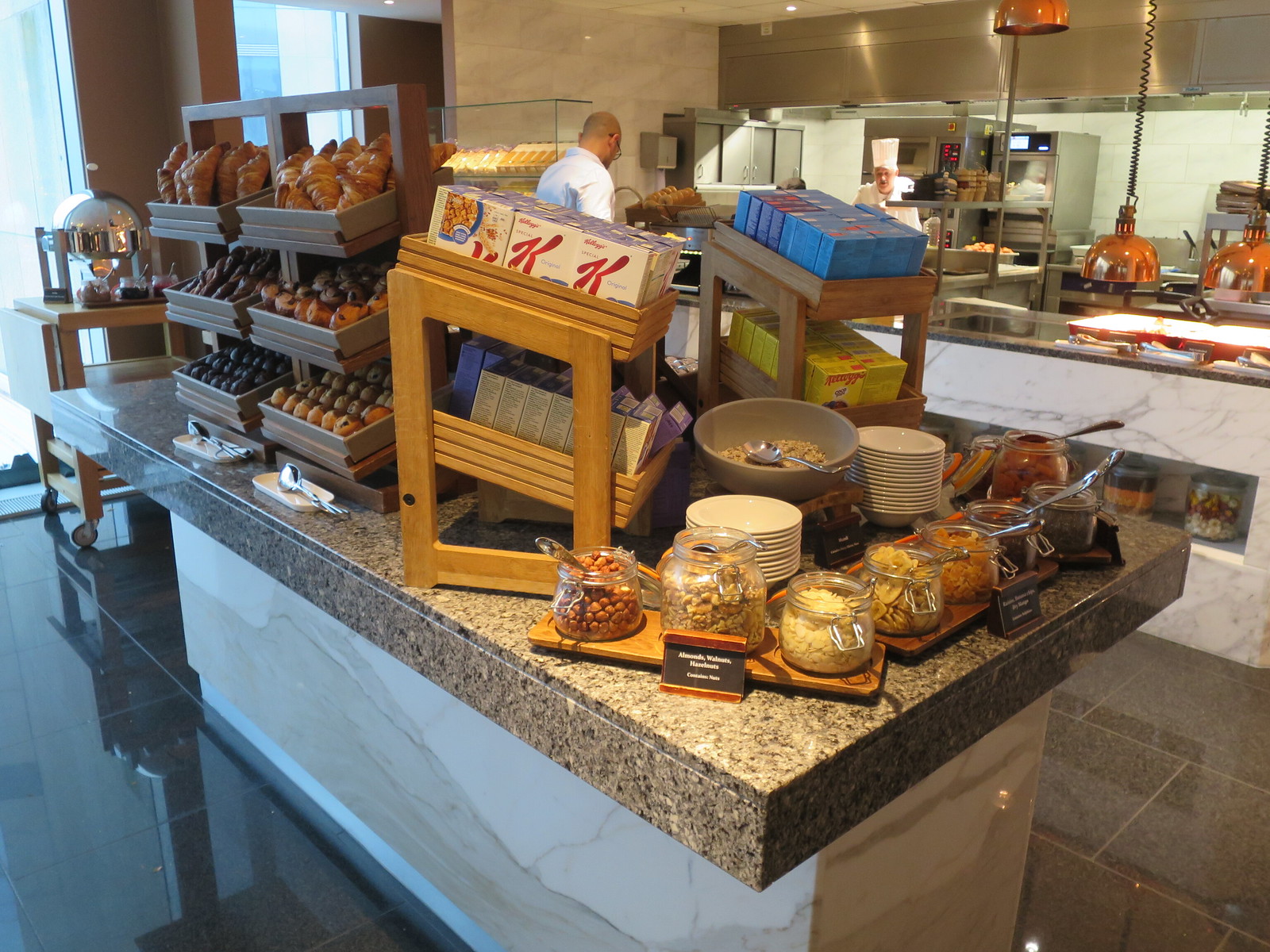
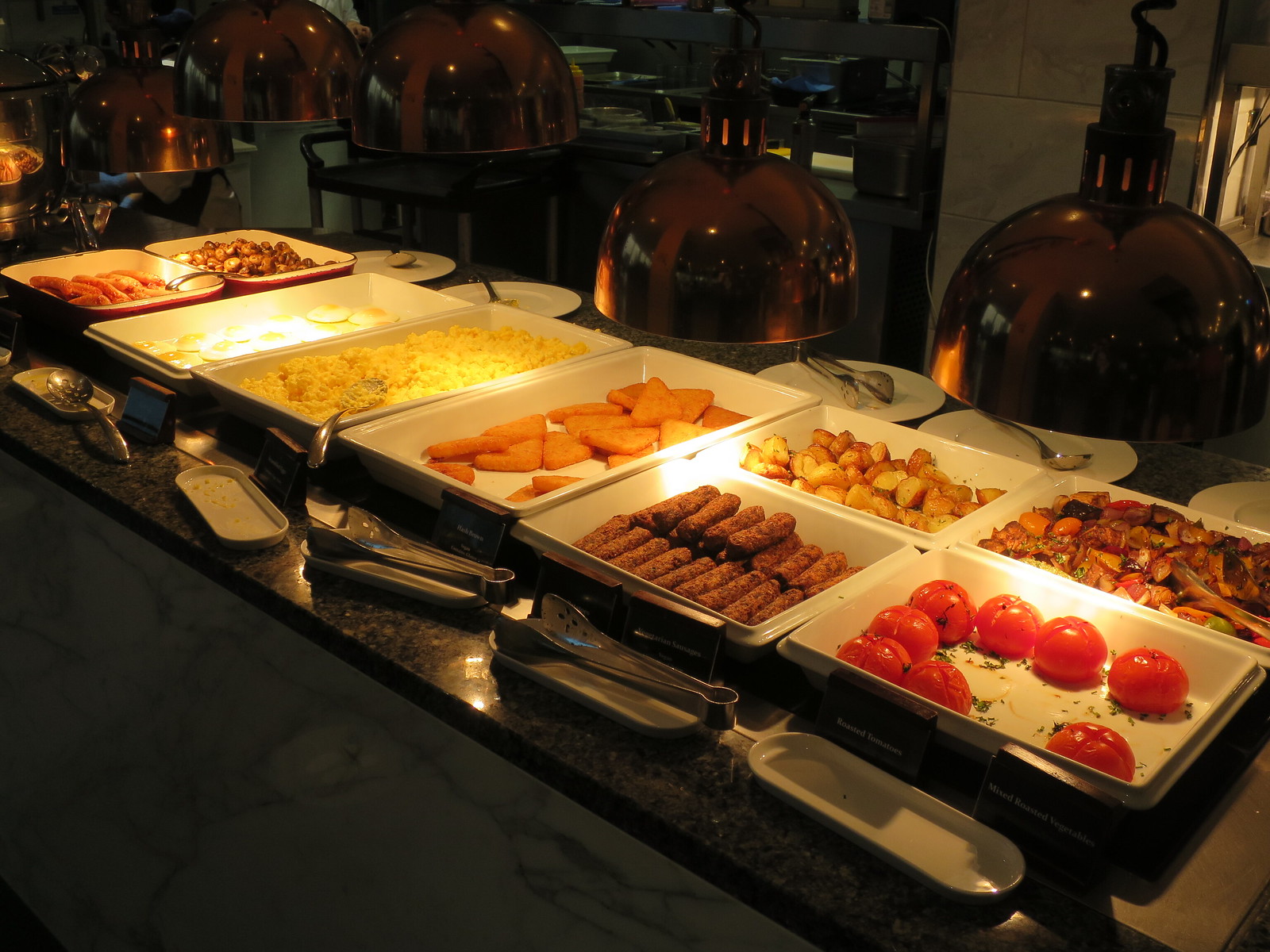
An à la carte menu was also available to us on request, with everything included in the Club InterContinental rate aside from the smoked cod kedgeree. This is pretty stingy given the cost of the dish is only GBP2 more than the next most expensive (included) item on the menu. Over the course of two mornings, we sampled the eggs royale, the sourdough, avocado and poached eggs, and an omelette; all were good, although the first two could’ve been served hotter. Note the menu description of eggs in the plural, but the very notable single egg served in each case; I’m not sure whether this was due to the restaurant operating at close to capacity, or because we were dining on the Club rate, but either way this was poor.


The Club InterContinental lounge is located on the second floor, adjacent to the still-closed Peninsula fine dining restaurant and across from a small and uninspiring business centre.


Whilst the website claims the lounge is only open on Fridays and Saturdays for the time being, when we stayed the hours had recently been expanded to every day except Sunday and Monday. The space is split into two main areas; a dining area to the left (with all food and drink self-serve), and a seating area to the right. The seating area has the best view; floor-to-ceiling windows showcase the Canary Wharf skyline, although you’d be hard pressed to find a comfortable seat from which to admire the view, as the furniture here is distinctly impractical – including tables variously too low or too high for the sofas and armchairs, unusable chaise-longues (completely the wrong type of furniture for a hotel lounge), and even an odd dining chair. This area has a desk with iMac and printer, and a small library area with board games. The lighting in the seating area was rather bright, although thanks to some failed bulbs, we found a darker area to relax.


Over in the dining area, echoing the arrangement of the Market Brasserie a floor below, dining tables and chairs are arranged in a regimented fashion that doesn’t feel particularly private. Three high-backed armchair groups are located towards the only window in this space, overlooking the forecourt of the hotel; there are no river views here, as the adjacent space is the top of the double height Clipper Bar accessed from the floor below.


Individual male and female washrooms with showers for early arrivals are accessed from a corridor behind the buffet, with Agraria amenities (although hand wash was missing from the male washroom).

Afternoon tea featured four different types of fresh sandwiches, a decent selection of cakes and pastries, biscuits and fresh juices. Whilst the sandwiches remained the same across three occasions, the cakes and pastries did vary a little. A non-traditional take on scones (cold, with pre-spread jam and whipped cream) was offered.


Tea, Nespresso coffee, still and sparkling mineral water, soft drinks and beer (from a chiller oddly located in the dining area), whole fruit, crisps, toffees and a couple of packaged gluten free options were available throughout the day. The hot water for the tea was not fresh and was held in thermos-type jugs, which predictably didn’t taste great and was too tepid to successfully infuse a teabag; the Nespresso machine’s hot water outlet was a better bet. The teapots and mugs needed better dishwasher treatment, as stains were visible in both.

Evening drinks and canapés were slow to be put out on both evenings of our stay, with the service not ready until 15-20 minutes after the advertised 17:00. Once available, as with afternoon tea, the selection was attractively presented and of good quality; three hot and three cold canapés, antipasto, cheese, bread and cut fruit were all on offer. The hot and cold canapés varied across two occasions.


An adequate selection of wine, spirits and prosecco was laid out adjacent to the coffee machine. On our first evening, the fruit vanished from the buffet fairly quickly, and the helpful member of lounge staff delivered a plate (presumably pre-prepared from the room service menu) just for us; this was very thoughtful, although I’d have liked to have seen the buffet replenished more often and empty plates and glasses being cleared quicker.


It was clear that the lounge suffered from the same service issues experienced in the rest of the hotel; staff were new and ill-trained, lacking in polish, albeit were well-intentioned for the most part. A good example of this is that I had to open the prosecco bottle on our first evening in the lounge, request a bottle stopper, and then pour the drink myself, all whilst the lounge manager stood and watched. This is nothing that proper training and management oversight can’t fix.
The most irksome service failure came on our second evening in the lounge; a photoshoot had been set up adjacent to the windows in the main seating area, meaning guests couldn’t sit in what is the prime location in the lounge. The third party photographer was reasonably quick to clear up and apologise for any inconvenience when approached, but the incommunicative accompanying hotel staff member was too busy eating the photographed canapés to care what paying guests thought. This was simply unacceptable.
In more positive news, the hotel’s spa, located off the lobby, is a delight; an attractive reception area gives way to well-proportioned changing rooms featuring Comfort Zone toiletries, a 17m swimming pool, jacuzzi (or ‘relaxation pool’) with water cannons, a sauna and steam room. No booking was required to use these facilities, and the friendly staff provided towels and flip-flops on request.

Despite there being a reception desk in the Club lounge, check-out was not possible there, and so we checked out at reception, before heading back to North Greenwich station via the O2 for the Underground to Waterloo.
InterContinental London – The O2 is well suited to those attending an event at the O2, but otherwise I struggle to see its target audience. The hotel’s location across the river means it’s inconvenient for Canary Wharf, and the 40-minute walk to Greenwich itself is largely unattractive (adjacent to industrial land for the majority) and too far to be practical for most. Whilst the property is modern, the rooms spacious (for London) and the catering of a good quality, the sometimes cheap fitout, persistent service issues and lack of management oversight means this is a property that is – for now, at least – questionably fit to carry the InterContinental name.