Next, we visited 1 of the main attractions of Kuala Kangsar, the Istana Kenangan (Memorial Palace) which located in Bukit Chandan.
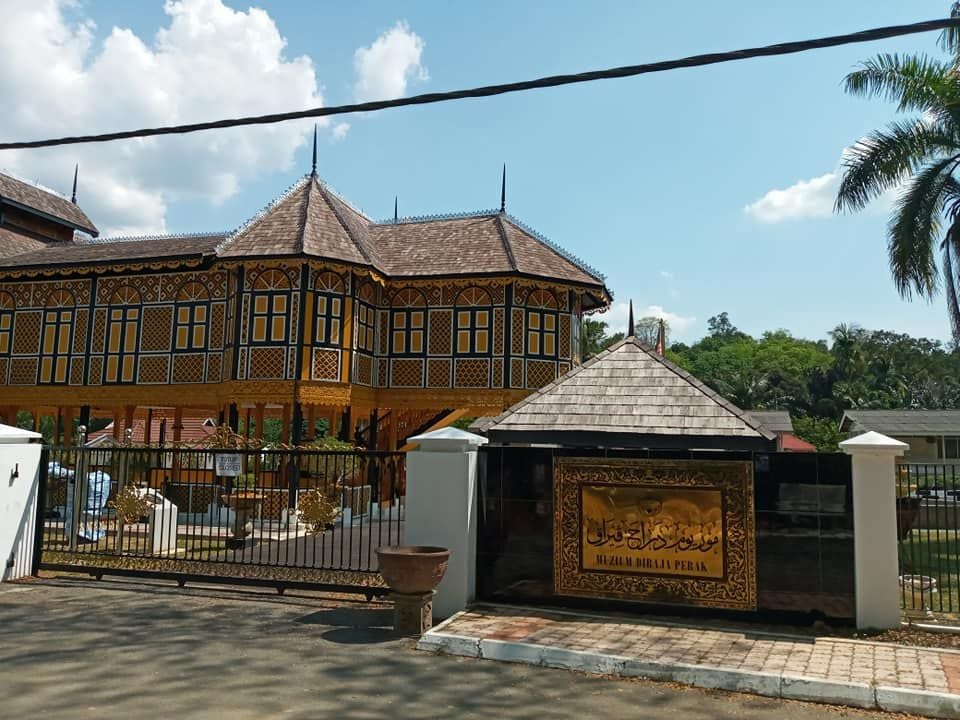
Also known as the "Valley Palace" due its location, this unique-looking palace was built during the reign of Sultan Iskandar Shah in 1926 and became the official residence for the Perakian royals between 1931-1933. After the completion of a new palace known as "Istana Iskandariah", the Istana Kenangan was used as the venue for royal receptions and a place for the royal guests to stay while visiting. Later, it was converted into Perak's Royal Museum which houses the history of Perakian monarchy.

The palace was also known as "Istana Tepas" or Tepas Palace. "Tepas" is the local word for the woven strips of Bamboo in which most parts of the palace's main structure were made. It gives the building a distinctively-unique feature.
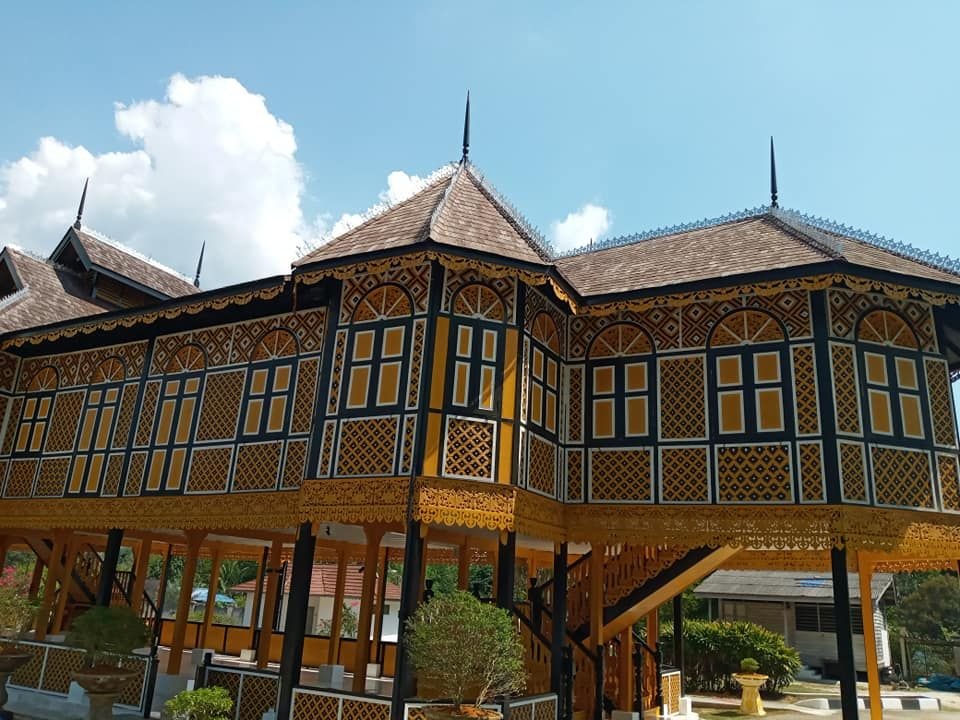
The palace was painted in 3 colors of Perakian flag (Black, Yellow & White) which further enhancing its striking look.

Unfortunately during our visit, the Royal Museum was closed for some restoration works (few weeks after our visit, the ground floor of the museum was re-opened again to the visitors).
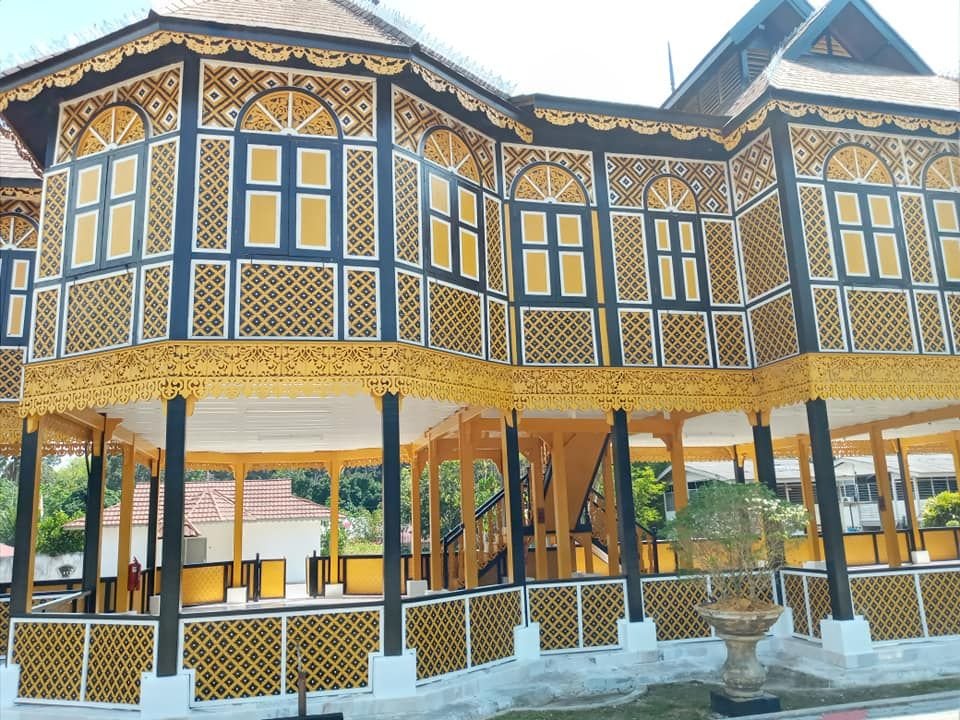
From there, we went to another nearby attraction, the Sultan Azlan Shah Gallery.


This handsome-looking building was built in 1898 as the official residence of 28th Sultan Perak, Sultan Idris Shah. In 2003, the gallery was turned into a gallery which exhibits the history and some personal collections of the late Sultan Azlan Shah, the state's 34th Sultan.

Unfortunately, this place was closed too for a restoration work.

Then, we paid a visit to the most iconic landmark of Kuala Kangsar, the Ubudiah Mosque.
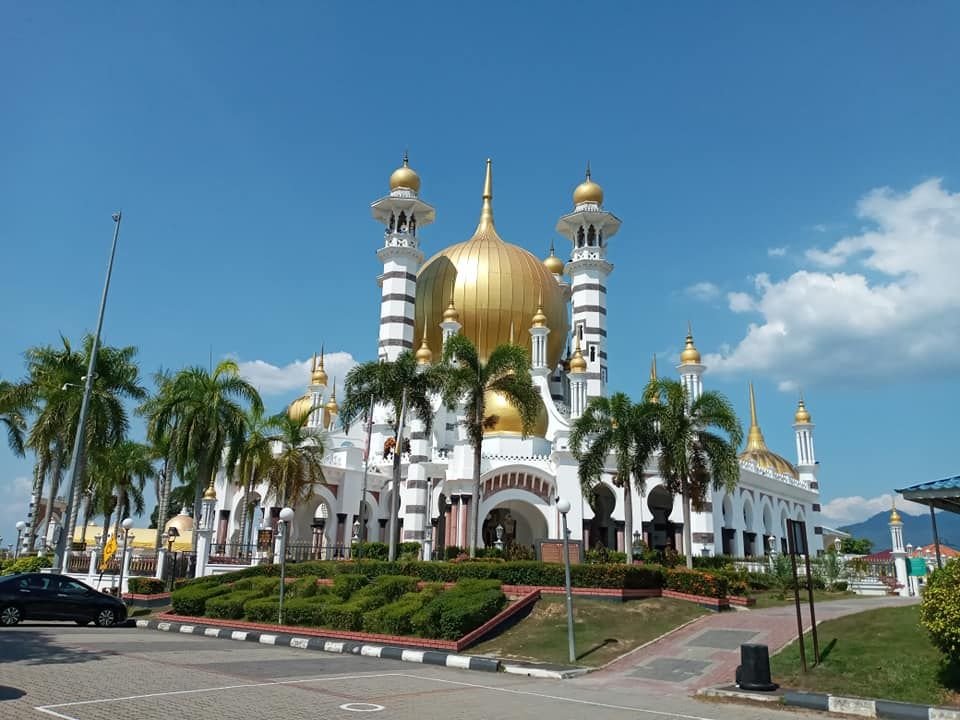
This majestic mosque was designed by English architect & soldier, Arthur Benison Hubback, the same architect for many other major heritage buildings and architecture in Malaysia. Sultan Idris Shah commissioned the construction of this mosque in 1913 the construction to fulfill his vow made upon a recovery from an illness. But alas, he did not make it to see the final product as the mosque was only completed after his death.

The mosque was mainly noticeable by its Golden domes and minarets which easily recognized even from a distance. The architecture features an
Indo-Saracenic design.

Non-Muslims visitors are welcomed to visit the mosque. A dedicated robe will be provided at the registration counter if you wished to go inside.

The main prayer hall.

The walls and floors were made of red and white marble specially imported from Italy and London.


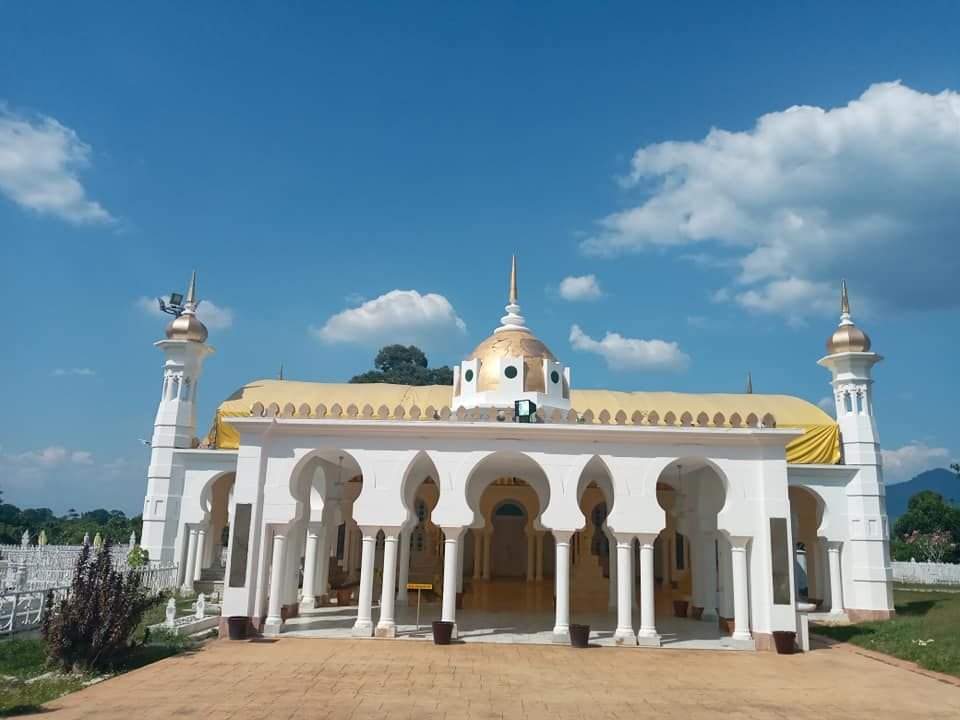
Located next to Ubudiah Mosque is the "Al-Ghufran Royal Mausoleum", which is the official burial ground for Perakian Sultans and their family members since 1916.

The mausoleum building incorporates a Moghul-style design.
The grand tombs of the state's previous Sultans.


Tomb of the late Sultan Azlan Shah, Perak's 34th Sultan.

I believe these are the tombs of the small children or perhaps babies.

Tombs are all over the place.

And more tombs located on the same ground outside of the mausoleum building.

