Zouni (雑煮) is another common dish during Oshogatsu (お正月, Japanese New Year) there are so many different variations of zouni depending on region of Japan and depending on houshold. There is not one zouni which is "proper." This is the way I made zouni but you will find many different versions of zouni.
First the broth. Some common ways to make Japanese broth, sea weed, drided thin drided bonito flake, etc. I cheated and used powder form from store, just add water.

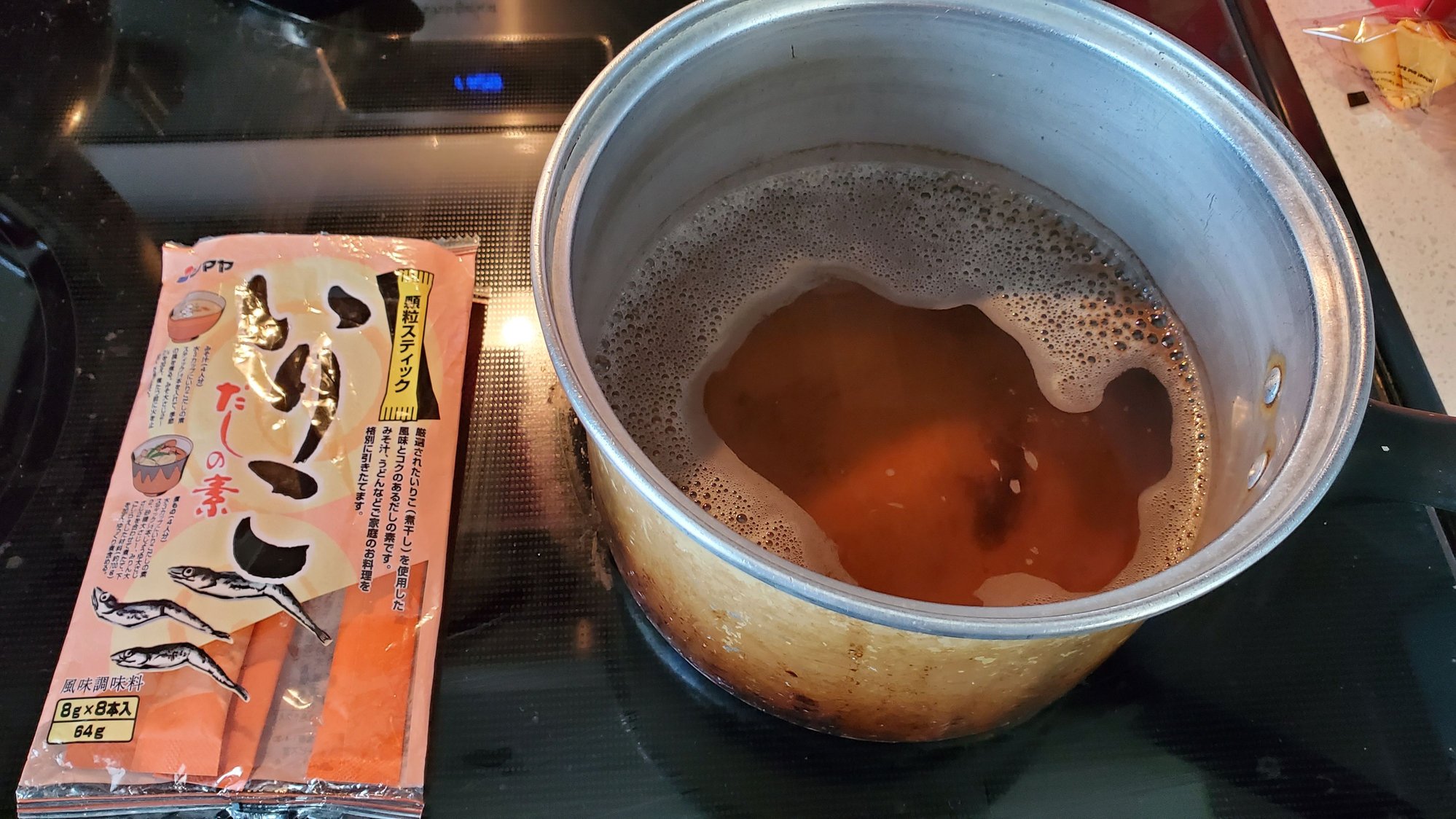
I chose iriko flavor broth, Iriko is a family of sardine and iriko dashi is made from dried iriko fish. But I simply used powder form bought from a store. Then the ingredients.
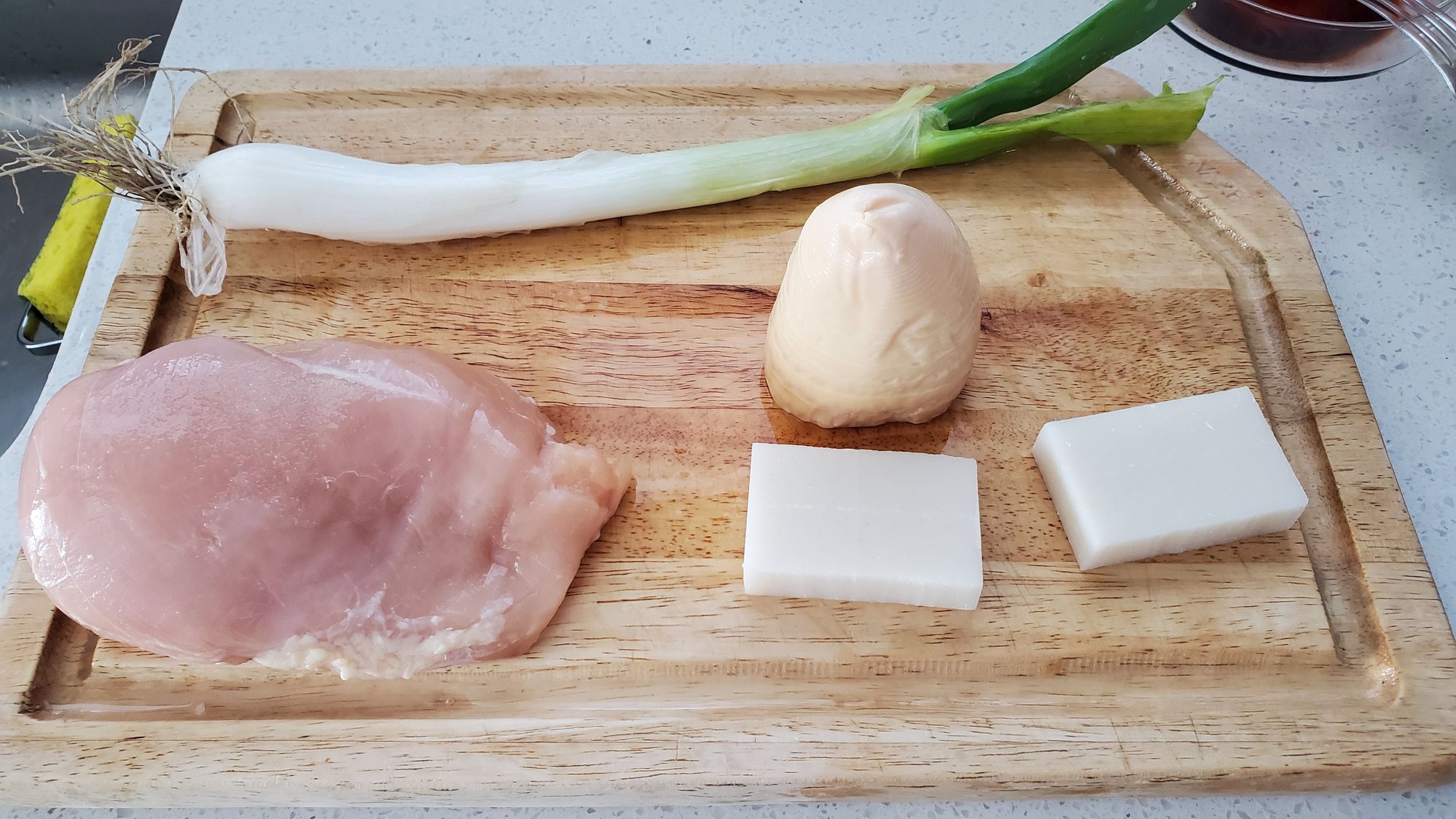
Mochi, chicken (I used bonless breast), bamboo shoot (I bought cooked one), long onion. There are also so many varaety of long onion, Tokyo has Tokyo Onion, Kansai has Kujyou Onion, etc. but it did not matter to me which long onion, I just bought what was at the store. Cut all ingredients in small bite size. Zouni differ from region to region and there are so many different ingredients out there. This is just one example.
Cook chicken in broth.
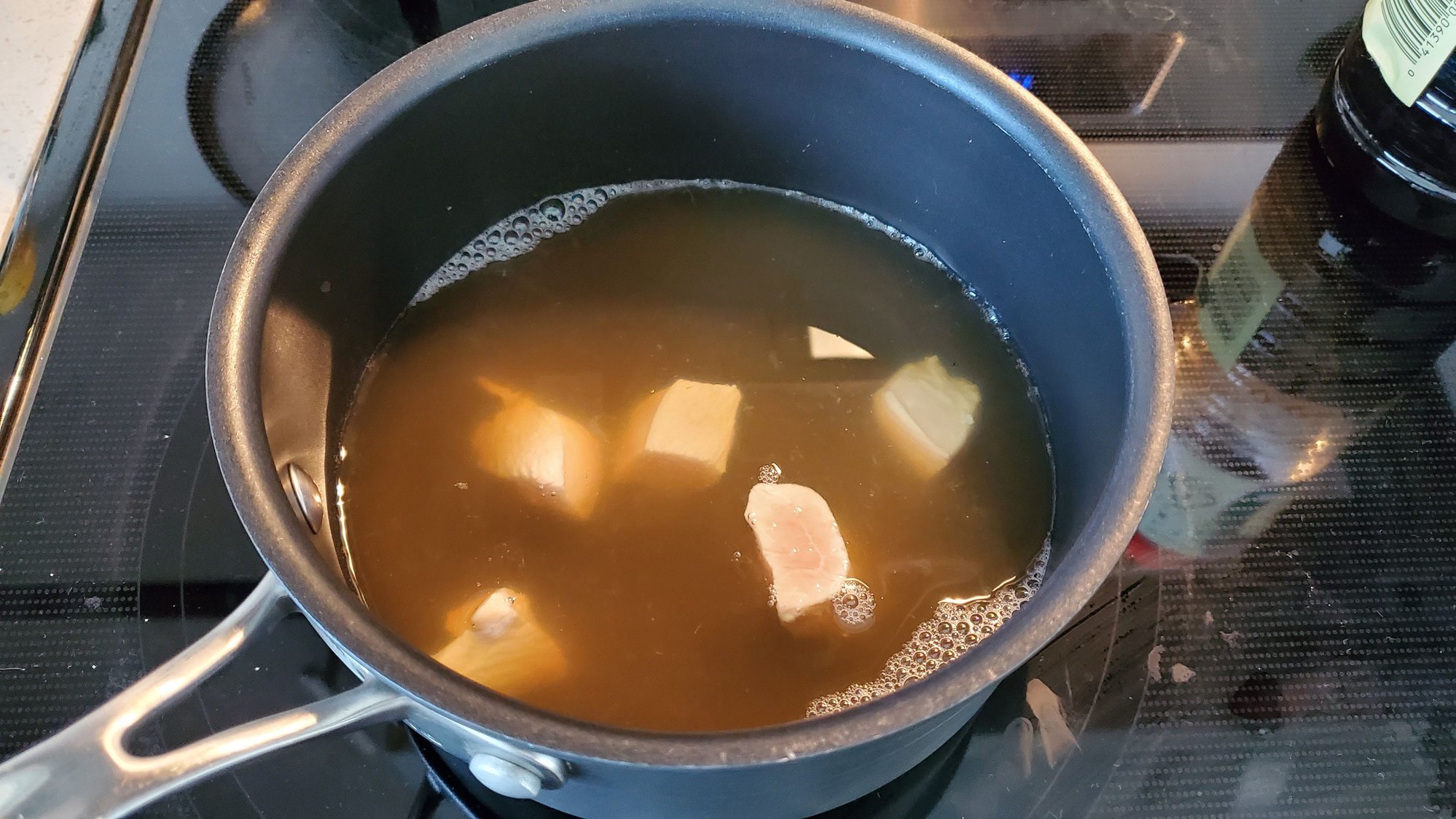
Add just a little bit of salt and soy sauce for flavor. Again, there are so many different Zouni, some use miso for flavor. Simmer and cook chicken. I bought cooked bamboo shoot so I do not have to add bamboo shoot till end. Meanwhile cook/grill mochi in same way as done in Isobemaki.
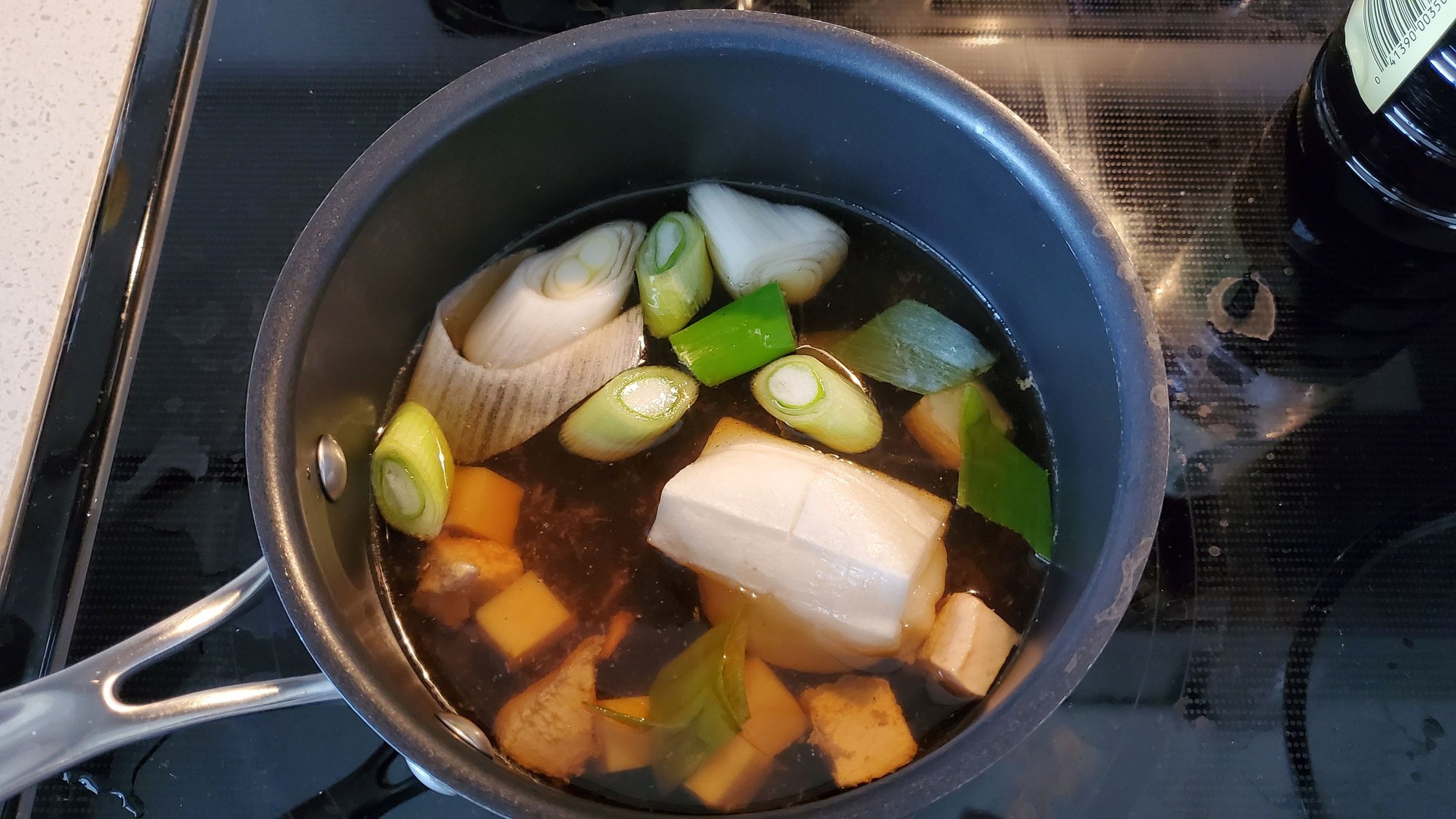
Once chicken is cooked then add mochi, bamboo shoot, and long onion. Simmer for another a minite or so.
My Shougatsu Osechi (正月おせち料理).

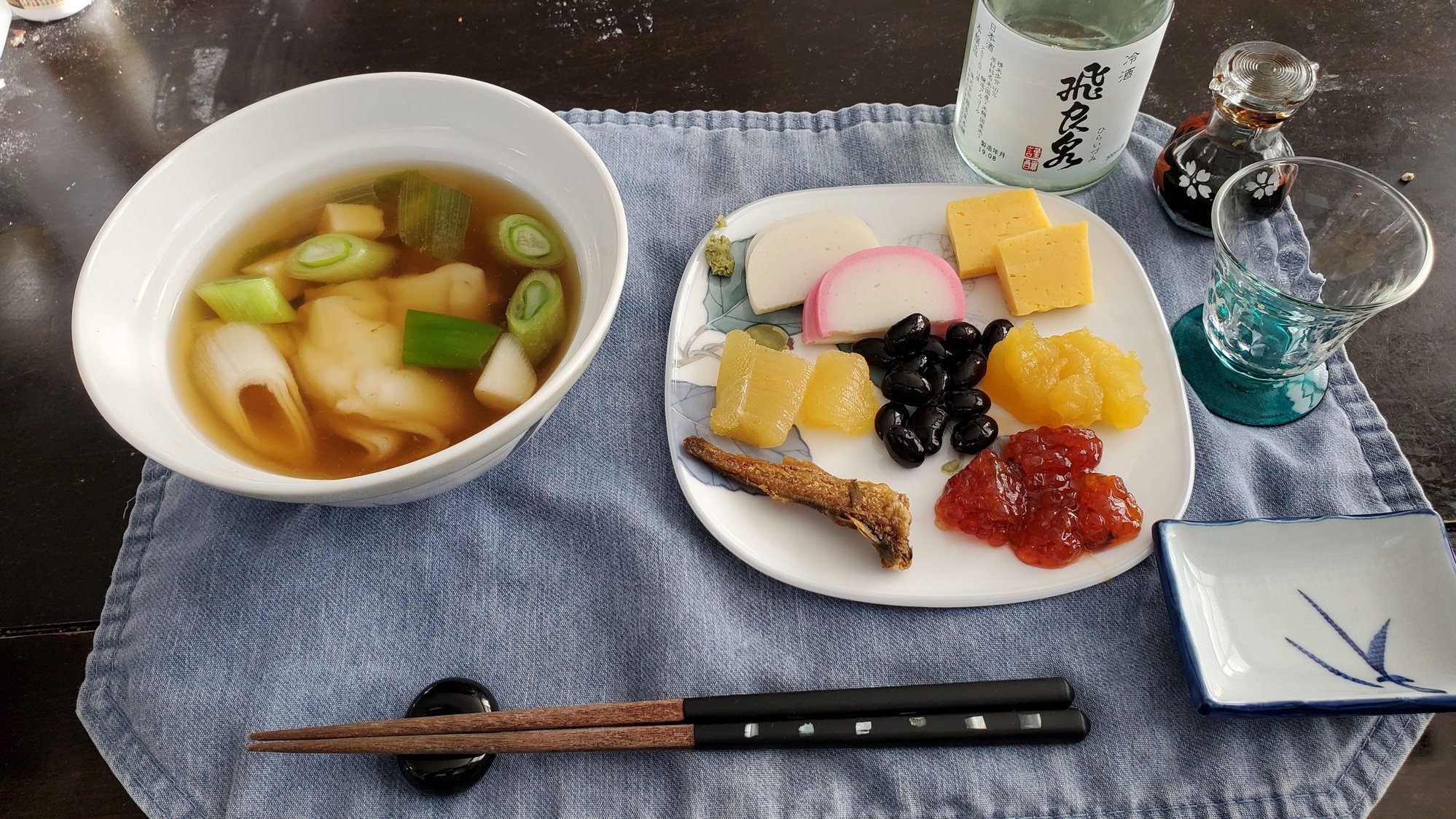
On the left is Zouni.I made. Accompanying Zouni is my version of Osechi. From top left to right:
kouhaku Kamaboko (紅白かまぼこ, fish cake). Red and white fish cake is usually used for New Years for festive reason
Japanese rolled egg omlet
Kazunoko (herring roe). Herring row contains many small eggs. A lot of eggs means a lot of kids and which interperted as prosperity of desendants.
Kuro Mame (black soybean) In Japanese beans is "mame" and associate Japanese phrase "mame ni hataraku" which means work diligently.
Kuri Kintoki (sweet chestnut). Gold/yellow color represnt money, Fortune.
Not associated with Osechi, but I also had:
Hatahata no Kraage (deep fried sea bass). Hata-hata is a family of sea bass cought aroung coast of Akita.
Sujiko (salmon roe).
Sujiko and ikura is both salmon roe, but difference is:
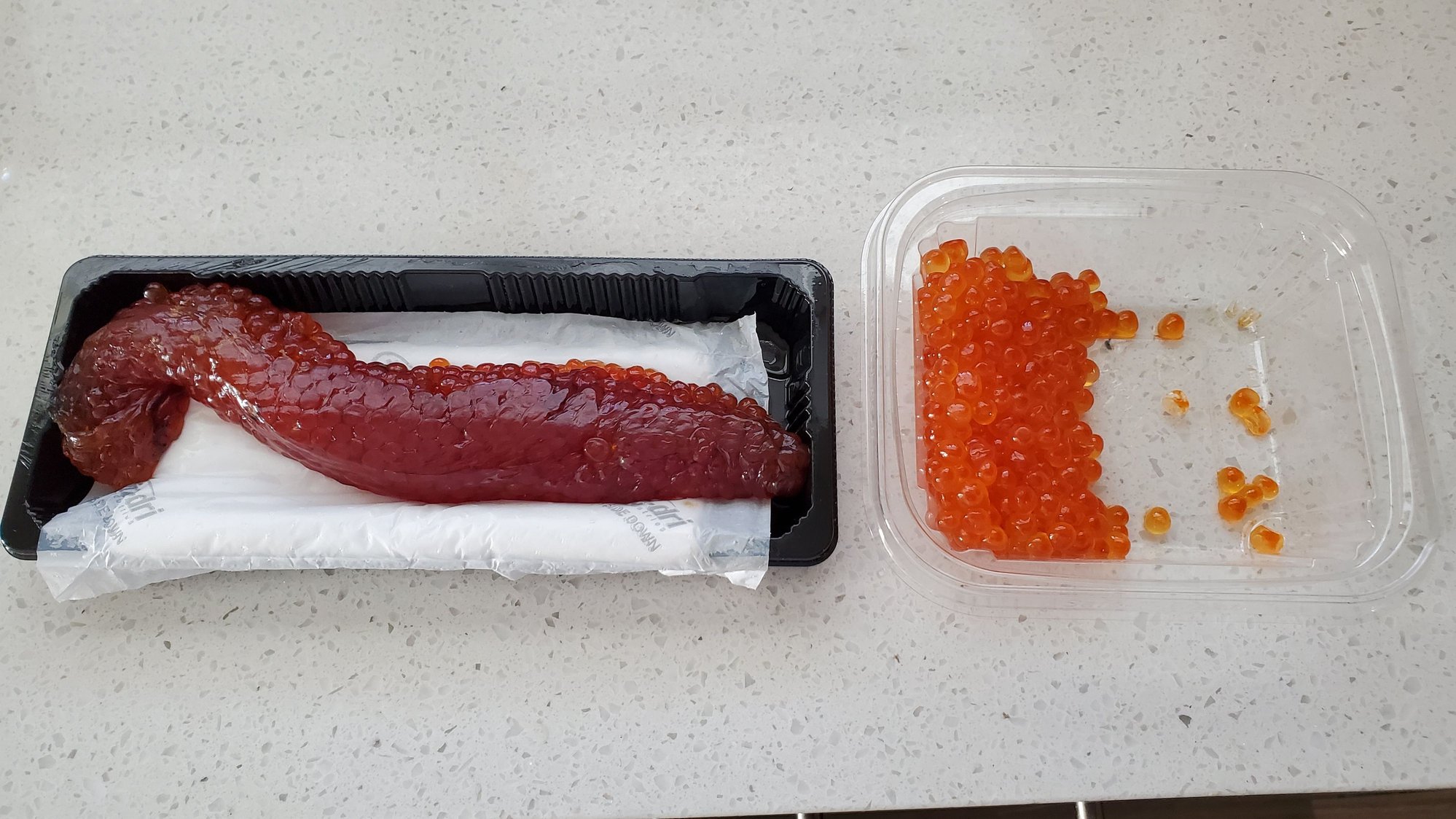
On left is sujiko (筋子) and on right is ikura (イクラ). Both are salmon roe but sujiko has eggs still inside of a sack, where ikura is eggs removed from a sack. That is the only difference.
With the meal Hiraizumi sake from Akita. My proper osechi for 2021!