The non-Nativity tour of Bethlehem
There’s three of us today: a Flemish Belgian lady and her teenage daughter and me. Our guide is Waleed: a forty-something Palestinian with a sandpaper stubble, leather jacket and obligatory packet of cigarettes at the ready. I wanted to know more about the reality of living in Bethlehem: nothing better than Waleed, born and bred in a nearby refugee camp.
Outside the weather has, if anything, turned worse: I’ve dug out my rainproof jacket but, instead, Waleed’s lime green Corsa is pressed into service. Before we can hop in the car, though, Waleed invites us to check out his numberplate, which we do. It’s white and green, with Arab letters and numbers. It’s the start of a brief lesson on transportation in the West Bank and the biggest, at least for me, takeaway of this journey. Cars with yellow numberplates can go almost everywhere; cars with white-and-green plates can’t. Jerusalem, the Med, Gaza are out of question for Waleed and his lime Opel. But so is a long
listof roads within the West Bank itself. Route 557. Route 5. Route 404. Route 413. Route 60. Route 43. And
more.
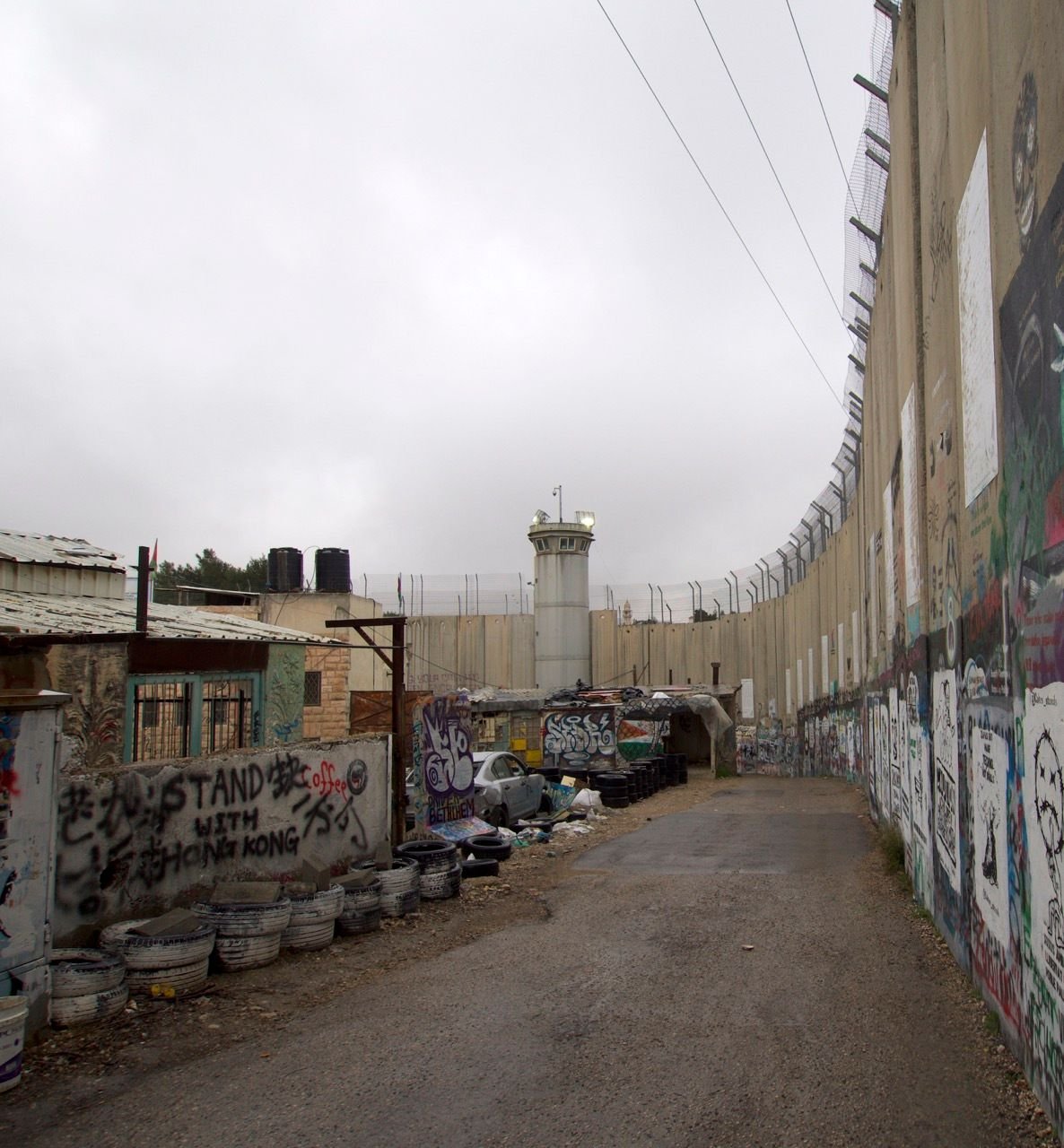
Life in Palestine, we begin to understand, is more complicated – and constrained – than we could ever imagine. I guess that the current situation (lockdowns, curfews and so on) has offered us a glimpse into it; but there’s no promise of a vaccine to open up the West Bank.
It’d be remiss of me if I were to ignore the principal purpose of the wall, which was to stop attacks. It’s perhaps not surprising if Waleed fails to mention that, though the Walled Off’s permanent exhibition is, too, silent on this aspect. The numbers, however, cannot be ignored: in the three years prior to the building of the wall there have been 70
bombings, causing 293 victims. All these were perpetrated by suicide bombers coming from the West Bank. After the wall went up, the number decreased to 12 in the same length of time and is now at zero.
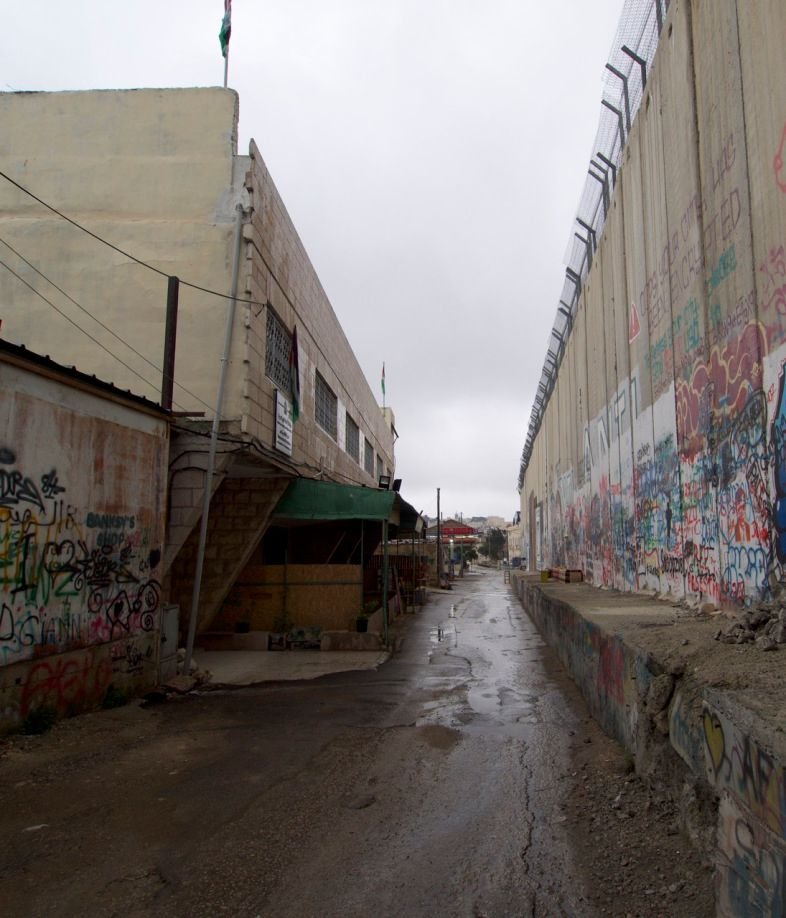
As sad as it can be I can get the reason behind the wall. What do you do when two neighbours can’t stand each other but can’t leave their homes? Build a wall and wait for time to do its magic (or for the Sun to swallow the system, whatever comes first). But… still, there’s something that doesn’t quite square with that.
The wall, as Waleed mentions, should follow the 1949 armistice line. Said line, which you can see here in the map below (from the Walled Off room I was staying in) is five km from Bethlehem.

And yet here the wall is. Crawling into the city’s urban texture, carving out an inaccessible space right in the city. Why?
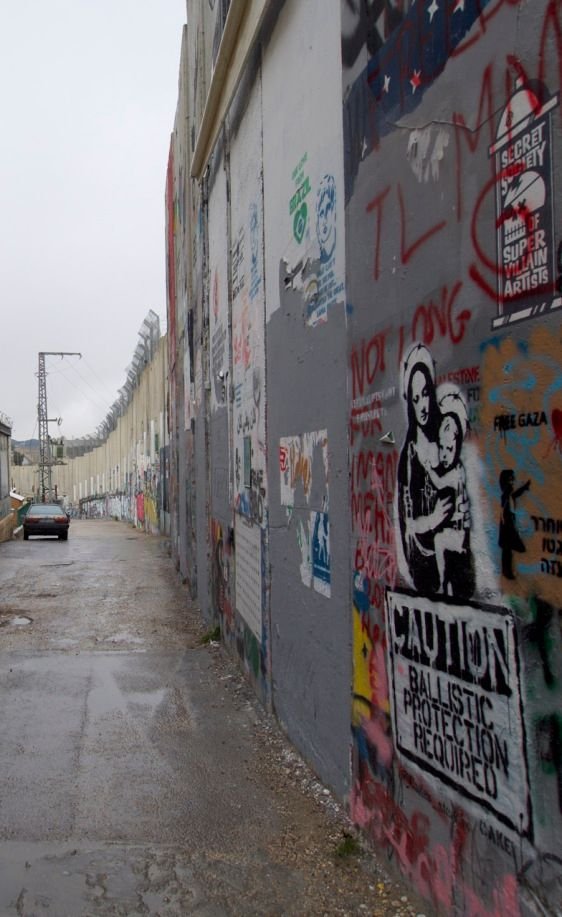
“Rachel’s tomb is behind there”, says Waleed, pointing behind the wall. “It’s a sacred place for settlers, so they can come visit”.
And we can’t, he seem to imply.
This, too, is a fact. The overall length of the West Bank defence measures is longer than the actual border; a lot of it is due to orography and the challenges of a landscape unsuitable for building, but a
lot is for political reasons, such as here. The UN, in a
2016 survey, found 490 obstacles to the freedom of movement of Palestinians and, try as much as I could, I struggle to reconcile all this with the legitimate desire of keeping Israelis safe.
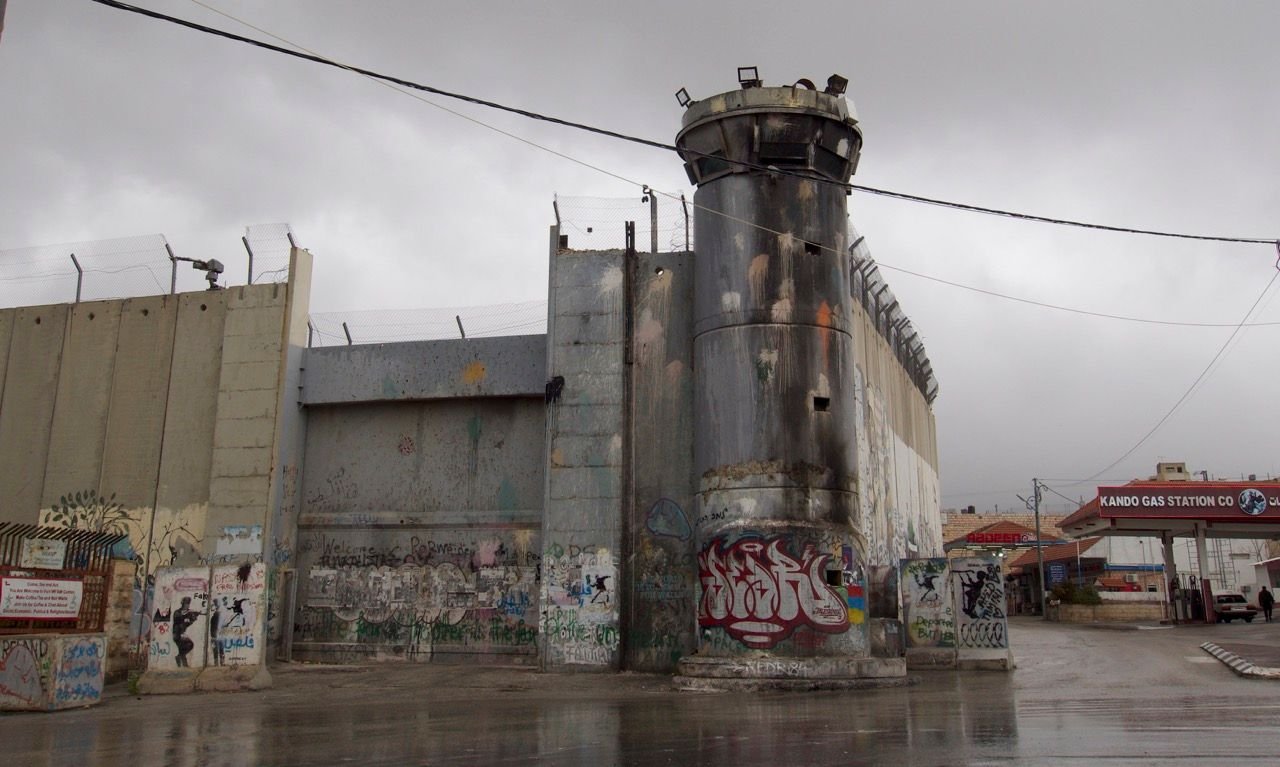
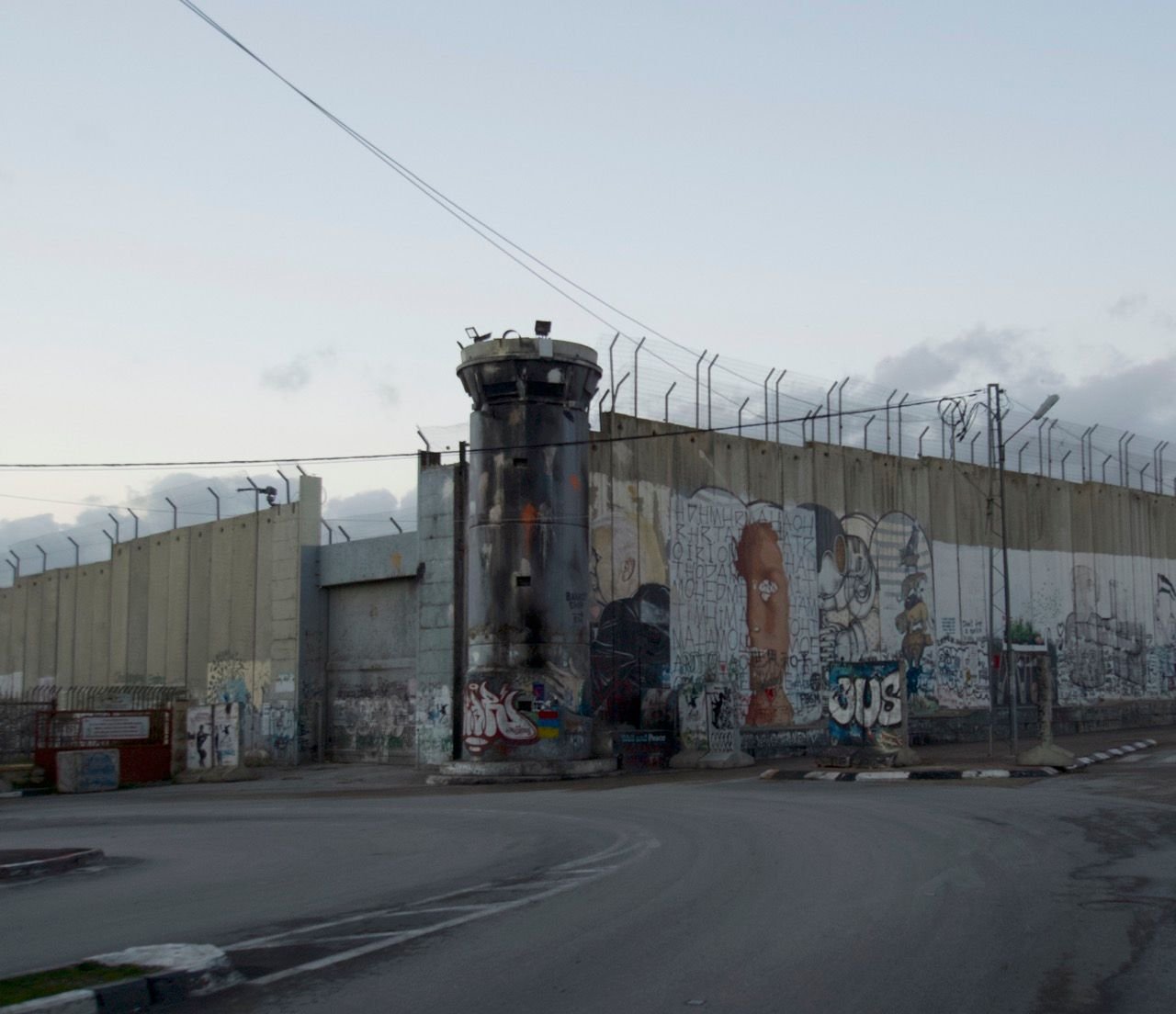
We dismount from the Corsa and walk around the tower and the gate that opens on Hebron road. Here the wall is at its ugliest, covered in graffiti, burned by petrol bombs and rubbish set on fire. Along the road are blocks of concrete placed at regular intervals: walls taller than a person and cubes with rough stairs cut behind them. “They’ve been placed by the Israelis, so that they have cover when they do raids in town. The council doesn’t dare moving them”, noted Waleed.
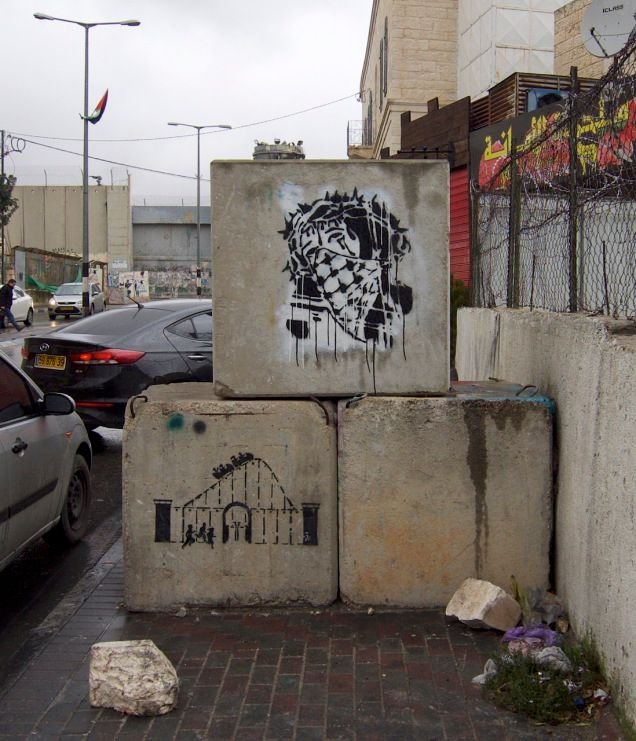
You’d be excused to think this wall a medieval solution, a throwback to a darker age, with men-at-arms ready to throw arrows and boiling oil from the ramparts in case of an assault. But the wall is brimming with the latest tech, a fact that becomes clear as we turn left in our journey and enter Aida refugee camp.

The camp’s no longer such: it’s become a densely packed town, multi-storey houses rising elbow-to-elbow, schools and workshops abutting the wall. Here we meet Nabil, a 22-year old student and activist. He begins rattling off an impressive array of hardware: “There’s
skunk water – the cannon is above the gate on Hebron road. Then there’s
tear gas, rubber bullets, sponge grenades, flash-bangs, stinger grenades, the
Scream”.
Our encounter with Nabil is the low point, at least for me. Nabil has a Palestinian ID
card, meaning that he is barred from entering most of Israel; as such, he’s never been to the Mediterranean. “Can you imagine”, he says, “I’m 22 and I’ve never been abroad. I’ve never seen the sea”. His passport ranks 101st out of 106 in the
Henley Passport Index. “You’d expect that at least the Arab countries would allow us to travel but we can only go to Jordan. Turkey gives us visa easily, but that’s it…” he trails off. He was due to visit Italy in March, guest of a family in the north of the country. “I can’t wait to see the sea”, he smiled, oblivious to the idea of having to drive for hours to Amman to catch his flight to Milan (Ben Gurion airport is obviously off limits). Knowing what happened after, I doubt Nabil ever made it to the Med.
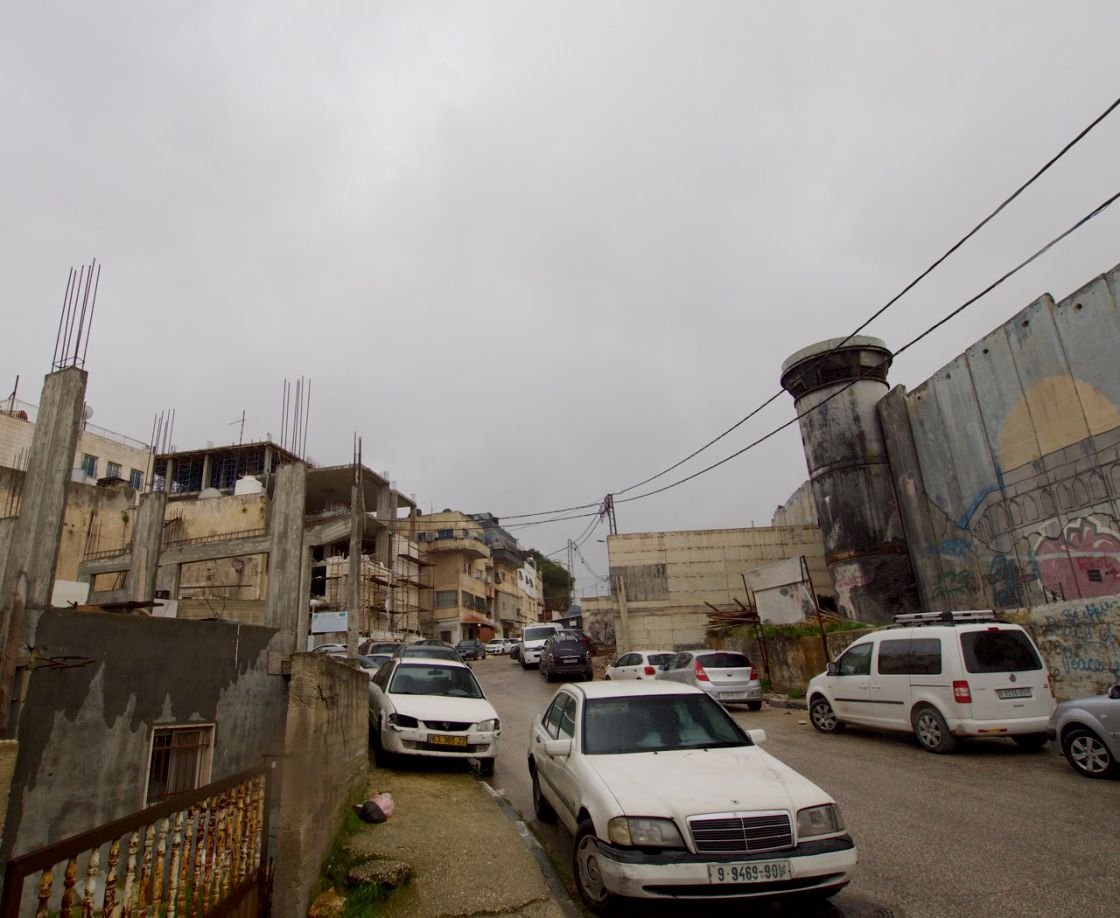
We finish our walk in Aida camp. Nabil takes us to his school, placed next to the wall. As a teenager, he and his friends would pelt the wall with stones and Molotovs, “the wall” retaliating with tear gas, flashbangs and stinger grenades. The violence left streets littered with spent canisters, so much so that a recycling trade sprouted up, with shops selling jewels and everyday articles made with the aluminium harvested from the ordnance.
Like the late Anthony Bourdain, I’ve always been of the opinion that the best antidote to prejudice and racism is to walk a mile in somebody’s shoes. To talk, to share a meal, to understand that, after all, we’re not that different. Has Nabil ever spoken to an Israeli? Has he ever met one, talked with one?
“How?” he laughs. “With that thing in the way?”
 To be continued; feel free to check out my blog Are We There Yet? for more.