61 years ago today, Boeing rolled out and delivered the 797-123 Flagship Michigan, ushering in the full Jet Age.
(While the De Havilland Comet flew first in 1952, the initial design was fatally flawed and the aircraft never saw much commercial success, nor was it out into use by any US airline. In North America, Mexicana did fly several Comet 4Cs; one is at the Seattle Museum of Flight’s restoration facility at Paine Field at Renton, WA. And while AA did fly the BAC 111, it came four years later.)
23 October 1959: American Airlines accepted delivery of its first jet airliner, Boeing 707-123 N7501A (serial number 17628, line number 7). The new airplane had made its first flight on 5 October. Christened
Flagship Michigan, American Airlines advertised its new 707 as the “
Astrojet.” The last 707, a -323C, was retired in 1983.
The Boeing 707 was developed from the earlier Model 367–80, the “Dash Eighty.” It is a four-engine jet transport with swept wings and tail surfaces. The leading edge of the wings are swept at a 35° angle. The airliner had a flight crew of four: pilot, co-pilot, navigator and flight engineer. The airliner could carry a maximum of 189 passengers.
The 707-123 was 145 feet, 1 inch (44.221 meters) long with a wing span of 130 feet, 10 inches (39.878 meters). The top of the vertical fin stood 42 feet, 5 inches (12.929 meters) high. The 707 pre-dated the ”wide-body” airliners, having a fuselage width of 12 feet, 4 inches (3.759 meters). The airliner’s empty weight is 122,533 pounds (55,580 kilograms). Maximum take off weight is 257,000 pounds (116,573 kilograms).
https://www.thisdayinaviation.com/23-october-1959
Engine replacement came only two years later. The original “Pratt & Whitney Turbo Wasp JT3C-6 turbojet engines, producing 11,200 pounds of thrust (49,820 kilonewtons), and 13,500 pounds (60.051 kilonewtons) with water injection... at MTOW, the 707 required 11,000 feet (3,353 meters) of runway to take off. The 707-123 had a maximum speed of 540 knots (1,000 kilometers per hour). It’s range was 2,800 nautical miles (5,186 kilometers).“
An integral part of the 707 lives on, in a way. The fuselage diameter, enlarged from the original “Dash 80” prototype, was used for the 727, 737 and 757; it continues in the 737 MAX.
Link to avgeekery story with Pratt & Whitney film on the 707-123.
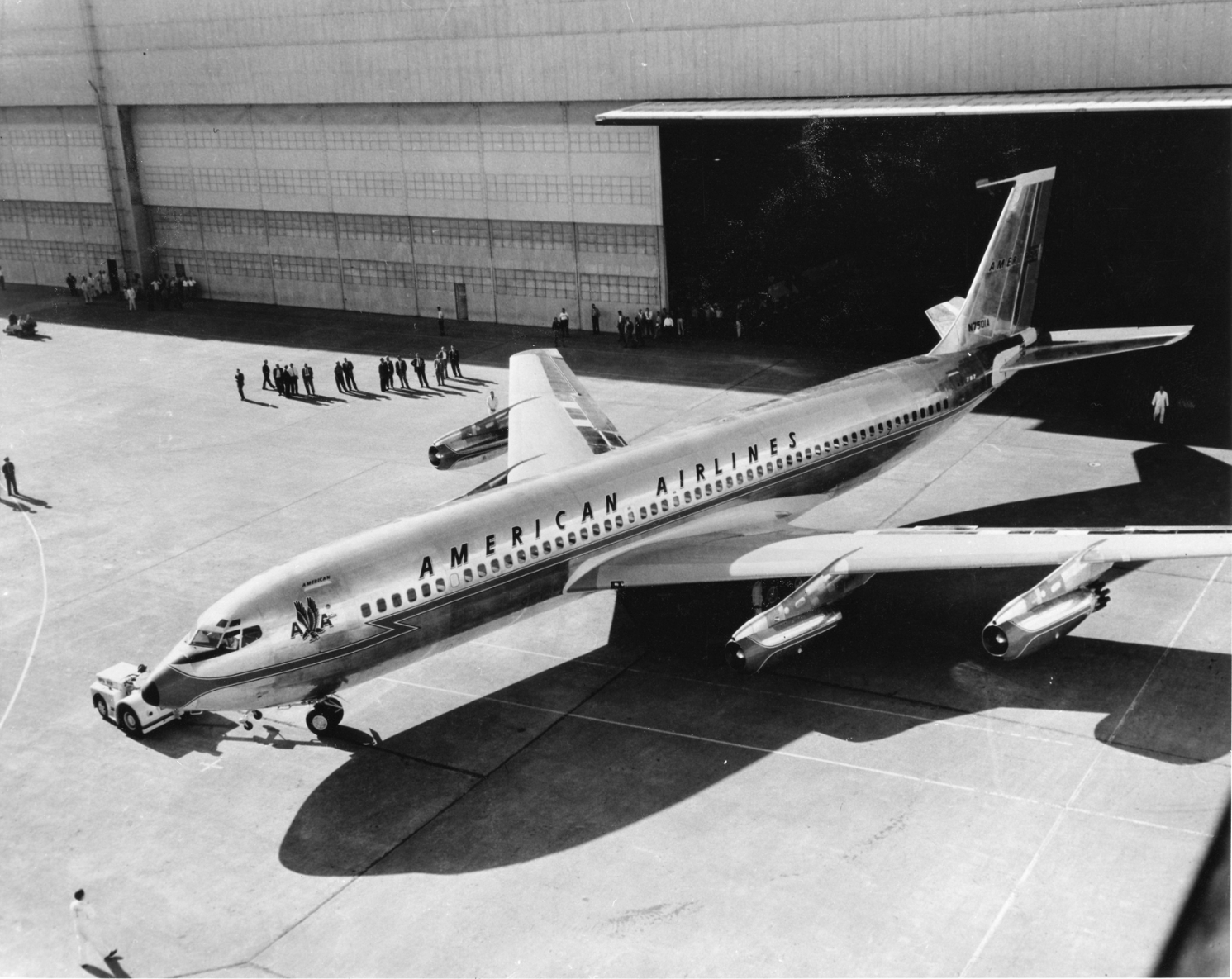 Flagship Michigan on delivery; thisdayinaviation.com
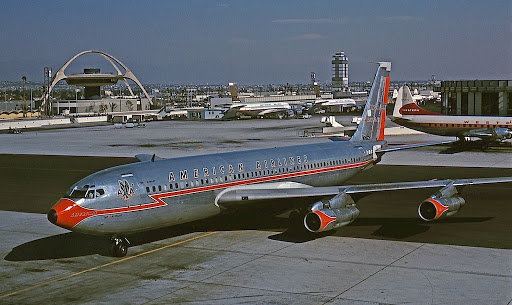 707-123 at LAX
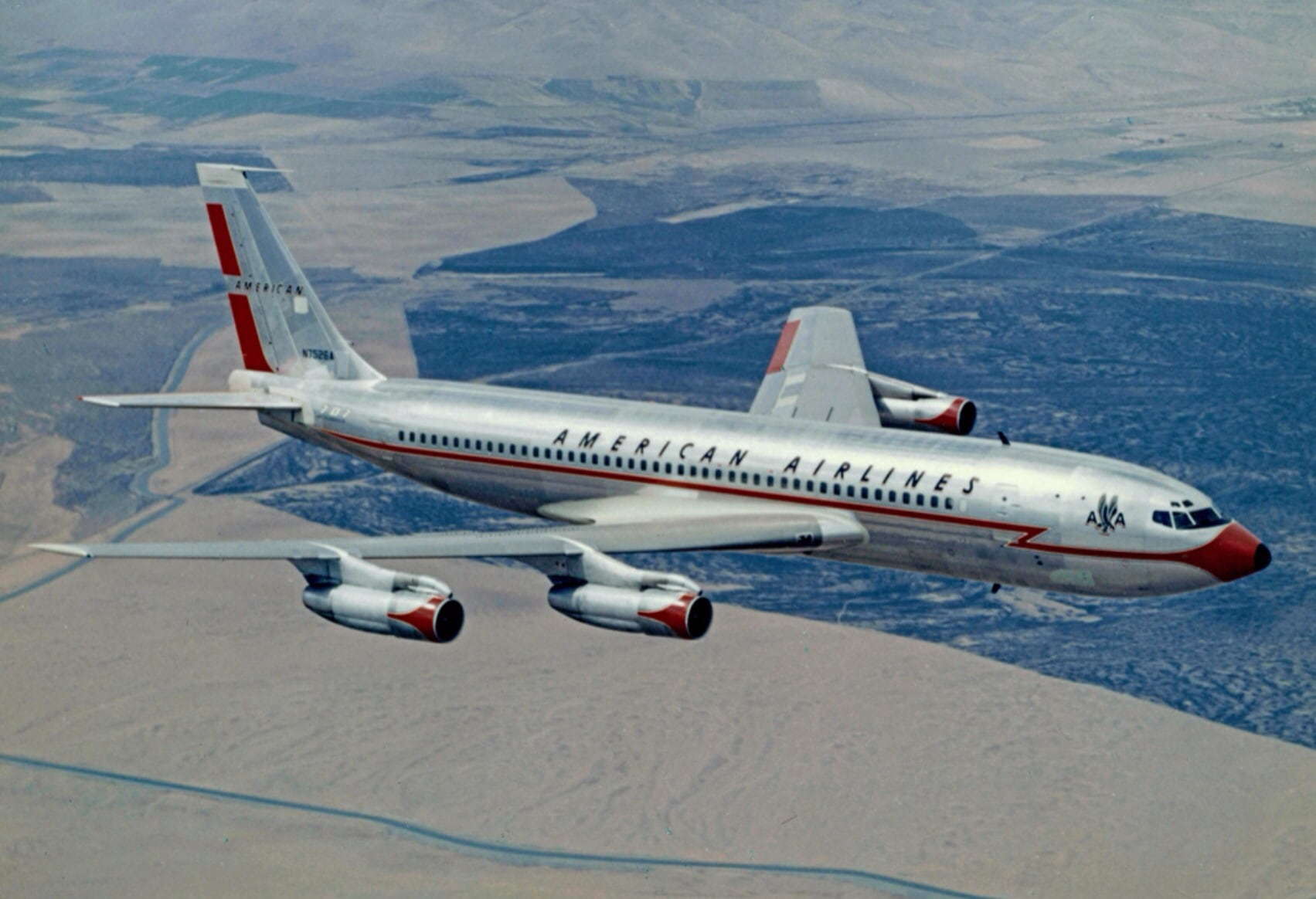 Photo found on Pinterest
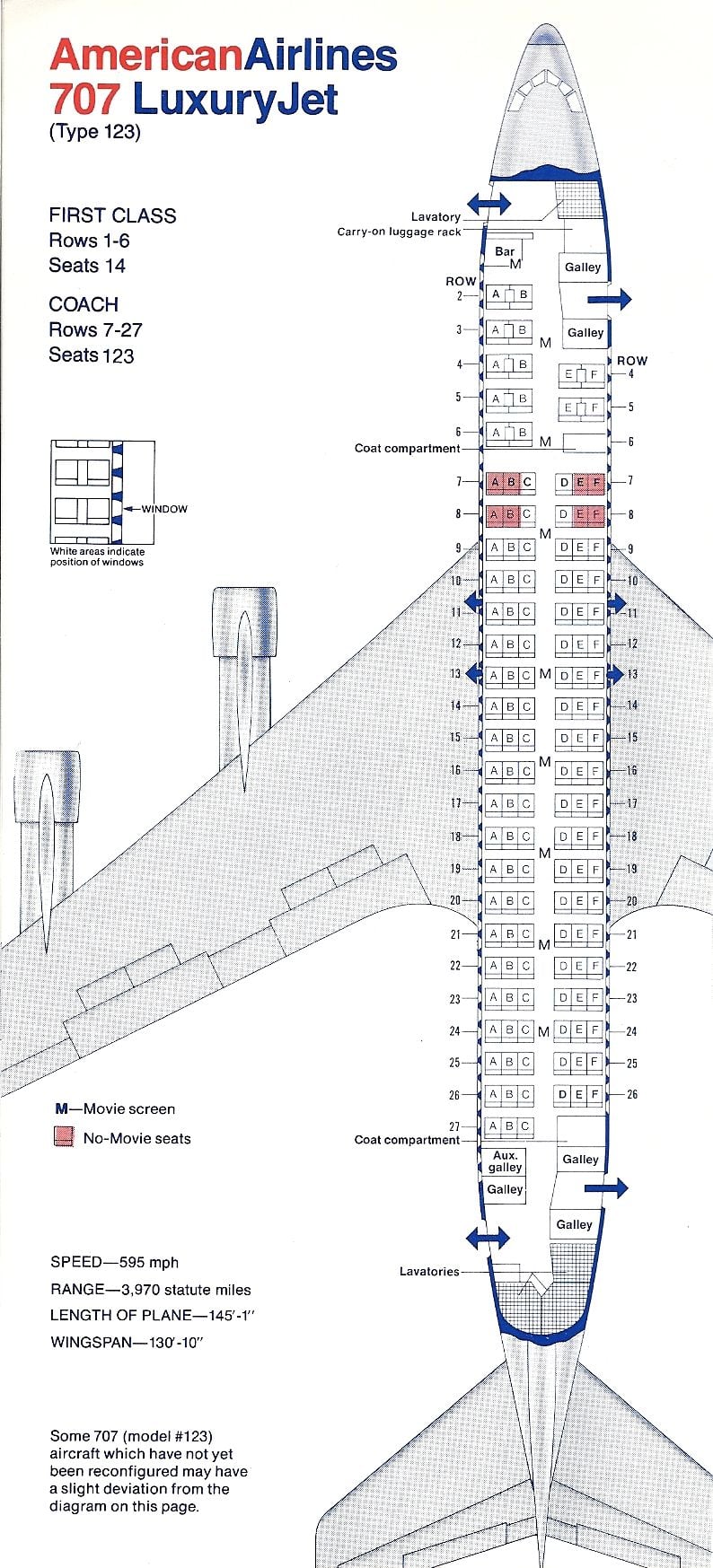 Vintage Seat Charts AA 707-123B seat chart
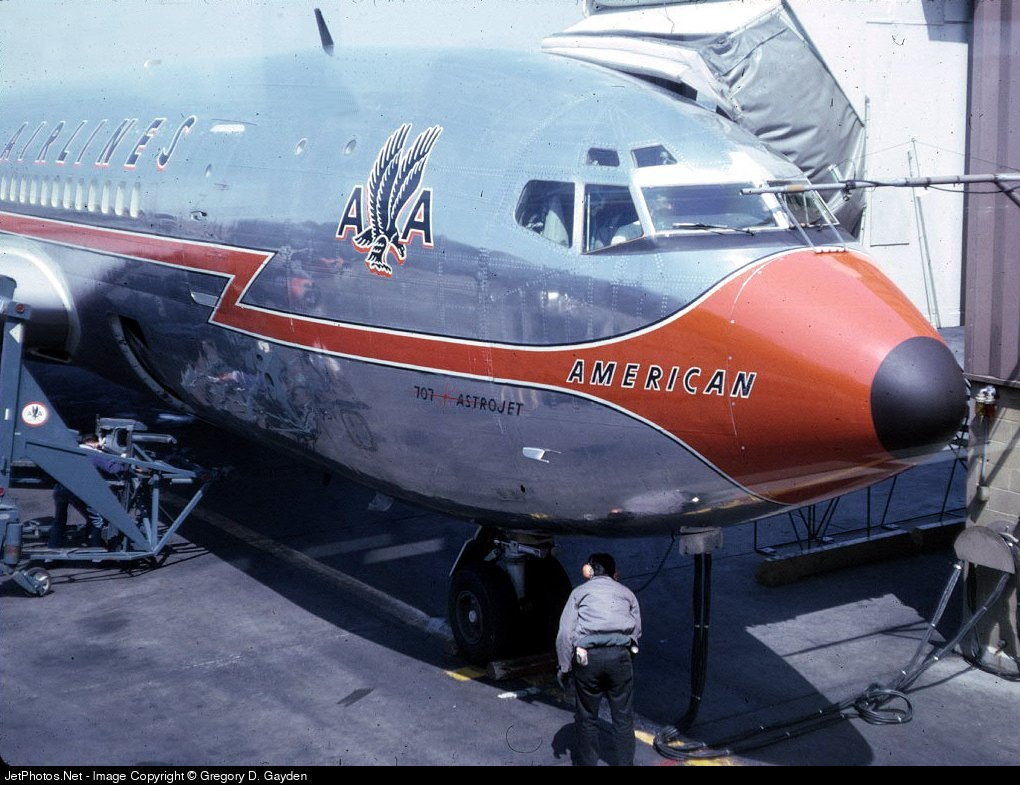 JetPhotos.net photo
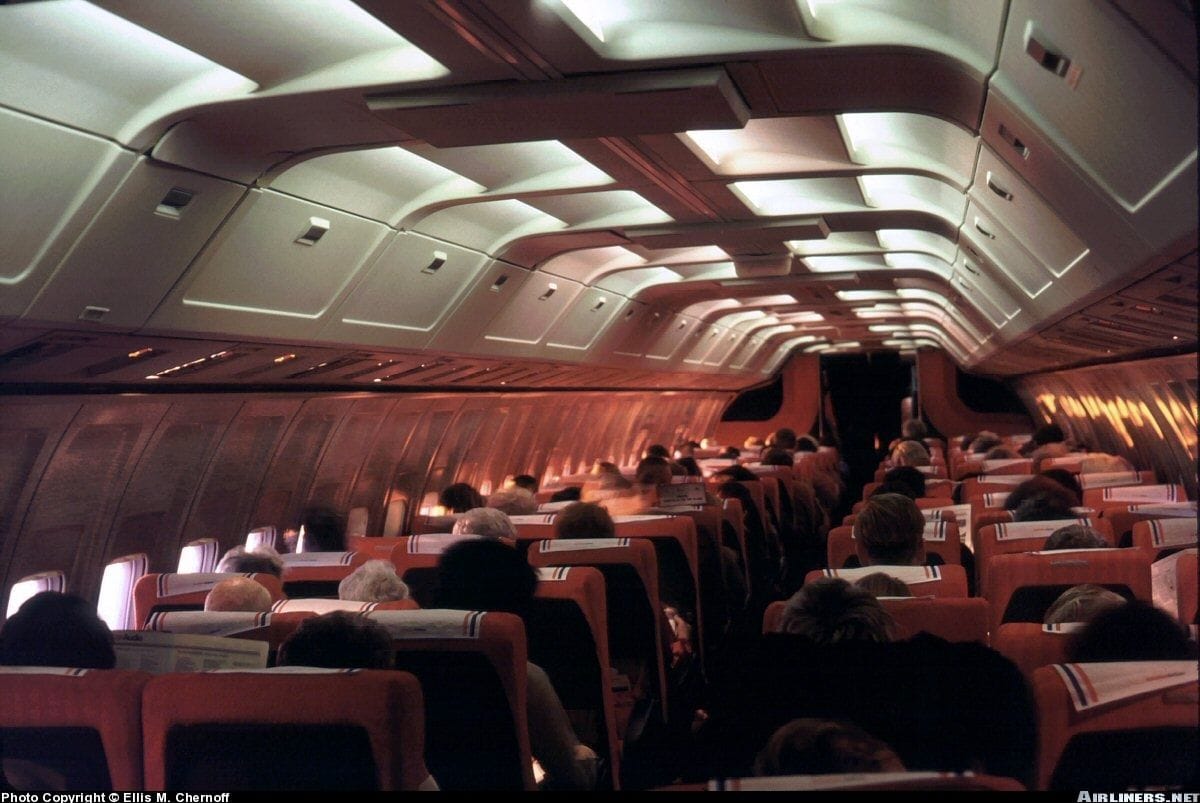 Interior looking forward; Wikimedia Commons
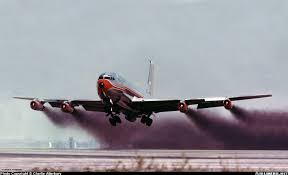
797-123 water injection takeoff