Our lockdown is considerably more stressful than it should be due to an ongoing... err... “situation” in the household next door. Cooking (and eating) has been a big comfort during this time. If we’d been in Japan we would have missed the worst of it, but that’s 2020 for you. Our dearest are doing fine, MrLapLap hasn’t been conscripted into an army, my daughter still has a semblance of a school life. We have blessings to count despite it all.
Two days ago we broke out one of the packets in MrLapLap’s Fukuoka and Tokyo haul from his visit in February.
It’s from Ajinomoto, and it’s called Ma-bo Chezu, which seems to be a sort of Mabo Nasu (Nasu is aubergine/eggplant)
https://www.ajinomoto.co.jp/cookdo/l...awase_001.html
Was very nice to eat something that didn’t taste anything like mine or MrLapLap’s cooking - just as a change.
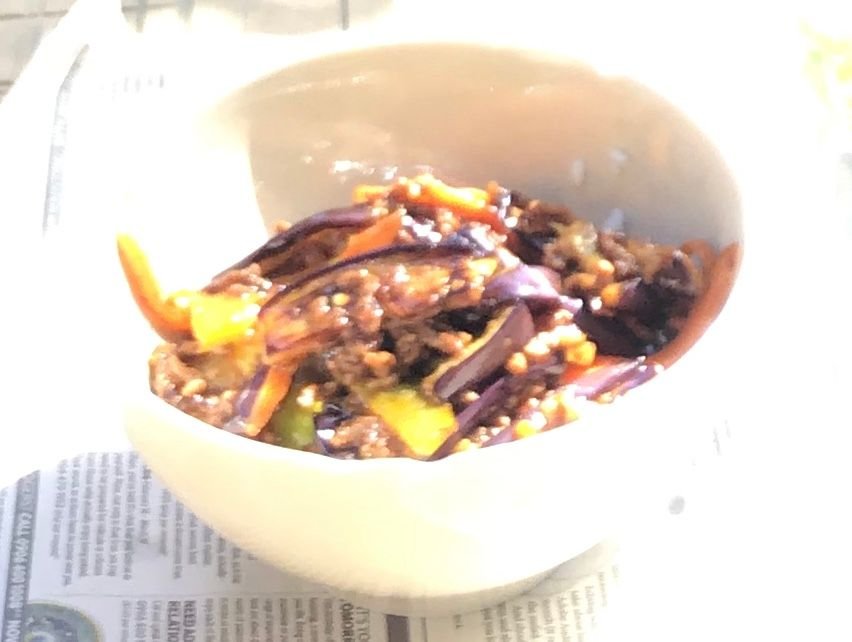
Looked like this (with beef instead of pork mince) and we had it with rice and salad in a rare quiet moment out in the sunshine.

The challenge today is to make it without the packet. Have a few dregs of very salty toban djan (Lee Kum Kee) left and will substitute miso for tian mian jang.
I knew about Mabo Doufu but hadn’t come across Mabo chezu or Mabo nasu before.
Will try this as it doesn’t seem too complicated
https://translate.google.co.uk/trans...ml&prev=search
EDIT TO ADD:
That worked out well. Followed the Ajinomoto packet’s recommendation for vegetable quantities and frying (although with my big European aubergine I sliced, salted, drained, rinsed and squeezed it first as they aren’t as tender as the Japanese kind).
Then removed the vegetables and fried the mince as in the Kikkoman recipe recommendation. Instead of the tian mian jang I subbed a bit of miso and some oyster sauce.
The biggest difference between this version and the one from the packet was the absence of a hint of Chinese star anise, so I’ll add a little of that next time I make it. Added a little spring onion/scallion and had it on rice with shredded cucumber on the side.
Suspected it would be rather salty, which it was, so didn’t add any of the salt the recipe called for. The rice and cucumber moderated the saltiness. Find this happens every time with Lee Kum Kee condiments.