Originally Posted by
cockpitvisit
What's the trick making the perfect rice for temaki?
My rice usually gets either not sticky enough, or too wet (so that nori gets wet too quickly - and I like it crispy). I am just using "sushi rice" from the local supermarket. Do I need to learn a lot about different kinds of rice, or is it just a matter of a proper cooking regime?
That’s my cue!
I present my tried and tested rice cooking method - works with “sushi” rice types, Spanish (non “bomba” rice, particularly the kinds from Calasparra) and Korean rice.
1. Rinsing.
Rinse rice. This in itself is contentious as there are folks who insist it isn’t necessary (and it isn’t a process that forms part of making Spanish arroz/rice dishes), but rinsing DOES remove heavy metals - significantly so - from rice, making it safer, and particularly so for children. It also helps with the absorption task (more on this in a moment).
Everyone rinses differently, I’d suggest a gentle hand. As soon as rice gets wet it becomes progressively more brittle and easier to damage. So a quick rinse, a bit of grinding (I count to 30) and then rinse by changing the water a few times until the water becomes clearish (doesn’t have to become crystal clear).
Things to watch out for - work fast! If you grind rice slowly, the water it is sitting in will become re-absorbed into the rice. So try not to let this stage take more than a minute. If your rice is a bit old, leftover rice bran oil in the residue (which goes a little rancid and has an unwelcome aroma) will get sucked into the rice as well as those heavy metal residues. So grind quickly and rinse immediately, don’t become distracted by a phone call at this point! The next couple of rinses can be more leisurely.
Grinding - some people grind rice with the heel of their hand against the bowl/sieve. That’s fine if you work quickly and have a round short sturdy grain, otherwise I’d suggest rubbing rice gently between two hands - particularly with the US calrose types (such as Nishiki) as the longer shape makes it less robust.
2. Draining
Once rinsed, leave the rice to drain, ideally in a sieve, for at least ten minutes - 20 is perhaps optimum.
Why? The initial rinsing, draining and soaking stages serve an important function. If you add dry rice to water it cooks from the outside in. As water penetrates the rice, the outside is cooking faster than the inner core. Rice has a greater tendency to crack or remain undercooked (that “chalky” texture failed rice might have). The rinsing and soaking stage encourages water to penetrate right into the centre of the grain so that when it cooks it does so evenly; inside out as well as outside in.
The pro tip (which I don’t do) is to rinse the rice the night before and soak it in very cold water overnight in the fridge.
If you look CLOSELY at my ham takikomi gohan you may see horizontal lines forming across many of the grains of rice - this shows that water is being absorbed unevenly.
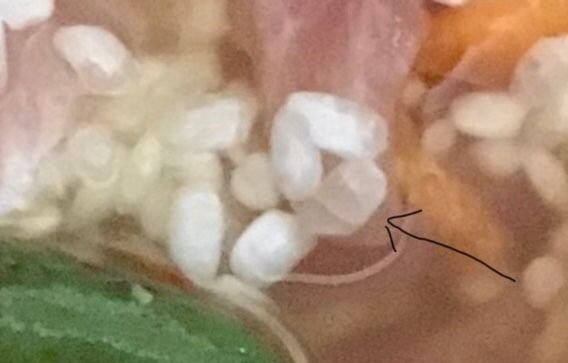
The night before rinse and overnight cold soak slows down the water absorbing process and avoids this - but my fridge is tiny and I’m not picky enough to require this attention to detail.
But it is worth knowing and you may value the improved quality.
As the rice drains you will notice how it changes colour/opacity as the water is absorbed. The goal is for it to change from translucent to a solid white - ideally without too many lines and “cracks” as it makes this transition, but no need to get too precious.
Tip - don’t wash rice in an electronic cooker pan as the bran residues (as well as friction from the rice) will erode the non-stick coating and give it a shorter life span. This is also why I make things like takikomi gohan and brown rice in a separate pot - our Zojirushi inner pan is like new after 8 years of near daily use for this reason; white rice only and never used for rinsing.
3. Soaking
For every measure of rice used, you will need 1.15 or 1.1 of water (the takikomi gohan had 1.0 because the vegetables introduced moisture).
Soak the rice in the water/liquid you are to cook it in. Let it sit for at least 20 minutes. Rice will be solid white when it’s ready. For convenience, soak rice in the cooking pot.
Unless you have a super-duper rice cooker which will allow you to cut corners, I can’t stress enough how important it is to let rice drain and soak before cooking. The
minimum you need is 10 minutes draining and 15 minute soaking, but I’d suggest 20 + 20 minutes.
4. Cooking
You’ll need a pot with a lid. If the lid has a hole in it, or a gap for a pourer, stuff them with something heat resistant. The point is to keep the steam inside.
First step is to crank up the heat - let it rip! You want the water inside the core of the rice to get to temperature as the outside does. Use your ears and eyes and listen and look for signs that the water has reached a boil. Once it does, turn down the heat to a gentle low (my advice is to change from a larger cooking burner to a smaller one) and let it simmer gently for 10-11 minutes. Do NOT take off the lid.
5. Resting.
After 10-11 minutes, take the pan off the heat and let it sit for a further ten minutes. You can (do it quickly) put a tea towel over the rice at this point to stop water from the lid dripping back on the cooked rice, but it’s not necessary. Just let it “rest” in the residual steam for another ten minutes. This is a vital part of the cooking process, don’t skip it!
And that’s it - done!
Trouble shooting
Rice browned/stuck to bottom? Lower the simmering heat a little next time. If rice making is to become a habit you might want to put a small sticker/bit of masking tape by your cooker dial to remind you of the optimum point (or where it was when it didn’t work).
Too wet/dry? Take very careful note of how much water you added and adjust for next time. Different bags of rice (even of the same kind) can have different requirements, depends on variety and if it is older or newer.
Making sushi rice? If adding seasoned vinegar, consider using just a little less water for cooking than usual as the rice needs to absorb the vinegar as well.
I know this is long, but it is a simple process. I find that understanding why things are done makes it easier to remember to do them.