13 October
Osh
After a week of waking up and not knowing what we'd do or where we'd sleep at the end of the day, it only seemed logical to continue that trend into our first day in Osh. What we had wanted more than anything else was a decent cup of coffee, so we made our way to the nearest coffee shop that had decent reviews.
The coffee shop exceeded our highest expectations (especially having WiFi) and we ended up spending half our day there. Turns out, the coffee shop was also where the expatriate crowd frequented on weekends and we ran into a filmmaker and German language teacher who gave us the rundown on what to do in Osh.
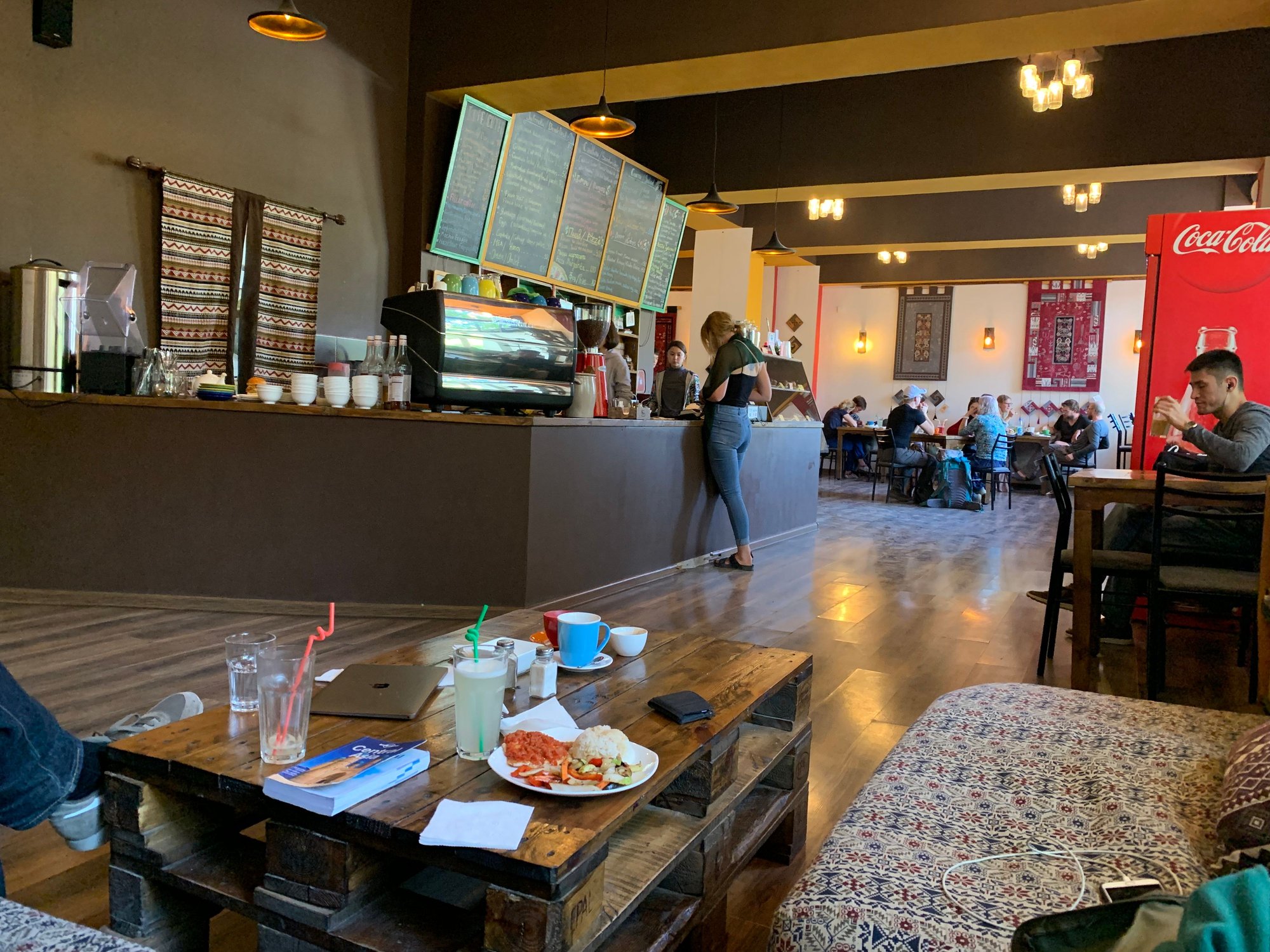
Several coffees and plates of food later, we realized that we probably overstayed our welcome and headed to the bazaar that coincidentally was busiest on Sundays.
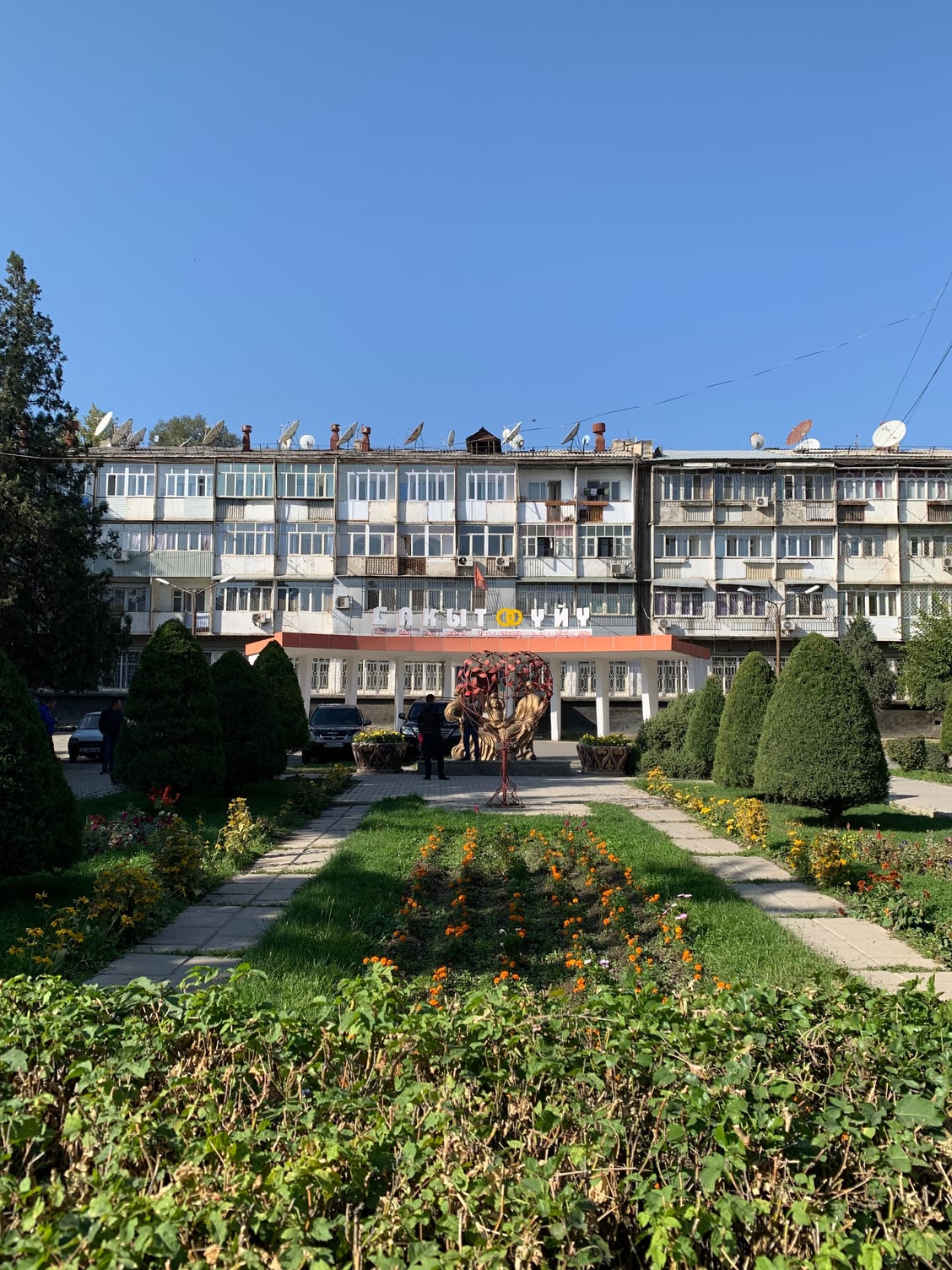
The government wedding registry building.
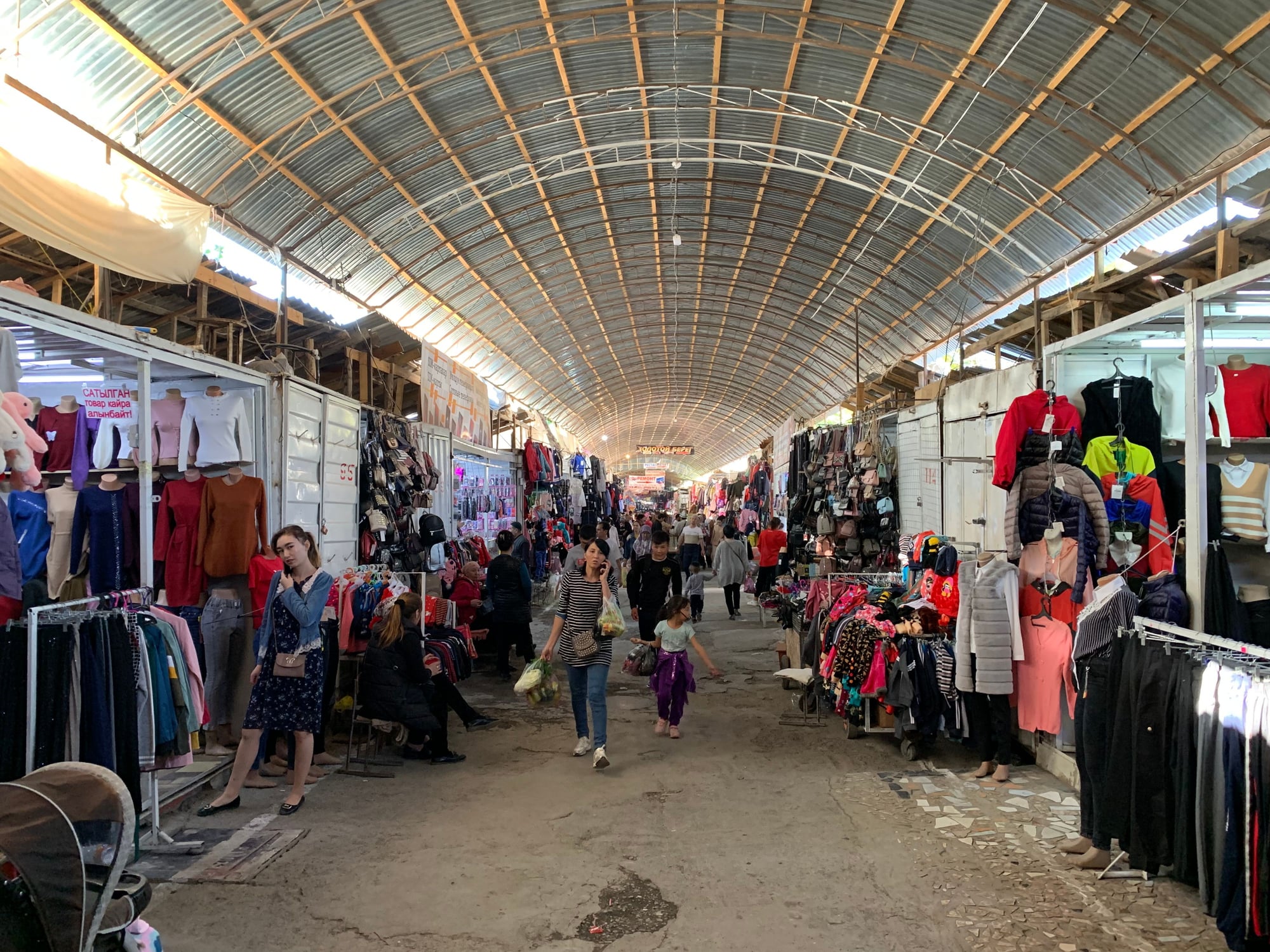
The bazaar was essentially one long covered corridor of shops and stalls in no particular order, with several more rows of shops branching off the main covered walkway. Walking from one end to the other took a good 20 minutes.
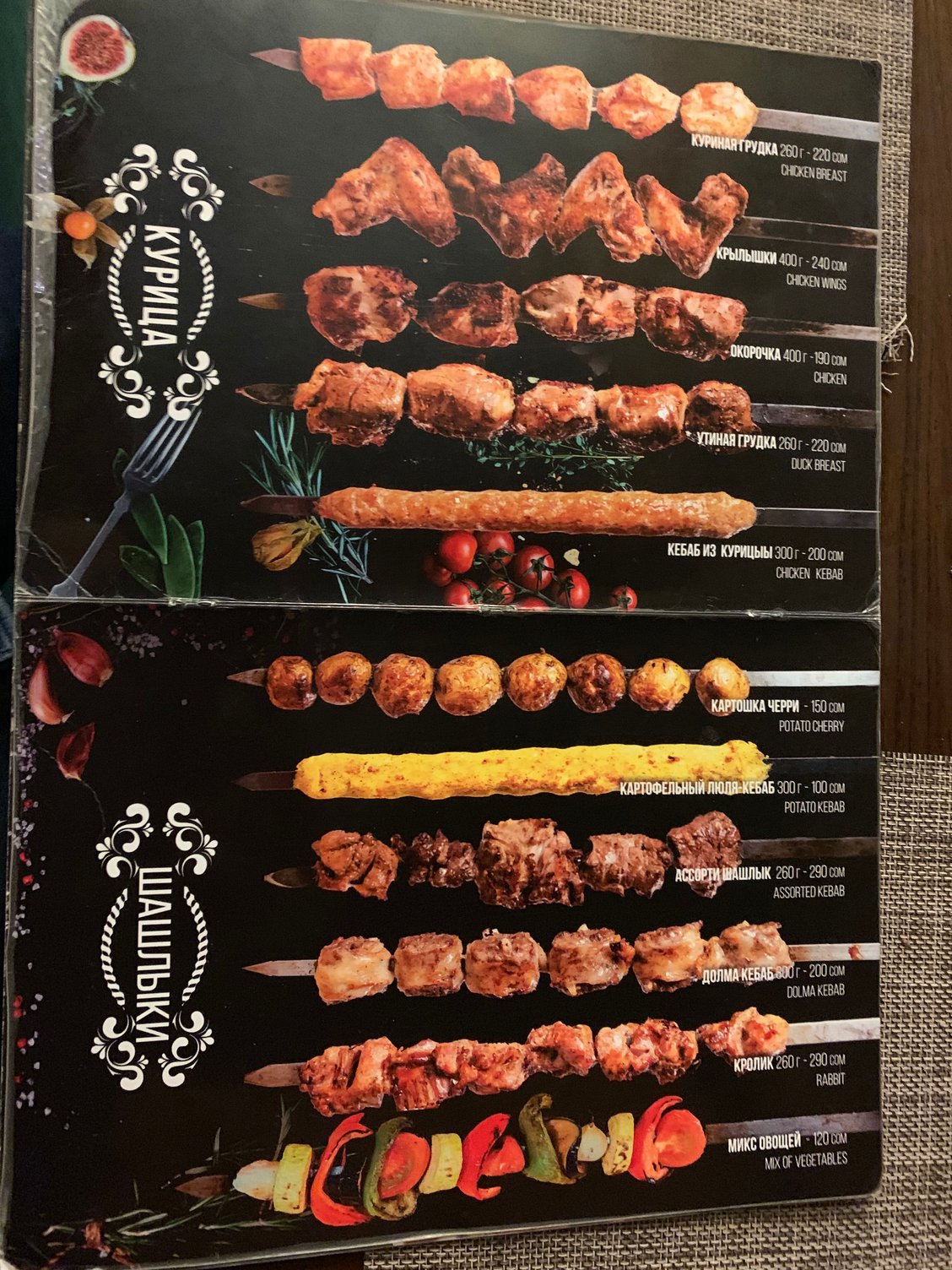
For dinner, we settled on shashlik at a restaurant across our hostel. I tried lamb and rabbit, both of which were excellent.
By the evening, I was debating whether to head to Bishkek the next day or stay in Osh for another day. Thanks to the expats we met at the coffee shop, I decided to stay another day in Osh to explore the city.
14 October
Osh
Our second day in Osh started with a hike up to one of Kyrgyzstan's three UNESCO World Heritage Sites and the only site located entirely in Kyrgyzstan (the other two are border mountain ranges). Sulaiman-Too is a small mountain in the center of Osh that was once the center of the ancient Silk Road and the site of Muslim pilgrimage. Today, Sulaiman-Too serves as an excellent vantage point to Osh and the Fergana Valley.
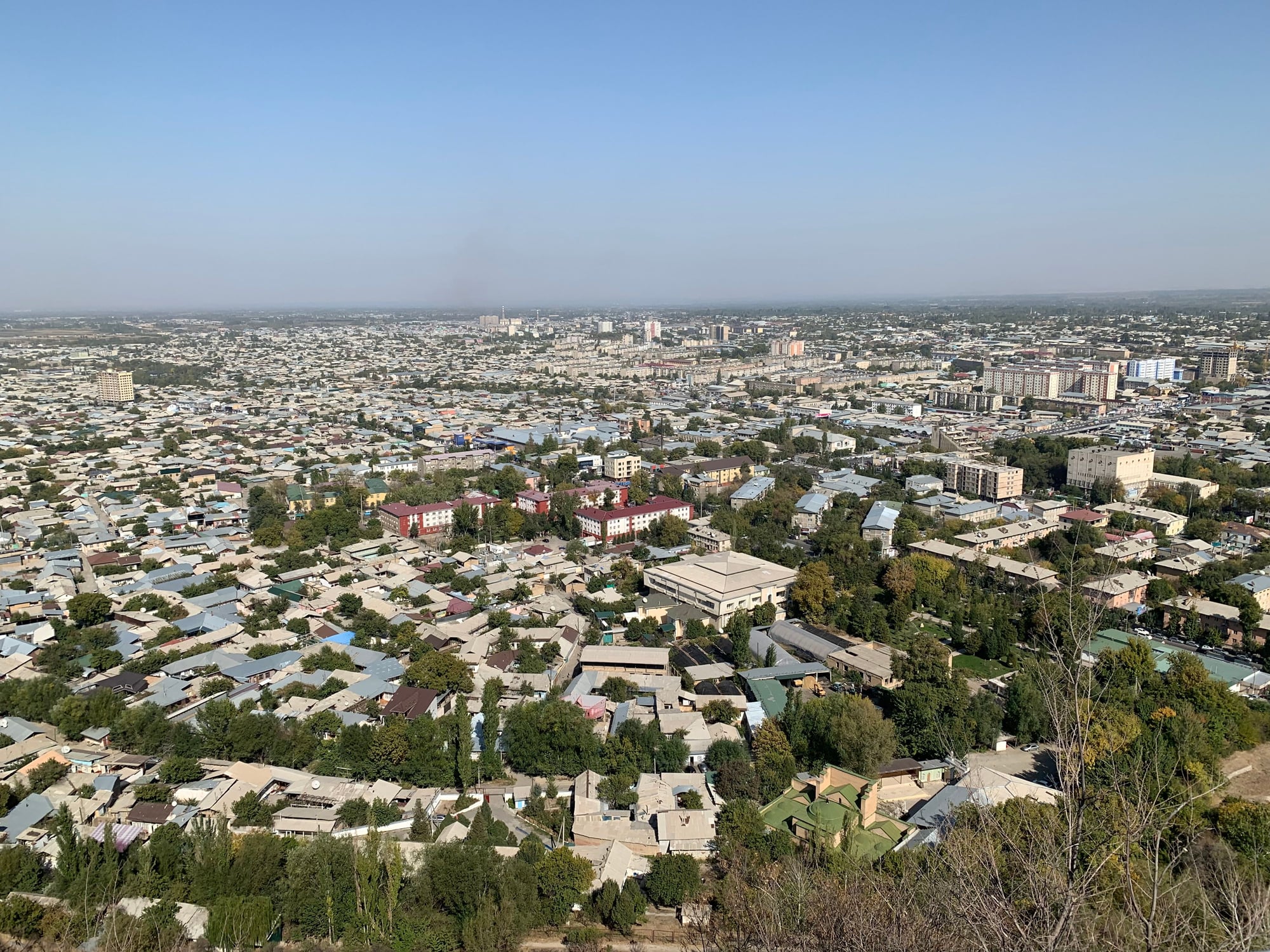
The hike up to the top of the mountain took about 30 minutes.
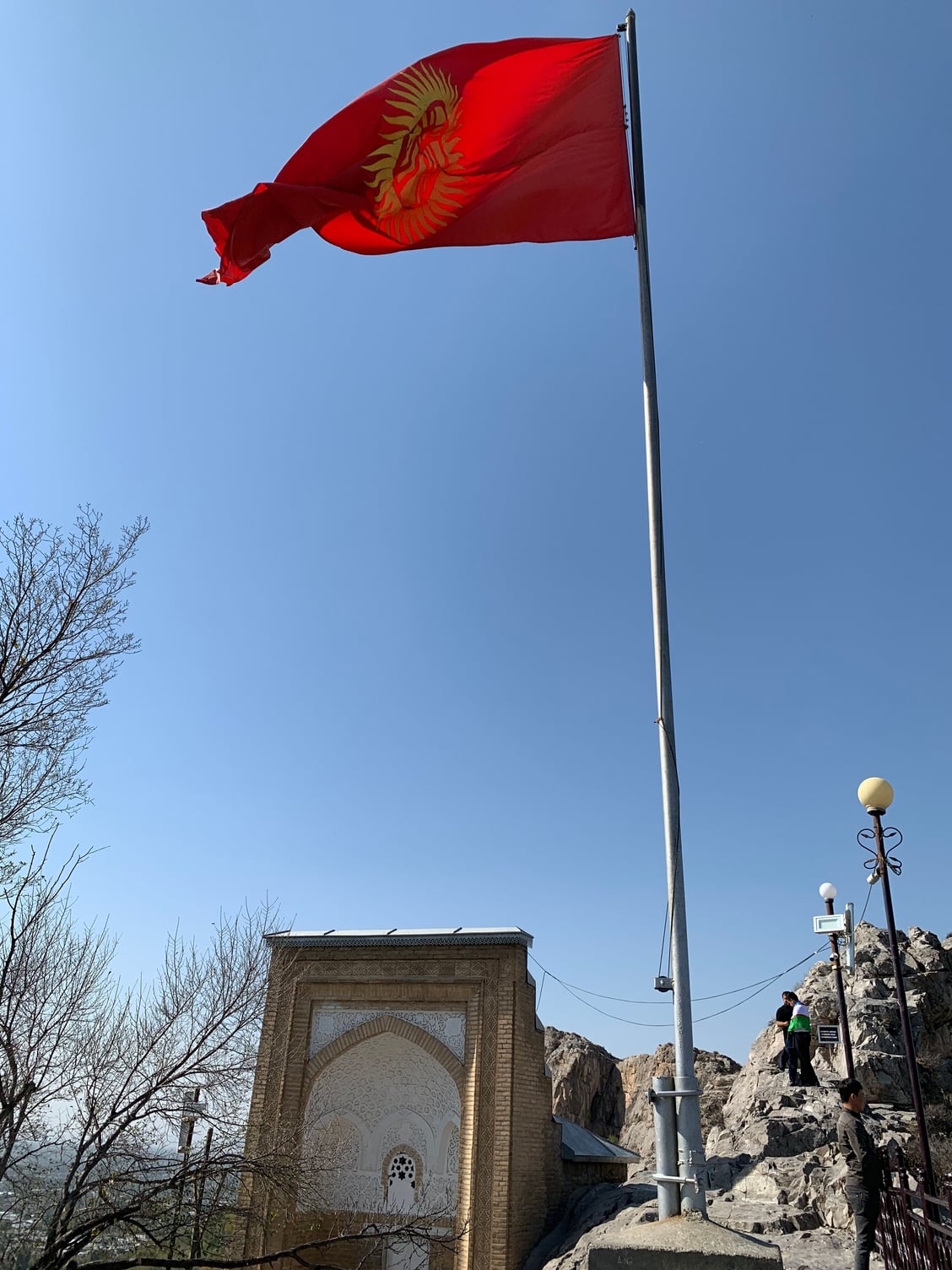
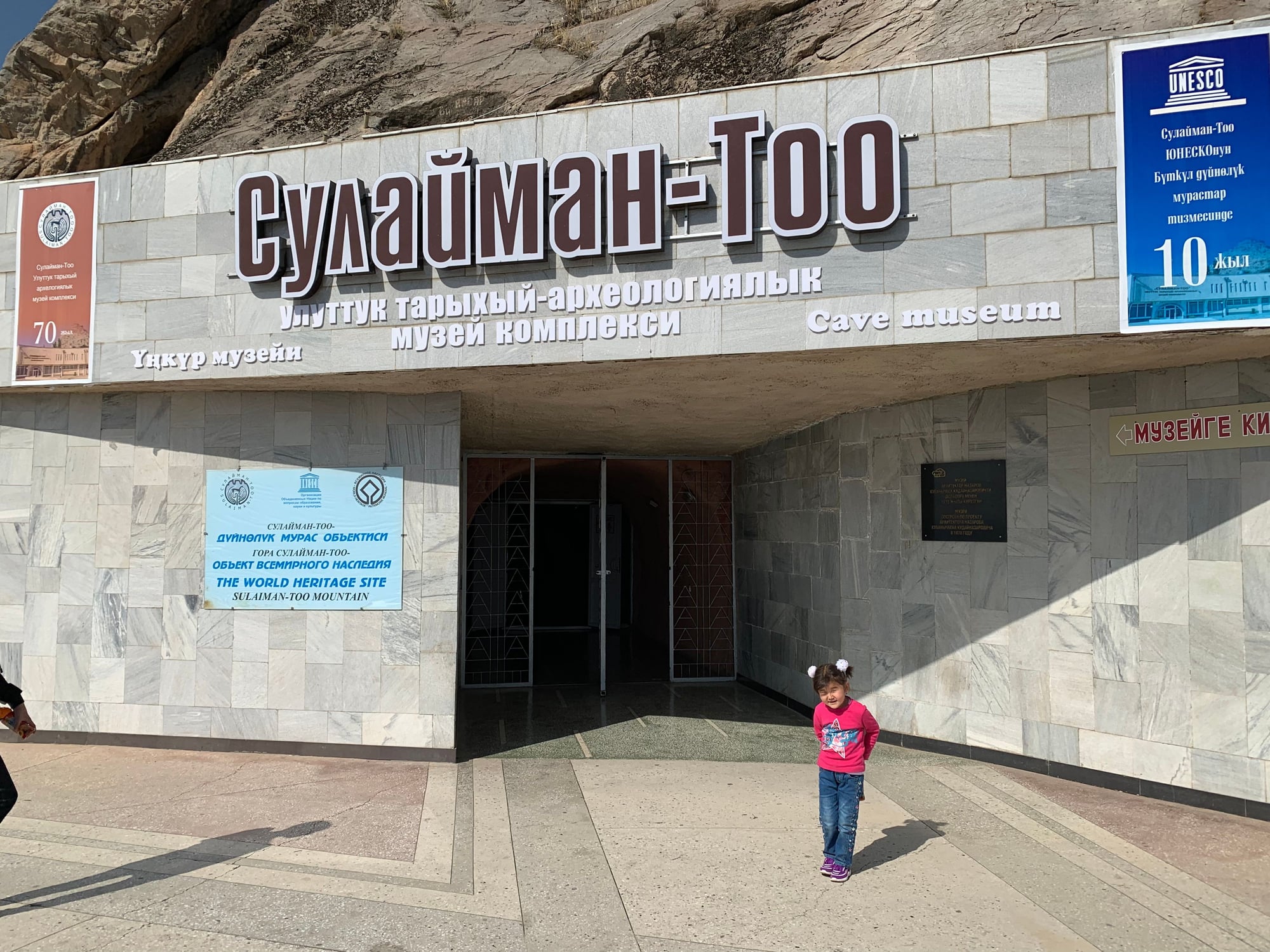
Followed by a trail that ran the length of the mountain to a cave museum.

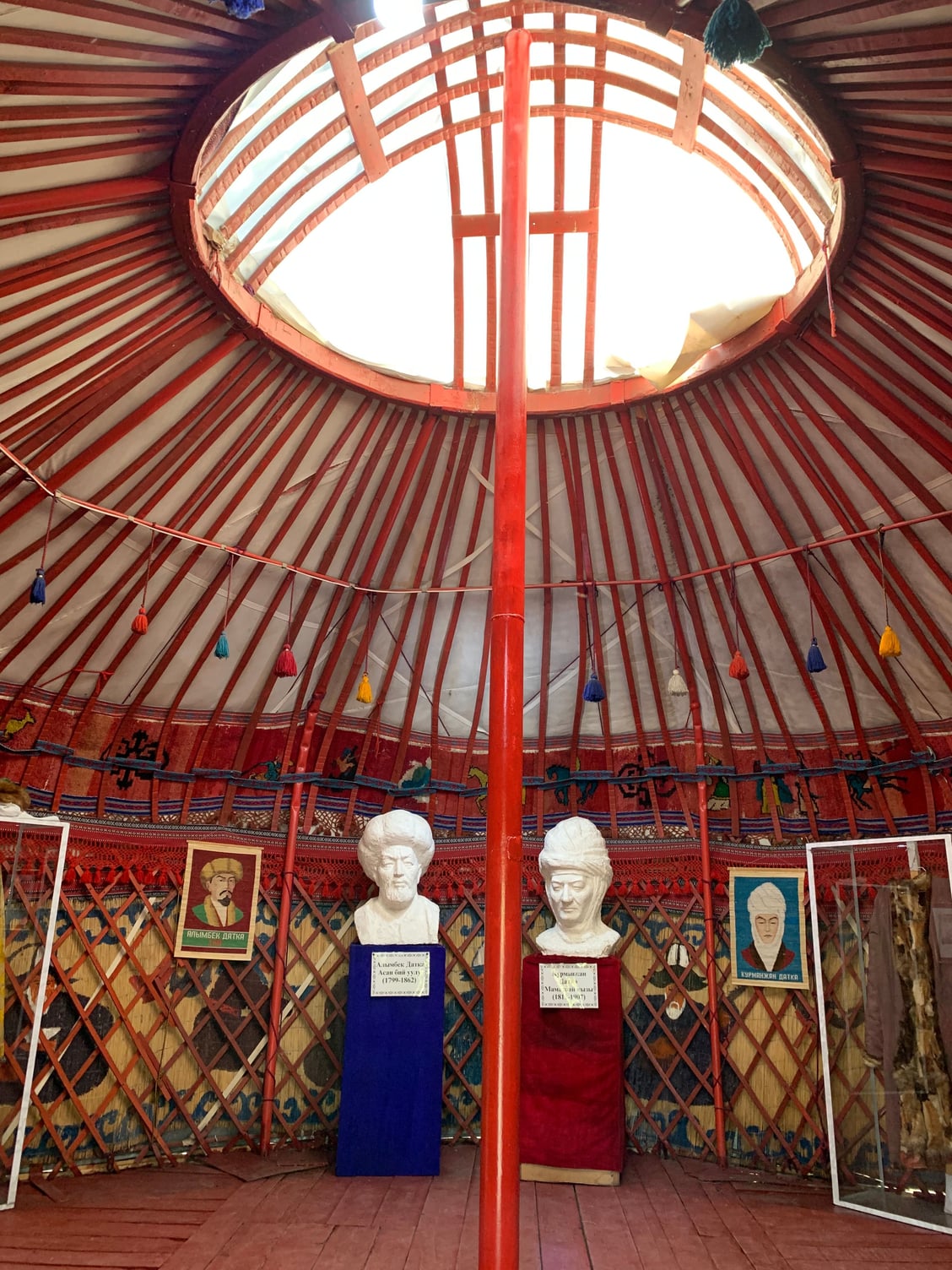
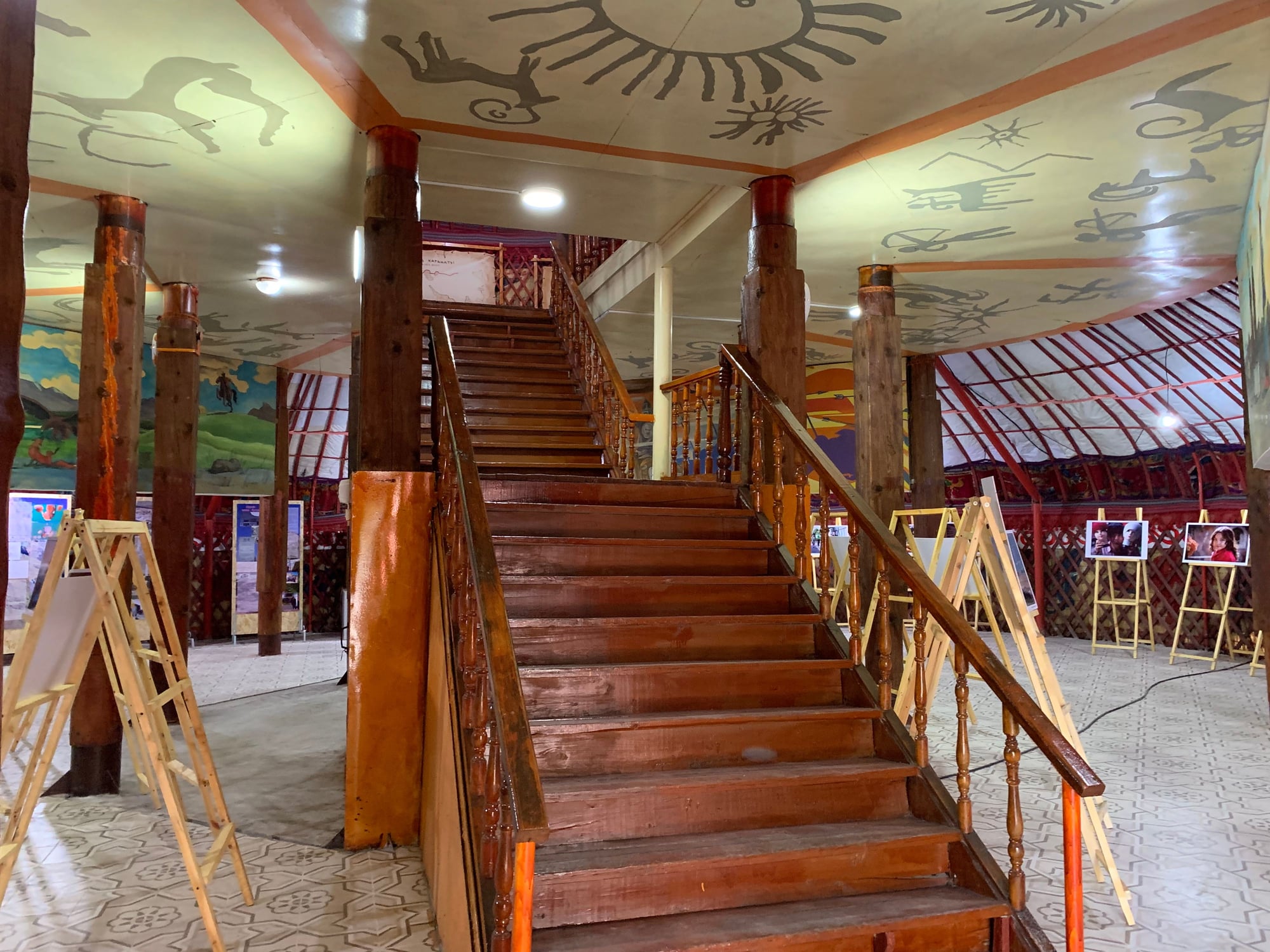
After the hike, we made our way to a three-story yurt in the center of the city (billed as the largest and only three-story yurt in the world).
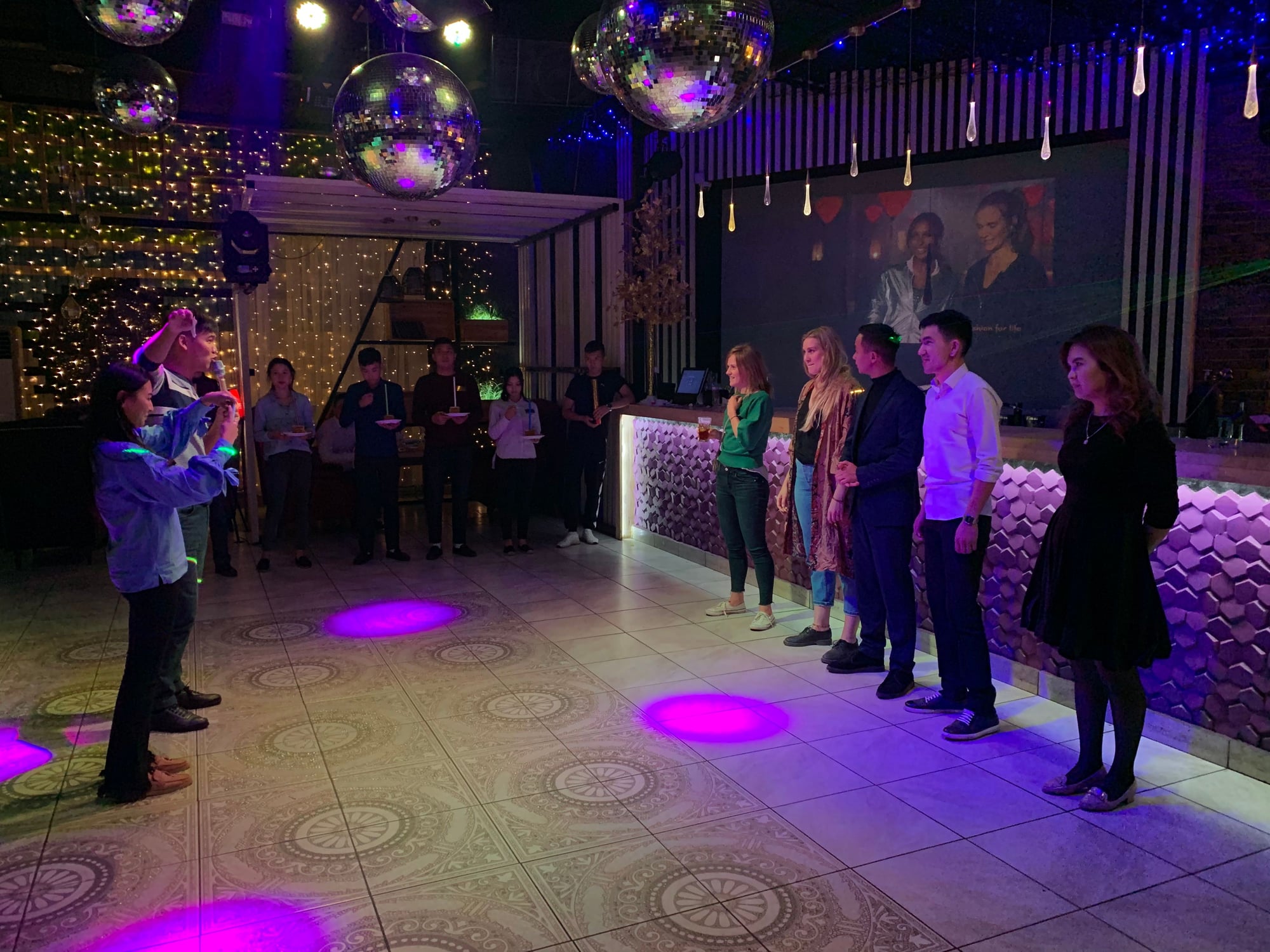
In the evening, we met up with the expats we had met the day before. By pure coincidence, there were two birthdays among our group of newfound friends. We celebrated together at a club called Skybar across the street from the hostel, where many of Osh's upper class residents would gather to drink and party well into the night. Our Monday night was no different than any other day of the week. No fewer than a dozen young adults and university students came over the keep us company. Many of them were conscious of the fact that their parents had no idea that they were drinking, smoking, and partying on weeknights. But after many rounds of drinks, shisha, and dancing, many of them expressed a desire to leave Osh for the capital or Russia.
 15 October
Osh-Bishkek
15 October
Osh-Bishkek
Kyrgyzstan is 93% mountainous so getting around the country can be an incredibly a time-consuming affair. From Osh to the capital, Bishkek, a shared taxi ride takes 10-12 hours for about 1,200 som ($17) per person. Flying takes 40 minutes at an entirely reasonable price of between $30 to $60. Although the road between Osh and Bishkek was in excellent condition, there was little chance I was going to get in another vehicle after the Pamir Highway.
Two days prior, I stopped by an aviakacca, a travel agent that had access to lower fares than what I could find online for Kyrgyzstan's three domestic carriers. After confirming that the online price vs. agent price was the same, I booked Air Manas given that it was the cheapest option that left in the morning.
Kyrgyzstan has three domestic carriers: Air Manas, Tez Jet, and Avia Traffic Company. All other airlines, including the former national carrier, Air Kyrgyzstan, are defunct. Air Manas has a single, 21 year old 737-400 that was previously with Pegasus, its former minority owner. Tez Jez has two Avro RJ-85s between 22 and 23 years old that once flew with SN Brussels Airlines. Avia Traffic Company has four active aircraft (three 737-300s and a single A320) ranging from 23 and 28 years old. All of Kyrgyzstan's airlines are on the list of airlines banned from the EU.
Choosing between the three came down to schedule and price. As much as I would have loved to fly the Avro RJ-85, Tez Jet cost nearly twice as much as Air Manas. Avia Traffic Company, arguably the most reliable of the three, didn't have a morning flight on Tuesday. Unfortunately, Air Manas had a mechanical incident in the last week that grounded their sole aircraft for several days, stranding many passengers and tourists who warned us against flying an airline that had only one aircraft. Ultimately their sole aircraft came back online three days before I wanted to depart. After confirming on FlightRadar24 that Air Manas was operating all flights as scheduled, I decided to take my chances and book Air Manas.
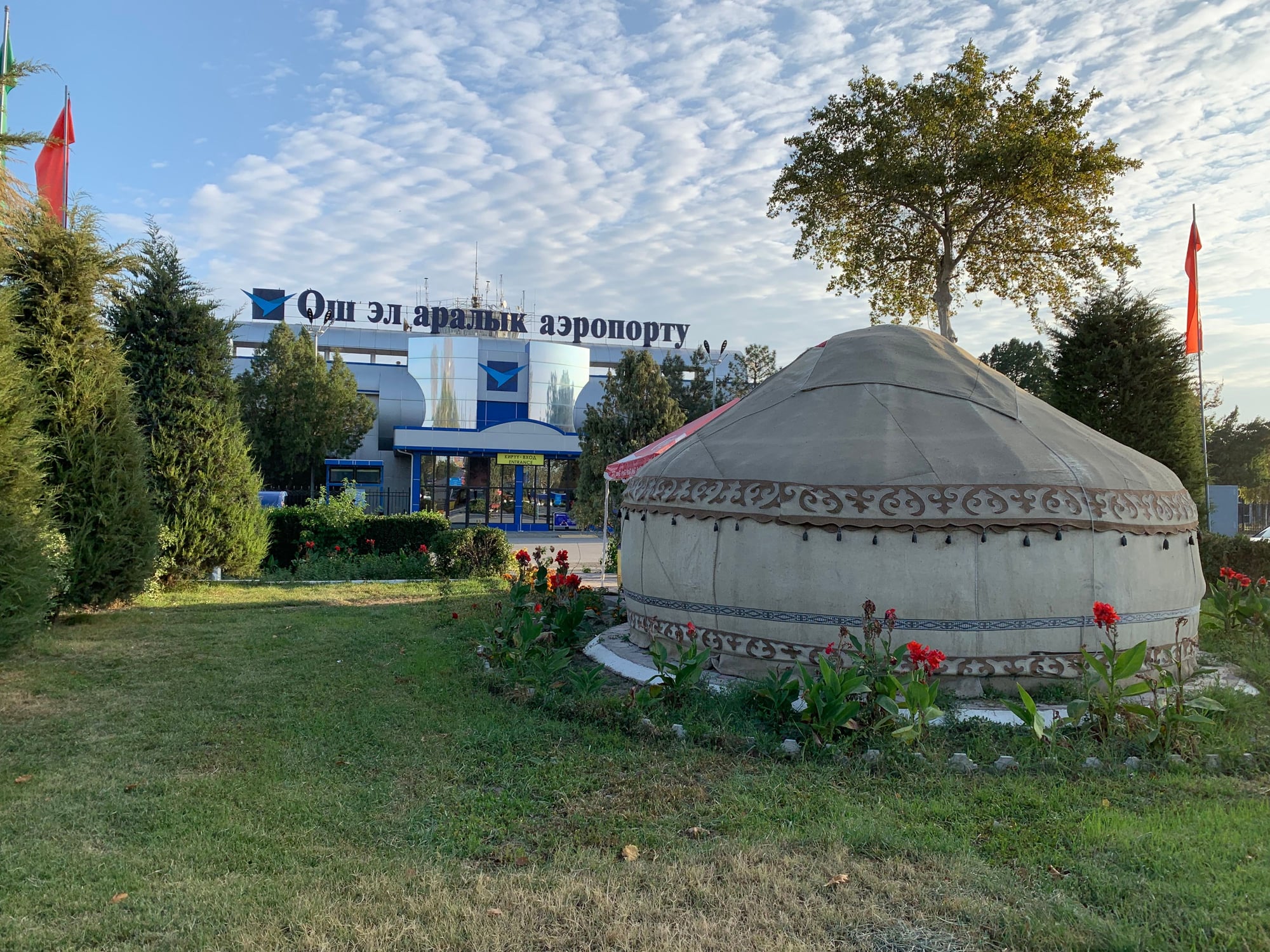
The day started with a short cab ride to the airport. I found it amusing that there was a yurt just outside the terminal building.
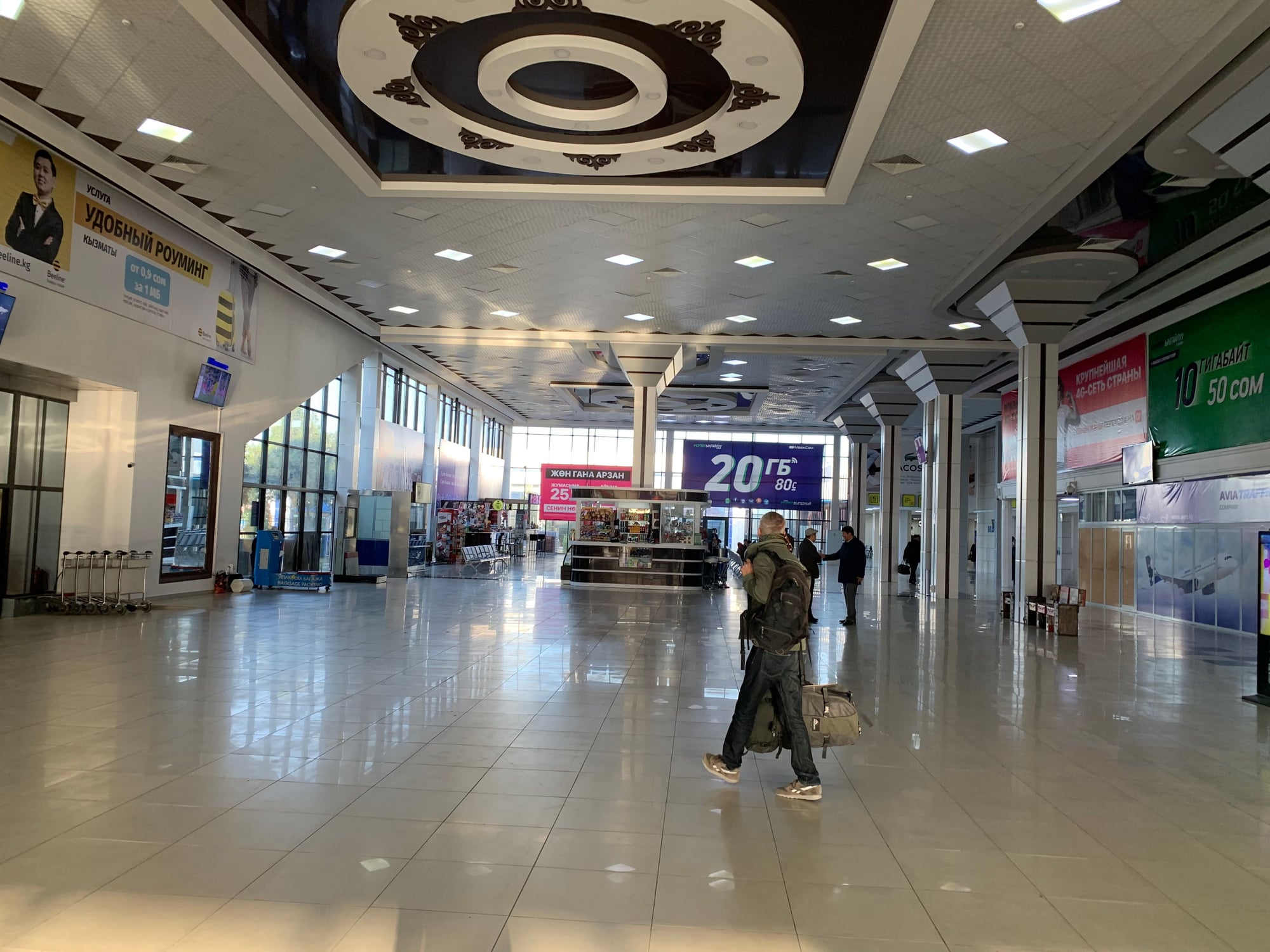
Osh has a single terminal for domestic and international flights.
 OSS-FRU
Air Manas ZM194
09:50-10:40
734
OSS-FRU
Air Manas ZM194
09:50-10:40
734
Check-in was processed quickly and I got a window seat. All fares come with 15 kg of checked baggage, though this didn't seem to be enforced.
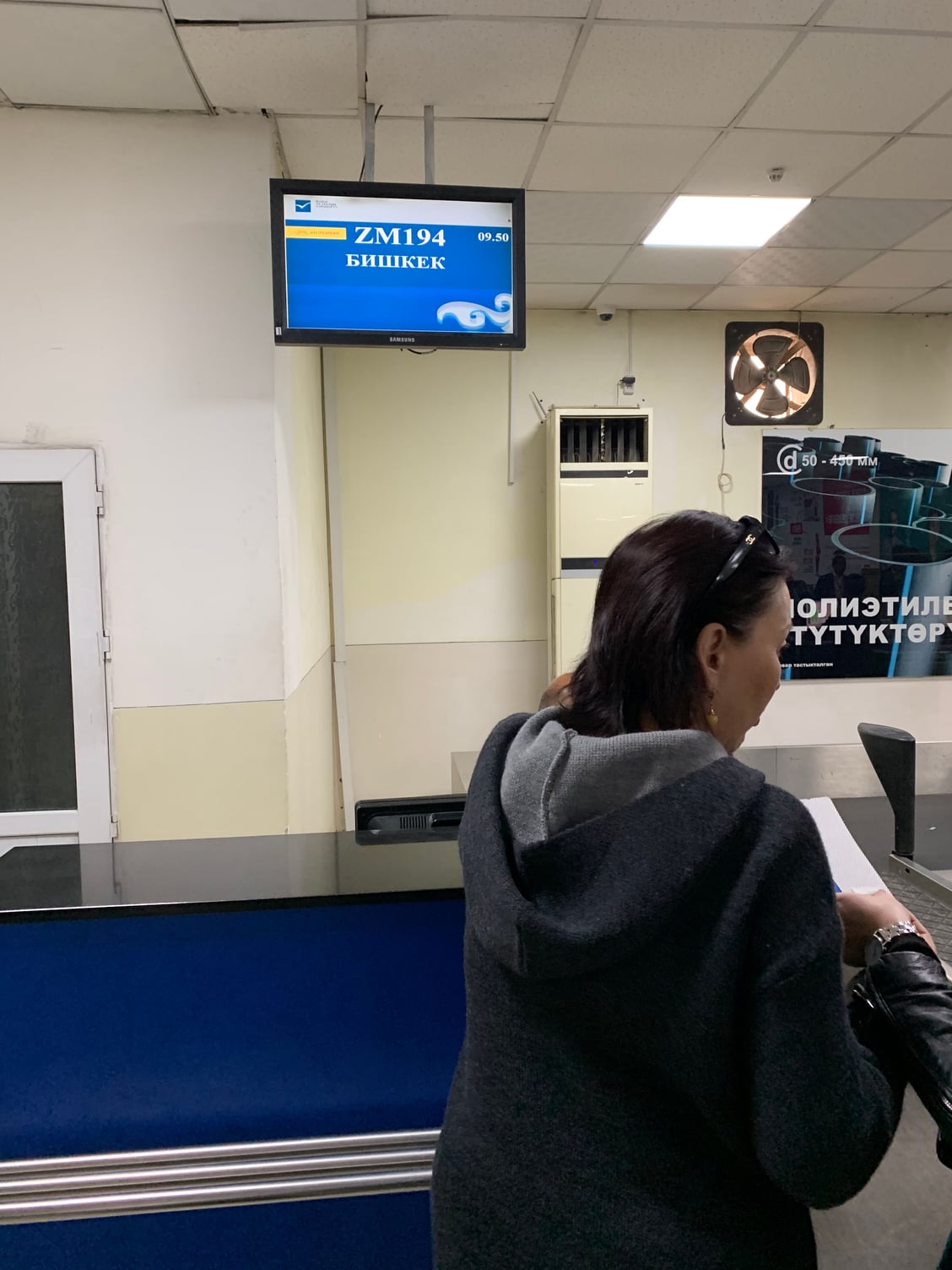
After security, there was a single, large boarding area. There was a TezJet flight departing Bishkek 20 minutes before our Air Manas flight.
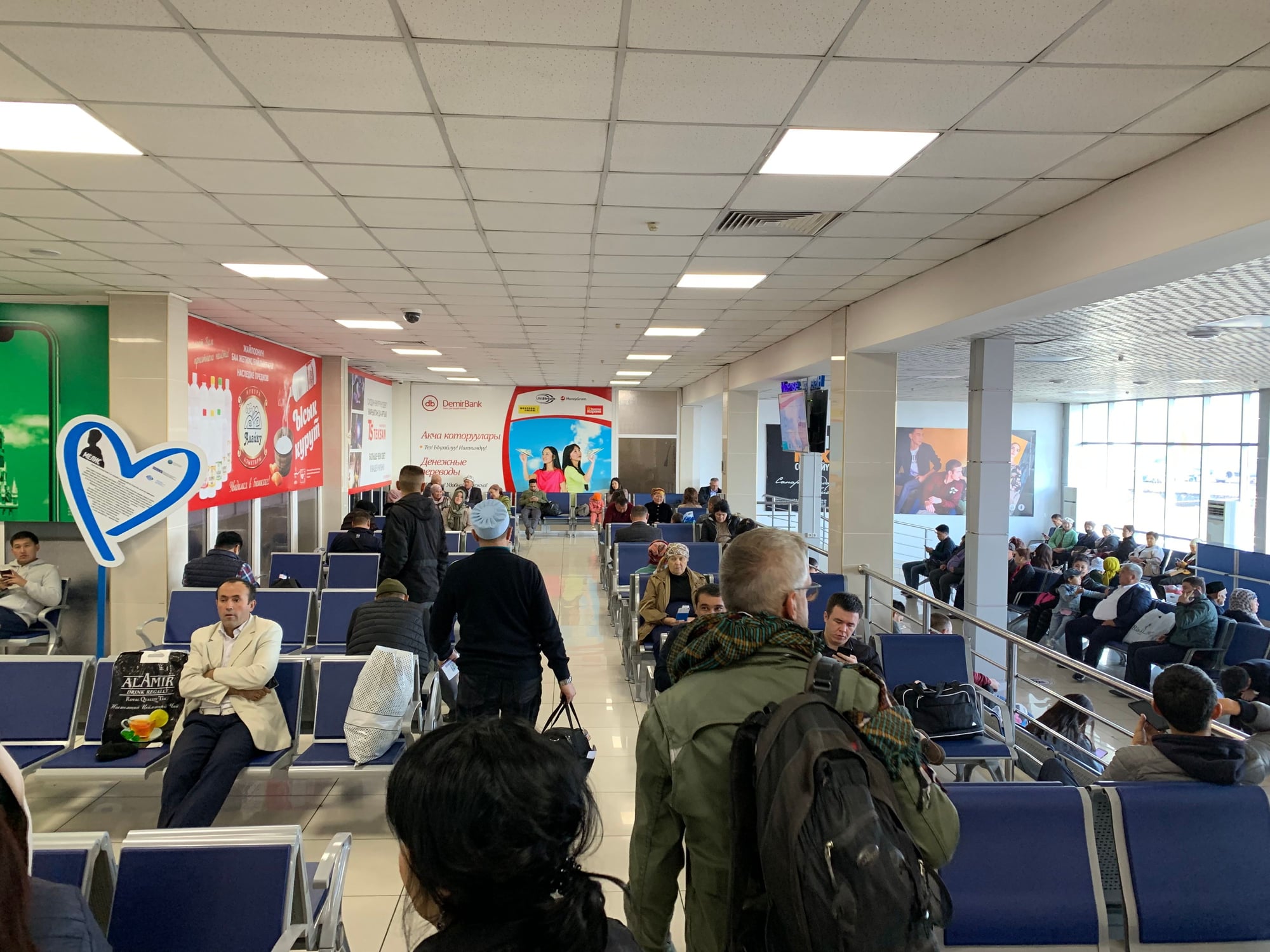
Shortly after the TezJet flight boarded, Air Manas was called and we were bussed to the aircraft.
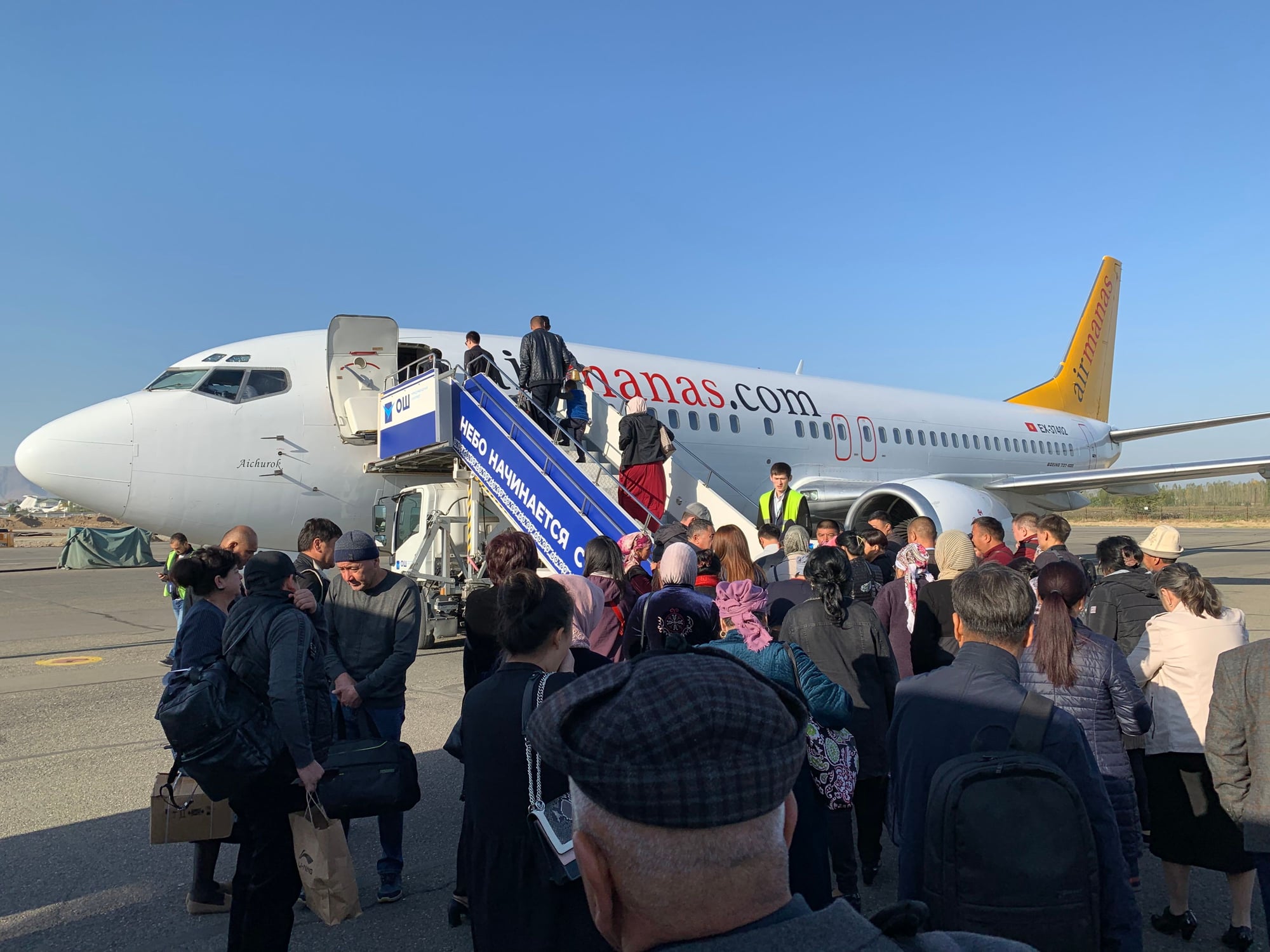
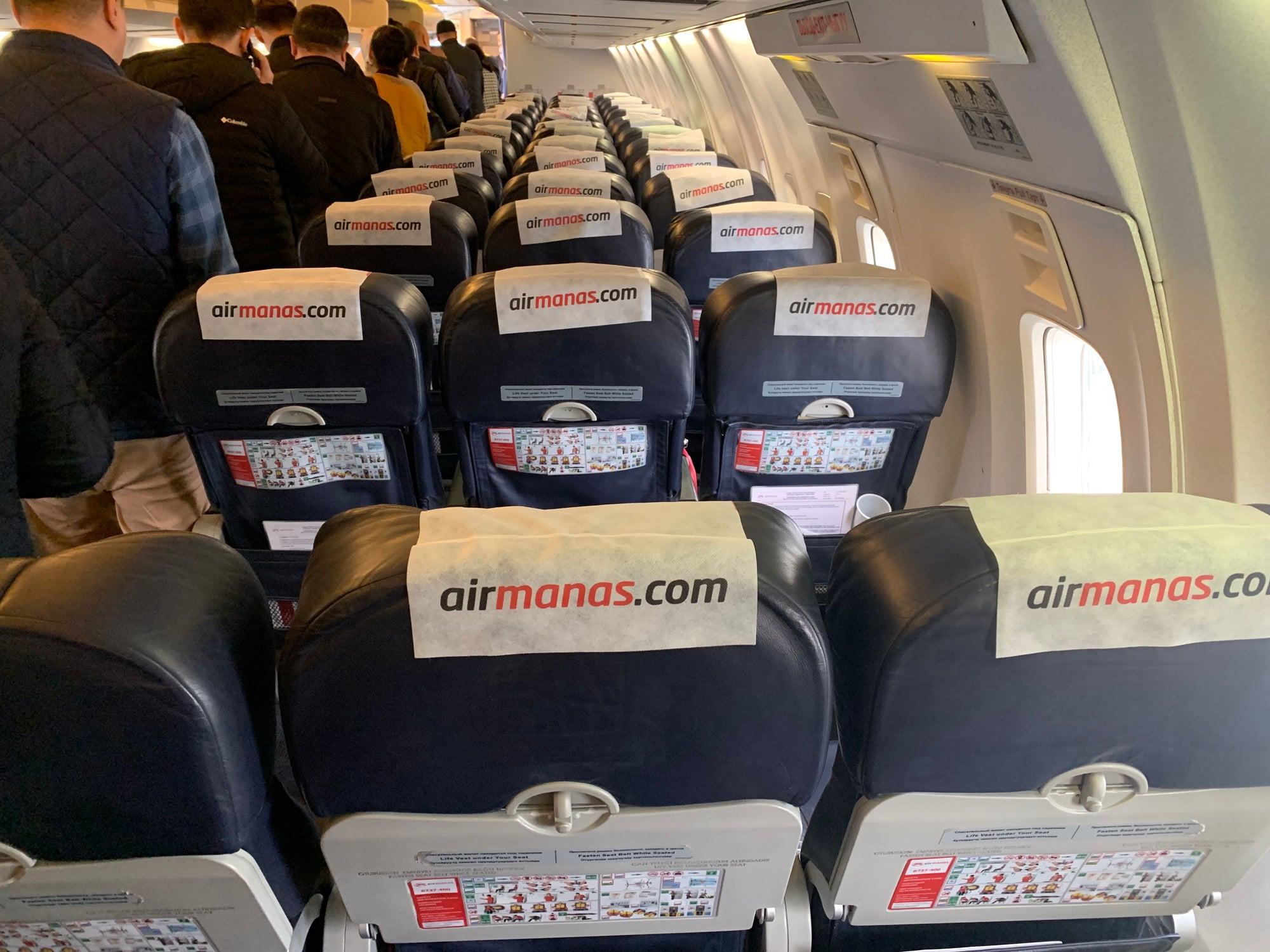
Despite a 100% load factor, boarding was completed in just 10 minutes and more than half of all overhead bins remained empty.
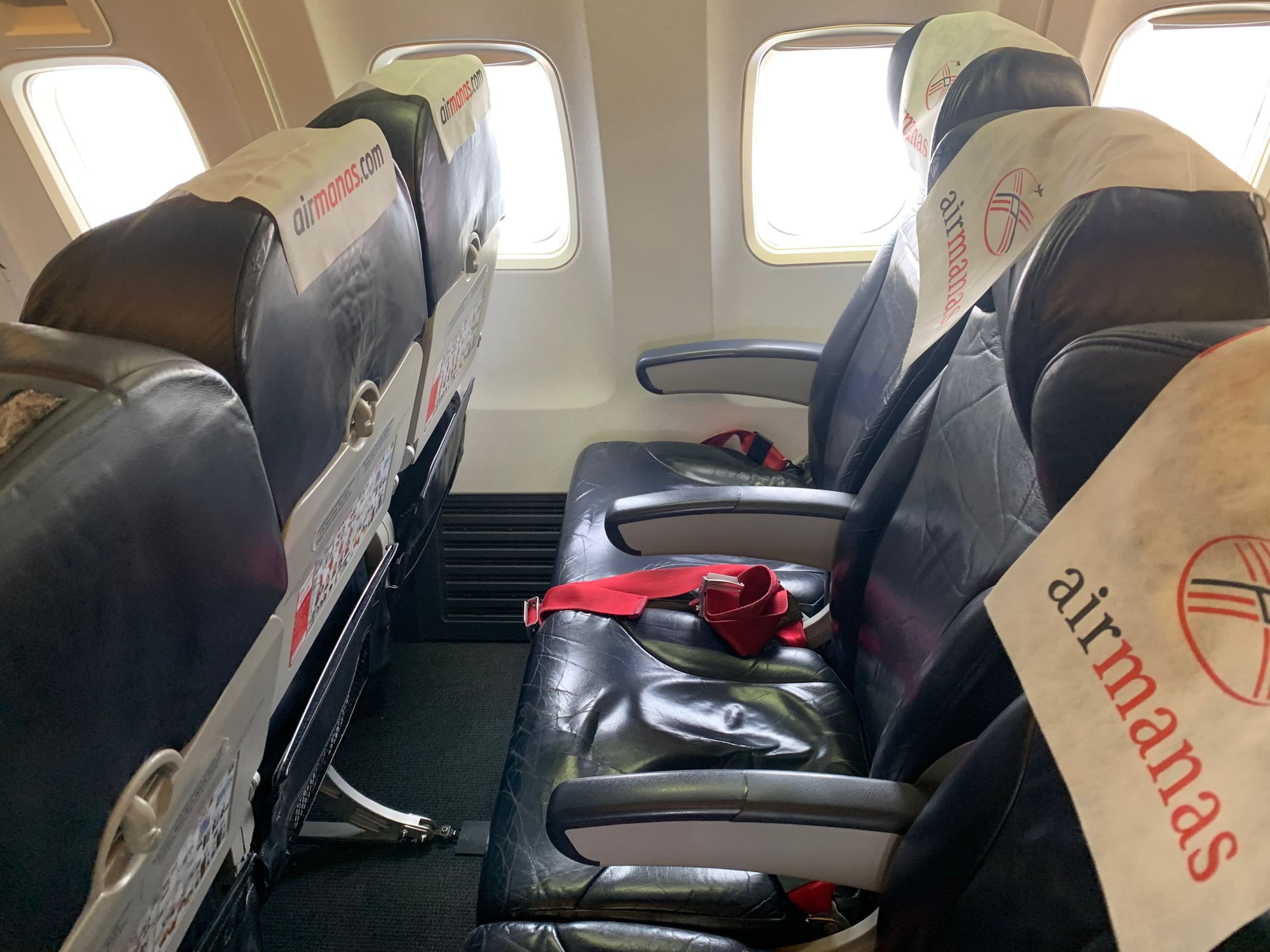
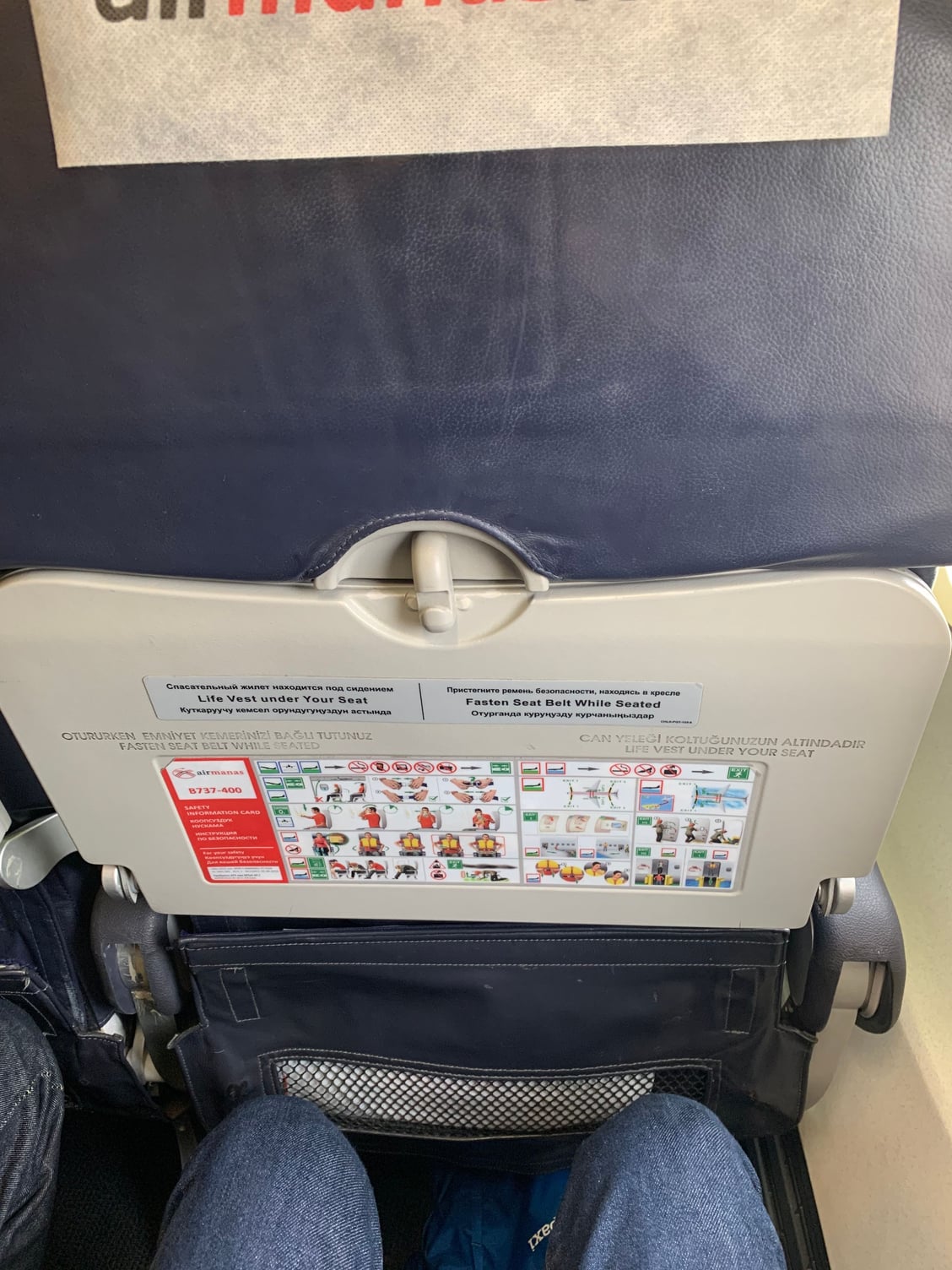
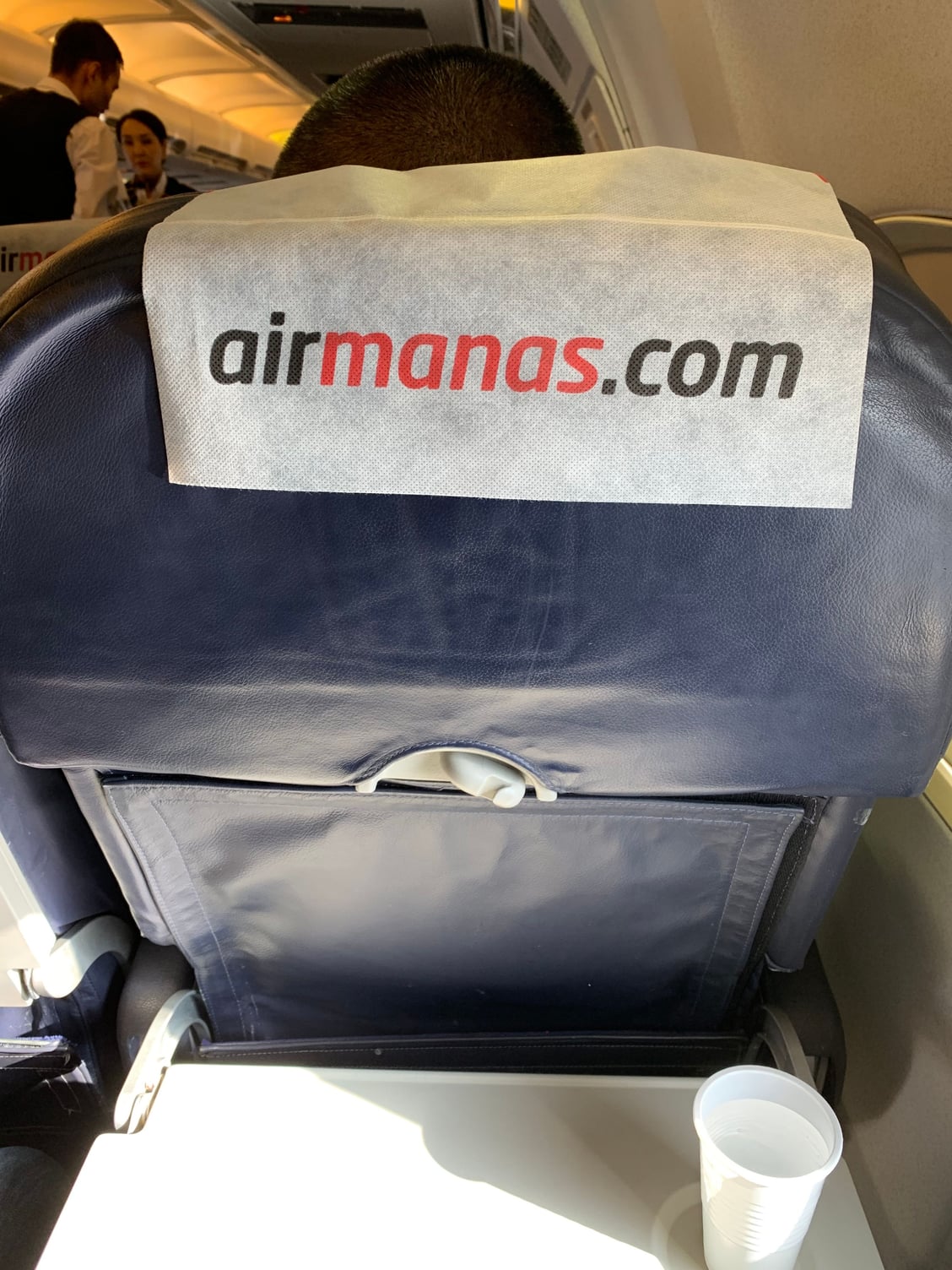
While pitch was awful (< 30''), the seat was well-cushioned and padded.
As soon as the double chime sounded, the seatbelt sign was switched off and four FAs sprung into action with a water service from the front and rear of the cabin.
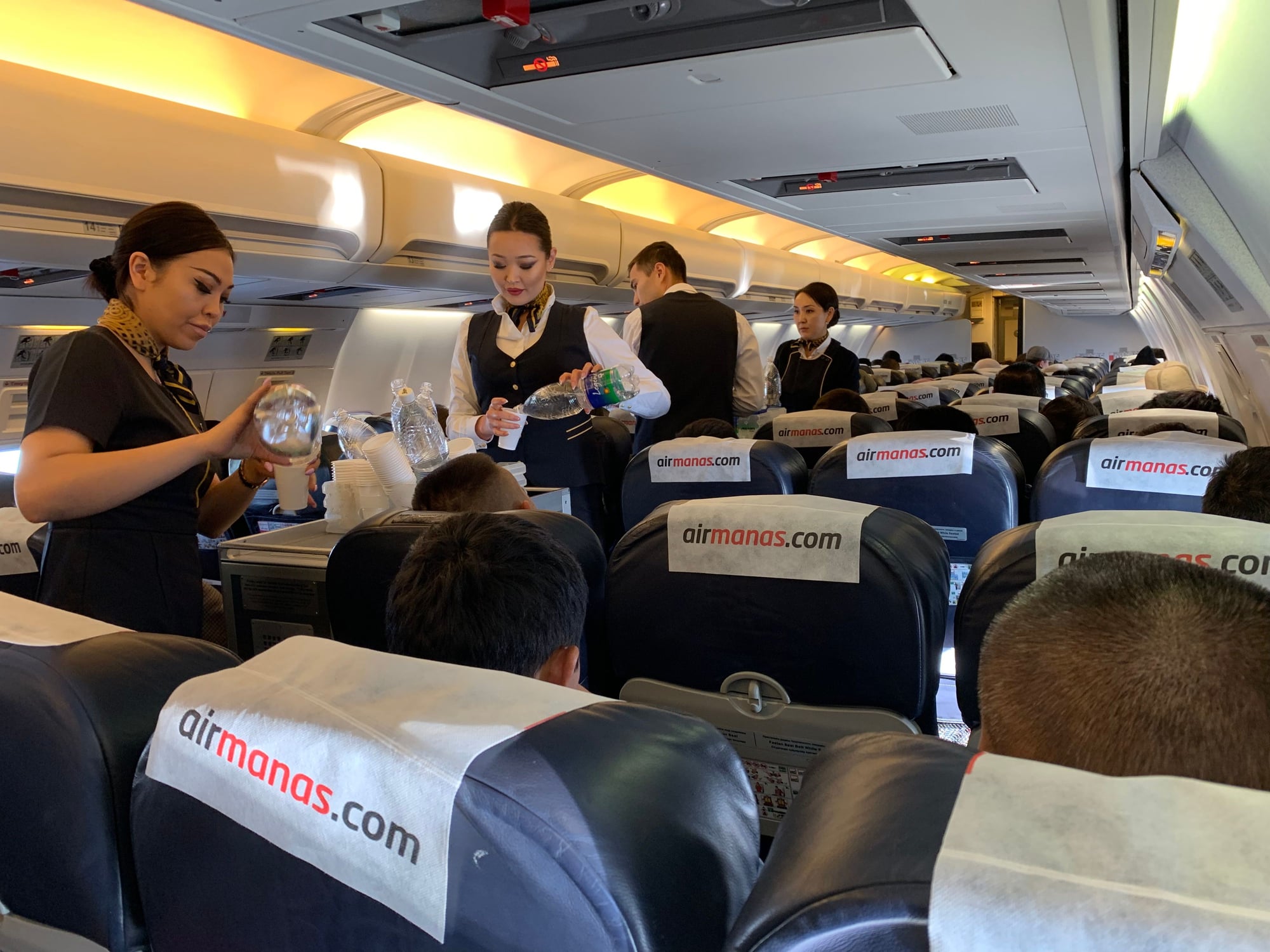
Water service on a 40-minute, 190 mile flight.
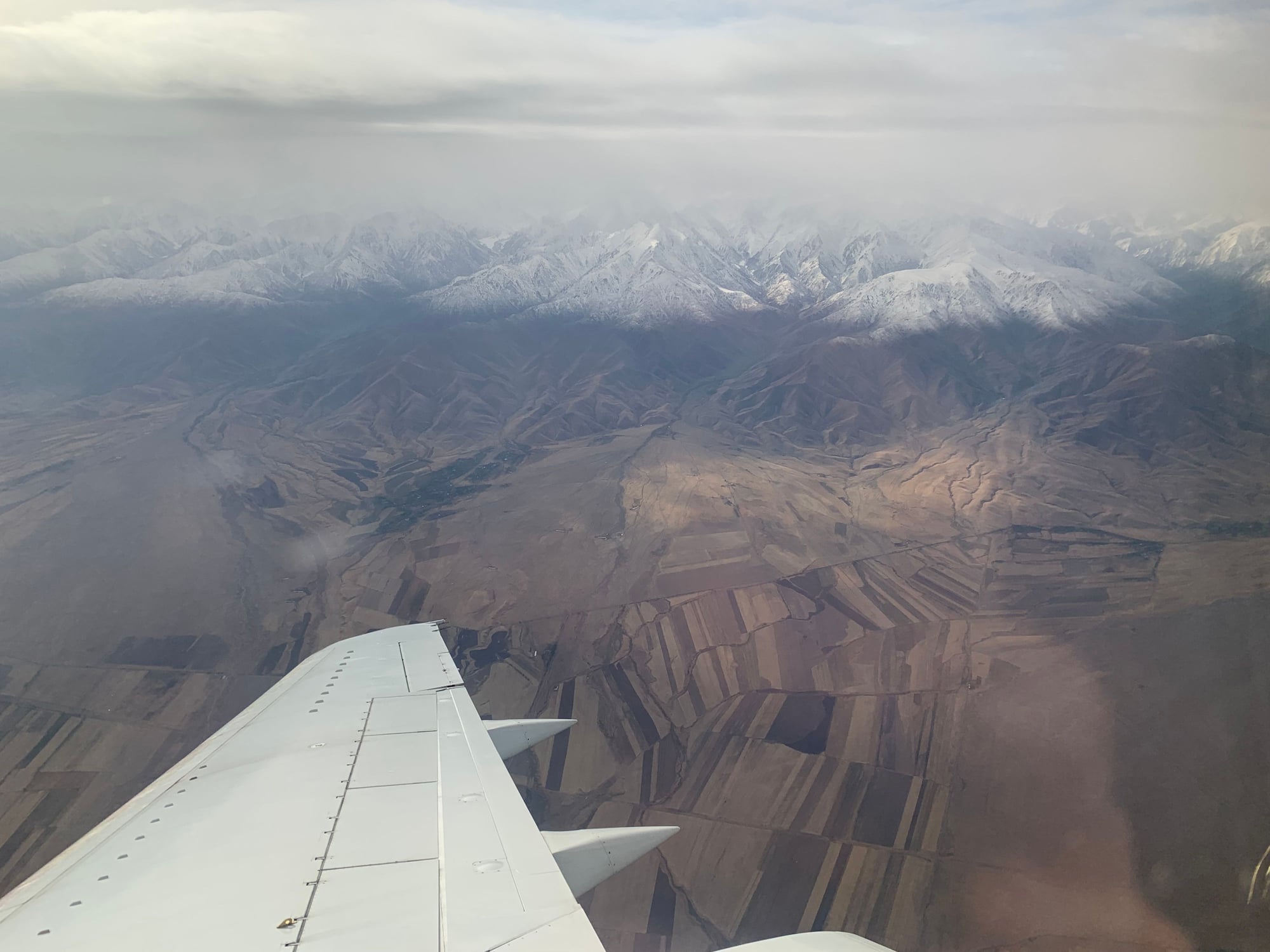
Approach to Bishkek.
Deplaning.
Domestic arrivals.
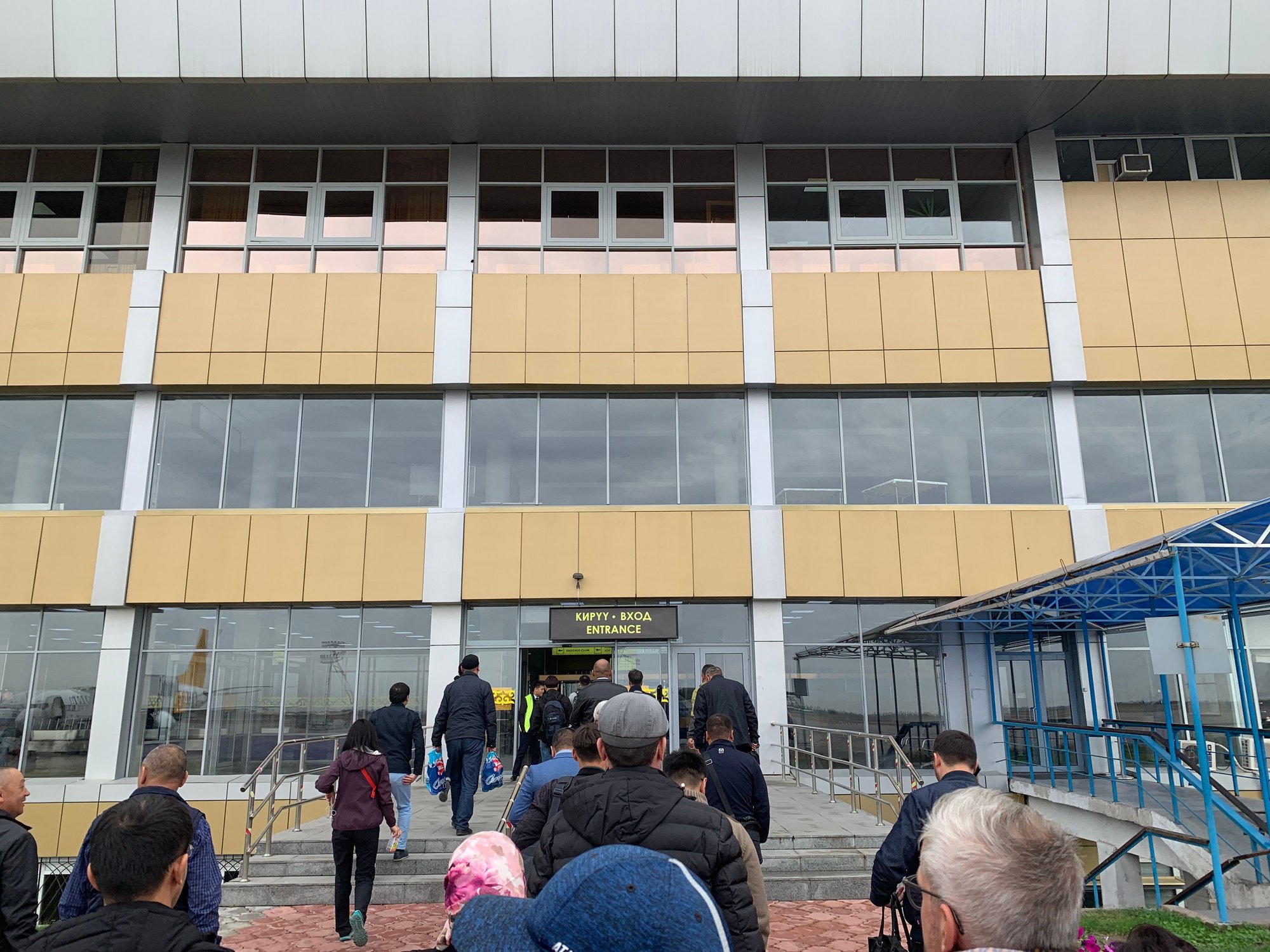
Bags appeared on the belt within 5 minutes of deplaning and I negotiated the standard taxi fare of 600 som ($8.60) to the city center. For my last night in Central Asia, I decided to splurge on the Hyatt Regency for 8,000 points a night. Standard cash rates were going for just over $260, so redeeming points was obviously the better deal.
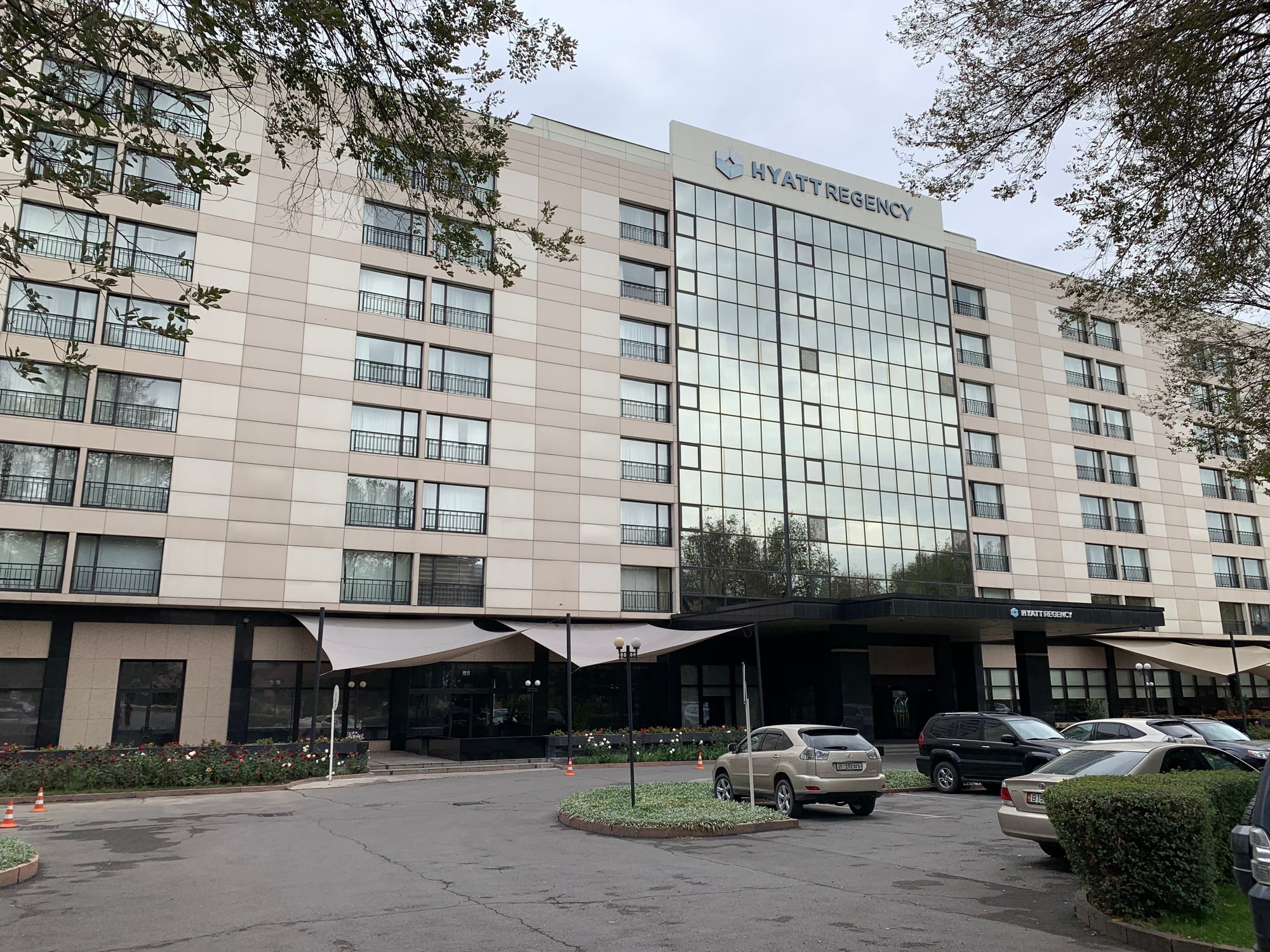
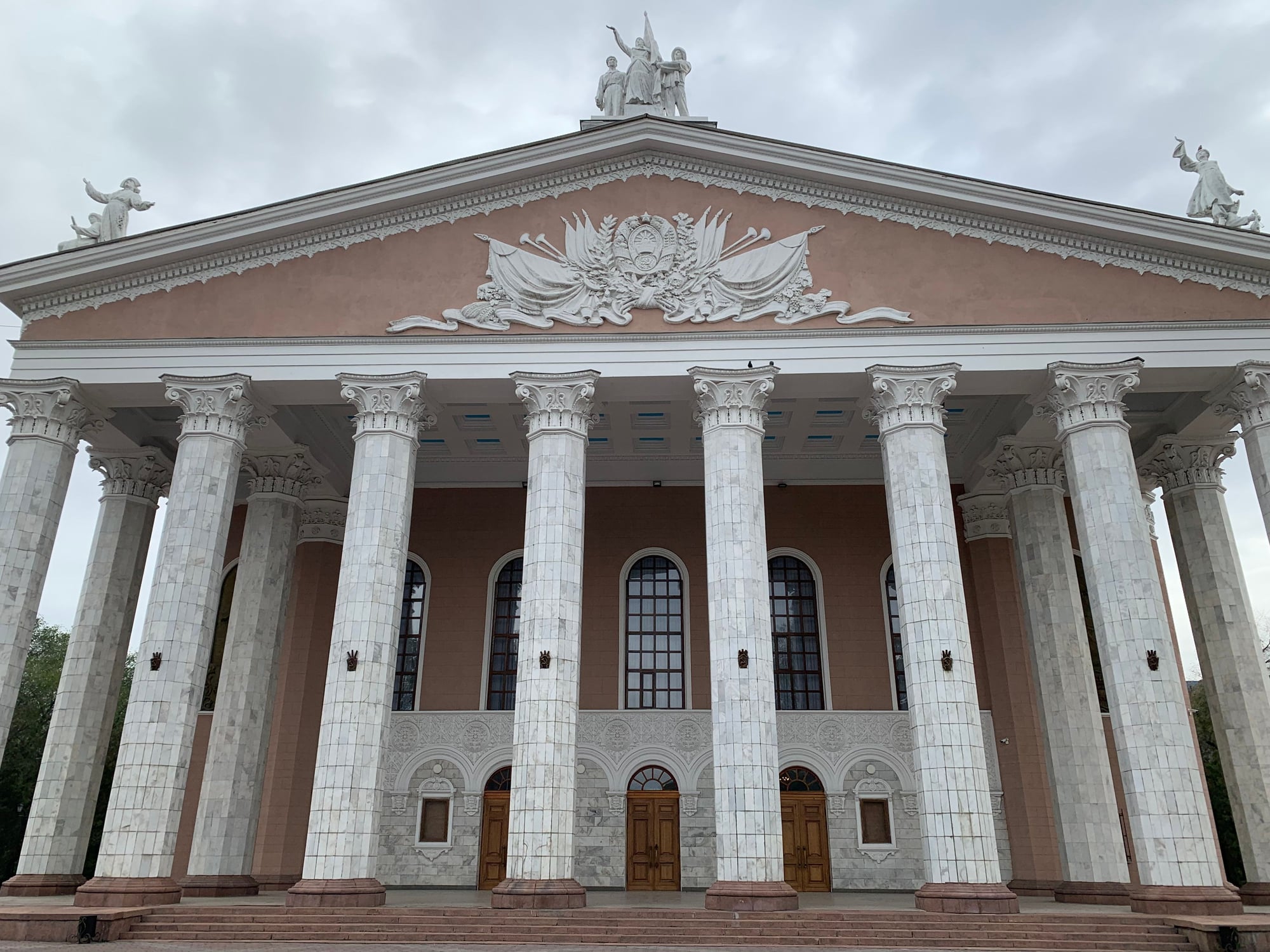
With no definitive plans, we spent the day walking around the city. Just outside the Hyatt Regency was the Opera and Ballet Theater.
Across the street were two parks that had many statues on display.
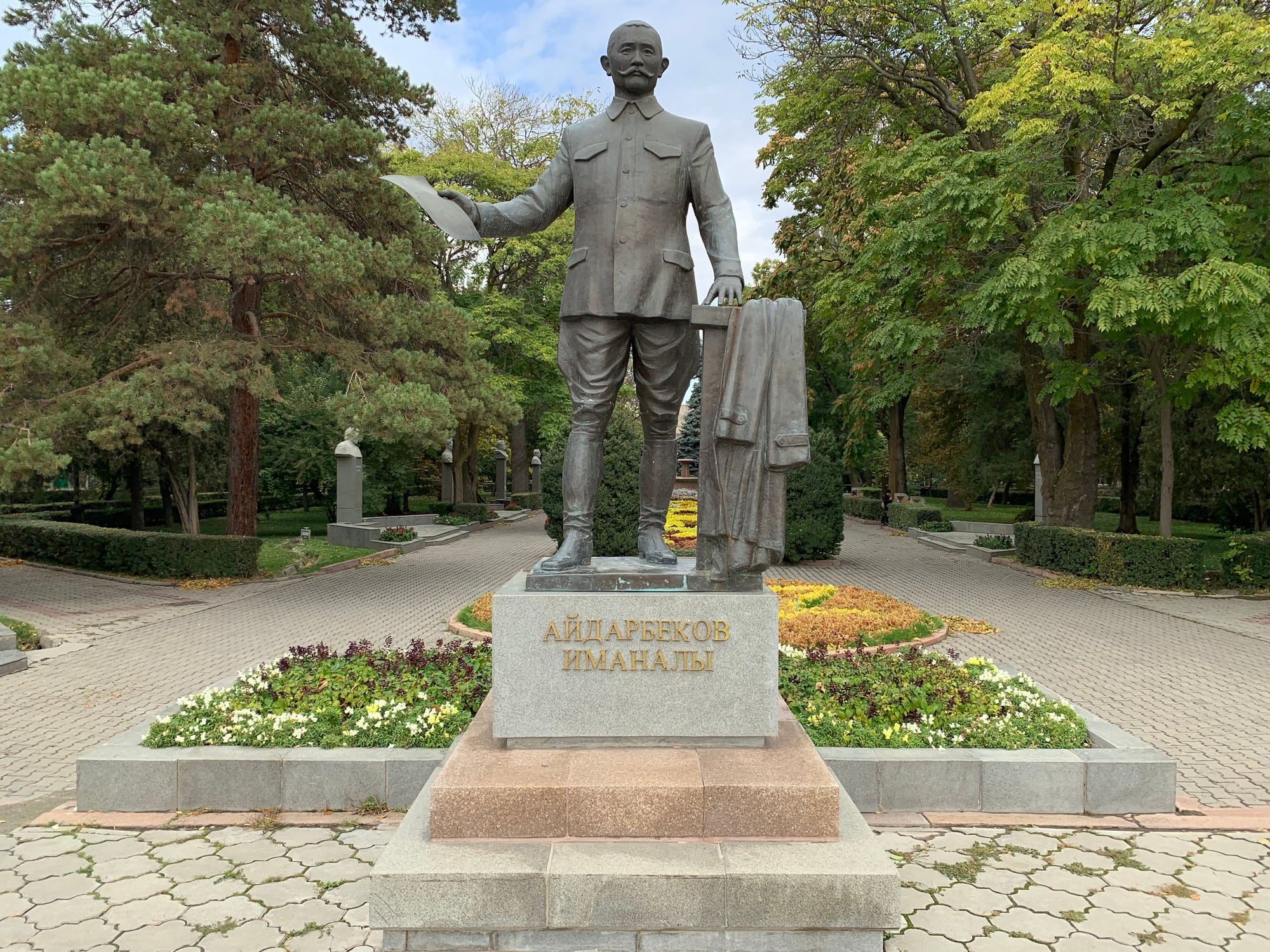
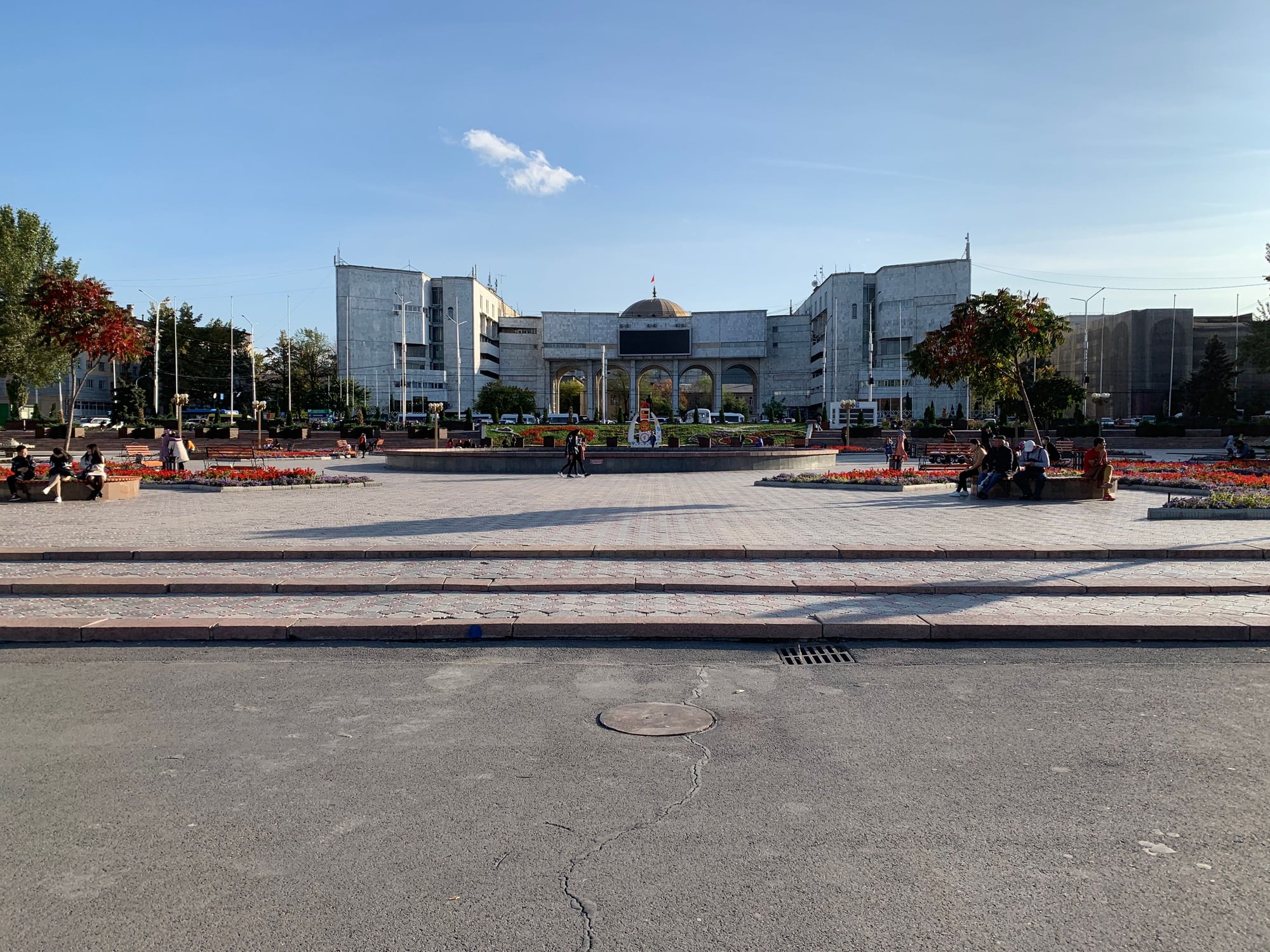
Ala-Too Square.
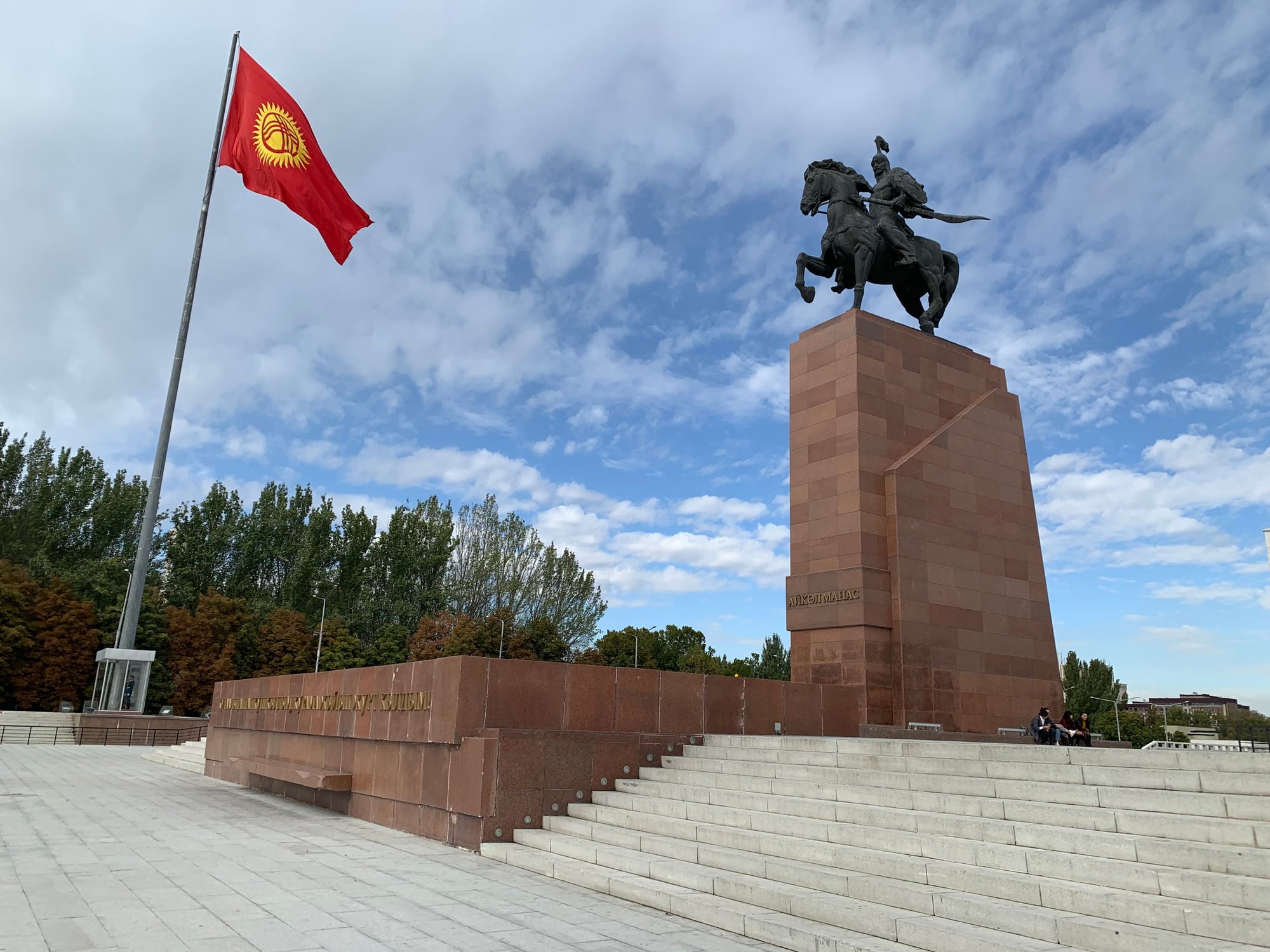
Statue of Manas. The name "Manas" comes from an epic, where Manas is celebrated as a hero for his victorious battles against various enemies.

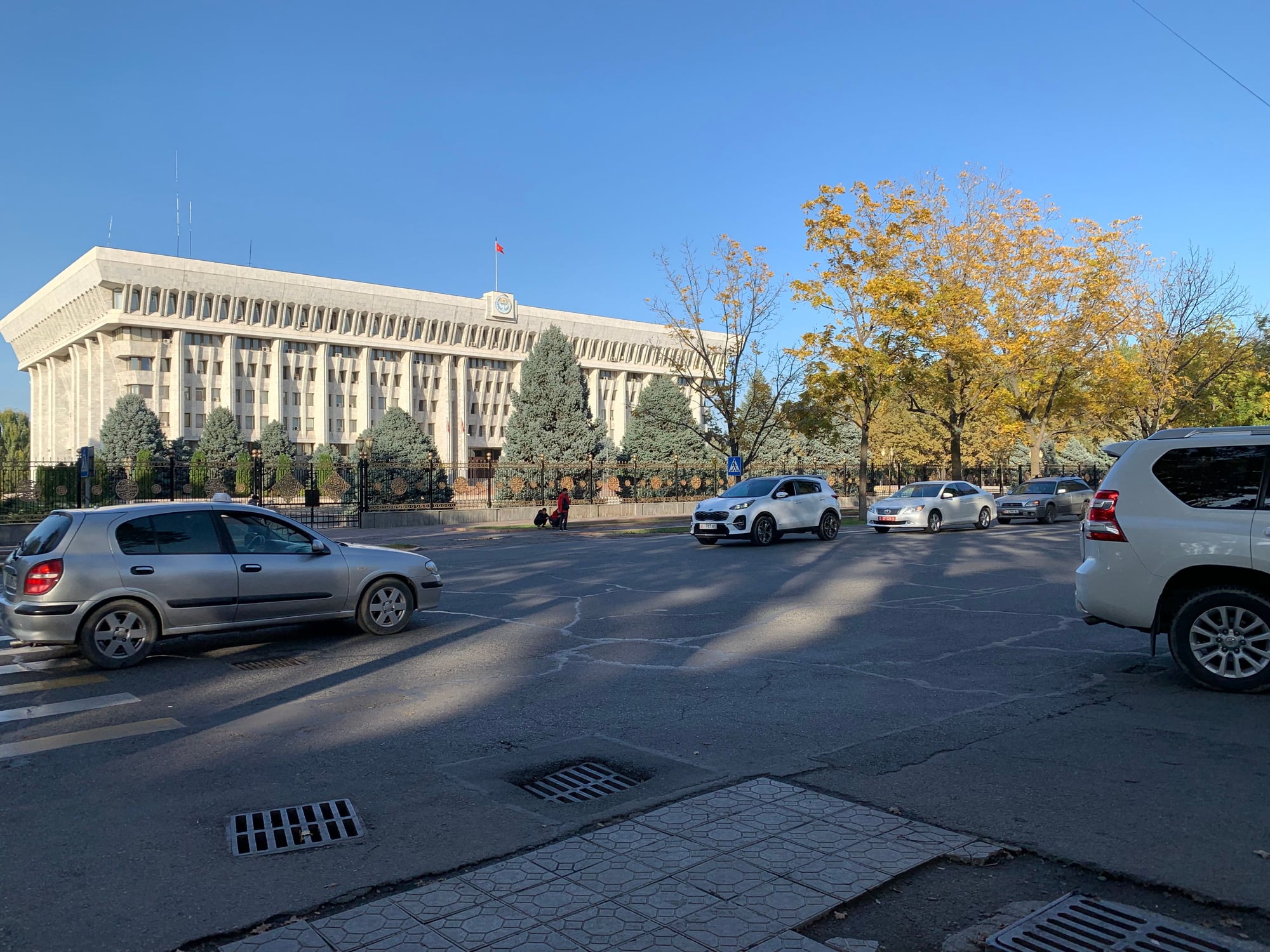
The brutalist Kyrgyz parliament building.

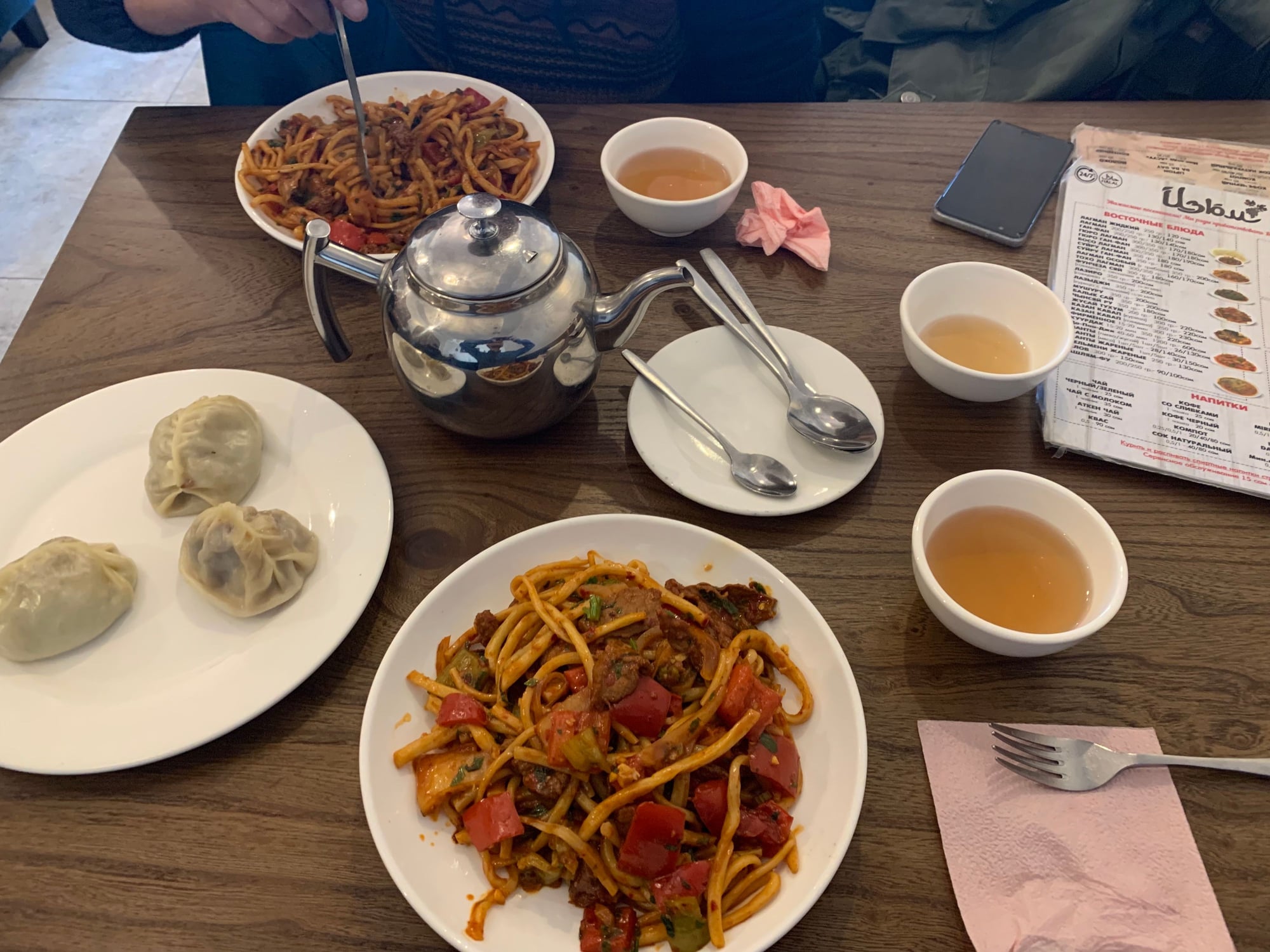
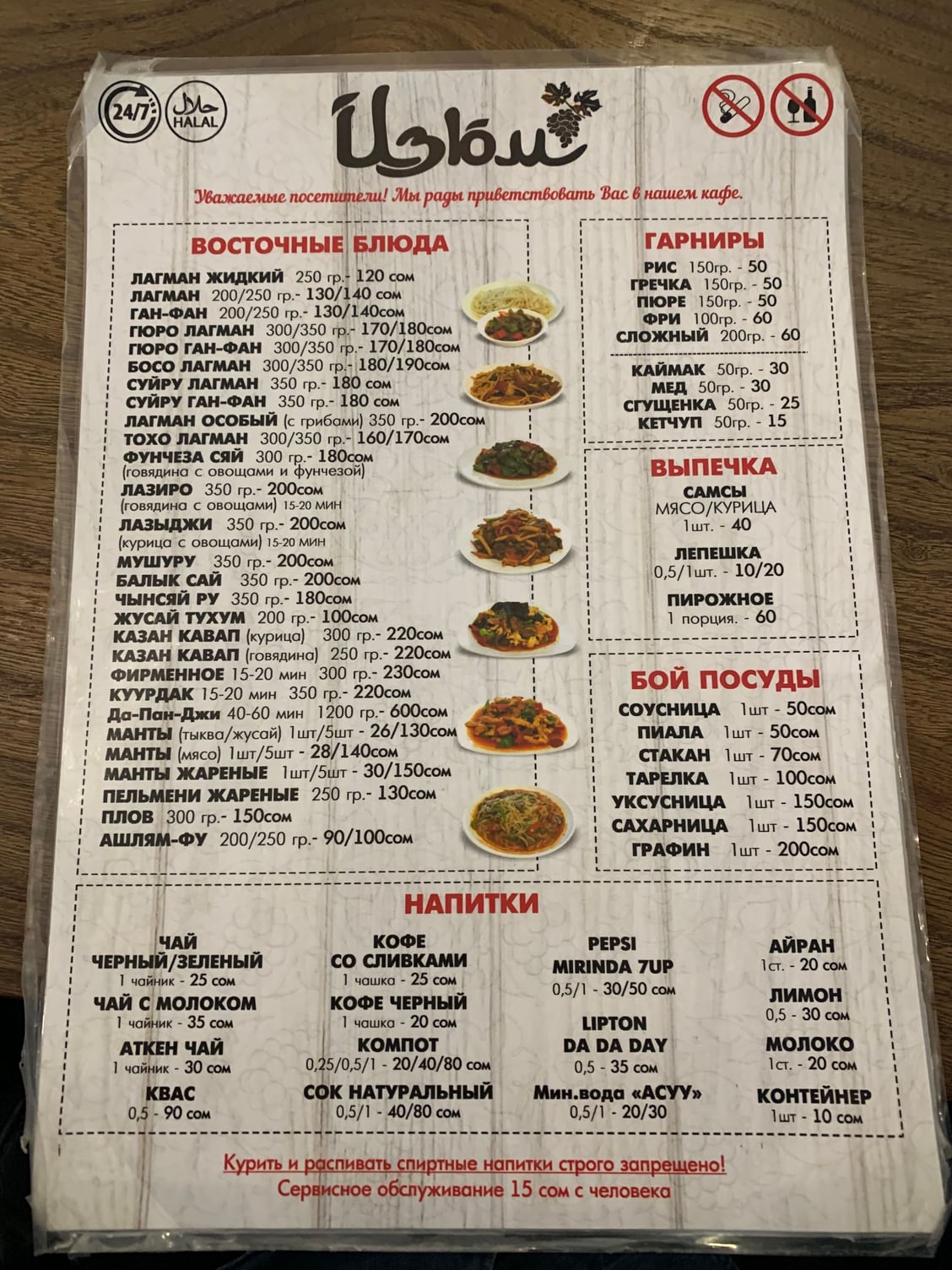
Lunch was about as traditional as it could get: lagman, manti, and tea.
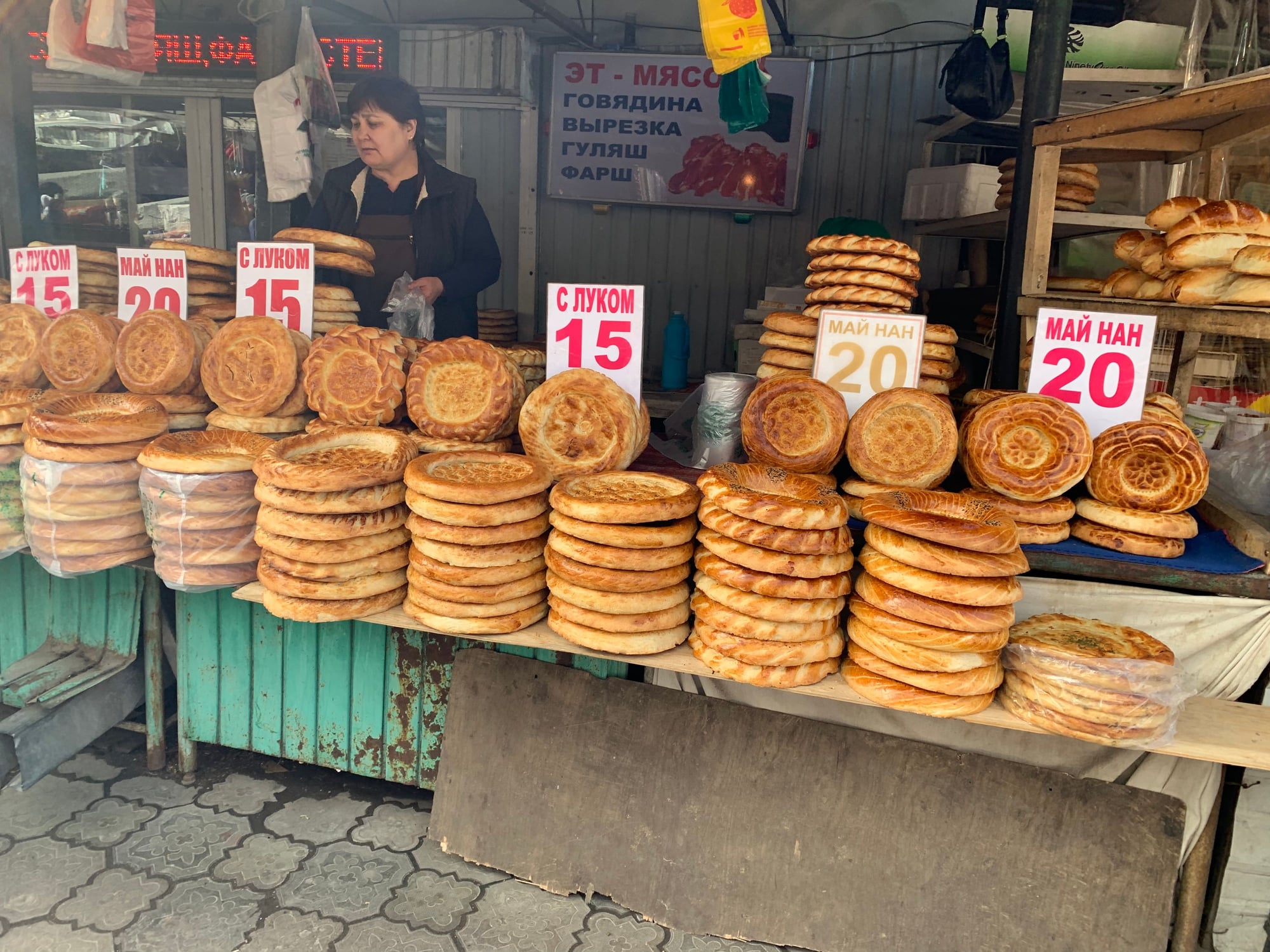
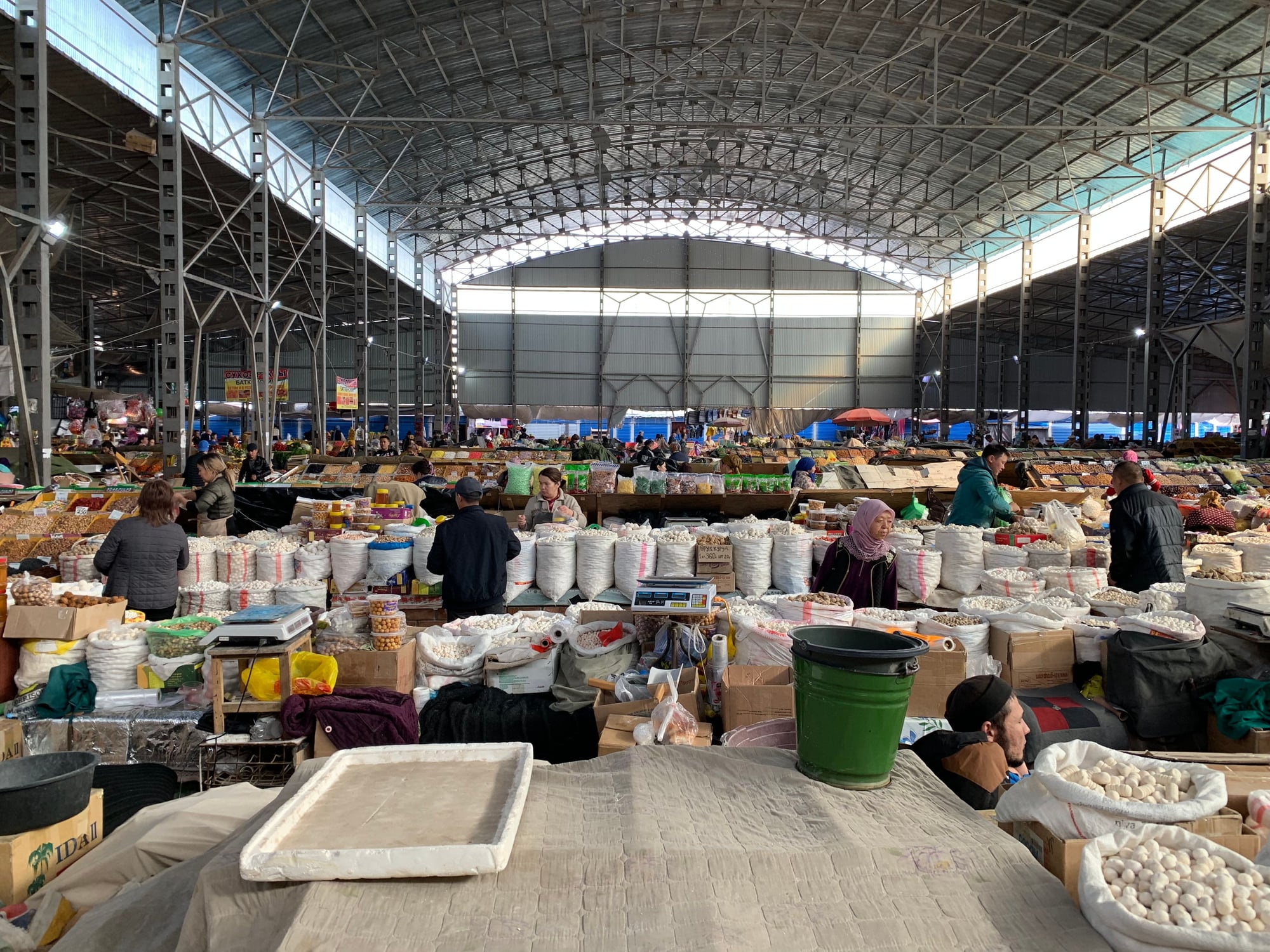
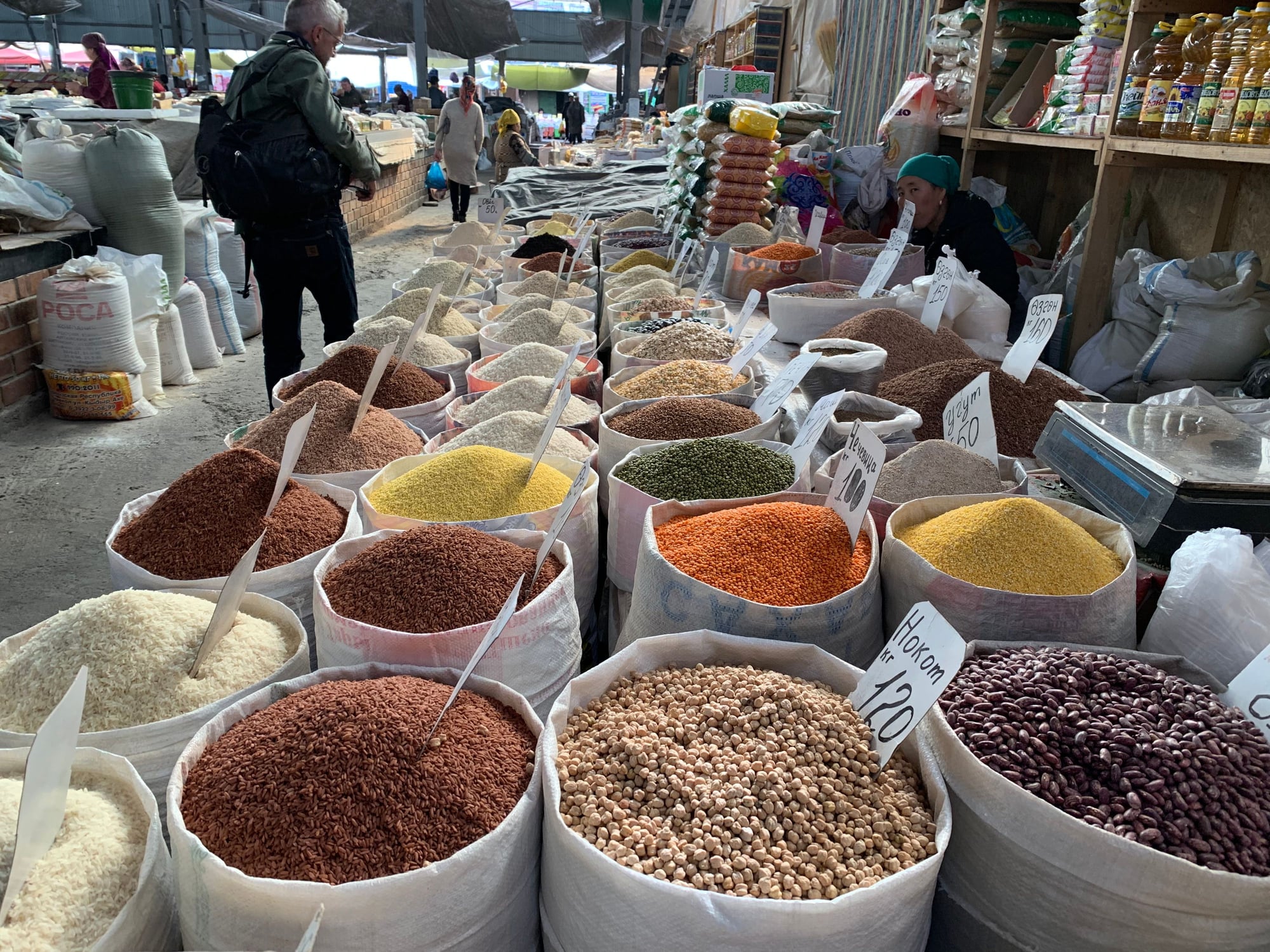
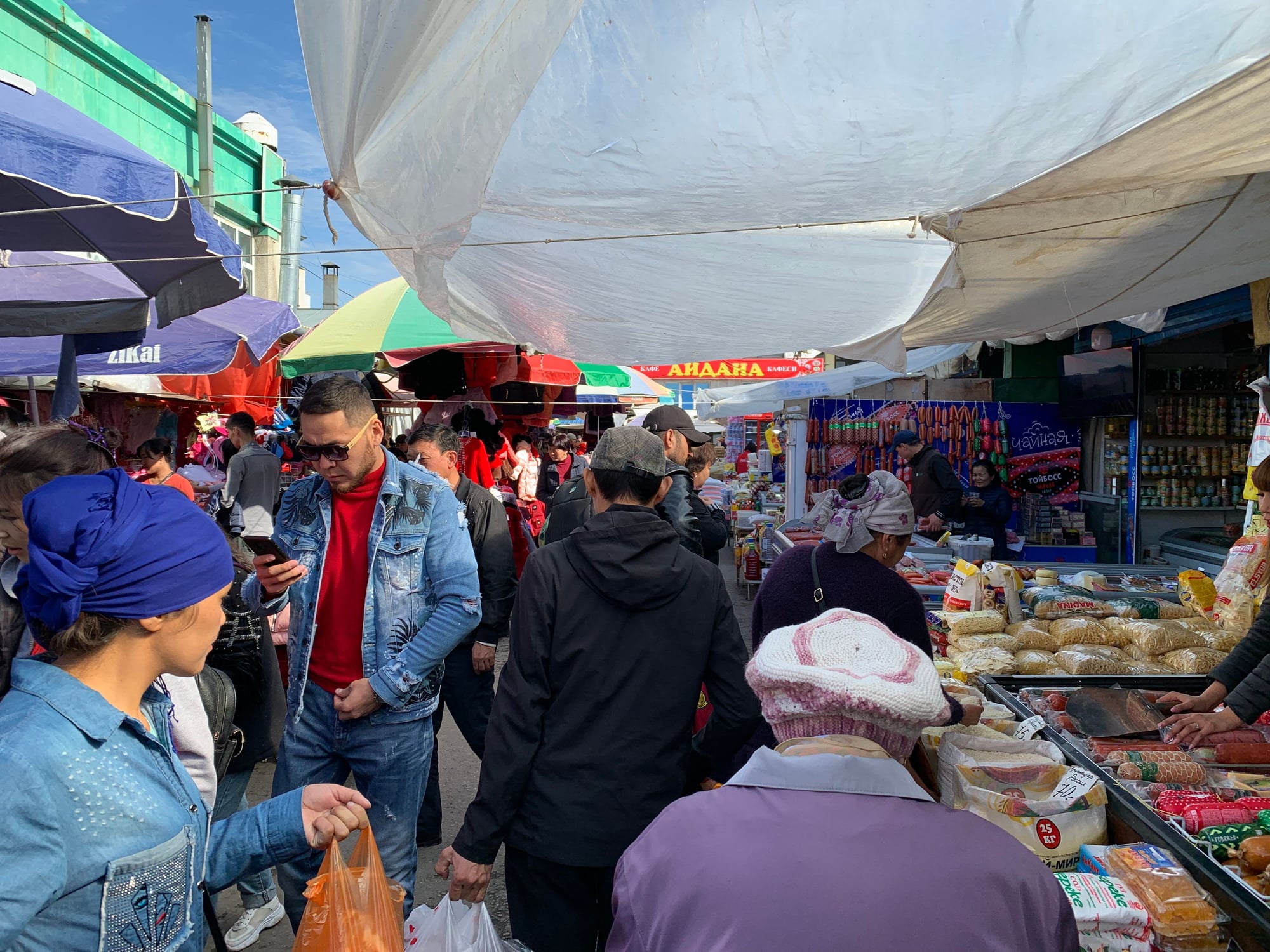
The highlight of the afternoon was a visit to Osh Bazaar, claimed to be one of the largest bazaars in Central Asia. The bazaar had both indoor and outdoor sections selling everything from electronics to food.

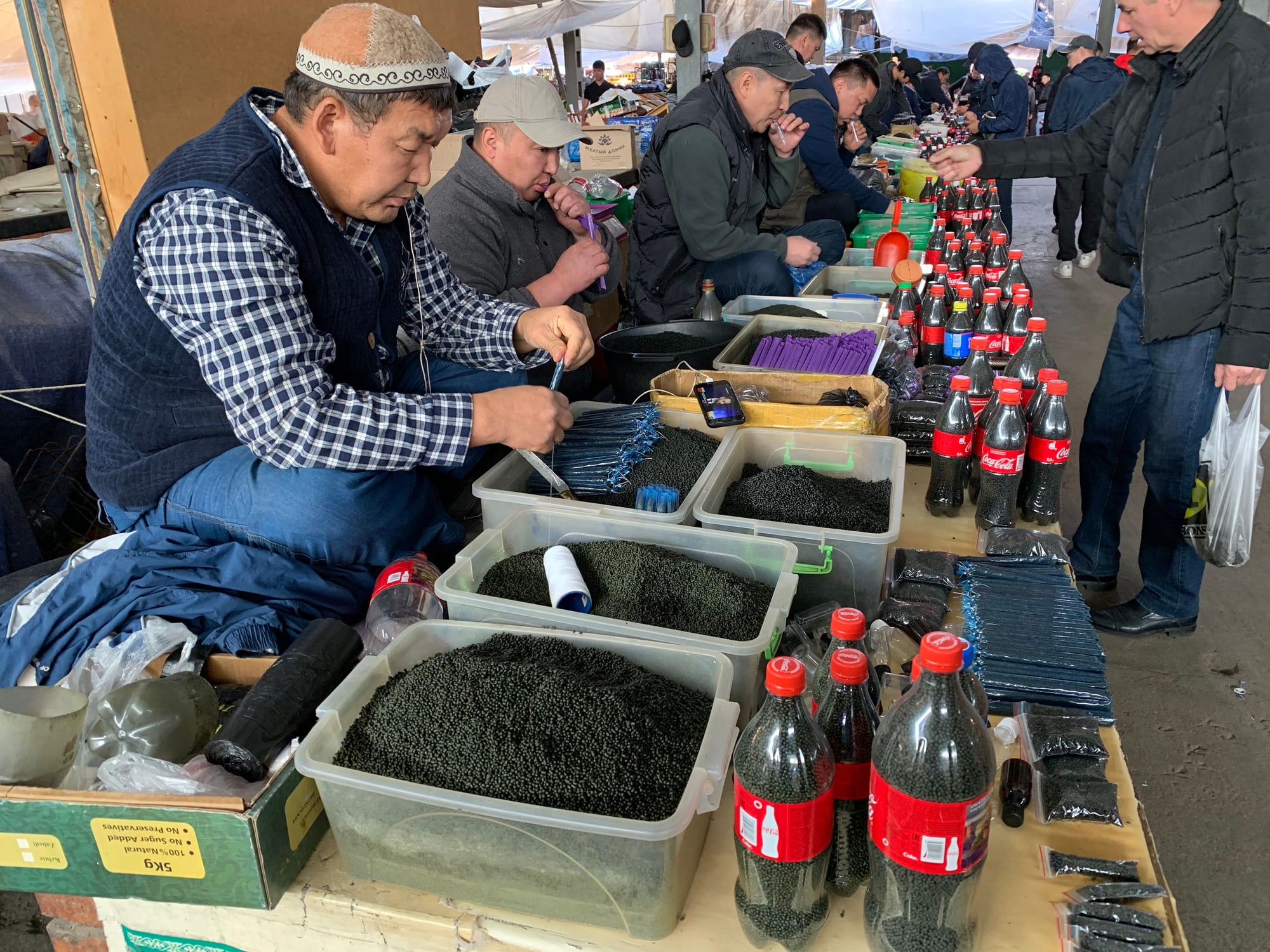
Rolled tobacco was one of the busiest aisles in the indoor market.
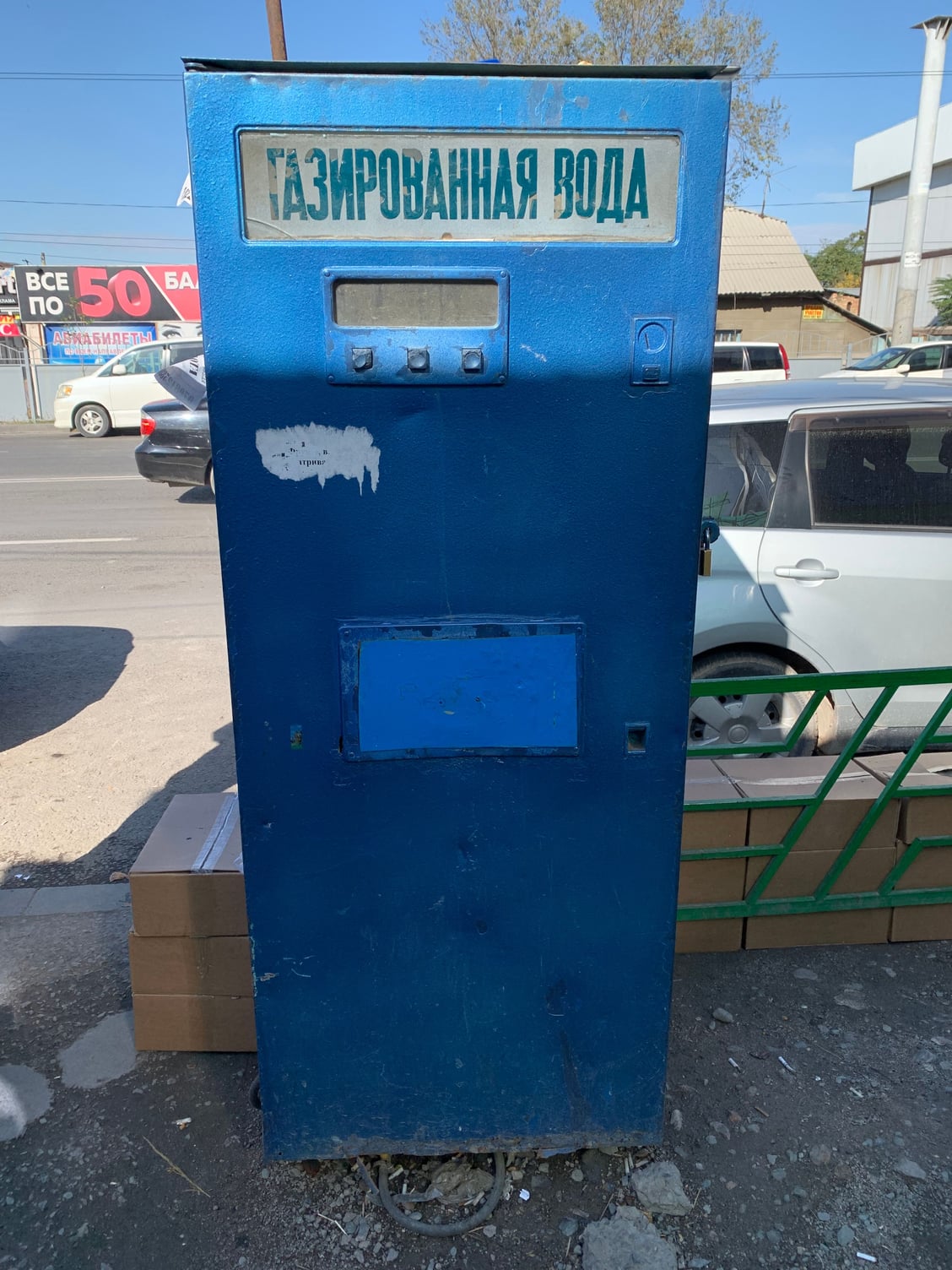
A disused Soviet-era "gassy" water vending machine.
 16 October
I had a 6:35am flight, so I set an alarm for 4:30am and was out of the door by 5am on my way to the airport. The front desk arranged a regular taxi for 500 som ($7.16) the night before which showed on on-time. The driver seemingly knew where each speed camera was placed on the long, straight stretch of road to the airport, so the usual 35-minute ride took a record 20-minutes.
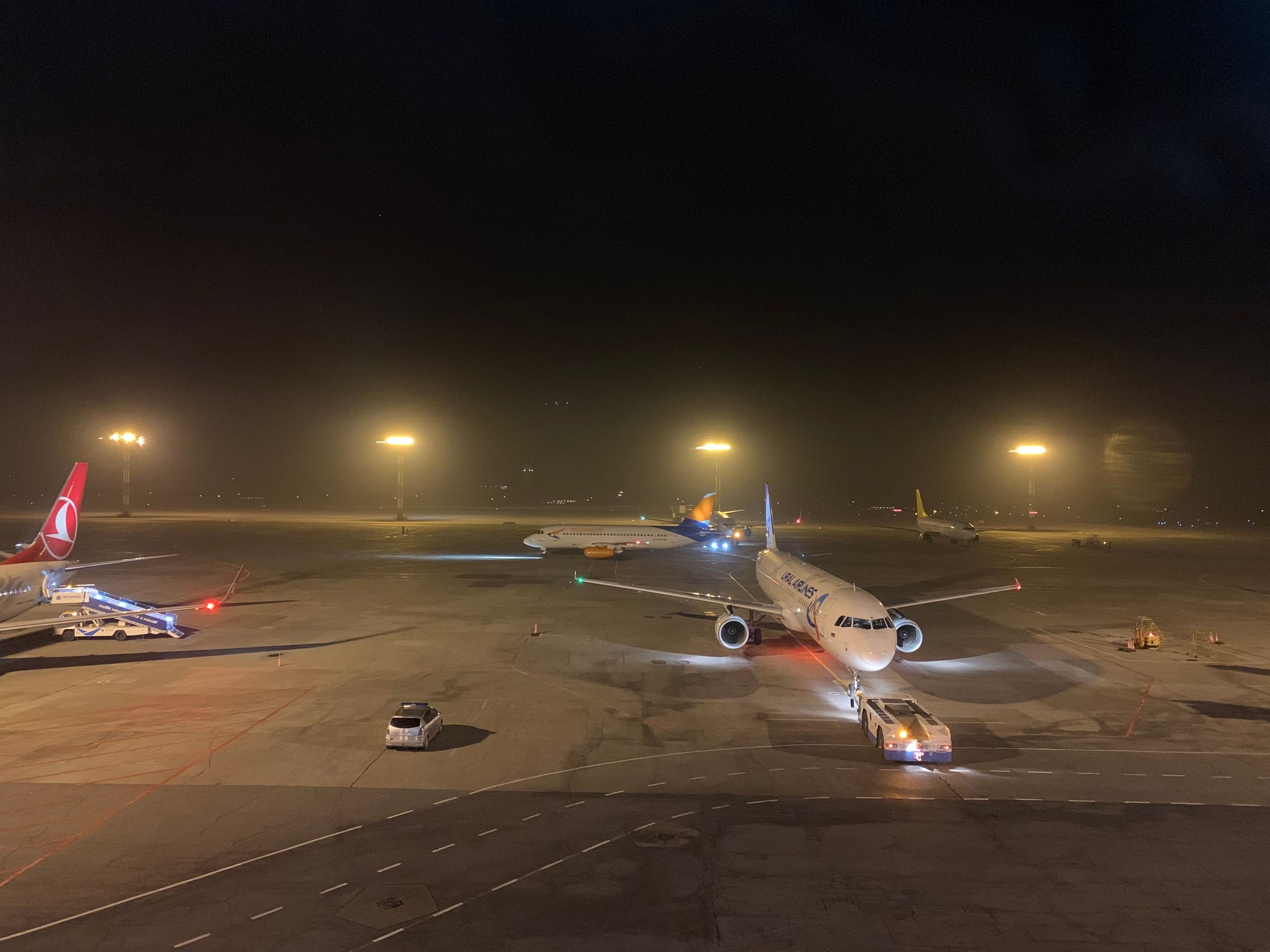
Manas airport is busiest in the wee hours of the morning, with multiple arriving and departing international flights, mostly to Russia. On today's early-morning departures board were flights on Ural Airlines, Azimuth, Aeroflot, Turkish, FlyDubai, and Pegasus.
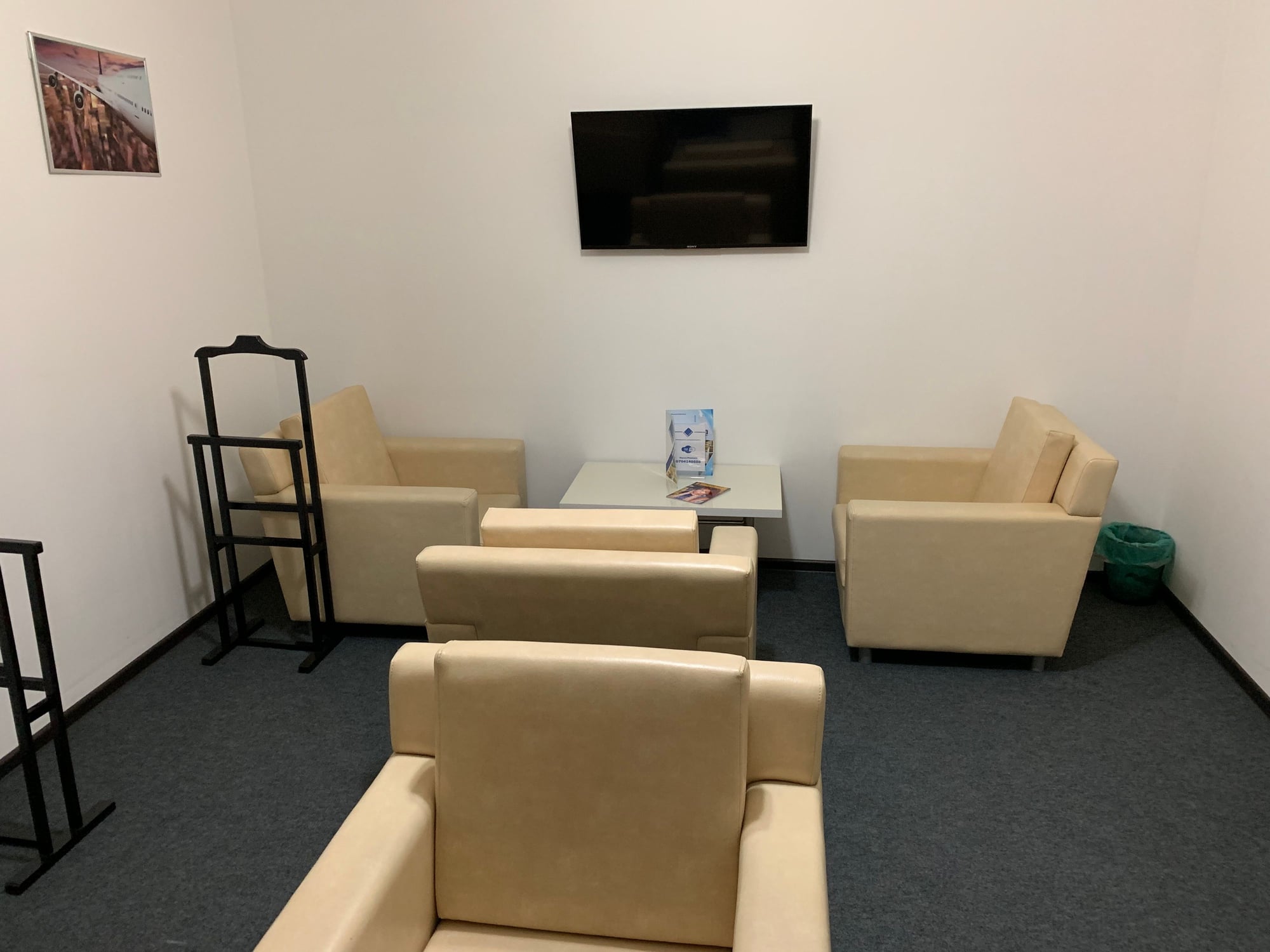
The sole VIP lounge in the terminal was packed, though I found a small room at the back that remained empty.
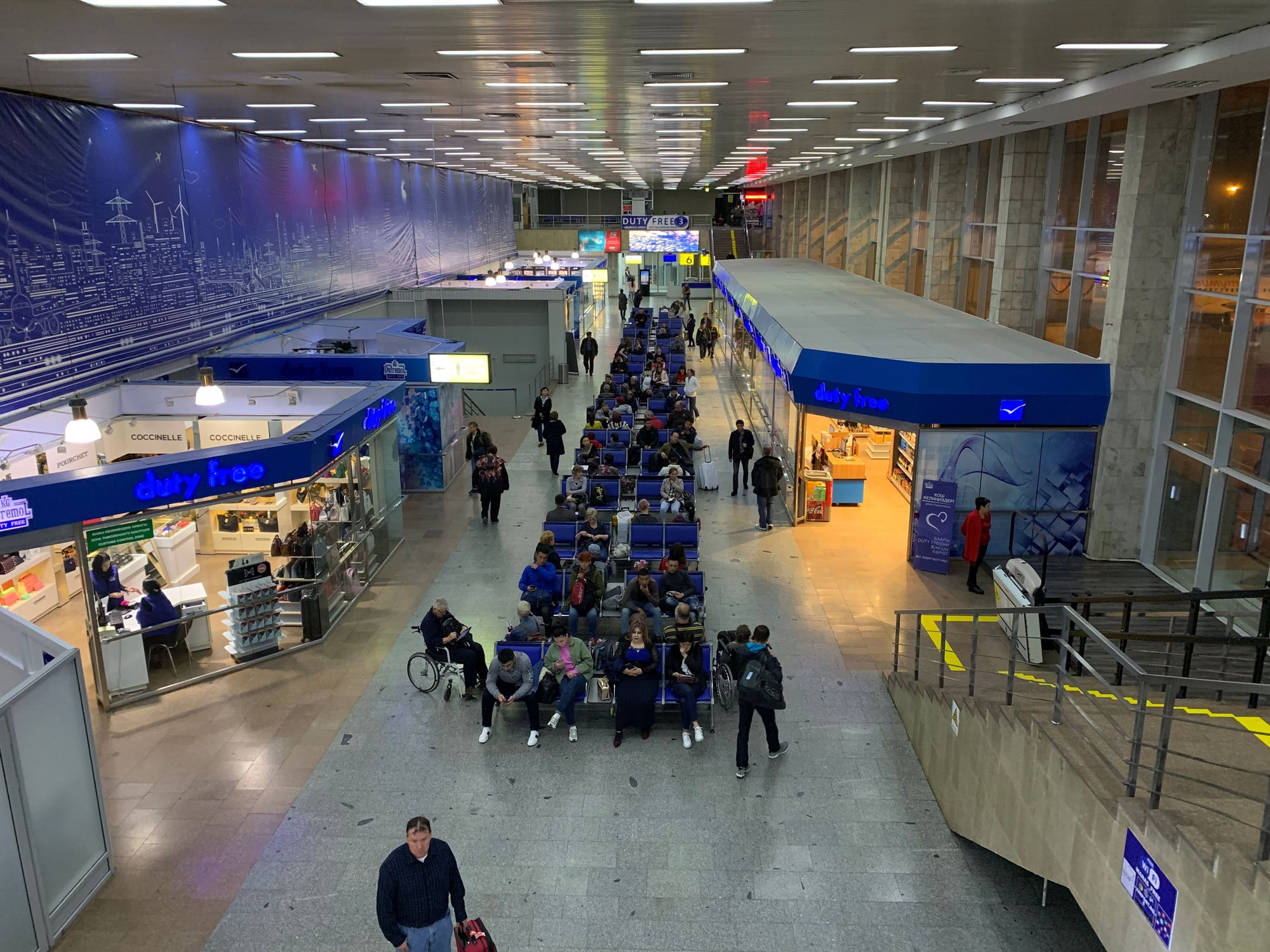
Airside terminal.
 FRU-IST
Turkish Airlines TK349
06:35-09:35
738
FRU-IST
Turkish Airlines TK349
06:35-09:35
738
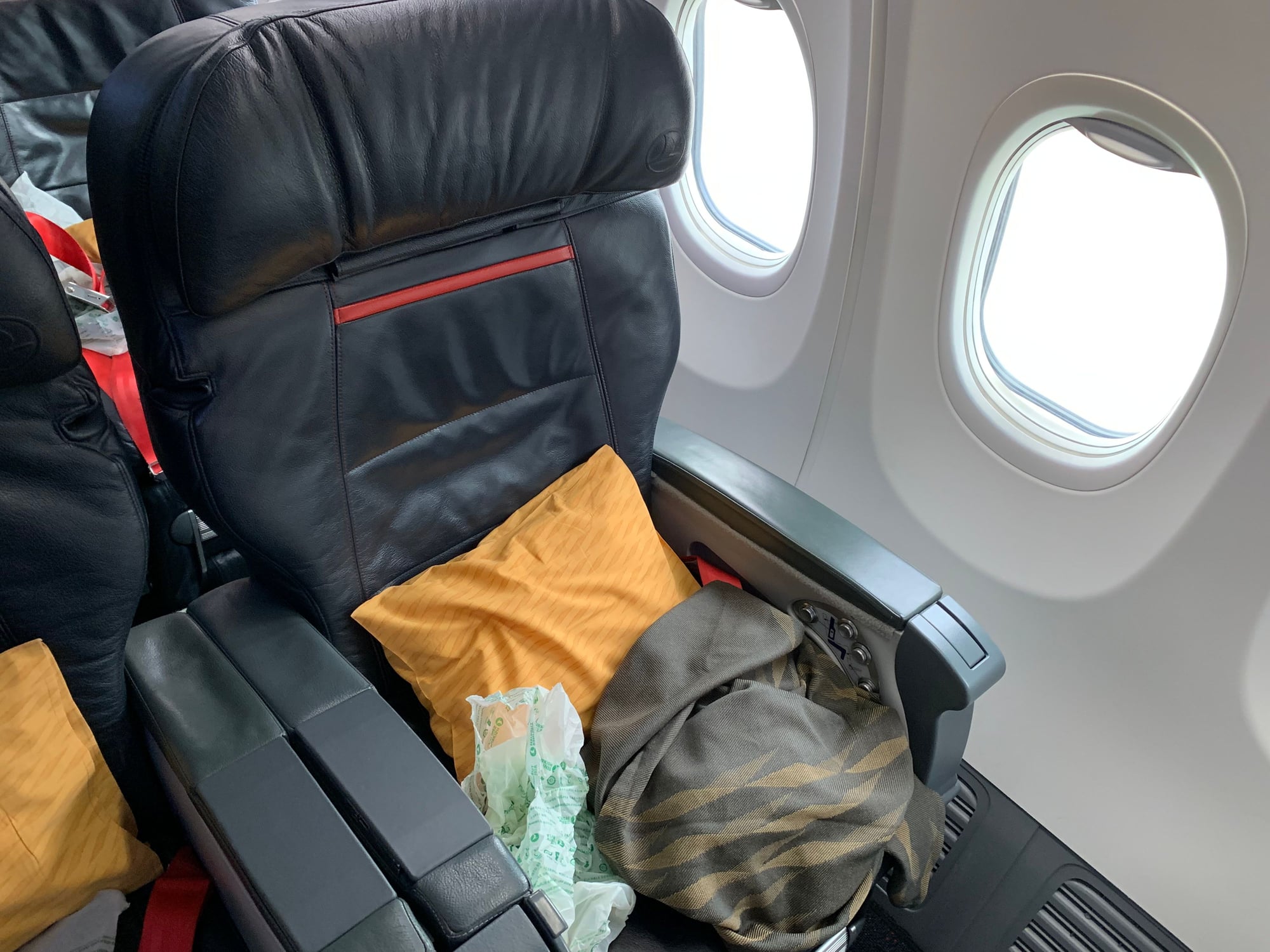
This morning's flight to Istanbul was operated by a 737-800. Pitch was noticeably less than the 737-900ER I had flown into Astana with a week earlier, but with a load of 8/16, I moved to the bulkhead seat 1A to have an empty seat next to me.
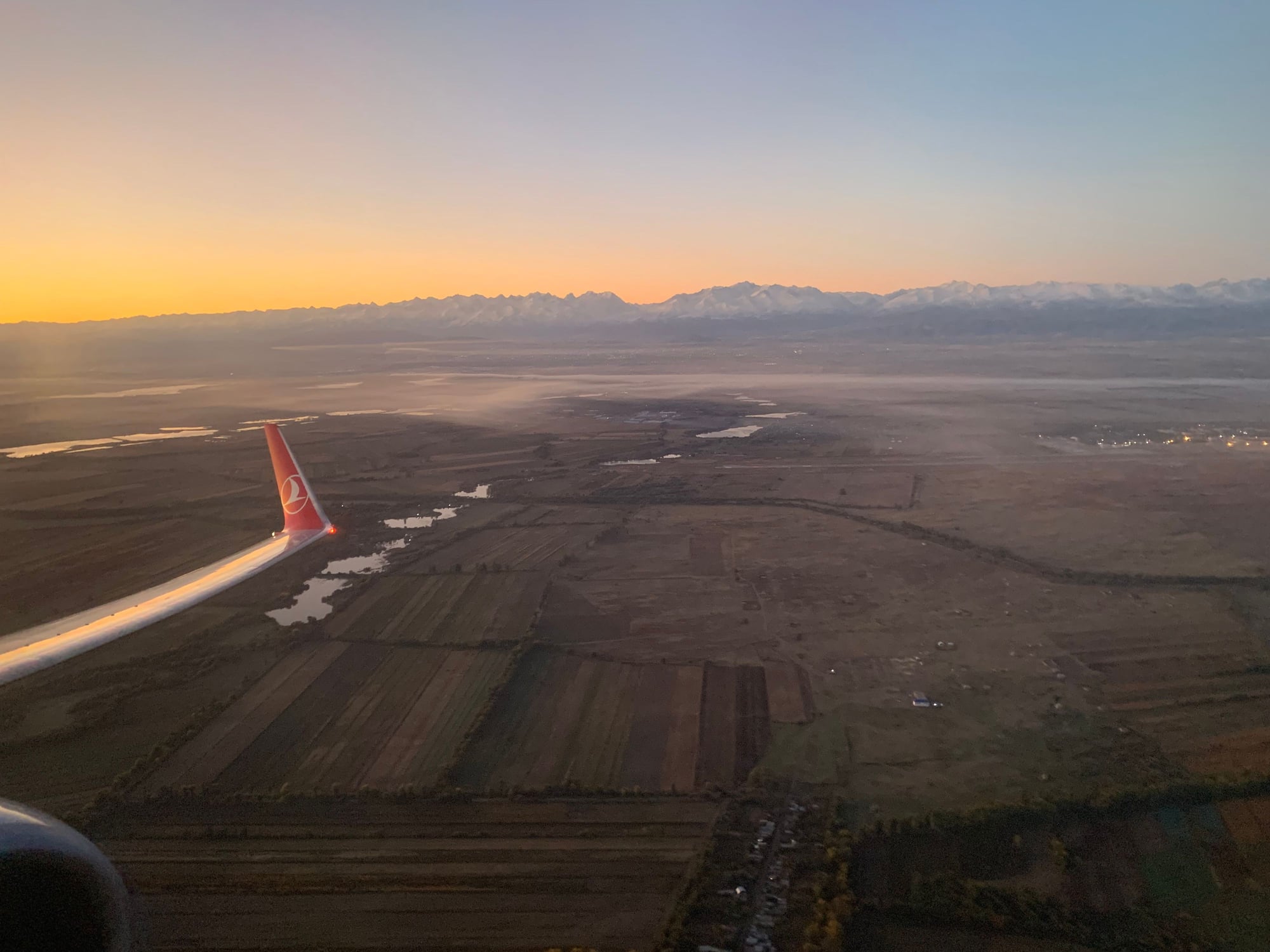
We departed from Bishkek and turned west along the mountains.
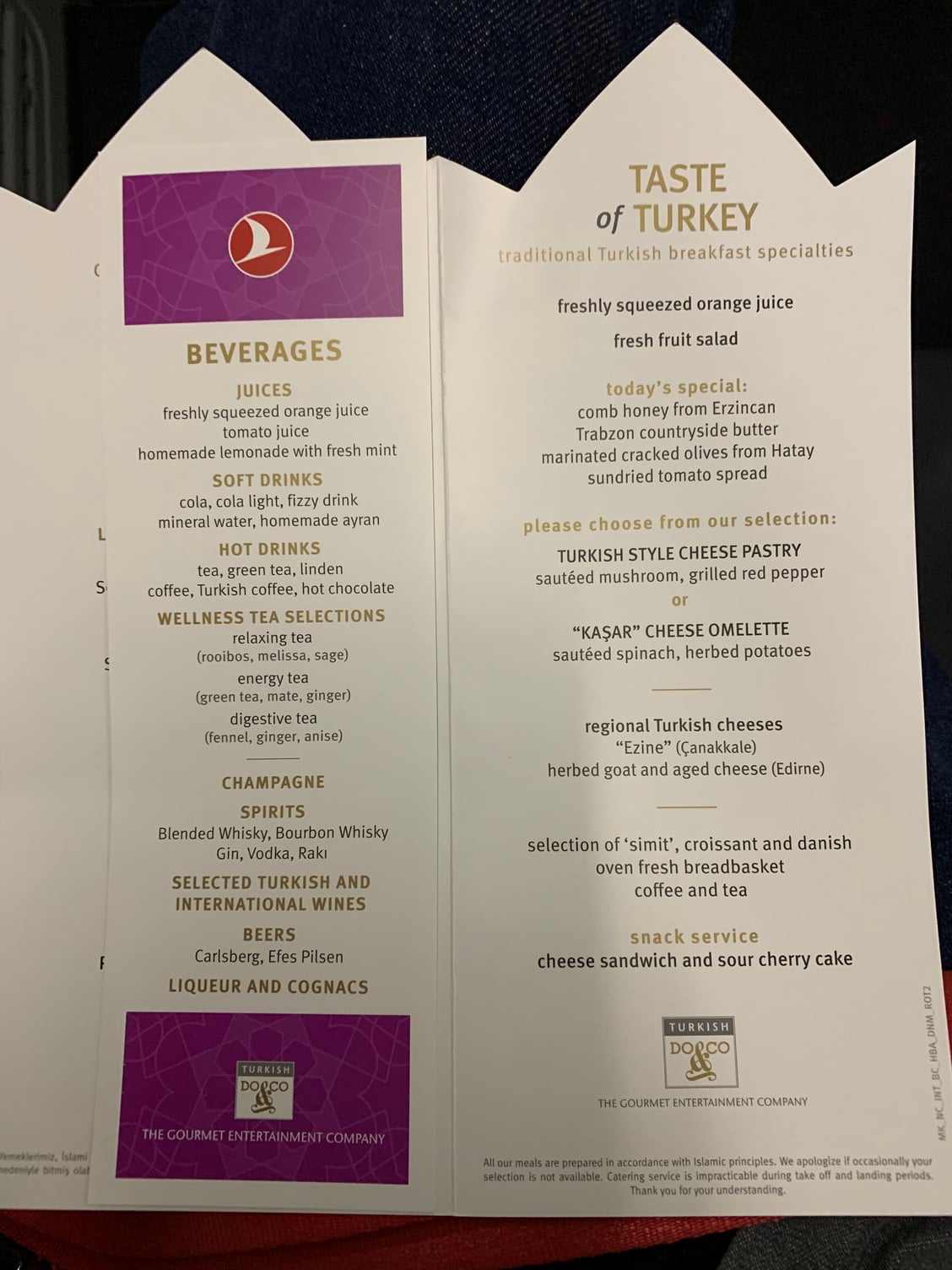
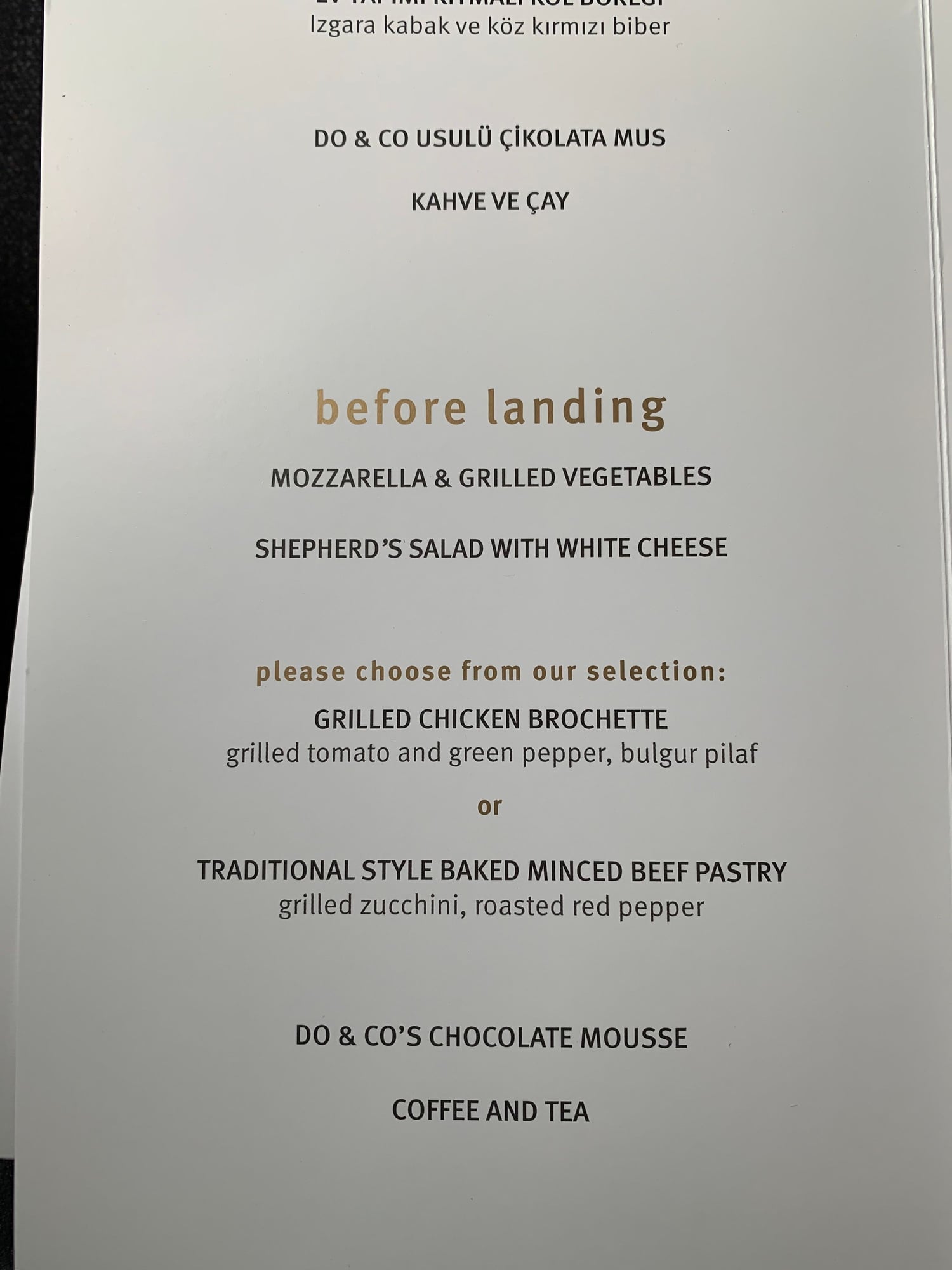
Menu.
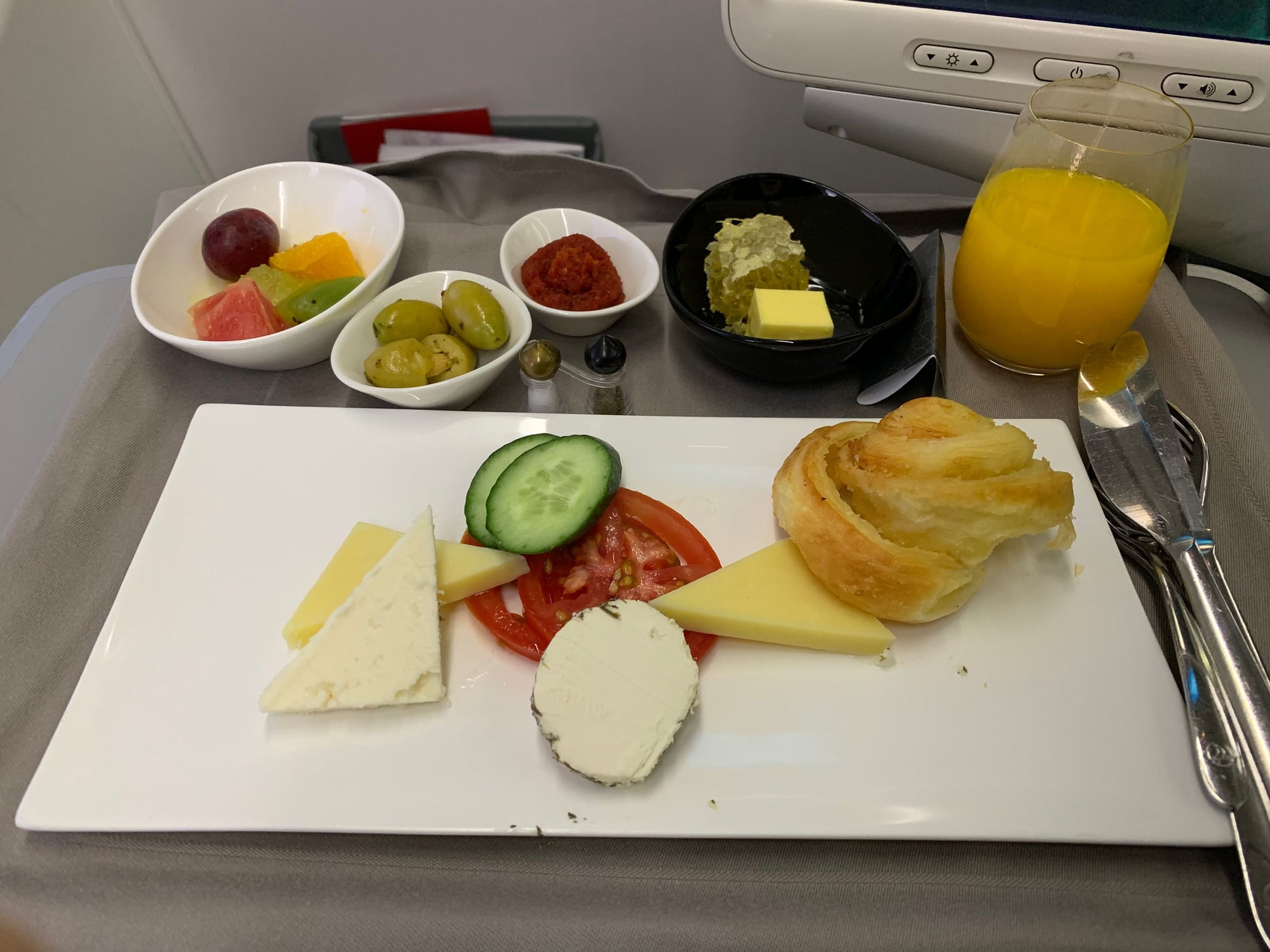
Breakfast.
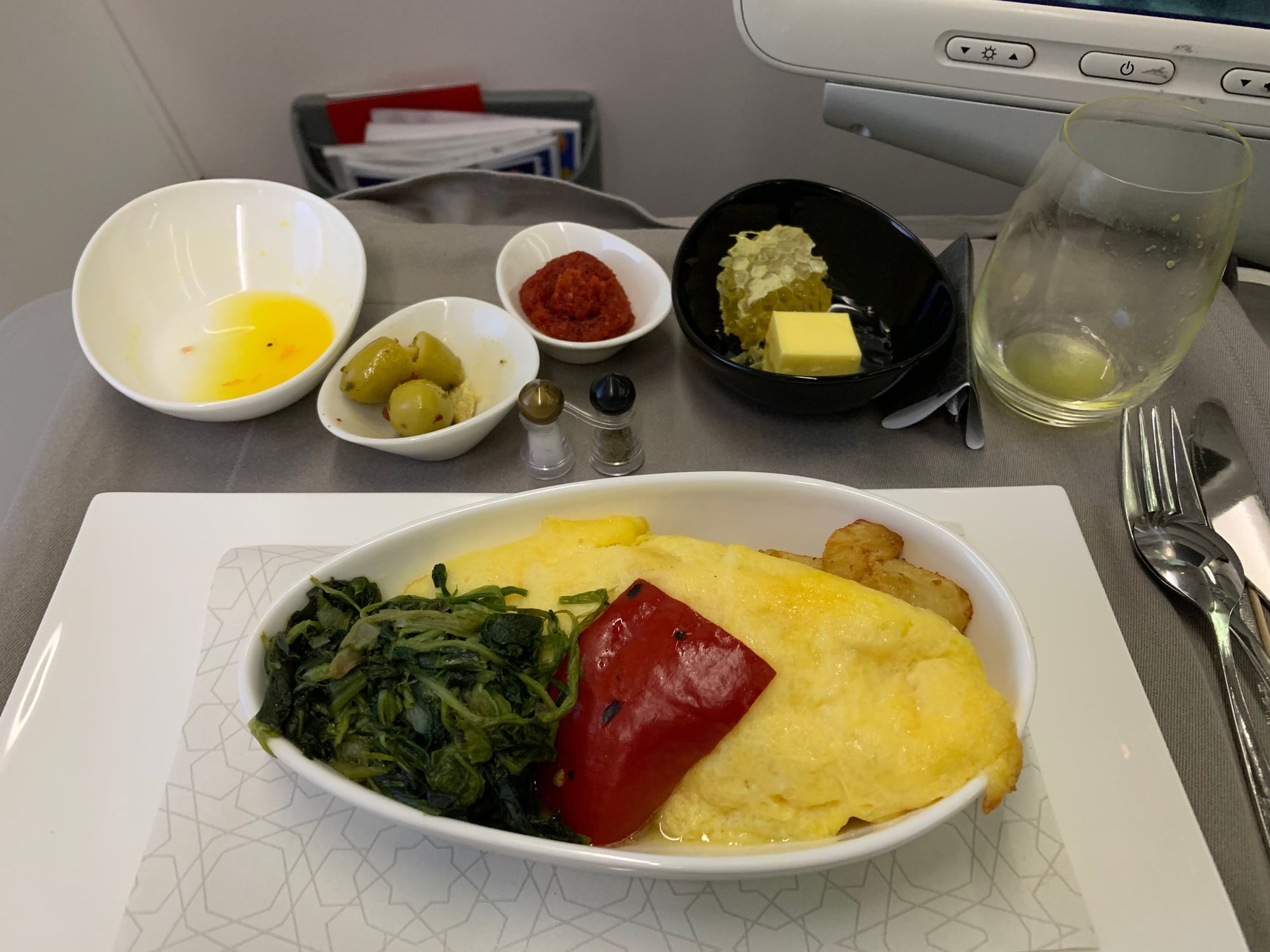
With a flight time of five hours, a pre-landing snack was also offered (similar to the pre-landing offering on TK's mid-haul flights to Africa)
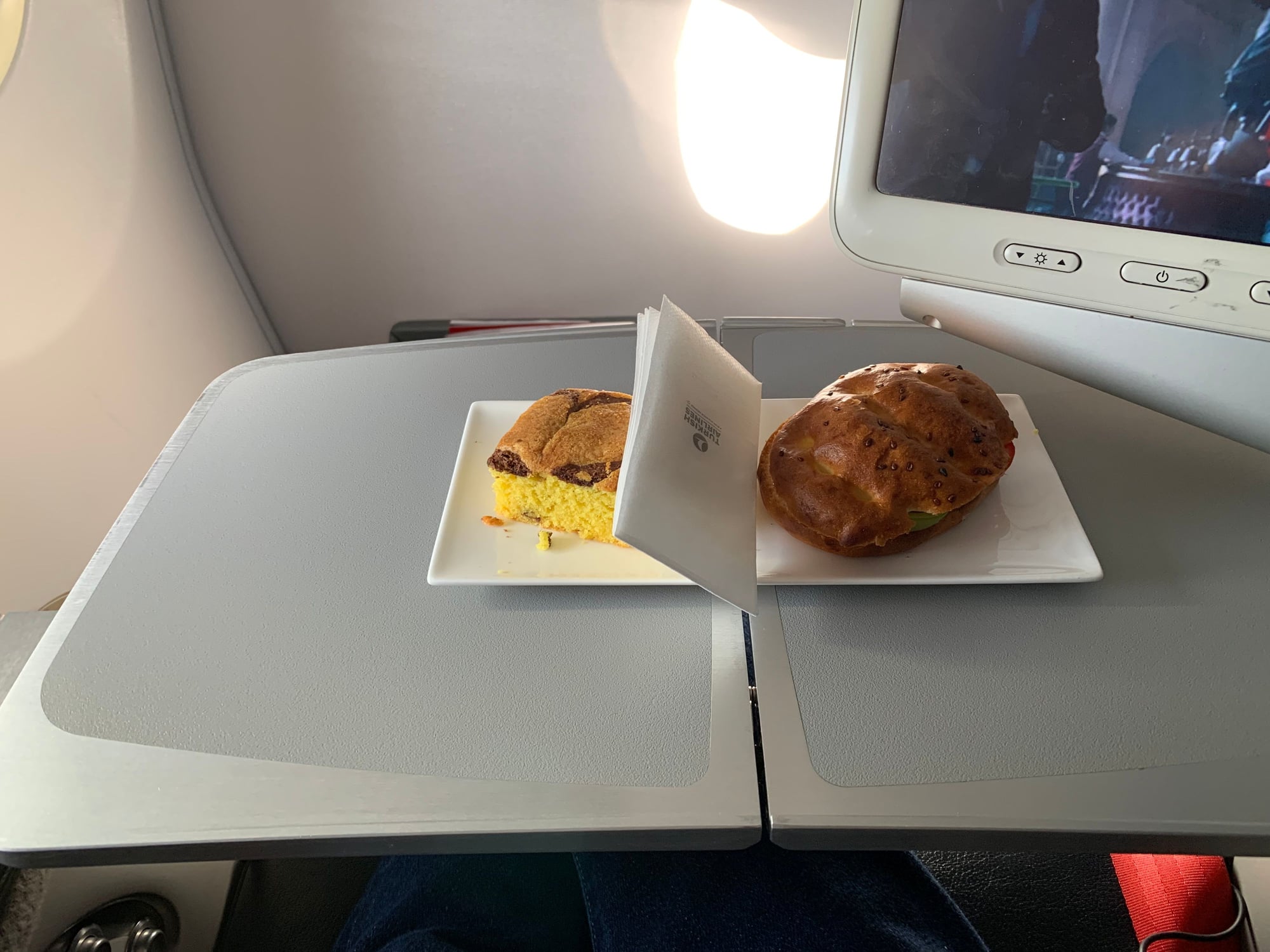
We touched down in IST a few minutes early, and I was first off the plane.
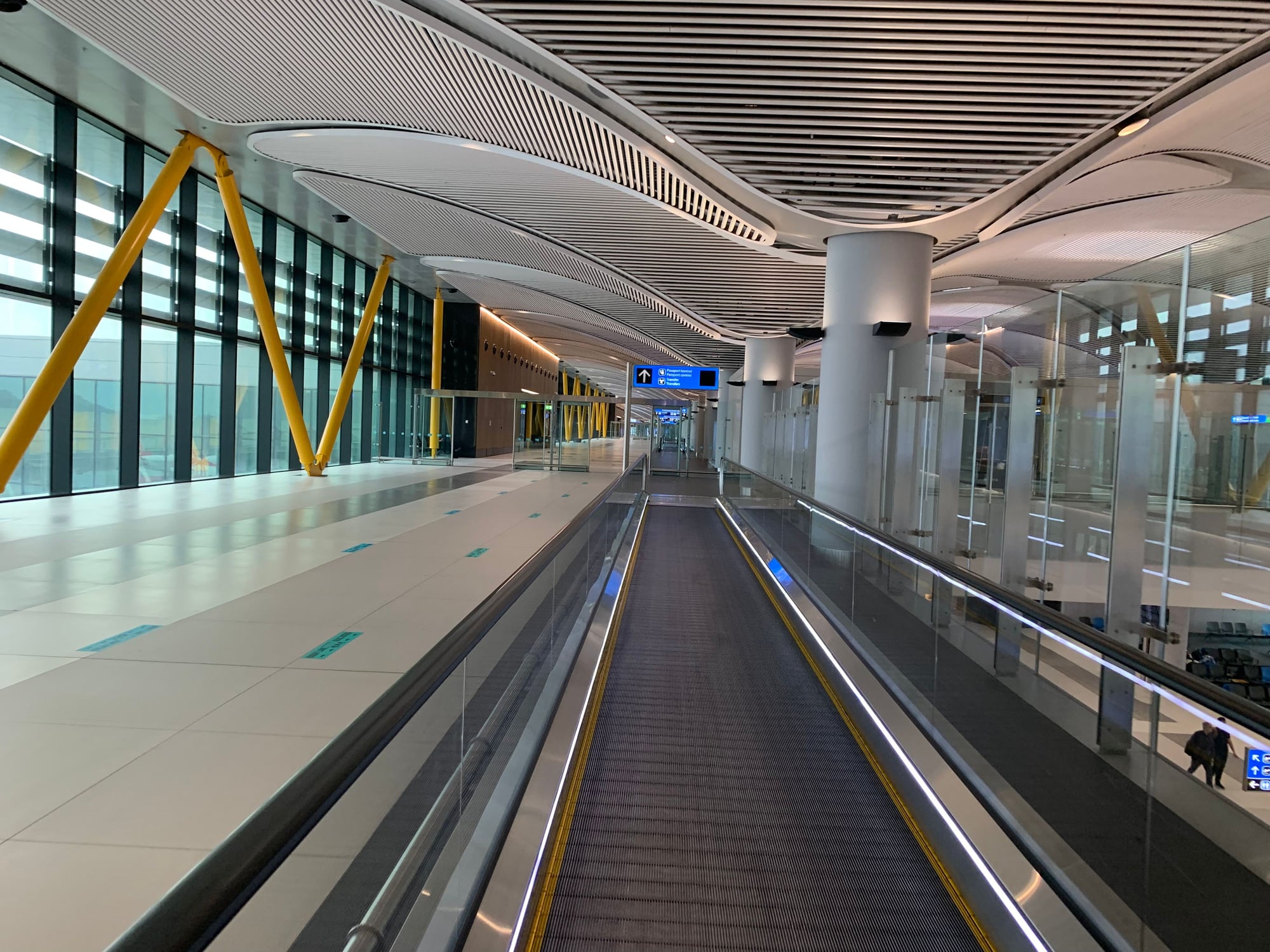
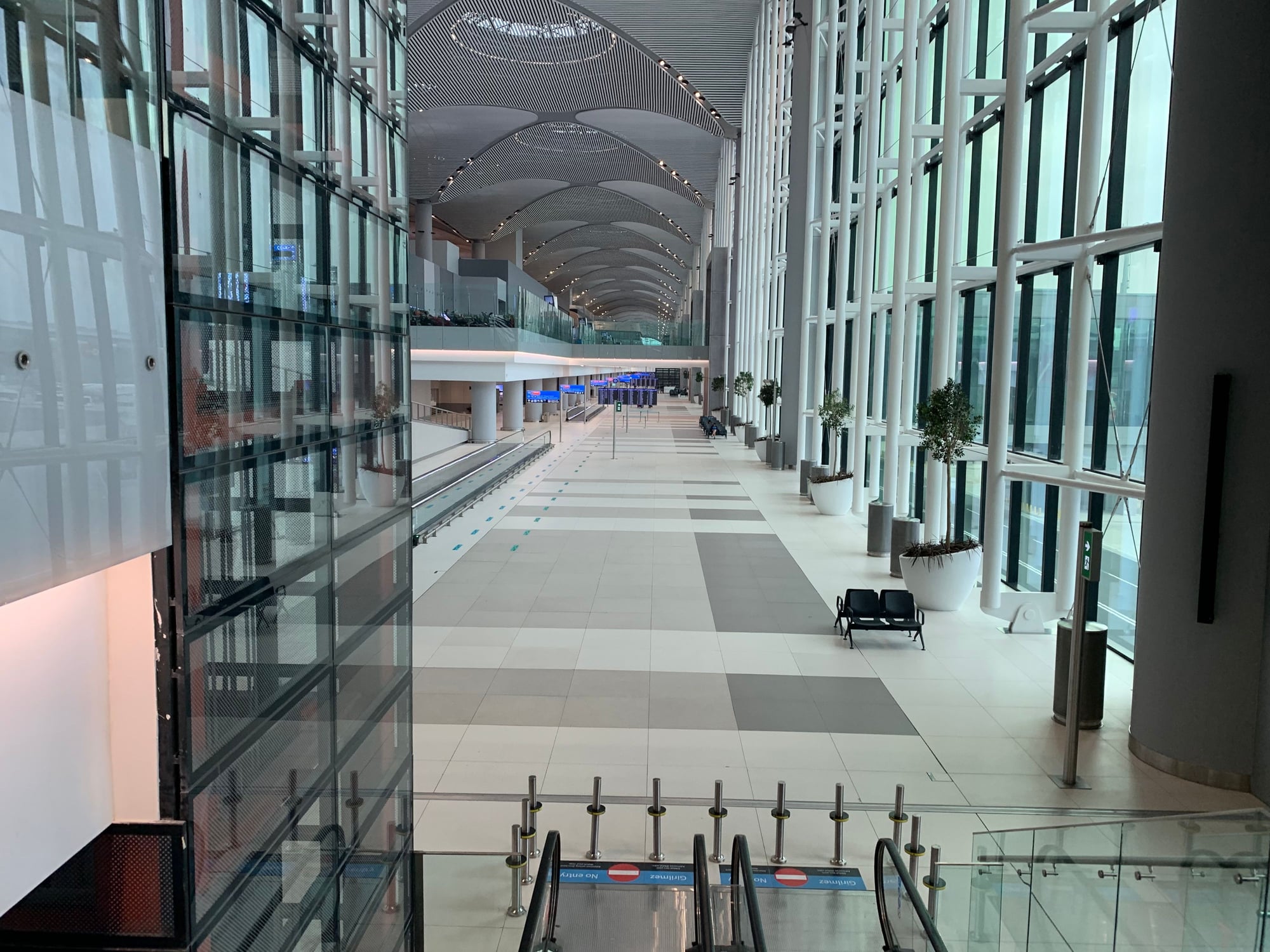
An eerily quiet transit hall this morning.
After passing through transit security, I made my way to the business lounge. I took a shower and ask to reserve one of 13 private suites. The private suites can be reserved for business and Elite Plus passengers with a 4-7 hour connection, as long as one of the flights exceeds 8 hours. Since all suites were occupied or being cleaned, I was asked to come back an hour later. The day beds in the lounge, however, were largely unoccupied.

After gorging myself on more food, I made my way back to the reception an hour later to check-in to my suite.
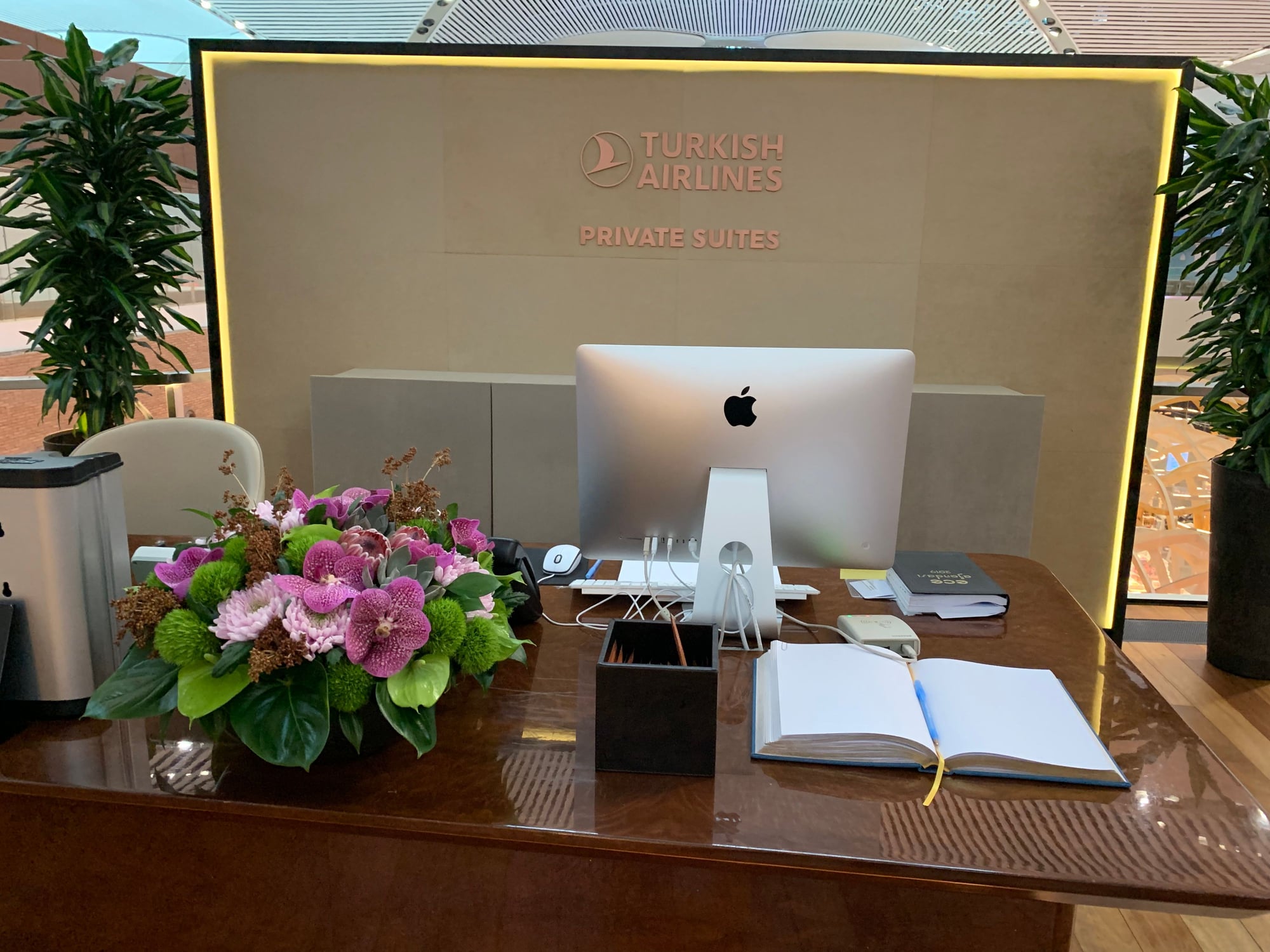
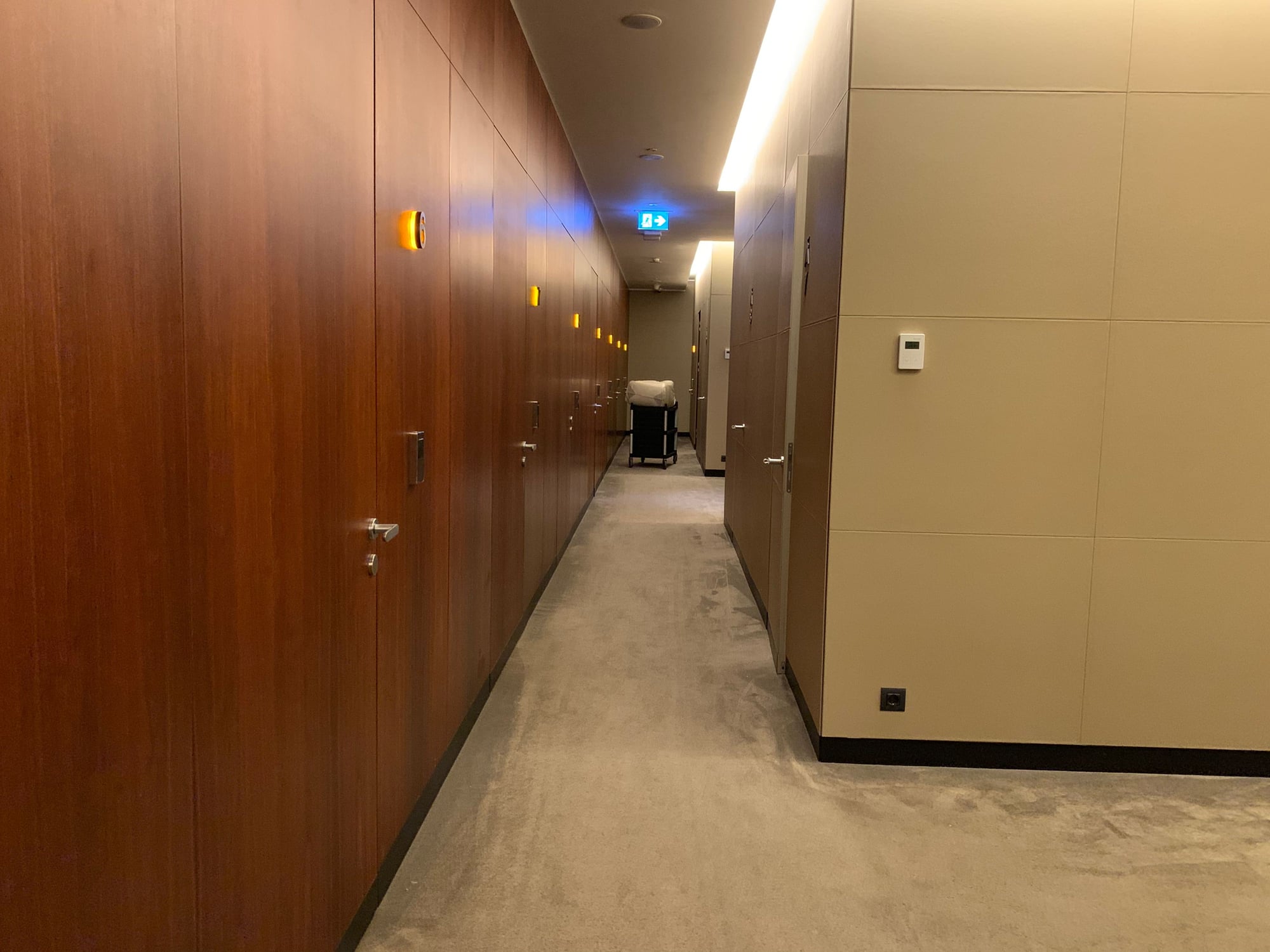
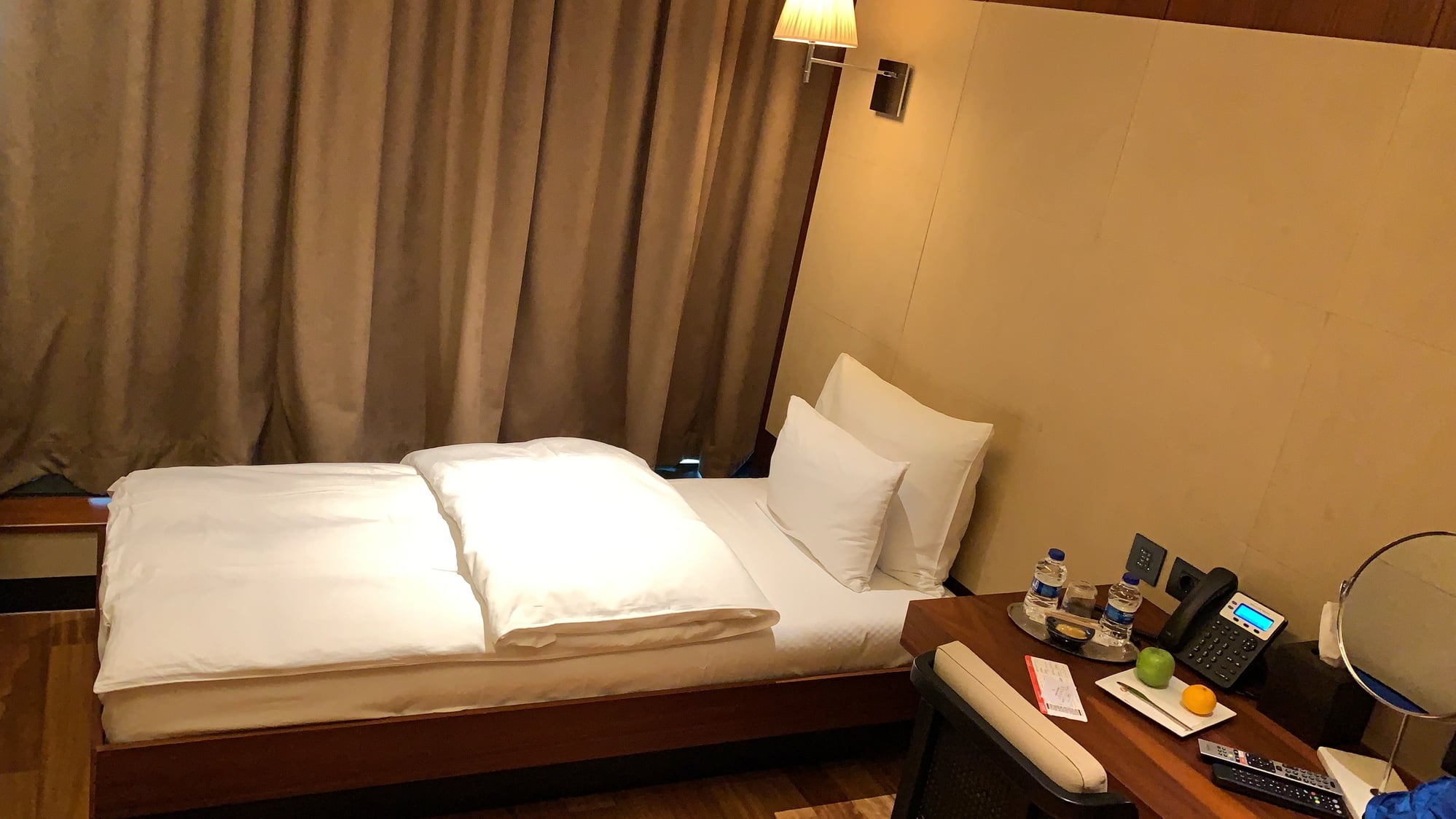
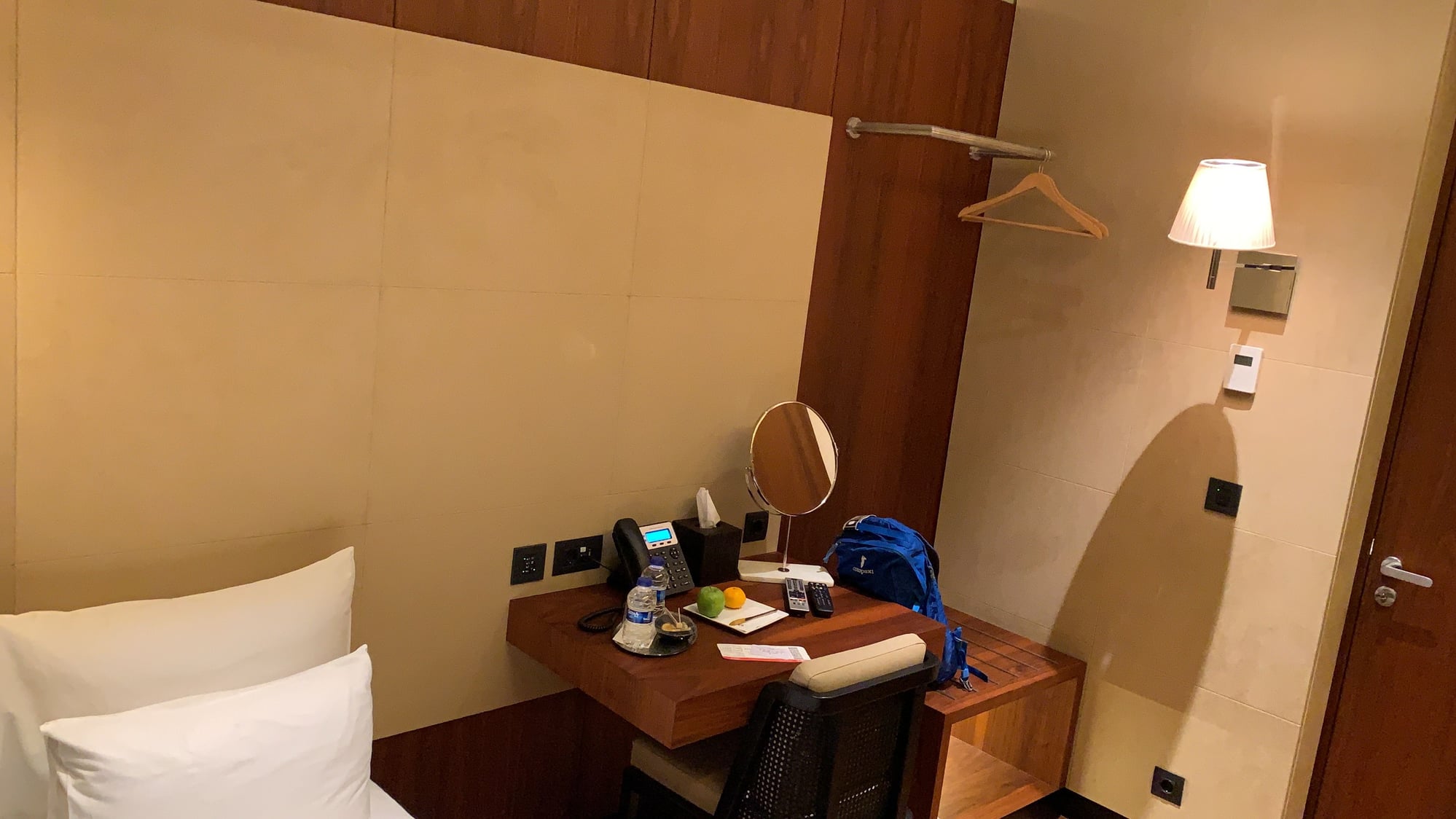
I napped for a solid two hours before heading to the gate.
IST-ATL
Turkish Airlines TK31
14:05-19:40
789
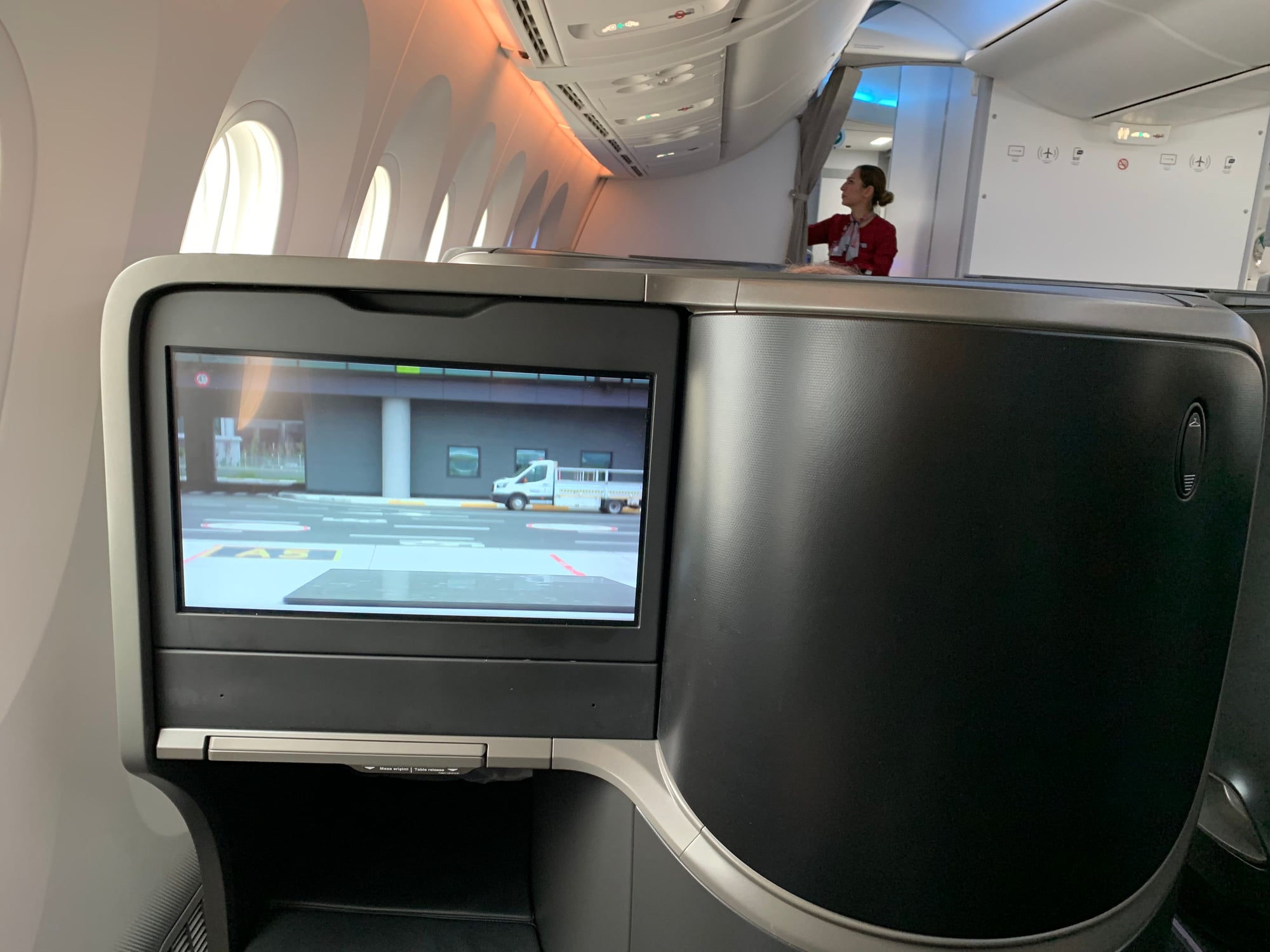
In September, Atlanta became the second U.S. destination to receive the 787-9 after IAD. The seats, manufactured by Stelia, are similar to SQ's regional business class product on their 787-10s though TK is using the seat for long-haul flights.
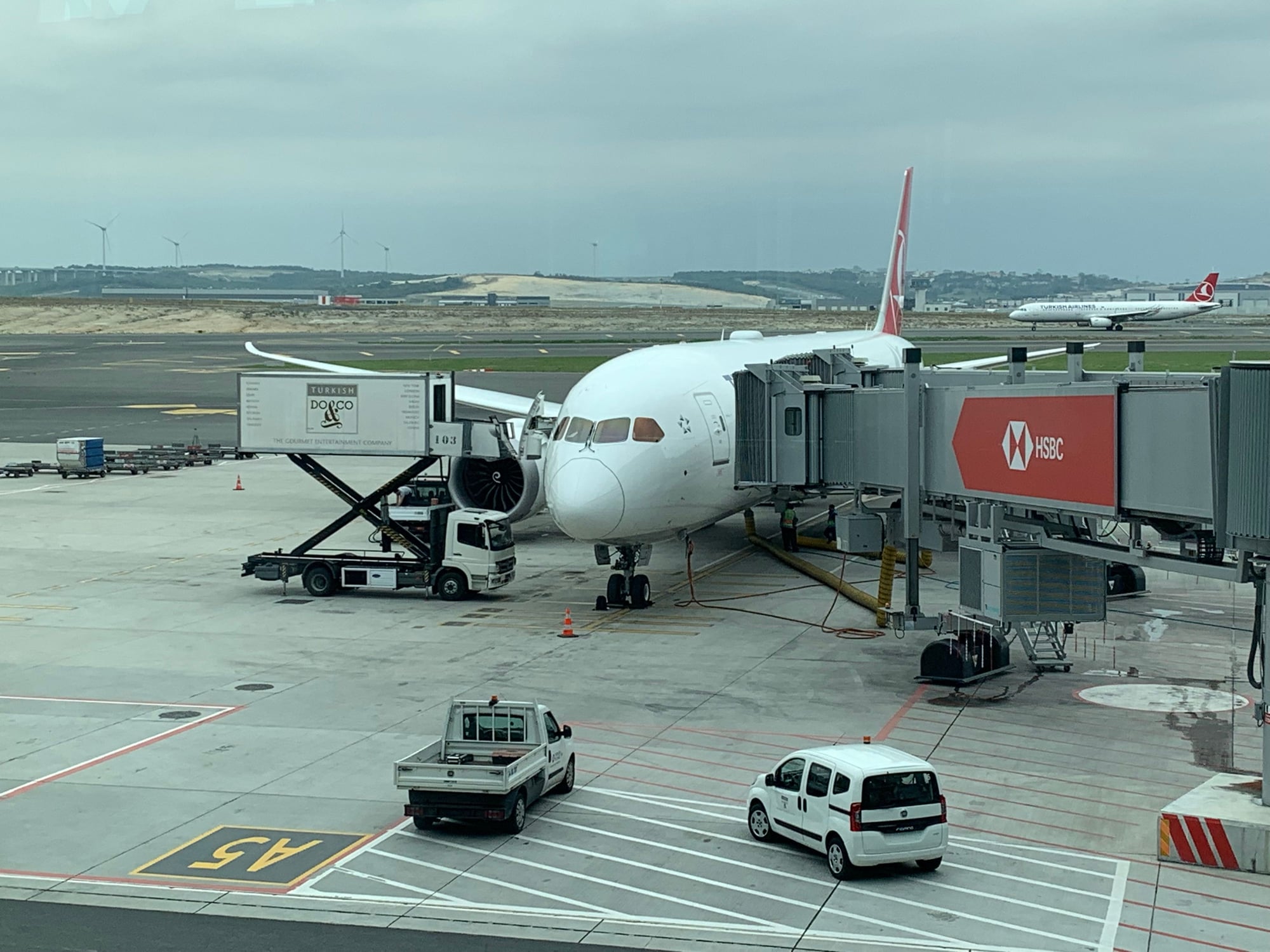
As you would expect from a brand new aircraft, the cabin and seat finishes were gorgeous. But the seats and footwell were narrow and I constantly found my legs and knees hitting the sides of the seat while sleeping. For sleeping, I'm actually conflicted between this seat and the 777, though privacy on these new Stelia seats is unbeatable.

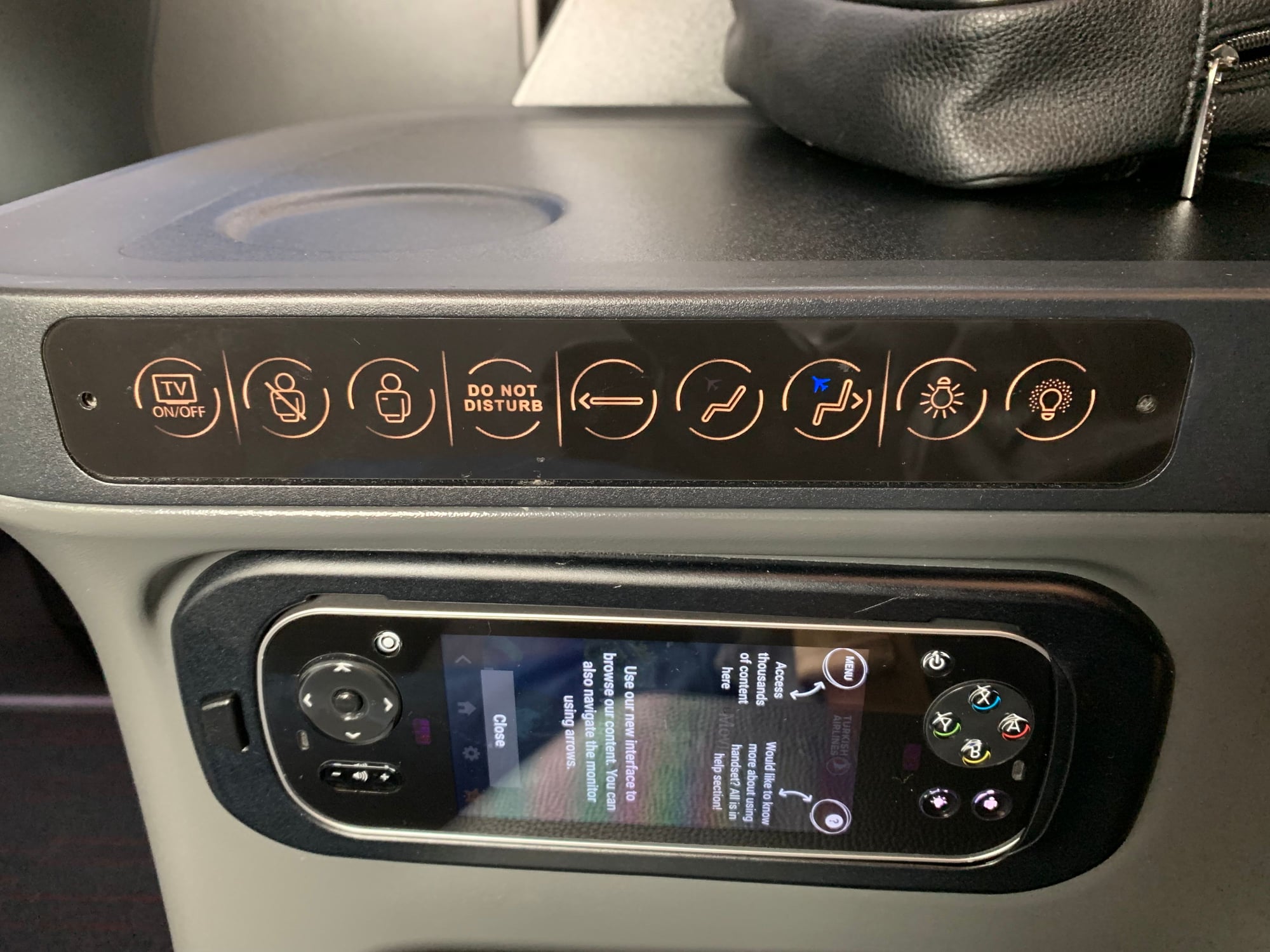
The J cabin was initially only about 60% booked, but we ended departing with a full load. Weather delayed many northeast US flights by several hours, causing several rebooked customers to be transferred to our flight.
Today's menu.

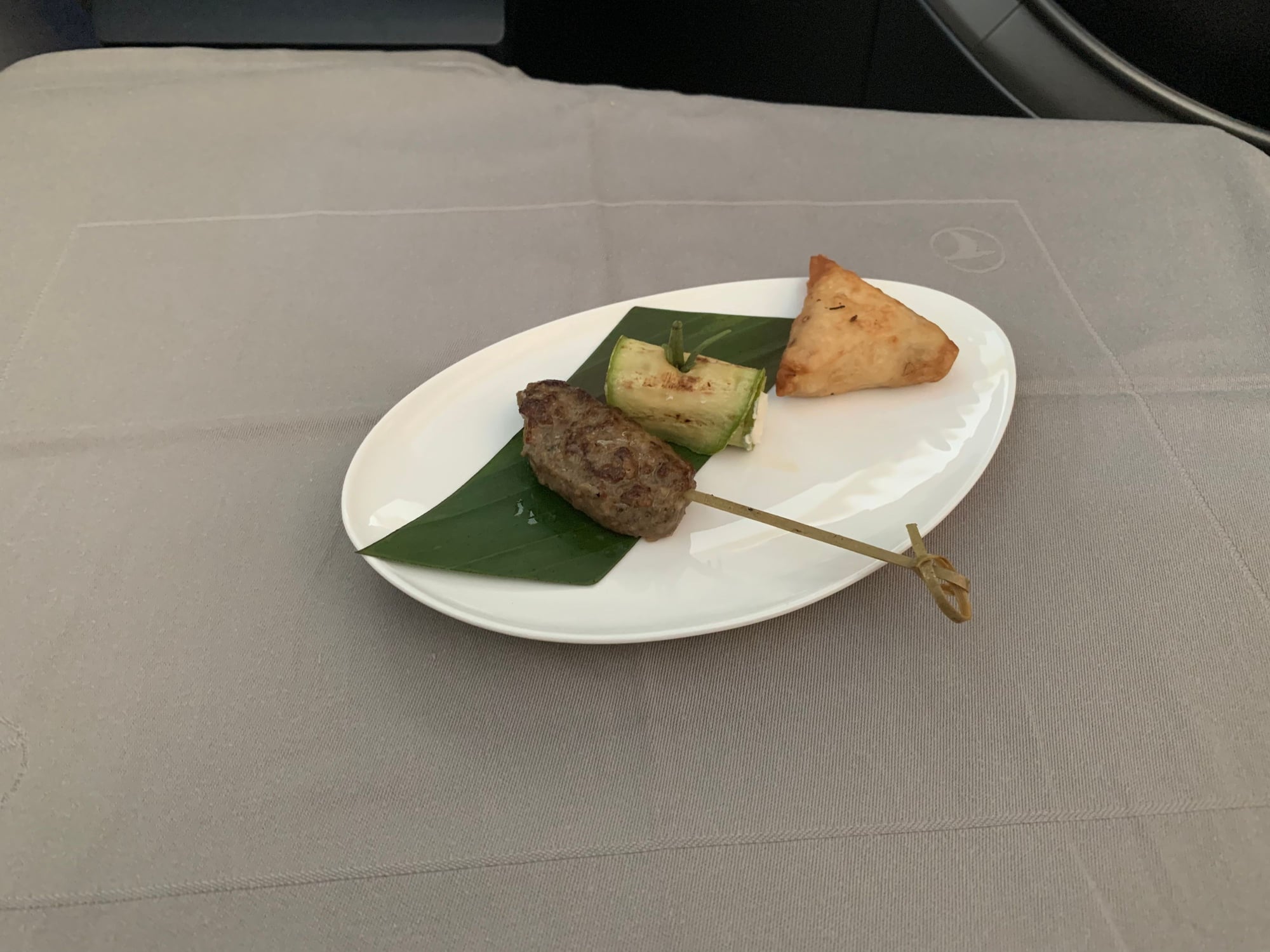
Canapés were served 70 minutes after takeoff.
Followed by the starter trolley 55 minutes later.

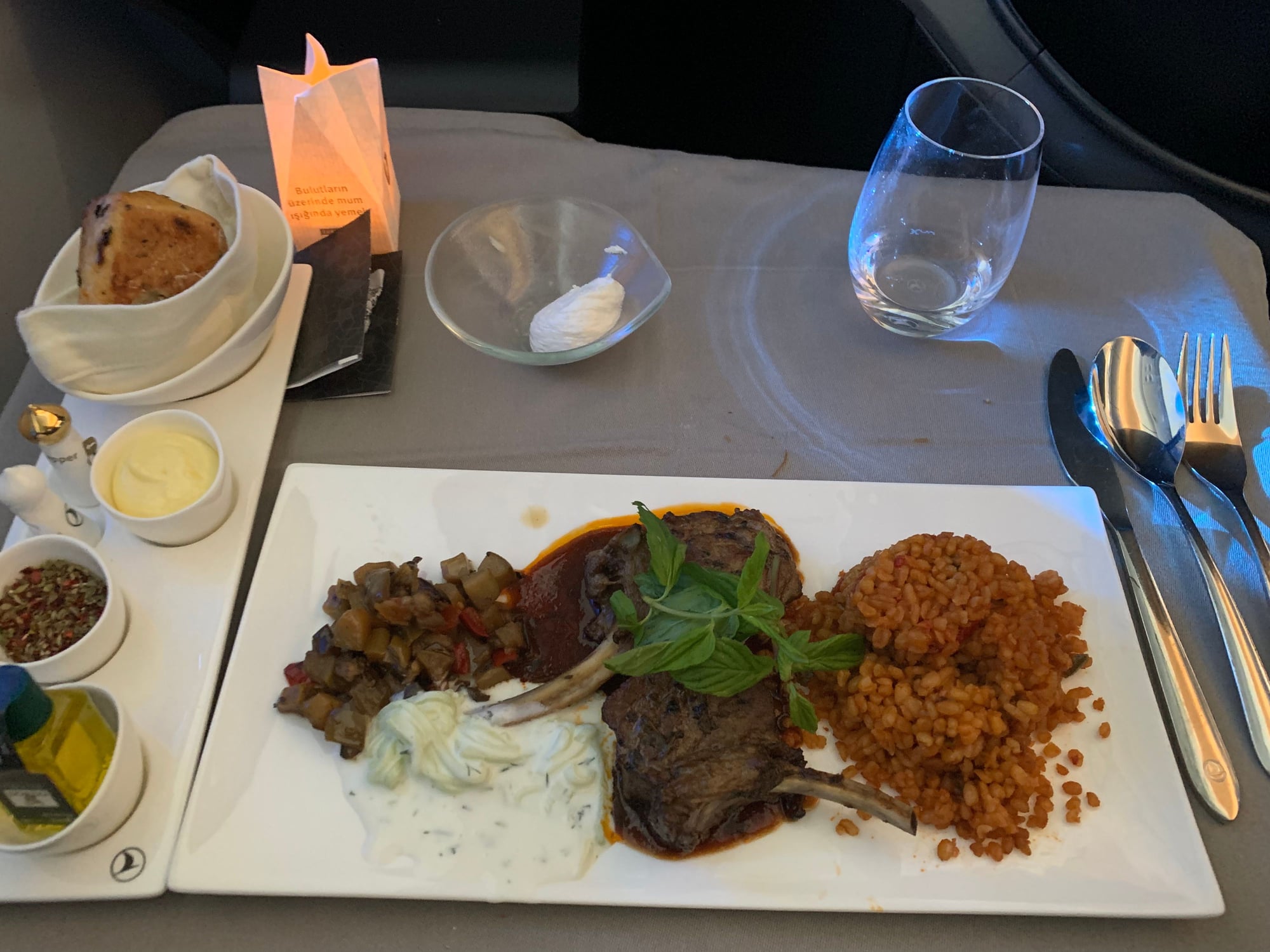
The main course was brought out 15 minutes later. The lamb chops were good, but slightly overcooked.
And the dessert and coffee/tea trolley another 55 minutes later. In total, the meal service from canapés to dessert lasted 2.5 hours. Lights were dimmed and turndown service was offered 4 hours after departure. I'm not sure if crews are just starting to get used to the 787-9, but service and flow was exceedingly slow.
I slept for about 4 hours before lights were turned on again for the second meal service.
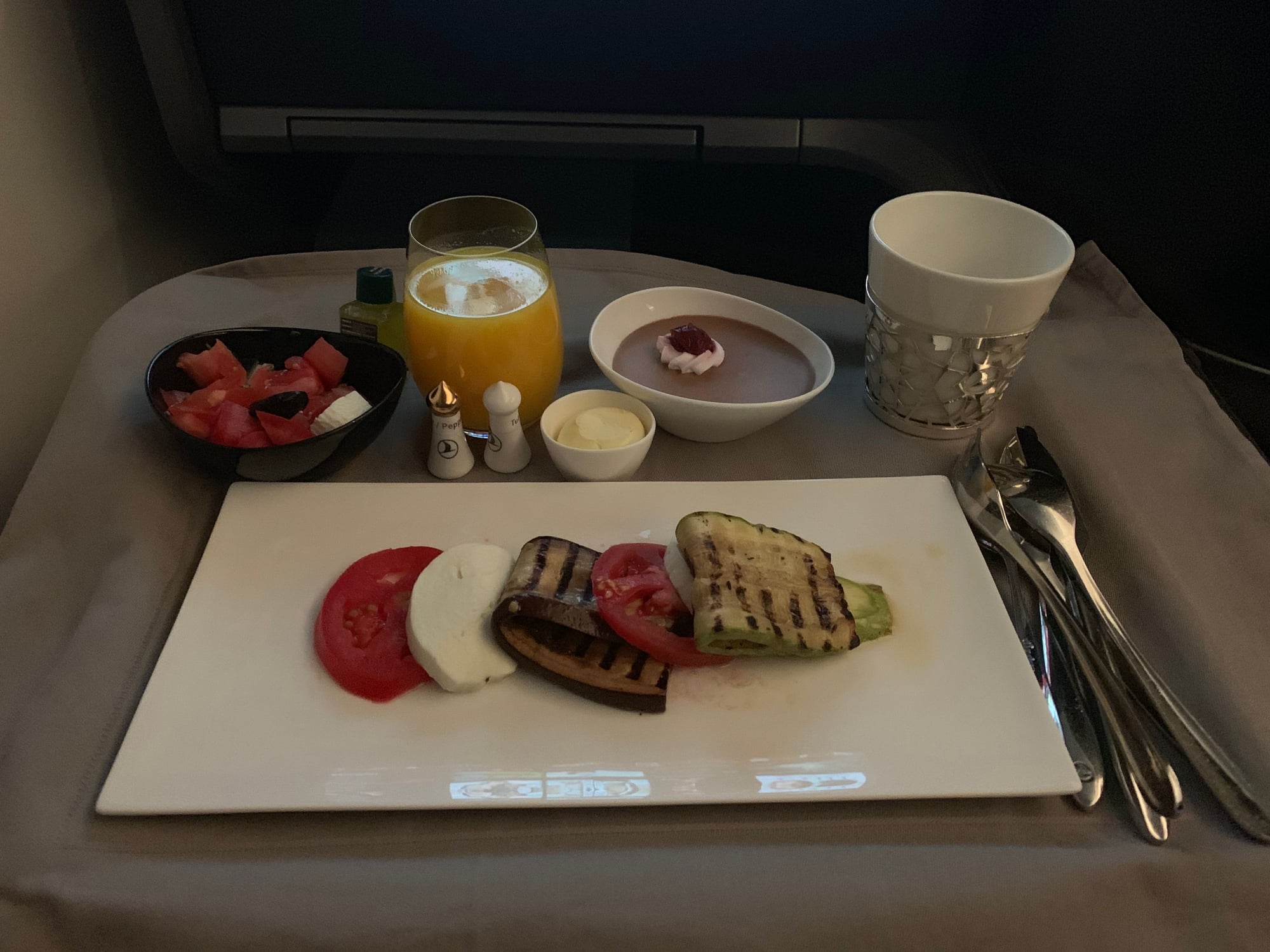
The chicken was dry and largely forgettable.
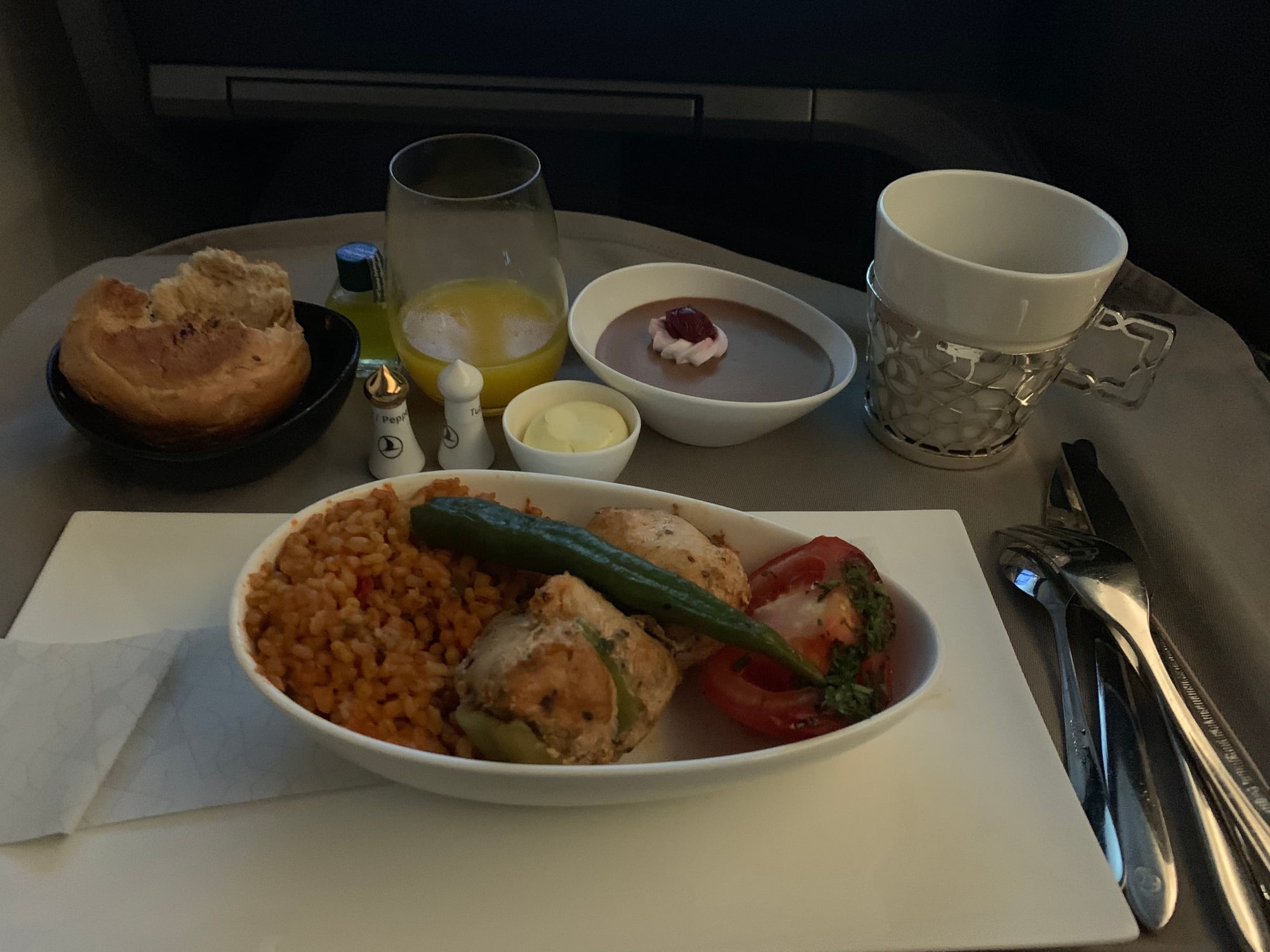
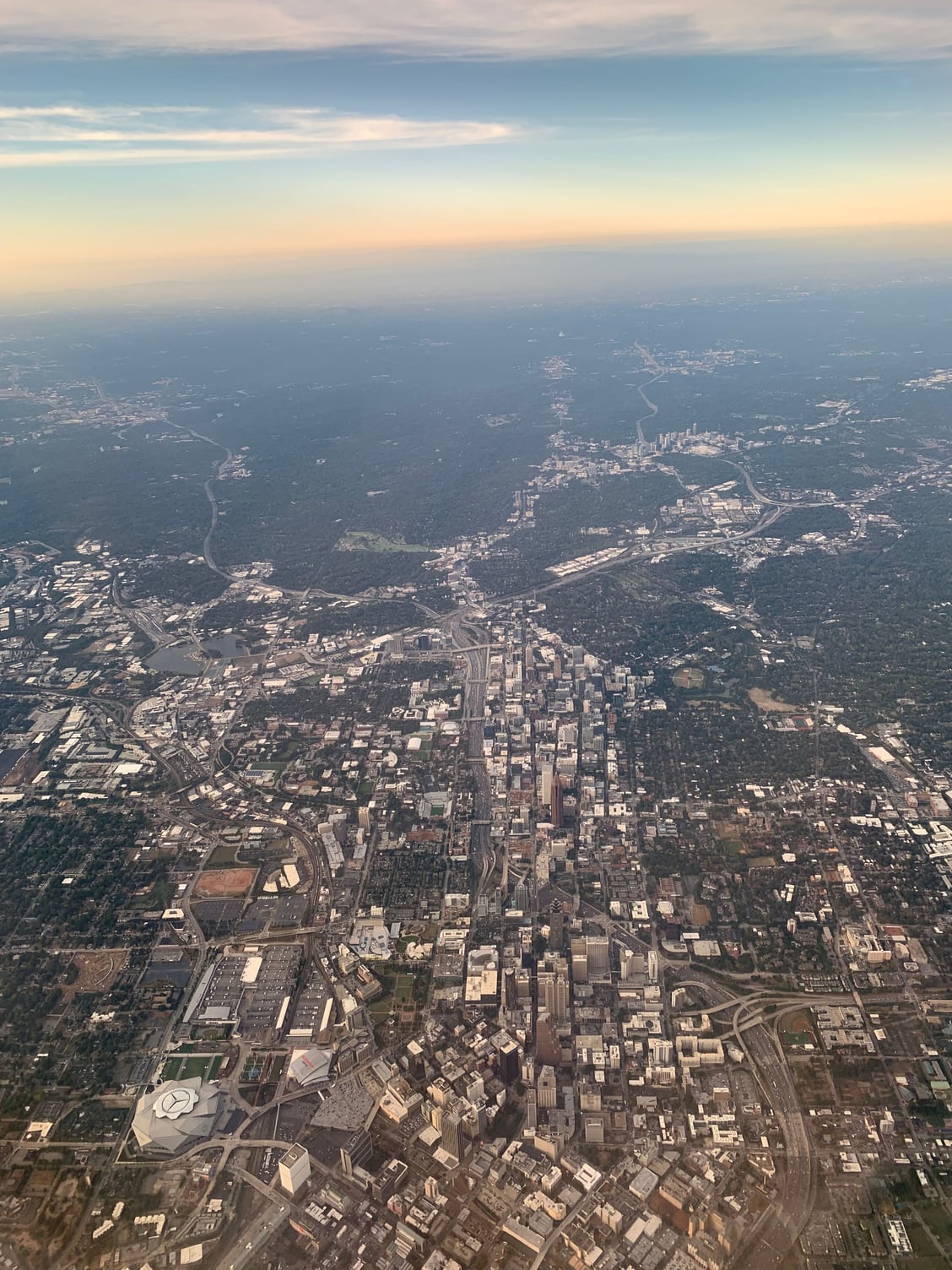
This time, the meal service, from start to finish, was completed in 45 minutes. With two hours to go until landing, I reclined my seat for another nap before landing. The descent into Atlanta gave us great views of the city.
I had an expiring Chase IHG free night certificate so I used that on an overnight at the Kimpton Overland Hotel. This is the first Kimpton in Atlanta and goes for 40k IHG points a night.
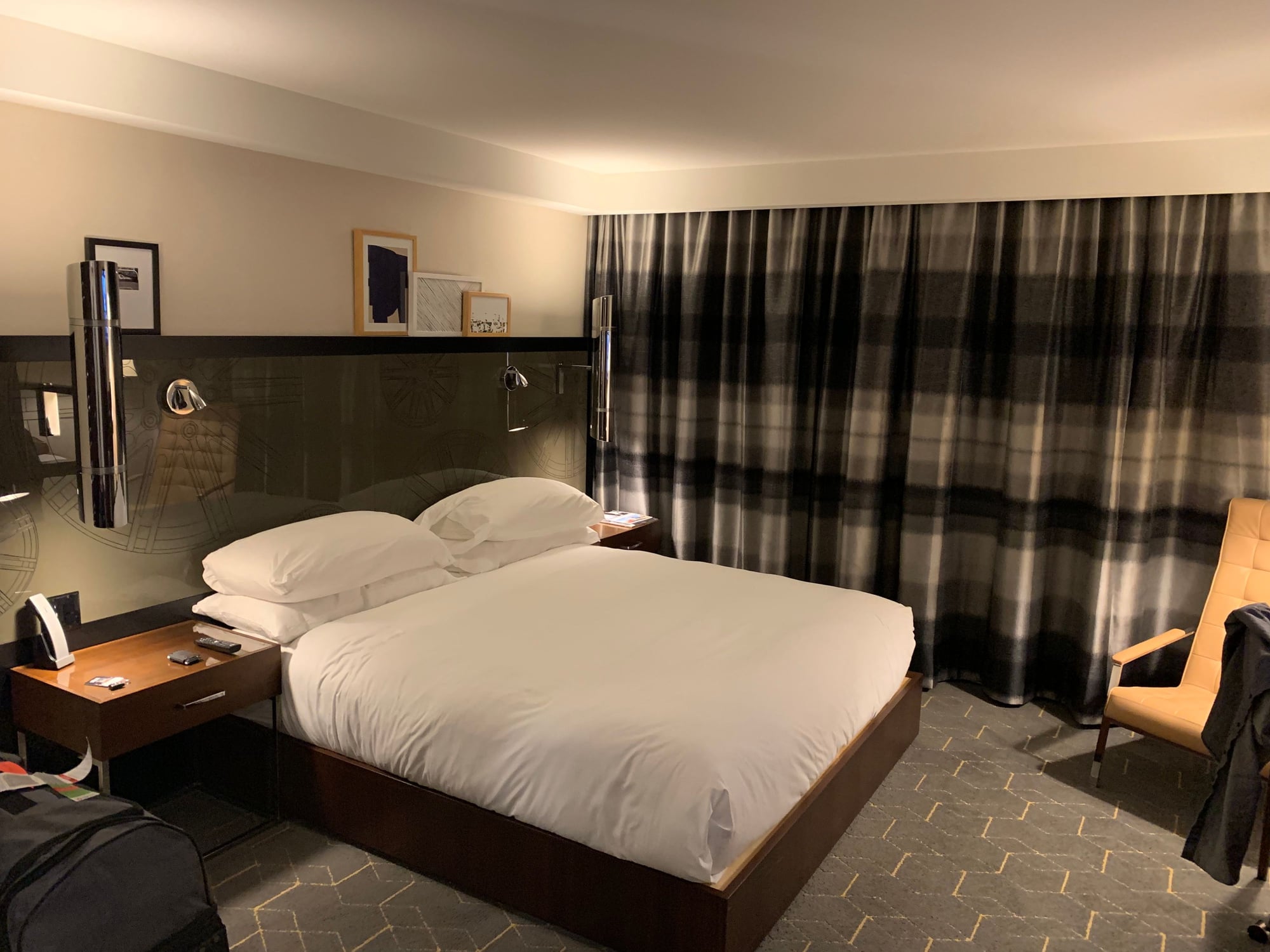
The layout of the room was a little strange given the exposed bathroom.
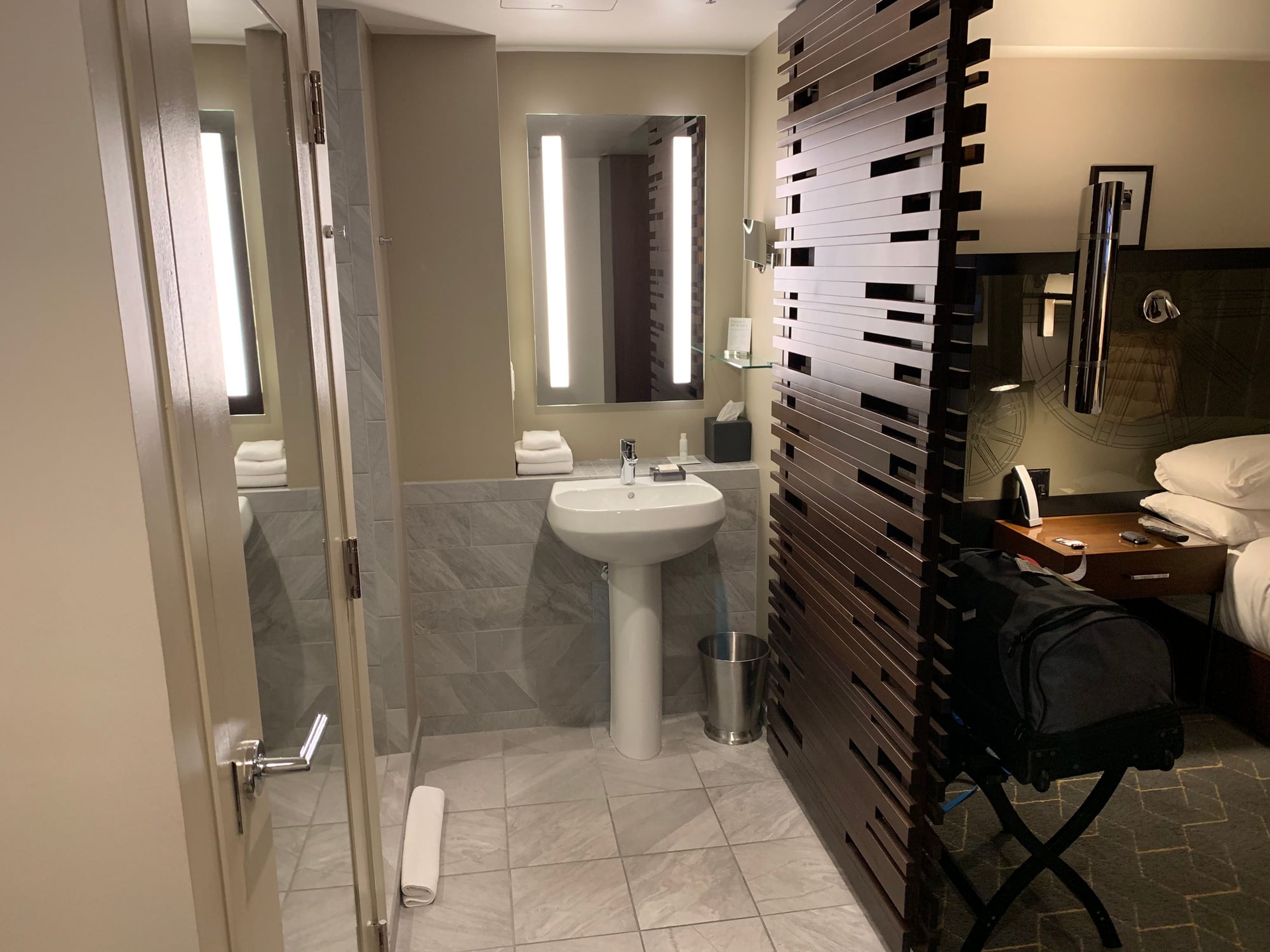
Overall, the stay was fine, but I wouldn't necessarily go out of my way to stay at this particular Kimpton again.
17 October
The final two United flights were about as boring and ordinary as domestic flights could get. This forum doesn't need any more reports of United domestic flights, so I'll keep this part short.
ATL-ORD
United Airlines UA3405
08:05-09:15
Way back in the day, when I lived in Atlanta and was still flying UA, one of my biggest frustrations was the lack of a United Club. I hadn't flown out of a T gate in years, so I was excited to visit the new-ish United Club.

While the breakfast offerings were unmemorable, the sunrise was magnificent. There's always something special about the late sunrises that Atlanta gets in the fall.

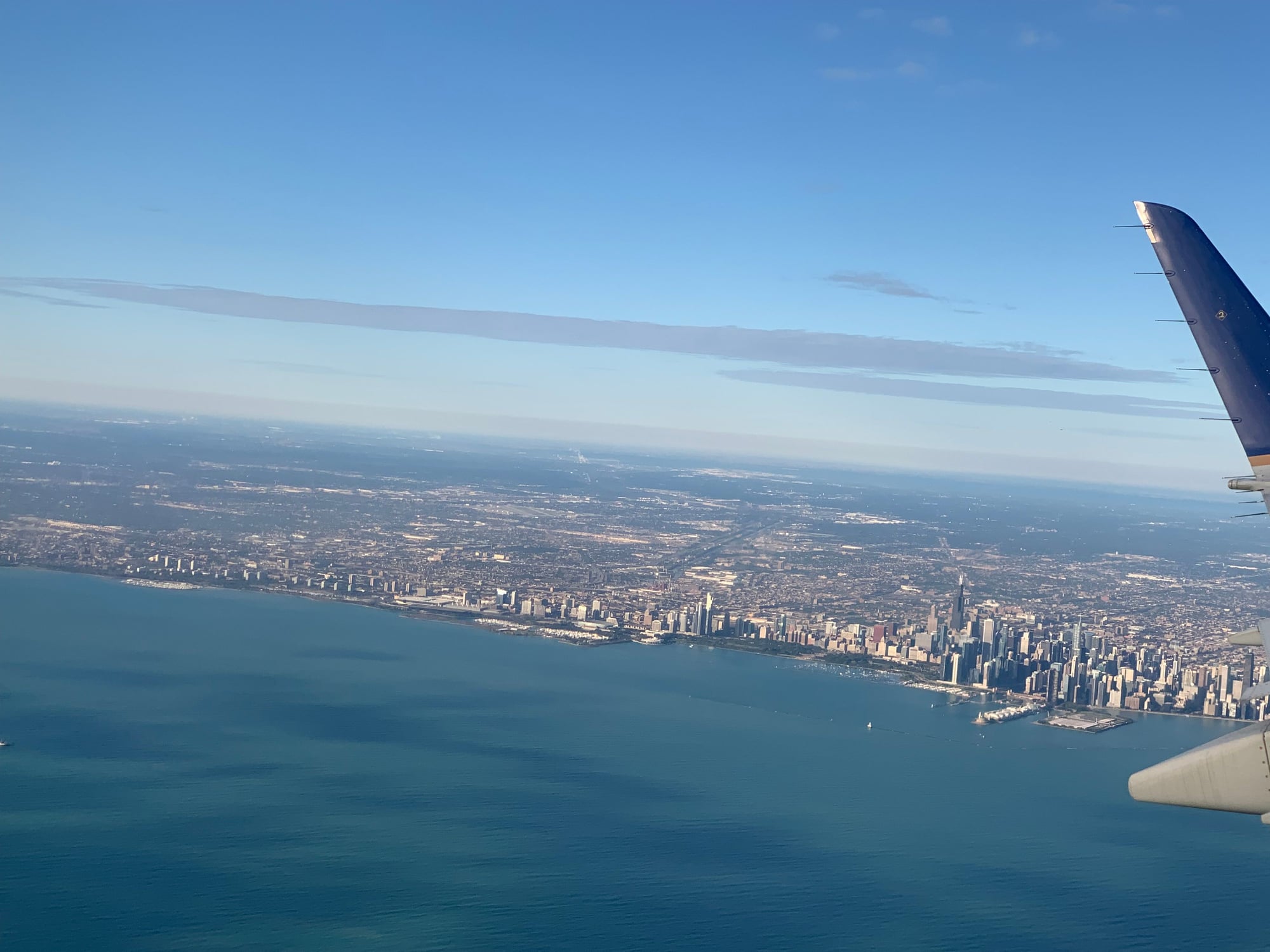
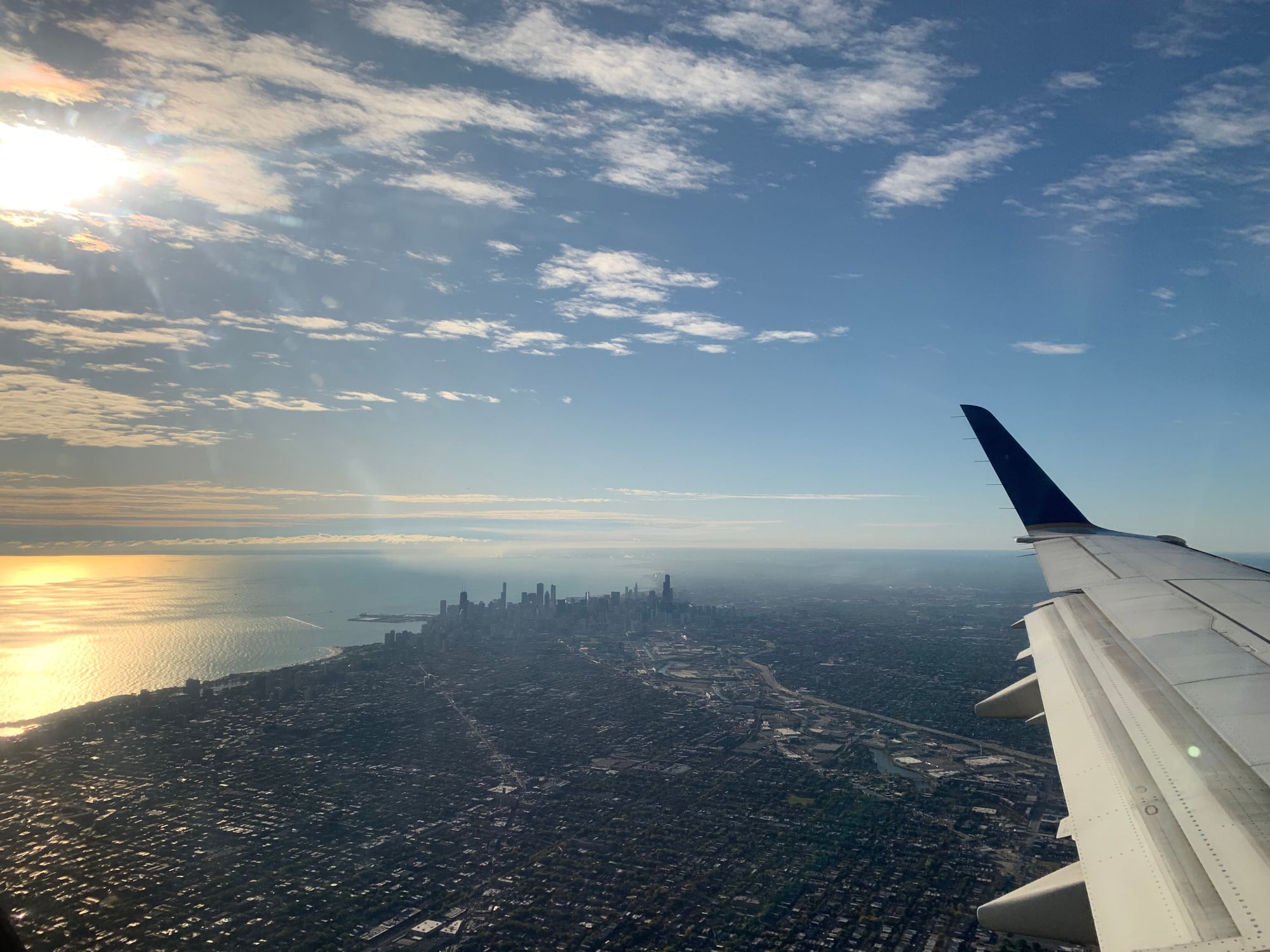
As were the views on approach to ORD.
 ORD-LGA
United Airlines UA1741
12:00-15:14
319
ORD-LGA
United Airlines UA1741
12:00-15:14
319
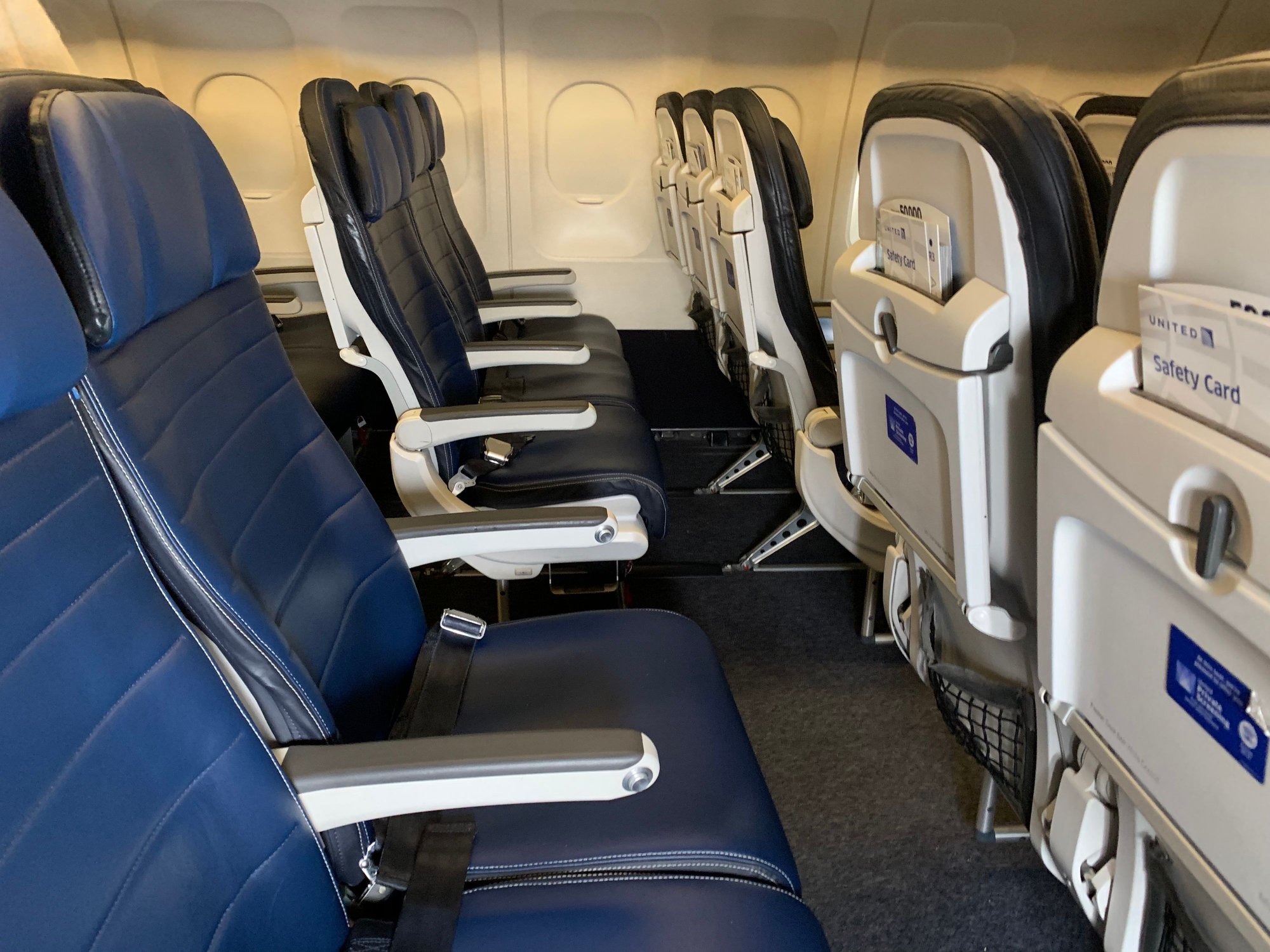
After killing time in the B6 and B18 clubs, I was onboard a 319 to LGA. I loathe these butt-numbing seats more than any other Y seat in the UA fleet, but was glad to see the stroopwafel offered on this afternoon flight.
 Conclusion
A couple that I met along the Pamir Highway told me the following story. There are four types of fun: Type 1 fun is the feeling you get when you know you're going to Disneyland. You're happy before you even get to to Disneyland, knowing that you'll have a great time there. Type 2 fun is the fun you get when you fall into the water while whitewater rafting. The water is paralyzingly cold for a moment, but when you get out of the water, you have fun. Type 3 fun is the when you're on a road trip and you have a flat tire. It sucks for more than a moment, but when you look back at the trip once you're done with the trip, you realize how much fun you had. Type 4 fun is the fun that leaves you angry and biter for a long time, but eventually, you realize an appreciation and deeper takeaway from the experience. It's like being turned away at a border or getting a visa denial. You're angry and bitter, and you blame others. But in the end, you realize the experience made you a better, more prepared traveler.
The Pamir Highway falls somewhere between Type 2 and Type 3 fun. Flying to Tajikistan with only a one-way ticket, no plans, and no travel companions was scary. From potholed roads to freezing nights, questionable food and water hygiene to filthy outhouses, there is no denying that the beauty of the Pamir and Wakhan requires a tradeoff with comfort.
But two weeks on, it's easy to realize how every uncomfortable moment led to an experience beyond my wildest dreams. The Pamir Highway is one of the greatest road trips on this planet. And scrolling through the camera roll is just the consolation prize.