Part 14: Khiva, Uzbekistan
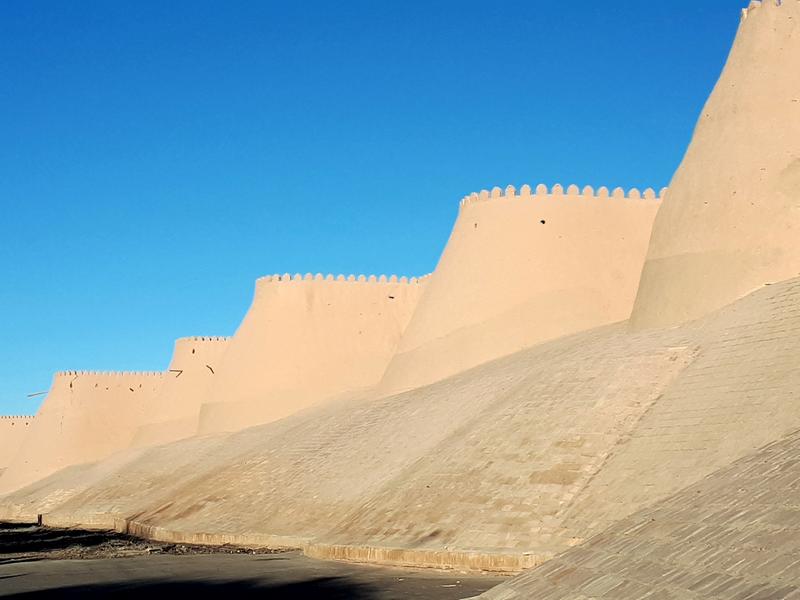
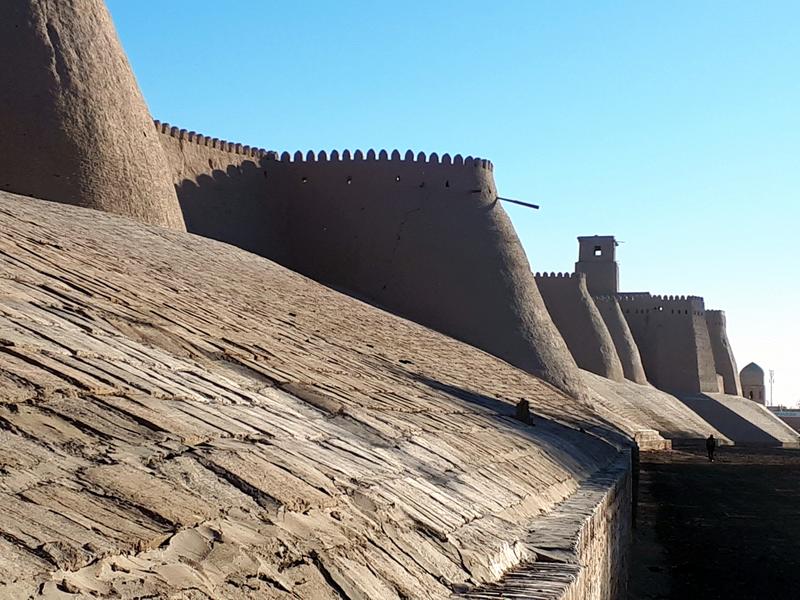
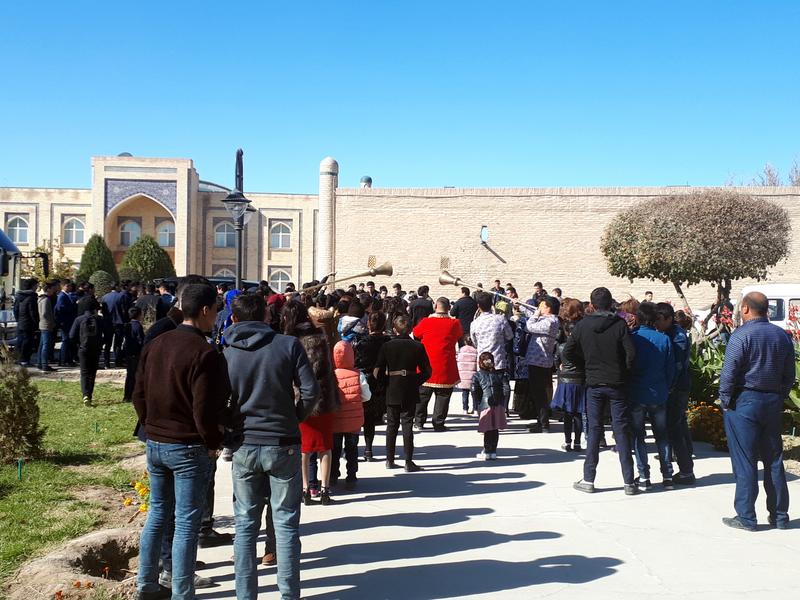
Khiva indeed feels special and completely different than both Bukhara and Samarkand. This is due to its location in the Kyzylkum Desert. When standing in front of the clay mud walls of the oasis city, once the centre of a feared slave-trading Khanate, you just feel that back in the days this was not the most hospitable of surroundings for foreign travellers. Interestingly, there was a wedding procession going on in front of the gate with some men playing on their karnay, a long trumpet making a very distinct sound. With the oriental music as backdrop I had no problems at all imagining I was indeed stepping back in time.

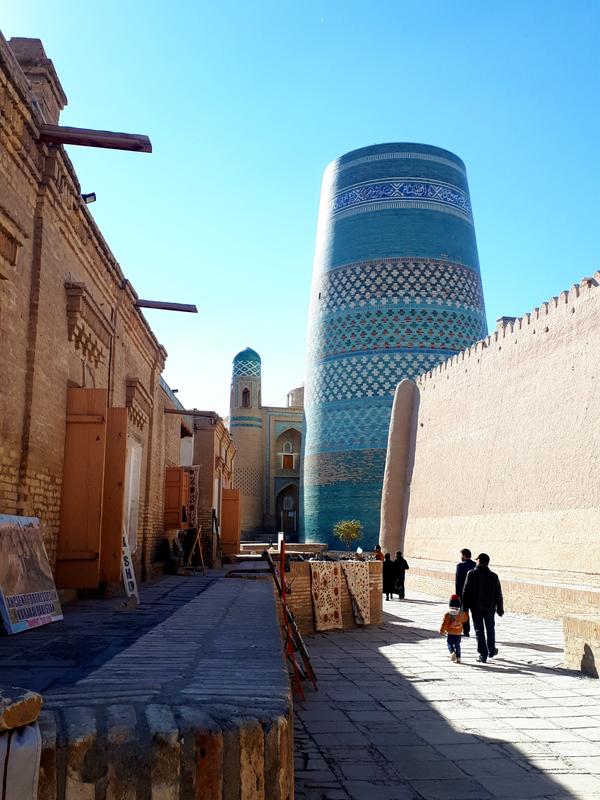
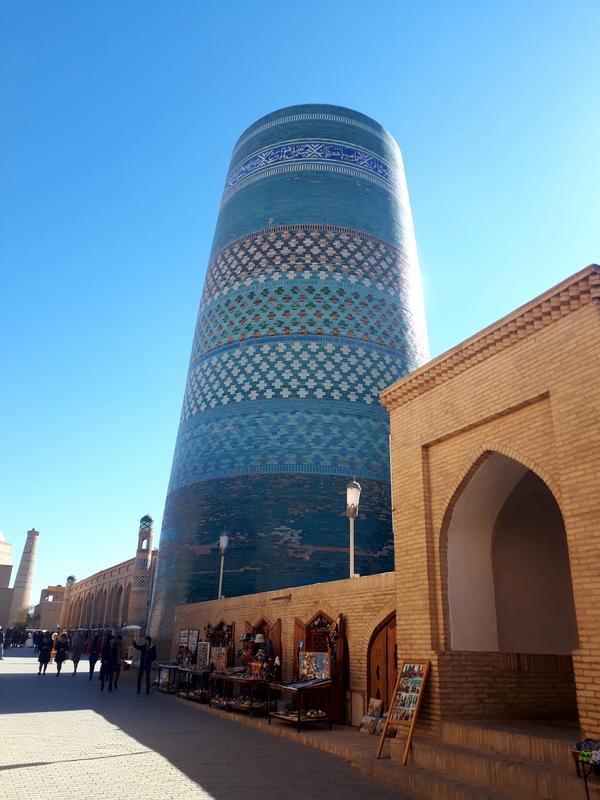
As mentioned in my previous instalment, the first object you notice after entering the city gate is the Kalta Minor minaret, which is completely covered in beautiful blue tiles. The fat minaret was built on orders of Mohammed Amin Khan in 1851, although when he died construction stopped. The minaret was thus never finished beyond its base. Next to it is the Mohammed Amin Khan Madrassa, which nowadays is used as a hotel.
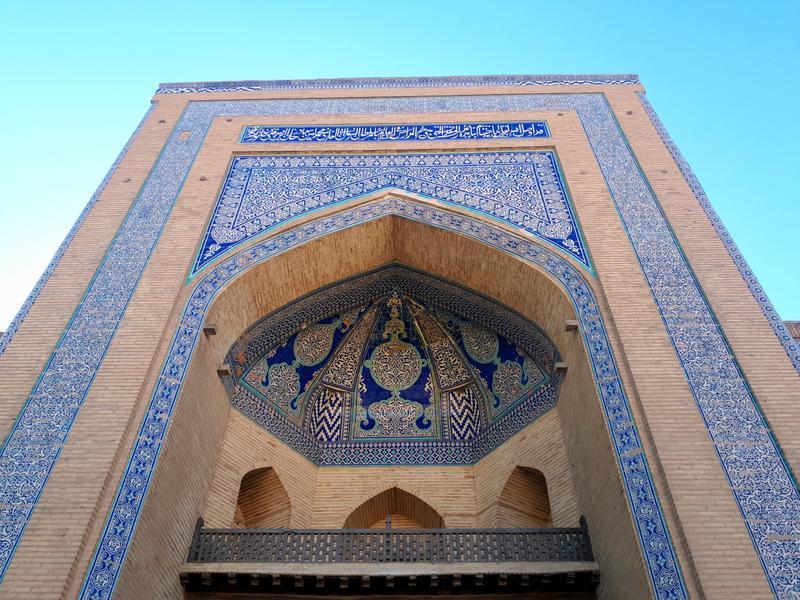
Just after the entrance gate (West Gate, which is the most important entrance to the walled city) you need to buy a combined ticket if you want to visit any of the sights and museums in Khiva. For around 15 USD you get a card (valid for multiple days) which gets stamped at almost every major sight and museum. There are however a few sights which are not part of the visiting pass and require you to shell out 2 USD or so per visit.
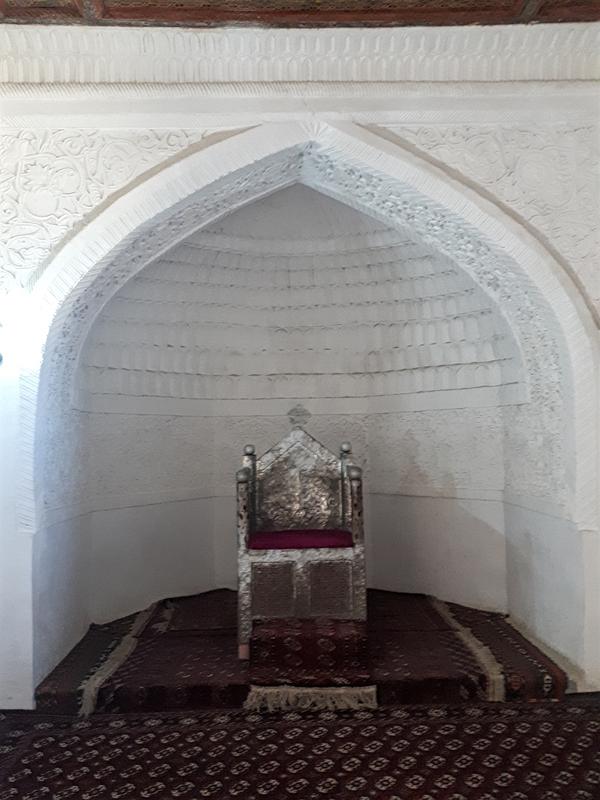
With the card in hand, the first sight on my list was the Kukhana Ark, the fortress and residence of the Khans of Khiva. Military quarters, palace residence, harem, stables, mosque, jail, an audience room for meetings with nobles or mere subjects, all can be found inside.
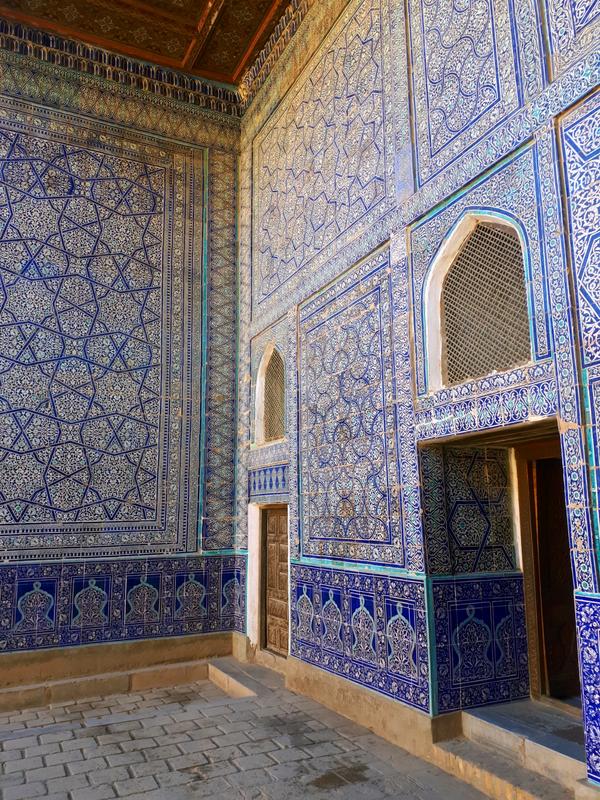

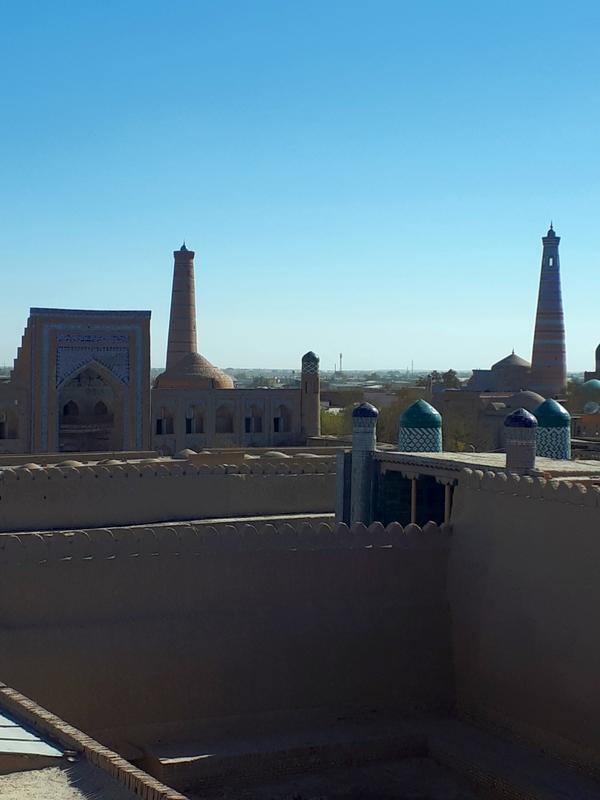
There are some decent views from the top of the complex – although there are much better sights in town for this purpose.

The Khans of Khiva managed to thank their wealth to the slave trade and high taxes extorted on travellers and traders (fairly easy when you are in the middle of the desert as the only oasis) and even on their own subjects (as they controlled the water and all irrigation – both heavily taxed as well). Especially because of the slave markets the Khanate had a fearsome reputation. I can only imagine the thoughts travellers might had when seeing soldiers with the banner of the Khanate in the far distance – it must have been very similar as seeing the black ISIS banner nowadays.
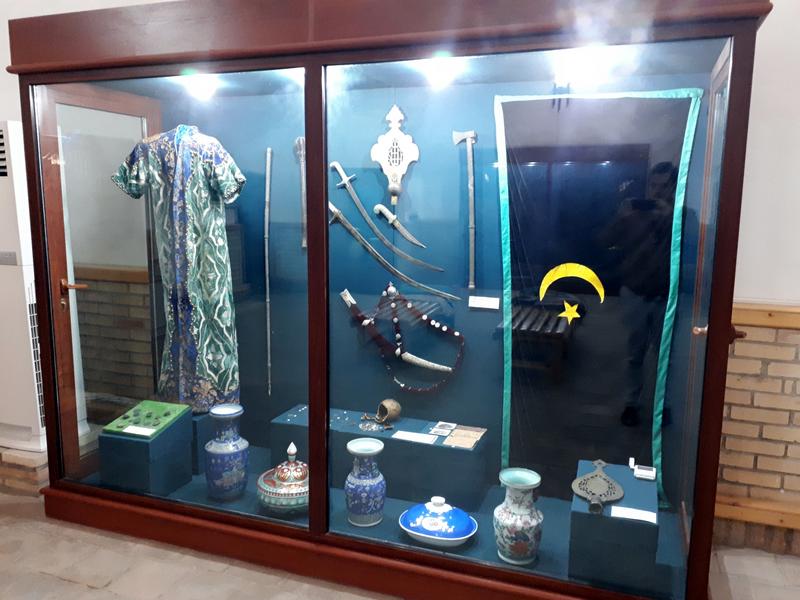
In what was seen at the time as a giant diplomatic PR coup in the Great Game, a British officer named Richmond Shakespear managed to convince the Khan of Khiva in 1840 to free more than 400 Russian slaves, for which he was later knighted by Queen Victoria. When the Khanate finally fell to the Russians in 1873 the Khan was not more than a vassal of the Tsar and the slave markets were disbanded.
Across a square on one side of the Ark (which was back then used as an execution square) is he Mohammed Rakhim Khan Madrassa which was built in the 19th Century. The square is mostly empty now except for the odd camel waiting for a tourist who wants to make a ride on it.

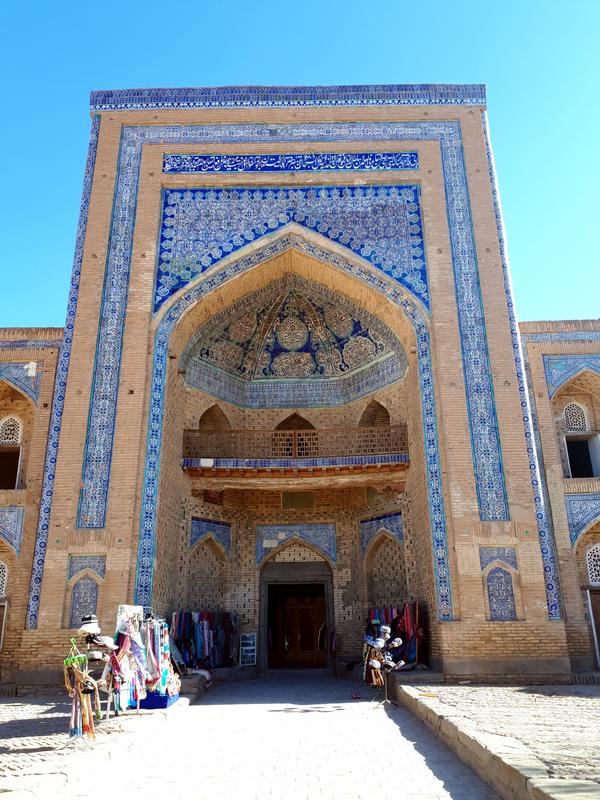

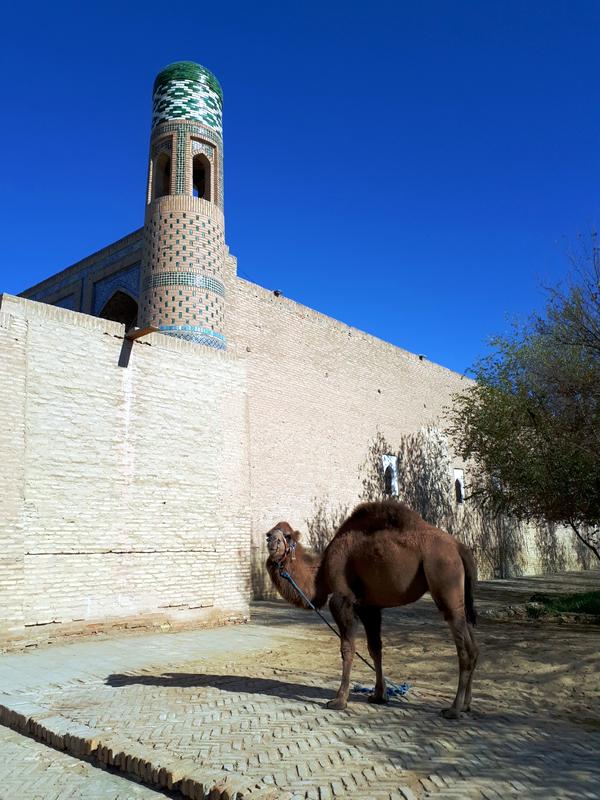
As the best preserved of the three great Uzbek silk road cities, the main draw of Khiva is however not one of the individual sights in the city, but the atmosphere of the old alleyways and city walls which haven't changed in hundreds of years. My only (very minor) complaint is that at times it however feels a bit too open air museum like, lacking local life (the few shops and stalls which are there in the old town all cater for tourists).

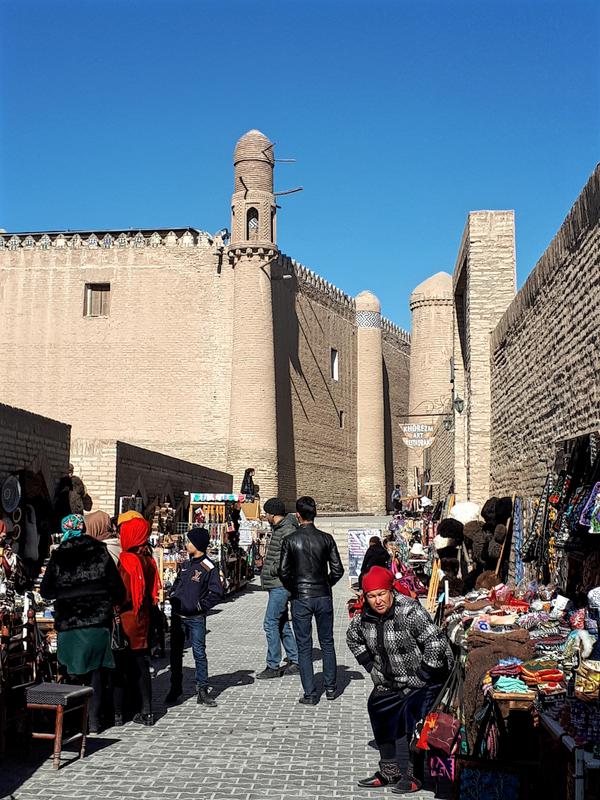
Many of the once notable buildings – such as the Kazy Kalya madrassa below – now house small museums, in this case a museum of applied arts. While worth a quick peek given entrance is free if you bought the visitor pass, most museums aren't terribly interesting

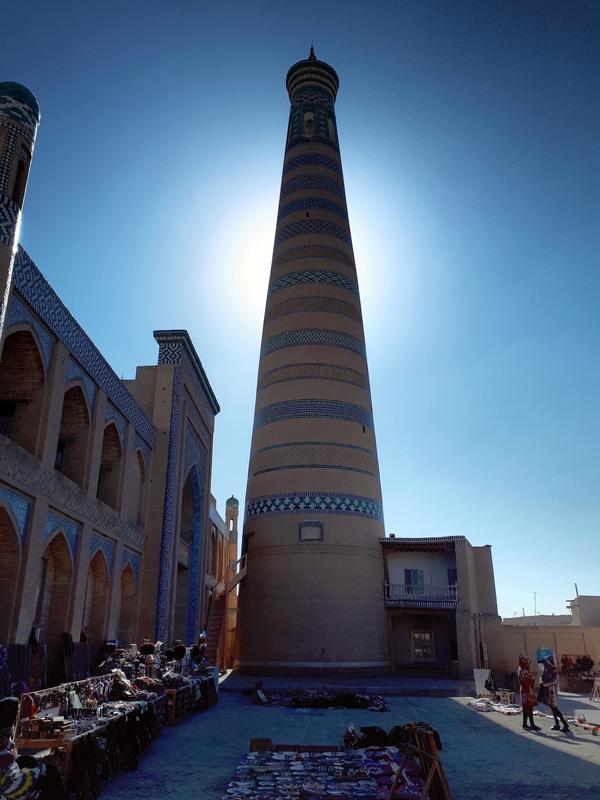
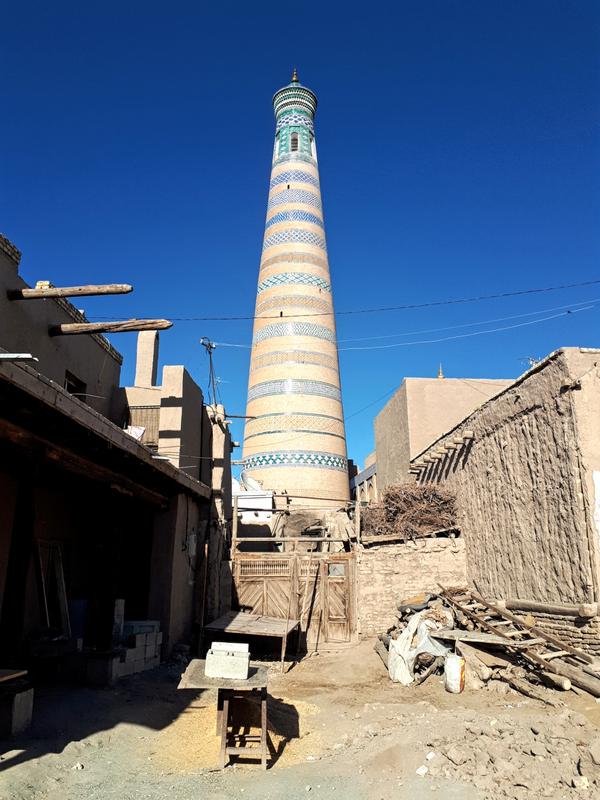
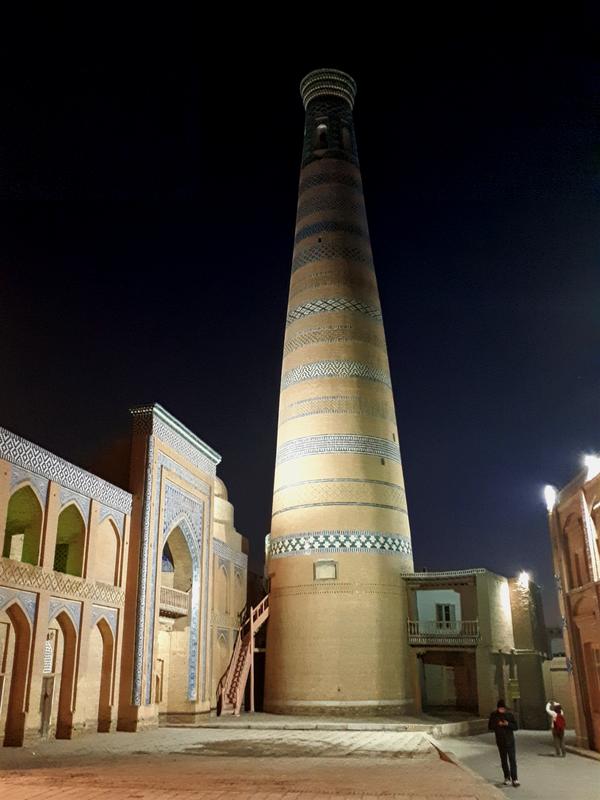
The biggest sight which is not included in the combined ticket is the 148-feet-high Islom-Huja minaret, which costs around 2 USD to access. It's quite a climb to the top on some narrow and steep steps, but it does give some sweeping views over the city and surrounding desert. It's well worth it.
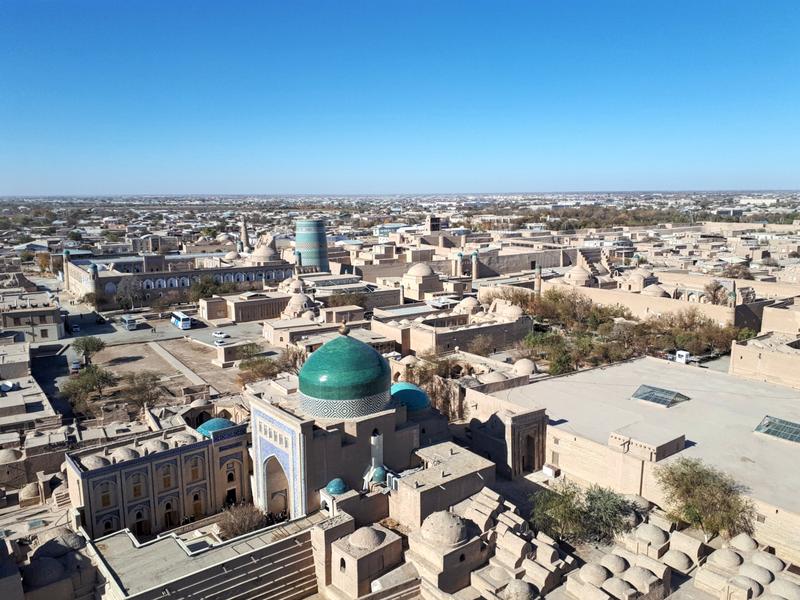

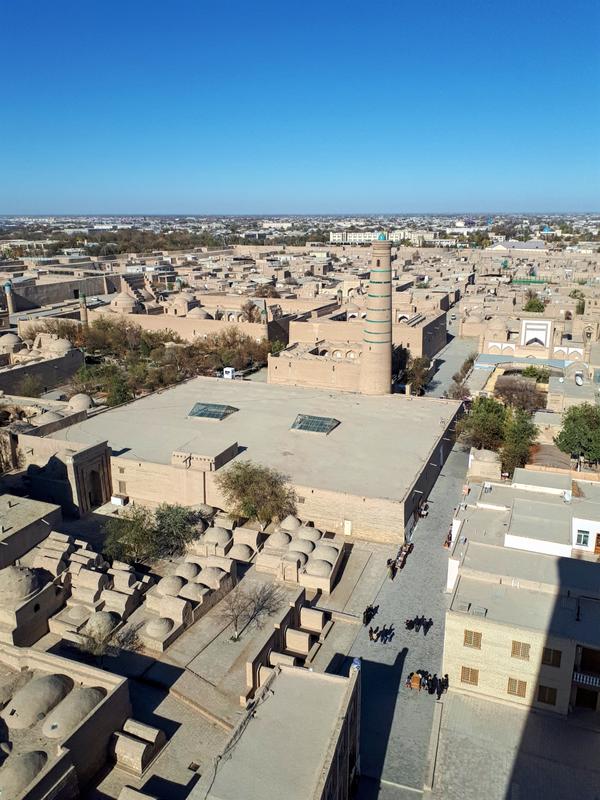

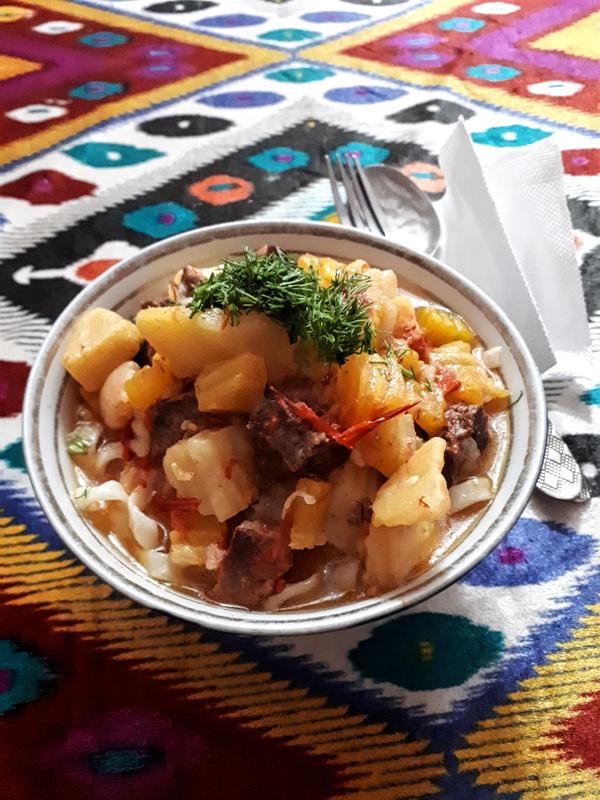
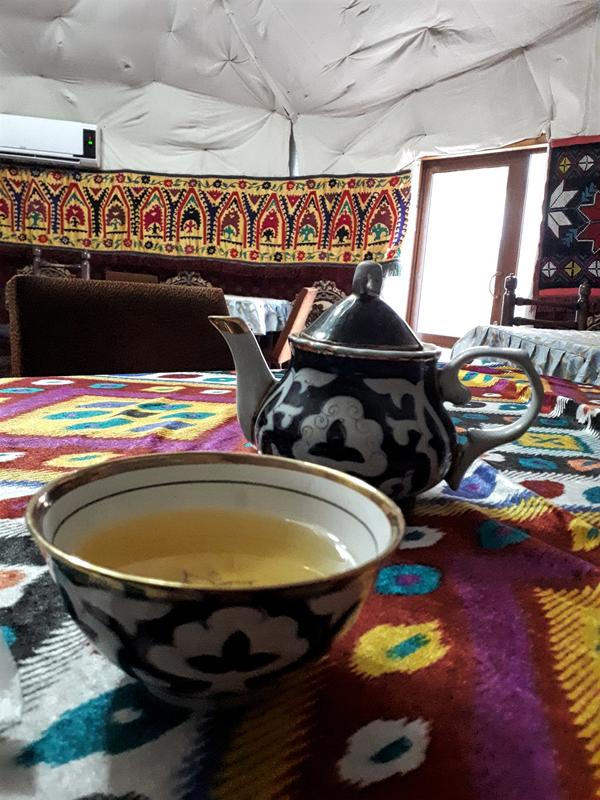
After the climb I decided it was time for a break. There was an appealing looking restaurant nearby where you could dine in an authentic yurt set up on the inner courtyard. I had some laghman (this time served as a soup) and a pot of tea.
The backstreets to the south of the Islom-Huja minaret are my favourite as there are some cool views and most of the local life, such as this working tannery and carpet weaving workshop.
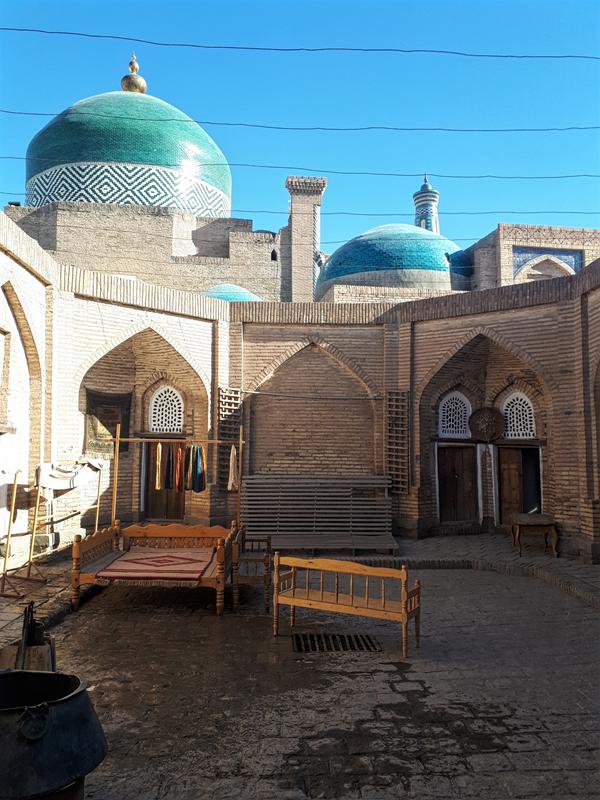
The Islom-Huja minaret towers above all buildings in this part of town. The more south you go, the more local life you will encounter as many of the low-key houses here are inhabited by townsfolk since centuries.
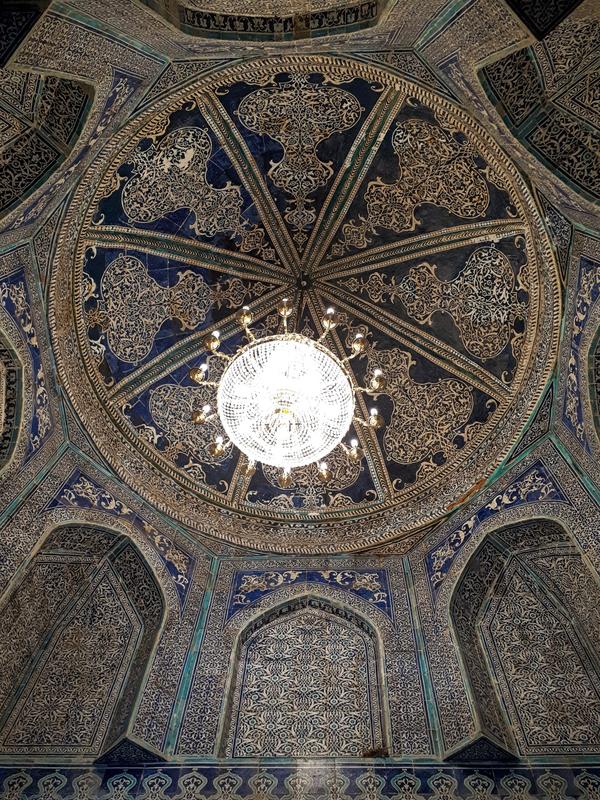
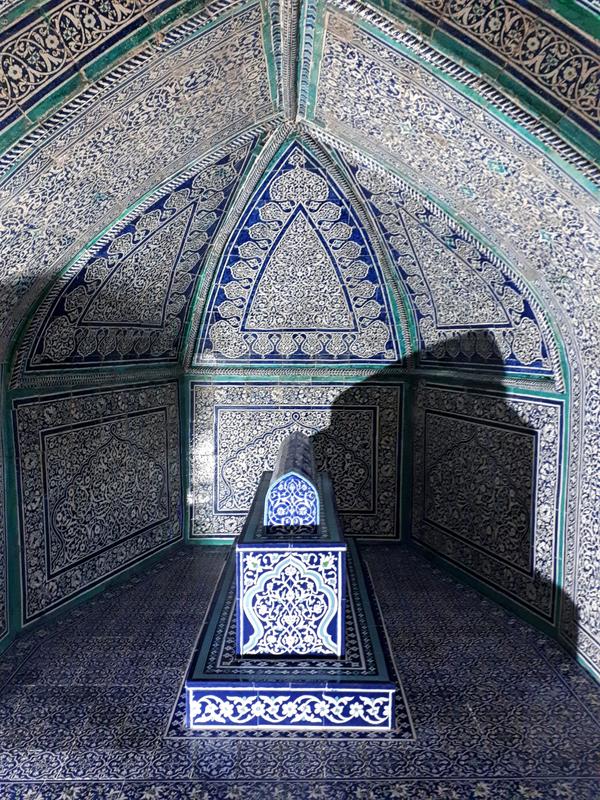
Also the most beautiful sight in town is located in this area. The Pahlavon Mahmud Mausoleum is named after a man who was a poet, philosopher and legendary wrestler in one. Pahlavon Mahmud is considered Khiva's patron saint and it's easily the most-visited place in town by locals. The tomb is from 1326, but was rebuilt in the 19th Century. Also some of the Khans of Khiva are buried here as they requisitioned it in the early 20th Century.

Opposite the mausoleum you can find the impressive Sherghozi Khan Madrassa – which unfortunately is closed for visitors.
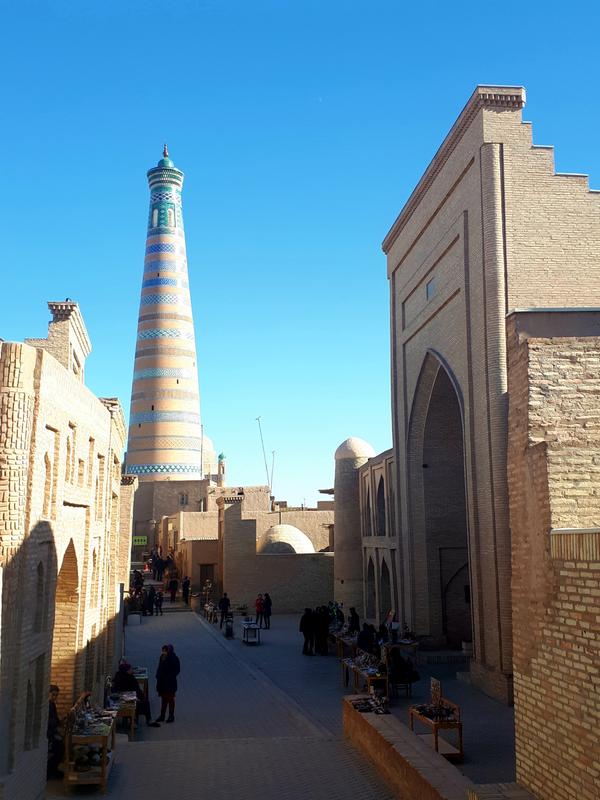
I continued walking through the backstreets until I reached the southern gate of the city.
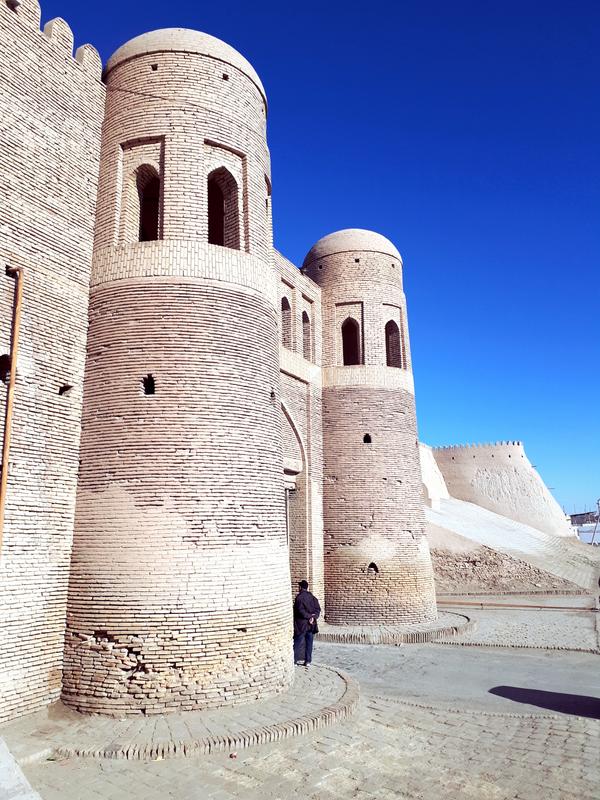
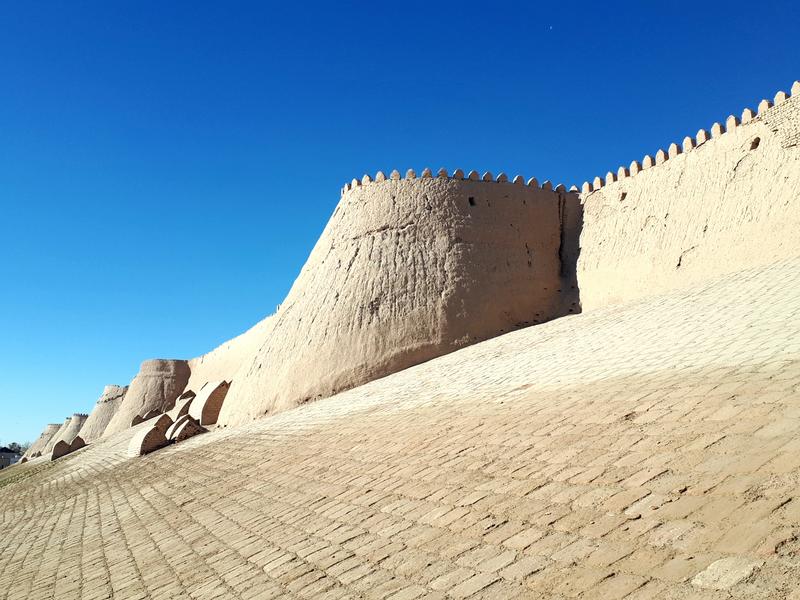
Top tip: you can climb on top of the city walls here by using a sandy slope just to the west (at the inside of the walled town). I had to dodge some cows and chickens however to reach the slope before I could climb up.

You can walk the entirety of the city wall all the way to the West Gate from here. The views over Khiva are beautiful. It is also possible to get up on the wall at the North Gate (using stone steps which are part of the structure as opposed to a sandy slope) but the views there are much less beautiful in my opinion.
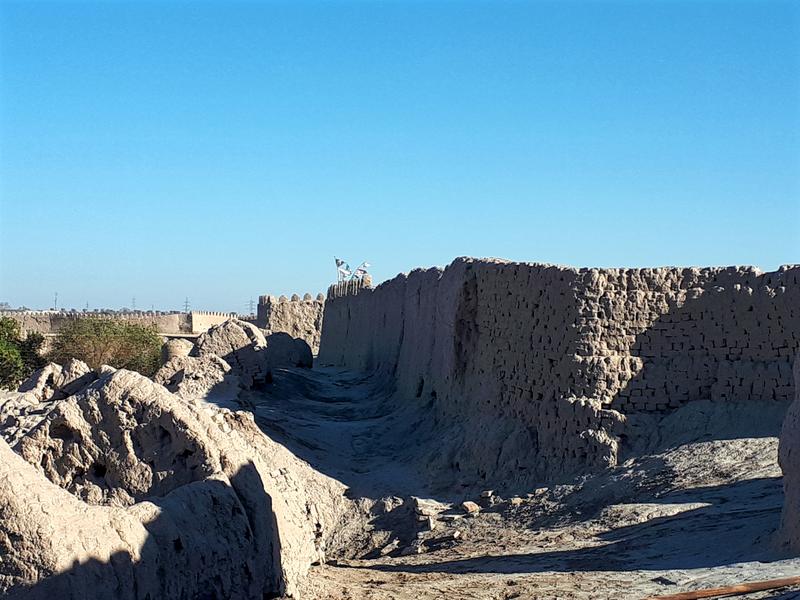
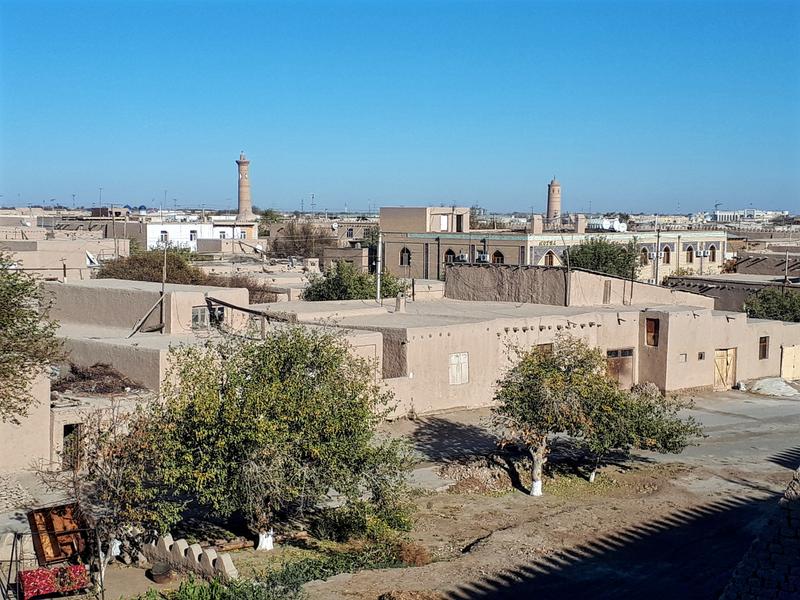
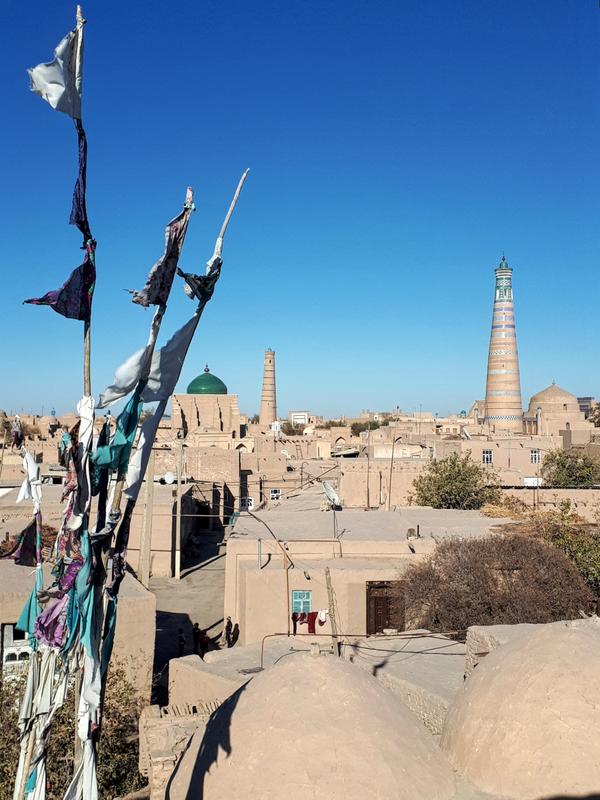

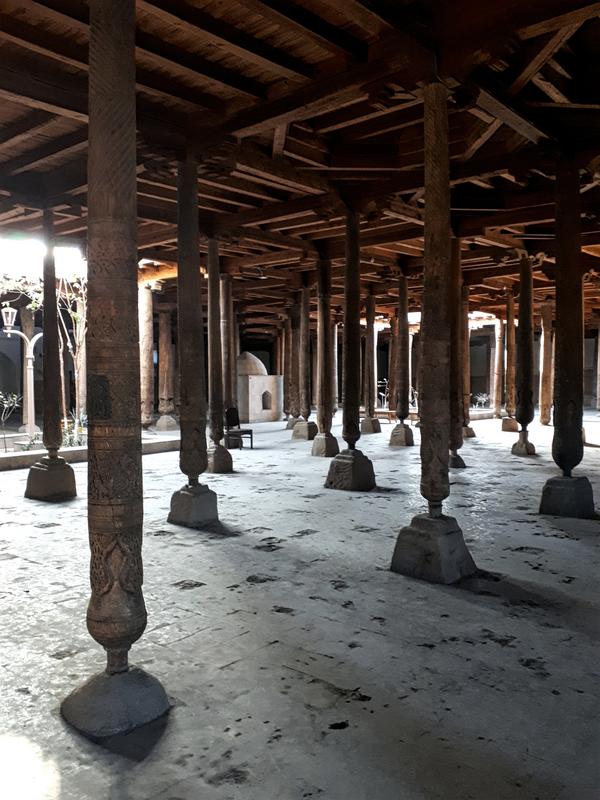
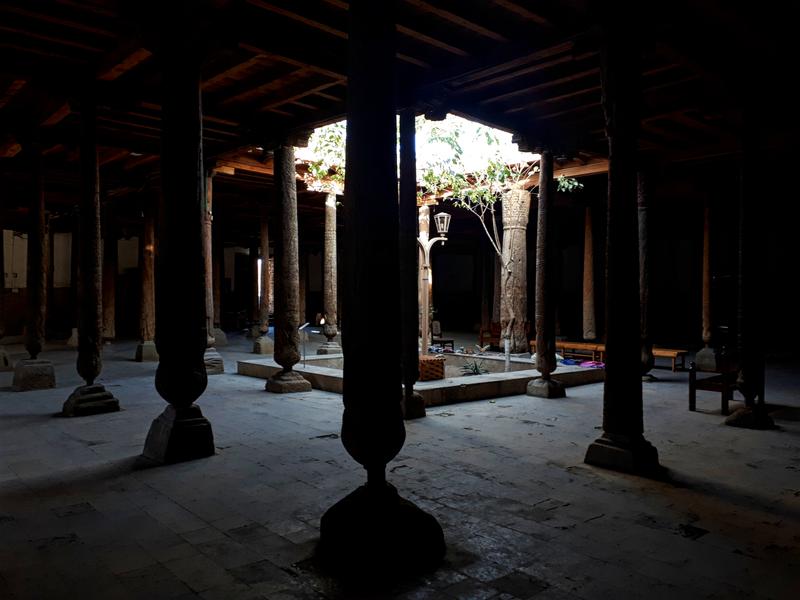
After the detour on the city walls I headed back down again towards the centre of Khiva. Another important sight is the rather unusual Juma Mosque, which is famous for its 218 wooden columns supporting the roof. Some of the beautifully decorated wooden columns date from the 10th Century.
The Allakuli Khan Madrassa from 1835 is also well-worth a view.
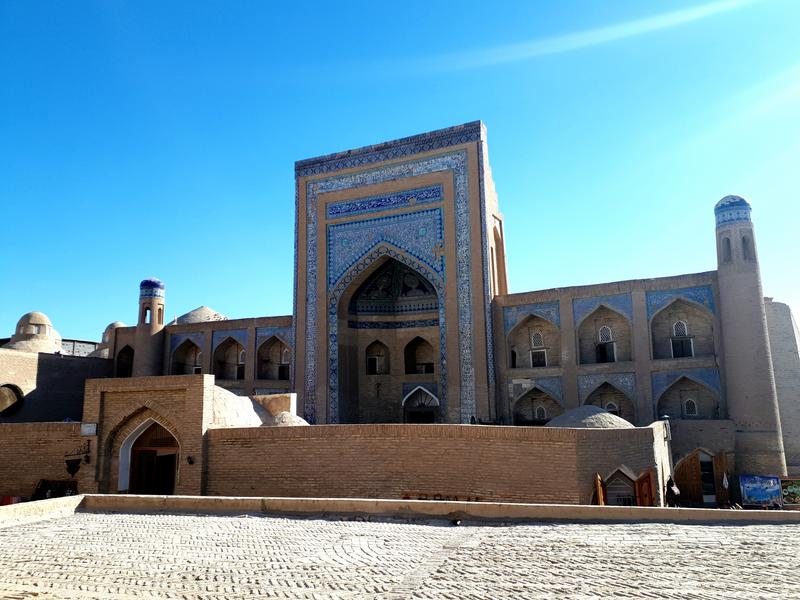
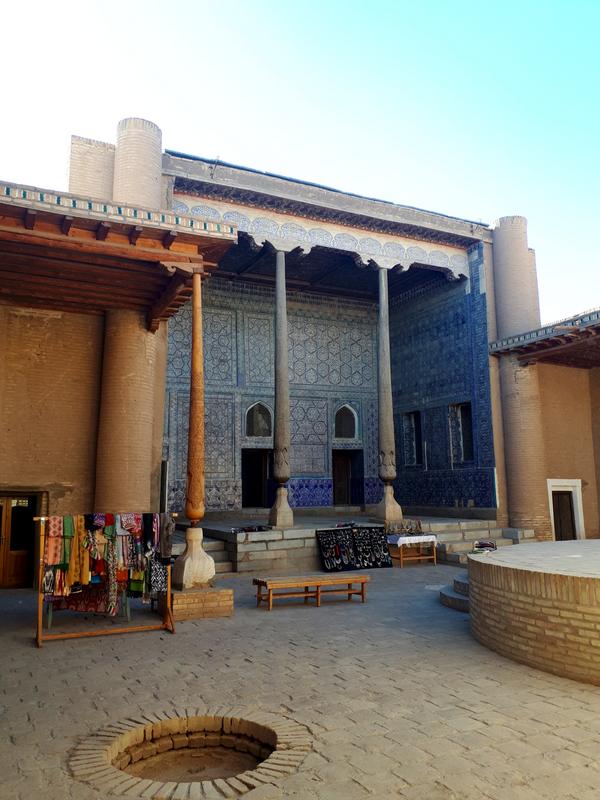
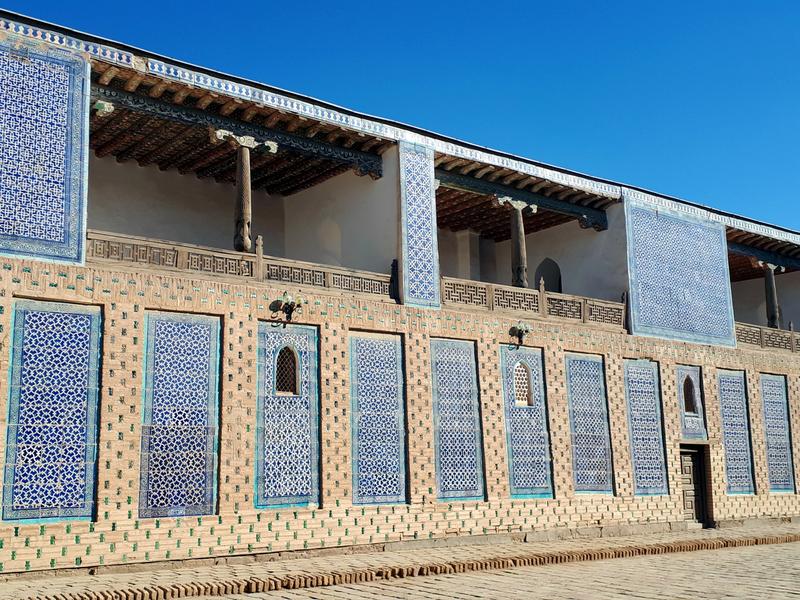
As well as some other pretty buildings which for the love of God (and some thirty minutes of Googling) I really cannot seem to remember, nor find any clue back how they are actually called. If anybody knows it'd be appreciated! (EDIT: I managed to find the building using the coordinates in the EXIF data, it's the Tash-Khovli Palace)

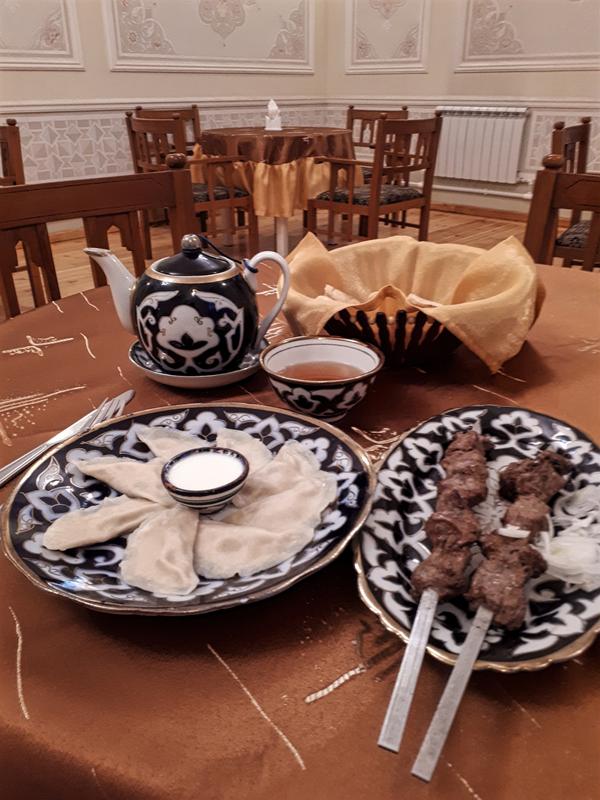
There aren't too many restaurants in the walled city of Khiva, so I stopped at a random hotel restaurant in town, where the dining room was completely deserted. The food, some manti (dumplings) and shashlyk, was however tasty enough, even though it was one of the least impressive meals I had on the trip. But you can't complain much after walking the entire day and being hungry.
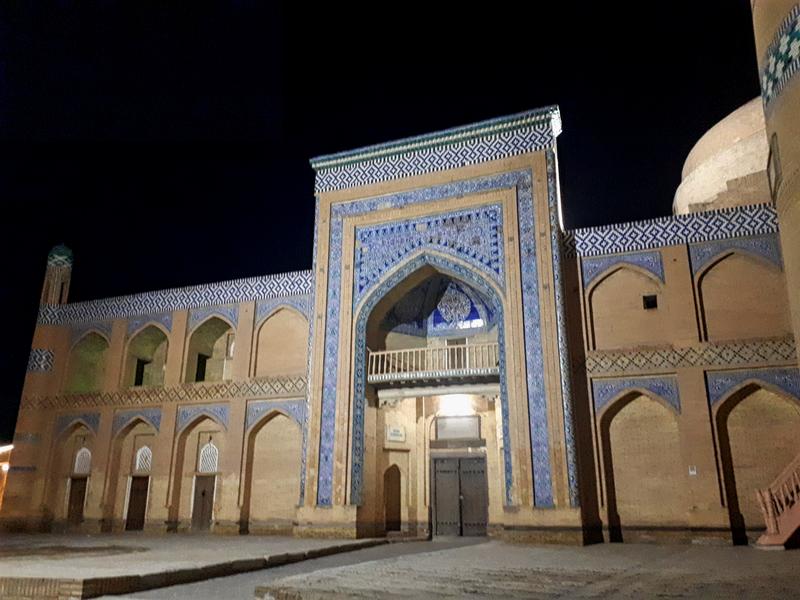
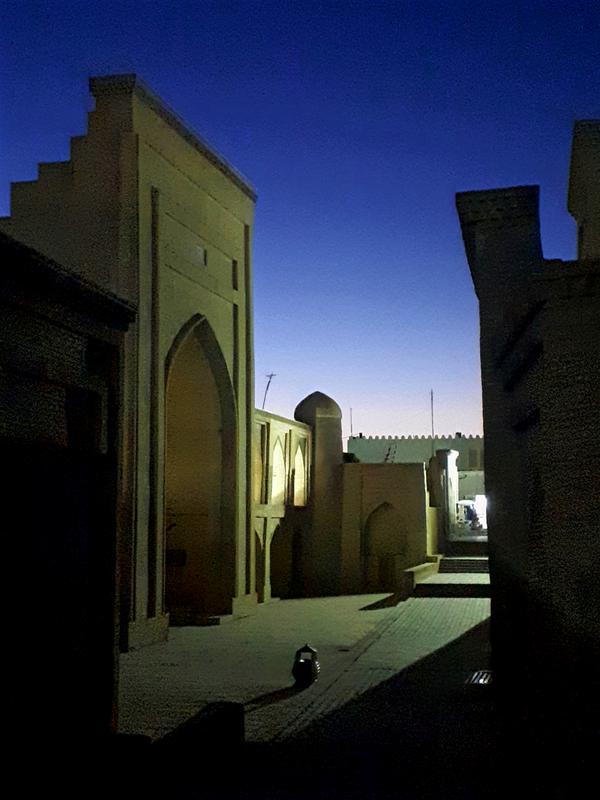
One thing which I can highly recommend is to take a walk through town at night. The walled town will be completely deserted (but still very safe, so don't worry there) – it really makes for an unique walk you will not easily forget.
I absolutely loved Khiva as it is somehow the most unique of the three silk road cities I've visited, even though it is not the most beautiful (that distinction still goes to Samarkand) and at times it felt a bit to much like an open air museum. Even though Samarkand, Bukhara and Khiva might all look alike when purely judging by the madrassas and mausoleums, they each have their own distinctive atmosphere and the simple truth is that I would have hated to miss any of them.
Next up: the long train ride back to Tashkent through the desert – and a journey north into Kazakhstan