Part 9: More sightseeing in Samarkand
My second day in Samarkand started at the Guri Amir Mausoleum. The great conqueror Amir Timur, to whom Samarkand owes its great riches, is buried here. The story has it that Timur actually wished to be buried in the city of Shakhrisabz where he was born – but when he unexpectedly died in a harsh winter from pneumonia he could not be taken over the mountain pass there and had to be buried in Samarkand.
Originally a madrassa was built in front of the mausoleum, but from that only the main gate remains.

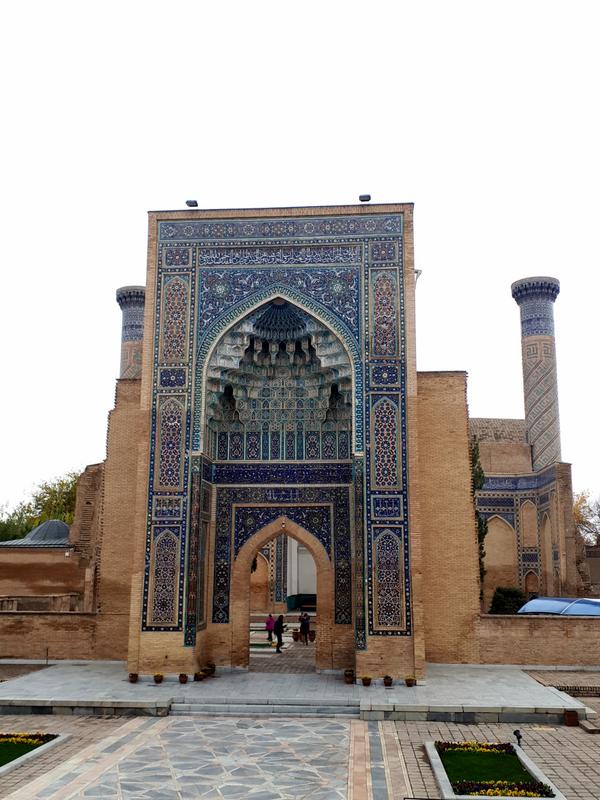
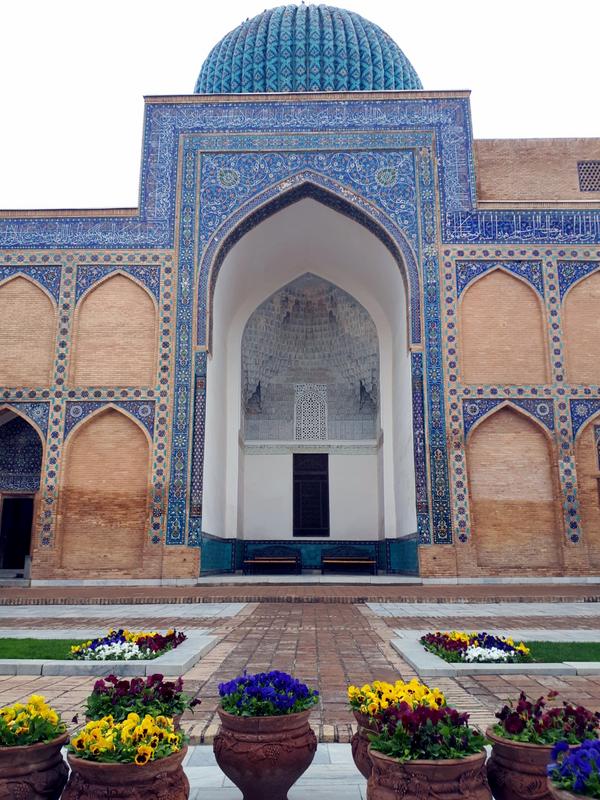
After entering the gate you are in the inner courtyard with the entrance to the main building with a gorgeous blue dome.
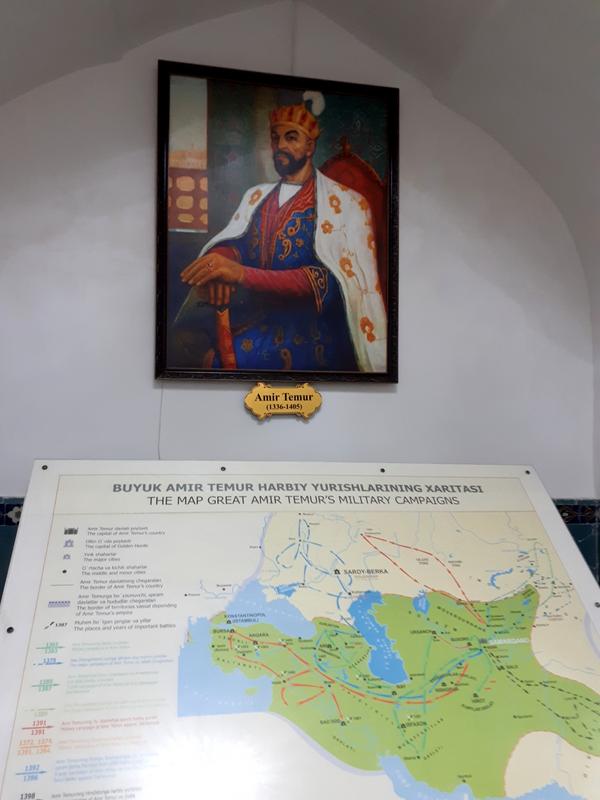
The hallway itself is very modest with little to no decorations. There are a few information signs here about Amir Timur, his life and military campaigns.
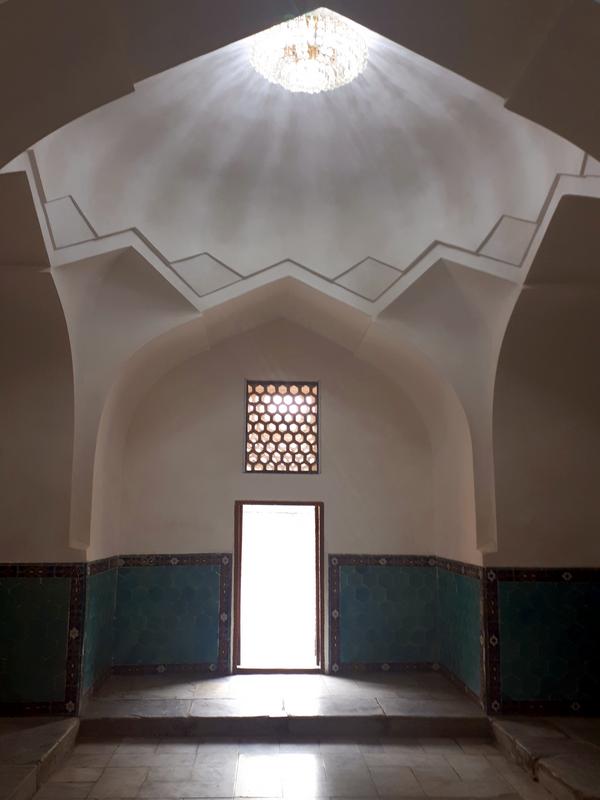
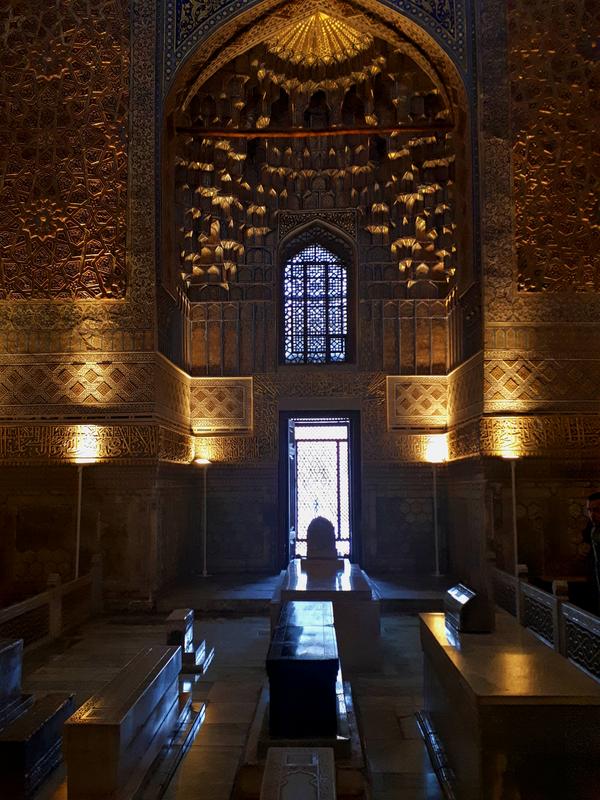
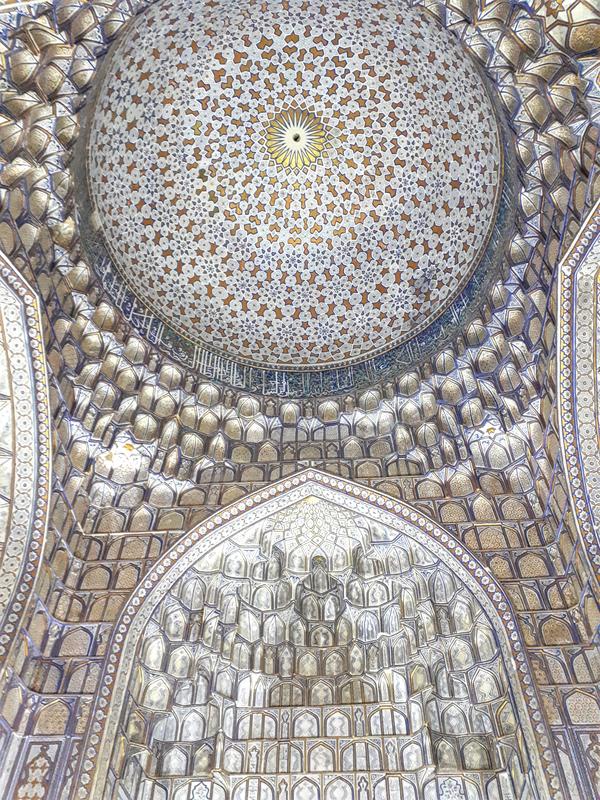
A door to the right leads to the main chamber underneath the dome – which is gorgeously decorated.
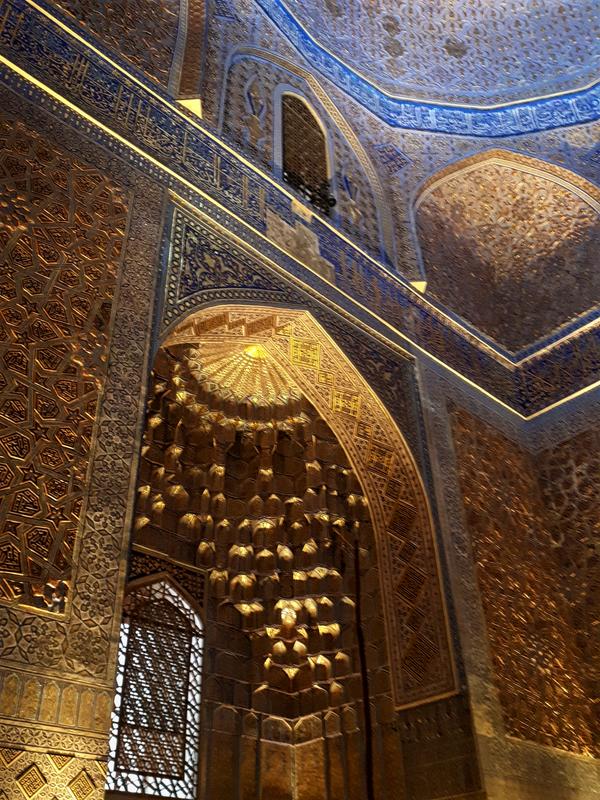
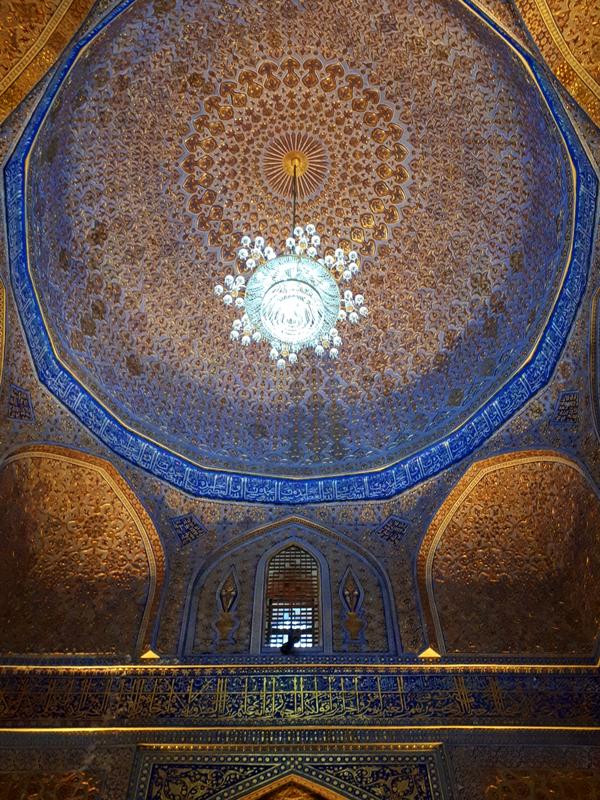
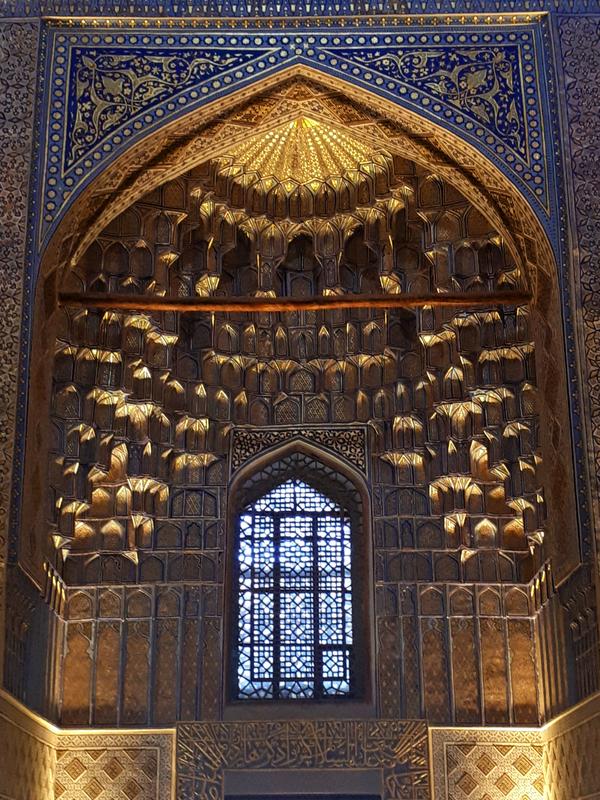
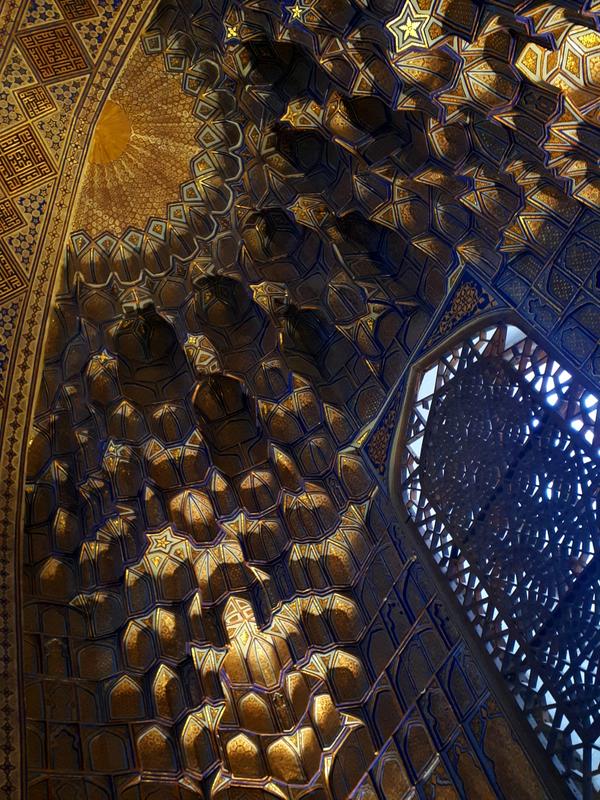
The graves itself are remarkably modest. Do note however that these are not actual grave but rather markers – which is common in Muslim mausoleums. They actual graves are in a crypt below and the tombs which are visible on this floor only give the location of the place where the person is buried in a crypt. Besides Timur, also some of his sons and grandsons (such as Ulughbek) are buried here.
Just behind the Guri Amir Mausoleum is the derelict little Ak-Saray Mausoleum – which was closed off.

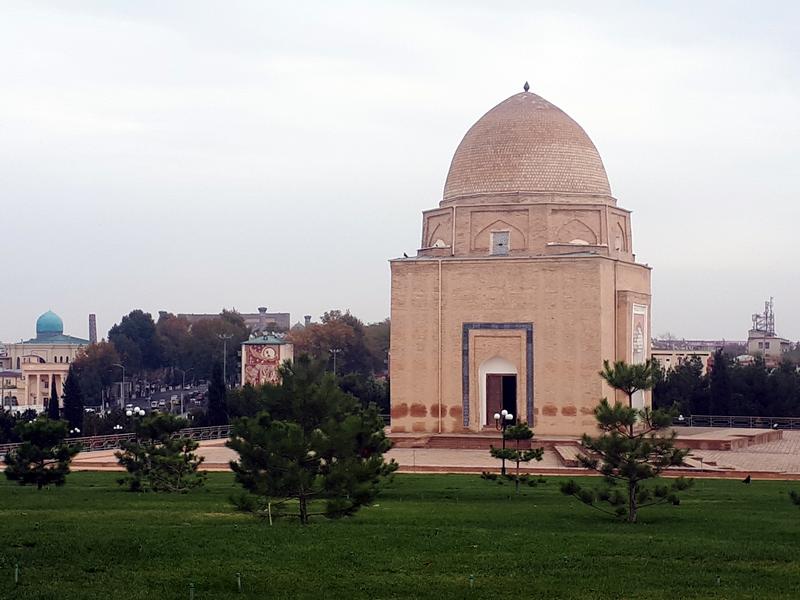
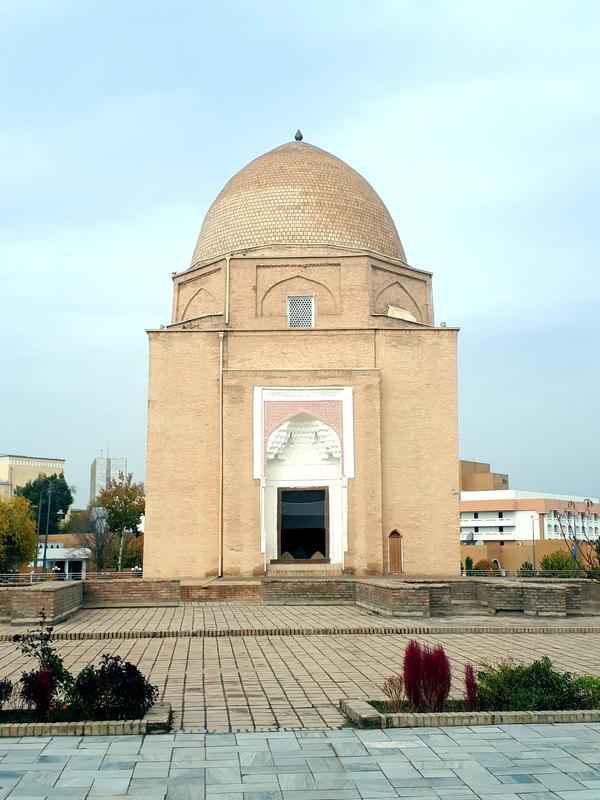
Also nearby is the Rukhobod Mausoleum from 1380, said to be the city's oldest.
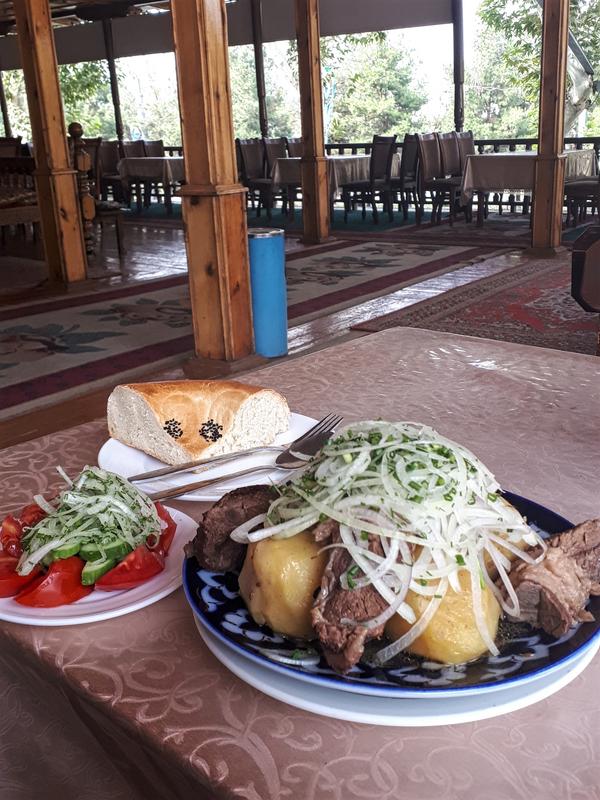
It was soon time for lunch and I settled on a nice looking restaurant on Registanskaya street – one of the main drags in the historical city. I ordered a meat and potato dish – which was absolutely huge in size, and came with an even bigger amount of onions on top. The added lemongrass made for a nice oriental bite and a good, hearty meal.
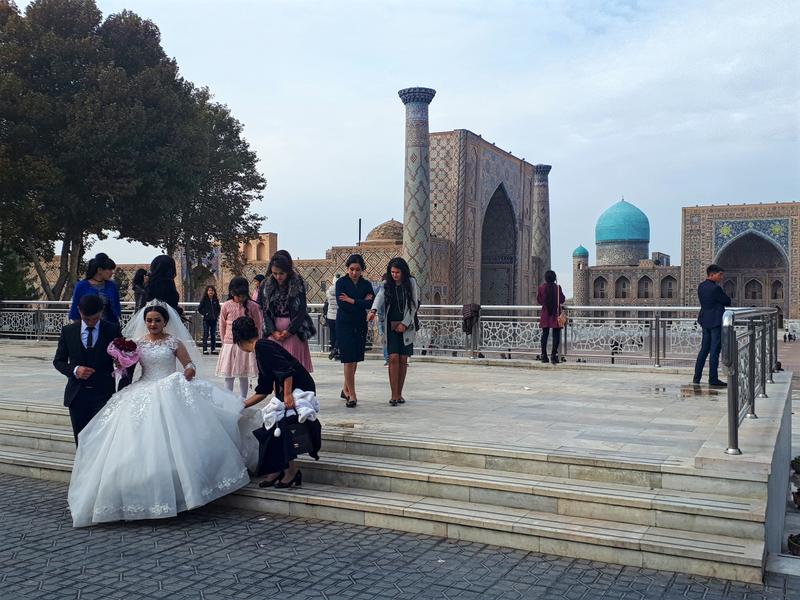
On my way to the next sights in town I passed by Registan Square again, where a couple was shooting wedding photos. Even though it was a weekday I was surprised by the huge amount of couples making wedding pictures. If I'd get a dollar for every couple I saw I could probably buy myself a (Ryanair) flight ticket by now

The park to the east of Registan Square also was a favourite picture-taking place for couples, although there wasn't much to see besides a giant statue of Islam Karimov, the deceased Uzbek strongman who ruled with an iron grip from post-USSR independence to his death in 2016.

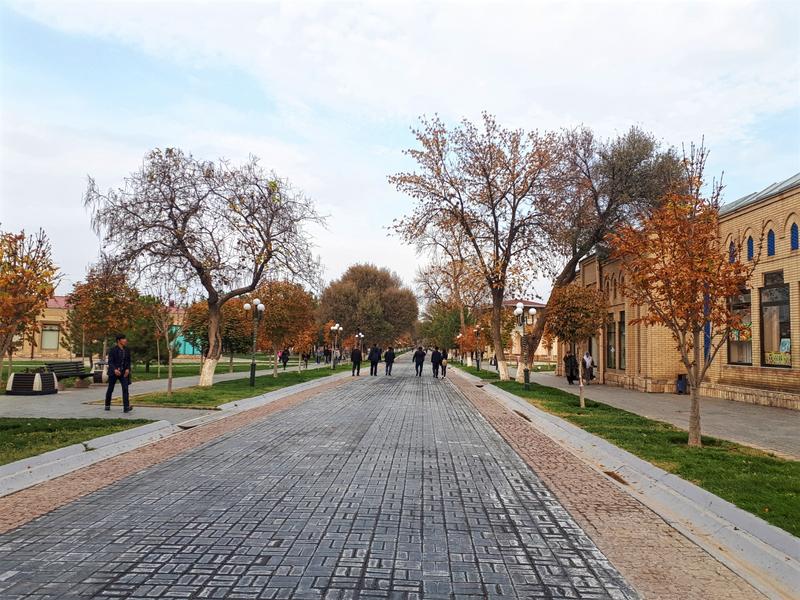
From the east of the Registan a pedestrian street (Tashkent Street) runs north towards a couple of other main Samarkand sights. There are a few (not terribly interesting) souvenir shops and small supermarkets in this street. A fleet of giant-sized electric golf karts which easily seat around 20 people run up and down the street offering complimentary rides, even though the distance is fairly short and perfectly walkable.
The main sight here is the city's biggest mosque, the Bibi Khanym Mosque, which was finished shortly before Timur's death and which at the time must have been the greatest architectural wonder of his entire empire. It however fell victim to its own grandeur as it collapsed in 1897 after an earthquake, although it was reportedly crumbling for centuries prior having pushed Medieval architectural techniques to the limit. A recent renovation project however has reinstated the imposing main gate building and several domes.

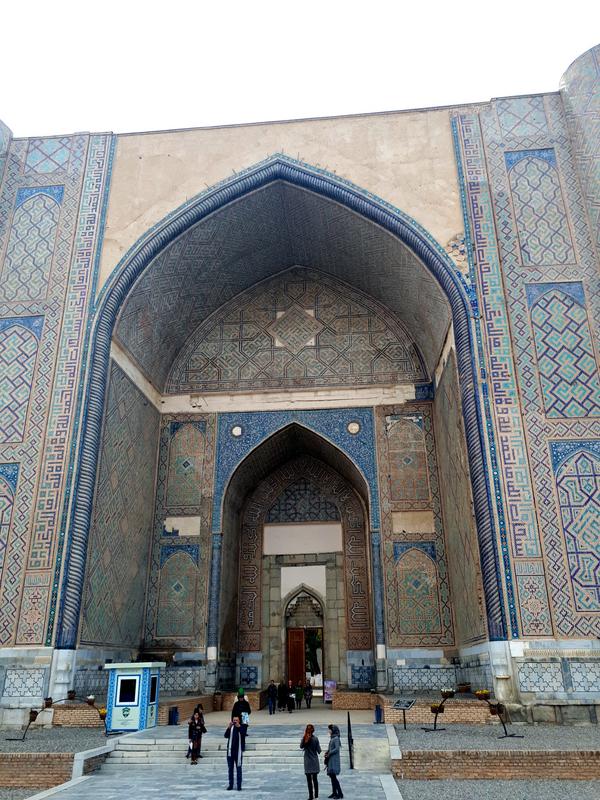
The gate leads to an inner courtyard, from where on all three sides you can find a dome. Bibi Khanym is by the way Timur's Chinese wife who is said to have ordered the construction of it while Timur was away on a campaign.
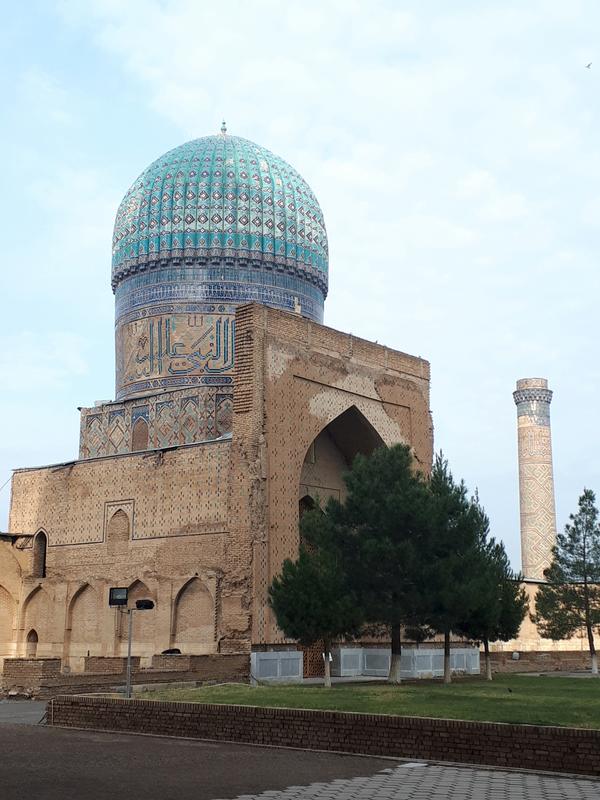
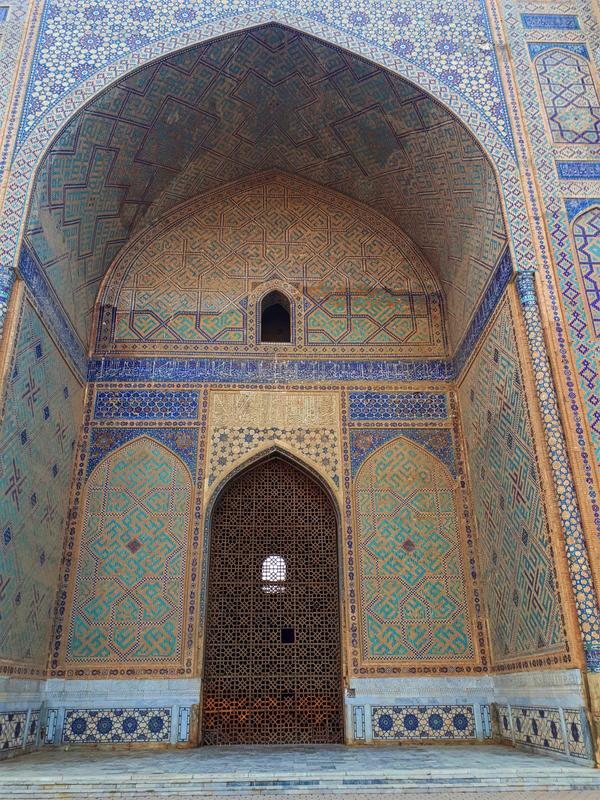
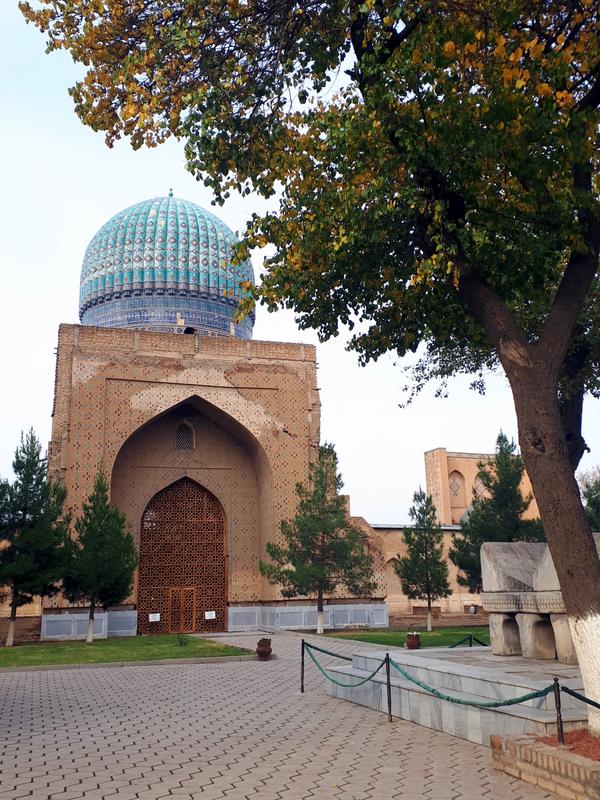
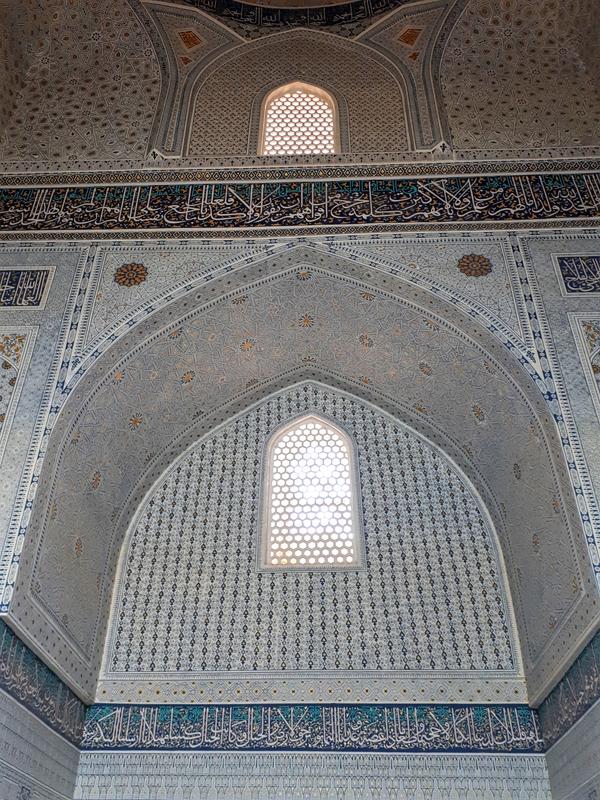
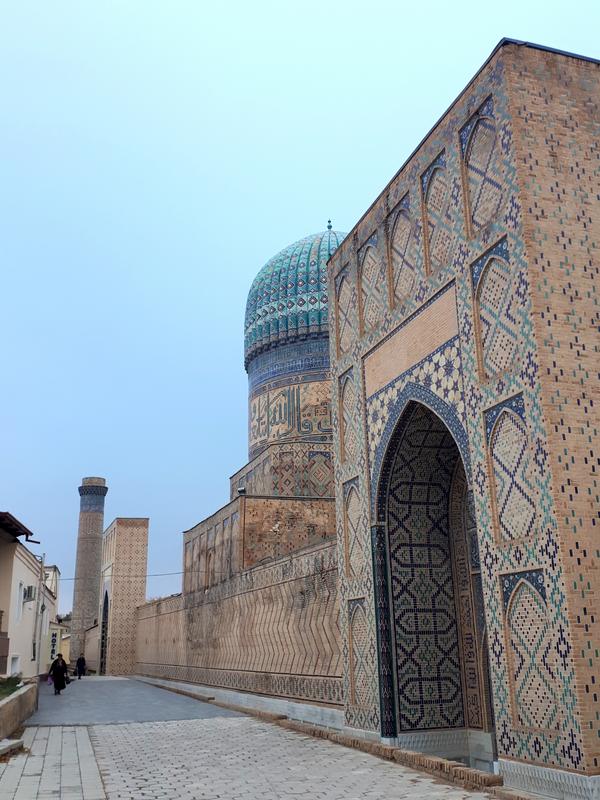
Directly opposite the mosque on Tashkent Street is the mausoleum in which Bibi Khanym is buried, as well as some other important women of the court.
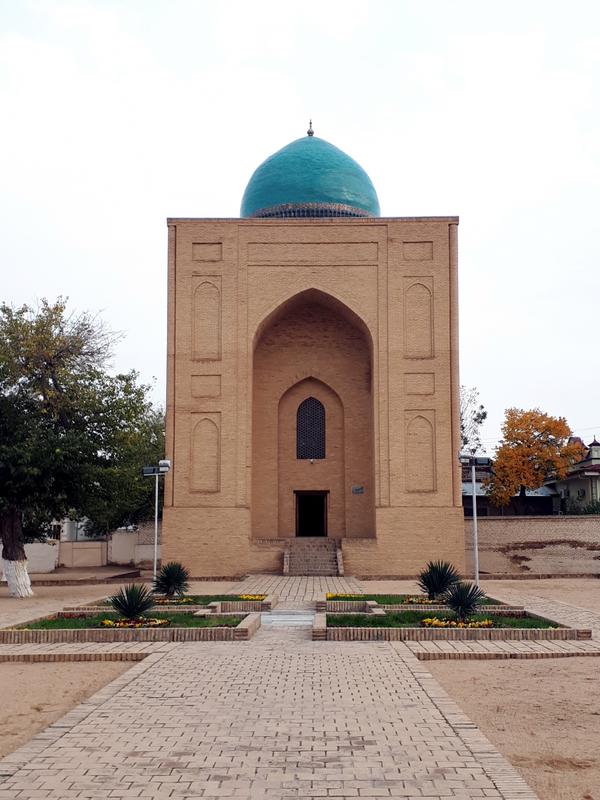
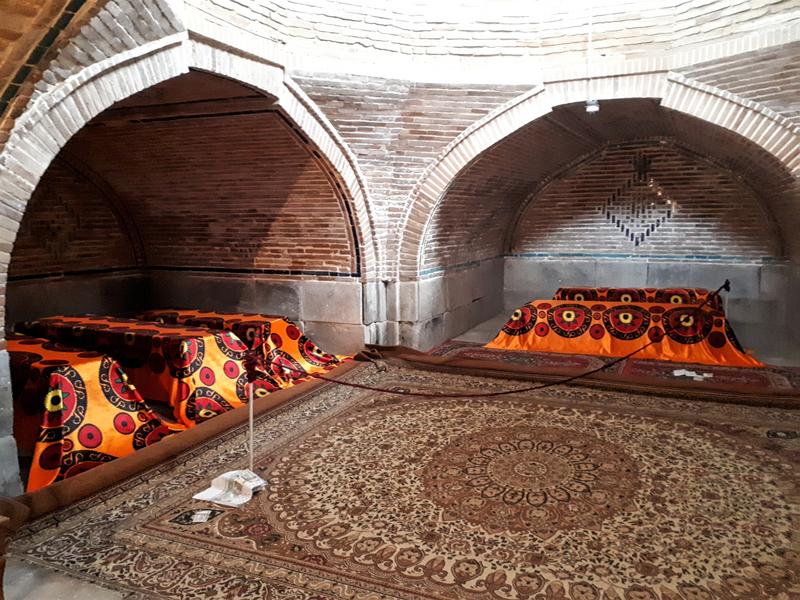
The tombs are again markers to the actual place in the crypt below where the women are buried.
At the far northern end of Tashkent Street is a more recent mausoleum, that of Uzbek strongman Islam Karimov, who was born in Samarkand. Even though photography is officially forbidden on the premises I managed to take a few sneaky snaps on the grounds.

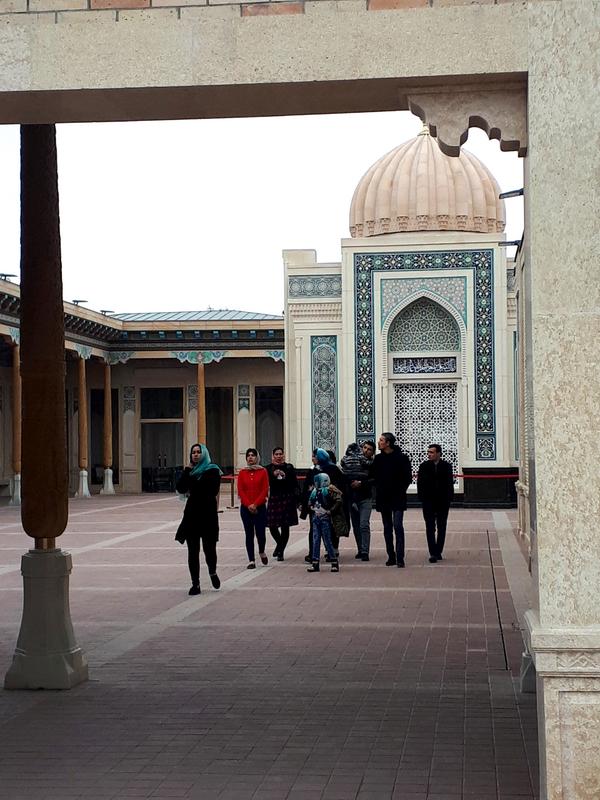
There are some good views here over the nearby Bibi Khanym Mosque.
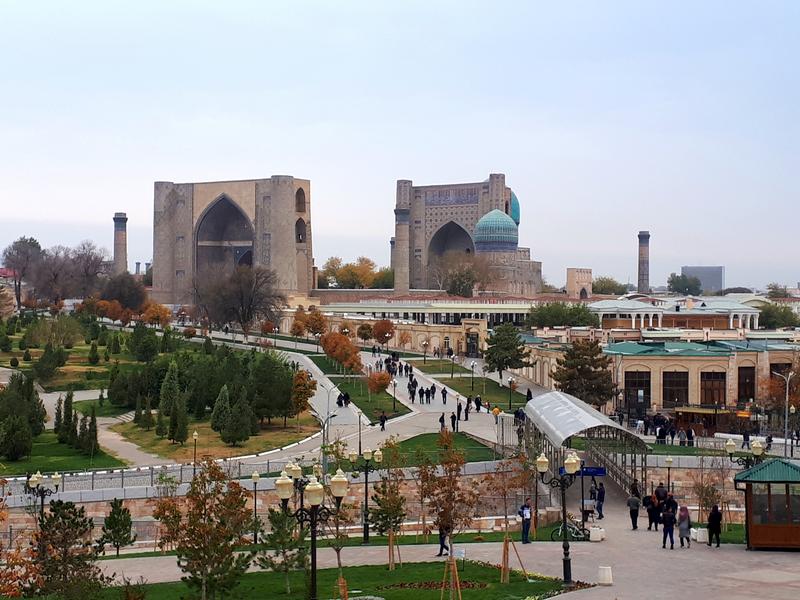
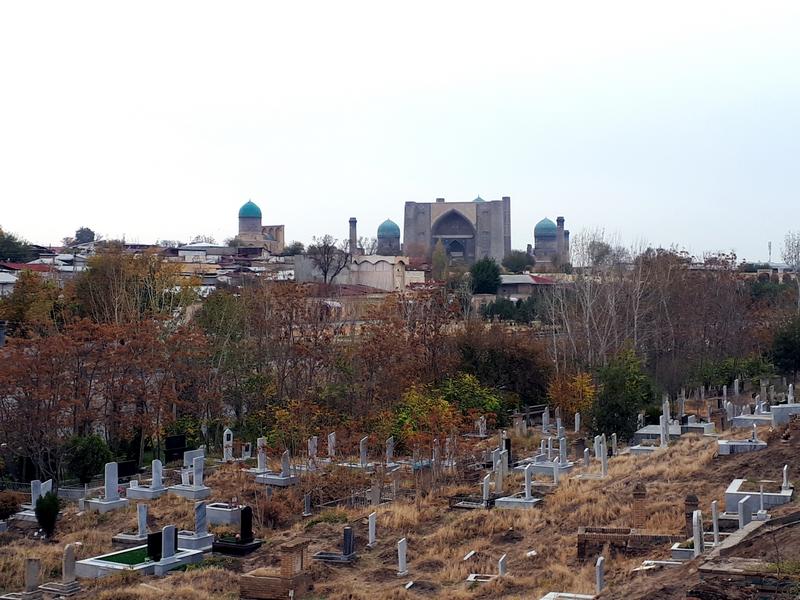
I had one major site left to see in Samarkand: the Shah-i-Zinda necropolis. On the way to it I passed by an old graveyard from where the grounds also gave some good views back over Samarkand, with the Bibi Khanym Mosque as well as the three Registan madrassa's being clearly visible.
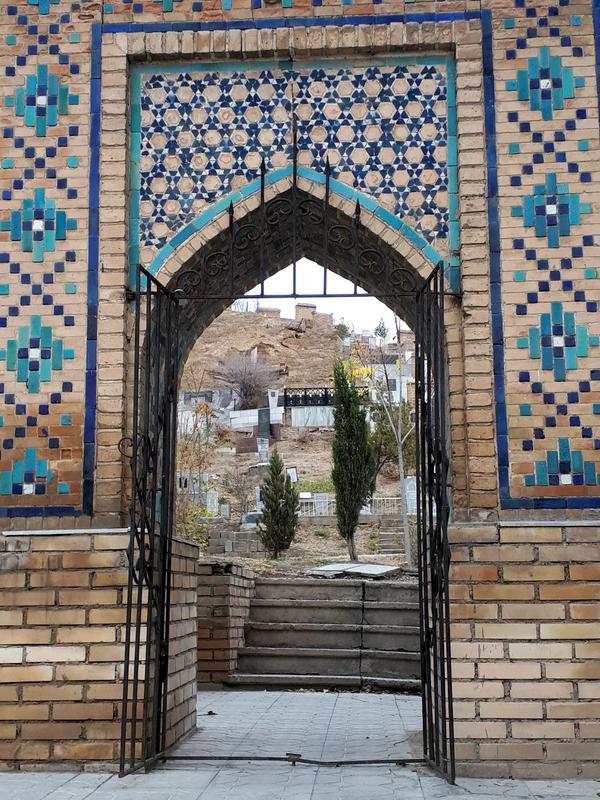
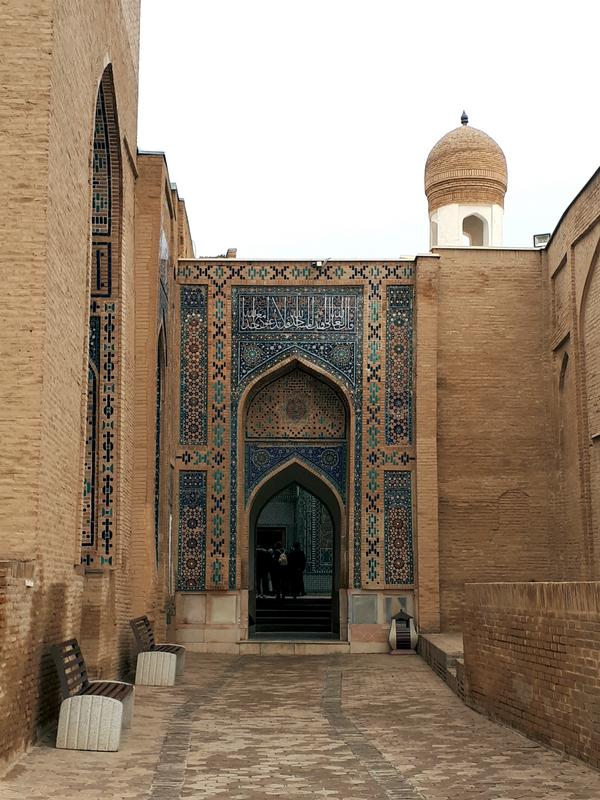
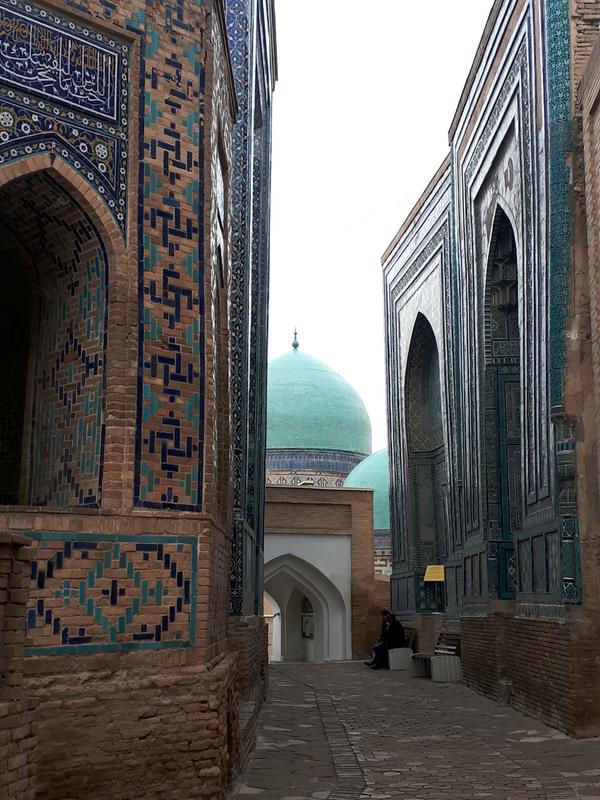
The Shah-i-Zinda ('Living King') necropolis complex was built over a whopping eight centuries and includes some 20 mausoleums all built in different years. The name derives from a legend about a nephew of the Prophet Muhammad who allegedly was still alive after they beheaded him when he came to this area to spread the word of Islam. The complex is compromised of a lower, middle and upper part connected by arched passageways.
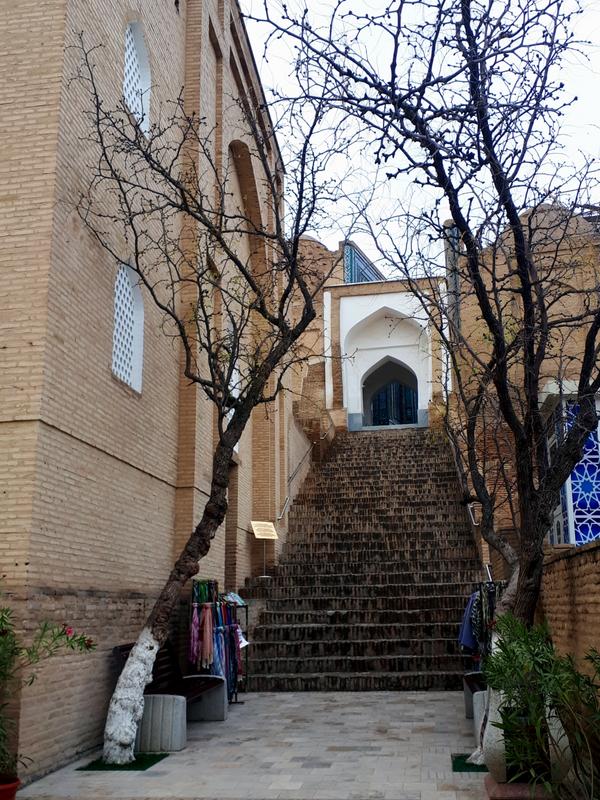
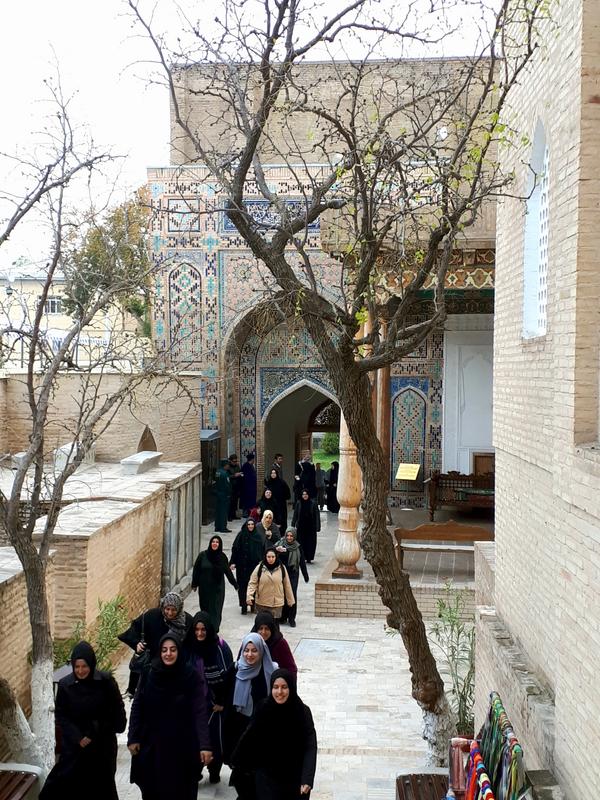
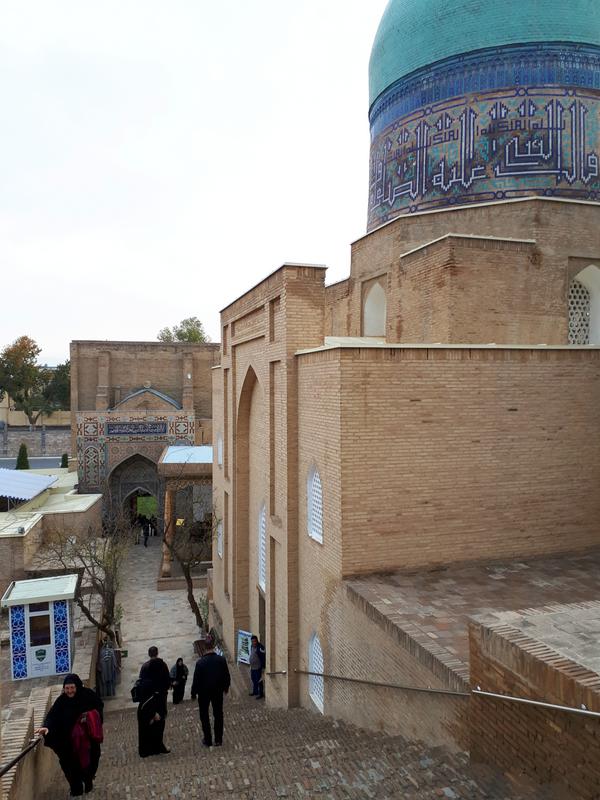
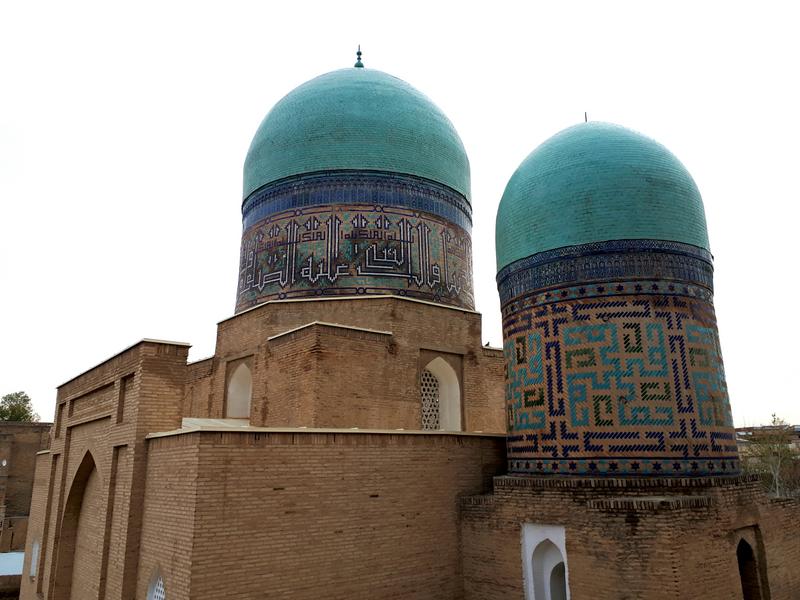
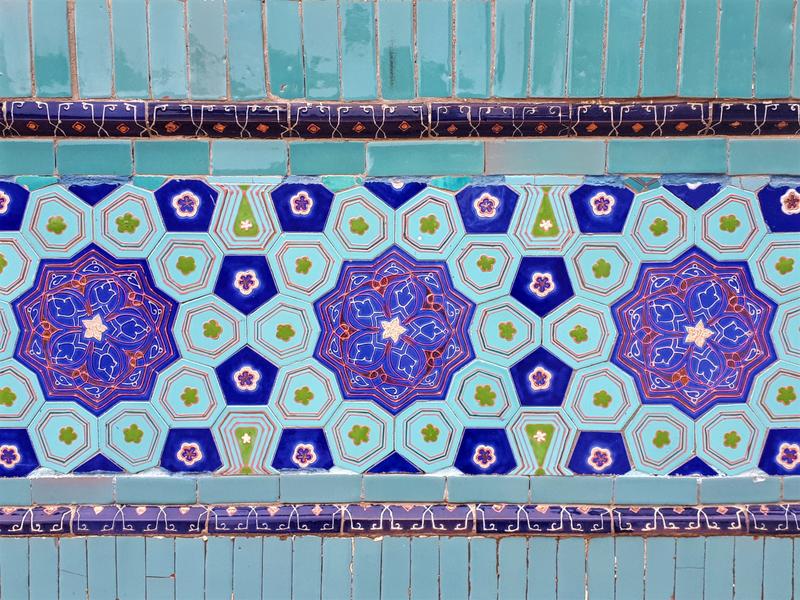
Even though the first impression for many might be that the Shah-i-Zinda might be a bit underwhelming after visiting the Registan and the Bibi Khanym Mosque, it is not the entire picture. On the contrary! Wow, I as in for yet another big surprise and the entire necropolis would end up becoming one of my favourite parts of the city. There are so many different mausoleums here all right next to each other, all decorated in different colours and patterns – it just felt walking around here.
 Man in traditional Uzbek garb and hat sitting in front of one of the mausoleums
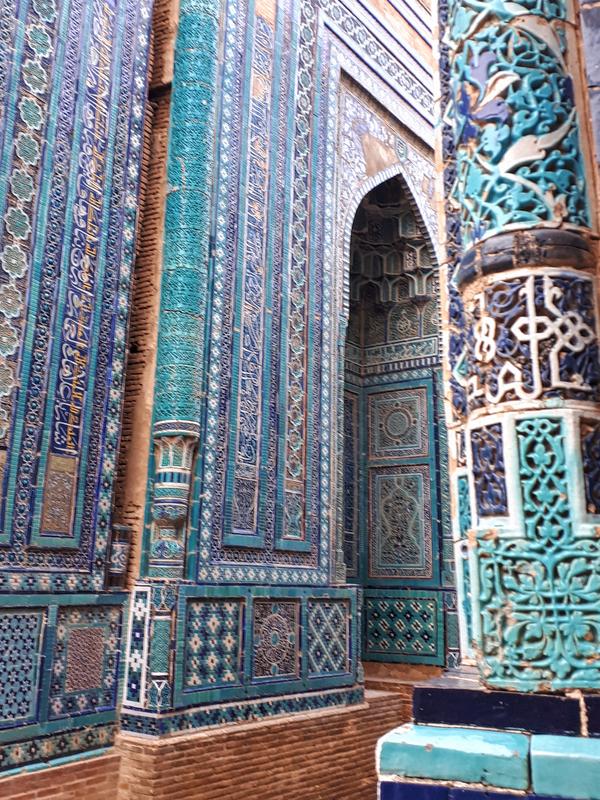
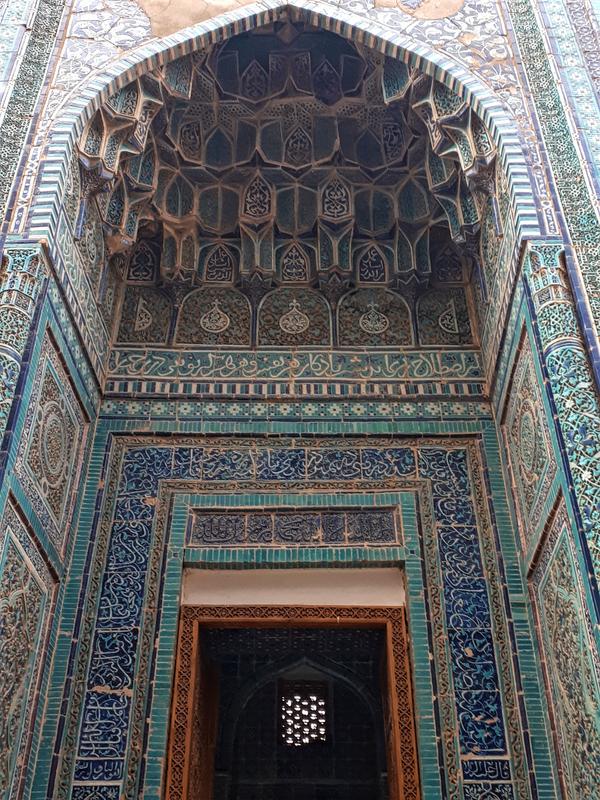
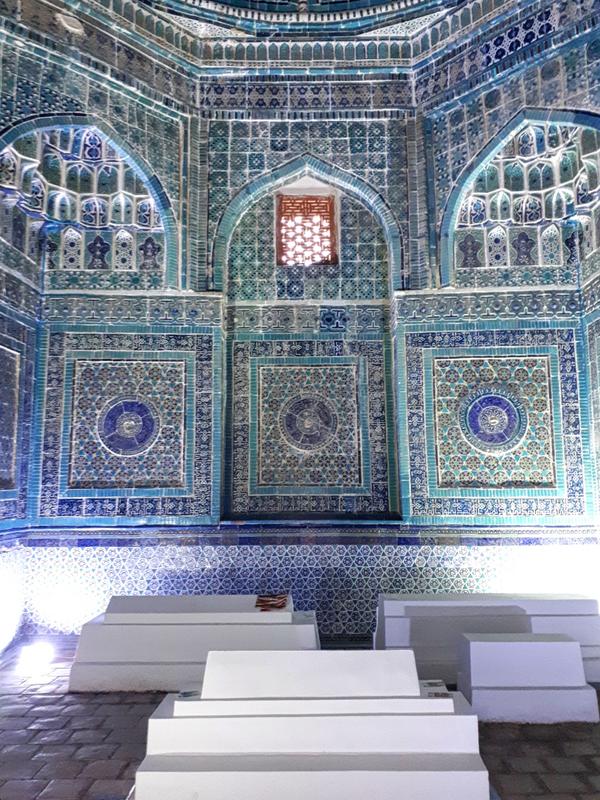
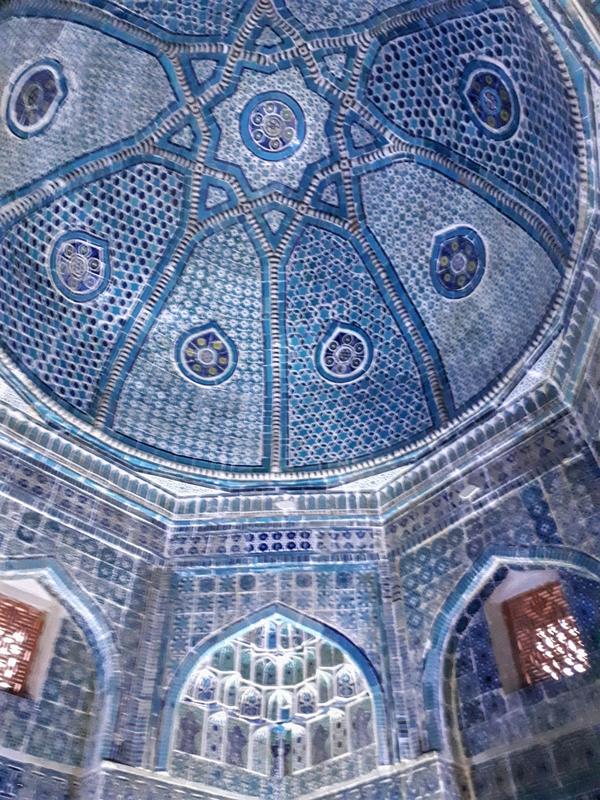
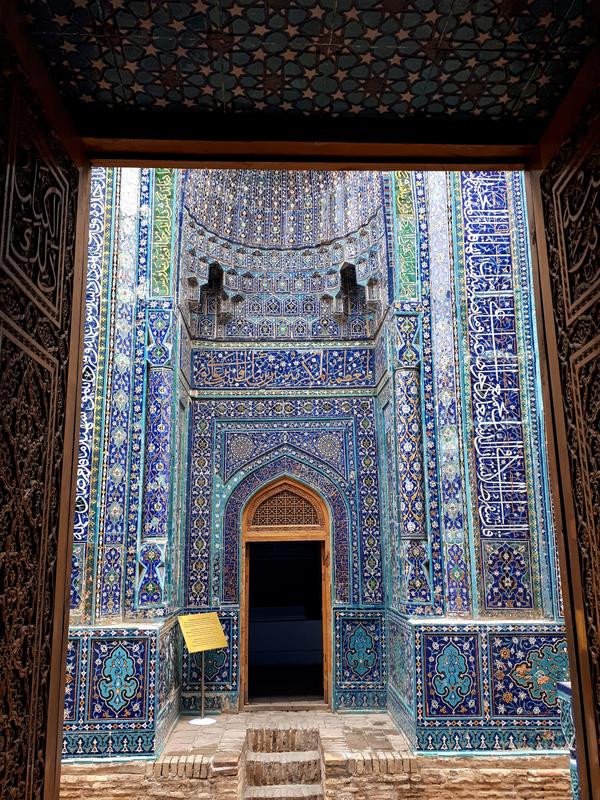
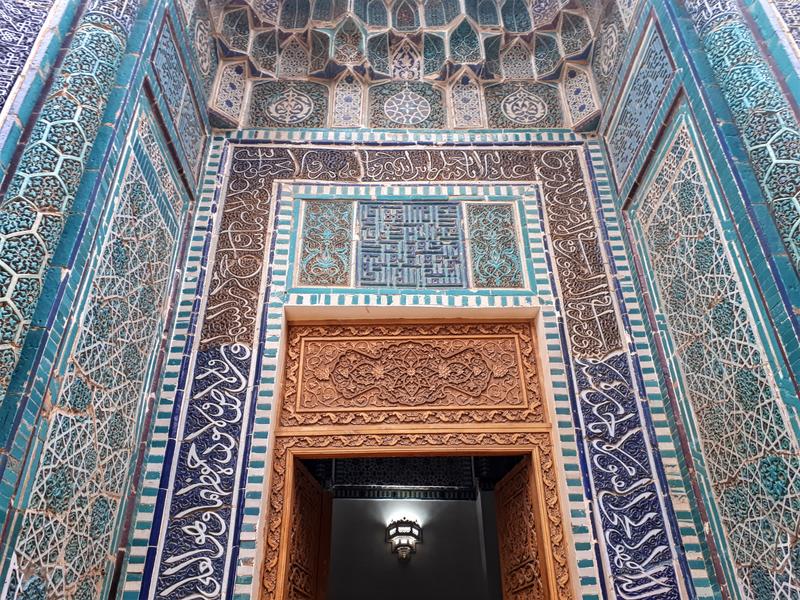
Even though by now some of you might get a bit tired of all the tiles and domes I just love the architecture, history, calligraphy and beautiful colours. The diversity is great here, there are small mausoleums in which hardly ten people can stand, but there are also bigger and higher ones with huge domes.
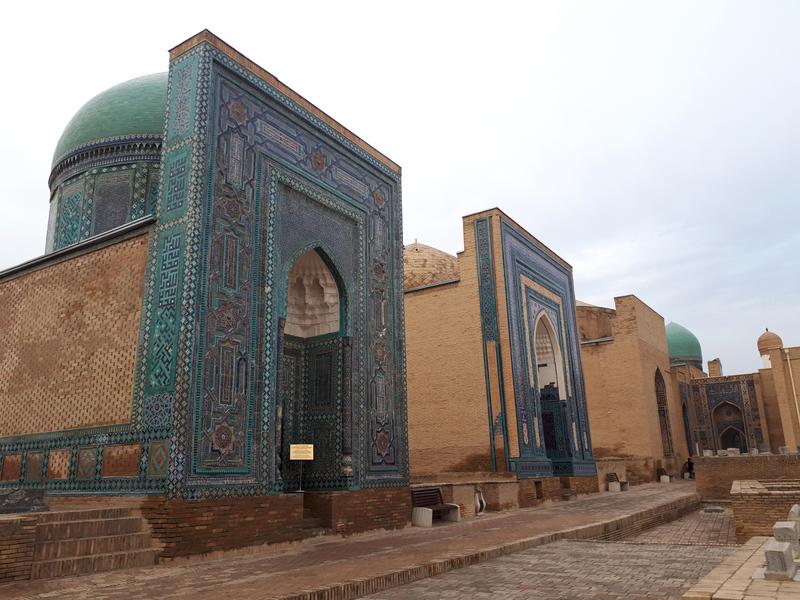

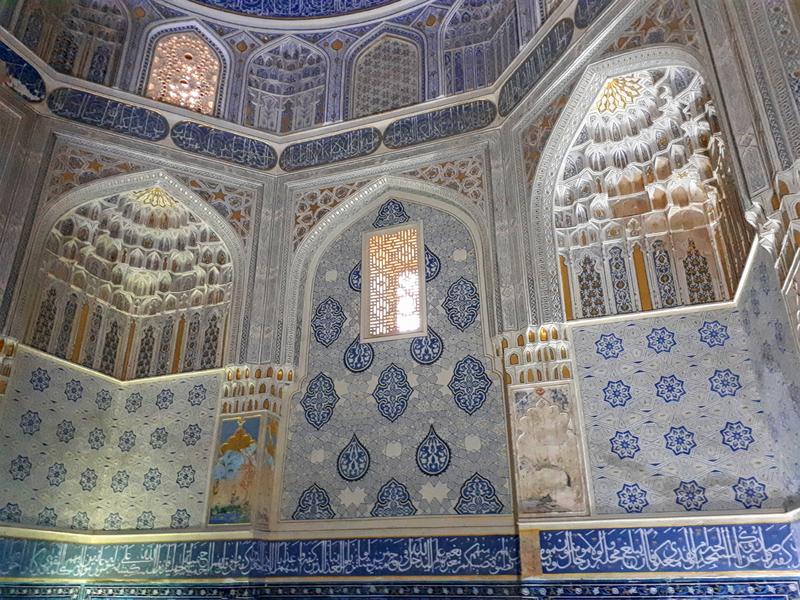
I'll let the pictures do the talking from here on.
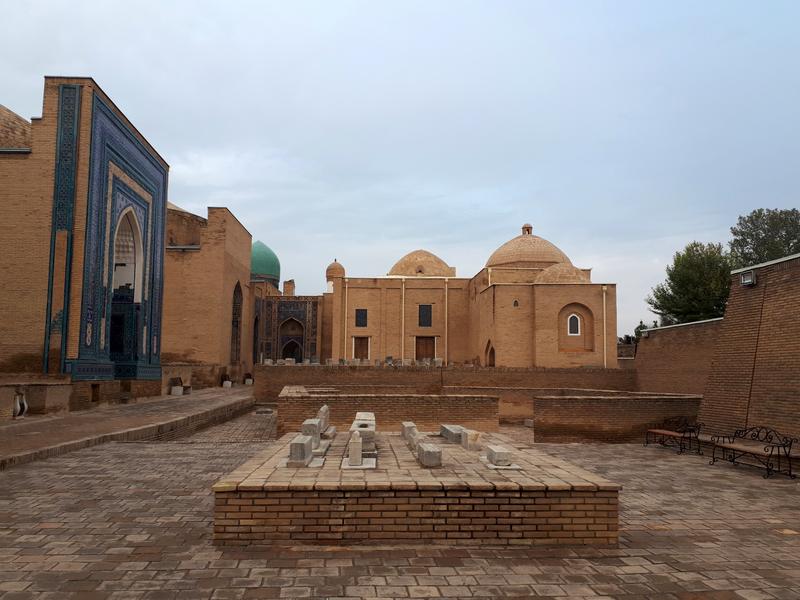
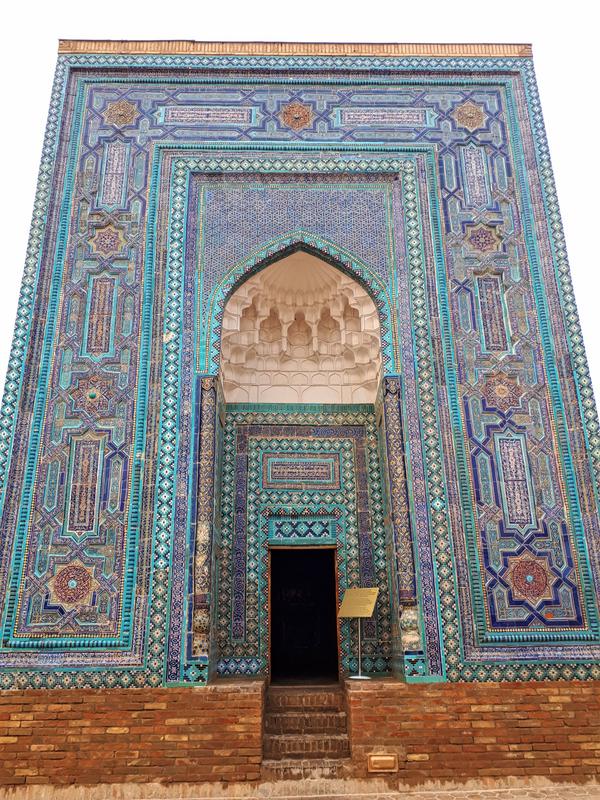
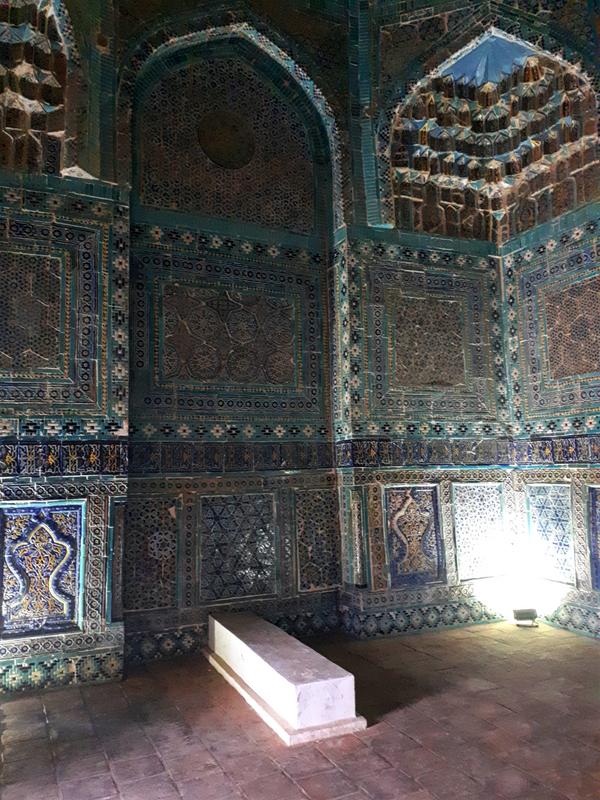
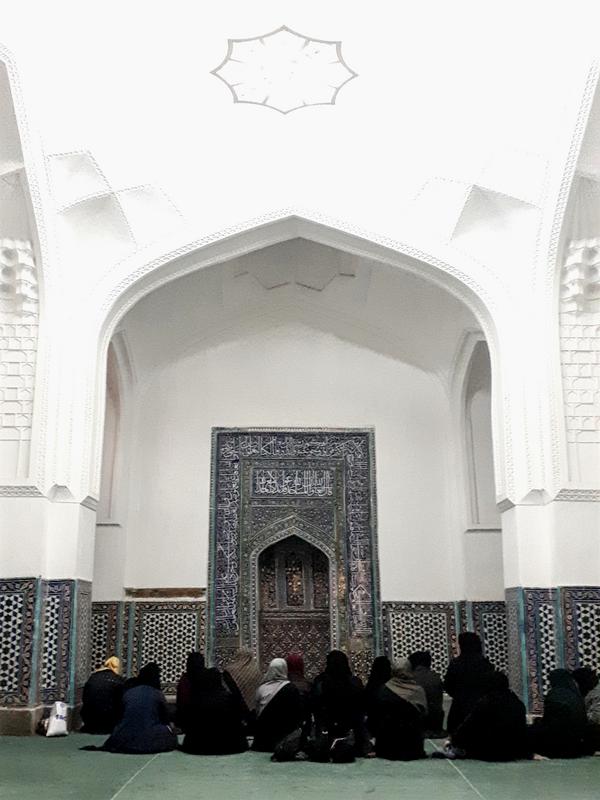
The complex also had a functioning mosque in which a group of veiled women were praying. Interestingly, even though Uzbekistan (much like the other Central Asian countries) is nominally Sunni Islam, (conservative) religious behaviour is actually frowned up on and at times even downright suppressed in the secular country. Karimov limited the number of Muslims who were allowed to go on Hajj pilgrimage to Mecca, intelligence services controlled and actively listened to every mosque and every sermon in the country, banned some religious garments and arrested many people considered to be too fundamentalist, whether or not they were indeed supporting jihadist groups or were just very pious and conservative.
In the defence of Karimov and other Central Asian leaders, it must be said that terrorism and radicalisation always have been major worries, especially in the more conservative areas such as the populous Fergana Valley. Although the question whether repression actually solves the situation or creates even more hatred is open for debate. New Uzbek president Mirziyoyev is however reportedly loosening religious restrictions.
On the way out of the complex, I visited some of the mausoleums which I had skipped on the way in. It really is worth it to walk into every single one of them as all look different and some are just drop-dead gorgeous.

As it was getting dark I ate a kebab somewhere and bought a few bottles of beer in an alcohol shop close to the Registan to drink in my hotel room. The friendly guys at the alcohol shop even gave me two complimentary mini bottles of (quite decent) Uzbek vodka. The city has been such a joy to see and is so magnificently beautiful that it easily places in the top five sights I've seen across the world in more than 70 countries. I just loved it.
Next up: On the Uzbek high speed train to Bukhara, another ancient Silk Road gem