Part 2: Exploring the capital of Moldova: Chisinau
As I would stay with friends in Chisinau instead of a hotel and would only meet up with them after they were out of office, I had to entertain myself for the day. It was already the sixth or so time I was in Chisinau, which frankly isn't one of Europe's most appealing cities to put it mildly. That said, it is not the worst around either (that distinction must surely go to Kosovo's capital of Prishtina) and there are actually quite a few amazing day trips you can make from Chisinau – more on that later.
I decided I would put in some work for most of the day so I wandered from the train station – which is a good 40 minutes walk from the city centre – slowly towards the city's main boulevard to find a nice place to eat breakfast and work.
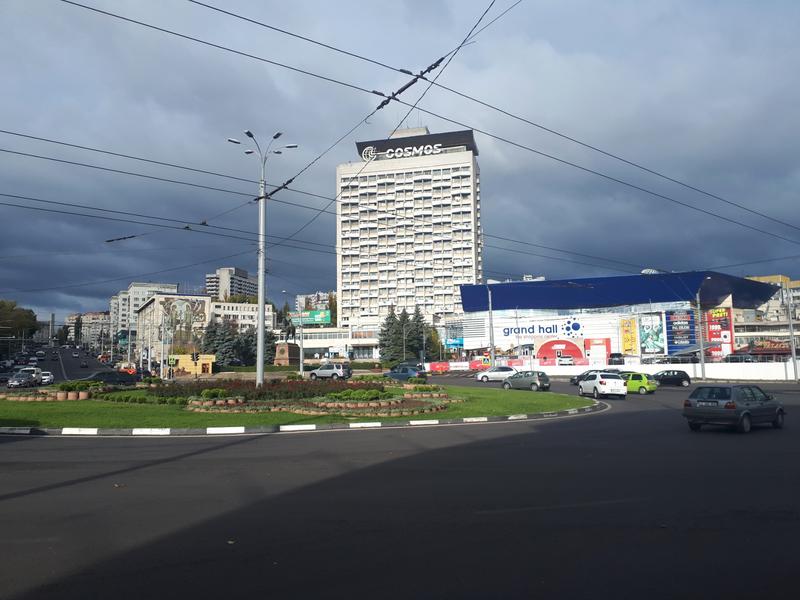 The Cosmos Hotel – one of the old Soviet hotels of the city. The street on the left is the start of the main boulevard of the city which starts here and runs slightly uphill
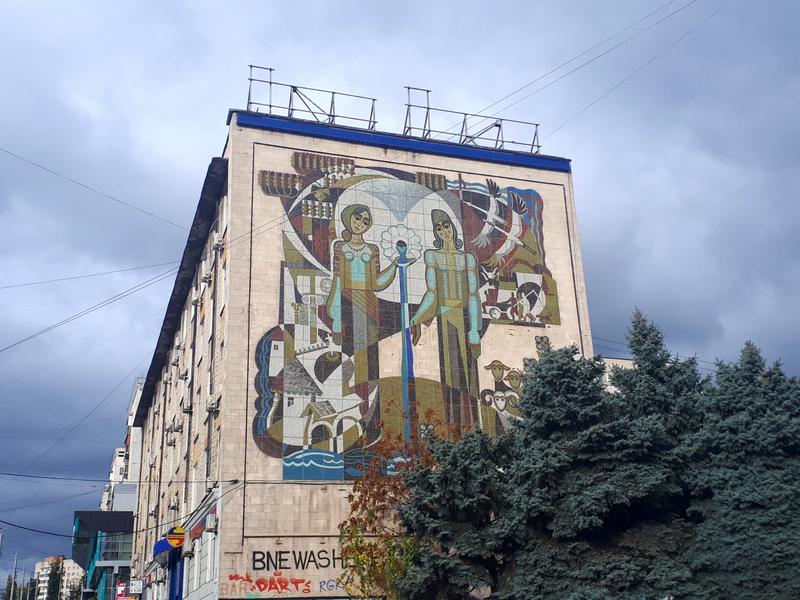 Communist mural
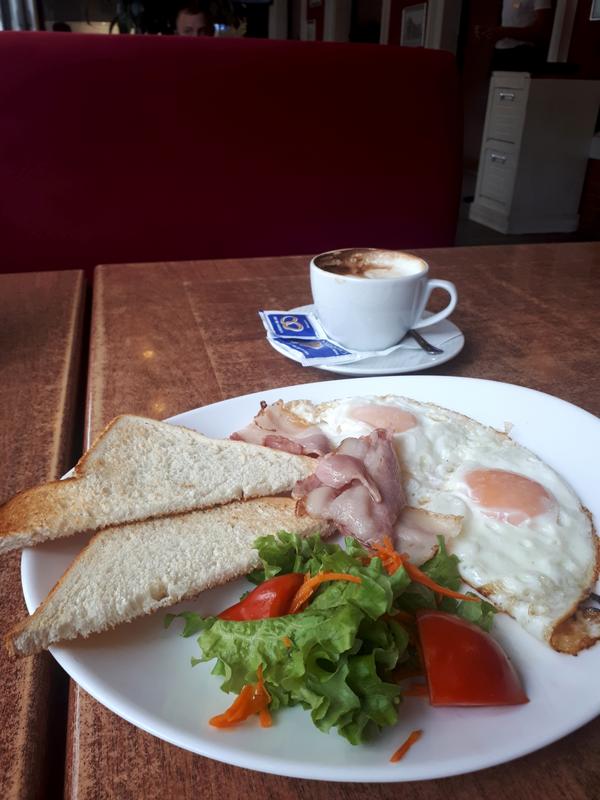
Before I however reached the city centre the rain started to pour down from the skies. I hurried to the first restaurant I could find, where I lingered over breakfast, coffee and work on my laptop for a few hours. At around 3 EUR it was extremely good value – Moldova in general is extremely affordable when it comes to eating out.
When I had done my share of work for the day it was time for a walk through the city. Most sights are located along the main boulevard called Boulevard Stefan cel Mare. Stefan cel Mare (Stephan the Great) was a 15th Century prince who ruled the Principality of Moldavia as it was called back then. The country was much bigger then as it includes also parts of nowadays Ukraine, as well as what is now the Romanian province of Moldavia. Stefan cel Mare built beautiful monasteries and churches and earned great victories over the Ottomans and Hungarians alike and was one of the most respected rulers of his time. It is then no surprise that you find his image on every Moldovan banknote and his name attached to every park or monument.
Chisinau was by the way always just a tiny regional outpost at most. Moldavia's capital has been first Suceava, and later Iasi – both in Romania. Even though Chisinau is nowadays bigger in the number of inhabitants, the city does still feel much more as a historical backwater compared to Iasi which oozes much more charm and history.
The construct of what is now the Republic of Moldova is anyway rather artificial – thanks mostly to Tsarist and Soviet expansion and rule. The majority of the people in the country is Romanian speaking – although a big minority has Russian as mother tongue (there is also a smaller Turkic-speaking Gaugaz community in the south). Between the two World Wars, Moldova was part of a Greater Romania – which basically saw the old Moldavian state of Stefan cel Mare as a whole united with the two other Romanian geographical regions of Wallachia and Transylvania.
After WW II, the Moldovan Soviet Republic was however created and the Romanian-Moldovan border was put along the River Prut – where it still is. The concept of nationhood is still is a hotly debated topic. Most Moldovans will just tell you that they are Moldovans and a whole unique cultural group, while a smaller part might feel more about reunification with Romania as they share both the language and culture, while others long back to communist times and Russian rule as they language and cultural ties with them. If you would ask Romanians about their perspective, they would in big majority say that they see Moldova as the little brother of sister who ran away and that both cultures are exactly the same. The truth is somewhere in between all this!
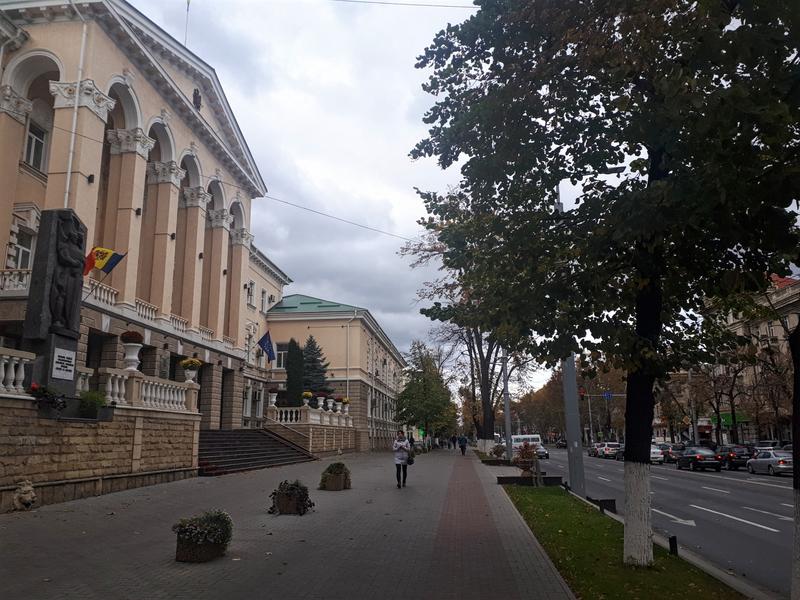 Sefan cel Mare boulevard
On the Stefan cel Mare boulevard many government offices, as well as the main theatre, banks etc. are housed. Some in quite ornate buildings!
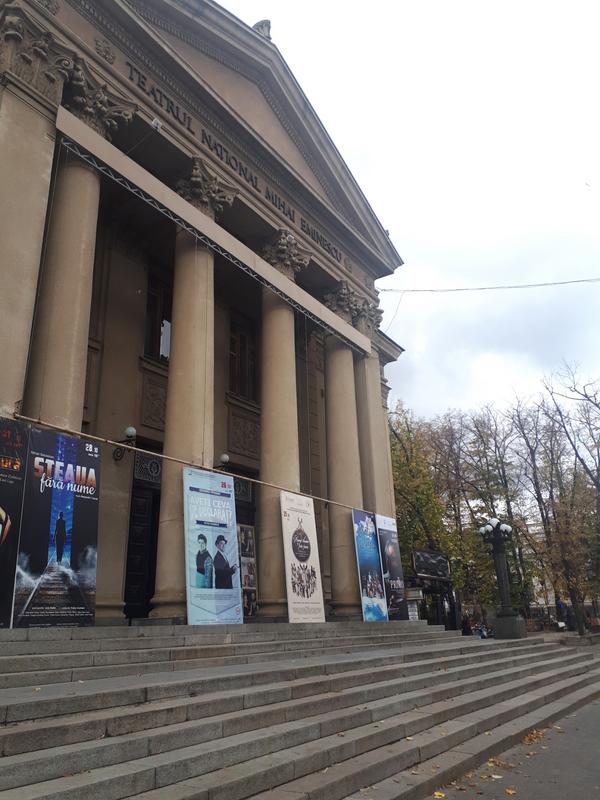
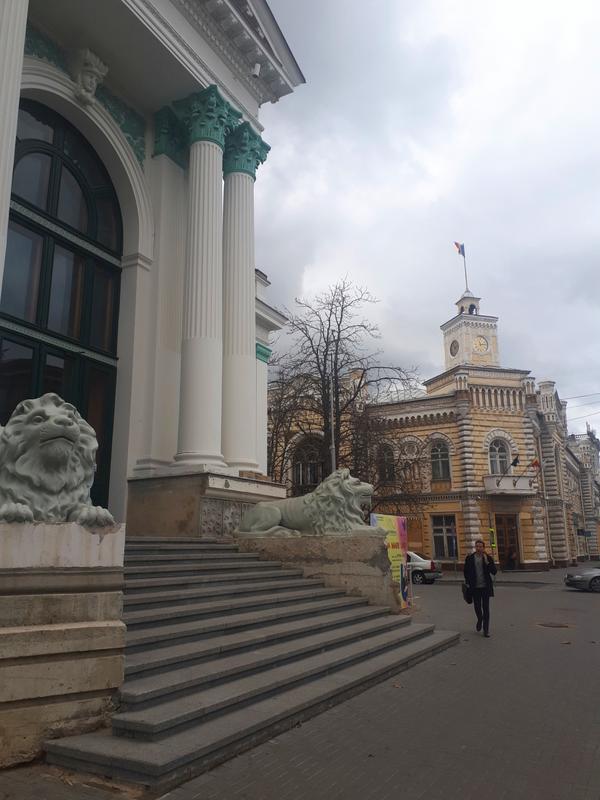
The main sights of Chisinau are all located on the same square. First you have Chisinau's own version of the Arc de Triomphe – which proportionally is about the right size if you compare how small Moldova is to France.
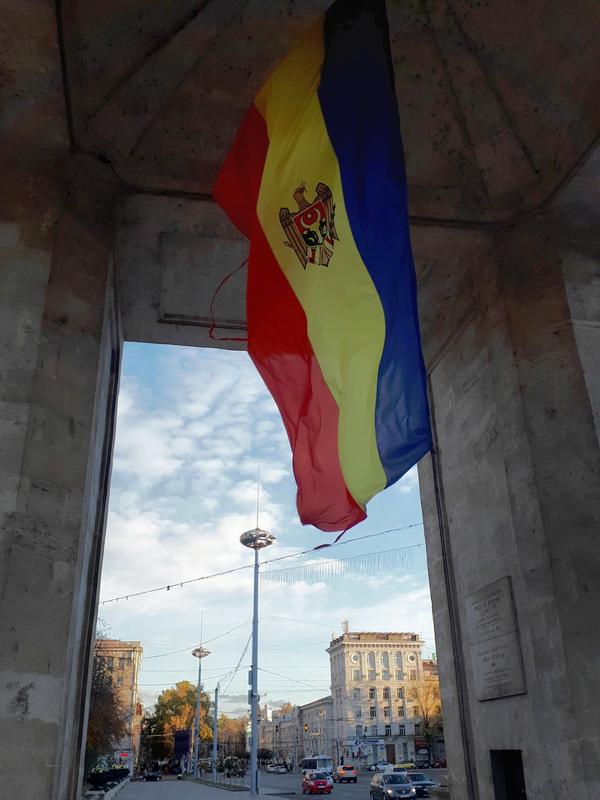
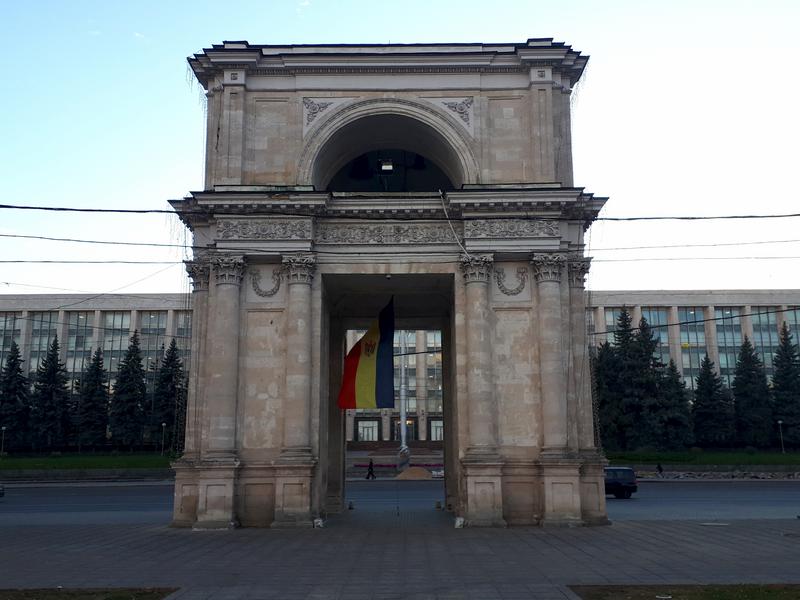 The Arc de Triomphe – with the main national government building seen in the back
The national government offices from where the country is run is your typical bit of communist ugliness.
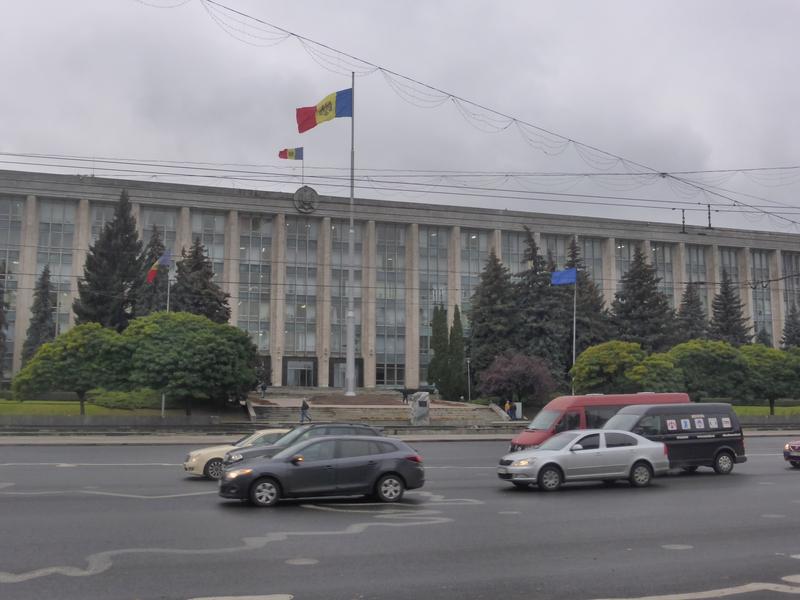 National government office – picture taken during an earlier trip
On the square behind the Arc de Triomphe is the Metropolitan Cathedral – the city's main church.
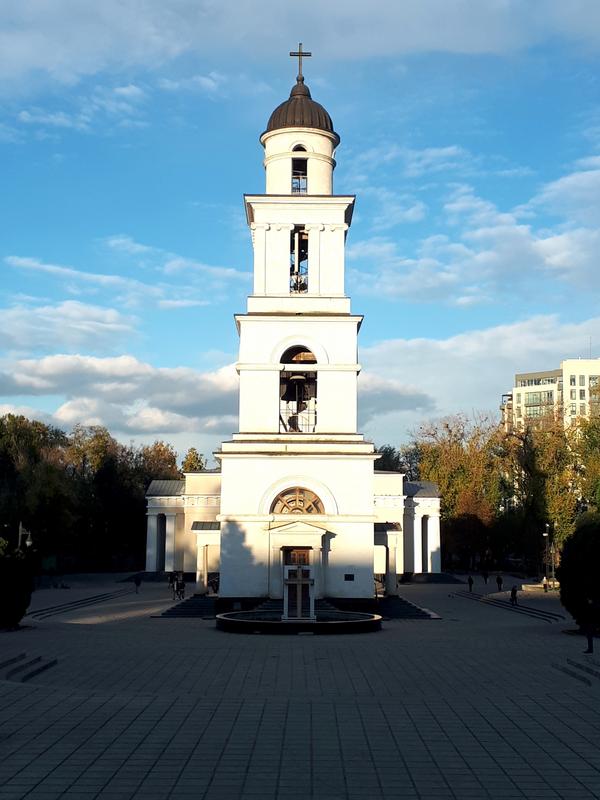
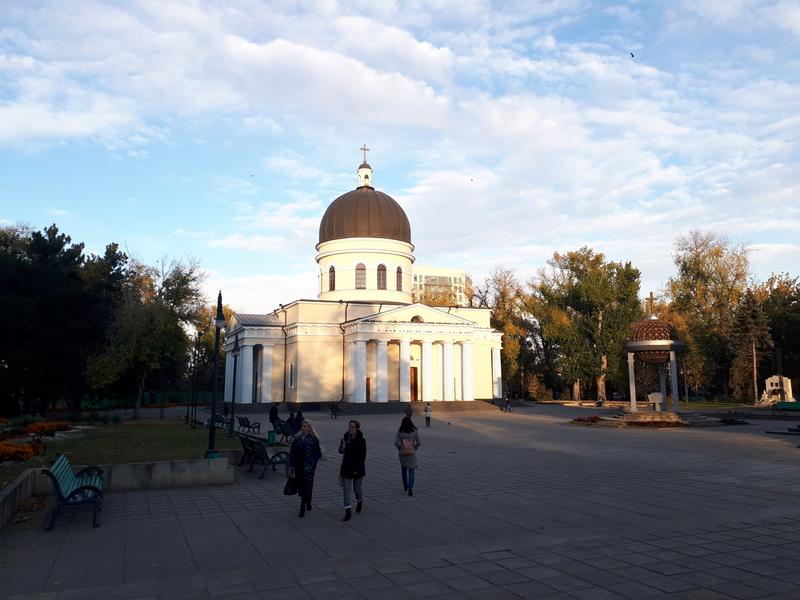
As I was getting hungry I stopped by La Placinte – a local chain restaurant which does great Moldovan food at cheap prices. You will see La Placinte – often together with its sister restaurant Andy's Pizza right next to it – all over the country. La Placinte is named after the national dish – a small round or square-shaped pastry filled with a savoury ingredient such as cheese or potatoes (although there are also sweet versions with apples inside). Although there is much, much more on the menu I fancied one with a salty sheep cheese – which I washed away with a decent Bere Chisinau from draught.
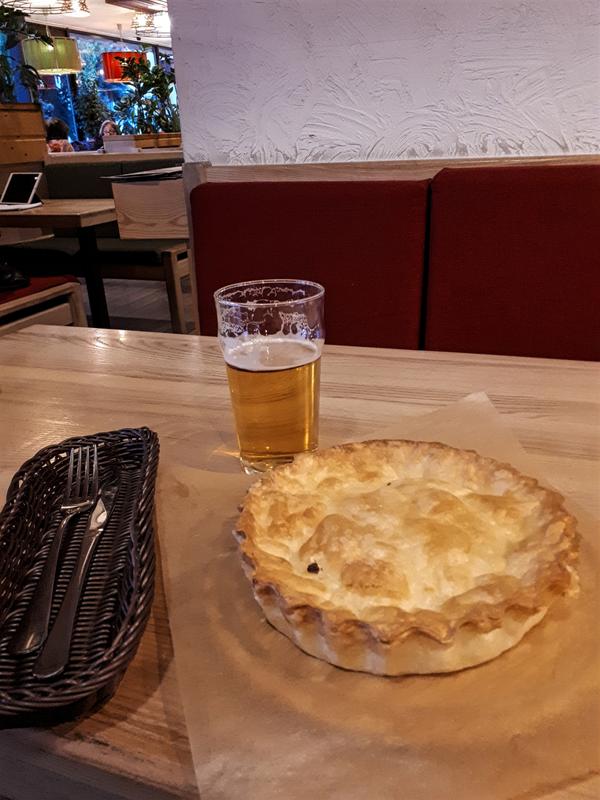
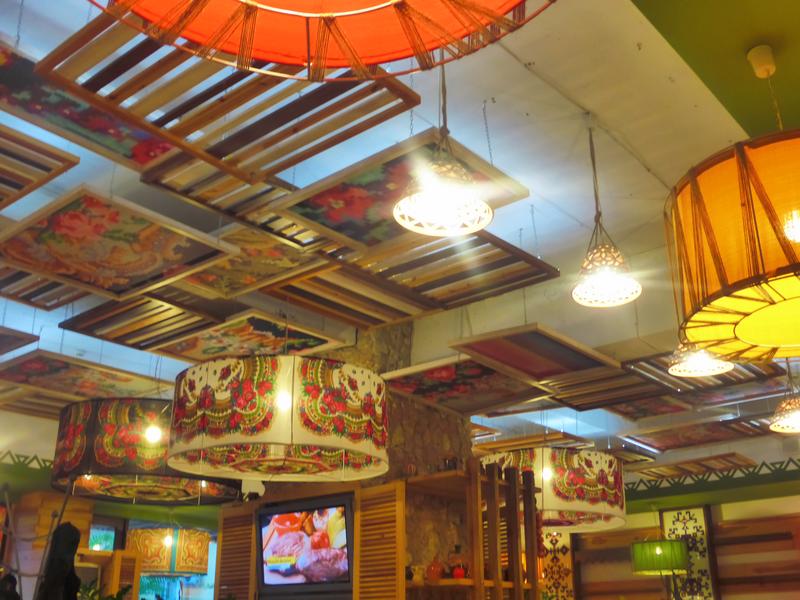 Eating a placinta at the 'La Placinte' restaurant
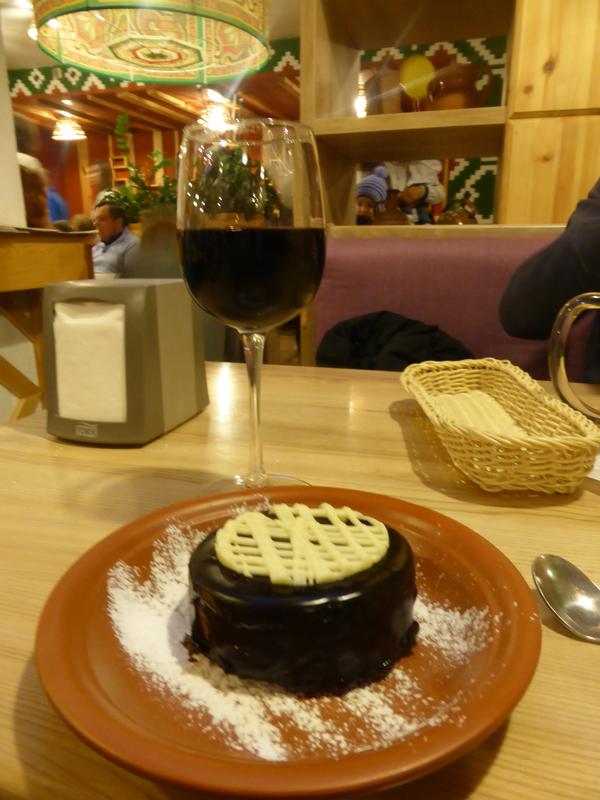
I might even had a chocolate cake and a glass of excellent Moldovan red (more on the Moldovan wine later). All combined, the whole meal was around 5 EUR.
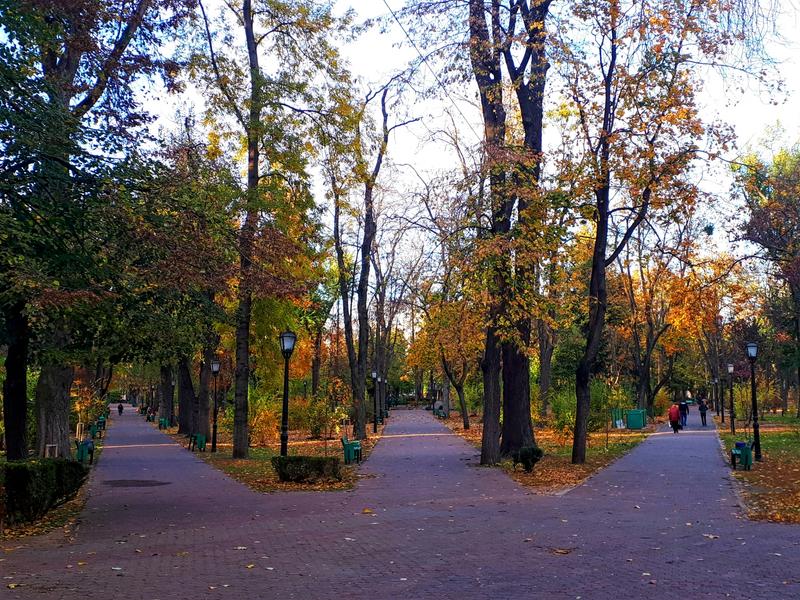
Diagonally opposite of the Cathedral and the Arc de Triomphe is Chisinau's central park – which is named after.. yeap, Stefan cel Mare. Even though it was fairly cold on this late autumn day – I can tell from experience that it is a nice spot in the summer for a walk or to drink a cold beer from one of the terraces.
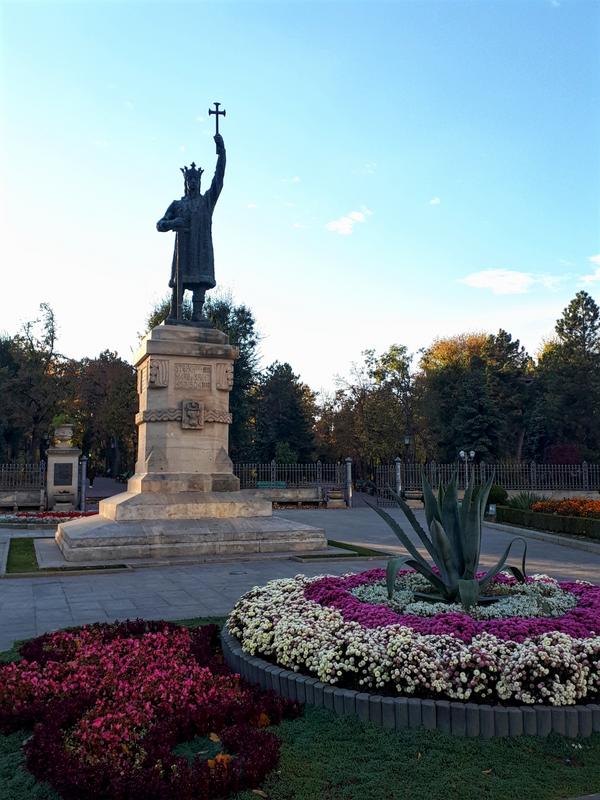
At the entrance of the park there is also a statue of a certain man – I guess by now I don't need to say of which Moldovan ruler exactly.
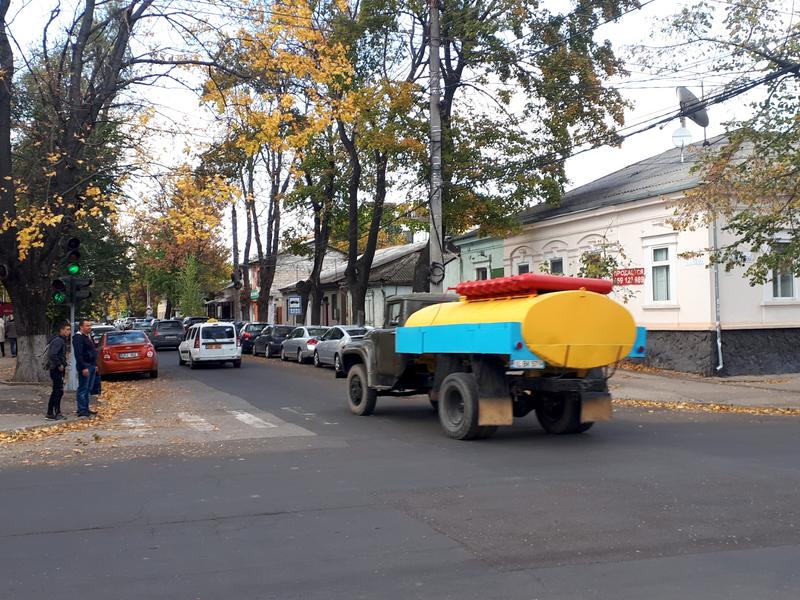
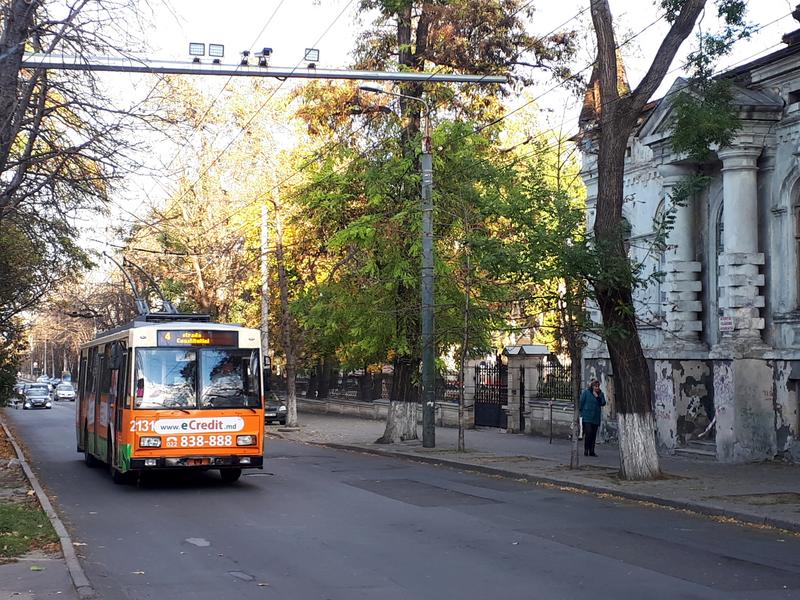
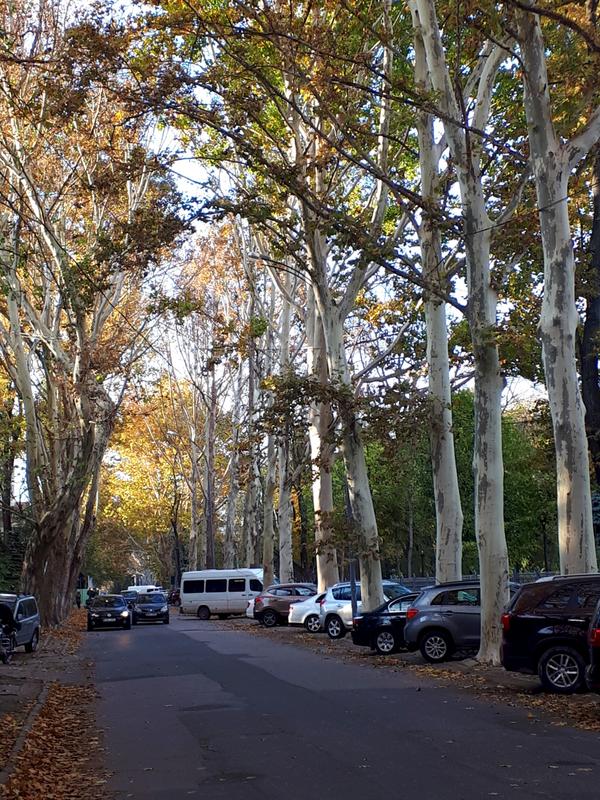
The nicest part of Chisinau is directly to the south-west of this stretch of the Boulevard Stefan cel Mare. Here you can get a glimpse of the old Chisinau before it was ruined by communism. You will find very leafy streets and mostly old-style Tsarist-era brick houses – making it resemble like a cute Russian provincial town. Some of the nicer cafes and restaurants can also be found here.
After my walk through town I met up with a few of my friends. We had a lovely dinner and a few glasses of wine at a restaurant called Eli Pili. I stayed with the local food options and ordered a tocanita (stew) which is traditionally served with mamaliga (polenta), grated cheese, an egg and sour cream.
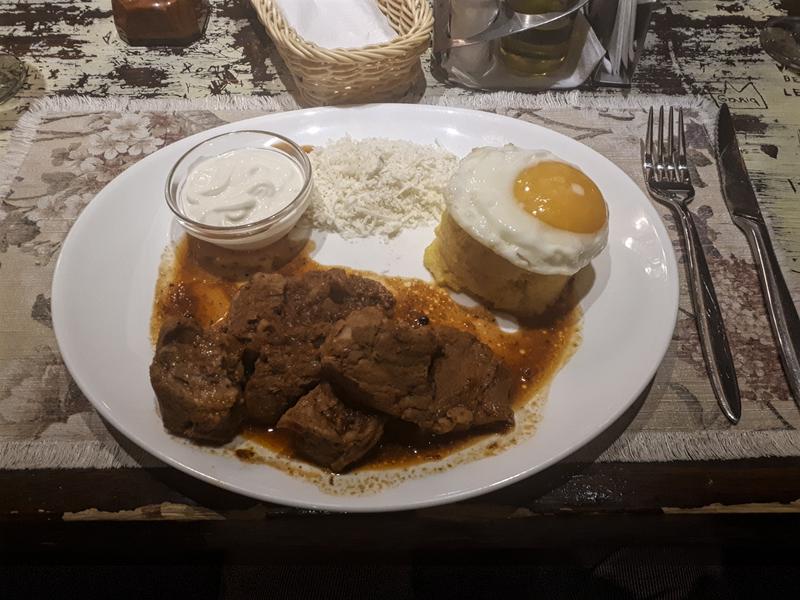
This is for me one of the nicer aspects of the city – as when you inform yourself well there are lots of nice little restaurants, cafes and pubs which are all extremely affordable. It's a good city to eat a drink a lot and to try out new foods without breaking your budget!
In short: Chisinau will never be one of Europe's finest cities – it lacks the history for it. Much of the city is an disastrous mix of Soviet brutalism and post-communism ugliness when new office blocks and shopping malls were constructed. There are however a few sights to see, the parks of the city are nice in good weather, and the local food and drinking scene is lively and very affordable. For those wanting to see something different, Chisinau will not disappoint.
Next up: Day trips to the underground wine cellars of Milestii Mici (the biggest in the world!) and to the breakaway republic of Transnistria where a weird communistic-kleptocratic regime still reigns