Part 10: A trip to the UNESCO World Heritage site of Ani
The biggest reason for coming to Kars was a major sight some 50 kilometres out of the city: the medieval ruins of Ani, one of the old capitals of ancient Armenia. I'm very much interested in the ancient civilisations of Asia Minor in general, and the first time I saw pictures of this UNESCO World Heritage site and its spectacular location I was sold – I had to see this myself one day.
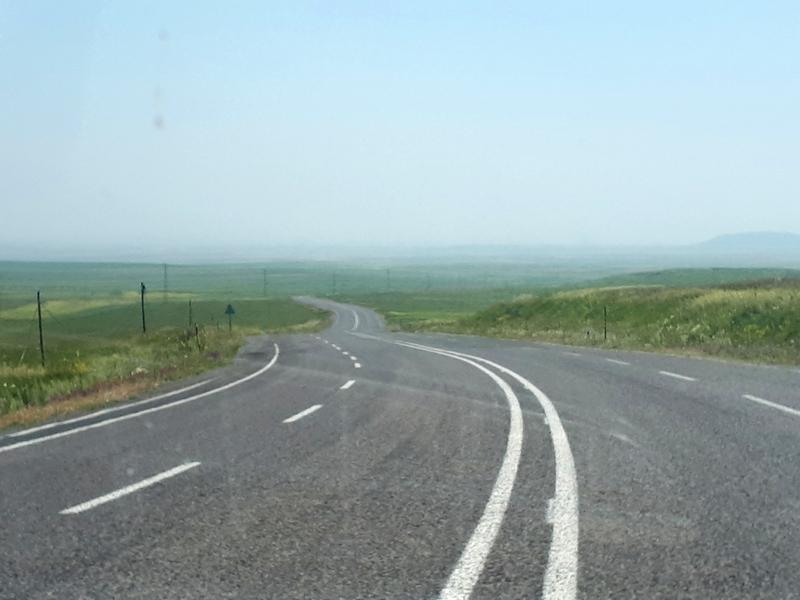
Through my hotel I arranged a taxi for a half-day trip to Ani, which was perfectly reasonable in costs at around 25 EUR if I recall correctly. Just like the drive of the prior day into Kars, the road to Ani was on a highland plateau with grasslands as far as the eye can see.
At the end of the road, next to a dusty little village, are the great city walls of ancient Ani. Cars need to be parked on the parking lot, where there is also a small snack bar, two souvenir stalls and the ticket kiosk. There was hardly anyone around when I arrived – I guess I might have only encountered five or six other people when walking around the grounds.
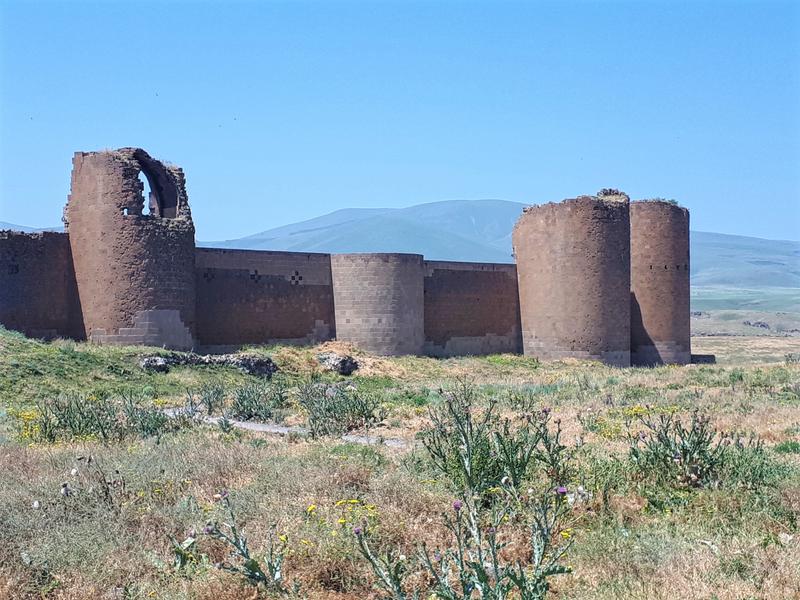
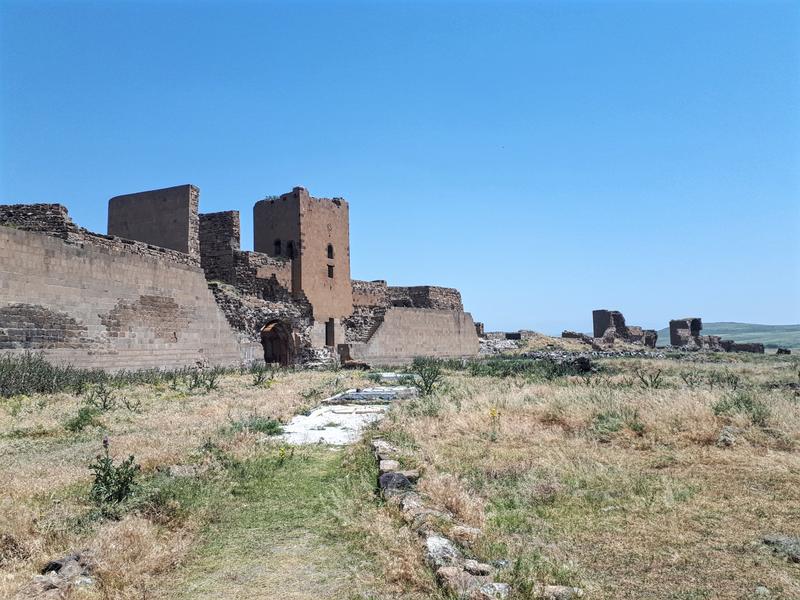
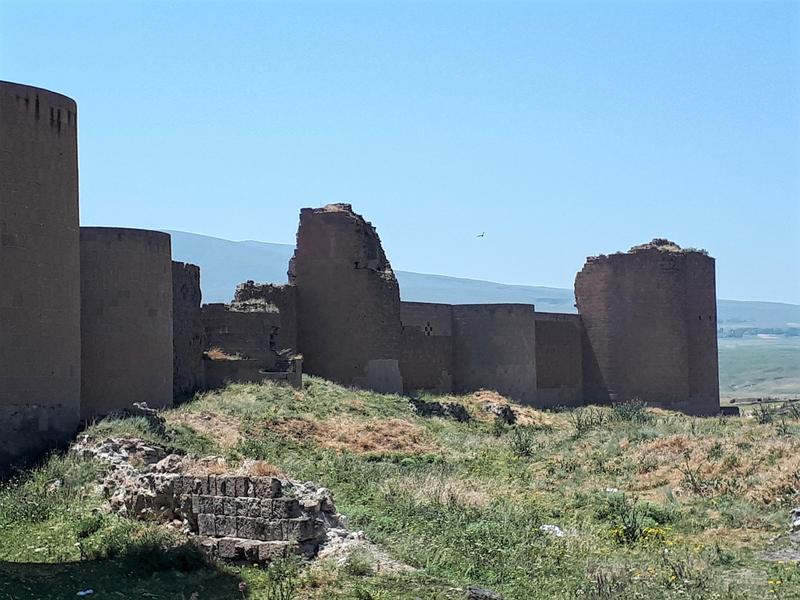
Ani was basically built in a triangular shape, and only one side has the huge walls. This is because of the unique geography of the site: there are big canyons on the other two sides which makes a great natural barrier. The Akhurian River inside the canyon is the current border between Turkey and Armenia, which due to politics (the Armenian genocide) is currently completely closed everywhere. You can easily see that the area is a highly sensitive area. At the edges of the canyon is quite some barbed wire and it is easy to spot the watchtowers and soldiers at both the Turkish side and across the border in nowadays Armenian territory.
Needless to say, Armenians are quite proud about their country's history, but also melancholic given how so much of their ancient might and greatness has been taken away from them in more recent history. Just like Mt. Ararat, which is an important Armenian symbol, visible everywhere from the current capital of Yerevan, but nowadays located right across the border into Turkish territory, also their ancient capital of Ani lies beyond reach across a sealed border.
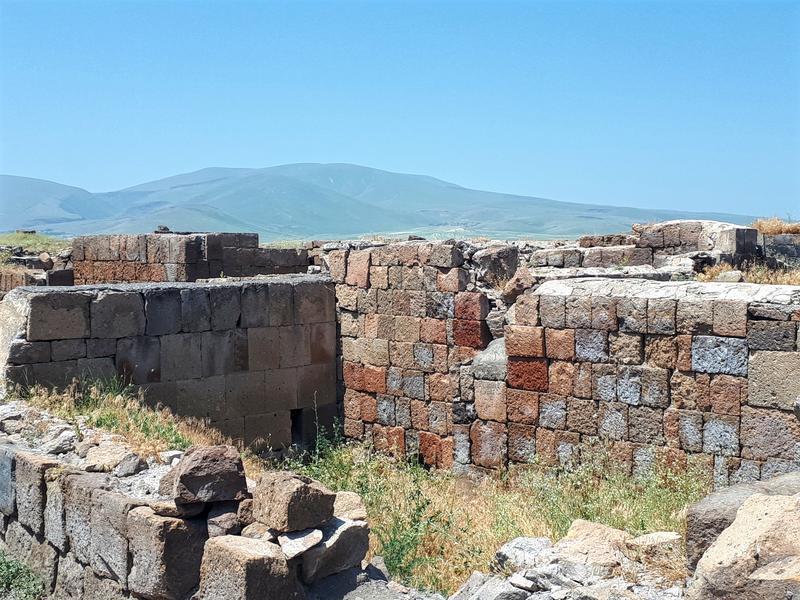
There are a couple of old churches, mosques, walls etc. to see at the site – with the buildings all in varying states of ruin (and some being renovated/rebuilt). Between 961 and 1045, Ani was the capital of the Bagratid Armenian kingdom that covered much of present-day Armenia and eastern Turkey. It was an important city on ancient trading routes and a city of huge cultural significance, called the “City of 1001 Churches” (ancient Armenia was the first country to adopt Christianity as its state religion). In its heydays Ani might have easily had some 100,000 citizens – making it one of the biggest cities of the world at the time. Unfortunately for the Armenians, Ani was sacked in 1236 by the Mongols and devastated almost completely about a century later. It never recovered and was slowly abandoned and all but forgotten by the 17th Century.
My first destination was an old mosque, spectacularly located above a gorge where the remnants of an old stone bridge were still visible.
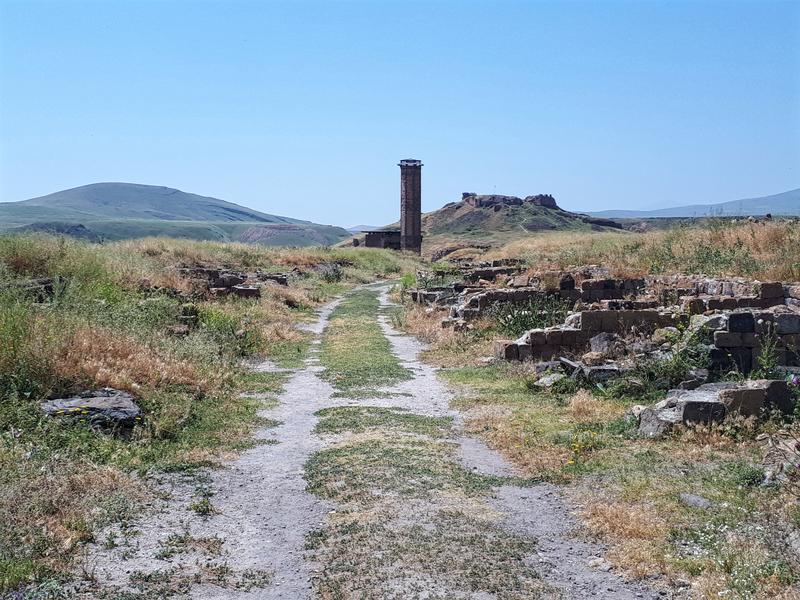
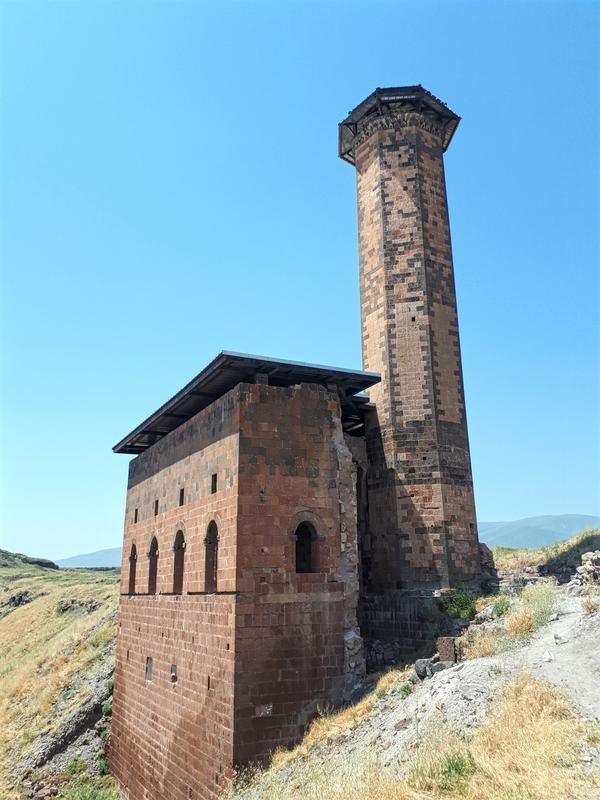
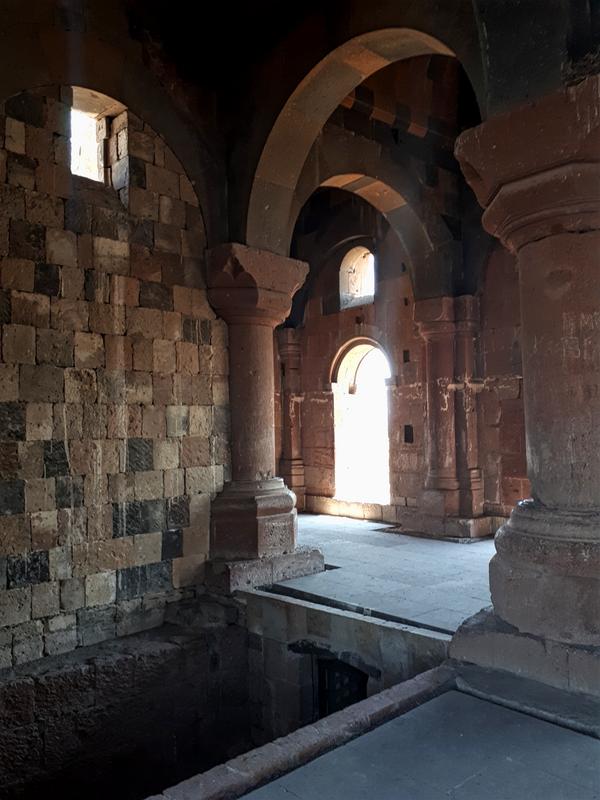
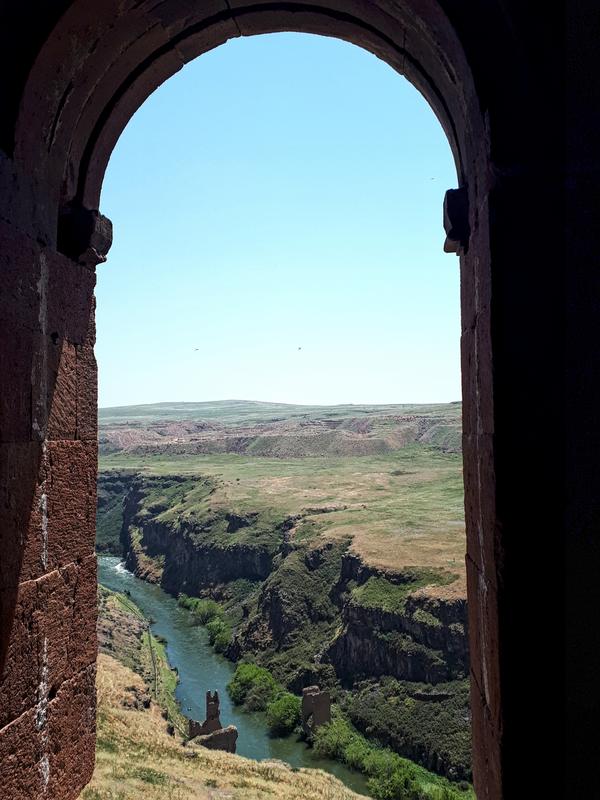 View from the mosque, if you look carefully you can still see the remnants of a bridge at water level.
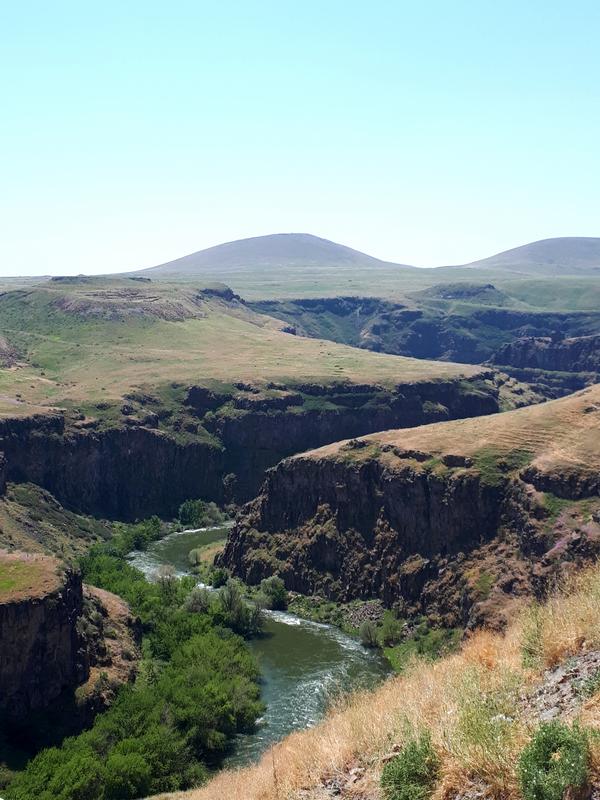
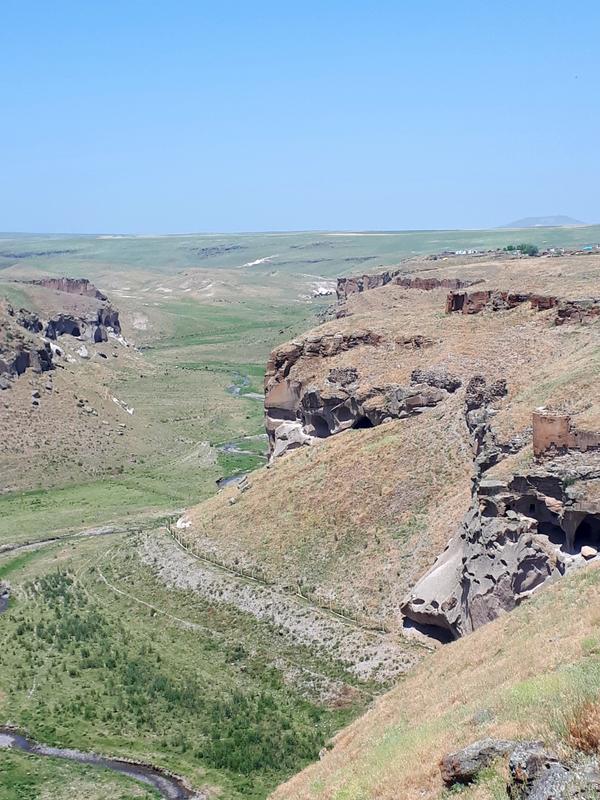
From the mosque, I slowly wandered to the other side of Ani where the gorge was a bit less steep but still impressive enough (and beautiful!).
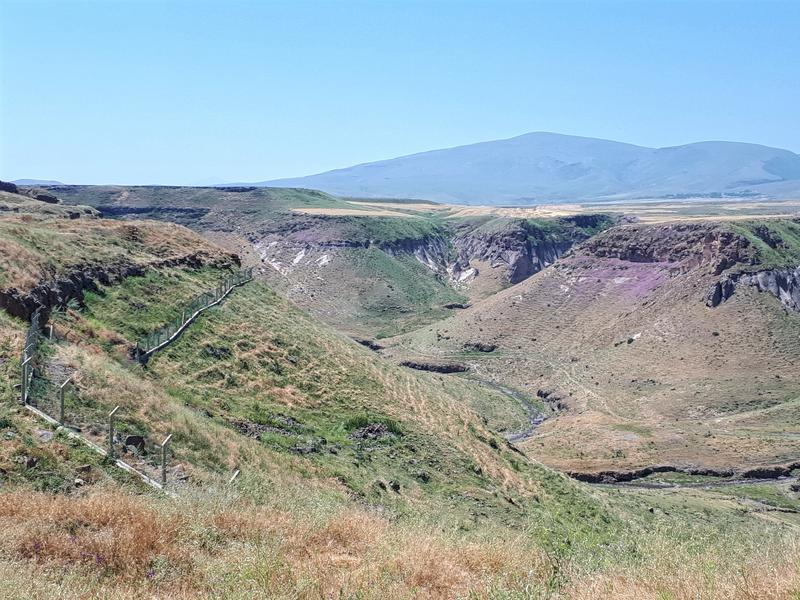
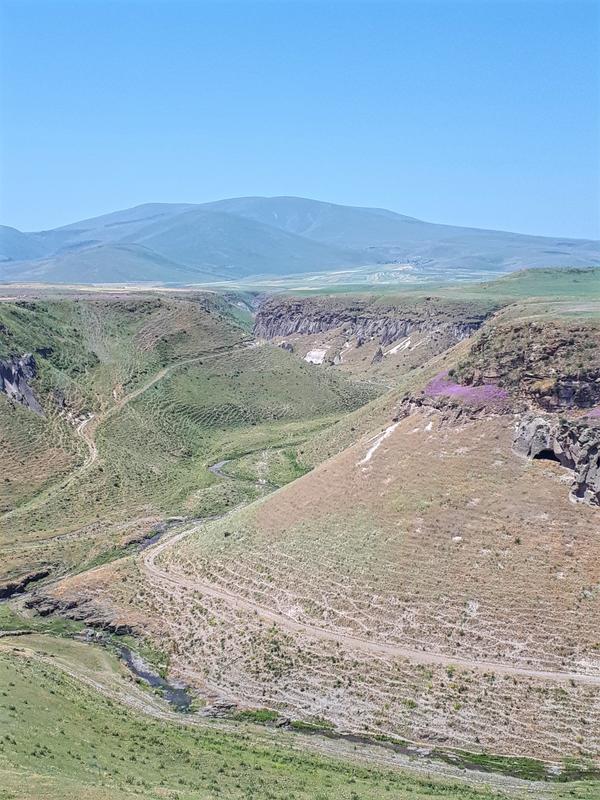
Down in the rock you can see some cave dwellings here, which were actually used by people to live in when the city of Ani grew out of its city walls.
On the highest point of Ani – and the furthest away from the main wall, overlooking both sides of the gorge – are the remnants of the citadel of the city. Unfortunately they were off-limits according to the signs, so I didn't walk all the way up there.
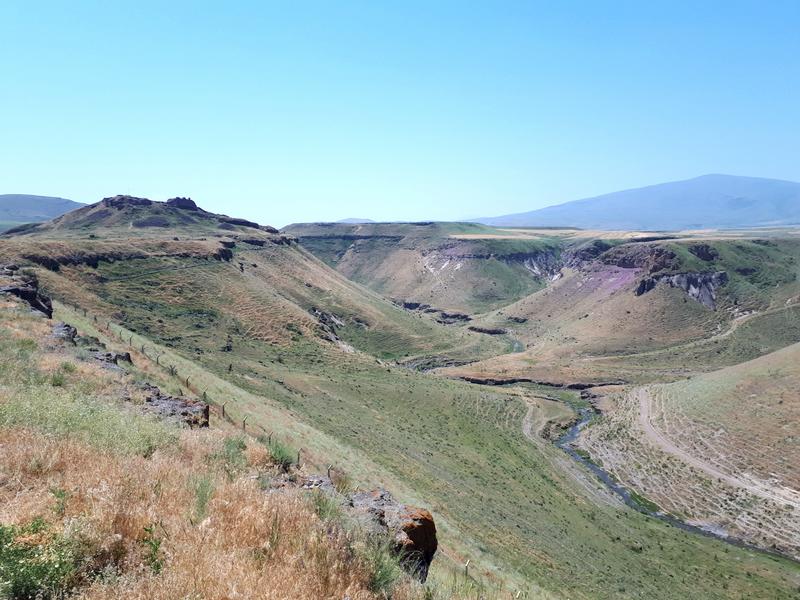 The Ani citadel in the top-left corner of the picture
Instead, I headed towards an amazingly beautiful church stunningly located above the gorge. Pictures just don't do justice how amazing the feeling is to walk all alone at such a tangible historical sight set in such a gorgeous terrain.
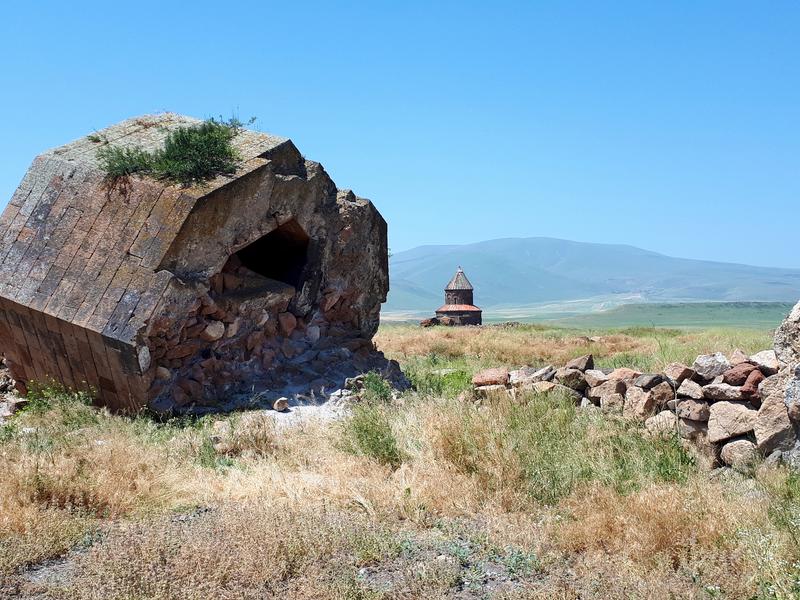
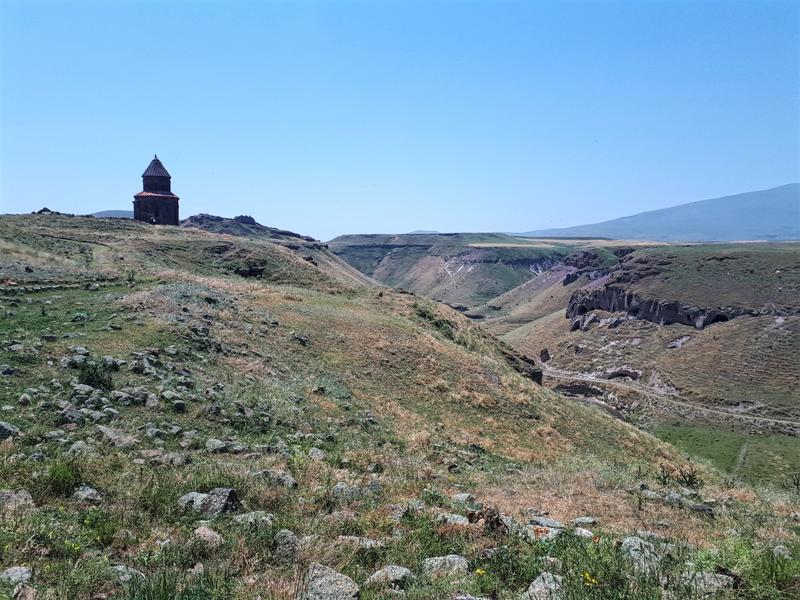
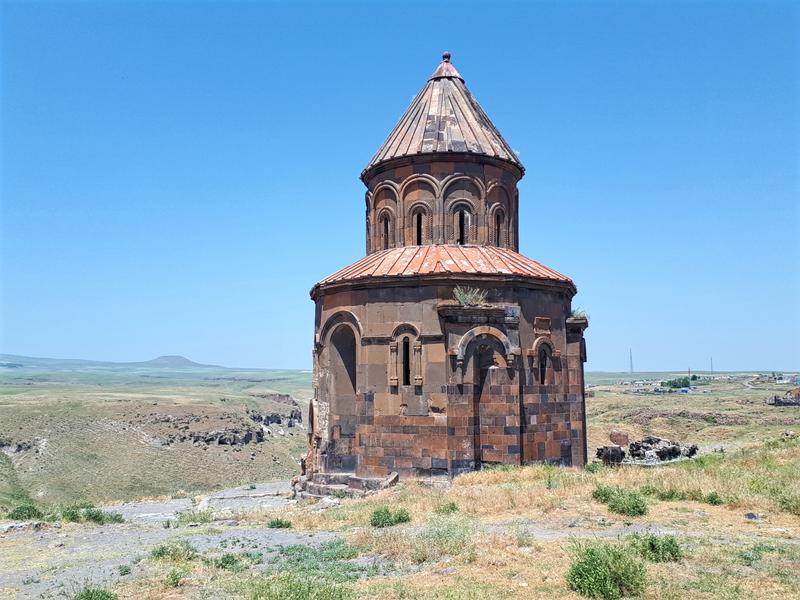
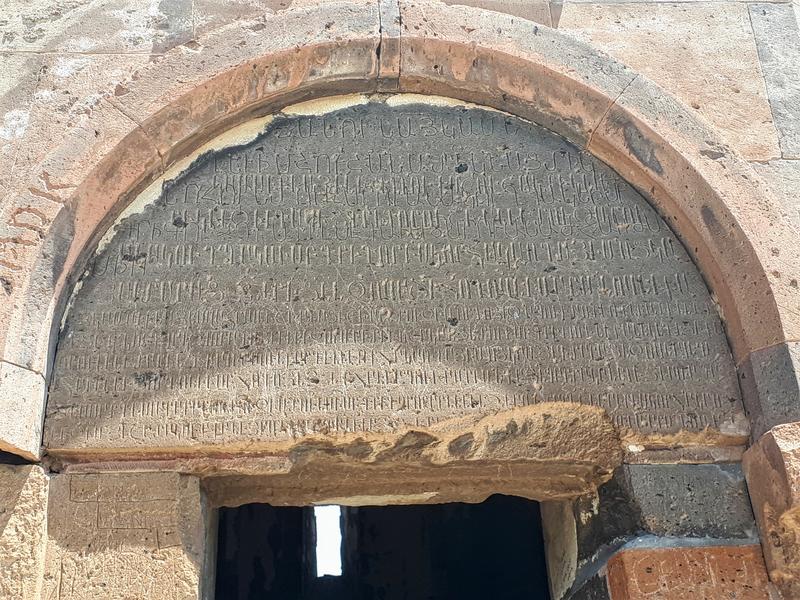
The Armenian alphabet above the entrance is very recognisable.
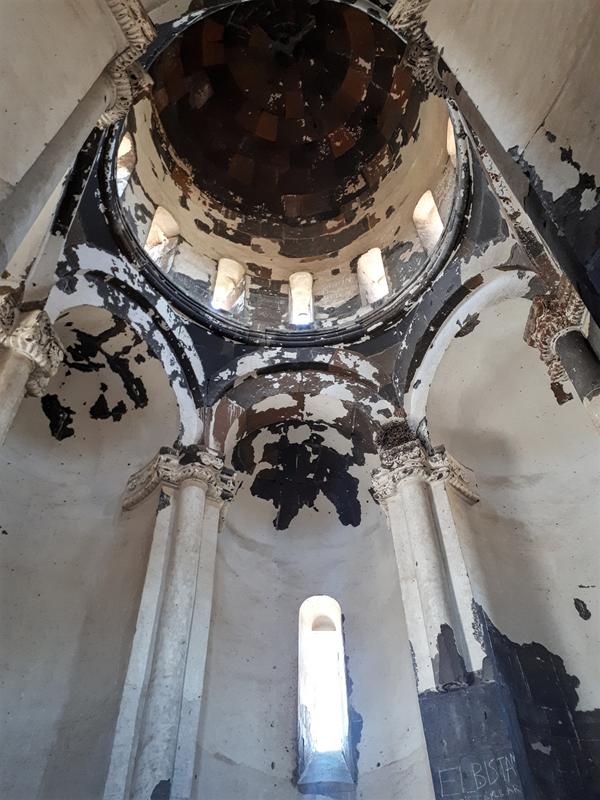
Other structures however are in a much more ruined state (I forgot the details which church was exactly which, so unfortunately cannot tell more in depth stories with every remnant of ancient Ani).
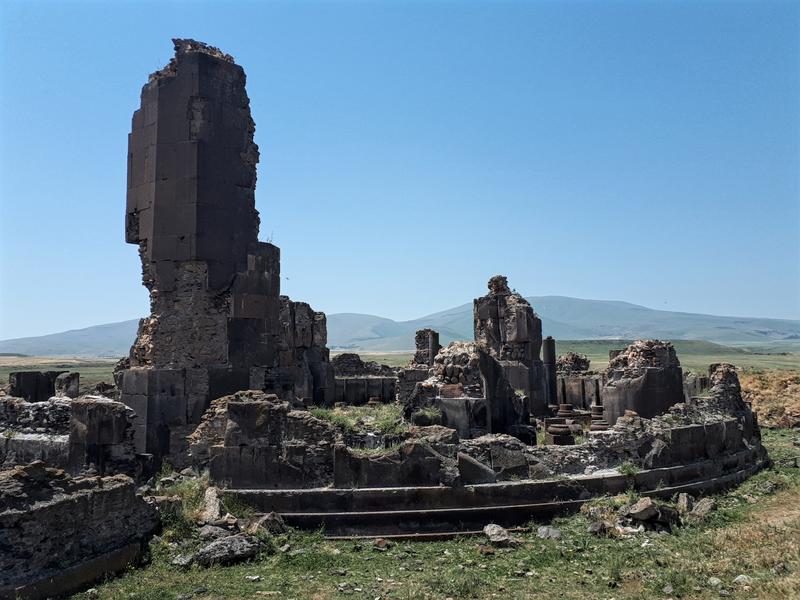
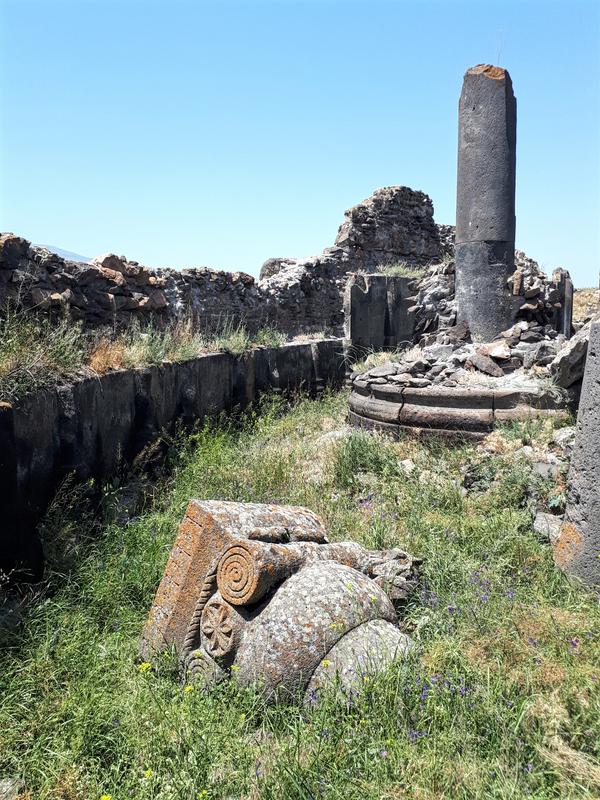
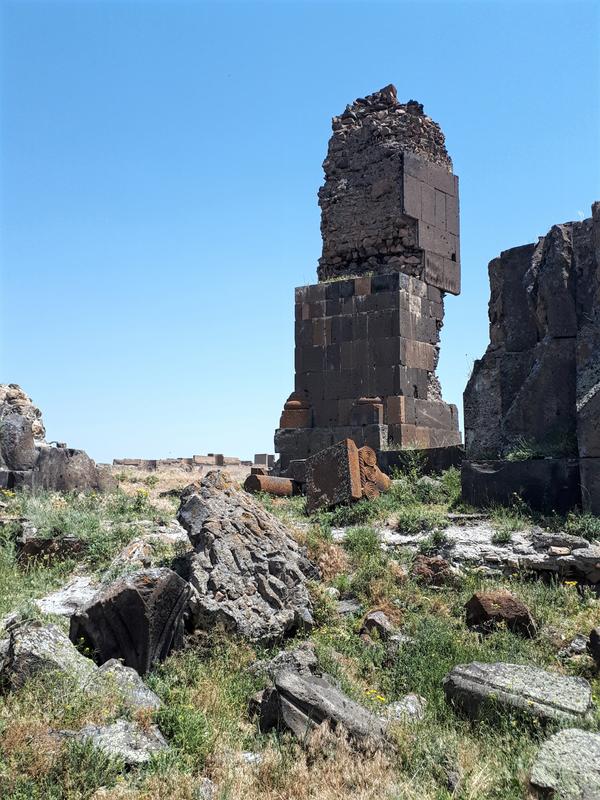
The same counts for the walls, defensive towers and other such structures.
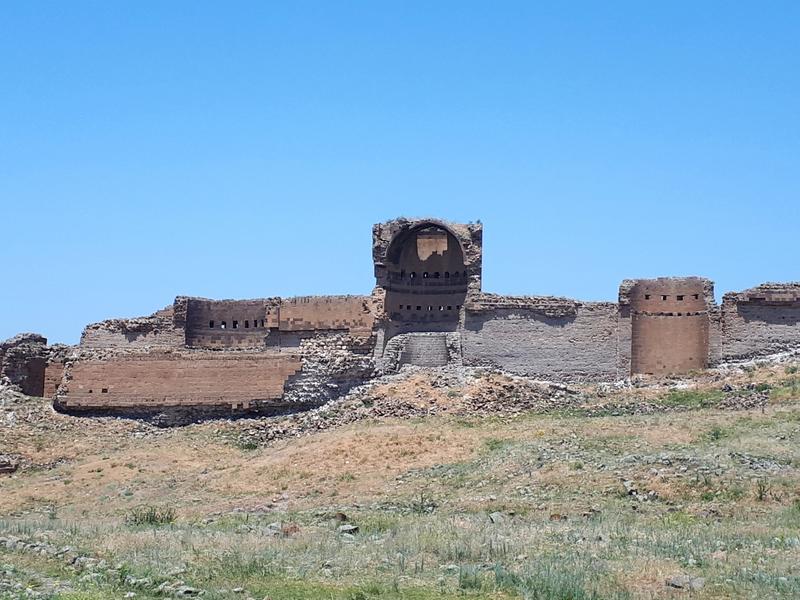
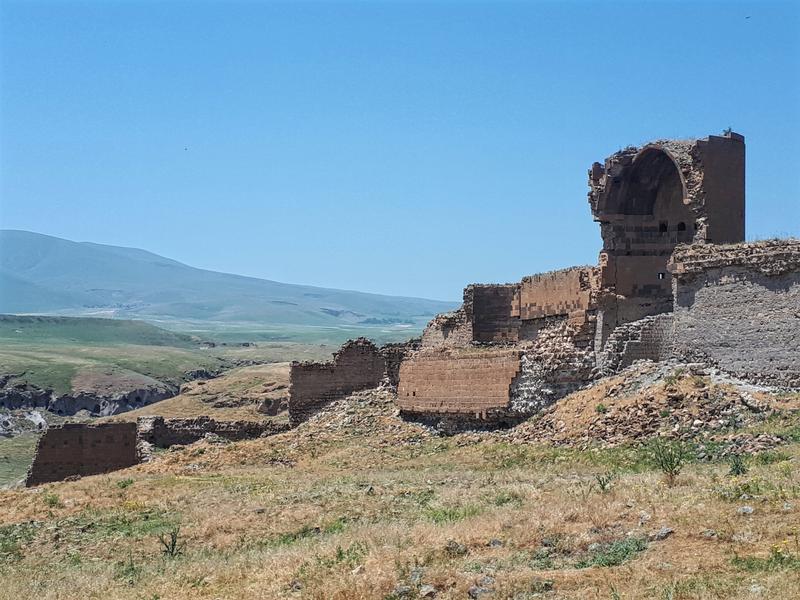
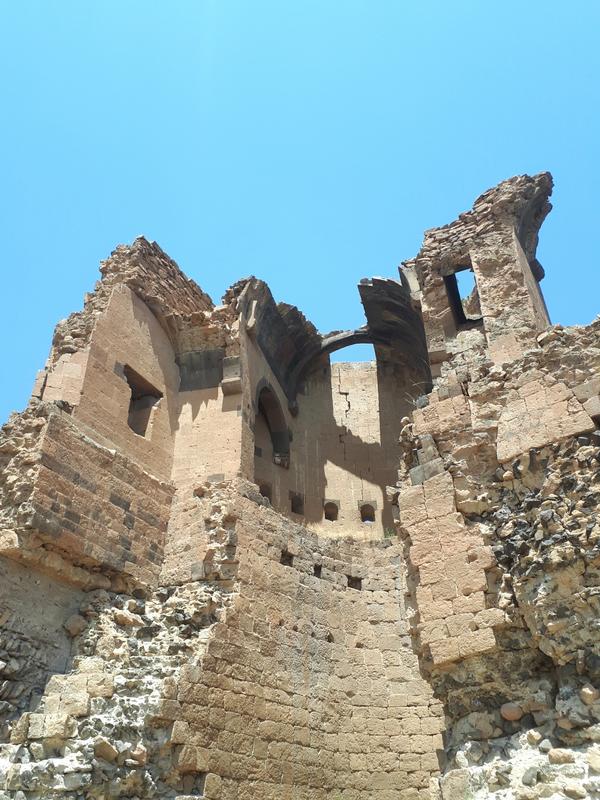
One of the more famous churches at Ani is the Church of the Redeemer (Surb Prkich). The church was largely intact until 1955 when one entire half collapsed during a severe storm. It is now being renovated so I could not get up close as it was fenced off.
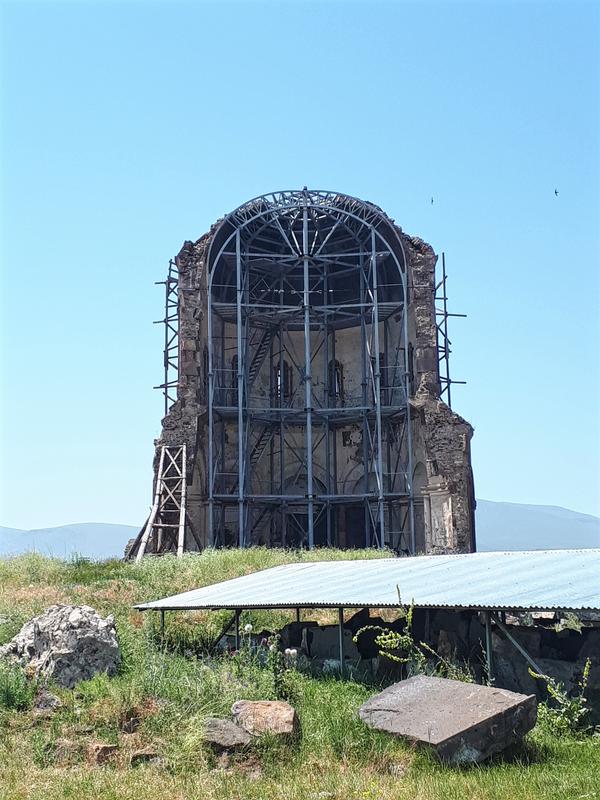
Also the cathedral was being renovated. Although you can approach it and walk around it, you cannot enter it due to the scaffolding both outside and inside.
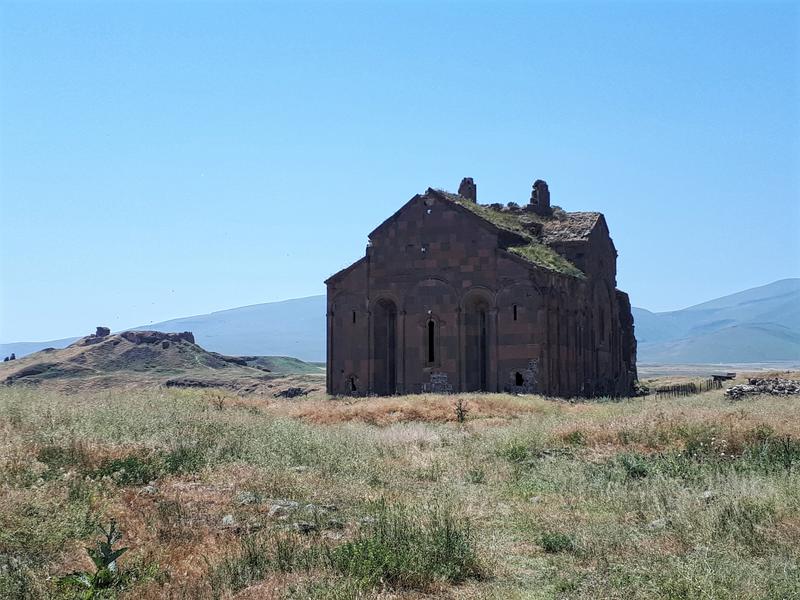
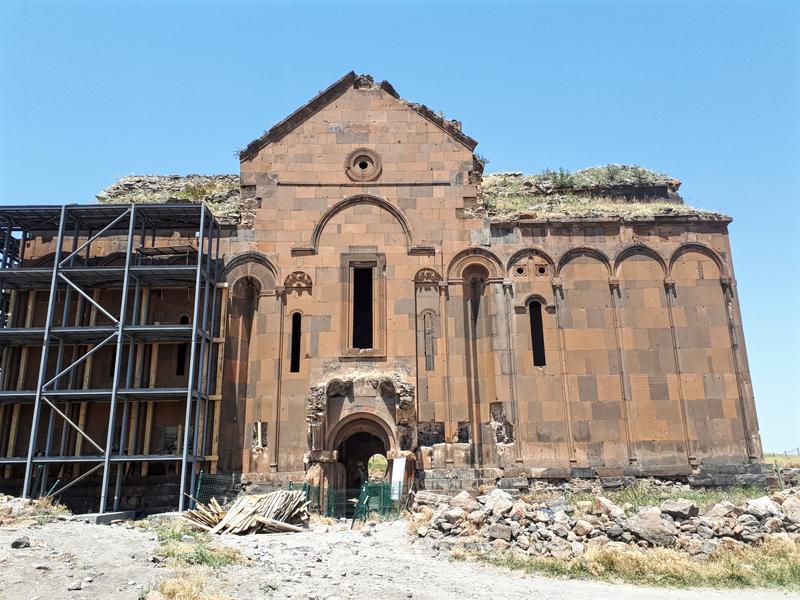
Instead, I just wandered a bit more along the canyon to admire the beautiful views.
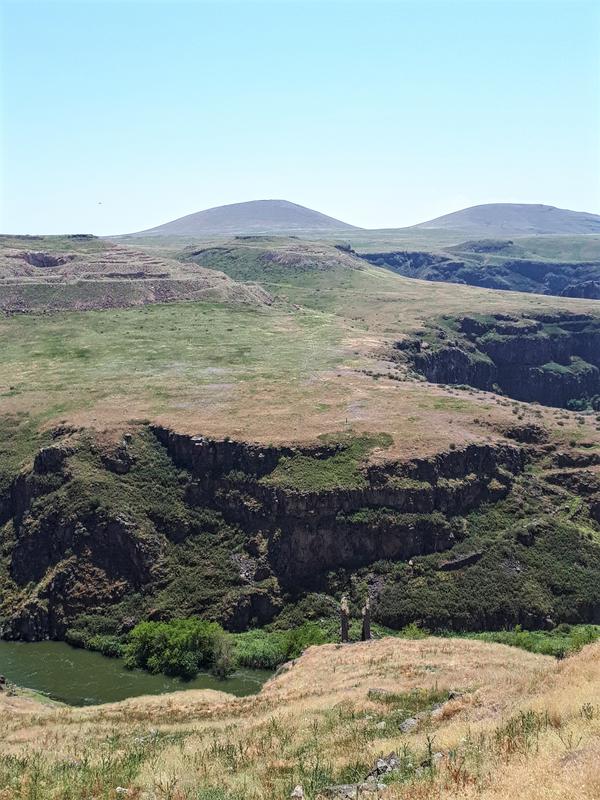
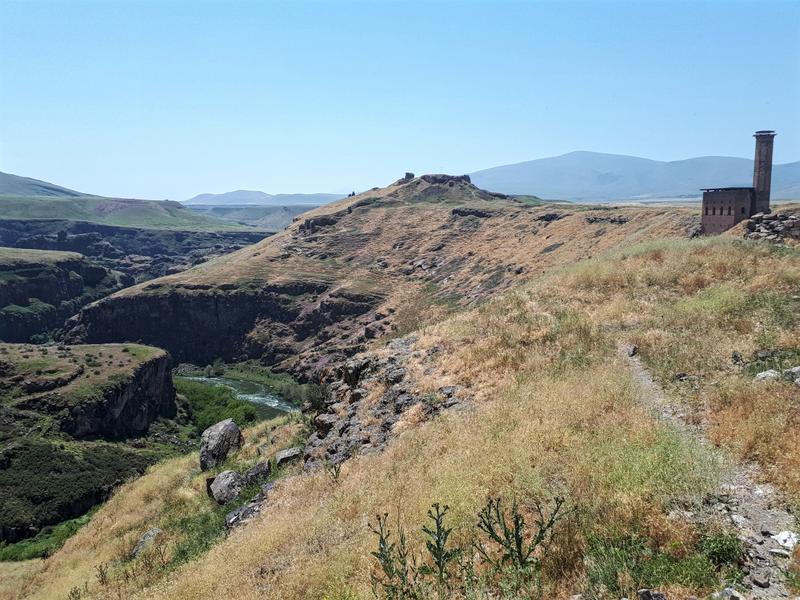
As the clock ticking towards 1pm I decided to call it a day. I wanted to stay longer but I knew my taxi driver would be waiting as I negotiated only half a day at Ani and more importantly – it was getting scorching hot on the highland plateau. When visiting Ani in summer, do remember to go early, take enough sunscreen, and take a hat! (which I forgot to do..) as there is absolutely no shade around the terrain and the ruins are quite spread out.
But wow, what a fantastic sight ancient Ani is. To me, it can easily compare in its own way to other famous ruined cities such as Angkor Wat – with the benefit that you have this entire site entirely to yourself.
Next up: An afternoon seeing the sights in Kars