Part 8: Batumi, Georgia to Kars, Turkey
360 kilometres by taxi, minibus and bus
I woke up before the break of dawn as today was a sort of crucial transport day in which I could not afford to miss a connection as dealing with IRROPS would not be fun in a sparsely populated part of Turkey. I read on the internet about people saying not to worry if missing a direct bus to Kars as you can do the entire journey by making 5-6 minibus changes – but spending the entire day in a cramped
dolmus (how the Turks call a minibus) seemed more like my version of hell.
Simply put, I had to be at the junction town of Hopa on the Turkish Black Sea coast – some 37 kilometres away from Batumi – at 10.30am. I managed to buy a ticket online for a bus leaving that hour to Kars, and it was the only direct bus I could find online. Now to go to Hopa is on paper quite straightforward as like Batumi it is on the Black Sea coast, just some 37 kilometres away. There are plenty of direct buses, but most of them leave at godawful hours in the middle of the night as they originate from Tbilisi, or are timed for passengers travelling all the way to cities like Istanbul. So I had to do this trip in a few stages: first a taxi to the Georgian side of the border at Sarpi, cross on foot, take a minibus to the first town of the Turkish side (called Sarp) and then change onto another minibus to Hopa. I was warned before by Turkish and Georgian friends that the border can be hectic and massively overcrowded in summer with hundreds of Turkish holidaymakers and others buying up half of Georgia – so I didn't want to risk arriving in Hopa too late.
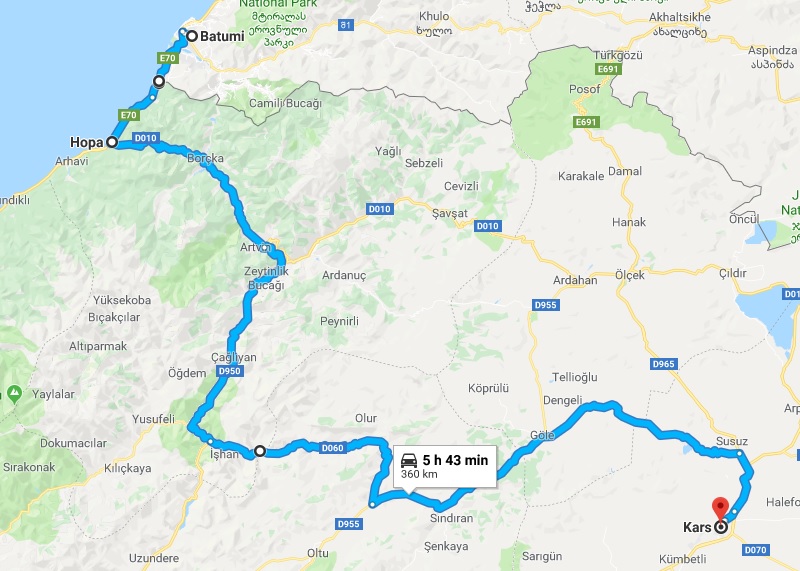 The route I would be travelling from Batumi to Kars via the Sarpi border and Hopa
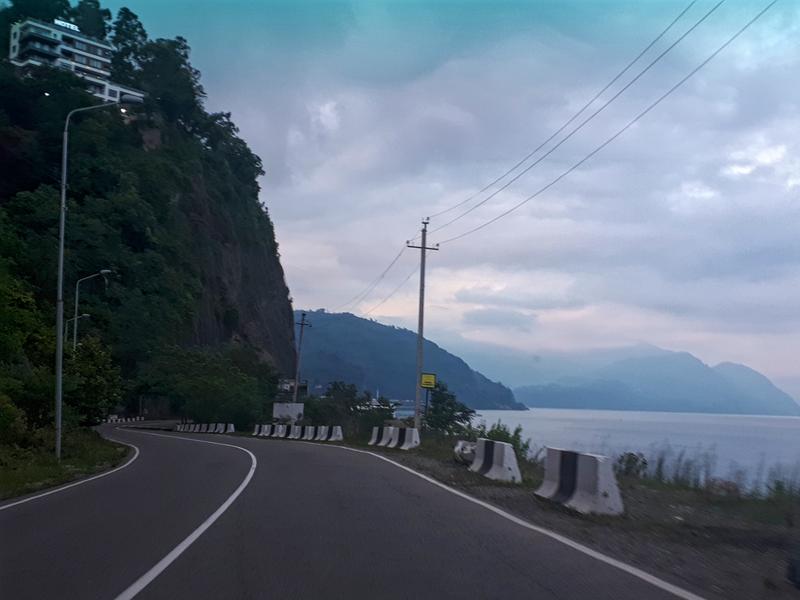
Despite it being 5am I managed to hail down a taxi quite easily from the main seaside road near my apartment, and even managed to arrange a fair price for the ride to the border at less than 10 euro (probably still too much – but why bother haggling more at this hour when you are tired, the price is very decent compared to the most of Europe, and the taxi in question is a comfy Mercedes. The road hugging the coastline was gorgeous, especially as dawn broke and first light illuminated the lush, subtropical forests on the mountains.
The taxi dropped me off right at the entrance building of the Georgian border for foot passengers. And boy, it was crowded even at this early hour. It seemed like half of Turkey was on holiday in Georgia and now wanted to go home. The gate towards the first room of the building (Georgian passport control) was firmly closed as the border guards only let in about 100 people inside at each time for the crowds not to become too great and uncontrolled inside the building. Needless to say, this resulted in a huge rugby-like scrum of people trying to position themselves the best as they could in front of the gate, hoping to be let in during the next batch of people to be processed. I have seen my share of disorganised border posts, but this was surely the one the furthest away from orderly British queuing etiquette as I could remember. I could perfectly understand now why the last Georgian sign over the road read (no kidding!) “good luck”.
Having played some rugby in my university days I was however able to get through the scrum fairly easily (while of course not jumping the queue like others did!) and it took me perhaps 20 to 30 minutes to get into Turkey. I had bought my Turkish e-visa beforehand and was swiftly stamped into the country. Though I needed to put my bags through an X-ray machine, the girl manning the monitor did luckily not seem to be interested in the copious amounts of Georgian wine, chacha and brandy I took with me.
Taxi drivers quoted too high amounts of money for the drive to the first Turkish town of Sarp, so I decided to opt for the minibus. I was however able to exchange my remaining Georgian lari for Turkish lira with one of the drivers for an OK enough rate (haggle hard as the beginning offers were way too low and there did not seem to be any official exchange point).
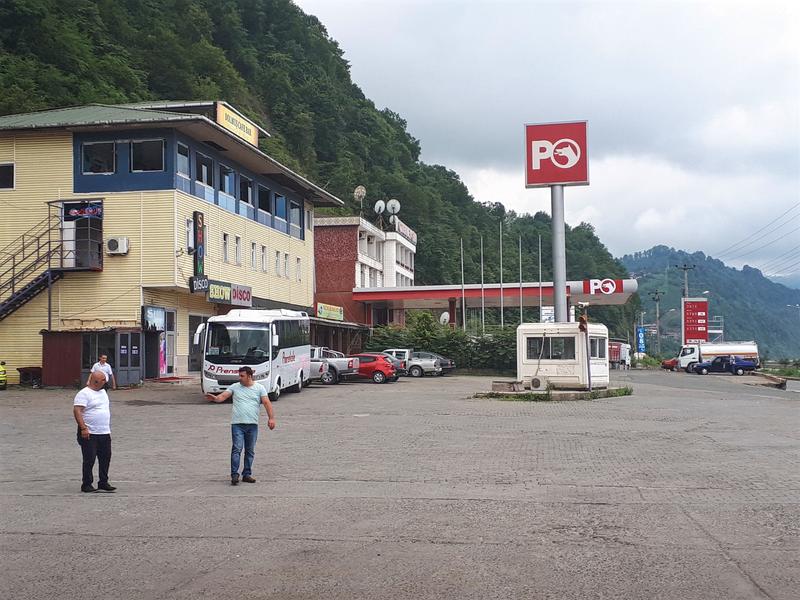
In all fairness, from that point on everything went super smooth. The first minibus dropped me off at its final stop of the small Sarp bus station, where almost immediately another minibus departed straight for Hopa. It went fast and was dirt cheap (less than 2 EUR combined) – and I arrived at the Hopa
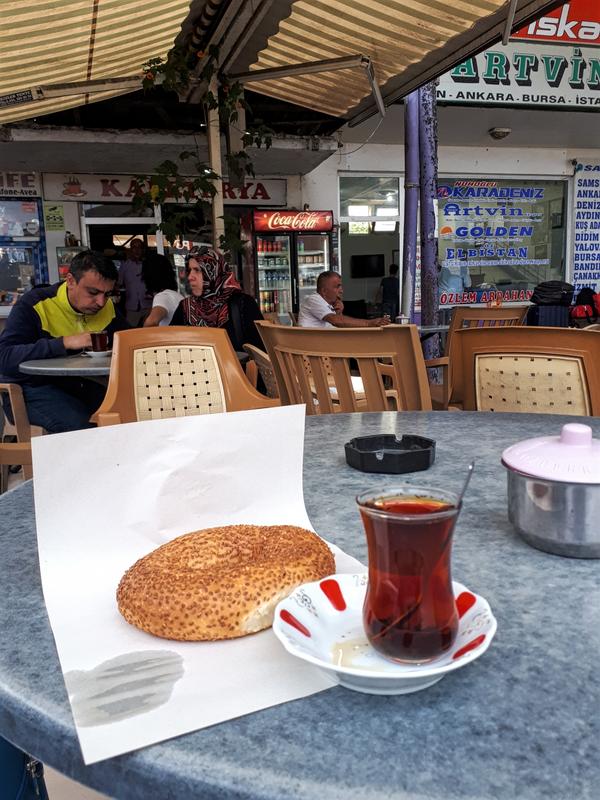
otogar (Turkish for bus station) with lots of time to spare. While I was happy to have arrived on time – and would even in hindsight not have departed later just to have peace of mind and not be stressed during the journey – I was hating the fact at this moment that I had to wake up super early and that there was absolutely nothing to do around the Hopa otogar. There are two small cafes – but that is really it. I decided to sit down, drink a tea, and eat a
simit (Turkish-style bagel).
Luckily the friendly office manager of my bus company for the onward journey to Hopa (Yesil Artvin, ticket from Hopa to Kars was about 10 EUR) was friendly enough to share the wifi password of the office so at least I could kill some time on the internet.
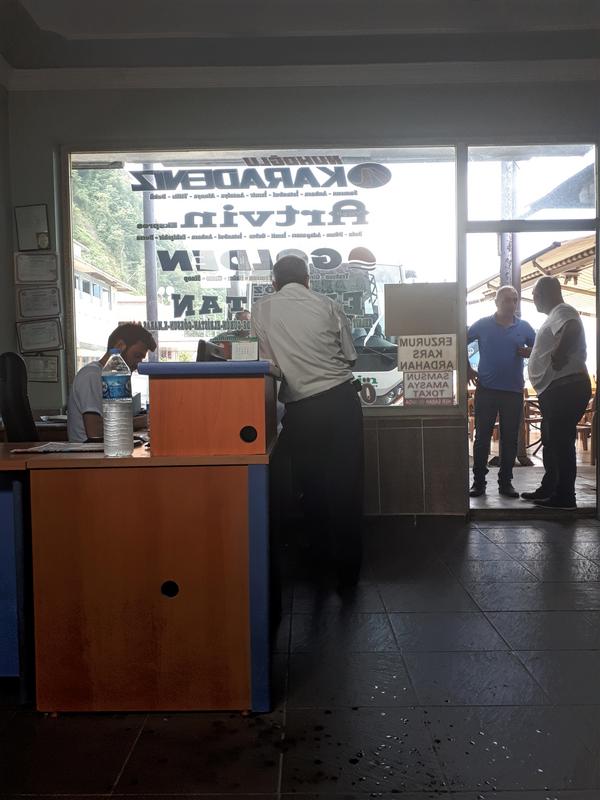
Luckily the bus arrived spot on time at the Hopa bus station (it originates from Rize a bit further down the Turkish Black Sea coast). Thanks to internet booking I could pre-select my seat and managed to snag 1D, allowing a clear view out of both the front window and to the right. It was a decision I did not regret as the scenery turned out to be absolutely spectacular. I quite expected it to be nice, but that some parts of the route would look almost like an US national park or faraway Central Asian highland I did not expect.
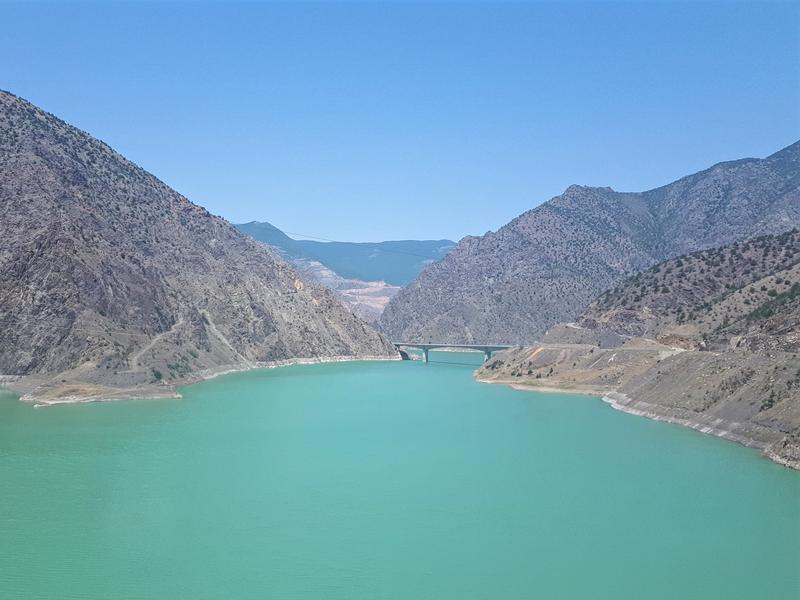
It was quite a nice contrast when shortly after the departure out of Hopa we entered a long tunnel across the coastal mountain range. While the weather in Hopa was cloudy, the other side of the coastal range was absolutely sunny with clear blue skies. While the first miles of the journey follow a small but pretty river, it turns out that a big more upstream the Turks have dammed about the entire stream, creating huge artificial lakes. According to Wiki there are now 15 large hydroelectric dams along the Çoruh River. While I do love the striking blue colours of these artificial lakes one can only wonder how it should have looked like without the dams.
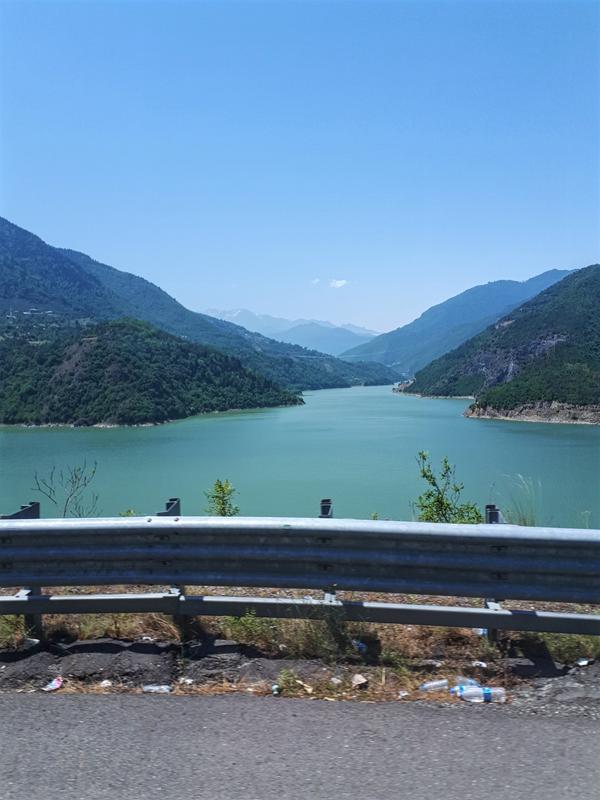
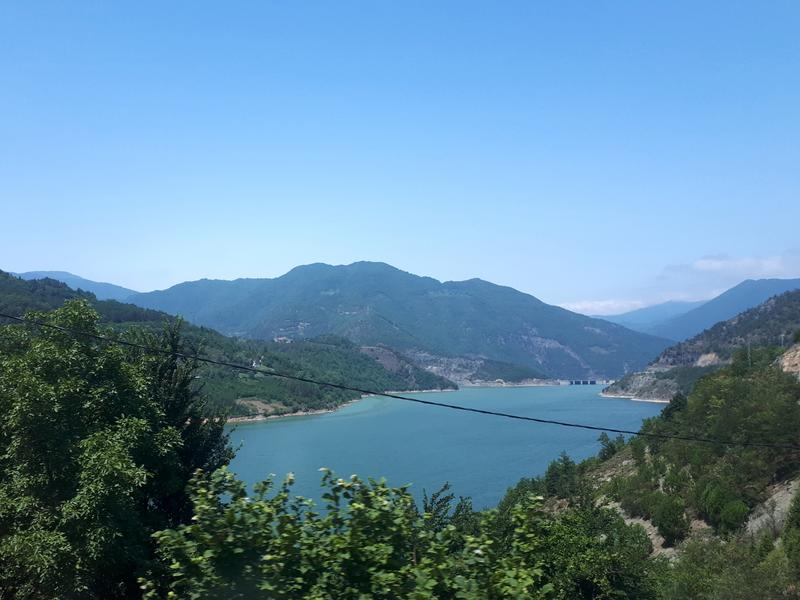
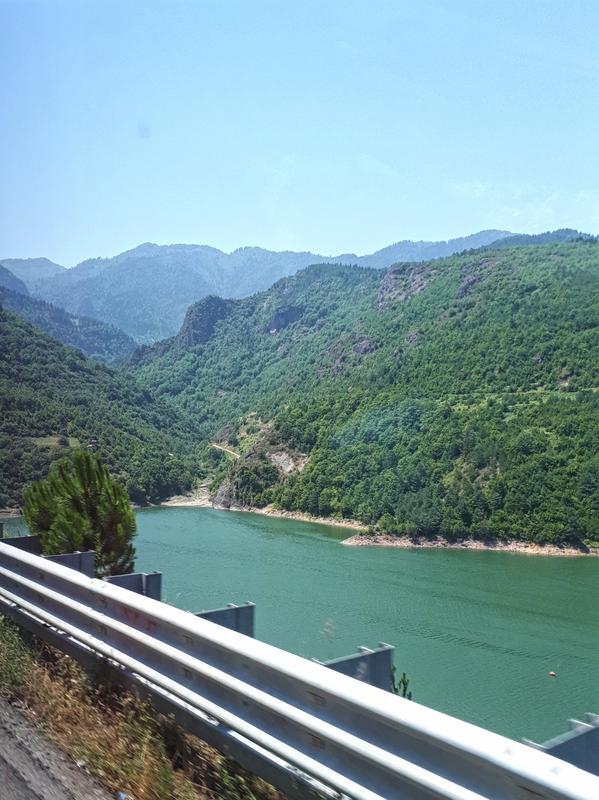
Historically, the region was settled by such peoples as the Pontic Greeks and the Armenians, although it is almost completely Turkish now besides some pockets of Georgian-speaking Laz. Besides some historic sights the region is apparently also a prime ecotourism destination (but not well known outside of Turkey at all) and I could easily see myself returning here with my own wheels.
We stopped shortly just outside the region's main city of Artvin, located on a hill just above the river and next to a major dam.
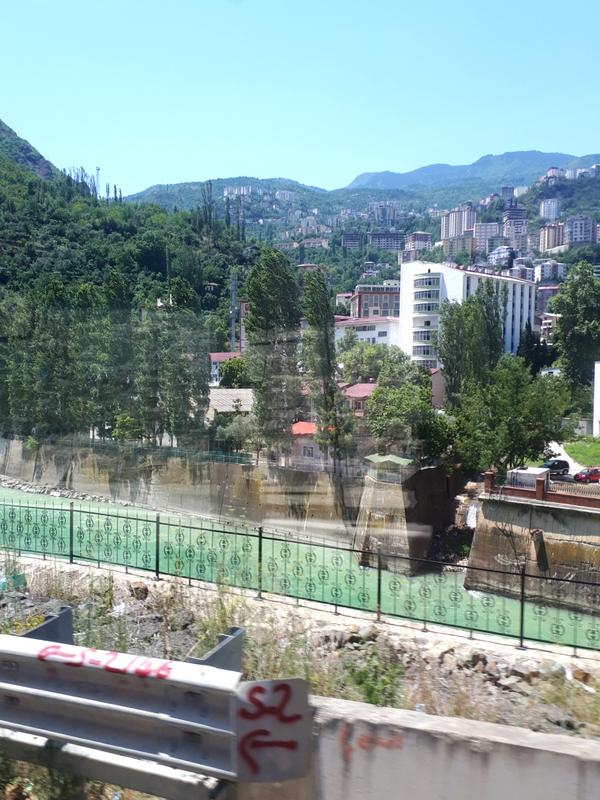
And afterwards there were miles and miles of more artificial lake views, with the green trees giving way to bare rocks more inland.
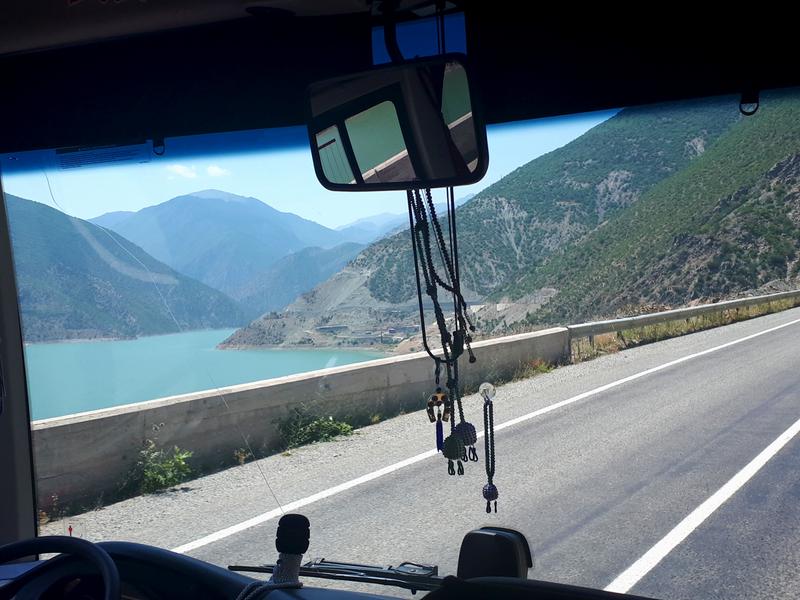
About halfway through the journey after some 3 hours we made an half-hour stop near a petrol station and two restaurants. I wasn't hungry so I just bought an iced tea and walked across the road to the fast-flowing river to snap some pictures of the truly stunning scenery here. If you'd have told me the picture was taken somewhere in Arizona I would have believed it.
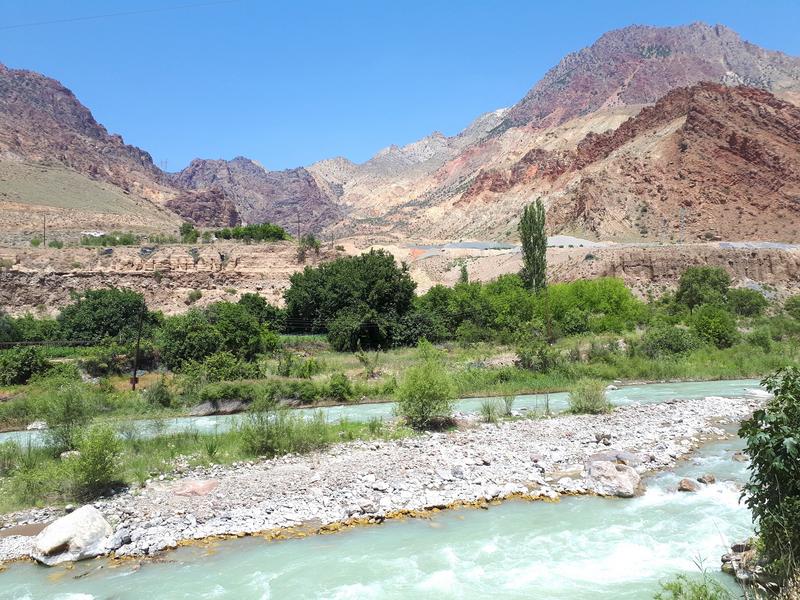
When we continued the second part of the bus journey I started to feel the pain from the cramped seat and remembered why I hate bus journeys so much. Yet the amazing scenery kept me glued to the window and appreciating the journey.
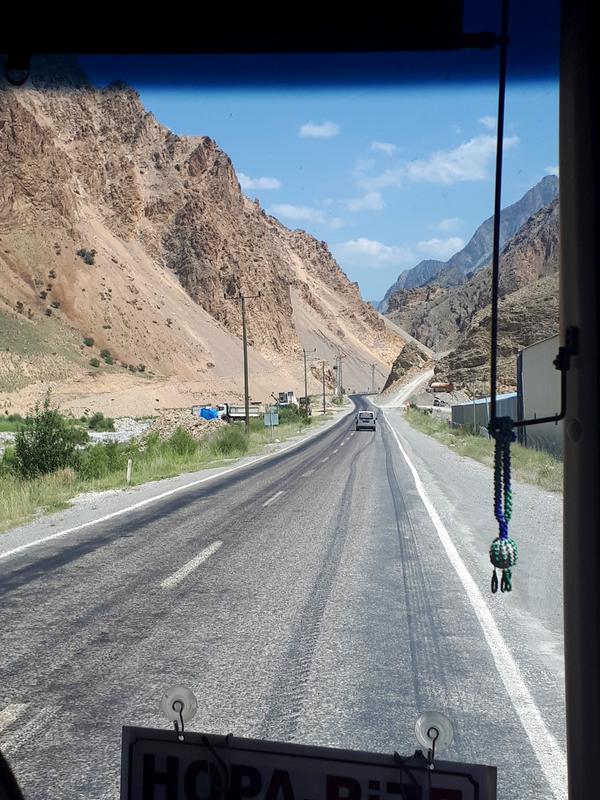
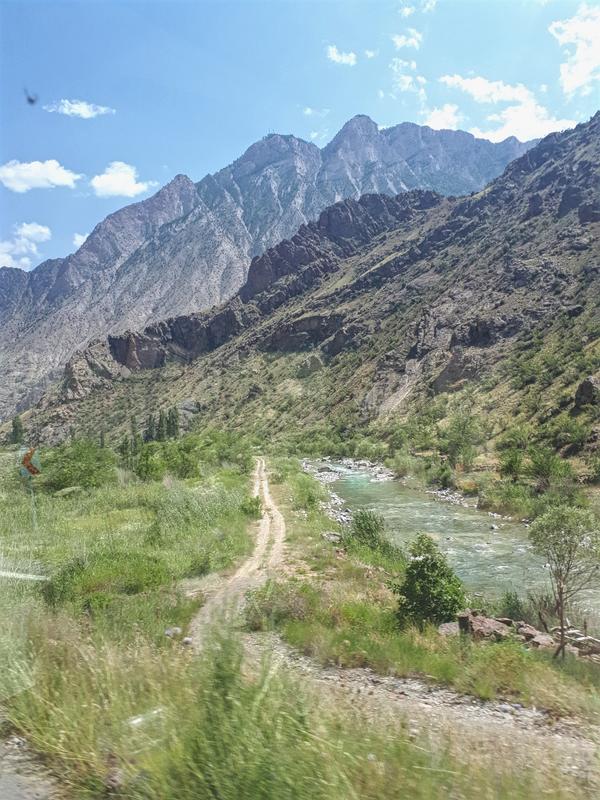
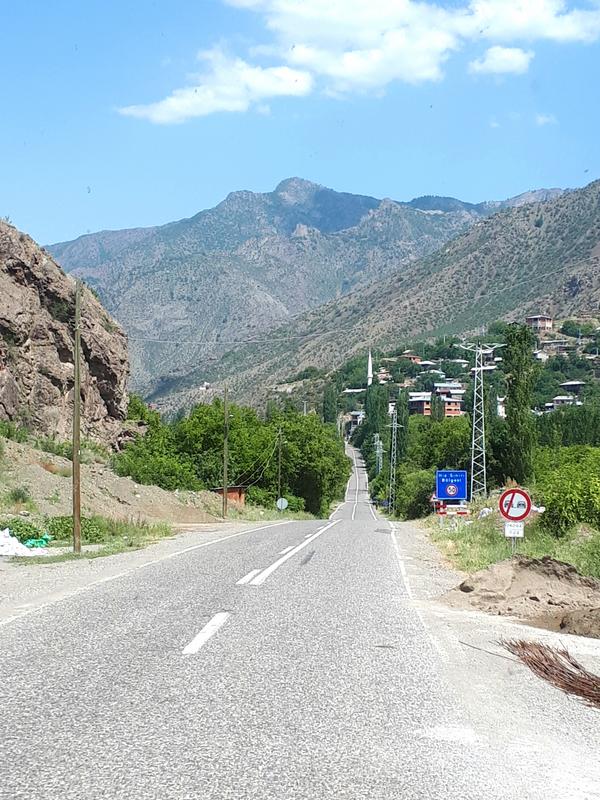
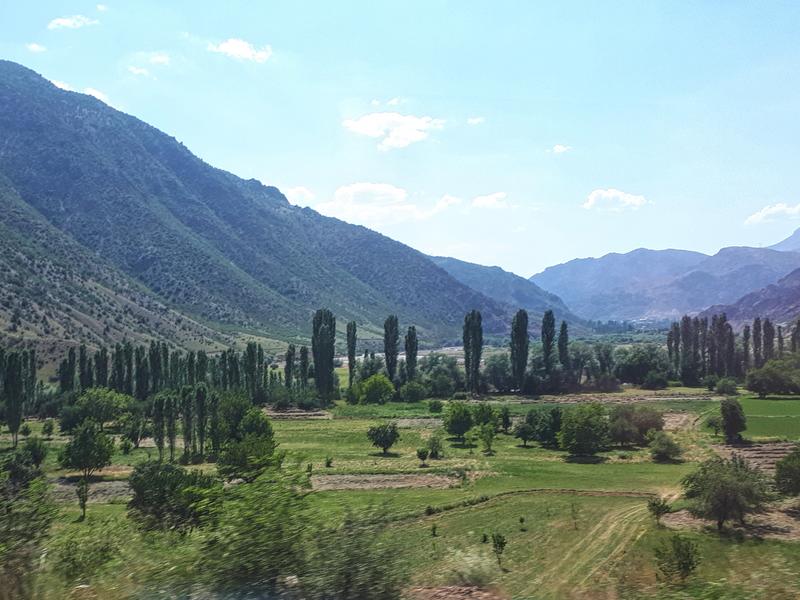
After some narrow canyons we finally hit a dual carriageway and were able to pick up some speed.
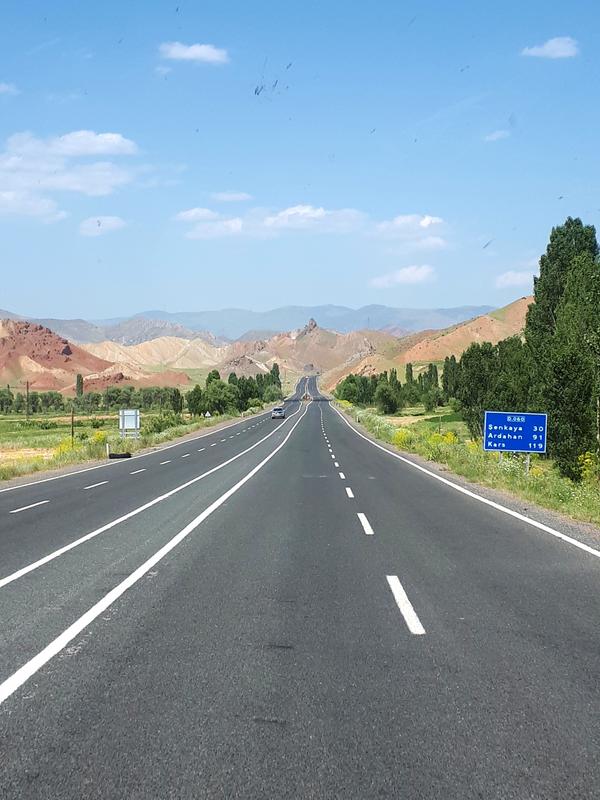
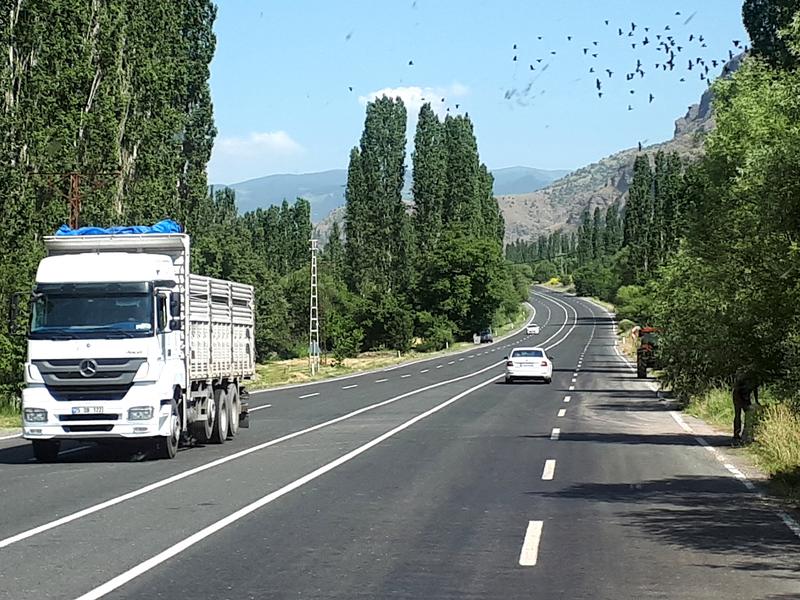
But of course, this is Turkey – and distances are endless and what seemed to be a short trip on Google Maps easily ended up taking twice as long. We hit a mountain pass, where judging from the signs even features quite some snowfall in the winter months.
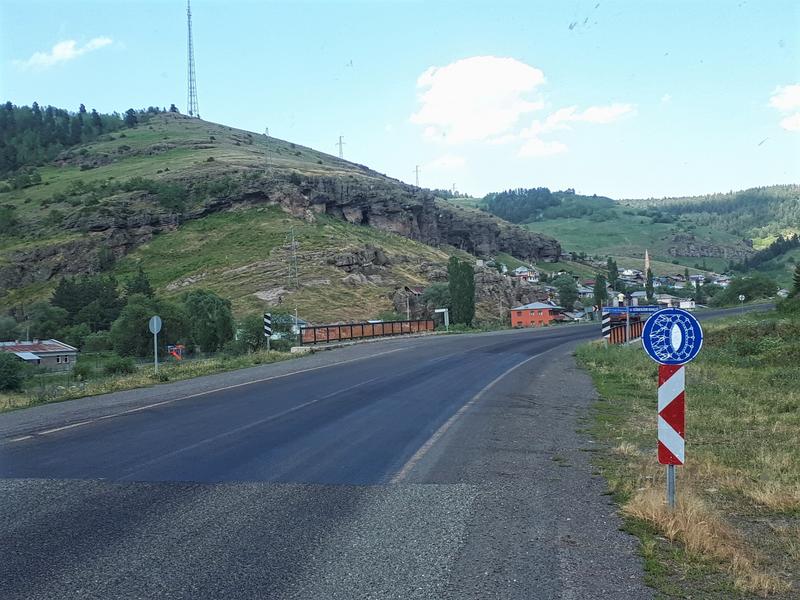
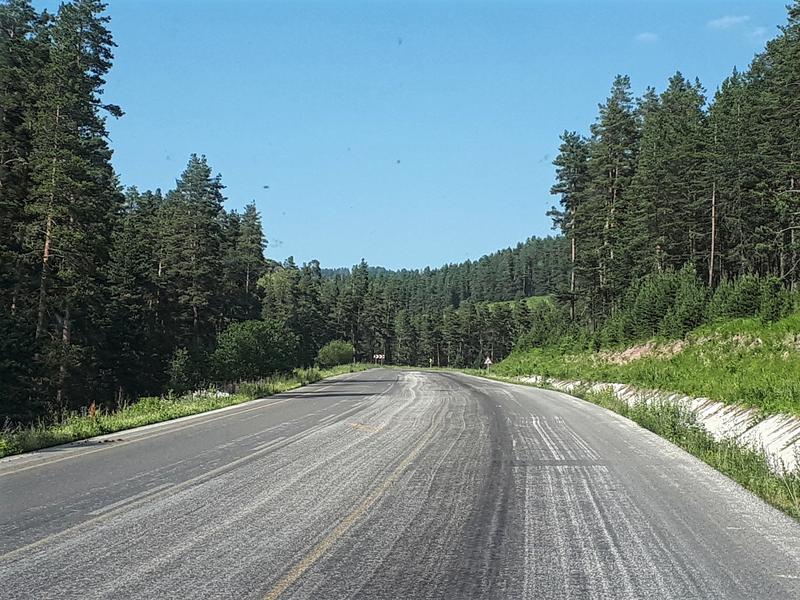
Road conditions got worse once up on the highlands. This part of Turkey saw ferocious fighting in World War I between the Turks and Russians on a front forgotten by much of the Western world. Yet it featured some bloody battles (especially the Erzerum offensive and the Turkish rout at the Battle of Sarikamish) where perhaps more people died from the severe winter conditions and inadequate equipment than to enemy fire. I had a good book (On Secret Service East of Constantinople by Peter Hopkirk) with me about these and other intriguing bits of WW I history such as secret German missions to Persia and Afghanistan in order to convince the Emir to join forces and invade India. I can highly recommend it to anyone with the slightest interest in history, the Great War, and epic adventures of hardy explorers and larger-than-life figures embarking on secret missions.
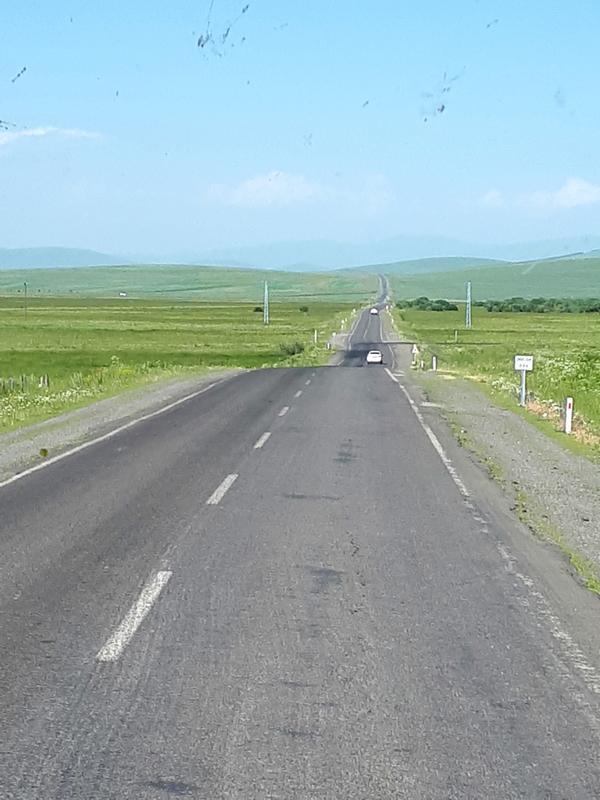
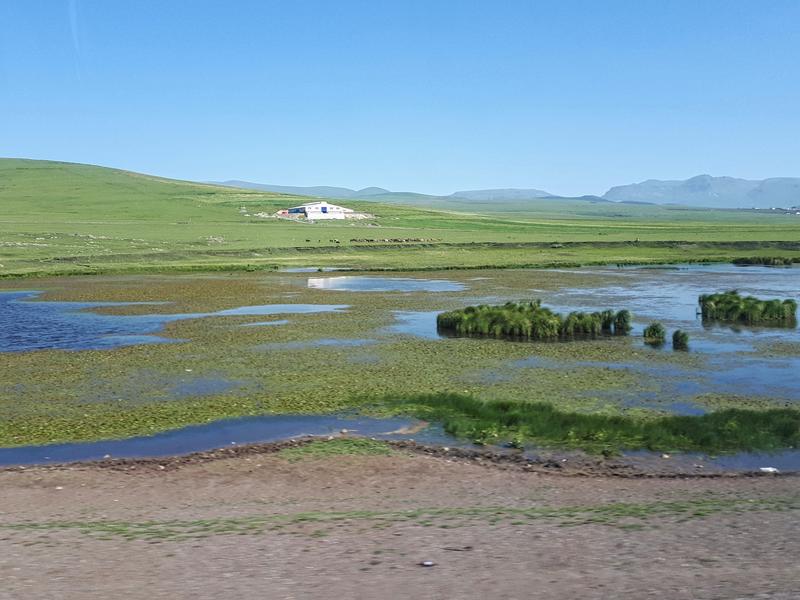
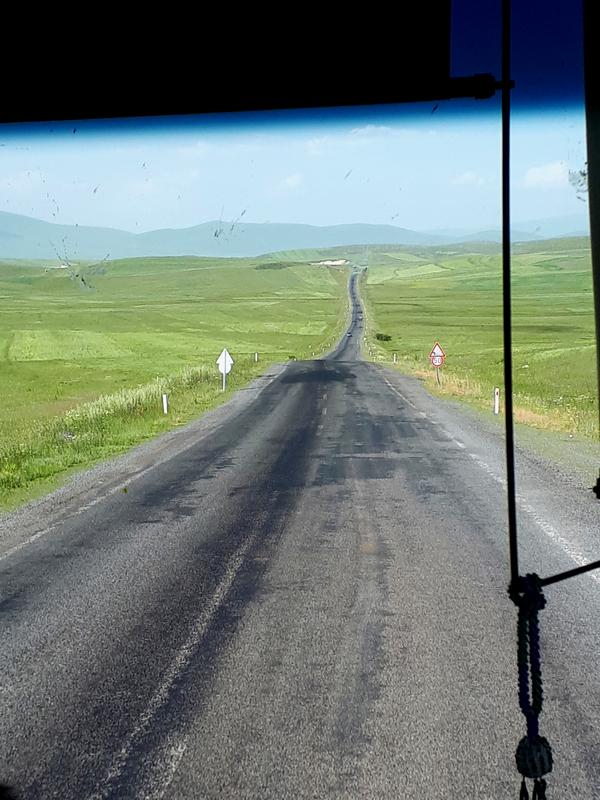
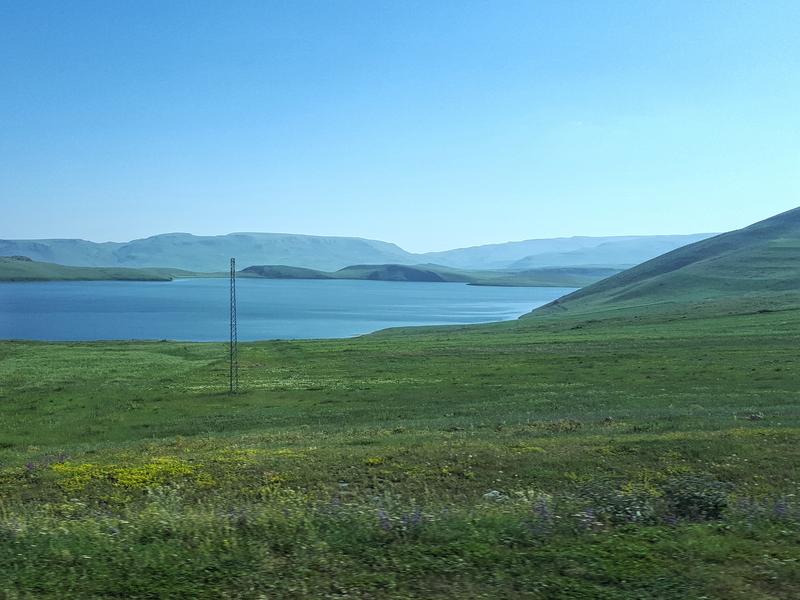
After some seven to eight hours we finally arrived in Kars. I was completely broken from the bus journey – but boy, what a fantastic journey it was! Next time I'll somehow do it by rental car though!
Next up: Chasing an elusive goose in the city of Kars, Turkey.