DAY 2
The next morning, we woke up early as we registered ourselves for the mangroves tour which scheduled to depart at 8:45am.
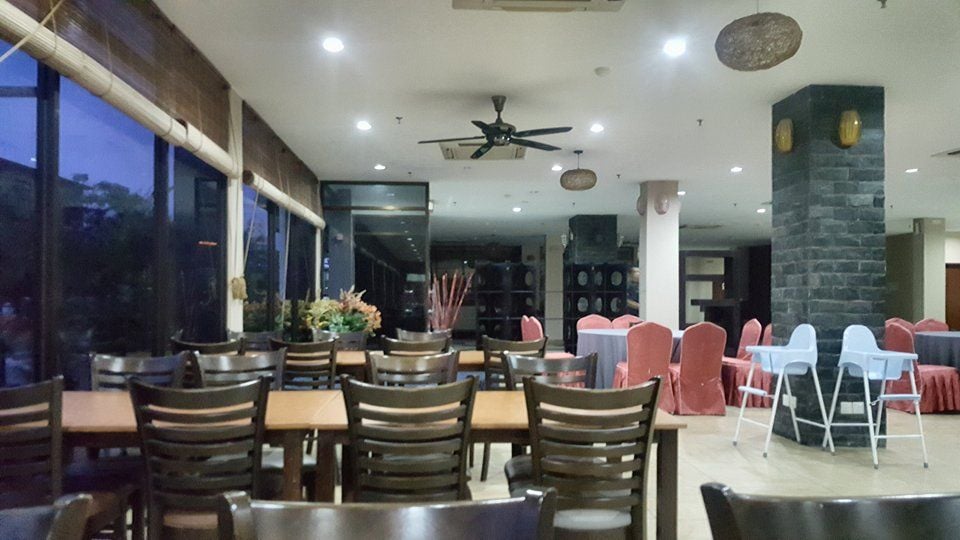
We had our complimentary breakfast in the hotel's cafe. The choices of foods were limited and not so good though.
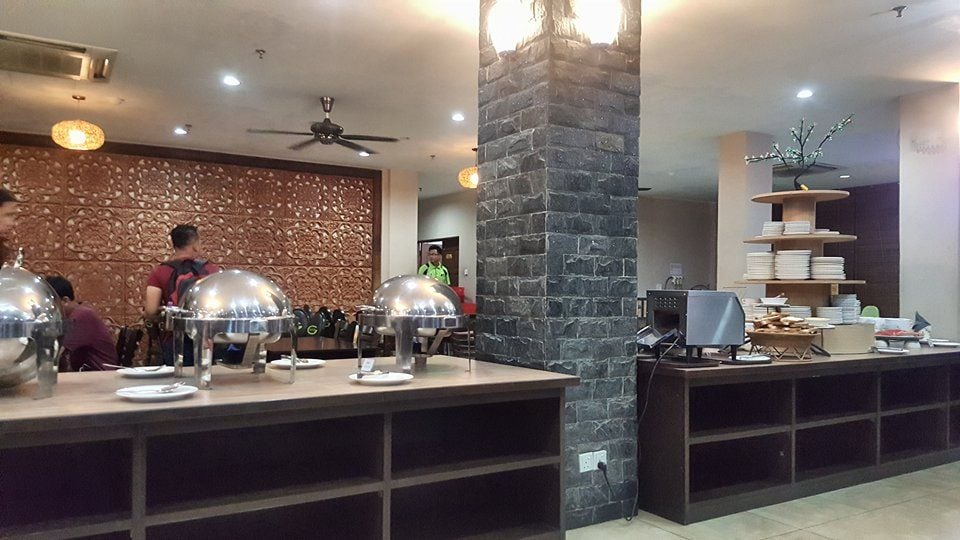
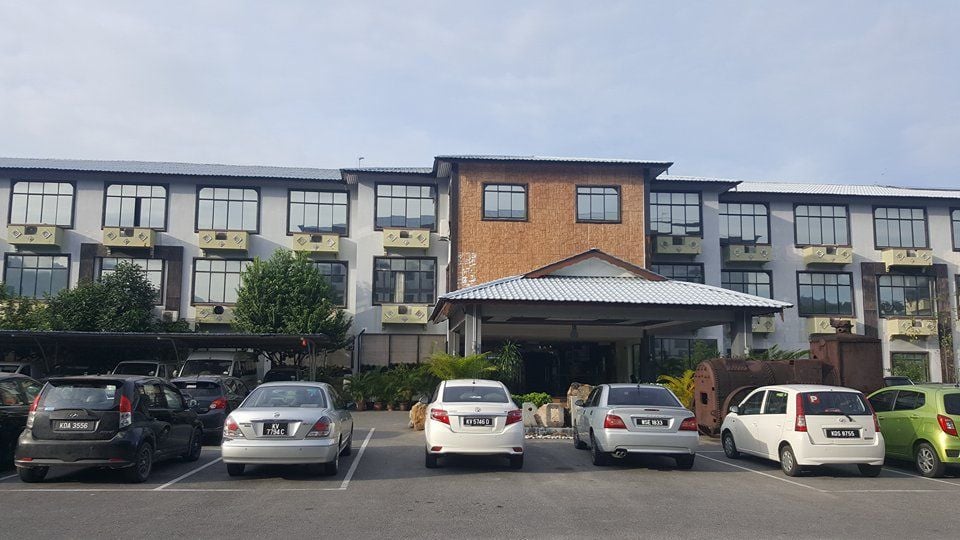
We stayed at this hotel called "De Baron Resort" which was just ok. The Baron group has few other hotels at different locations in Langkawi.

In this tour, we were joined by my elder brother (who sponsored the whole tour's fees) and his family. They had arrived in the island 1 day earlier than us. After we finished with the breakfast, we left Kuah town and drove towards Cenang Beach as the pick up point for this tour was in Meritus Pelangi Resort where my elder brother and his family stayed.
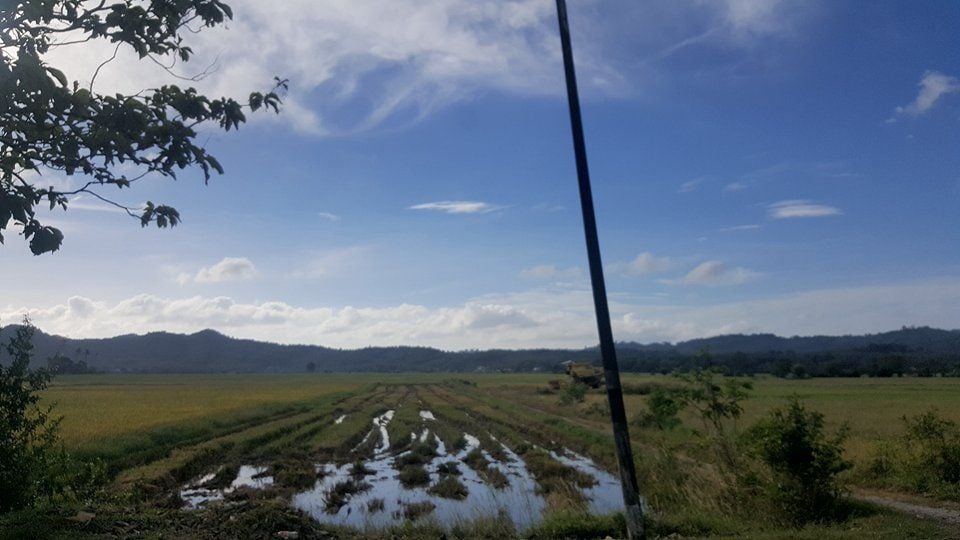
We met them at the Meritus Pelangi Resort's car park area and few minutes later, the tour van arrived. We all boarded the van and headed towards the Kilim Karst Geoforest Park which located quite far from there. Nevertheless, the scenery along the way was very beautiful.
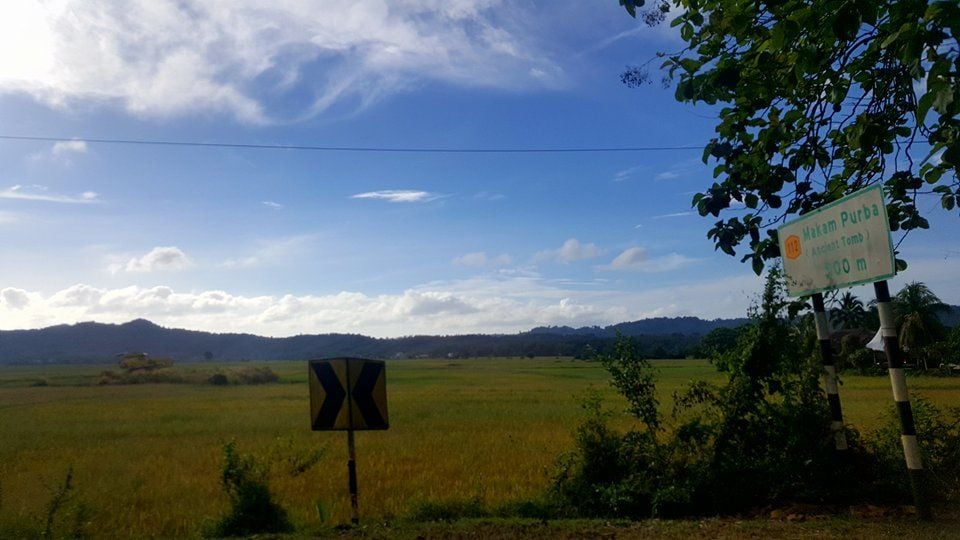
A green paddy field like this is such a common sight in Langkawi.
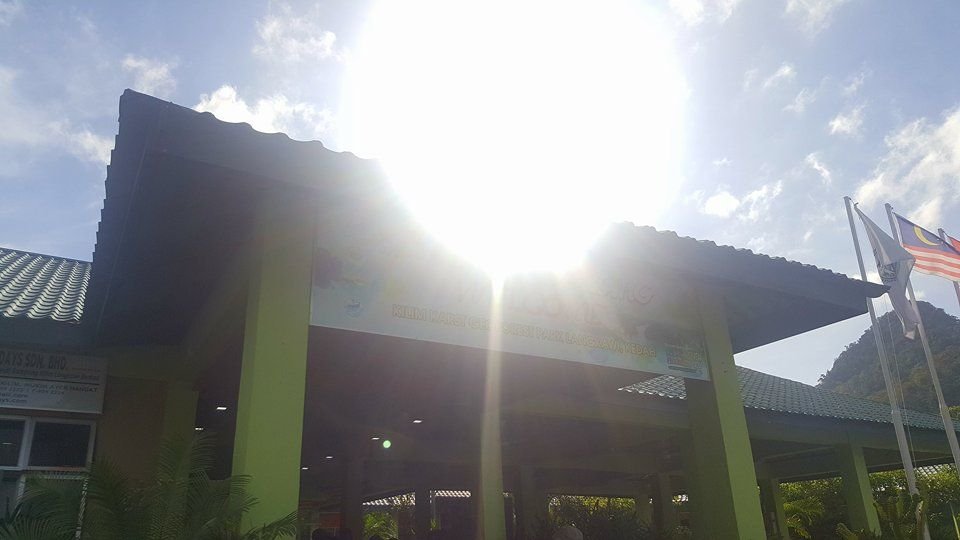
Finally, we arrived at the Kilim Karst Geoforest Park which was packed with a lot of group tours and bus operators. We met with our guide at the main entrance of the geoforest park and the guide asked us to use the restroom (if needed) here before the tour starts as there will be no a toilet break during the tour later.
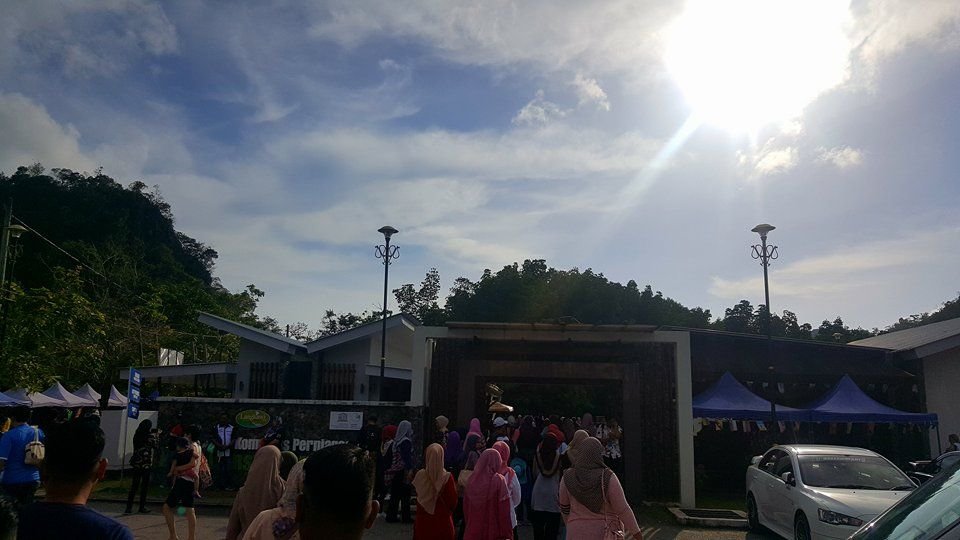
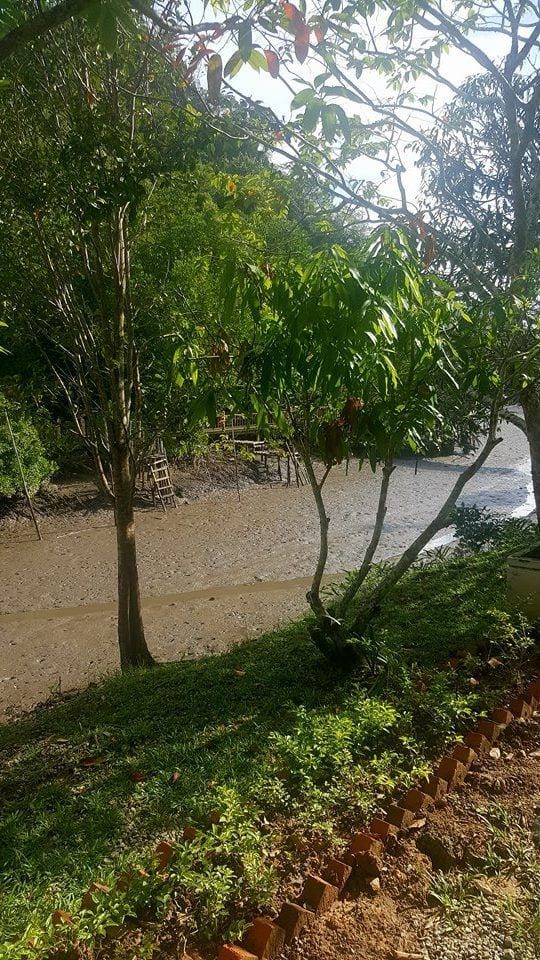
The guide introduced himself and provided some briefing about the tour. We also received complimentary bottles of mineral water, but sunblock lotion was not provided. The guide then handed the safety jackets to small kids (life jacket for adults can be found on the boat) and after that, we started to walk towards the jetty where our boat would be departed from there. While walking, we passed by a small area of Kilim River which experiencing a low tide.
The Kilim Karst Geoforest Park's jetty.
We didnt need to join the long queue to get the ticket as everything was already covered in this tour package. It also didnt take long for our boat to arrive. I would highly recommend for everyone to take the tour package ^
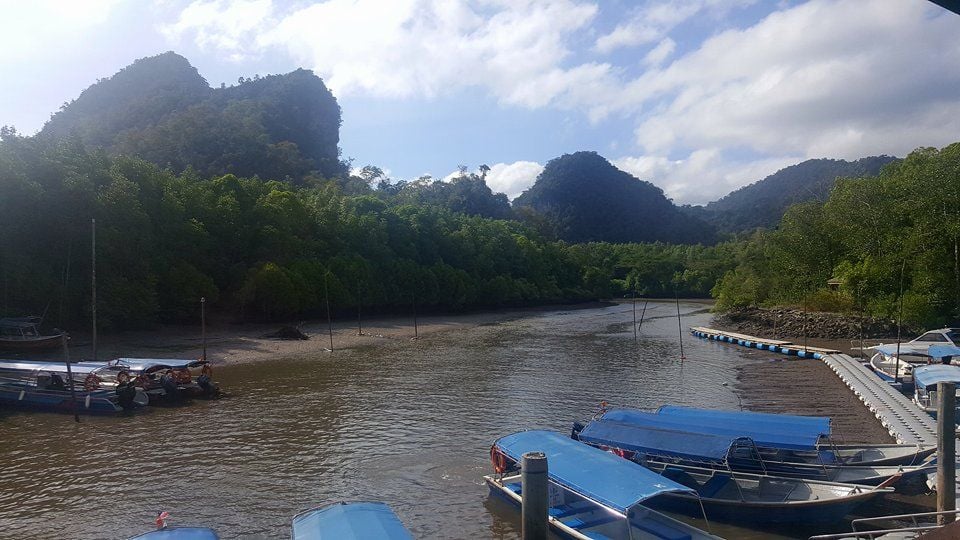
Our boat ready for boarding.
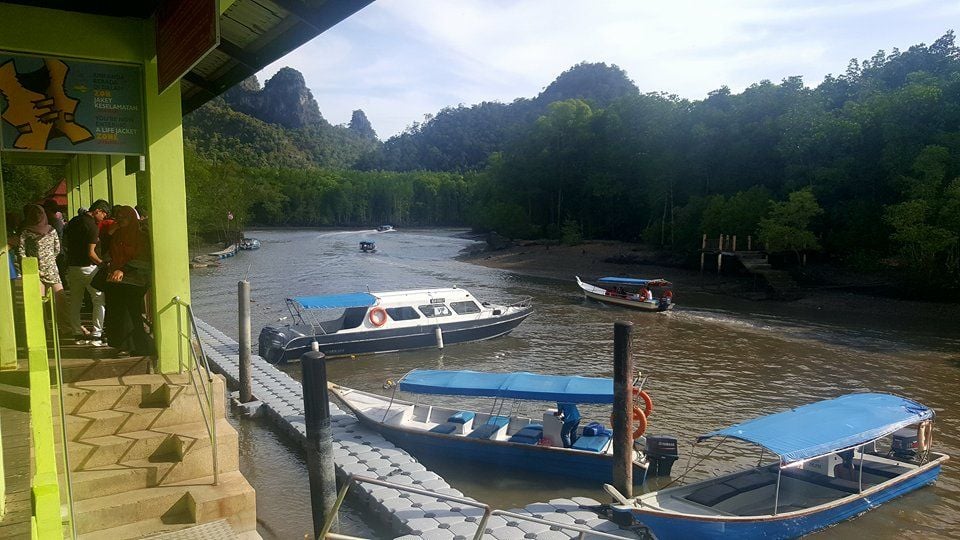
It was quite tricky to get into the boat, but everyone managed to get on board safely.
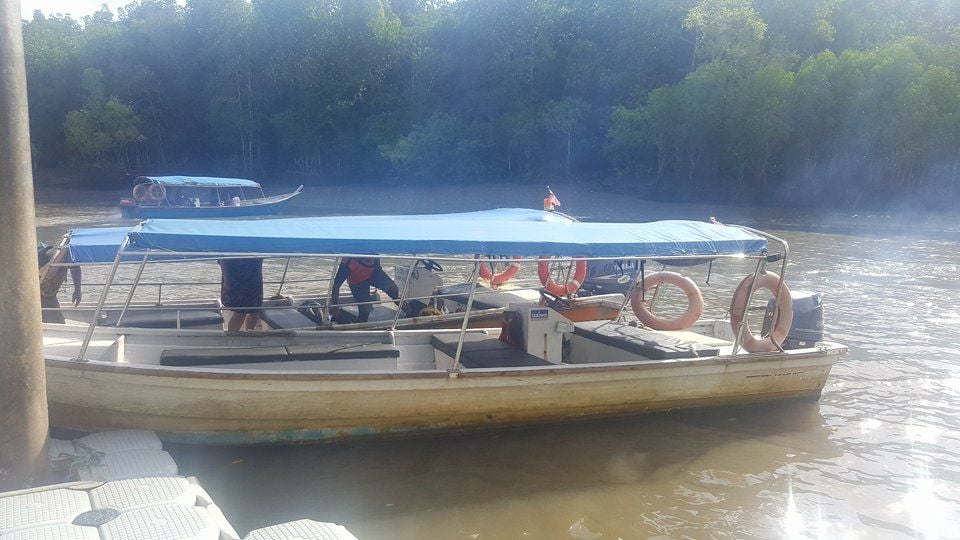
After all of us had settle down, the boat began to cruise along the Kilim river and heading towards our 1st attraction of the tour, Gua Kelawar (Bat Cave). At this stage, all of adults were not required to wear the safety jacket.
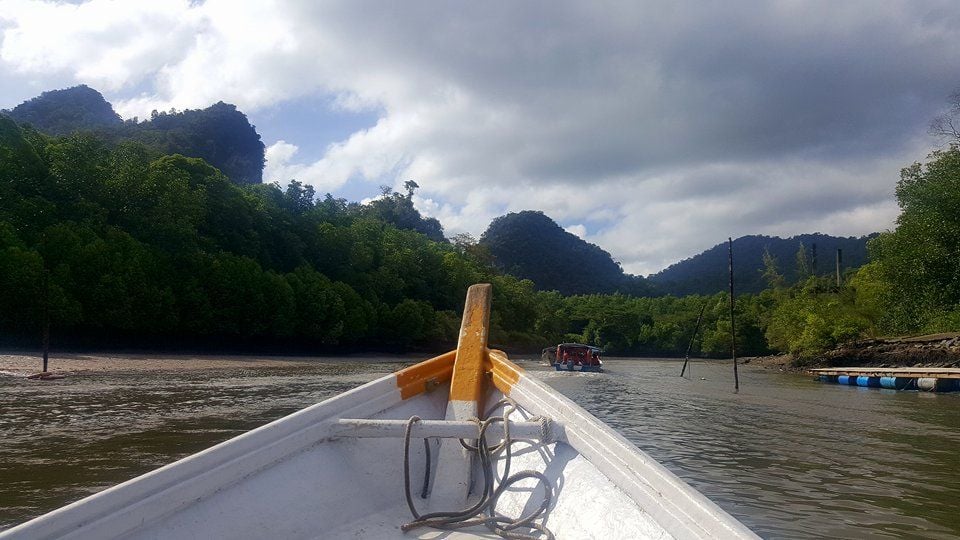
We arrived at the jetty of Gua Kelawar few minutes later.
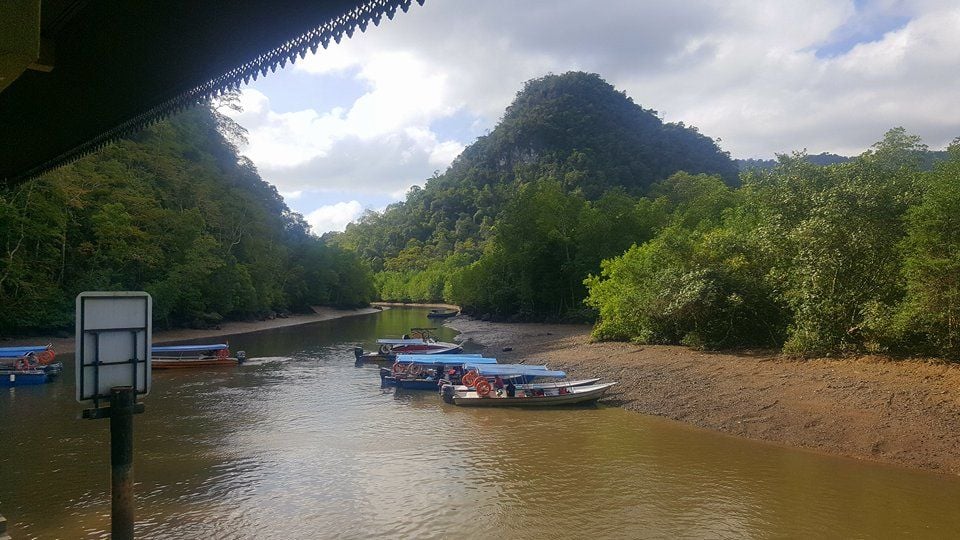
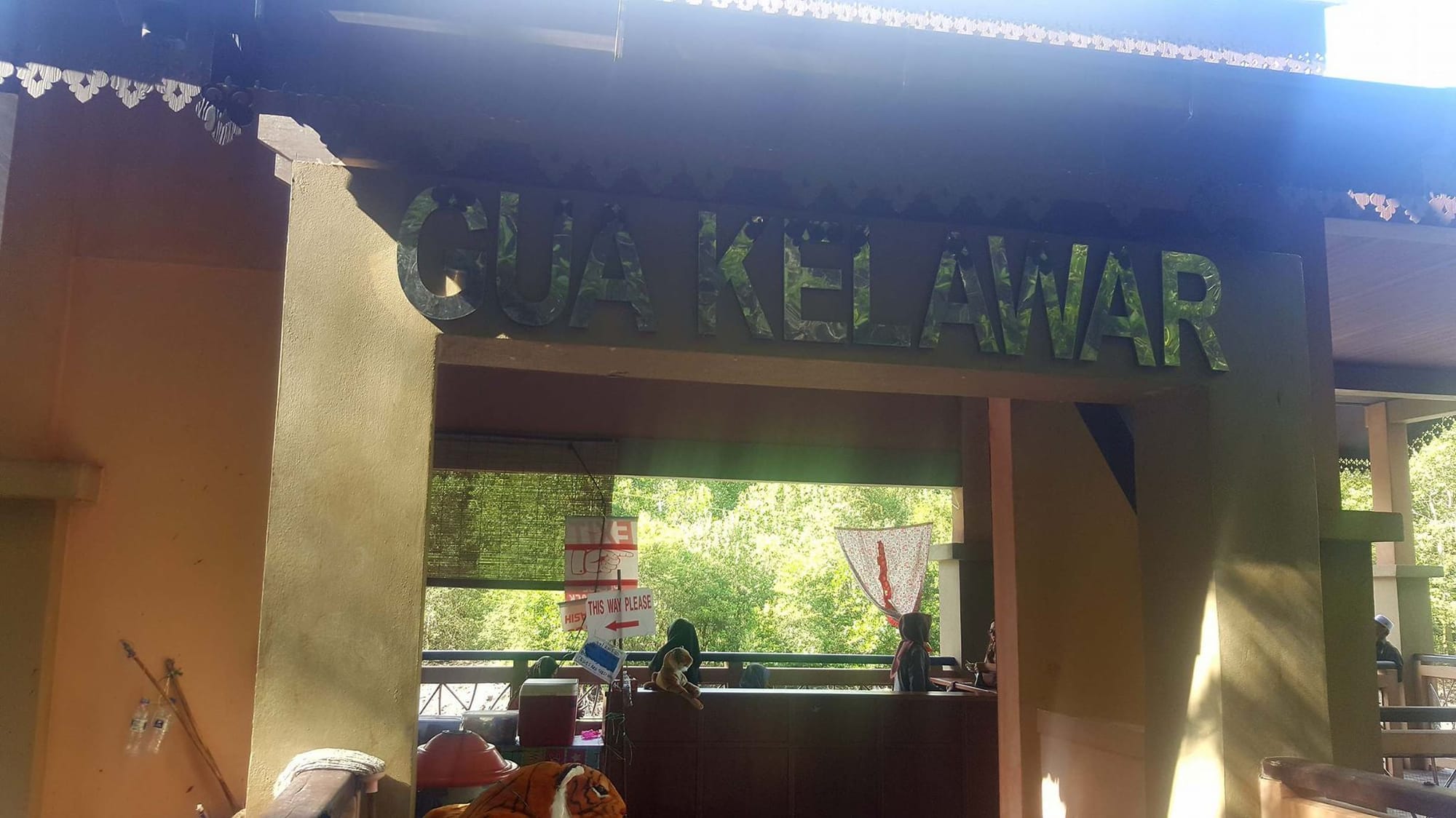
All guests were requested to leave their belongings including the backpacks and water bottles at the jetty's counter. Our group was provided with 2 small torch lights to enter the cave.
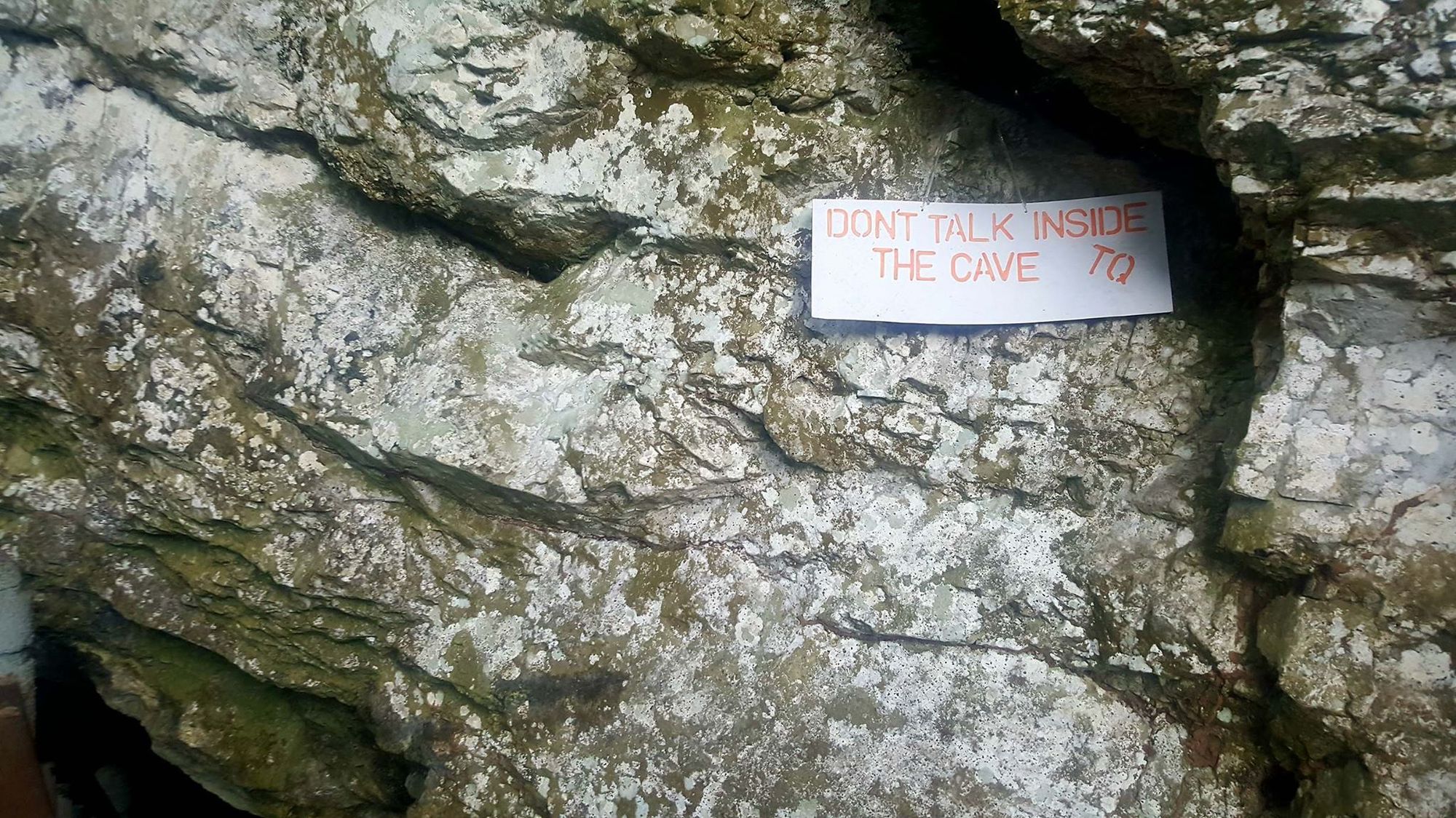
Guests also were advised to adhere to the rules such as switch off the mobile phone, no flash photography as well as no eating & drinking at all time.
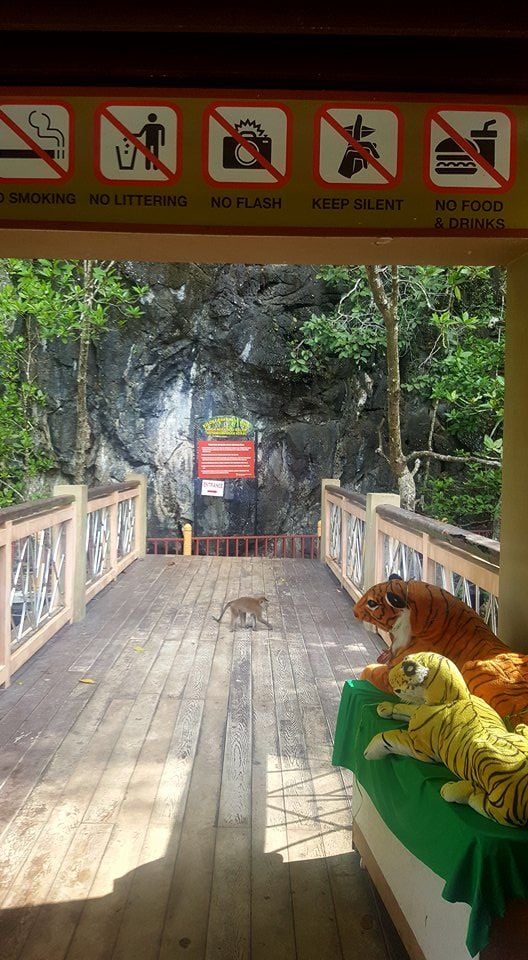
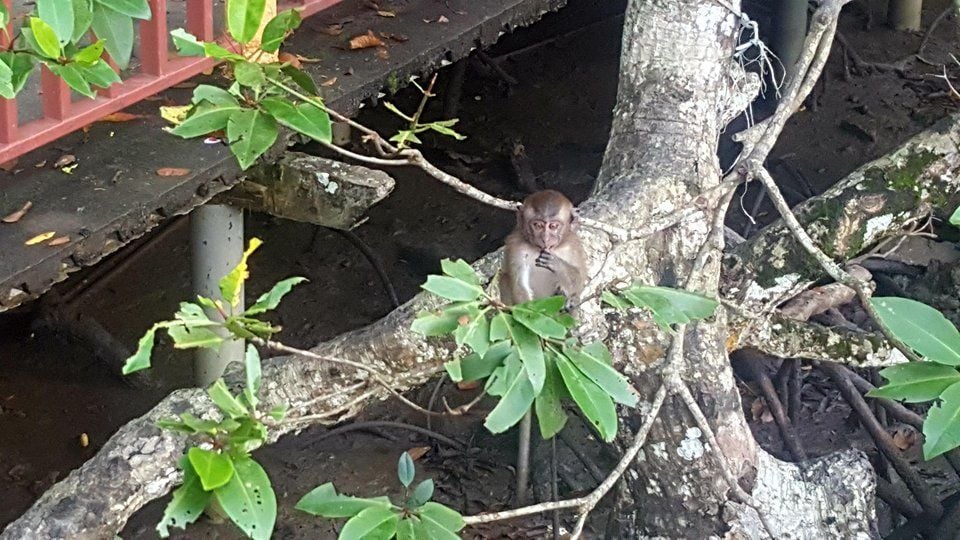
We spotted a group of long-tailed Macaques near the entrance to the cave.
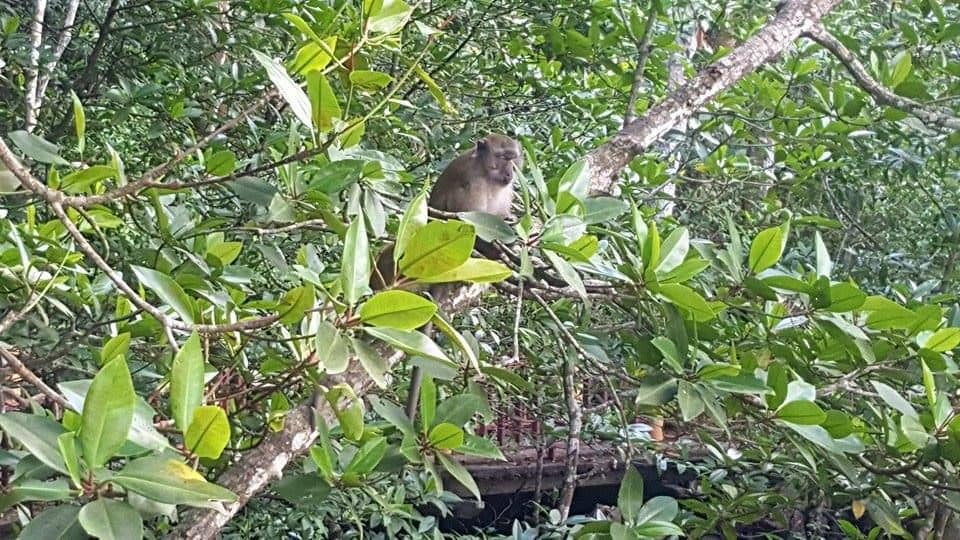
So cute yet brutal! They are the main reason why guests need to leave all their belongings behind before entering the cave

Gua Kelawar, which means "Bat Cave" in Malay, is 1 of the many caves that can be found within the Kilim Karst Geoforest Park. It got its name because of the presence of large population of Malaysian Fruit Bats that have made the cave as their home since centuries ago. The cave was getting darker as we went further inside.
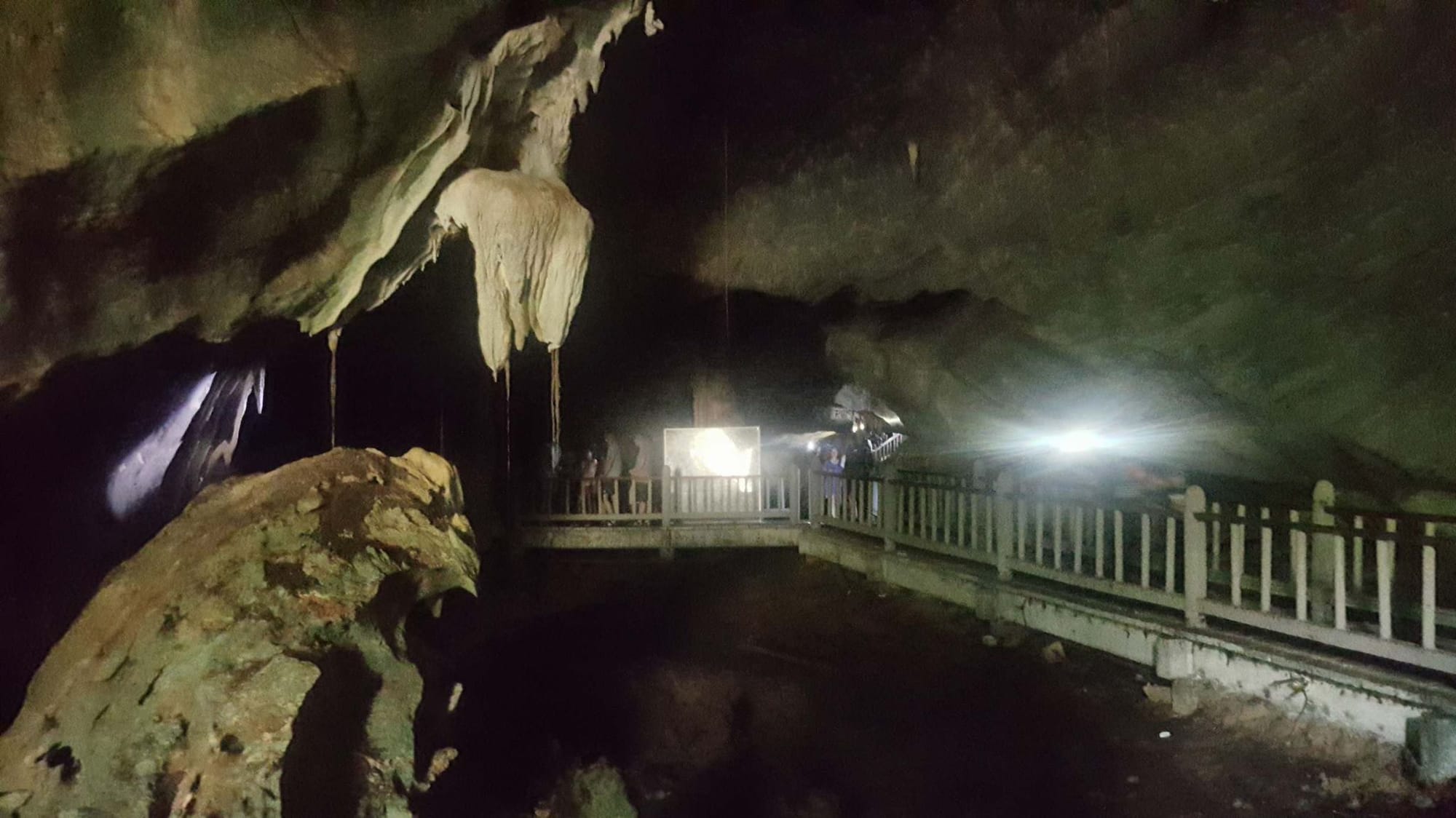
Our guide further explained about the history and some interesting facts about Gua Kelawar with its inhabitants as we walking inside the cave. Gua Kelawar has been existed since few hundred millions years ago and it features a chamber in the form of lung tunnel with gigantic proportions of stalactites and stalagmites. Its main inhabitant, the Bat, can be seen in all over the place. Most of them were hanging on the ceiling and some of them were flying right above our heads. Our guide told us to do not place our hands or touch the fences on the pathway as they were covered with a lot of bat's feces also known as "Guano". I didnt take any photo of the bats as I was too scared to do so. Forgive me....
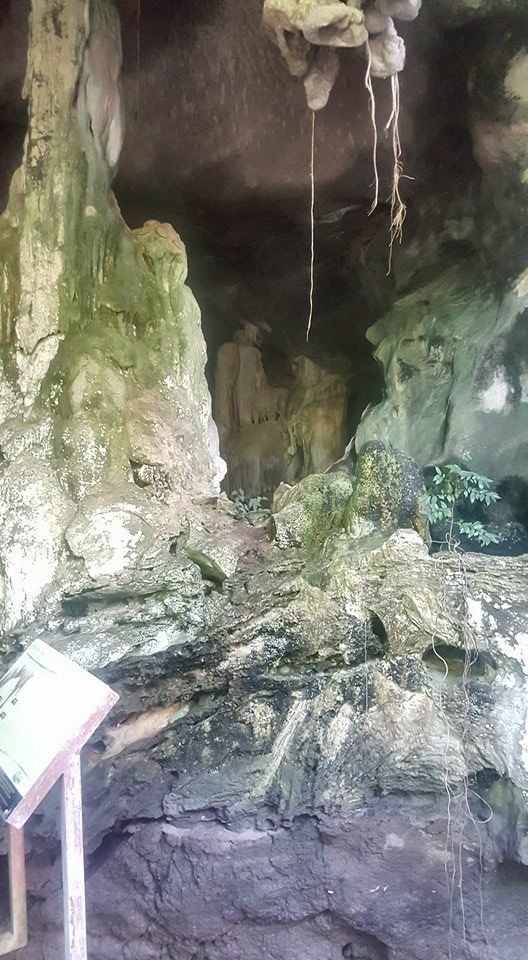
Some of the stalactites and stalagmites inside the cave joined to each other which lead to the creation of formations with some of them resembled the shape of animals such as snake and crocodile.
We exited from the cave and the pathway lead us to a mangrove swamps area.
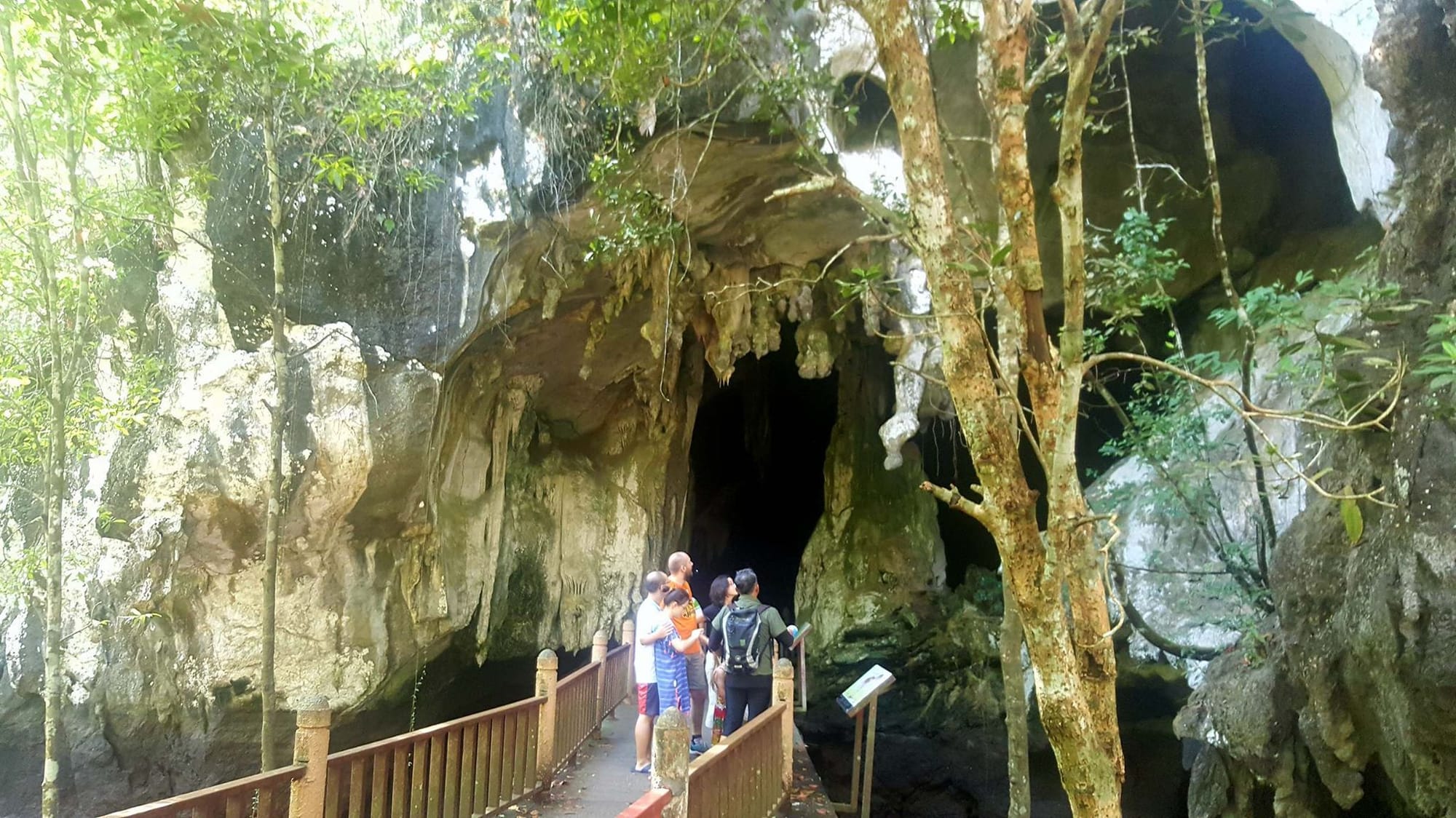
Here, we learned more about the Mangrove forest and looked towards the trees much closer.
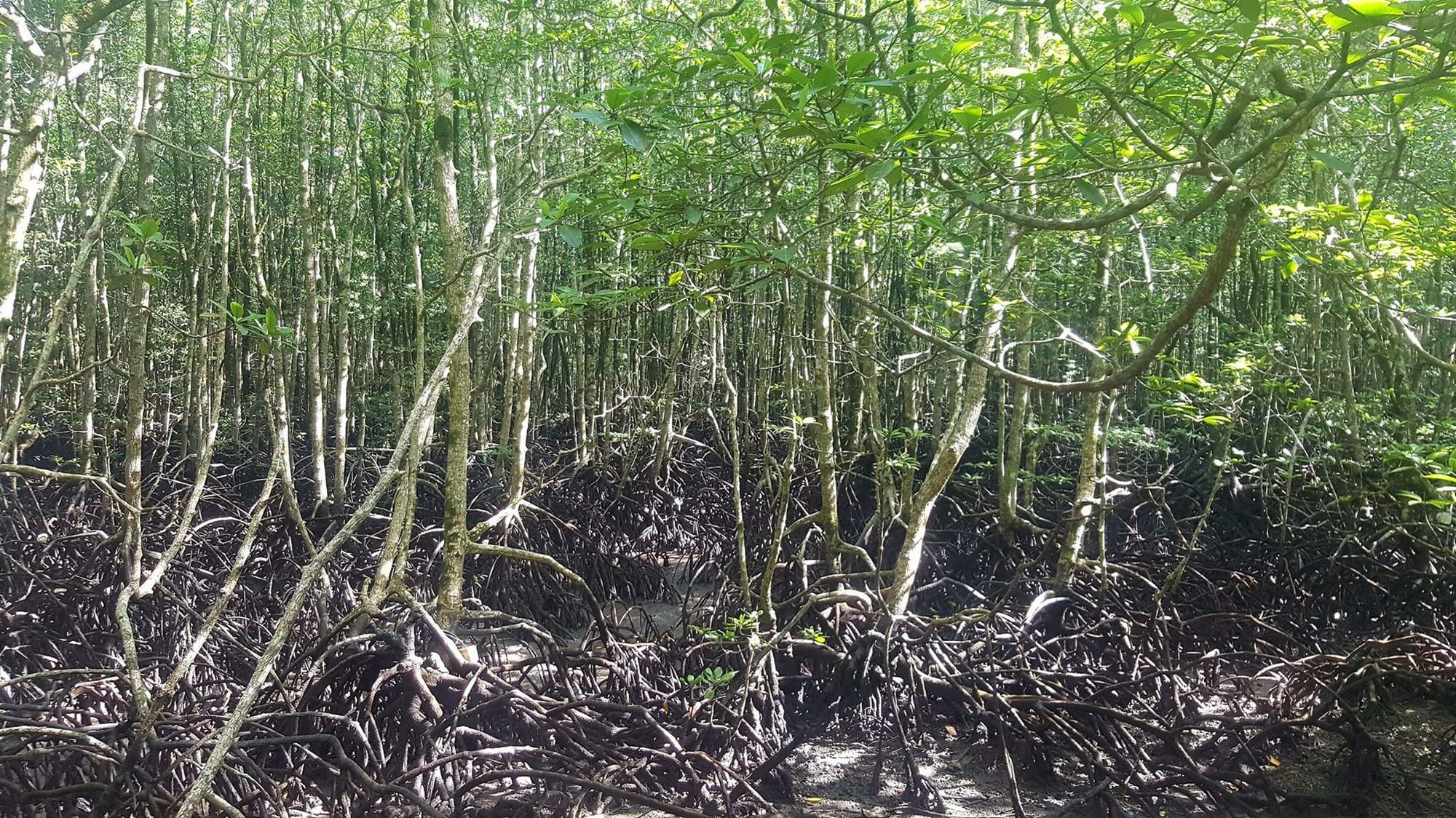
The spectacular Mangrove forest is a home to various kinds of wildlife which is responsible for the health and wide variety of species in Langkawi and the whole Andaman Sea. It also act as a natural coastal defense for the island from a natural disaster such as in the event of year 2004 Tsunami.
On that tragic day, Langkawi experienced small damages in some parts of the island with only 1 casualty. Research found out that Langkawi didnt received a bigger impact from Tsunami because of the abundant presence of Mangrove trees along the island's coastlines.
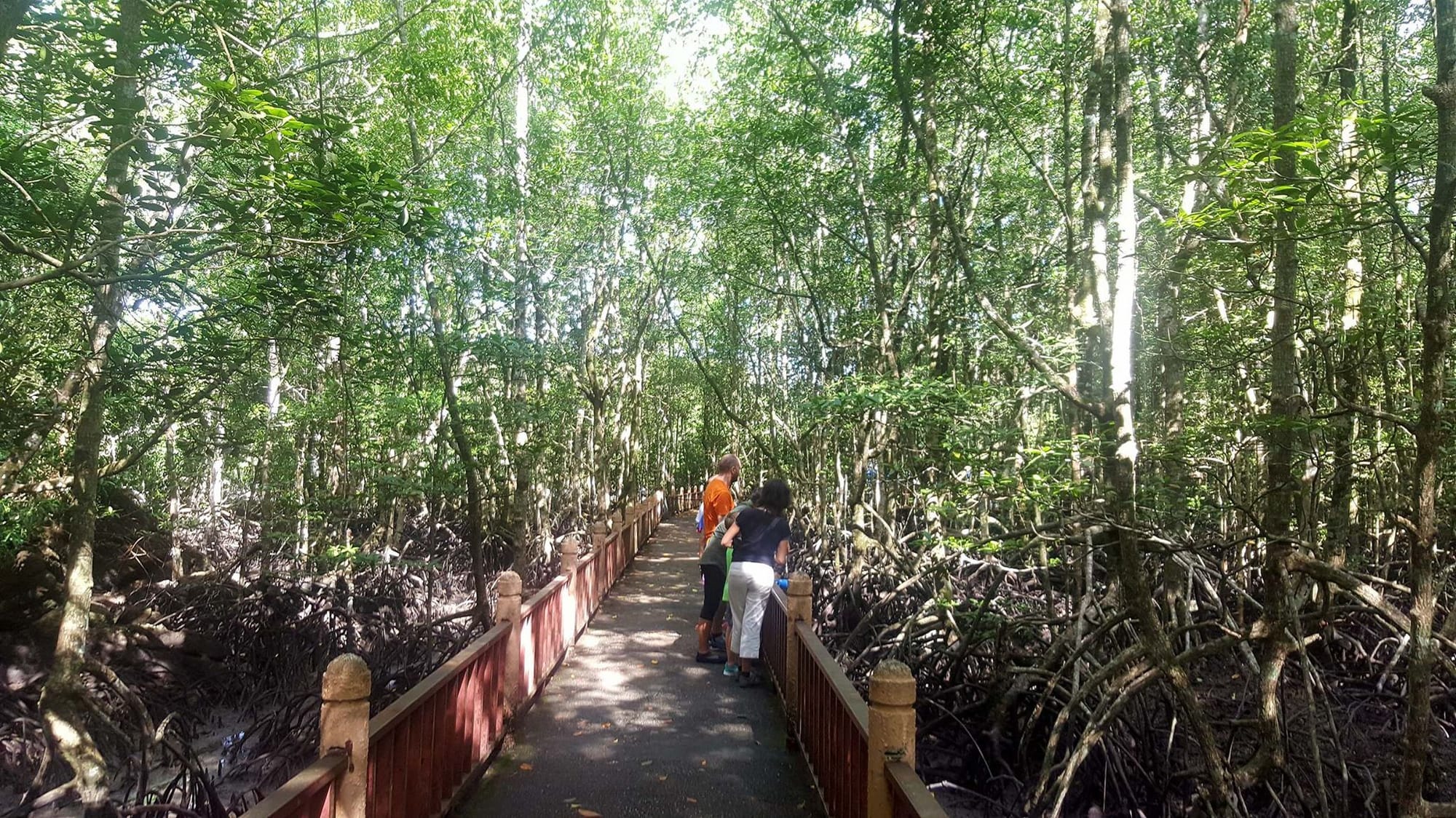
And today, the Mangrove forest provides a scenic view which can be turned into a tourist attraction.
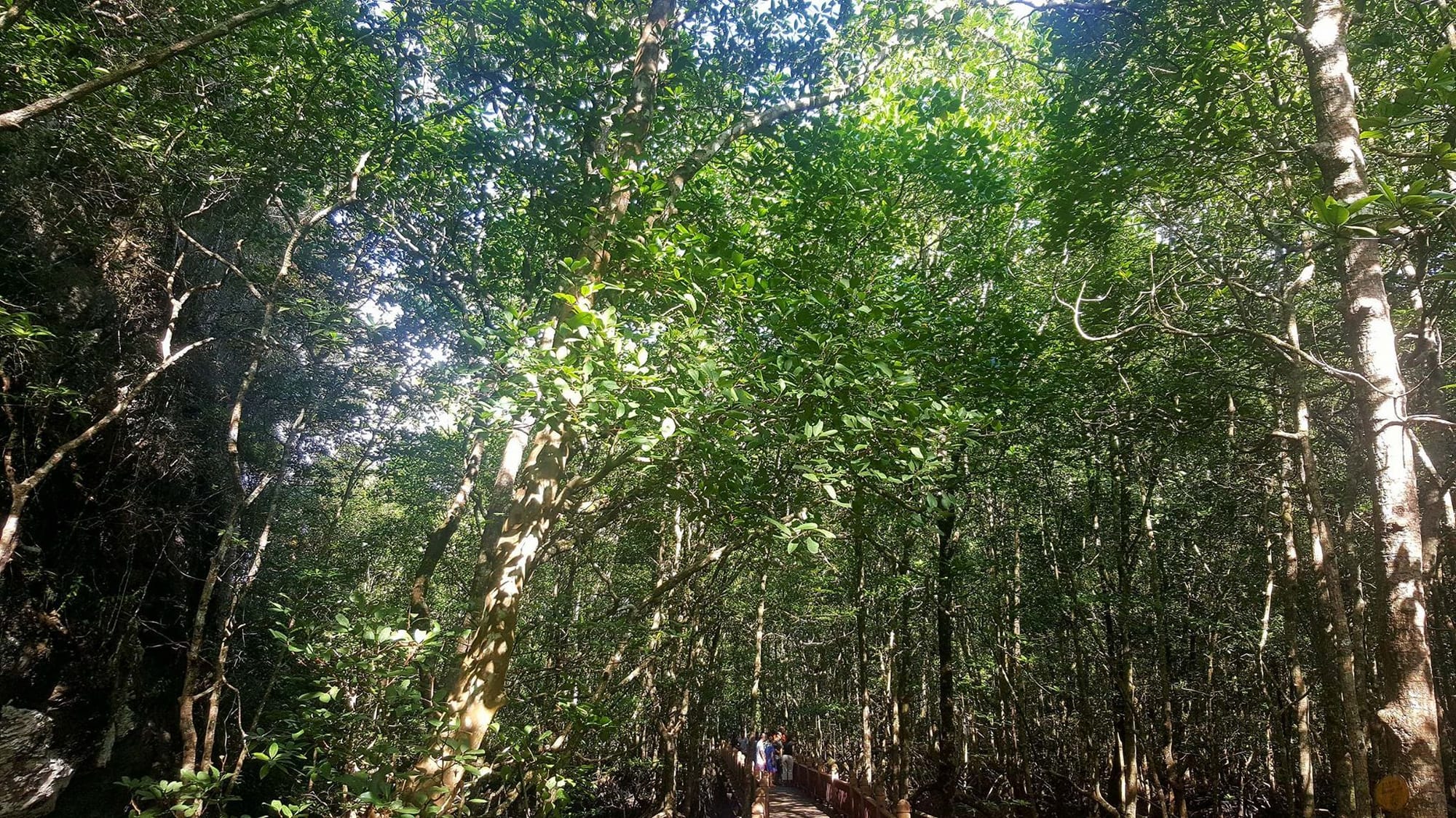
From the mangrove swamp area, we exited the Gua Kelawar through a different pathway from where we entered. The pathway for exiting lead us into another cave with a very low ceiling where we got to stoop down while walking. That was quite an adventure! Finally, we managed to exit from the cave and reached the front counter where we left our belongings.
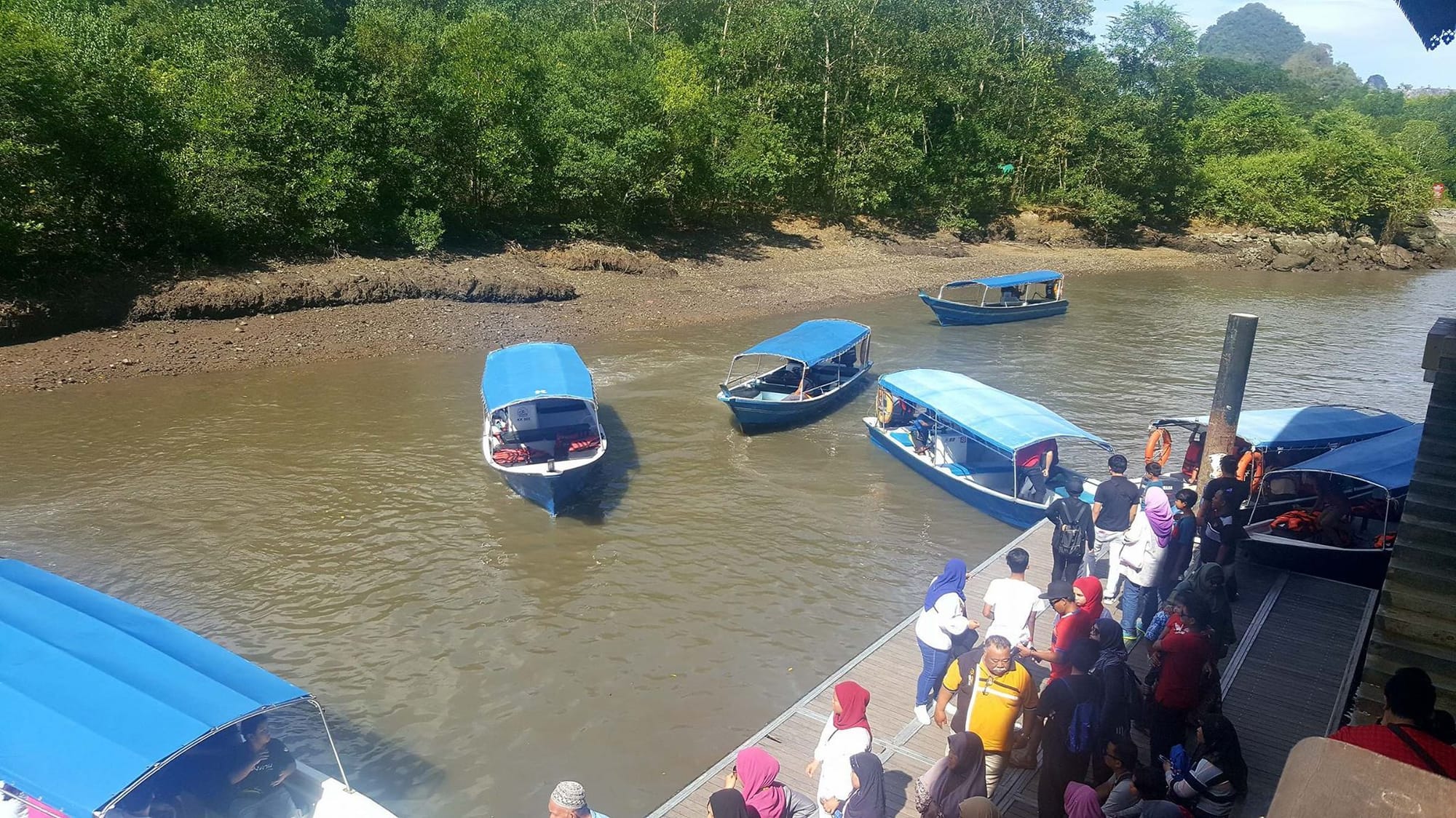
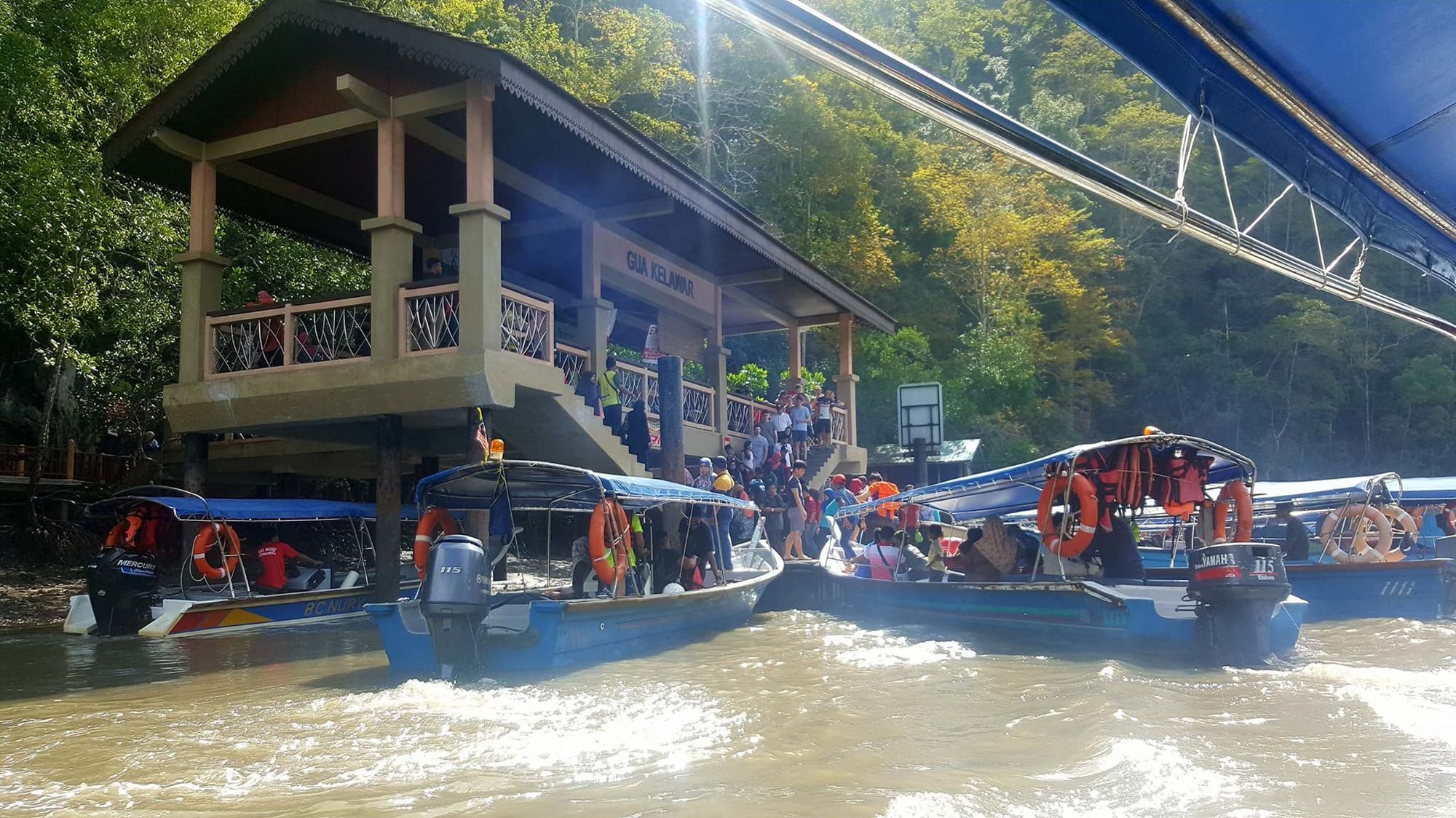
We waited for around 10 minutes before our boat arrived and we were readied for the next attraction.
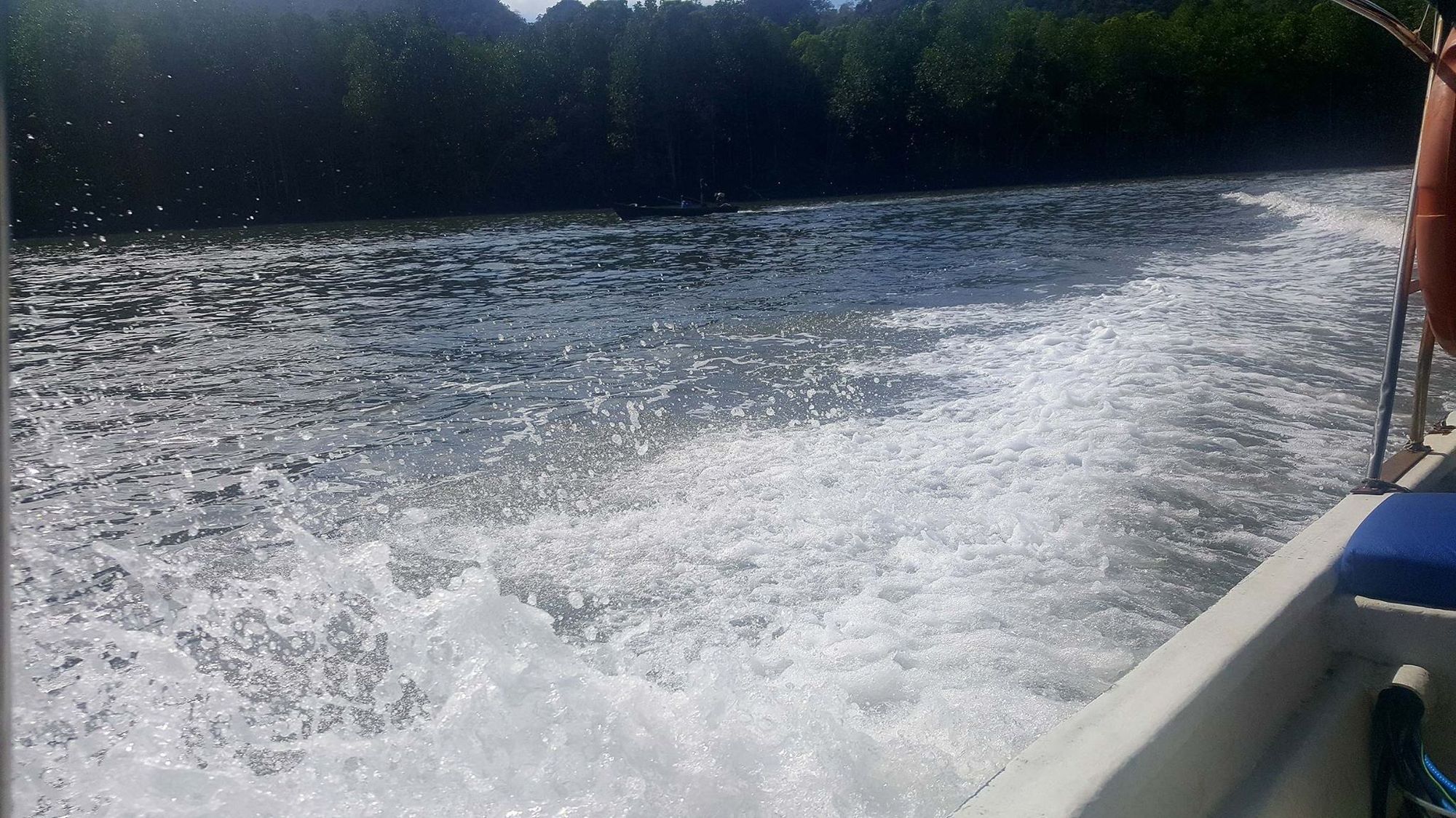
This time, the boat was moving at a faster speed and all of us were required to wear the safety jacket.
Our next attraction was the eagle feeding session which took place at the North Eastern side of the Kilim River.
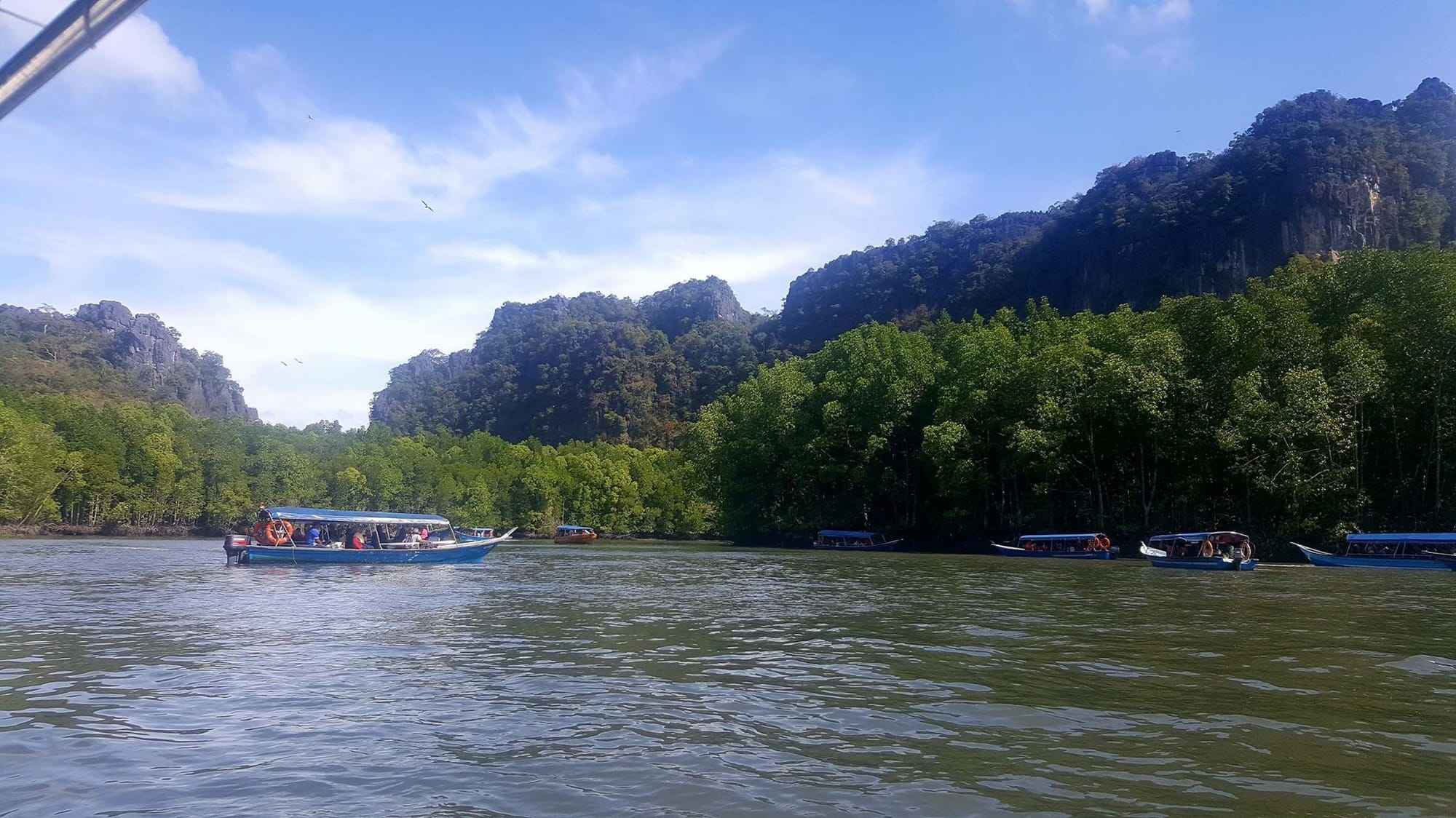
It was a very spectacular sight with many eagles hovering the sky and catching the foods which floating on the water. The 2 types of eagles we spotted here were the Reddish Brown Eagles also known as "Brahminy Kites" and the White Bellied Sea Eagles. The Eagle remains as the most iconic figure of Langkawi as the island received its name from this majestic creature.
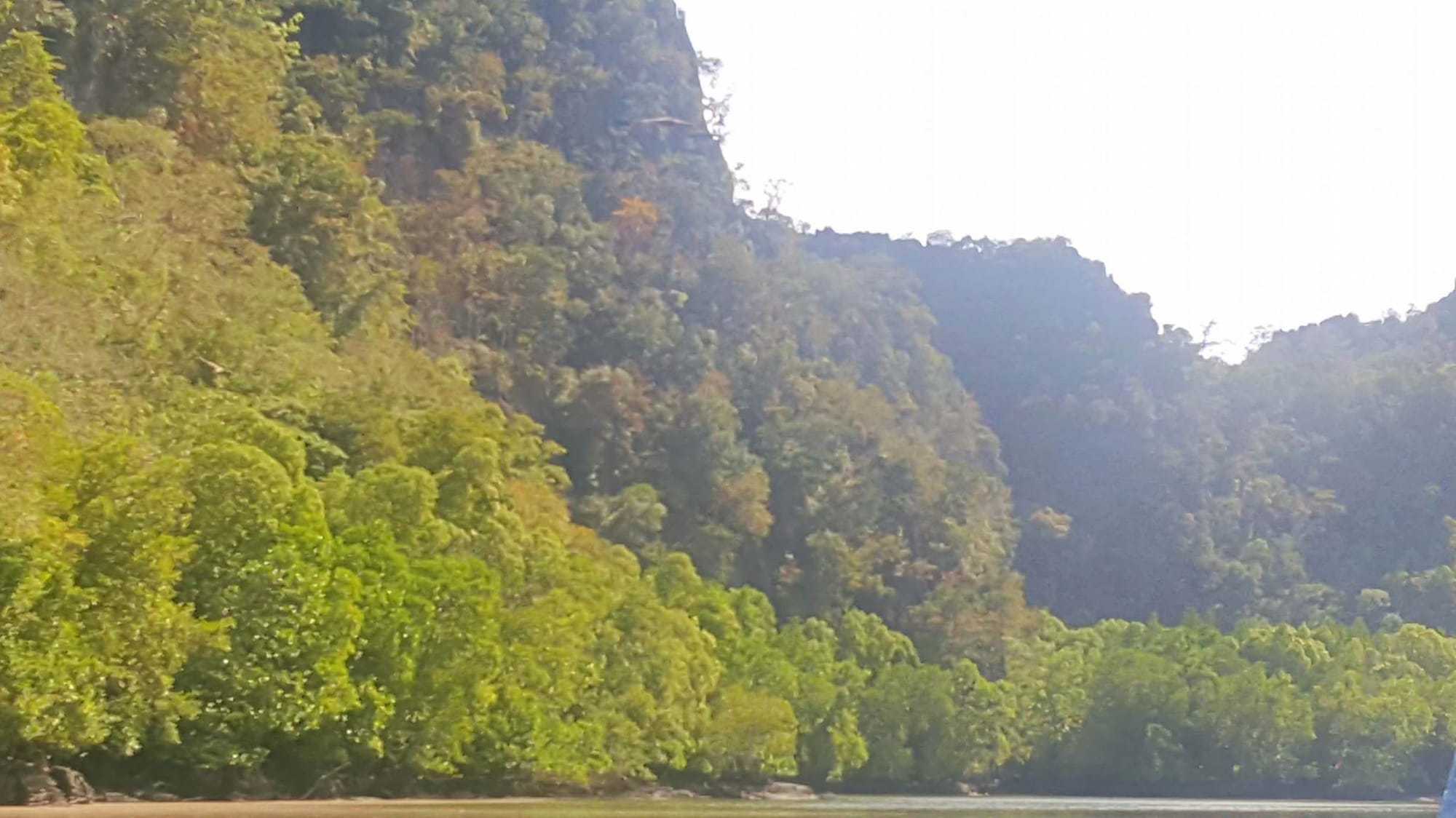
We were sitting inside the boat watching the Eagles circling in the air, diving and having a feast on its offering for about 20 minutes before we left the place for our next attraction.
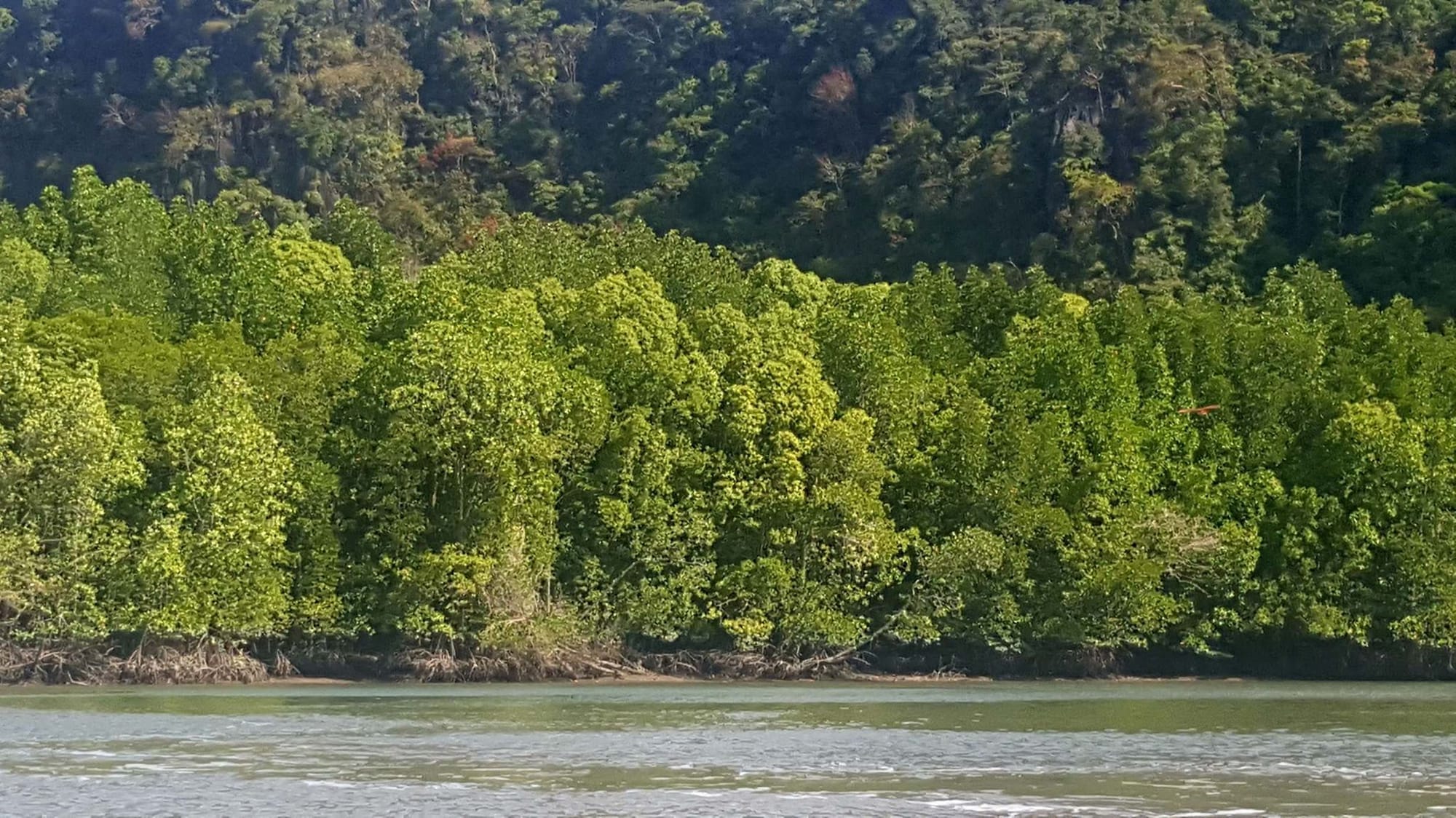
The boat now moving at the maximum speed and we felt like we were seating in a roller coaster. We got to ensure that all of our belongings were safely kept and didnt fly out from the boat. At 1 stage, the boat was slowing down as our guide introduced to us some other types of plants and wild creatures that live within the Mangrove forest. We tried our luck to spot a Mangrove snake but sadly, there was none.
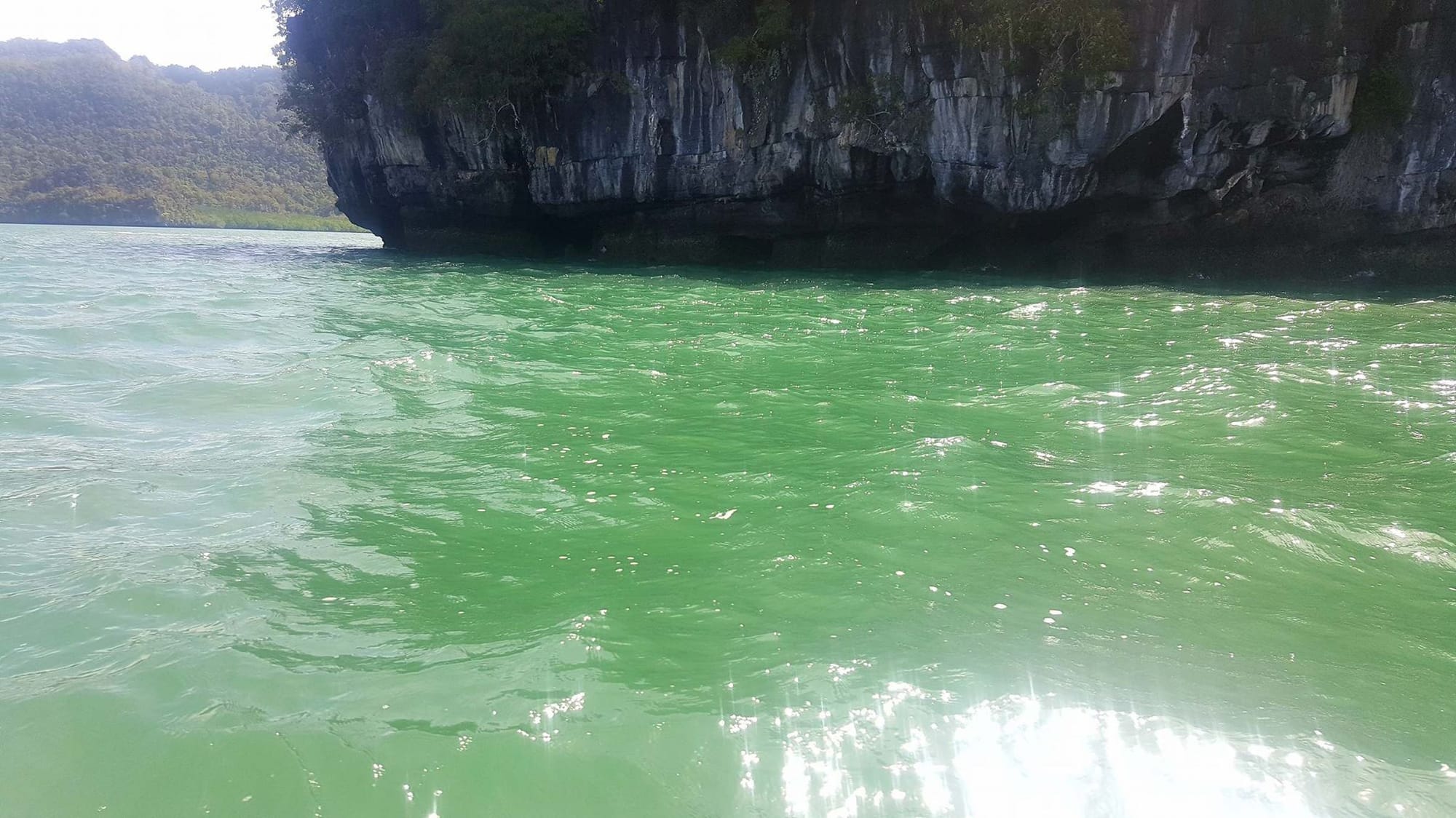
Our next attraction was a secluded beach known as "2 Faces Beach" which located in 1 small uninhabited island where we were given a "free at our own leisure" activity. Among the free activities that you can do here are snorkeling, swimming, collecting seashells or just relaxing on the beach. Alas, my mobile phone was ran out of battery when we reached there so no photo of that beach available in my record. We didnt spent a long time at that beach as we didnt bring any snorkeling or swimming equipment, so we only explored some parts of the beach before boarded the boat again.
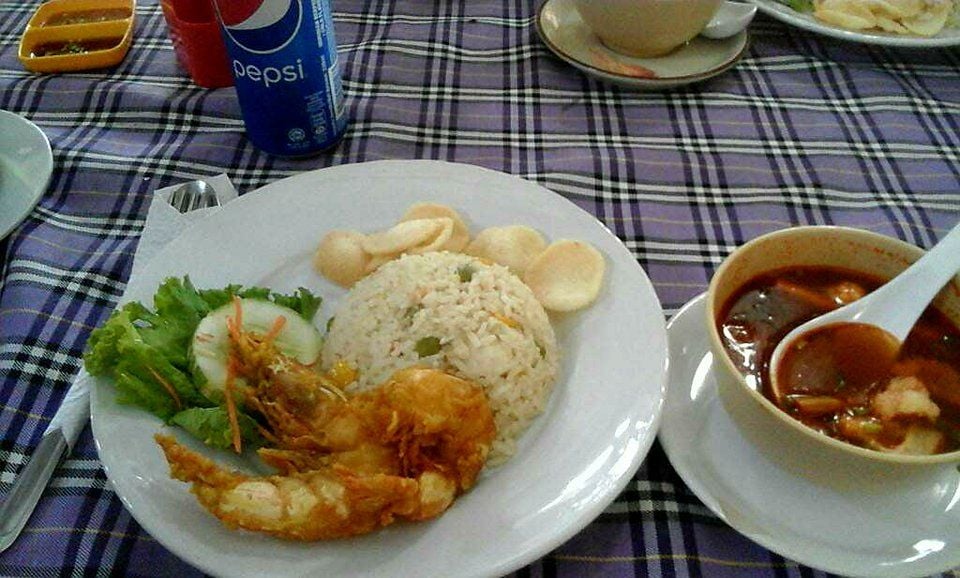
Our last stop of the tour was the floating restaurant known as "Hole In The Wall" where we had our lunch. This lunch was a complimentary as part of the Mangrove Tour package. We were given a choice of either Chicken, Prawn or Vegetables for the main course with the further option of spicy or non-spicy soup. I had Prawn for the main and a spicy soup which actually was a Tom Yum soup. All mains came with a fried rice. I borrowed my mum's mobile phone to snap this photo.
After lunch, we had a simple tour around the floating restaurant to see many big fishes in the restaurant's floating fish farm such as Stingrays, Groupers and Sea Basses. We also had the opportunity to feed them. This fish farm tour marked the end of our Mangrove Tour in the Kilim Karst Geoforest Park. Minutes later, we found ourselves on board the speed boat again to return to the main jetty.