CALIFORNIA ZEPHYR
Day Two
With arrival in Denver imminent, there wasn’t really time for a shower. There was however time for a good hot cup of coffee. I stepped into some pants and headed upstairs to the service center where orange juice and bottled water was also available. Downstairs in the entry level foyer people were beginning to gather in anticipation of our arrival – which, by the way, was 15 minutes early. We’d made good time while rolling across the hinterlands of southern Nebraska. Darryl had bags stacked neatly by the door and was busy helping a lady in a wheelchair who was staying in the handicapped room down the hall from me. It was a beautiful spring morning in the Centennial State and a part of me wanted to get off here as well. Denver is the most populous city served along the route of the
Zephyr and as such the train spends 45 minutes in Denver’s Union Station.
Even for those not traveling to Denver, the station is worth getting off and having a look at. This wasn’t always the case. A bit of history might be in order here…
Denver’s Union Station was first built in 1881 at a cost of $525,000.00. At the time, it was the largest building in Colorado. In 1894, a fire destroyed most the station. It was quickly rebuilt employing more stone than wood and, other than the loss of its clock tower in 1914, remains essentially unchanged today. While not on the scale of New York’s Grand Central Station, Denver’s Union Station is still an architecturally classic railroad station, built in the Beaux Arts style like the stations in Chicago, Kansas City and St. Louis which I’ve described in other trip reports. Like most big city railroad stations, it is truly a monument to not just train travel but transportation in general, reflecting an era when travel of any form was an exciting and adventurous endeavor.
Back in the 1920s and 30s, Union Station served up to eighty passenger trains a day. Up until 1958, the station served more travelers than Denver’s Stapleton International Airport. Like everywhere else in the country, the impending arrival of jets and Interstate highways presaged a slow but steady decline in passenger rail service.
Over the next forty years, Union Station suffered from neglect and disinterest as train departures dwindled to just two per day. The once vibrant neighborhood surrounding the station began a commensurate deterioration as more and more people bought cars and moved out to the suburbs. The inside of the station also reflected the dreary state of rail travel. The cavernous Great Hall was dark and grey, the last remaining café, barber shop, news stand and museum having long since closed down. The first time I ever parked at Union Station back in 1977, I returned to find my car broken into. Things got so bad that in the mid-1980s that serious consideration was given to tearing down the once grand station.
Following the blizzard of 1982, the city of Denver got fresh new leadership with a vision that included building a new airport and revitalizing Denver’s Lower Downtown District, or LoDo. We see the benefits of that vision in the 16th Street Mall and the return of shops, hotels and visitors to the area. Coors Field, the home of baseball’s Colorado Rockies, is located just a short walk from Union Station. The Wynkoop Brewery - Denver’s first craft Brewery – is just across the street from the station.
As part of the revitalization effort, the decision was made to save Union Station. The city brought together a team of architects, engineers, urban designers and transportation experts known as the "Union Station Alliance" and charged them with transforming Union Station into a regional transportation center that will serve buses, light rail, commuter rail and Amtrak.
Anybody who’s had the good fortune to visit Denver’s Union Station – especially those of us like myself who knew it in the bad old days – would be immediately impressed with the results. The new Union Station sports a dozen new shops and restaurants (including a couple of great bars!) as well as the Crawford Hotel, a boutique hotel offering 112 rooms installed in the upper levels of the north and south wings. The station’s “Great Hall” serves as the hotel lobby. Inside, the large windows flood the old waiting room - now the hotel lobby - with natural light. If you look closely, you can see that the plaster arches above the windows bear over 2000 carved Colorado Columbines—the official state flower.
As promised, the station is also a hub for light rail as well as regional, express and local buses. A 22 bay underground bus complex opened in May 2014 and rail service to Denver International Airport was launched last year. I first got to utilize the new bus complex back in December of 2015 when riding a bus down from Ft. Collins to connect to an Amtrak train. It worked beautifully.
I’ve been in a lot of train stations all over the world and I have to say that Denver’s Union Station is the nicest of the medium sized ones that I’ve ever been in. Congratulations, Denver, on a job well done! ^^
Unfortunately my camera is too small to capture the true grandeur of the refurbished station, so
HERE IS A WEBPAGE that provides some great photos of the transit portion of the station. Additionally, I’ve found a few pictures on the internet that present inside of the station beautifully:
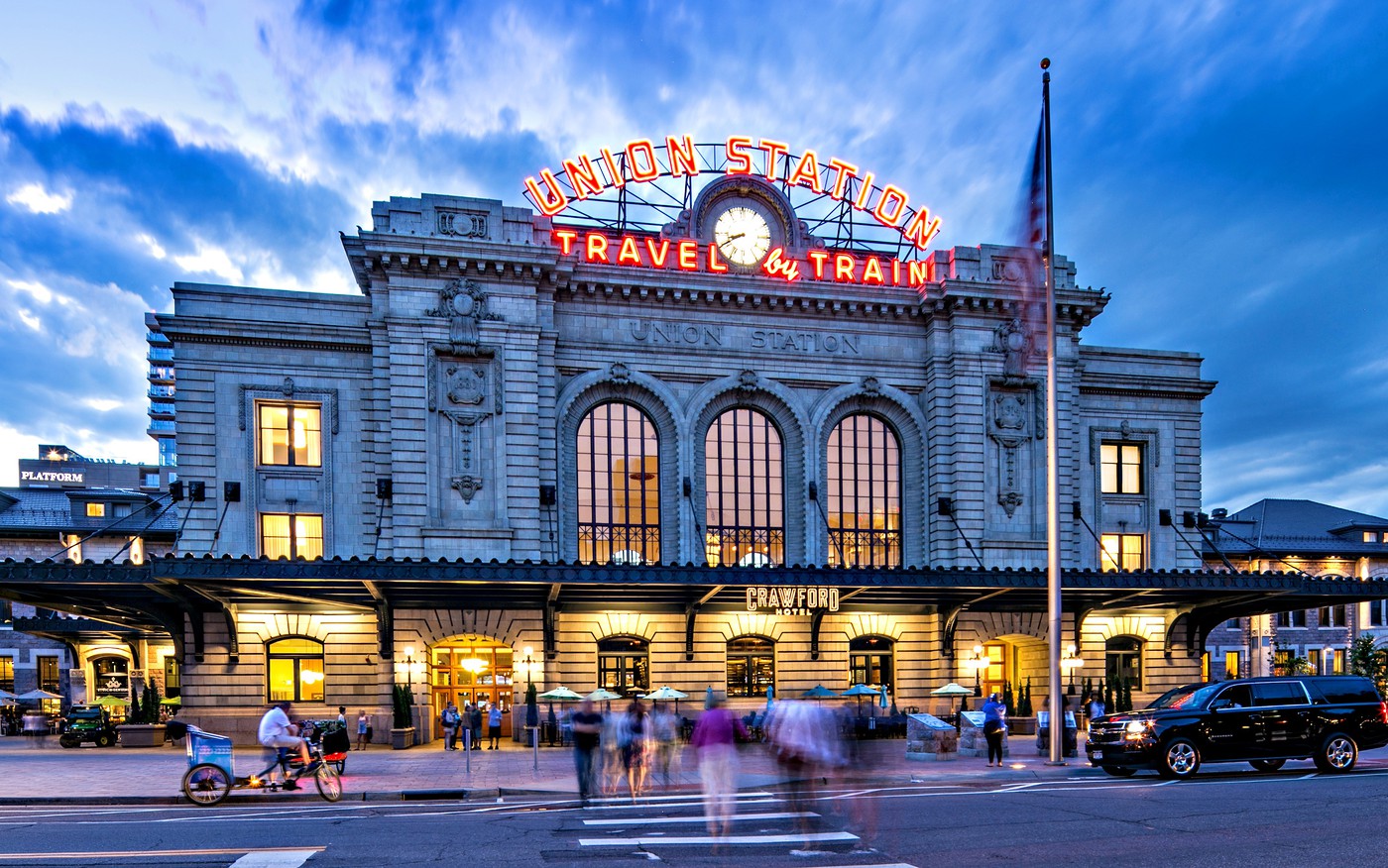 Denver’s Union Station from Wynkoop Street
Photo courtesy of Denver.org
Denver’s Union Station from Wynkoop Street
Photo courtesy of Denver.org
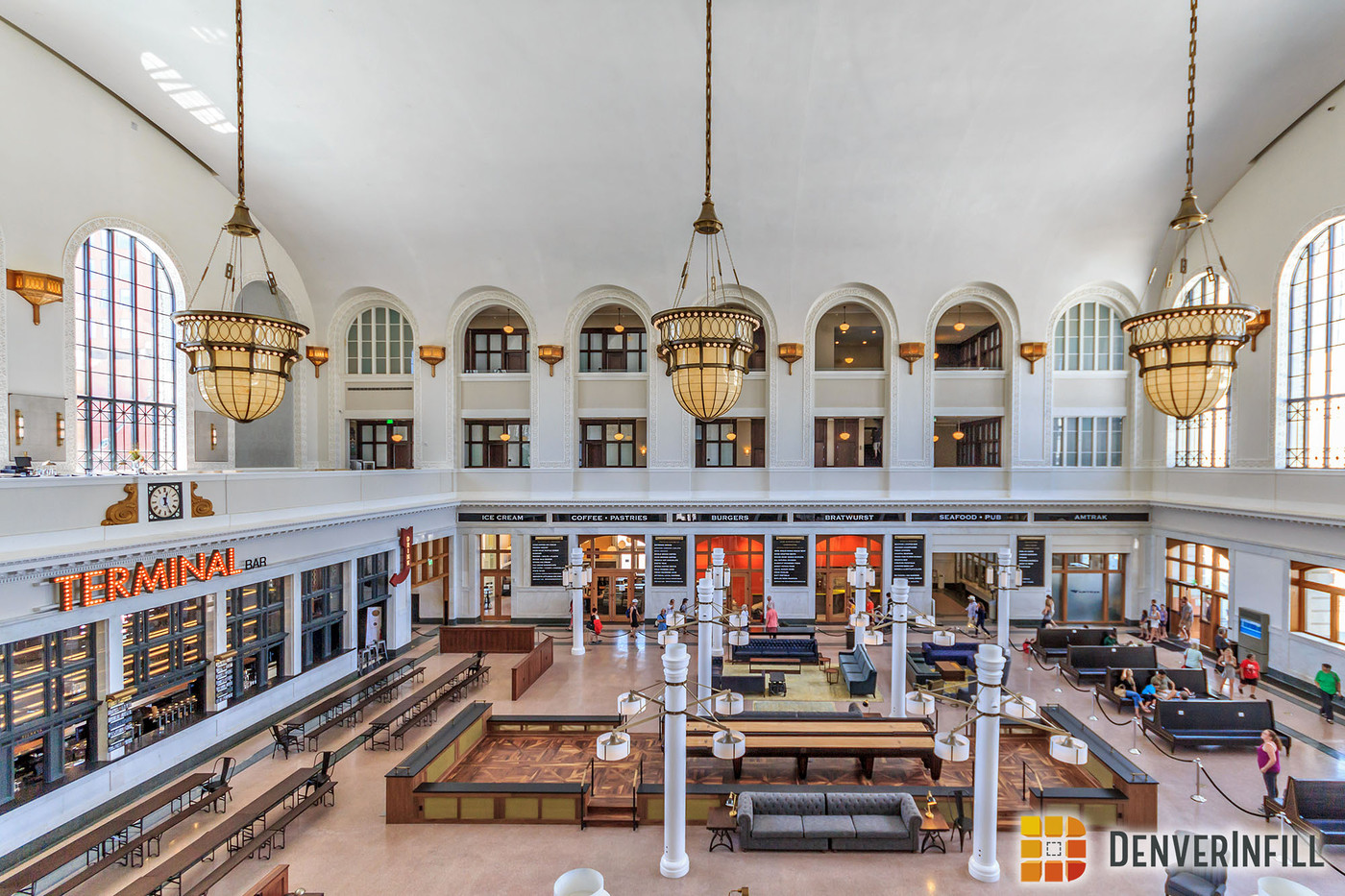 Denver’s Union Station Great Hall
Photo courtesy of Denverinfill.com
Denver’s Union Station Great Hall
Photo courtesy of Denverinfill.com
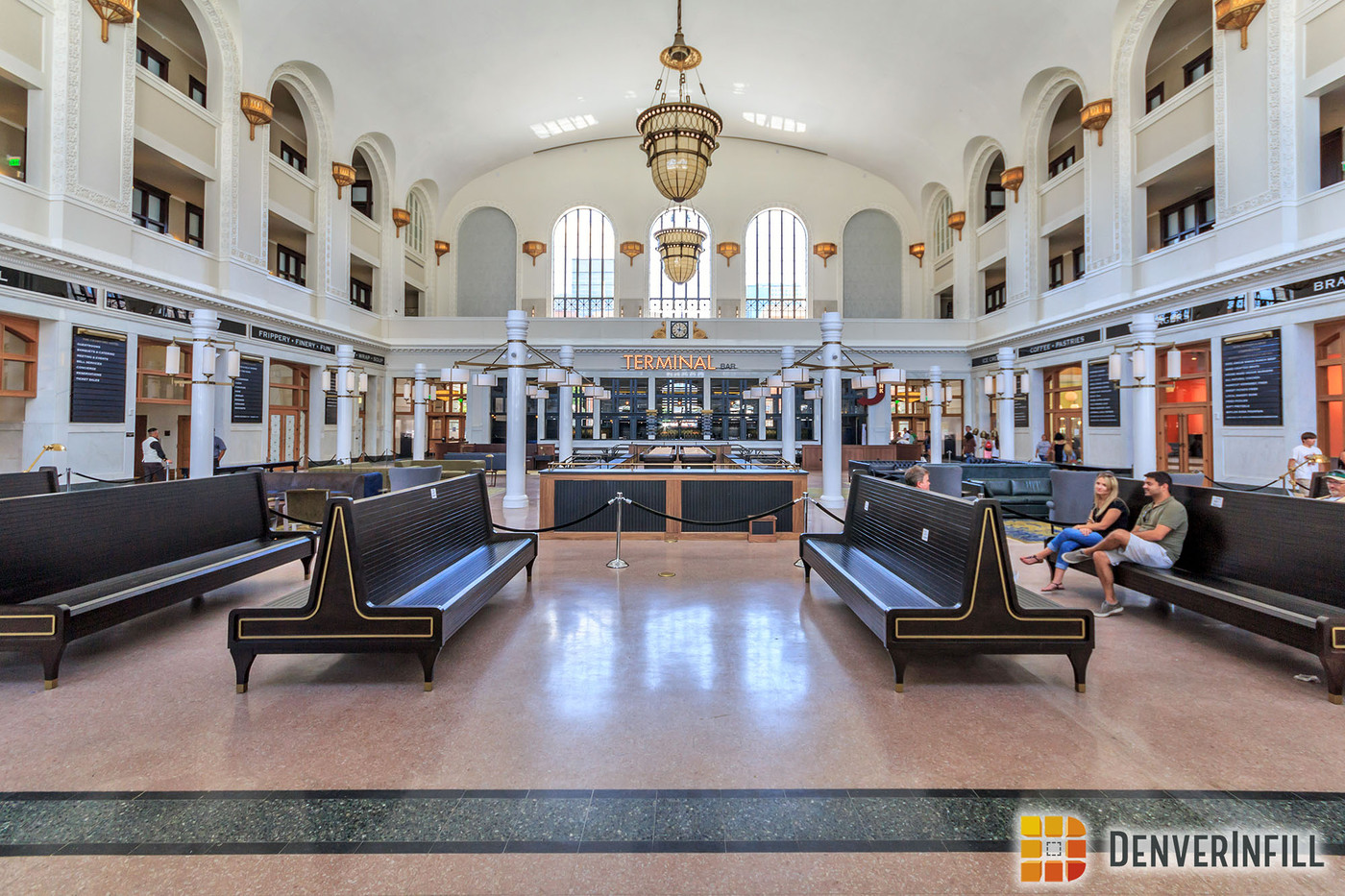 Denver’s Union Station Great Hall
Photo courtesy of Denverinfill.com
Denver’s Union Station Great Hall
Photo courtesy of Denverinfill.com
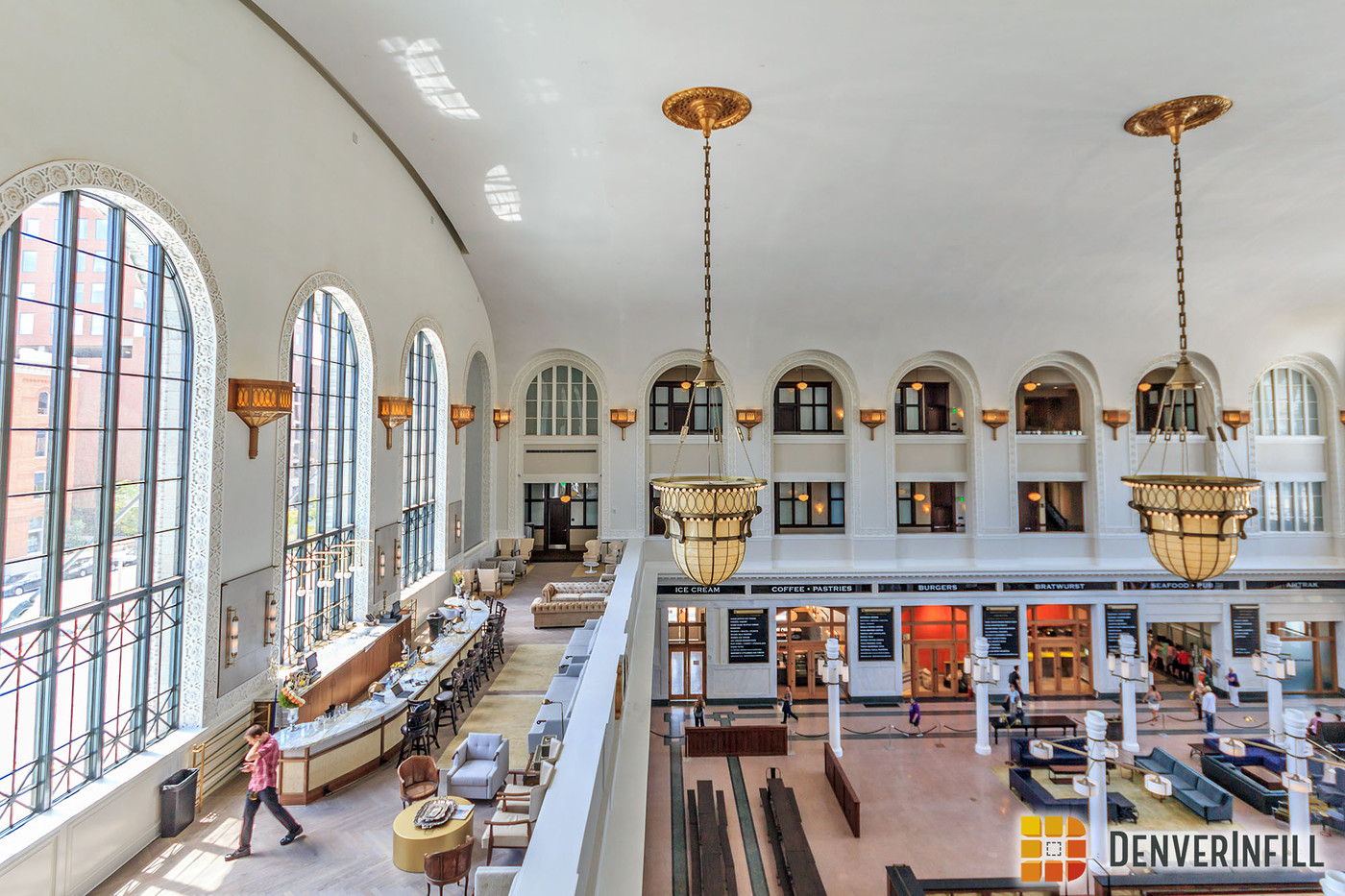 Denver’s Union Station Great Hall
Photo courtesy of Denverinfill.com
Denver’s Union Station Great Hall
Photo courtesy of Denverinfill.com
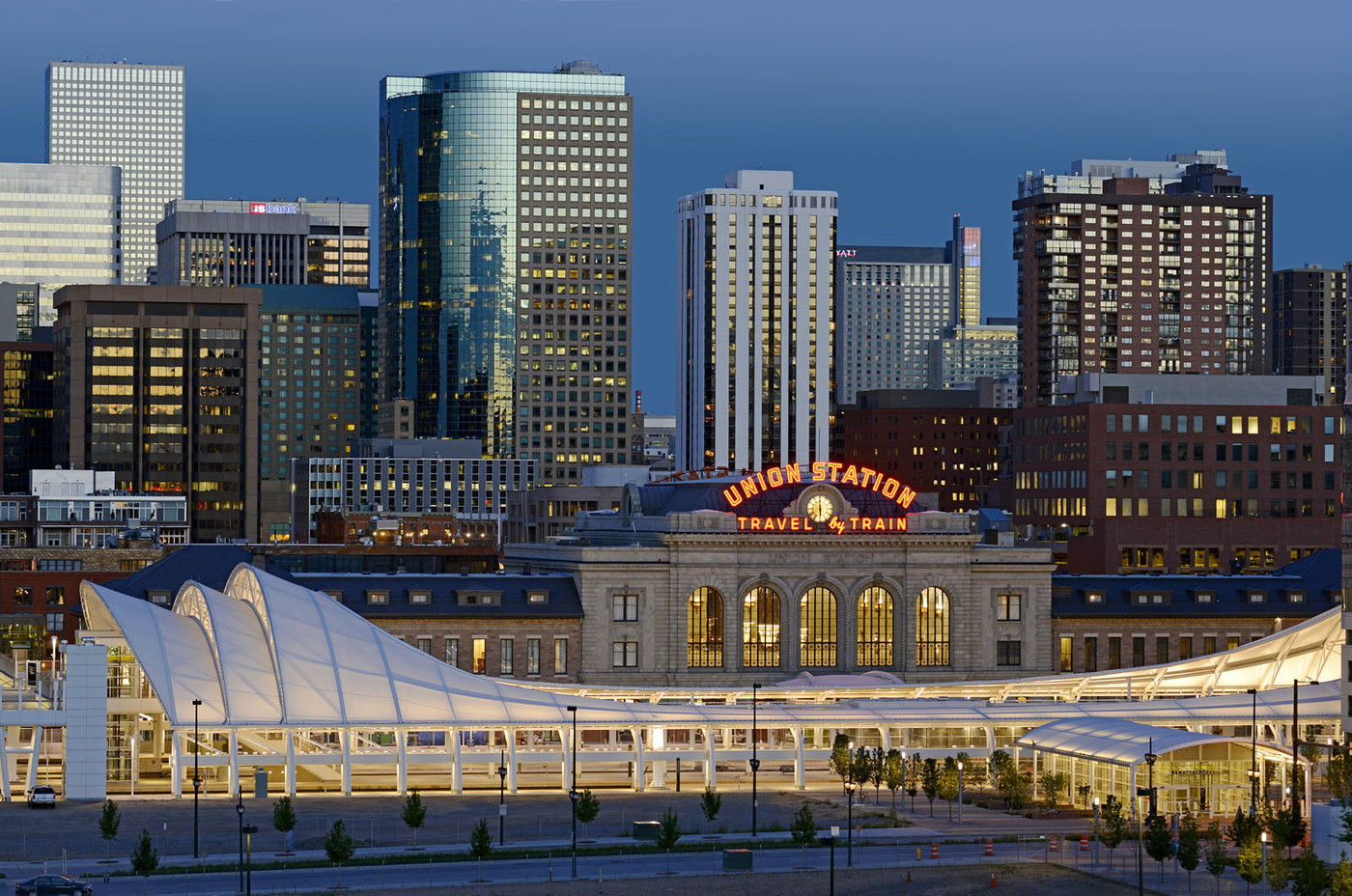 Denver’s Union Station looking toward Downtown Denver
Photo courtesy of Denver.org
Denver’s Union Station looking toward Downtown Denver
Photo courtesy of Denver.org
Alighting from the train, I paused to take a couple a couple of my own photos – one of my car trackside and the other of the iconic clock and orange lettering exhorting us to “Travel By Train”. That clock and letters have been part of Union Station as long as I’ve been alive and it’s nice to see that they’re still featured so prominently on the new station. By my reckoning, they are indeed a Denver landmark.
 Trackside at Denver’s Union Station
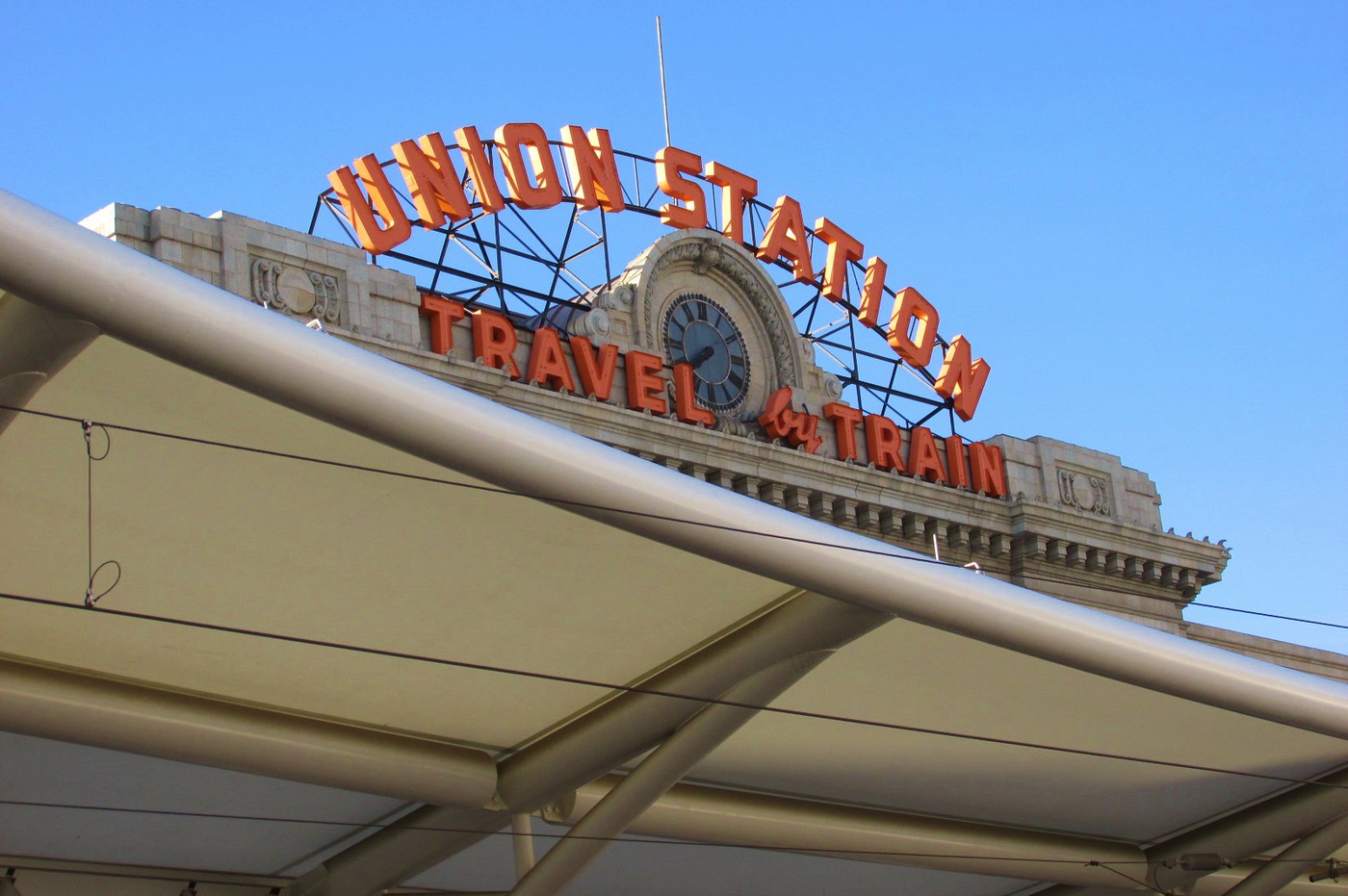 The famous clock and Travel by Train sign
With our early arrival, I had plenty of time to chat with my nephew and grandniece out in front of the station. Parking is at a premium downtown but at 7:00am on a Saturday morning it’s wide open. We paused for a couple of pictures, exchanged cash and booze, and then I headed back into the station and on to the waiting train with the rest of the stragglers. Breakfast was being served in the diner – even while we were in the station – so I stashed the Jack Daniels and made my way back to the diner. Perusing
the menu, I quickly settled on hot coffee, orange juice and an omelet with a side of 100 calorie chicken sausage. D – Licious!
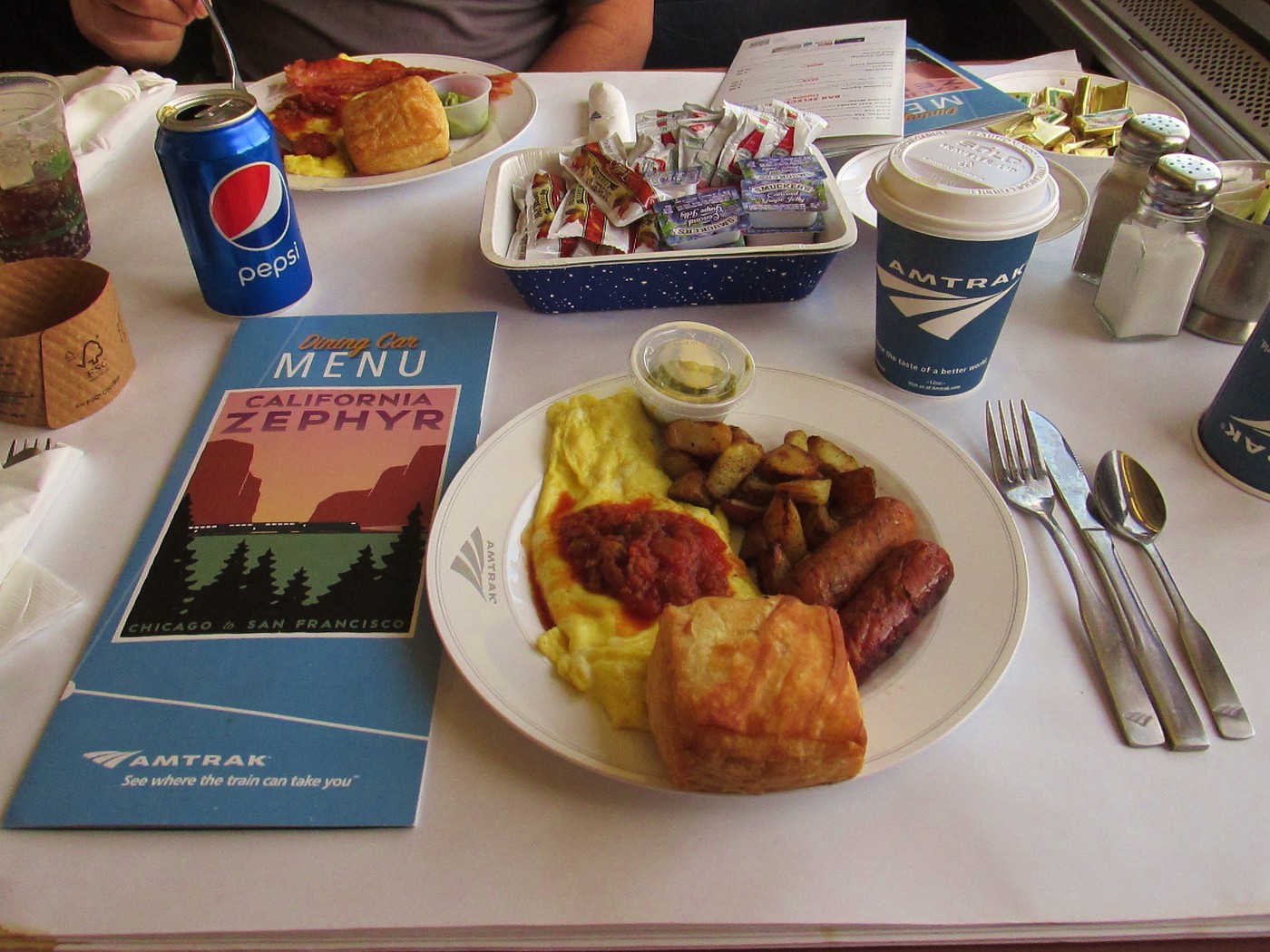 Breakfast aboard the California Zephyr
Not long after leaving Denver, the
Zephyr begins to wind its way up into the foothills northwest of Denver, heading up Boulder Creek just above Eldorado Springs and continuing to climb whilst passing through 28 tunnels enroute to The Big One – The Moffat Tunnel – 6.2 miles long at an elevation of about 9200 feet. Prior to the Moffat’s opening in 1928, trains had to climb up over Rollins Pass. You can clearly see the old rail bed up the side of the mountain above the East Portal. The top of Rollins Pass is at 11000 feet and it used to take trains about five hours to get over the pass and down to the town of Fraser on the west side. Now, it takes about 10 minutes to get through the Moffat Tunnel and another 10 minutes to get to Fraser, which is also the stop for Winter Park Ski Area.
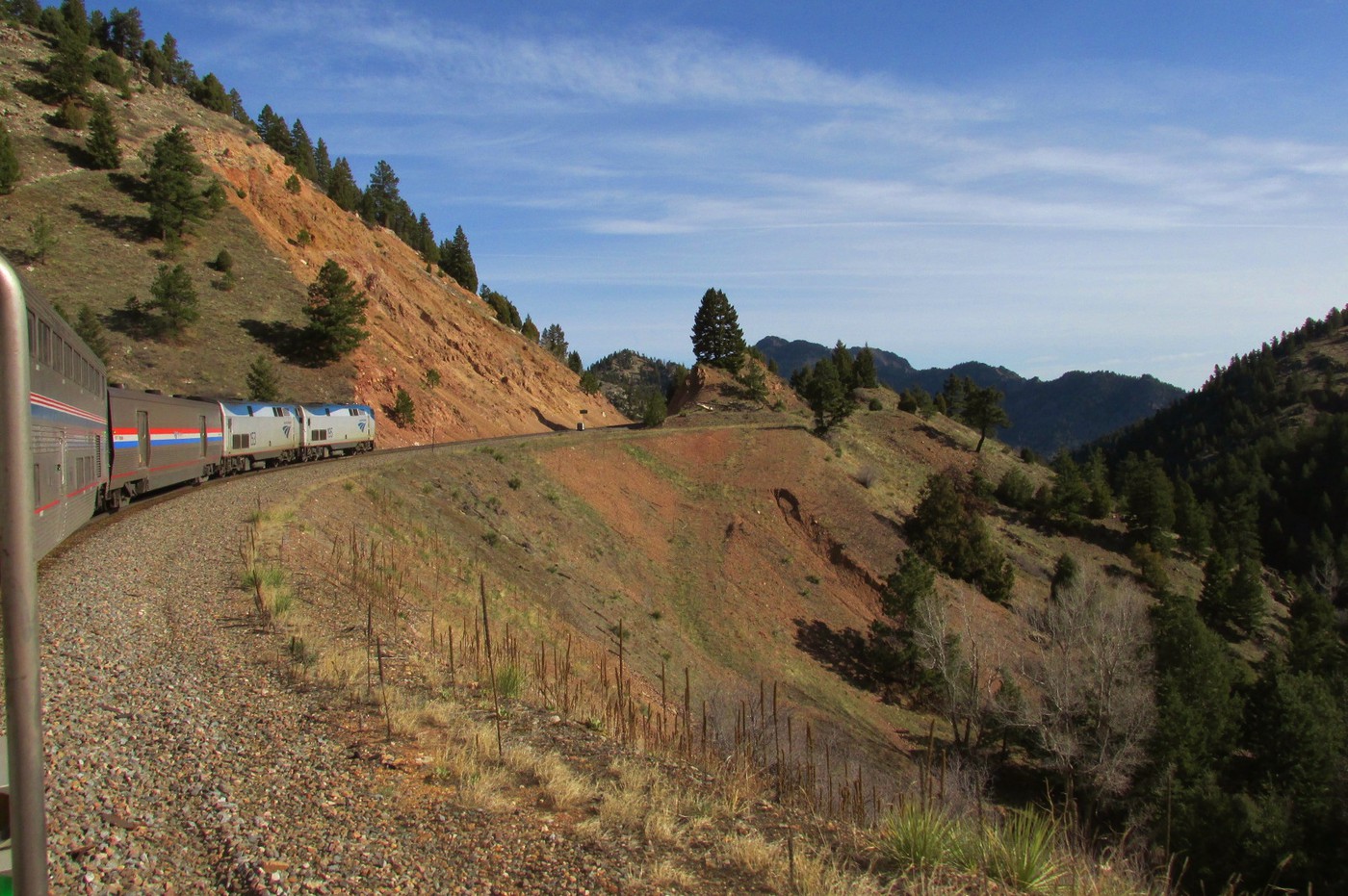 Climbing out of Denver
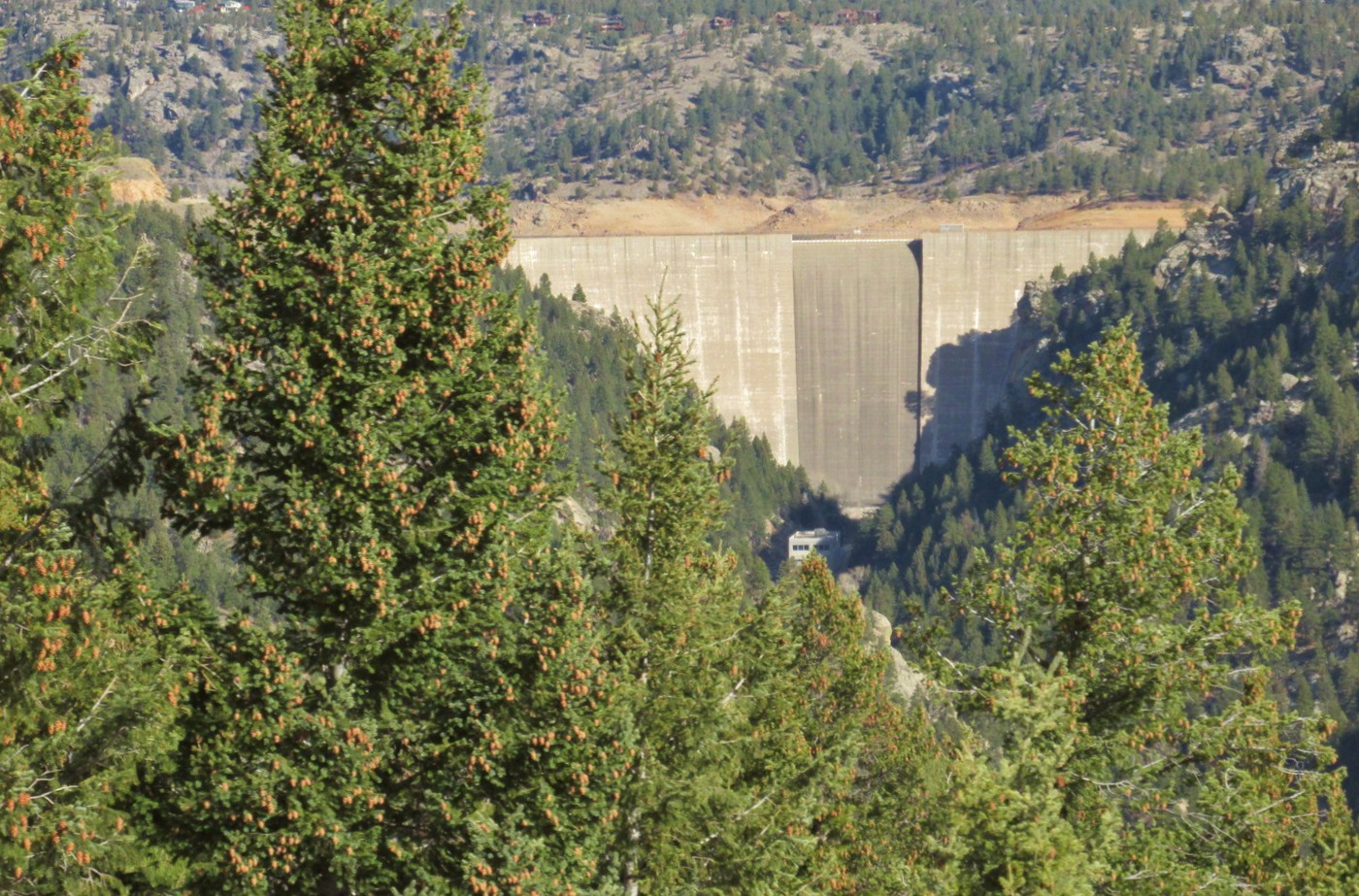 340’ High Gross Reservoir Dam as seen from the train
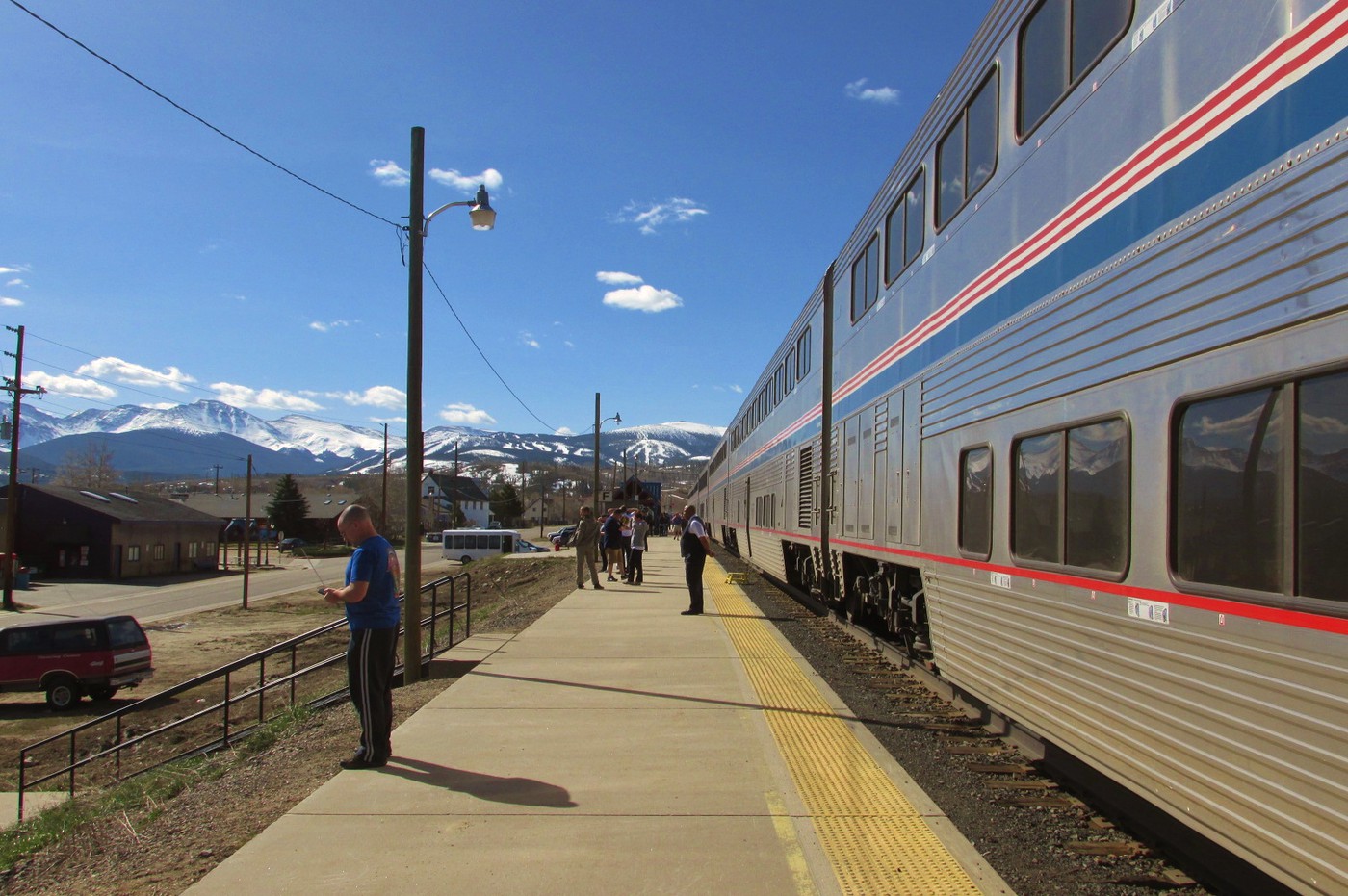 Trackside at Winter Park
Through the rest of the Rockies, the scenery is spectacular as the route follows the Colorado River for over 200 miles. The excitement begins with Byers and Gore Canyons. Both of these canyons are exceptionally rocky and rugged with numerous tunnels. The Colorado River flows just below the tracks, sometimes quite impressively. As you might expect with such spectacular scenery, the lounge car is a popular spot. When I stopped by this morning after the Winter Park stop, every seat was taken both upstairs and downstairs in the café. That’s alright. I have a secret spot I utilize for occasions such as this.
Byers Canyon starts at the west end of Hot Sulphur Springs, about 8 miles west of Granby. It’s not a long canyon – stretching only 8 miles – nor is it particularly deep but it does feature some pretty rock formations and good views of the river.
 Entering Byers Canyon
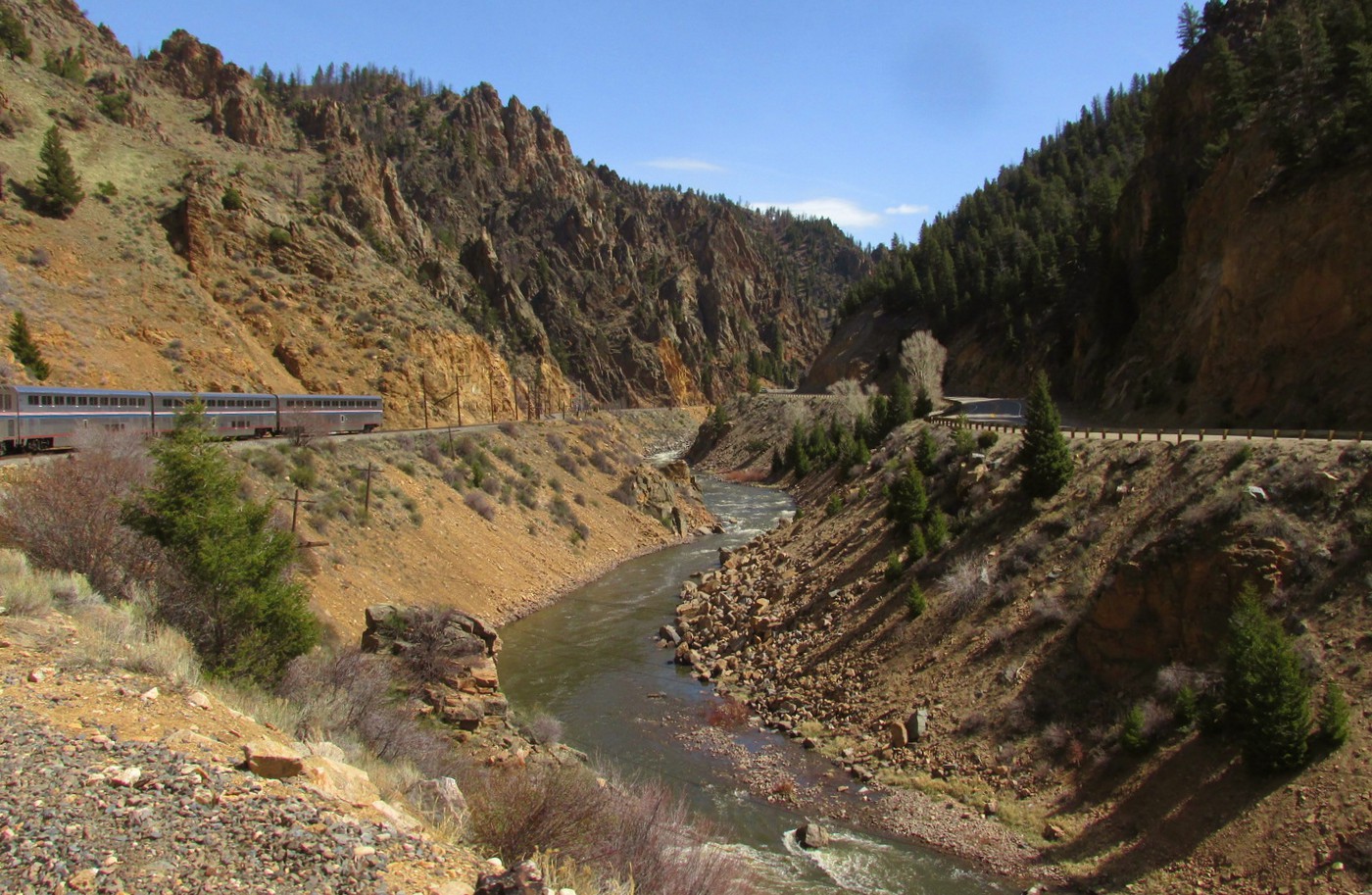 Leaving Byers Canyon
Shortly after leaving Byers Canyon the
Zephyr enters Gore Canyon. Now Gore Canyon, while stretching only about 3 miles, is a much deeper and more rugged canyon with steep granite walls ascending almost 1000 feet on either side. The Colorado River drops almost 300 feet over the length of the canyon resulting in arguably the most intense whitewater kayaking to be found in the state.
If you want to see really impressive class 5 whitewater, ride the train in late May to early June when spring runoff is often at its peak. Today – April 16th – the river was only moderately impressive. Even so, I couldn’t resist a few more photos:
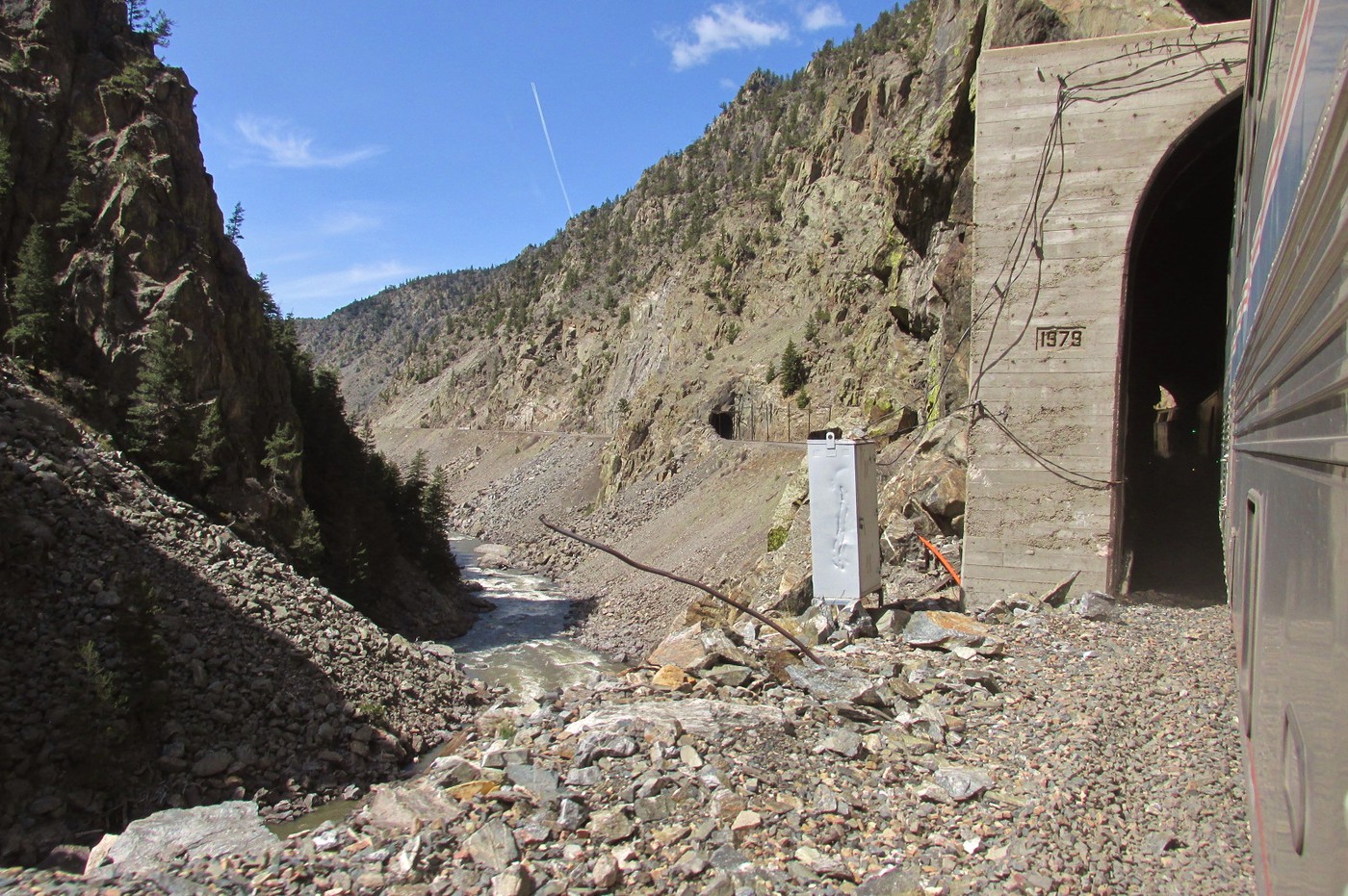 Entering Gore Canyon
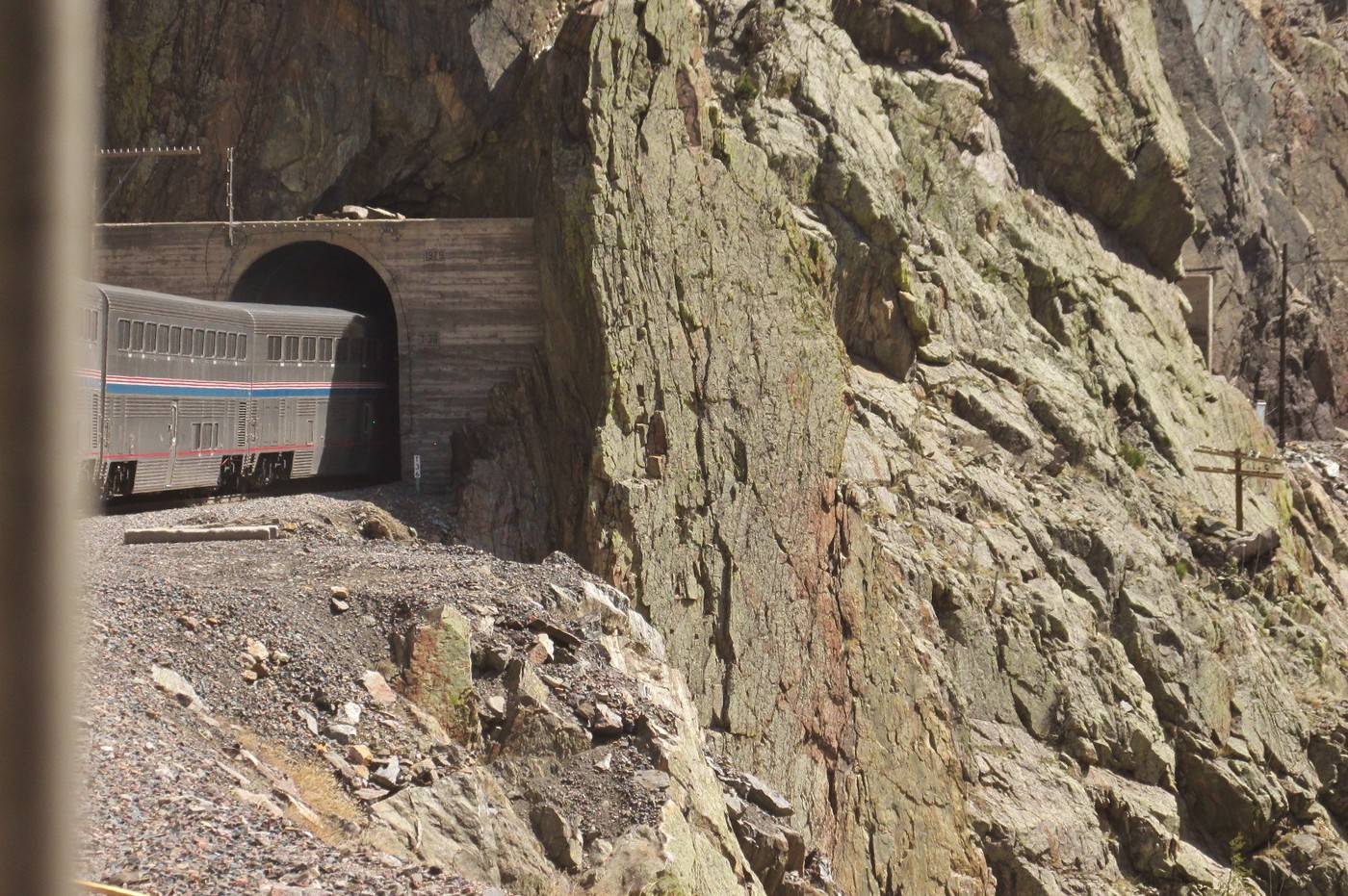 Rolling through one of the many Gore Canyon tunnels
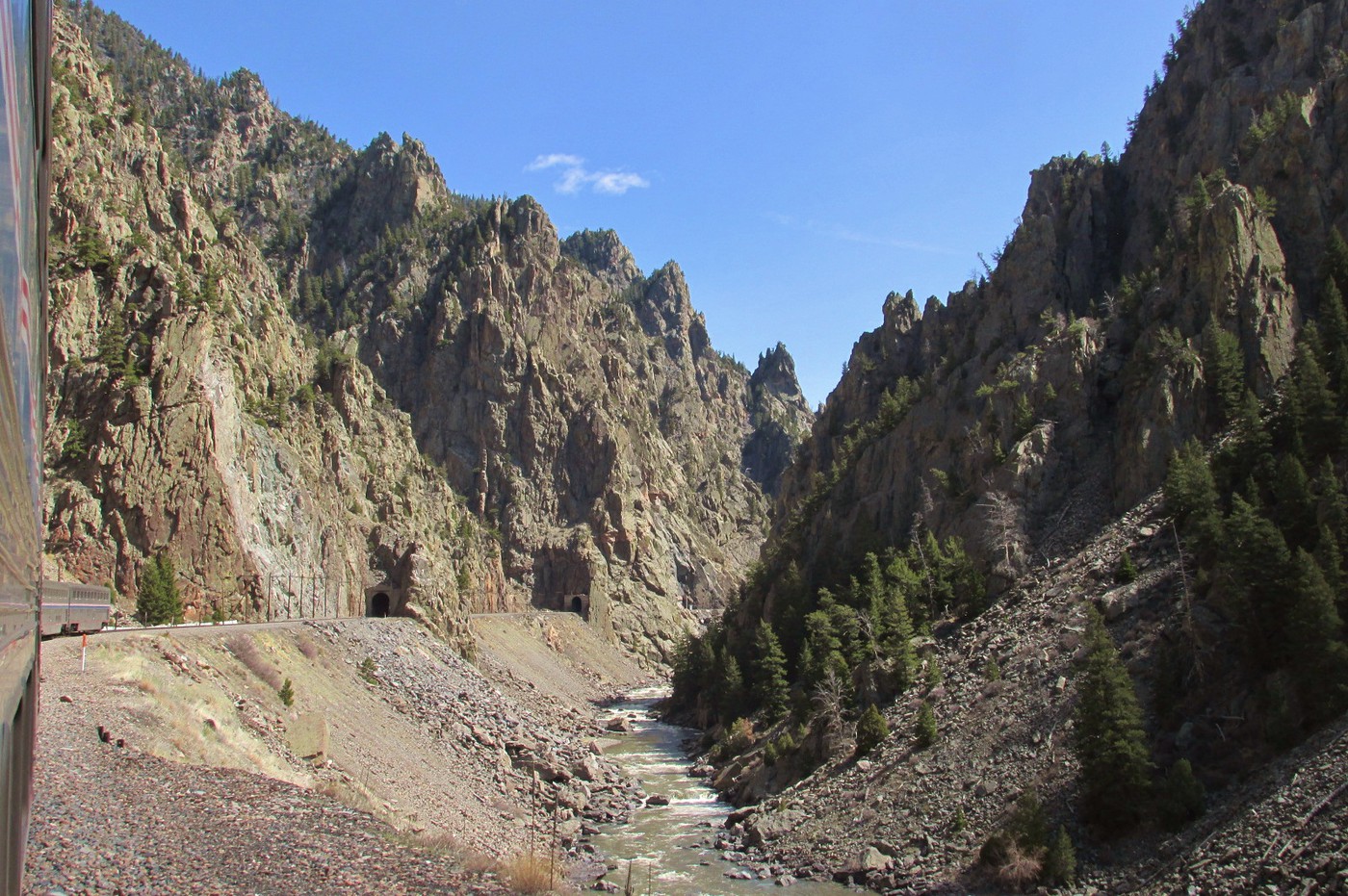 Jagged spires predominate in the canyon
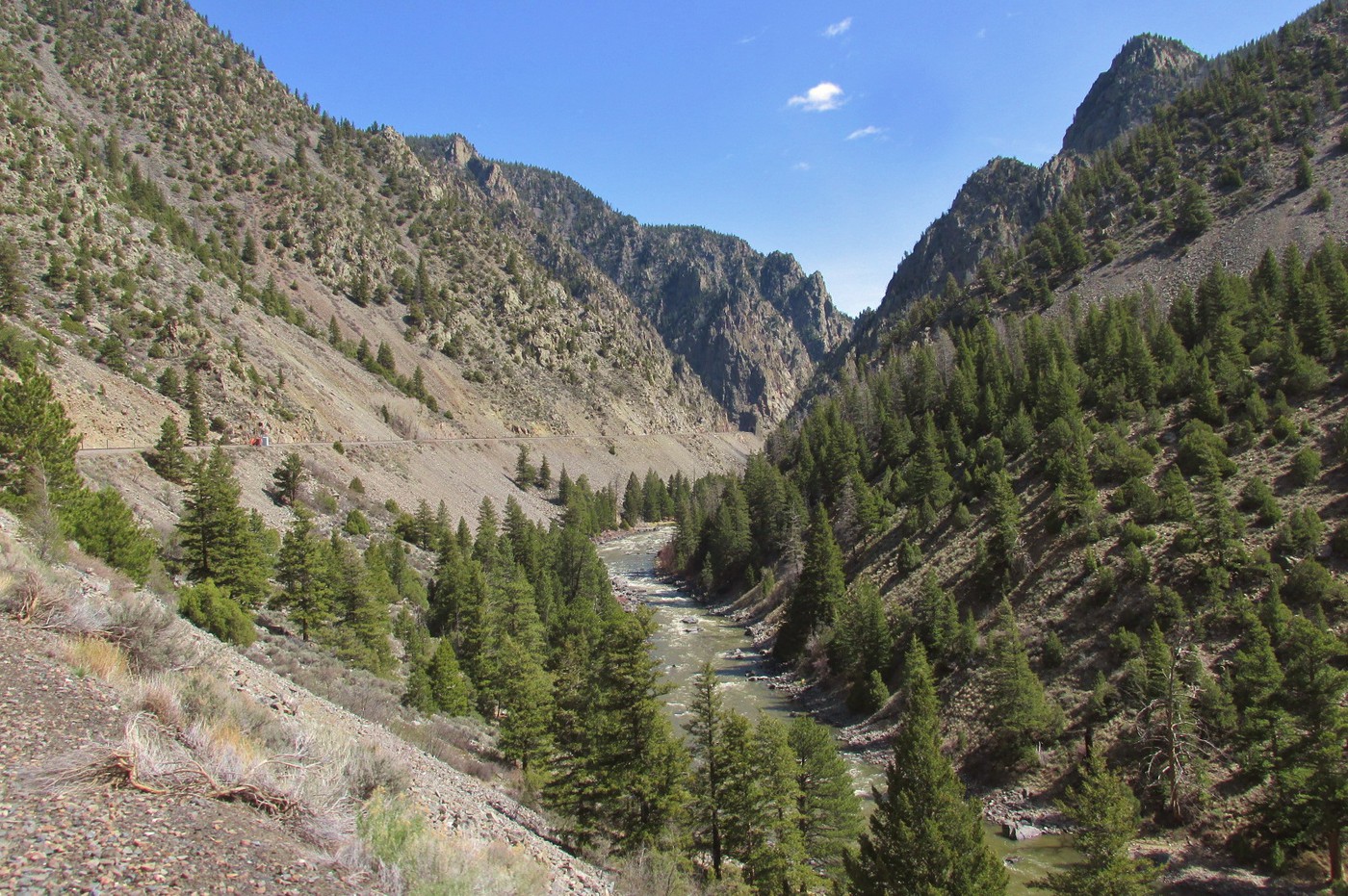 Leaving Gore Canyon