I had made my check-in online and with my boarding pass on my cell phone, I went straight to security lines, which were a bit long but were moving quickly. Unfortunately, it is required a paper boarding pass, as there is an officer just to check and stamp the BP. I went to a self-serve kiosk and printed my BP, but had to get back to the end of line.
There are several lounges on CTU accessible with Priority Pass. They are all called “First Class Lounge”, which is ironic or cynical, depending if they really meant that or were just having some fun. They are somewhat sad lounges, with questionable furniture and weak food offerings.
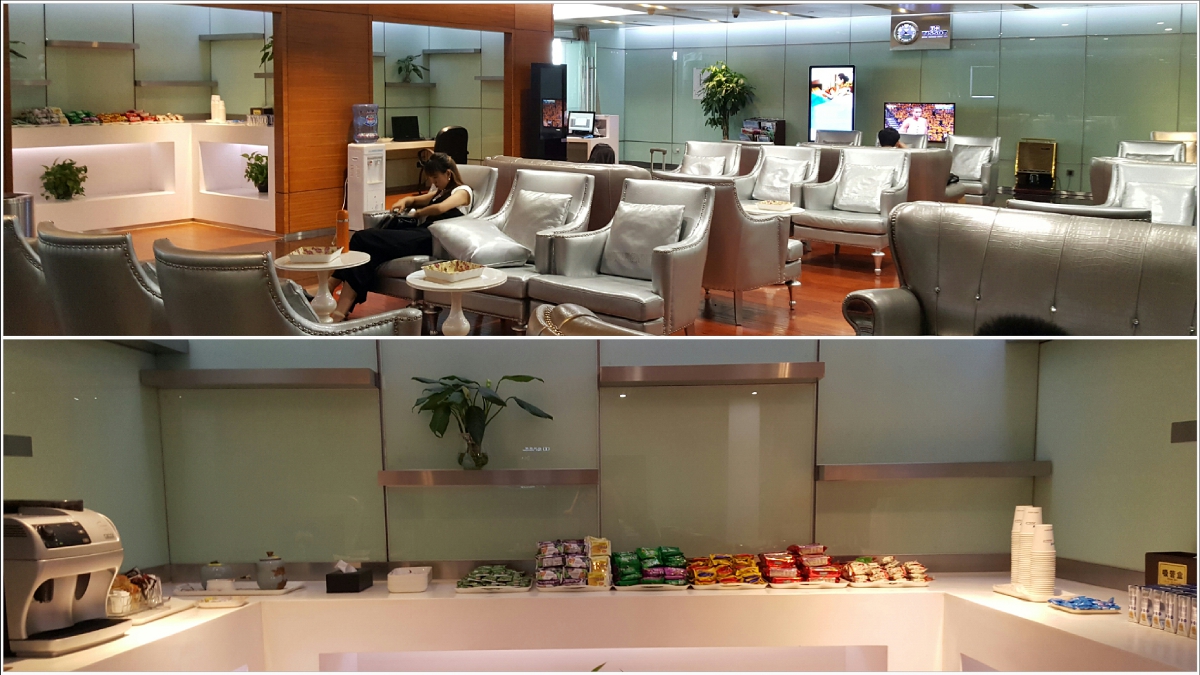
I waited for about one hour until boarding. My Air China economy flight was initially scheduled to departure at 06:55, but was a few months later changed to 11:55 departure. This meant I´d have less time in Lijiang, but, at least, it allowed me to have breakfast at the hotel. The flight was full, I guess I was the only western in the plane (I didn´t see any other western even on airport) and I slept the whole time.
The flight landed on time and LJG airport is quite interesting, as you usually walk through corridors (with or without windows) until reaching the baggage area. In this case, it is a semi-opened, external corridor, with brick walls on one side and glass on the other, which is not fully enclosed, protected from weather by an eave. I thought it would get really cold in the winter and found the design a bit odd, but checking the average temperatures, Lijiang actually has mild temperatures throughout the year, so it´s actually appropriate.
The benefit of booking Banyan Tree through Amex FHR was a one-way transfer from/to airport to hotel, so I used it on arriving. I found it a bit stingy, as they charge U$50 for the service and FHR usually has U$100 credit for food or spa services. It was a 40 minutes ride to the hotel.
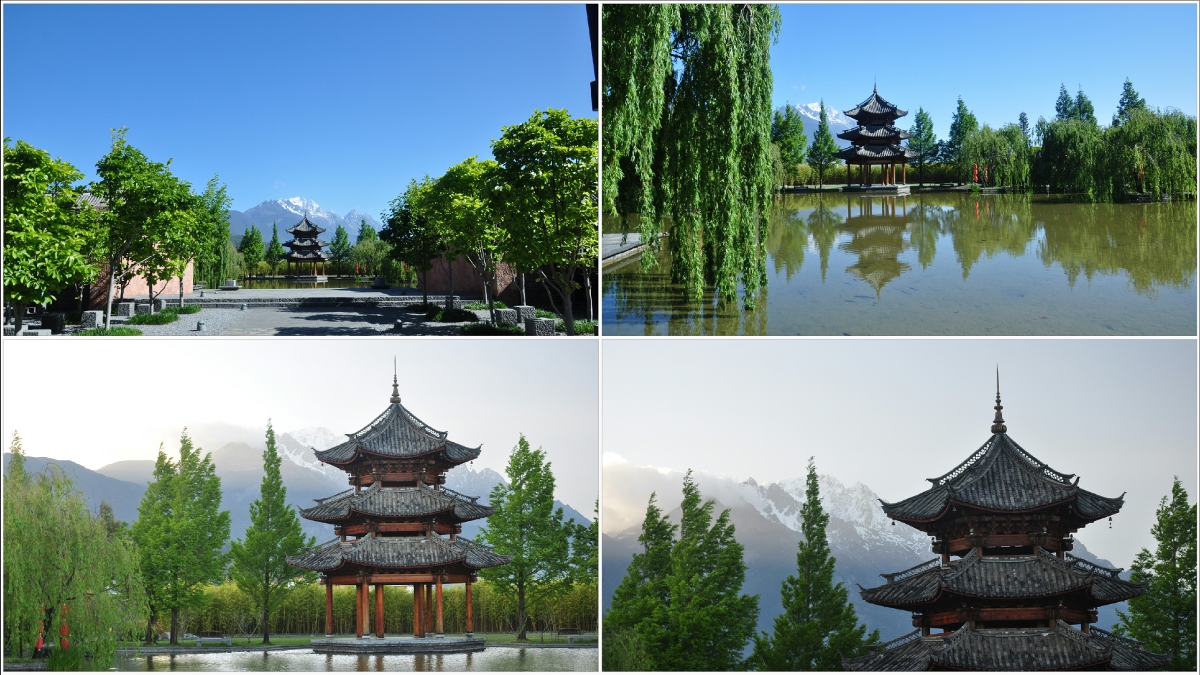
The architecture of the main patio, where reception is located, is stunning, with a tall pagoda, surrounded by a small lake and willow and pine (?) trees and Jade Snow Dragon Mountain on the background. On check-in, I was told I was upgraded to a mountain view room and got a buggy ride to my room. The rooms are like independent apartments along a brick street.
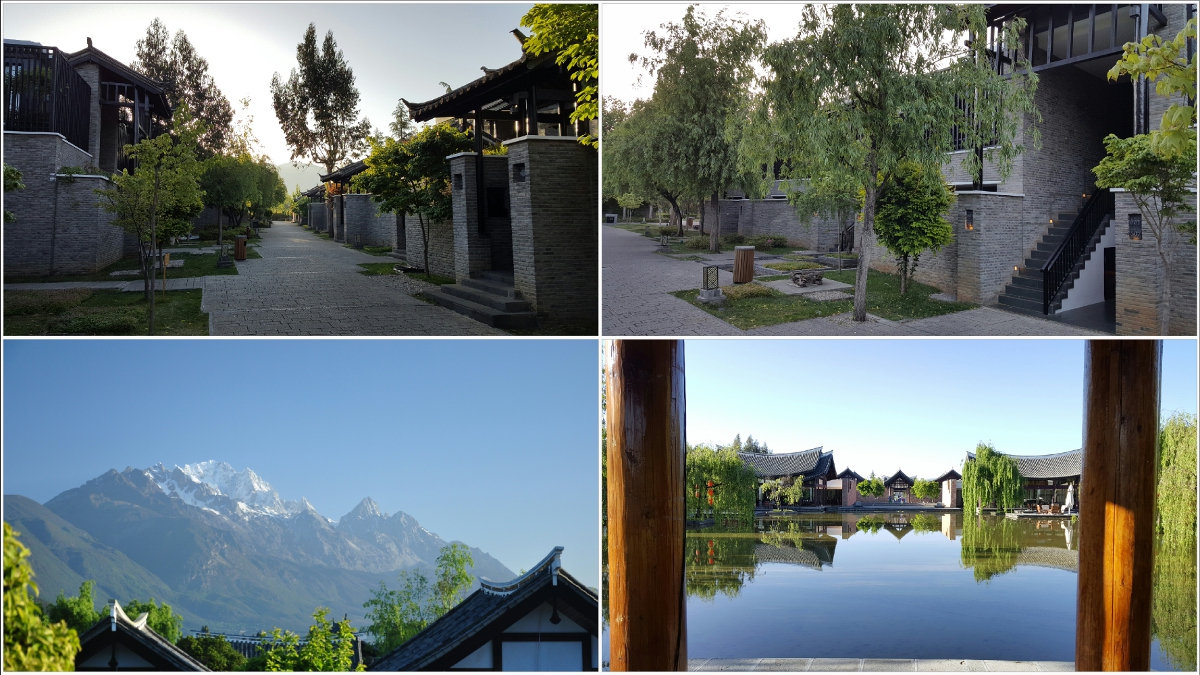
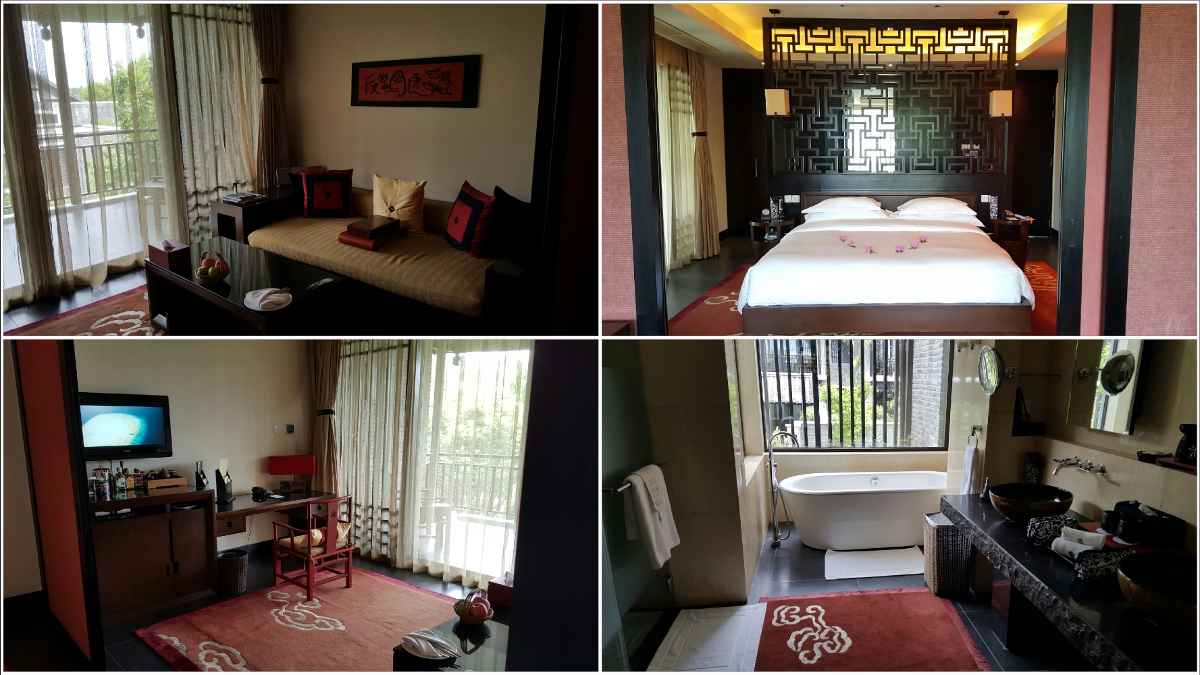
My room consisted of a big rectangular, with bathroom on the front and a living room with a couch and working desk on the back and the bed between the rooms, and a veranda in the end. It featured a classical Chinese design but seemed a bit tired to me, even though it´s only 10 years old. May be it´s the red tones, which I associate with the 70´s.
Internet was slow and I had a major problem which didn´t affected me in Chengdu: I had marked the places I wanted to go on Google Maps and used it to walk on the streets. However, the Great Firewall was in full effect and I couldn´t retrieve the information. The slow internet didn´t help and Bing Maps is a big piece of $¨&%¨&, so I had to use the old system of asking for a map at reception.
The map provided by Banyan Tree is pretty bad and weak. I asked both on reception and to the bellman the direction to the Old Town and both told me it was a 5 minutes walk from the hotel. I recalled reading on TripAdvisor that the hotel was a bit secluded, but followed the instructions.
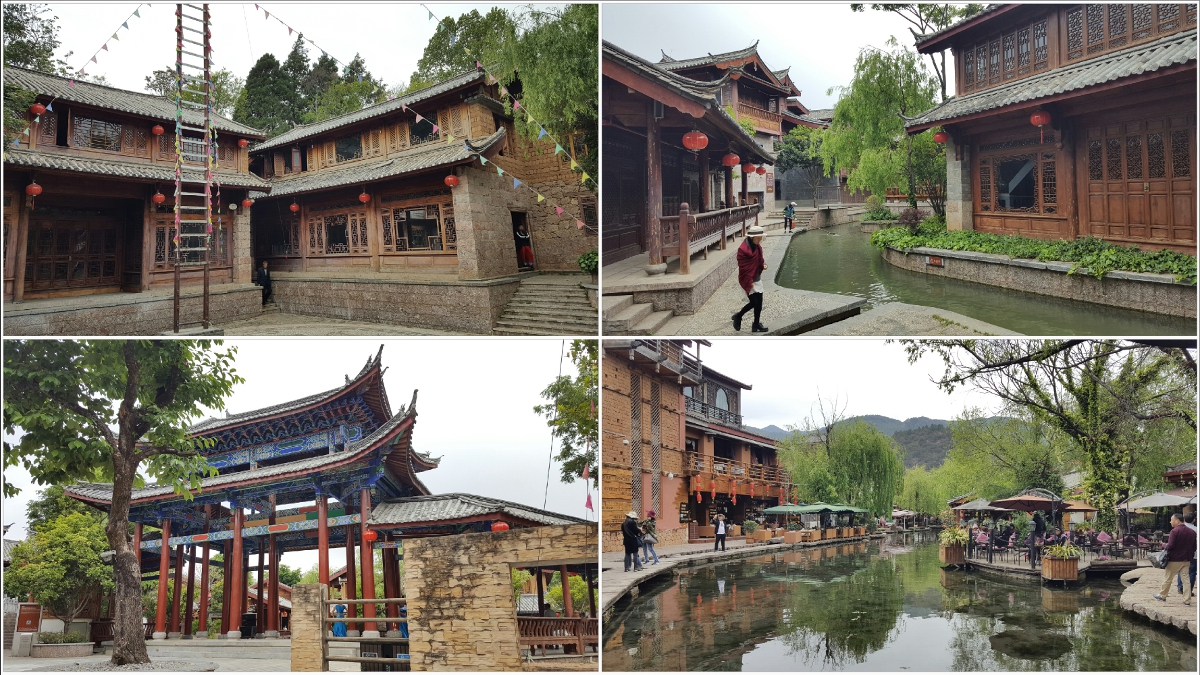
The lack of Google Maps and the weak paper map didn´t help, but I got to my destination. It was nice, with some canals and new buildings using old Chinese design, but I found it a bit small and empty. Actually, I was disappointed.
Anyway, the other place I wanted to visit in Lijiang was Black Dragon Pool. I couldn´t find a taxi where I was, so I walked back to the hotel and asked for one. On the way to the Pool, I saw several signs indicating directions to the Old Town, which were completely different from the place I went, so I realized I hadn´t been to the Old Town yet!
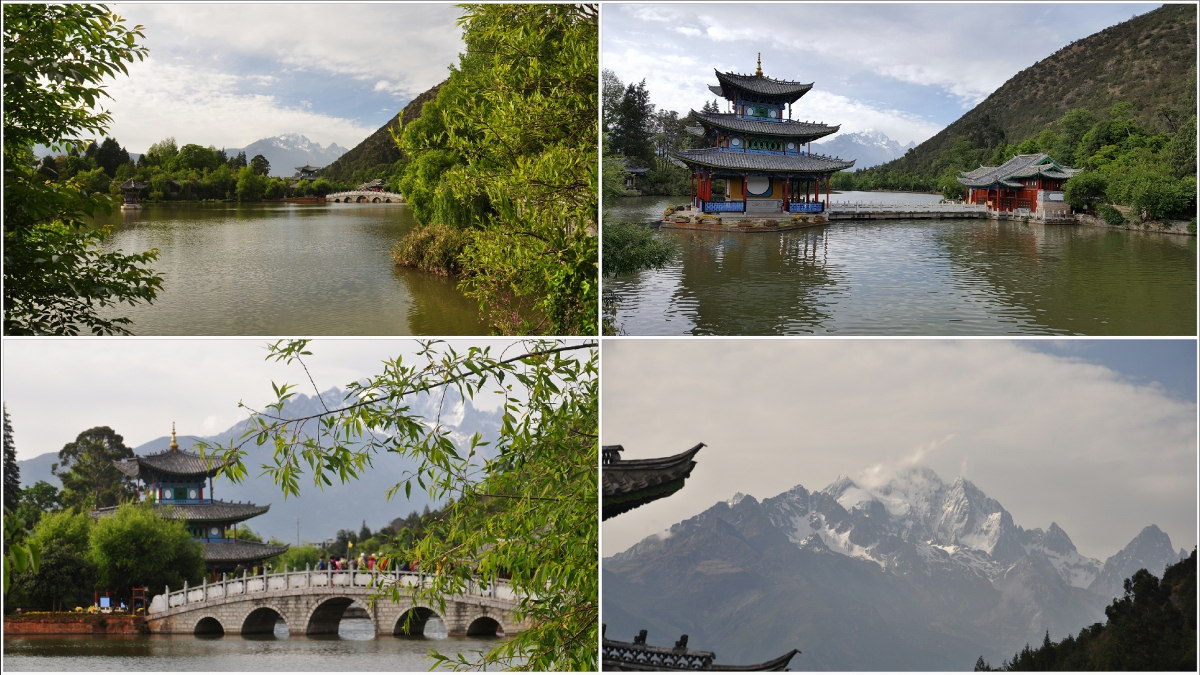
To enter the Black Pool Dragon, I had to pay 80 yuan and kept the ticket in my pocket. I walked around a bit, took some nice pictures of the lake, pagodas and bridge, with the mountains in the background, but as I found out I still had to go to the Old Town, I didn´t spend much time there. I took a taxi on the streets for a quick 5 minutes ride.
Arriving there, it was quite crowded. A ticket was required to enter Old Town. As I went to buy one, I saw it was the same I used on Black Dragon Pool. Luckily, the ticket was still in my pocket and I hadn´t thrown it away as I would normally do. So, for those who don’t research much about your destination, as I didn´t, your ticket is probably valid for a lot more places.
I walked for a couple of hours through the maze Old Town is. To be honest, I was a bit underwhelmed. It´s not that I didn´t like it, it´s just that I was expecting something more spectacular, like some attractions in Kyoto. My fault for coming with wrong expectations and not researching properly. The urban layout is unique and there are some canals and ancient buildings, but, in general, it was a sequence of lots of stores, which I think are divided in 5 types: tea, stone crafts, juices/local food, musical/drums instruments and cheap souvenirs.
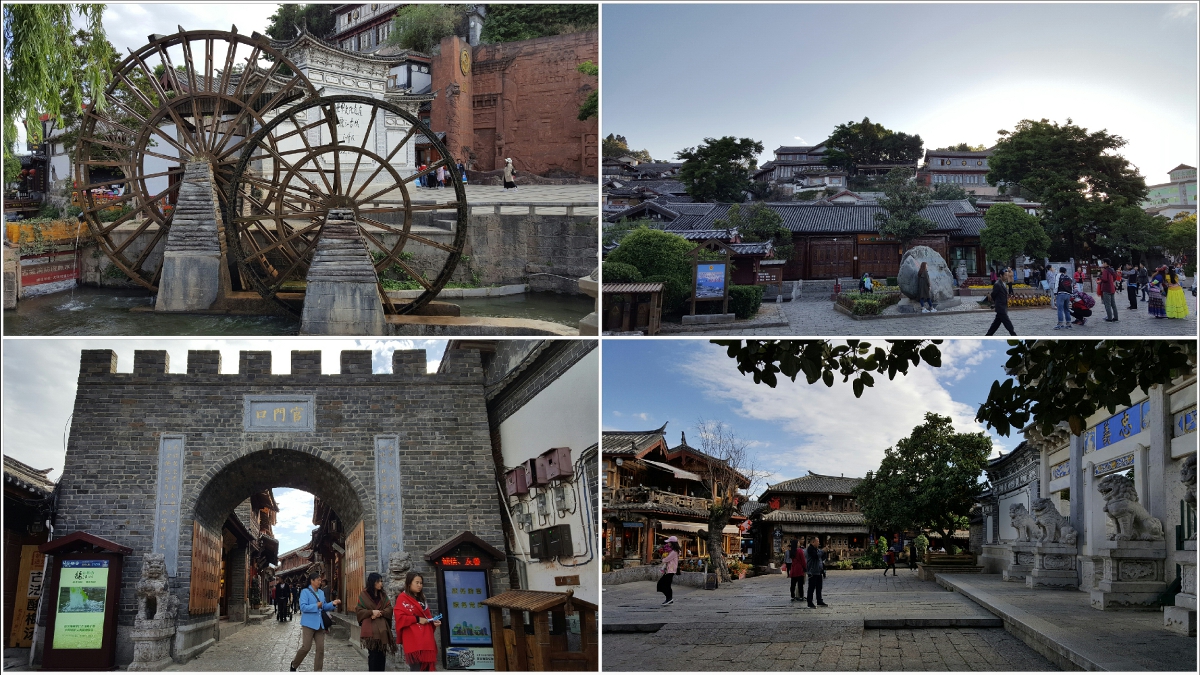
The problem to me was that this myriad of stores were all the same, it was very hard to see something more unique. And I am pretty sure that I didn´t got totally lost and walked back and forth on the same alleys several times.

It also seems to me that the majority of buildings/stores are less 50 years old, but built using a classical timber design. So the Old Town as a site and its urban layout may be really old, but not the buildings. I may be wrong here, but that´s the impression stuck with me. I´d actually love to find out that I´m wrong.
As in Chengdu and, also, later in Shenzhen, I hardly saw any western, which I thought was really cool. The food from vendors didn’t appeal to me and I was going to have something from the hotel. As I was just outside the Old Town, looking for a cab, I saw a very discreet McDonald’s wood sign on a disguised building and went for a burger a fries, leaving my guilt away for eating such a standardized cardboard food.
From the Old Town to the hotel was a 10 minutes cab ride. Later, in Bangkok, without the %¨$&$ Great Firewall, I found out that closer to the Banyan Tree, I went to the Old Town of Shuhe, which may also be an Old Town but not the one Lijiang is famous for. The hotel staff should know better that when a foreign guest is asking about the Old Town, it is referring to the main one, not a minor one.
After a good massage on the spa, it was time to call it a night.