We relished our last morning in Zanzibar with a bit of relaxation. Our driver agreed to get us back to the airport with a couple hours to explore Stone Town along the way. We didn’t need to leave right away so after packing up we enjoyed a casual breakfast and I ran back to town to pick up a few postcards (which still haven’t arrived six weeks later).
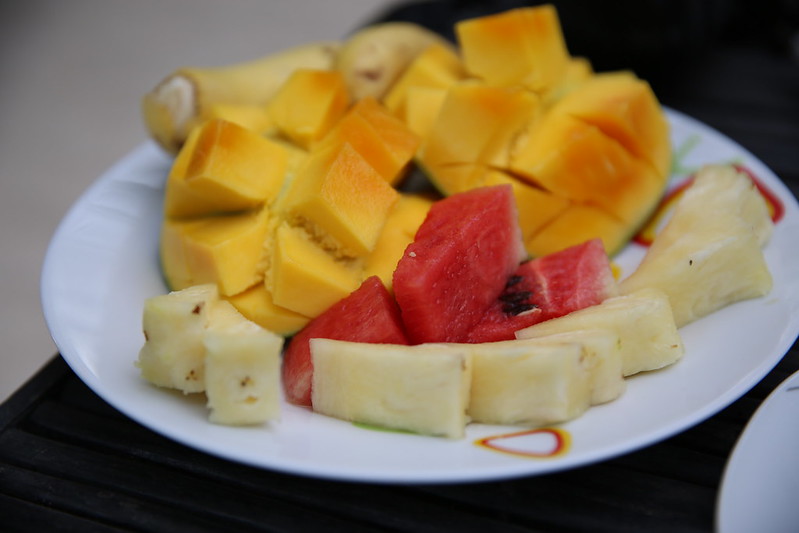 I need some breakfast variety
Around 11:00 we headed south for the hour drive to Zanzibar’s government seat. Stone Town is the former capital of the Zanzibar Sultanate and has a wide array of influences including African, Arab, Persian, European and Indian. The UNESCO (2000) site is most notably known for its role in the slave and spice trades. We were dropped off along the main road by the Darajani Bazaar and immersed ourselves in the sights, sounds and smells of this predominantly food market. Although, there were some vendors selling basic home goods and even a couple enterprising tourist touts.
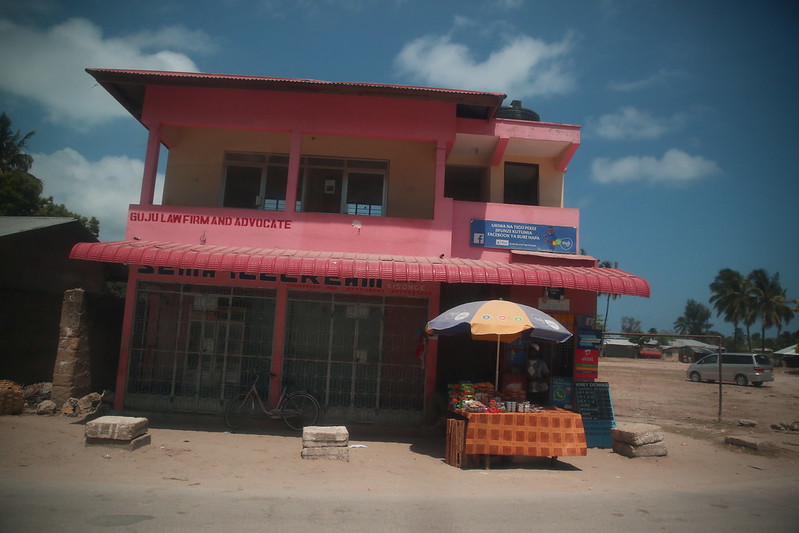 If Saul Goodman was Zanzibari
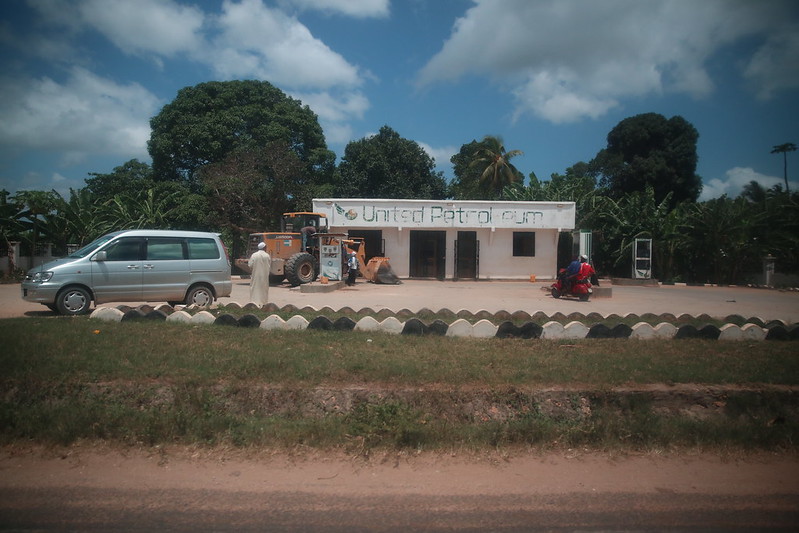 Fuelling up
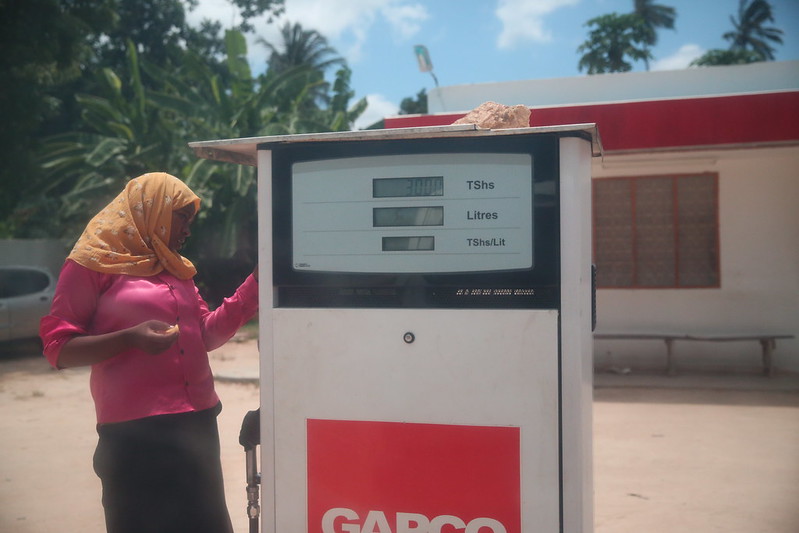 Full service
 WhatsApp ads everywhere
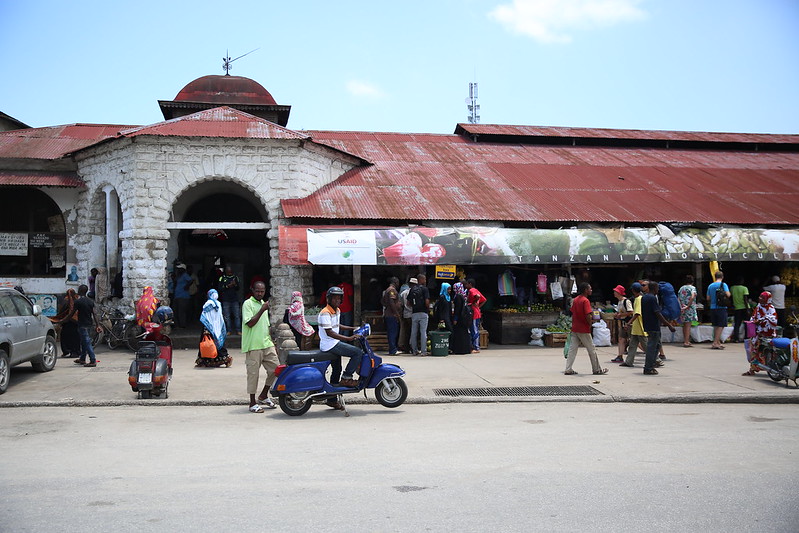 Darajani Bazaar
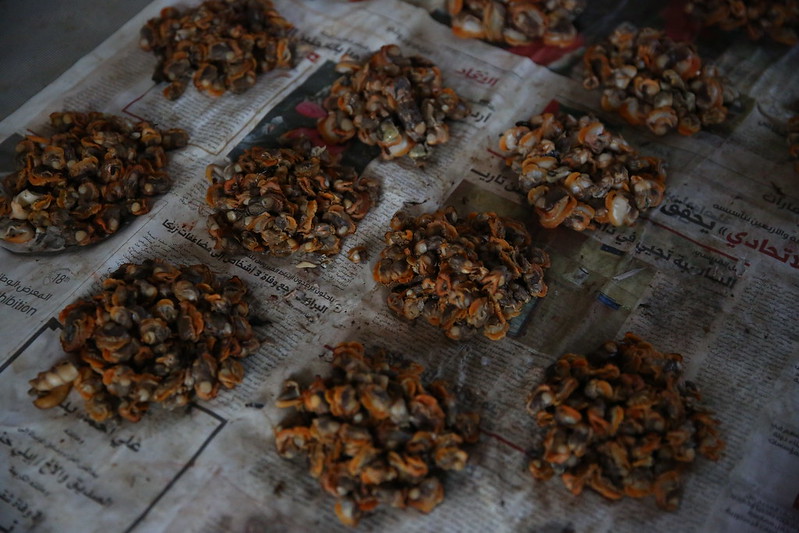 Pick your pile
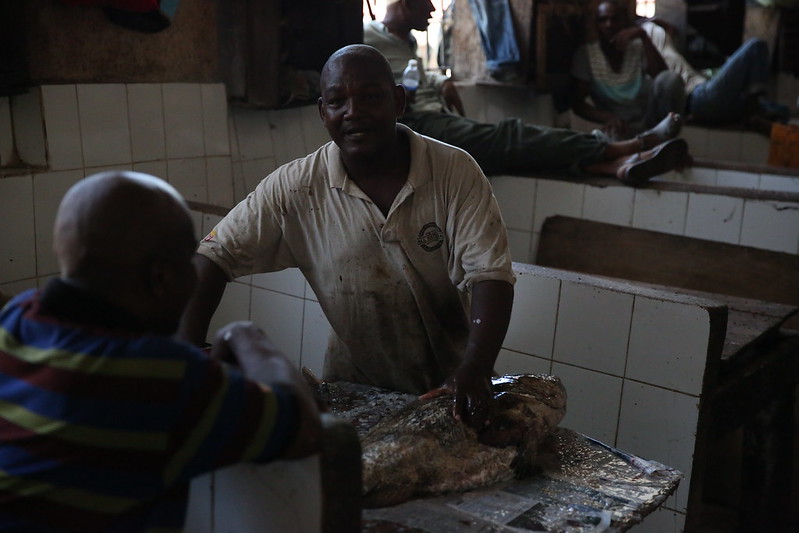 Fish stalls
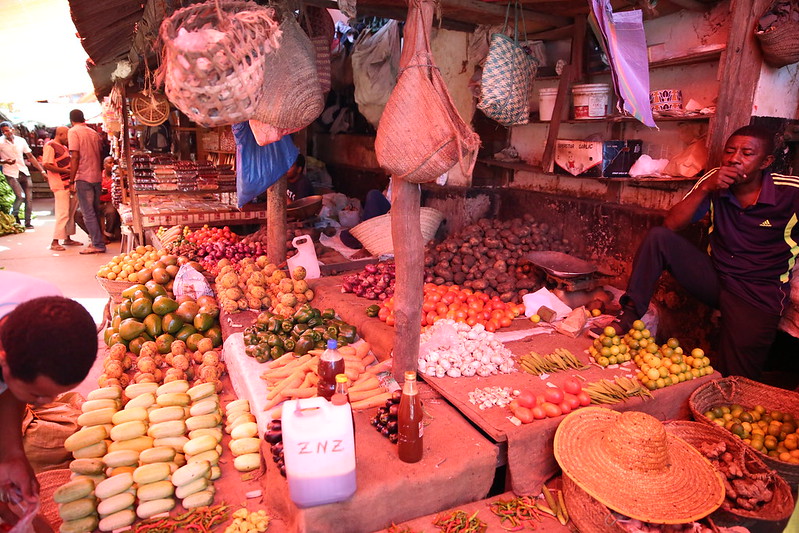 Produce department
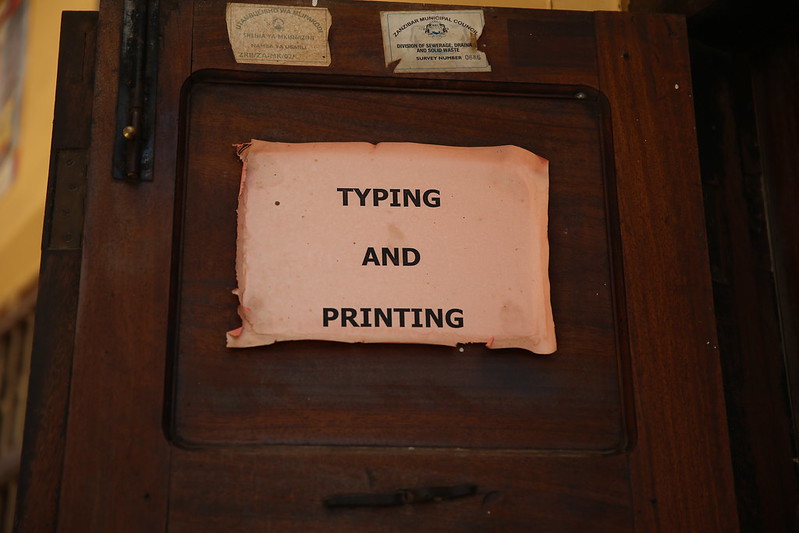 Looks like the skill hasn’t been done in some time
 March 20, 2016 Presidential Election winner
Eventually we made our way out to breath (fresh air) and began to meander toward the waterfront where most of the historic buildings stood. I didn’t have an exact route in mind so we just made lefts and rights as I felt appropriate until we arrived. Most of the narrow alleys reminded me of an Arab medina but most of the shops focused on selling art or other kitschy trinkets to tourists. Being mid day it was rather hot so I was happy when we reached our more open and breezy destination.
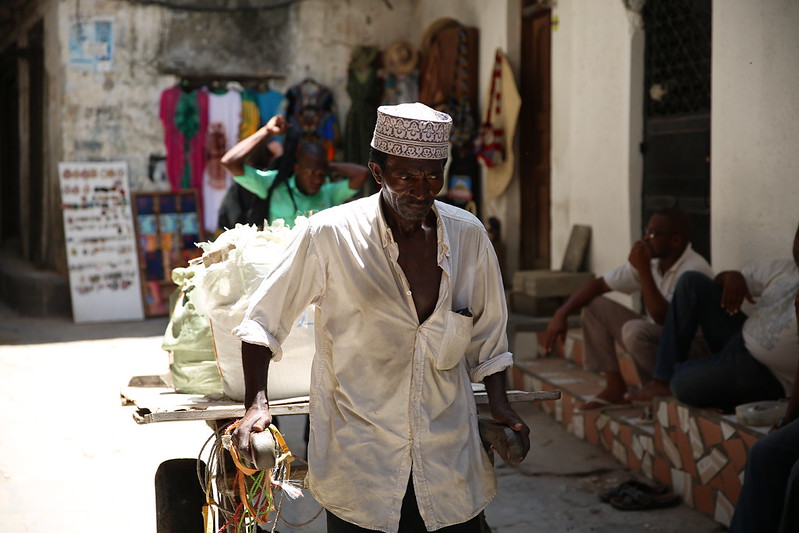 Carts for the narrow alleys
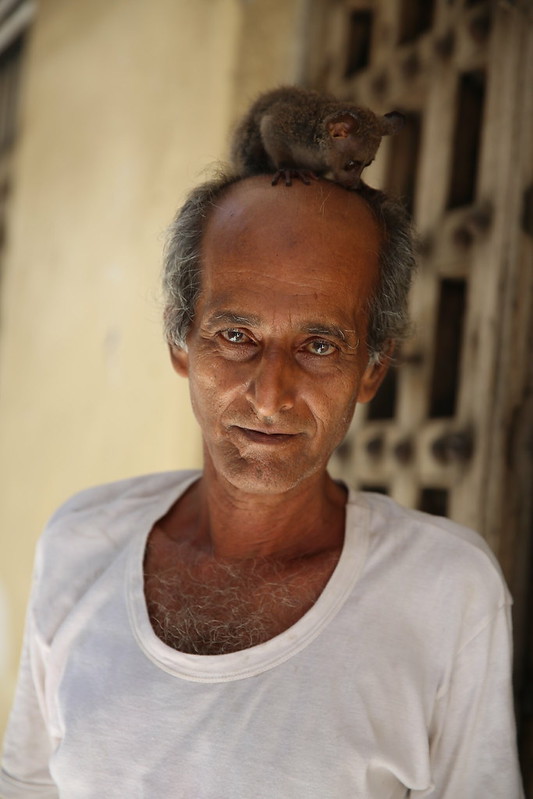 Eager to show me his pet
 And we are not even in Kenya yet
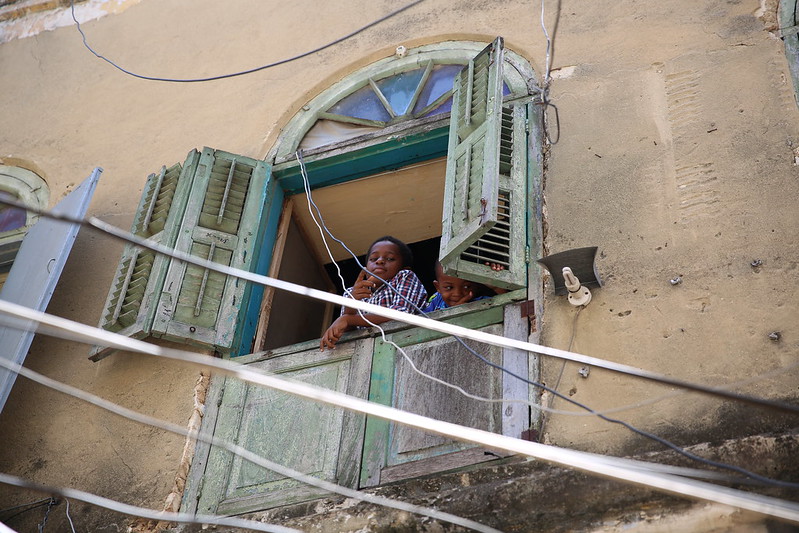 Neighborhood watch
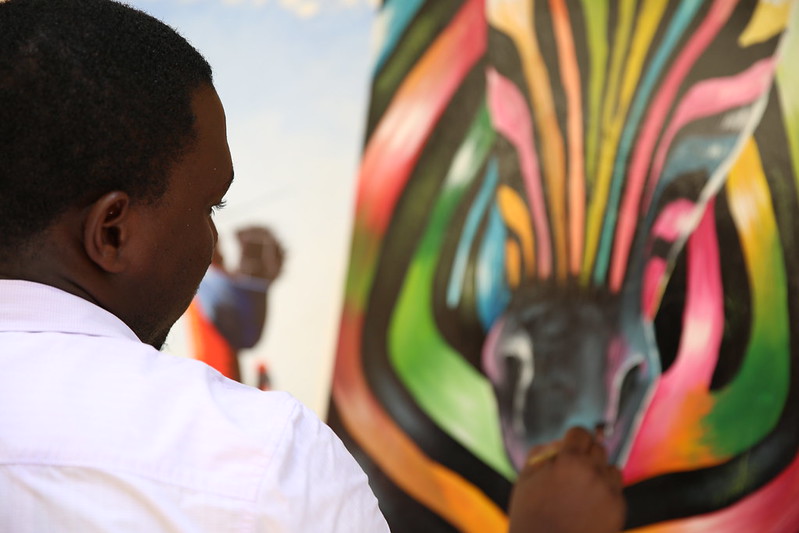 Artist
 Coconut sales
 Textile scraps
Our first stop was the Old Dispensary, one of Stone Town’s most decorated and symbolic buildings. It has had a bit of a tumultuous history, first being commissioned in 1887 to serve as a hospital for the poor and celebrate the Golden Jubilee of Queen Victoria, but between some untimely deaths and budget issues it eventually was completed and served as a dispensary at the start of the 20th century. The government finally allowed for its restoration in 1994.
 The Old Dispensary
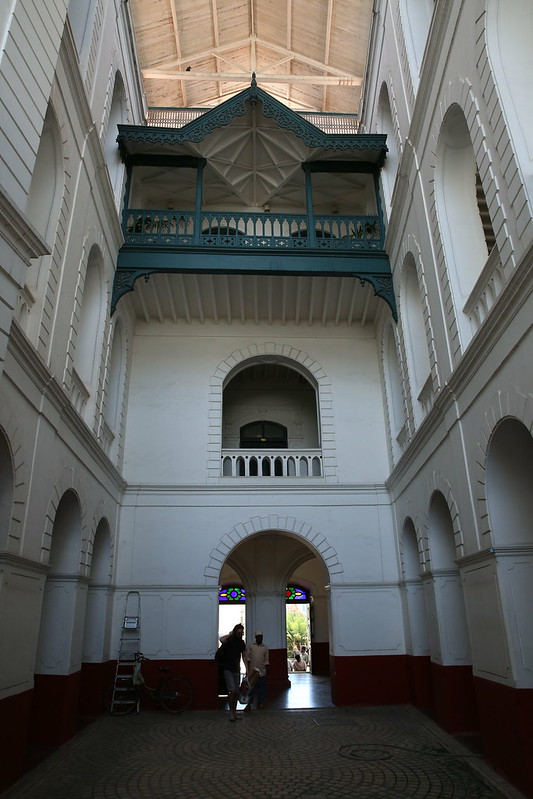 Inner courtyard
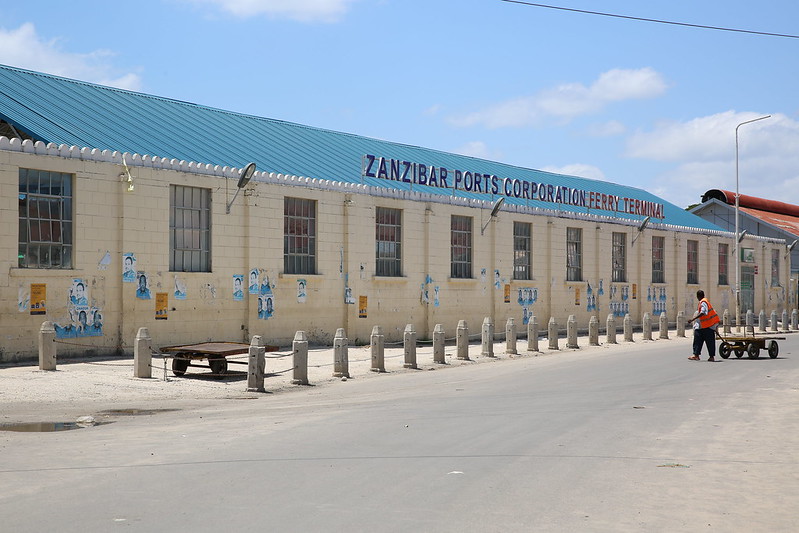 Ferry terminal from Dar es Salaam
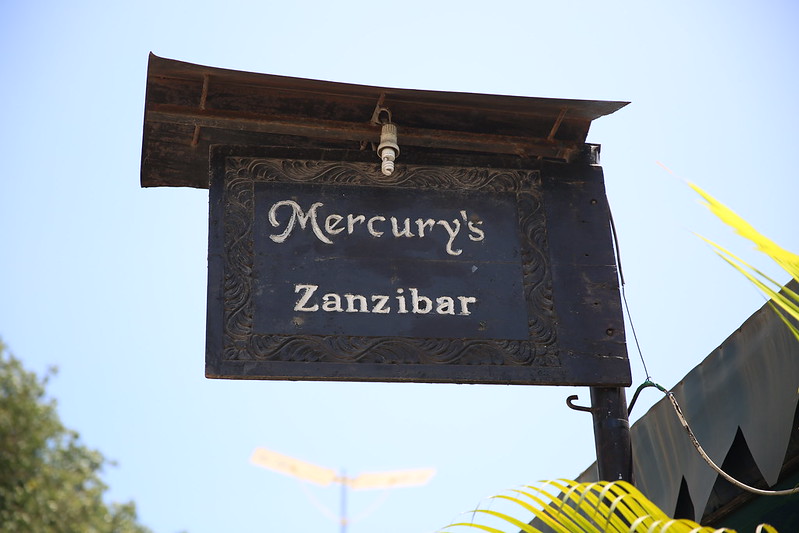 Freddie Mercury’s bar
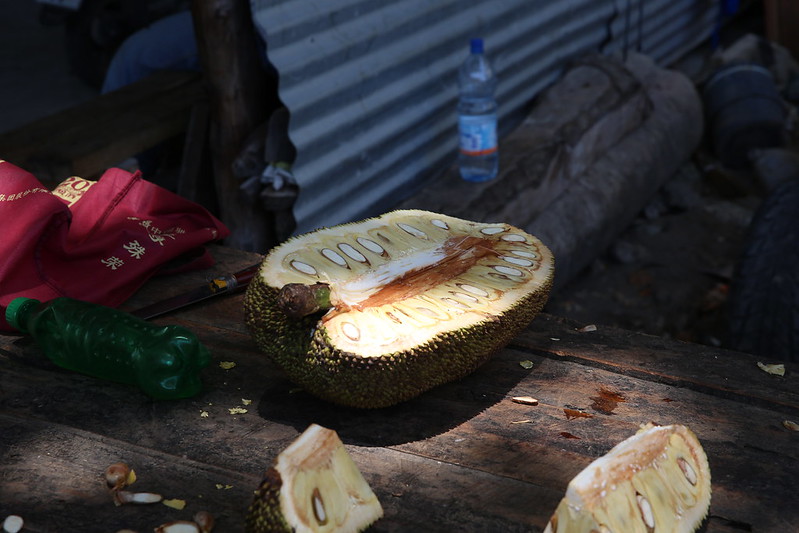 Jackfruit
Next up on our self-guided tour was Beit al-Sahel or the Sultan’s Palace. Originally built to serve as the Sultan’s residence, it later was converted to a government office and now a museum. It’s condition didn’t appear to be all that stellar and I’m not convinced it is still an operating museum.
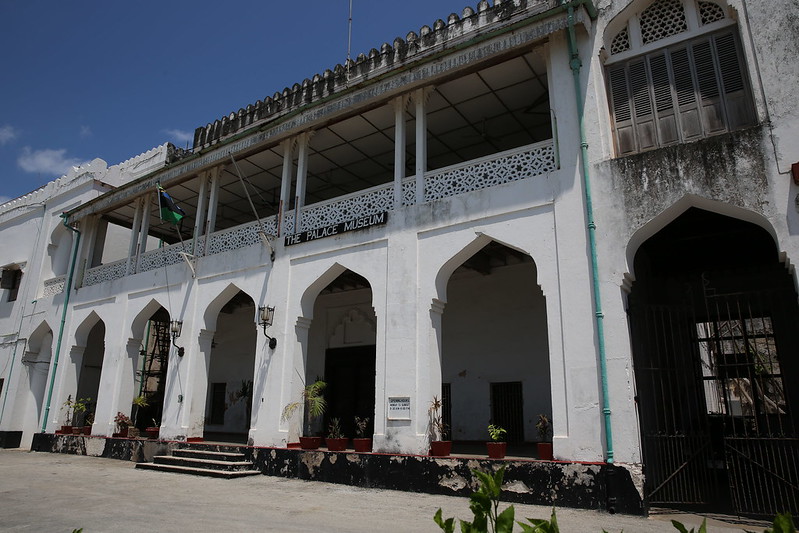 Suntan’s Palace
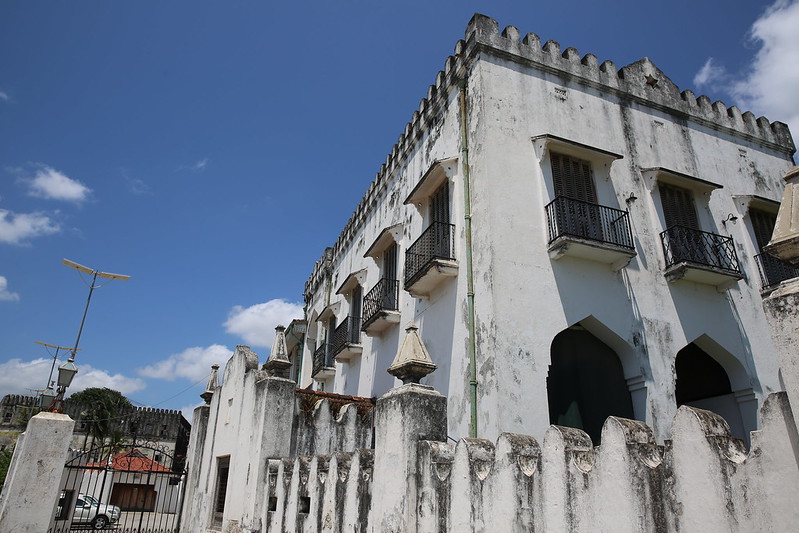 Could use a good white wash
Just next-door, was another historic landmark turned museum, turned dysfunctional museum. The House of Wonders or Palace of Wonders (Beit al-Ajaib) was built in 1883 to serve as the Sultan’s reception hall and is the largest structure in Stone Town, just across the street from Forodhani Gardens on the seawall. It was the first building in Zanzibar to have electricity.
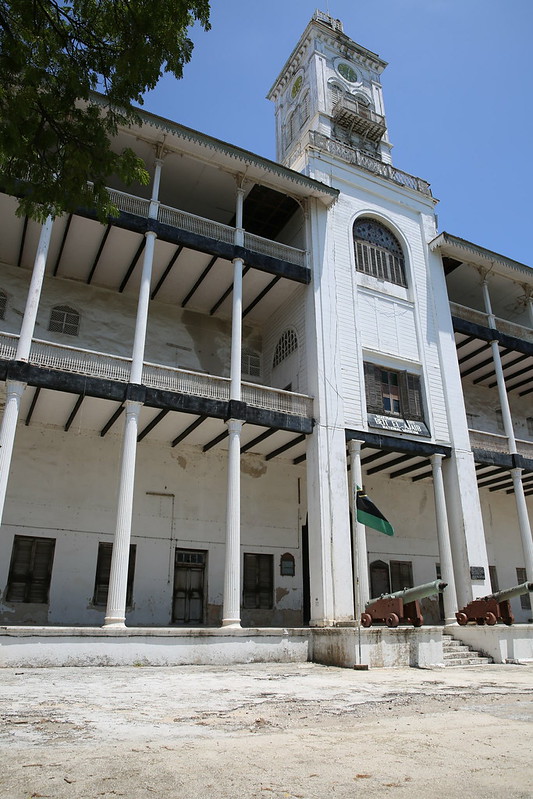 Palace of Wonders
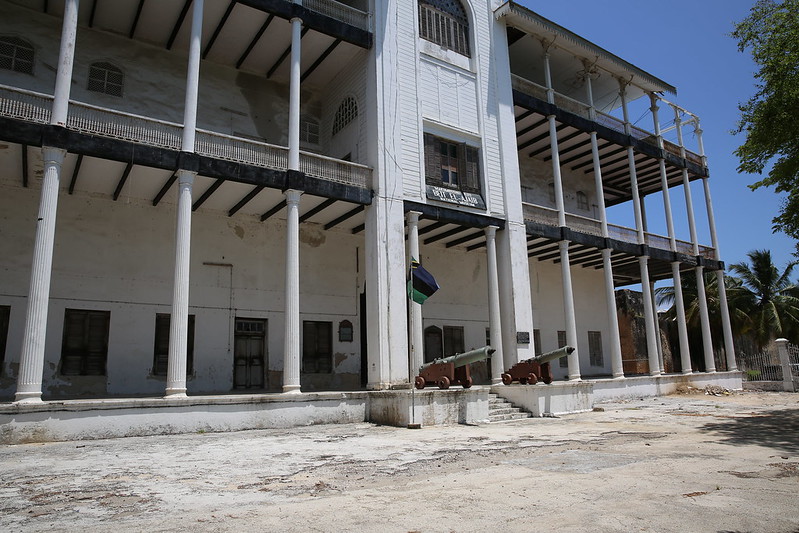 Not exactly in great condition either
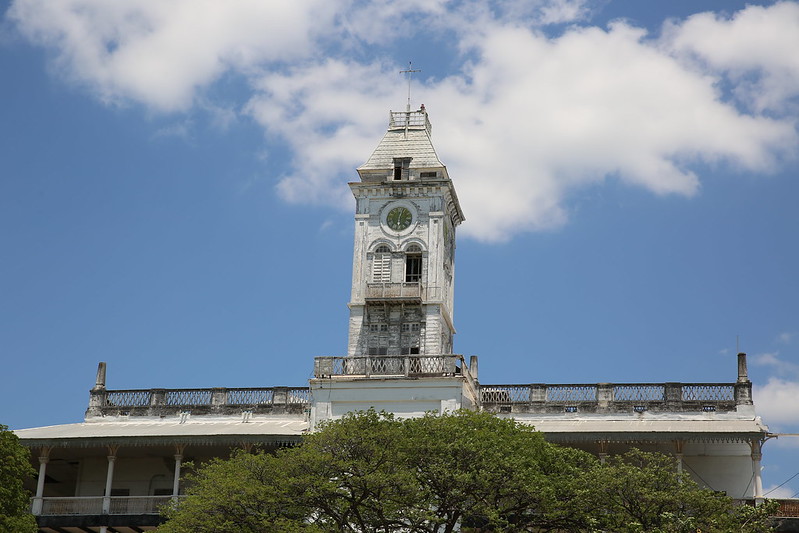 Clock tower
Also, across from the gardens on Mizingani Road, was the Old Fort, the oldest structure in Zanzibar. The Omanis built the fort in the 17th century to protect themselves from the Portuguese. Now it serves as a courtyard and theater each night.
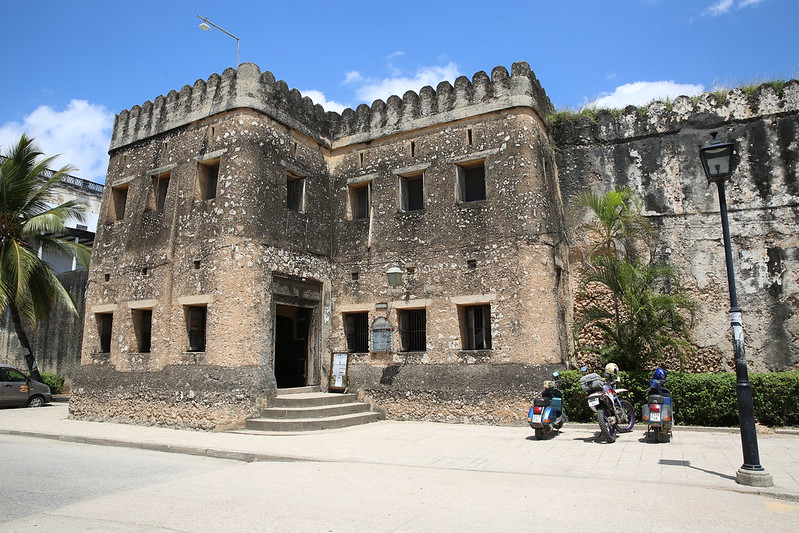 Fort entrance
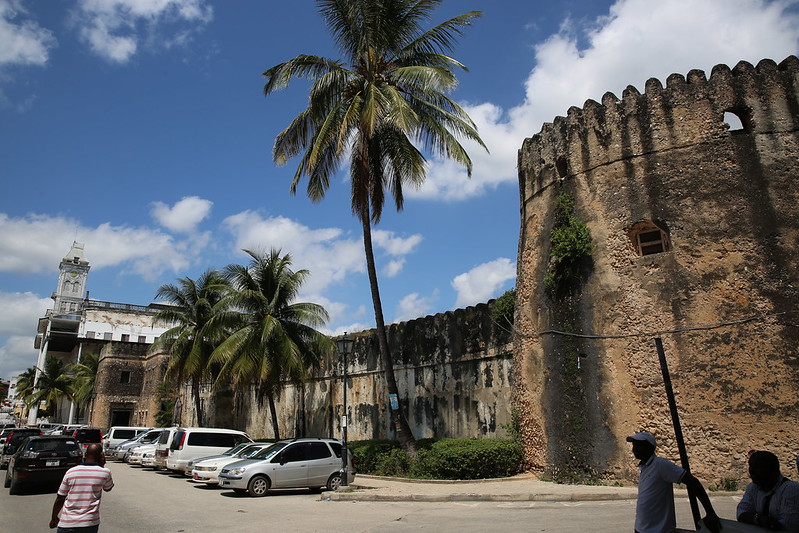 Fort and Palace of Wonders
In the garden I used the last of our Shilling (30,000 Tsh) to buy some souvenirs including a local football kit. My dad was approached buy a local who used to live in the states but was deported when he was confused with a Somali by the same name. He was hopeful we could provide a lawyer for him. We made our way to the touristy market area of Stone Town along Shangani Street where there were all sorts of touts who could only be warded off by dipping inside an overpriced gallery with artic temperatures. Win, win. As we made it to the Post Office (where I should have mailed those postcards) our driver was waiting and whisked us off to the airport.
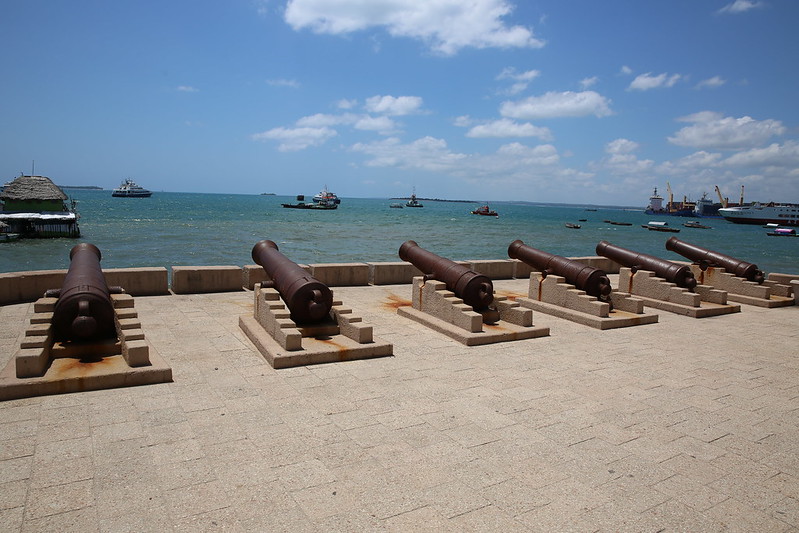 Fending off the Portuguese
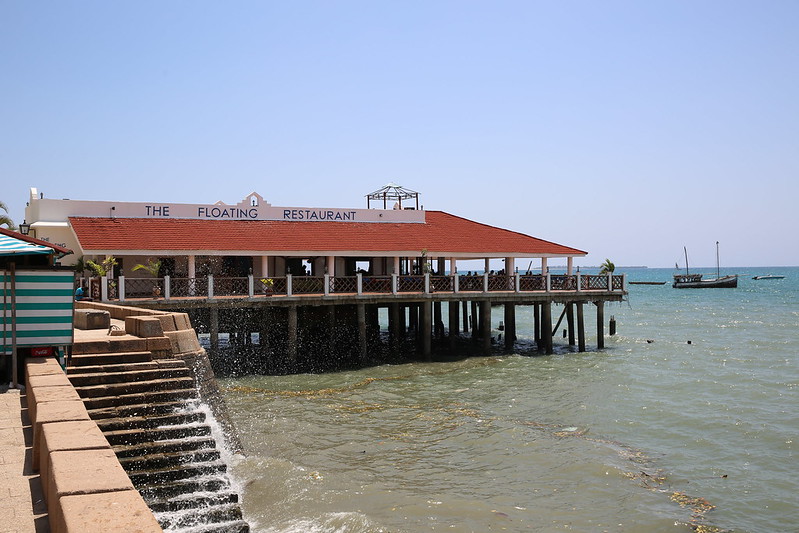 Maybe I need to look up ‘floating’ again
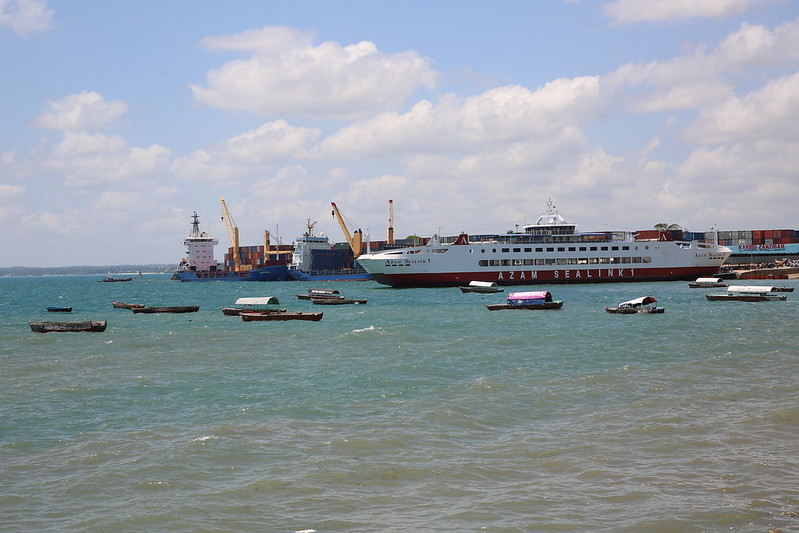 Zanzibar Harbor
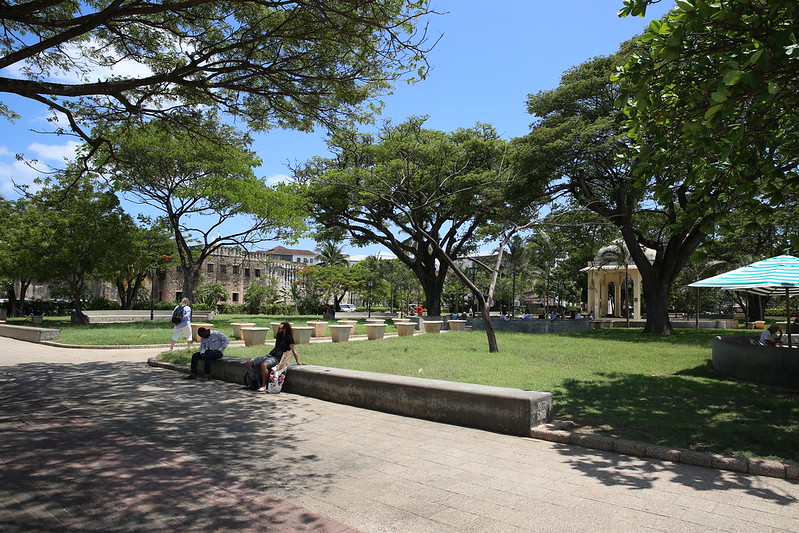 Forodhani Gardens
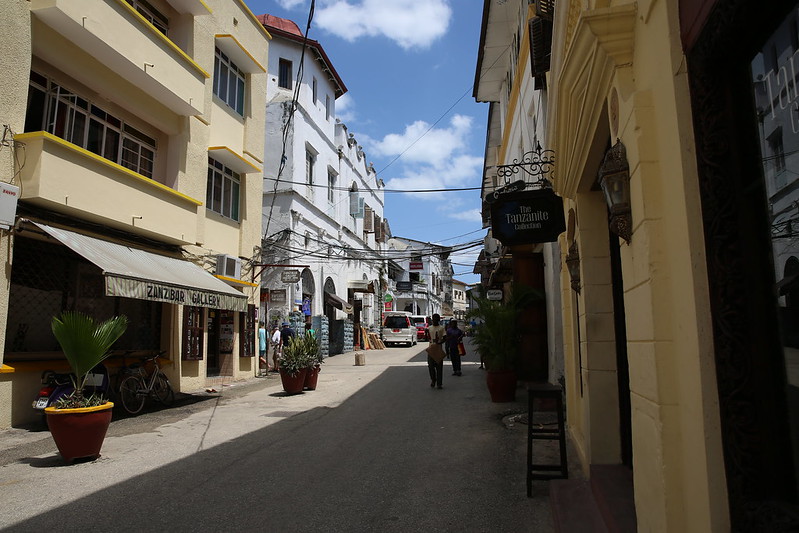 Shangani Street
At the airport we checked our bags to Nairobi after a bit of a delay and headed off to the lounge. By western standards, it was nothing special, but offered zippy wifi, free beer, a variety of only somewhat iffy looking small bites and air conditioning about as efficient as leaving your fridge open on a hot summer’s day. Well maybe not that bad. Our flight was never listed on the monitors but everyone assured us we were fine and one employee even offered to fetch us from the lounge, but I grew impatient and went down just a few minutes before boarding was called.
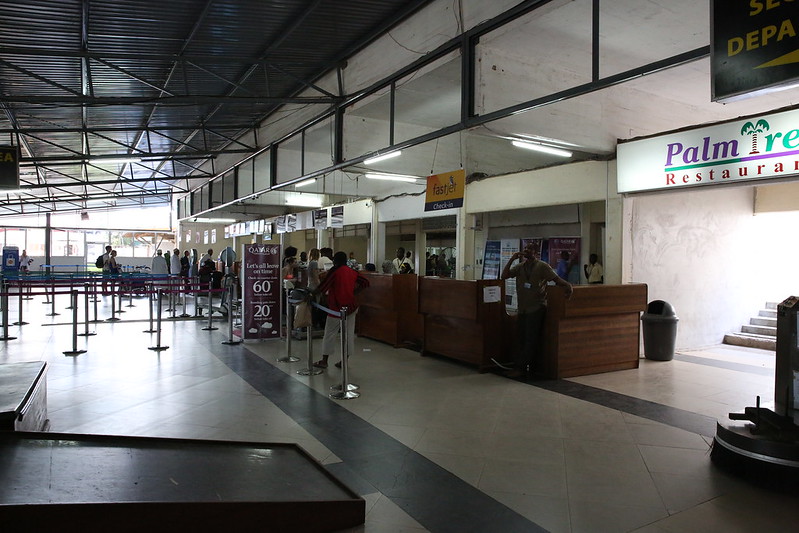 ZNZ check in
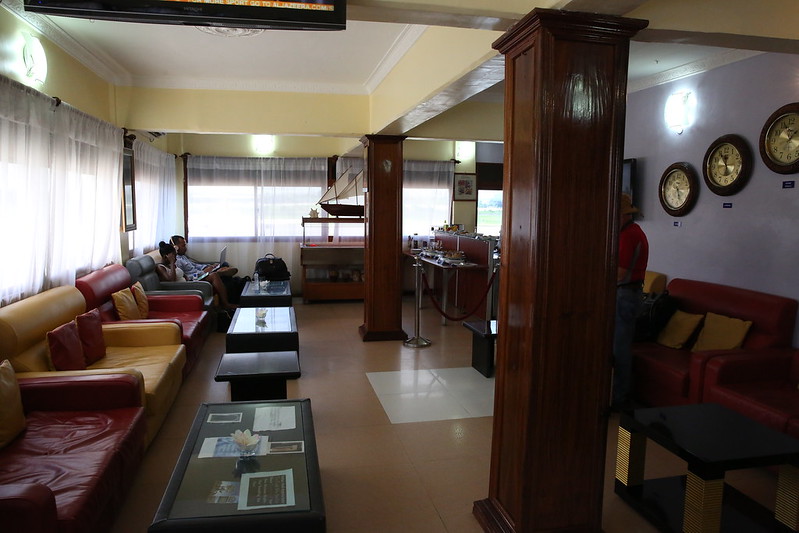 Dhow Lounge
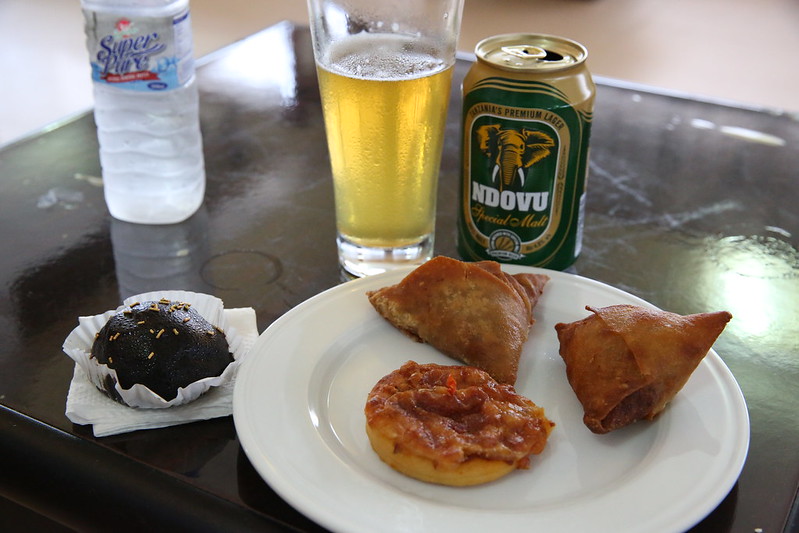 One last Ndovu
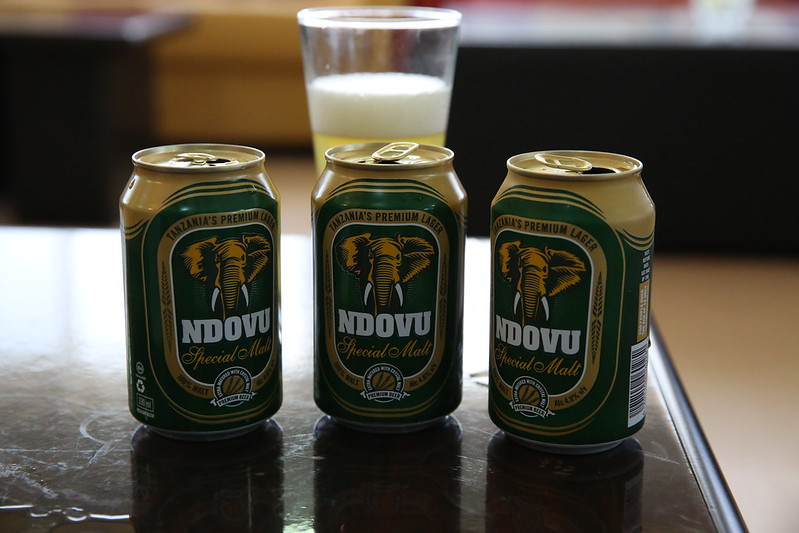 Or three
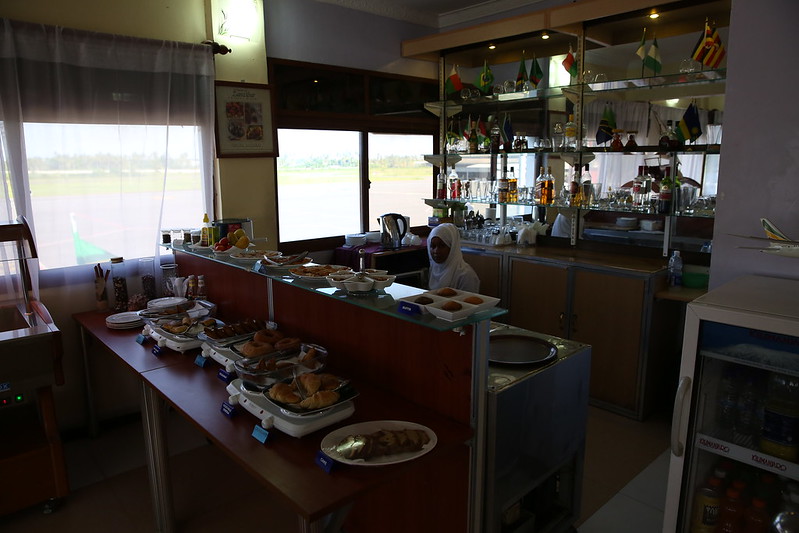 Food options
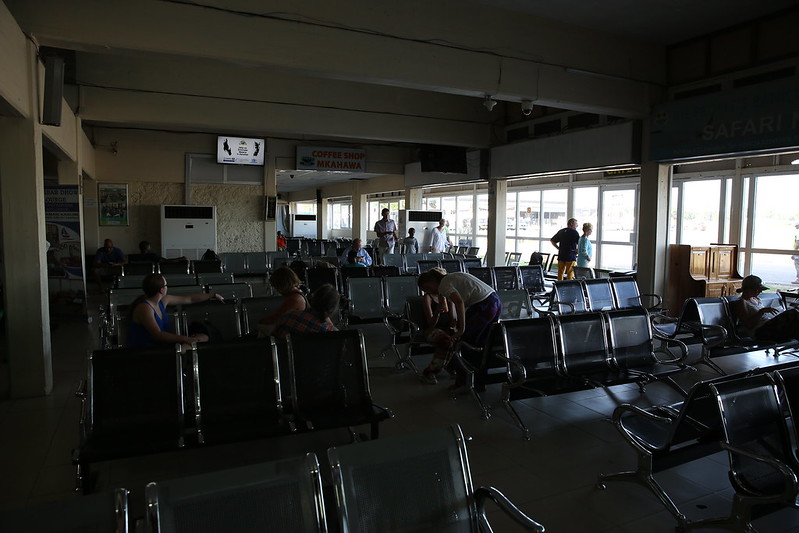 Gate area
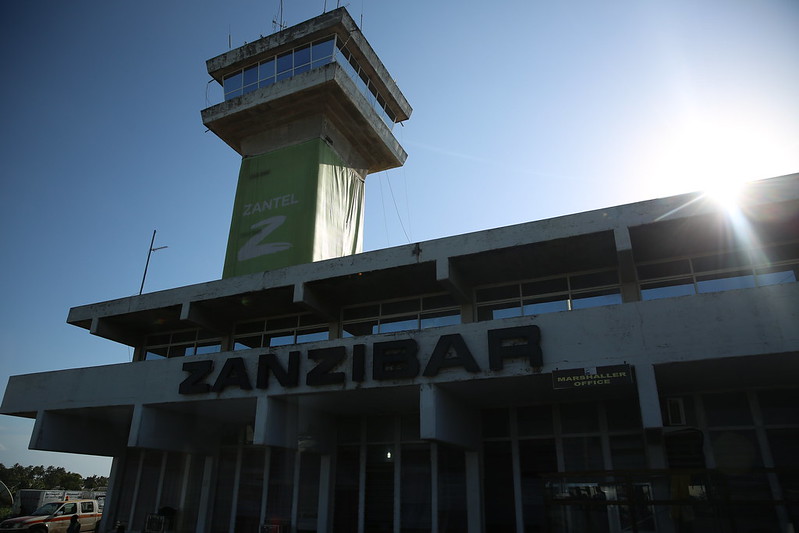 ZNZ terminal 1
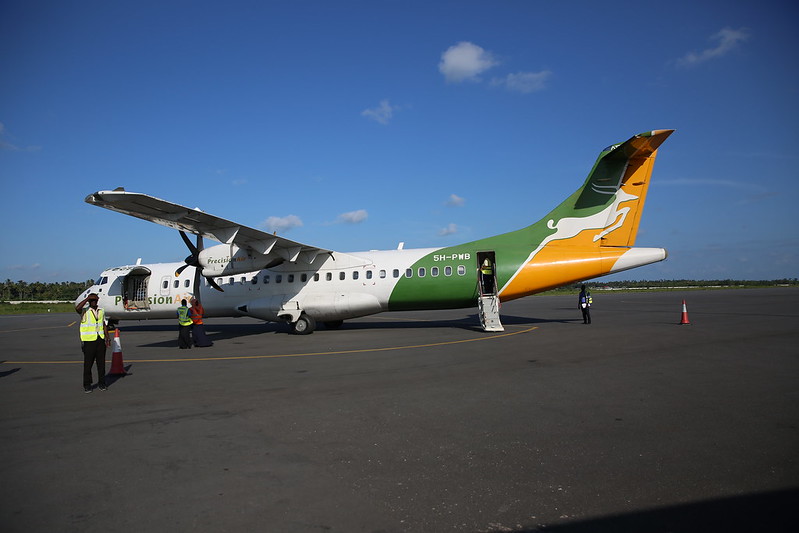 Same ATR 72-500 as from JRO
PW (Precision Air) flight 713
Zanzibar, Tanzania (ZNZ) to Nairobi, Kenya (NBO)
Depart: 16:55, Arrive: 18:35, Time: 1:40
ATR 72-500, Seat 16C
No exit row this flight, just a woman painting her fingernails for the whole plane to enjoy. Inflight catering was the standard Precision Air drink and whole cashews. For entertainment the pilot was quick to point out attractions along our route, but when he mentioned a view of Kilimanjaro out the left side I think every passenger rushed across the aisle for a view. Upon landing (over Nairobi National Park) the left side also got a giraffe spotting.
 Kilimanjaro off to the left side, not like I could even see through this window anyway
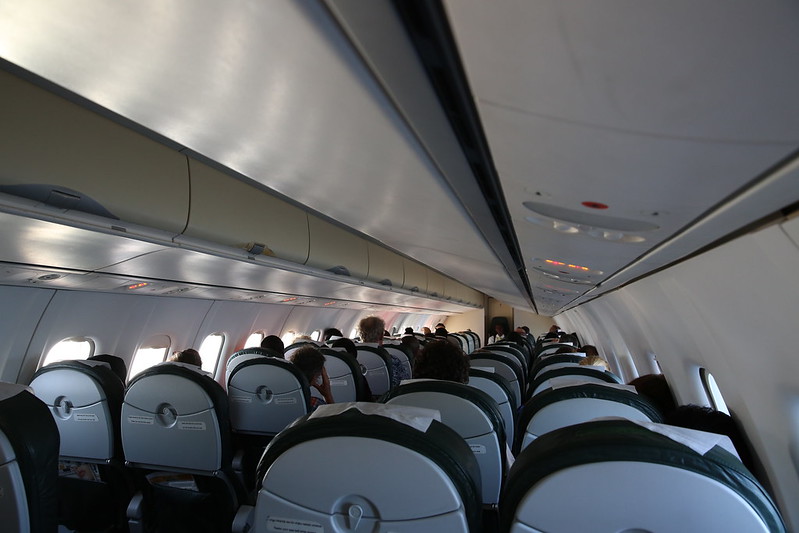 Otherwise a nice interior
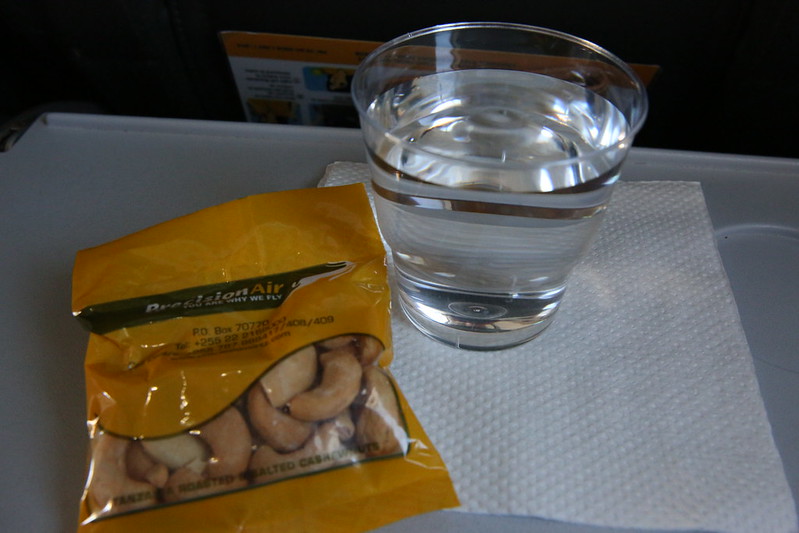 Precision snacks
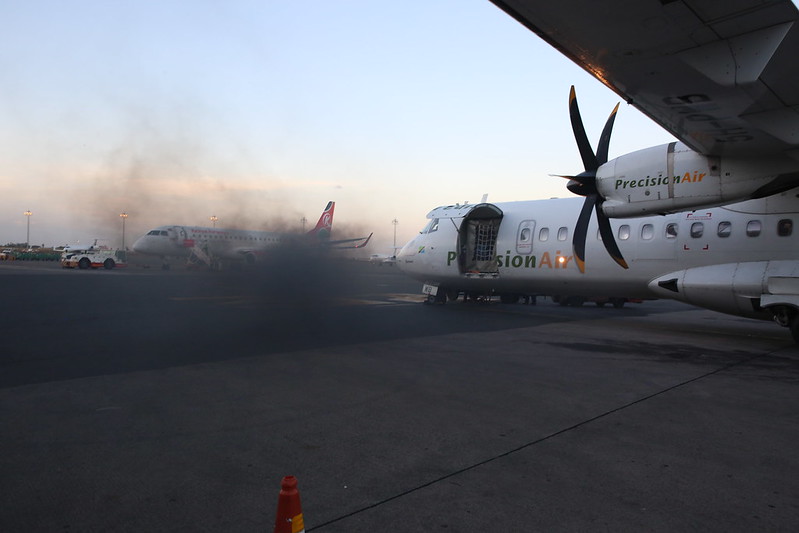 Baggage tractor pollution
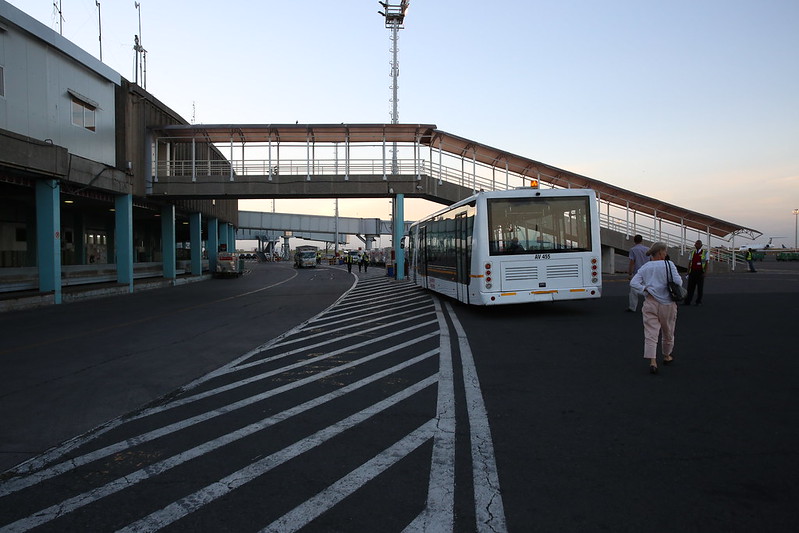 Bus to terminal
After a nice bus ride to the newest terminal (replaced following the August 2013 electrical fire that destroyed the previous terminal) we joined the line labeled e-visa. The passengers in front hadn’t printed the form and their mobile devices were dying which created a huge delays and they tried to charge their phone at the booth. Once our turn, we were told this line was only for people without visas. Uh? Everyone groans and moves to the next line and after five minutes that agent decides it’s break time so everyone rushes from the foreigner line to the EAC (East African Community) line. And because three lines wasn’t enough the agent from the diplomat line beckons me over and I’m finally admitted to Kenya. Thankfully the terminal was nicely air-conditioned. Our bags were not surprisingly waiting for us and we exited the terminal to find a Fairmont representative ready to take us to Kenyan paradise. Or so we thought. He was just a contract employee and made a call for our car to be delivered. Twenty minutes and a few additional calls later, what looked to be a first time driver arrantly pulled up to the curb. Our representative took the keys to the beat up Eurocar rental while berating the first driver for taking so long. In the meantime, the airport security (armed with his assault rifle) begins laying into our driver for stopping in a no parking zone. Finally everyone cools their jets and our bags are loaded for the only somewhat awful ride through Nairobi rush hour. The 18 km route only took us 50 minutes, which in Nairobi is a near miracle. The main highway is burdened with multiple traffic circles, lights and pedestrians who walk where they please. Made for a fun ride, but it all paid off when we arrived at the Fairmont Norfolk.
 Awfully nice new terminal
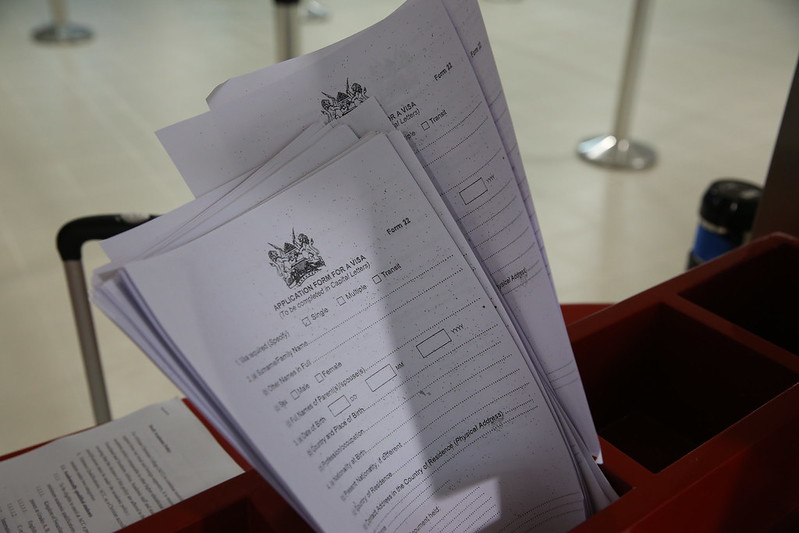 For those who don’t follow directions and need a visa on arrival
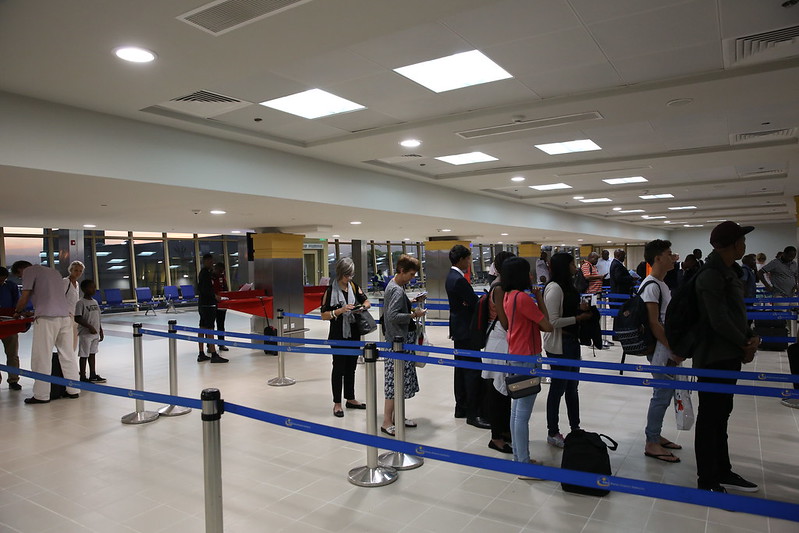 Time for line two
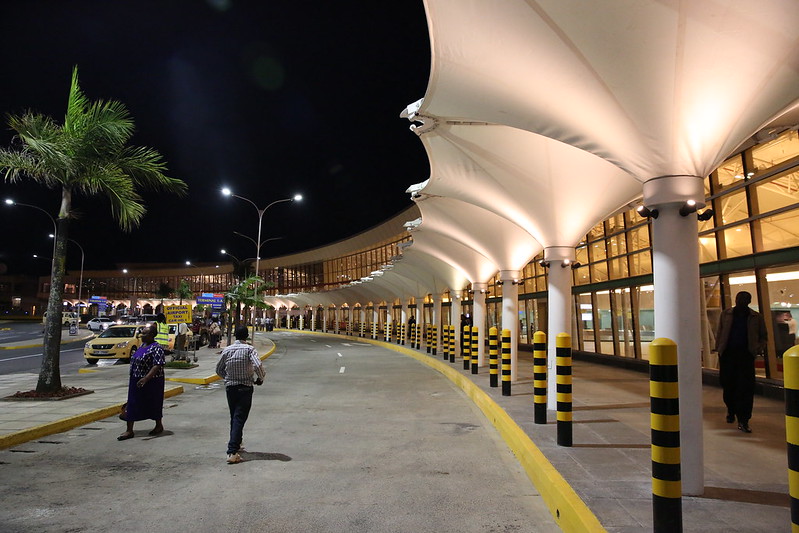 Waiting for the car
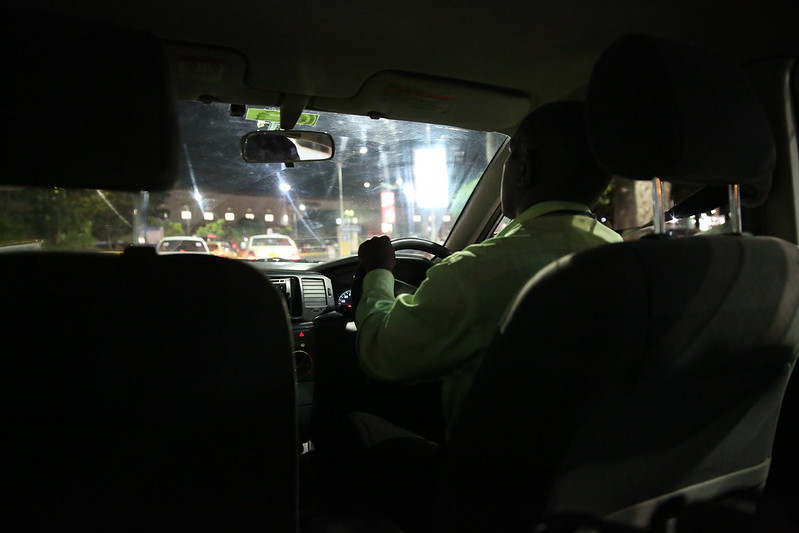 Parked on the Nairobi roadways
This history of the Norfolk is fascinating, dating back to 1904, it is often noted for being a leading factor in Nairobi being the capital of British East Africa and eventually Kenya (upon Independence in 1963). Originally serving as a gateway for Europeans on safari (hunting) it put Nairobi on the map. Between its geographic benefits and having a grand hotel like the Norfolk, the capital was moved from Mombasa to Nairobi in 1905. Over the years the property has expanded but not without its troubles. In 1922 a deadly demonstration was held outside to protest the imprisonment of African Nationalist pioneer Harry Thuku. Now the hotel lies on Harry Thuku Road. Also in 1980 the hotel was victim to a deadly bombing on New Year’s Eve.
We were checked in and given a very thorough tour of our room in the Acacia Wing but since we hadn’t really eaten a proper meal all day, headed to Lord Delamere Terrace for a nice meal. Lord Delamere was an early Norfolk owner and European colonialist. Having had Tusker already I went with a White Cap beer, which I really enjoyed. We had a great meal, but again I have to ask myself why did I order liver and ugali, two foods I have learned to dislike. After dinner we had to rearrange our belongings since we could only take 15 kg on safari the next morning. Finally after a long day it was off to sleep in the comforts of proper bedding and efficient air conditioning.
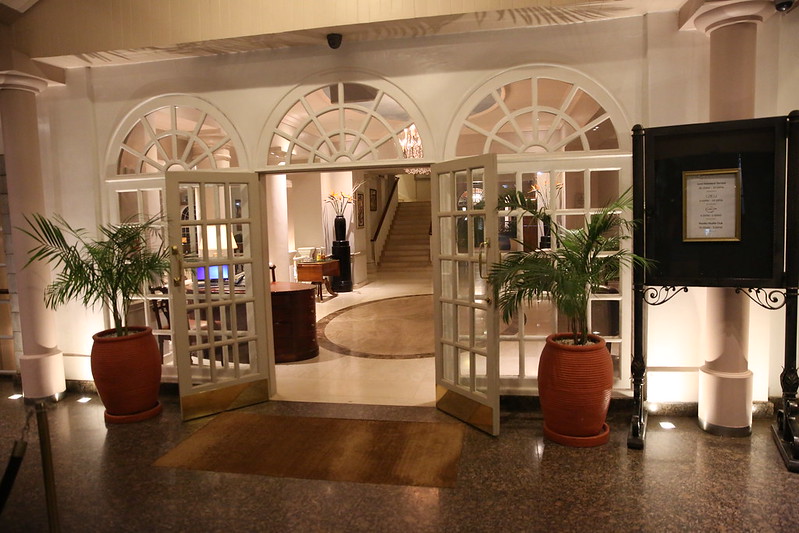 Welcome to the Norfolk
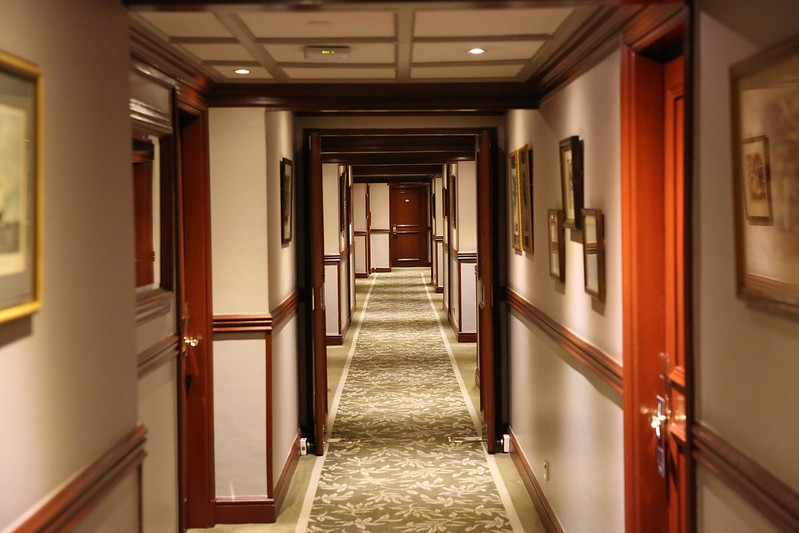 Spent a bit of time viewing the historical photos up and down the hall
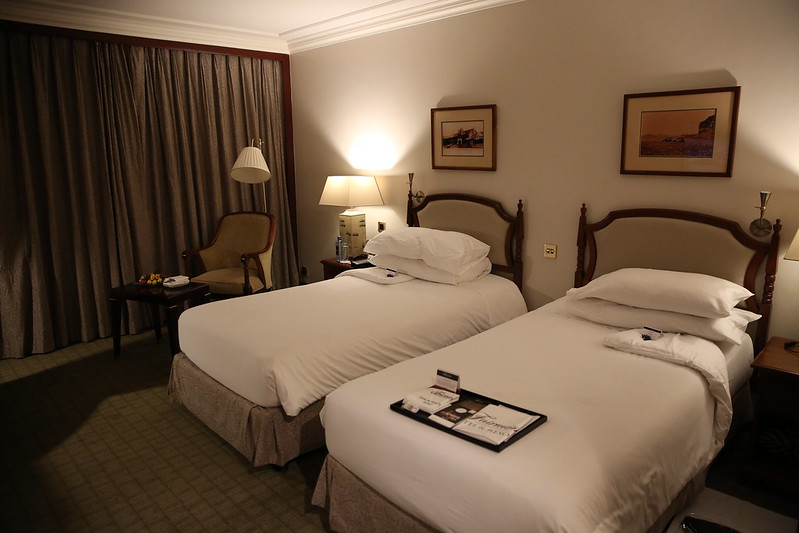 Real beds?!
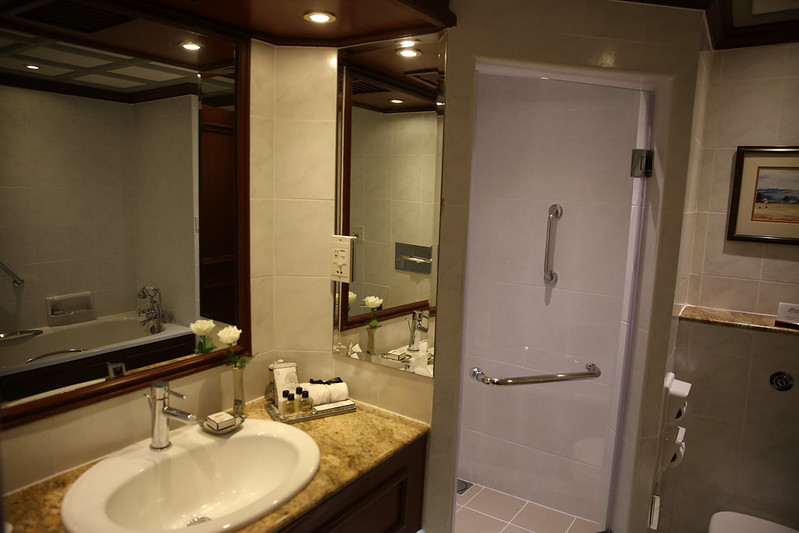 Bathroom
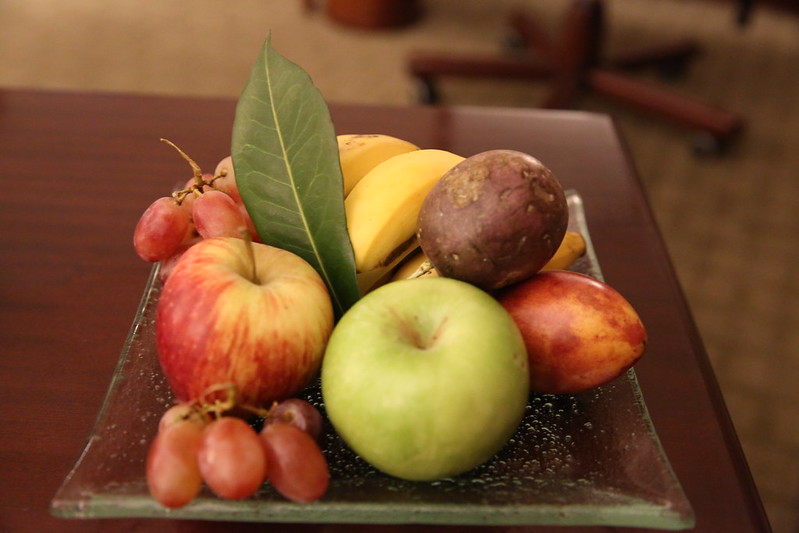 Welcome amenity
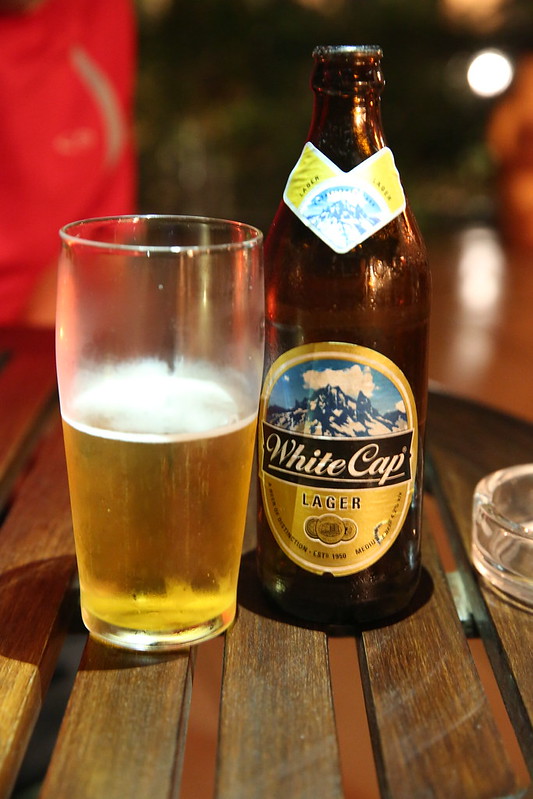 White Cap
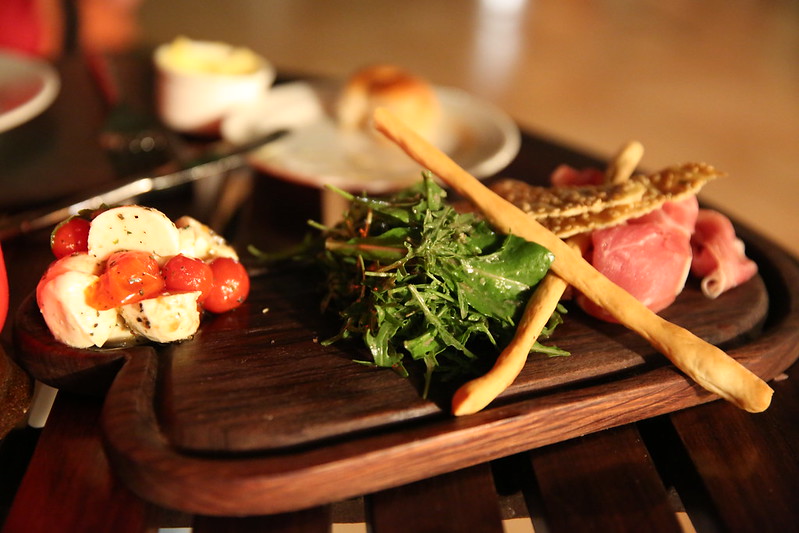 Prosciutto and mozzarella
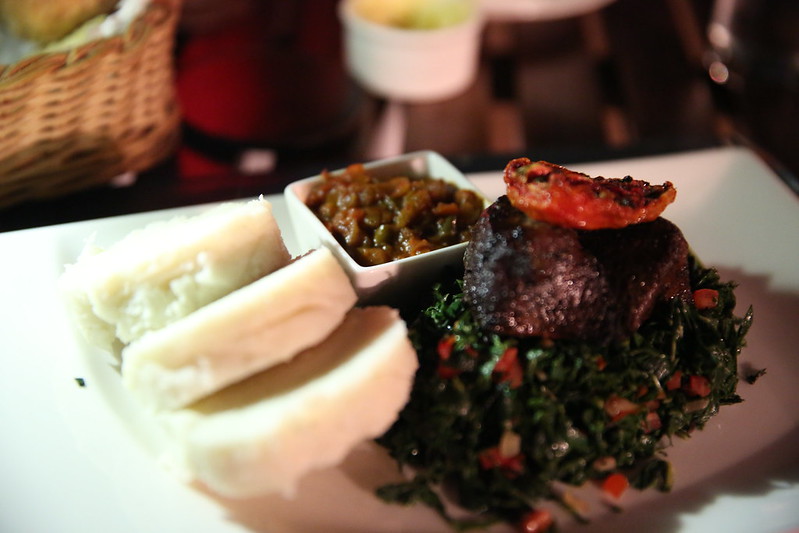 Maini (beef liver) and sukumu wiki (kale) – With ugali
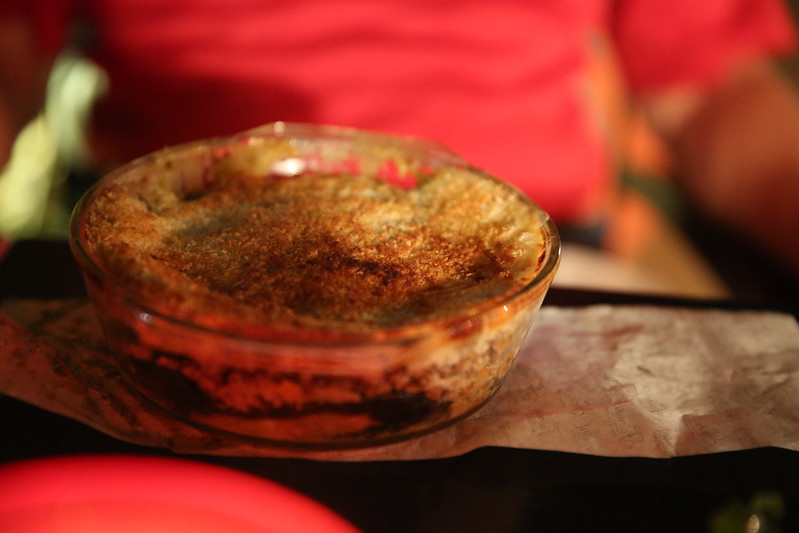 Dad’s Moussaka
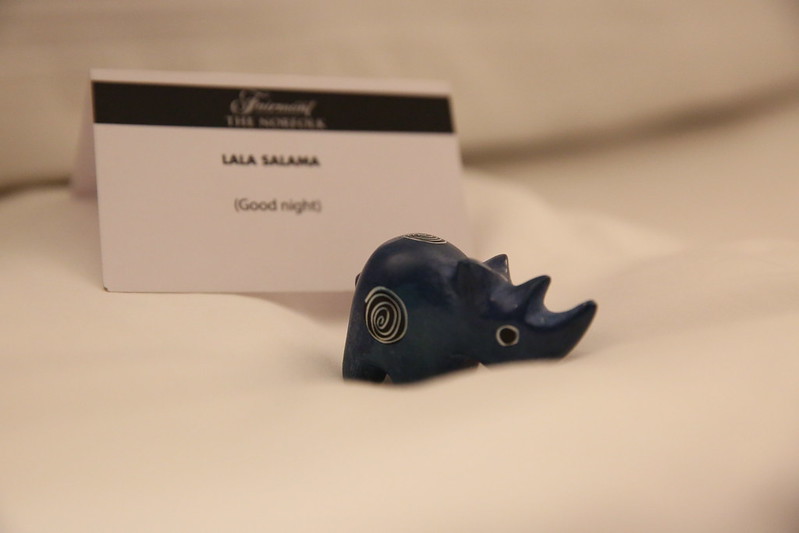 Lala salama; good night treat