This is a trip report for trekking in the Torres del Paine National Park in Chilean Patagonia from March, 2014. Perhaps it’s a bit on the tardy side, but my excuse is that I’m writing while flying the “free one-way,” segment at the end of my Delta award ticket.

Basic logistics: This trip was booked using Delta miles. Departure was from FNT rather than DTW for award availability. Low awards were, of course, never available and even medium availability was hard to come by to SCL (such is the wont of SkyMiles) so my friends and I flew a mixture of coach and business as the high cost of economy often approaches the medium cost of business. I spent about 200,000 Delta miles for roundtrip in business, but my friends are primarily positioned in United and Chase Ultimare Rewards, so Coupon Connection was necessary to book the tickets (a brief shout-out to our trade partner for Delta points: thank you for helping to make this trip possible!)
Anyway, I also want to make the point that the Coupon Connection was more than a way to score random travel tchotchkes, it was something that enabled beautiful and important trips. I understand that there are some serious and ongoing questions about its, “safety,” from a lot of perspectives, but the power to transform the points that you or your friends actually have to points that will allow them on a trip like this is an important one; I sincerely hope to see the Coupon Connection return in one form or another in the near future.
No one even publishes a fare from the Detroit region to the airport closest to the park, Puntas Arenas, so it was necessary to buy a separate ticket on LAN Chile. Money saving tip: the Chilean website quoted a price of about $330 versus $550 on the US website, so if you purchase a LAN ticket in the future, make sure you check prices through the Chilean site first. There were no issues during travel based on where we purchased the ticket from.
Total costs:
200,000 Delta SkyMiles
$330
25,000 IHG points for an evening in the Intercontinental Santiago (50,000 total for two rooms)
~$750 for other costs including housing in Puerto Natales, park passes and camping fees, food, and bus and ferry tickets
FNT-ATL:
Delta’s domestic first class service, even on this <2 hour flight, was solid, with a reasonable snack basket, friendly and fast service by professional attendants, and beer of higher quality than the Bud Light available in United domestic first. The flight passed quickly enjoying a Blue Moon and The Brief Wondrous Life of Oscar Wao.


ATL-SCL
After snacking on chicken tacos in Atlanta’s F-terminal the flight to SCL boarded on time.


Wines Simi Chardonnay 2009, Sonoma 2009
Louis Latour “Chanfleure” Chablis, Burgundy 2011
La Rioja Alta Vina Ardanza Rioja Reserva, Spain 2000
Chateau Lestruelle Cru Bourgeois, France 2009
Chambers Rosewood Muscadella, Australia
Quinta Do Noval 10 year Tawny Porto, Portugal
Champagne Jacquart Brut Mosaique, France
Settling In
Roasted Cauliflower, Marcona Almonds, and Serrano Ham
Starters
Iceberg Wedge Salad
Pumpkin Bisque

Main Event
Filet Mignon
Lemon Brained Chicken Breast
Roasted Squash Risotto
Chilled Plate (curried crab salad with avocado and orange)


Sweet Delights
Vanilla Ice Cream Sundae
A Tasting of Sweet Treats
Selection of Fine Cheeses
 P3019767
 P3019770
Almost There
Seasonal Fresh Fruit
Vanilla French Toast
Granola Cereal
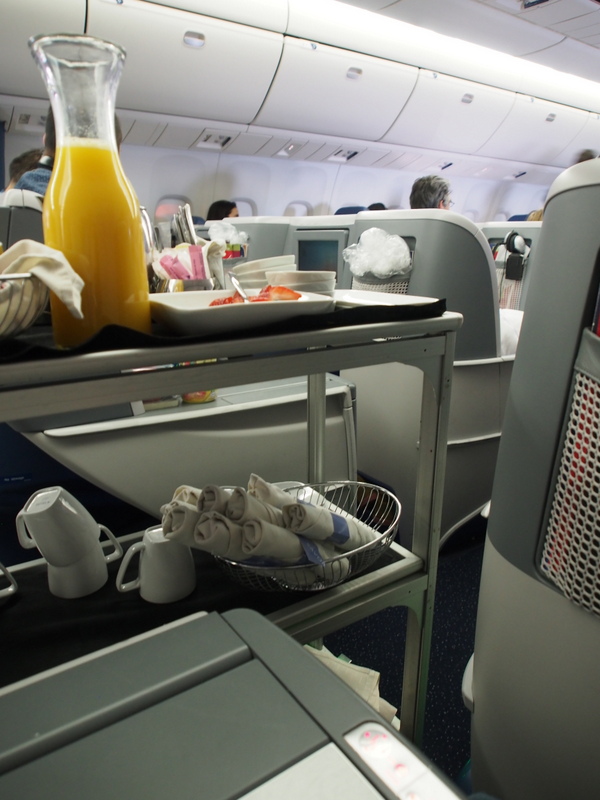

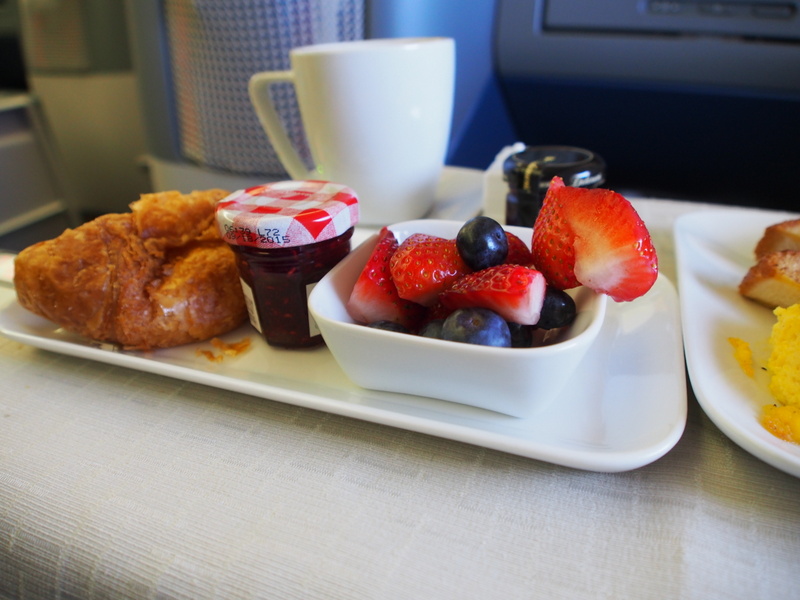
Delta’s catering coming from Atlanta was impressively solid. All of the selections below would have been perfectly passable at a mid-range restaurant with the exception of the potatoes accompanying the filet mignon (undercooked and flavorless). The beef itself was appropriately tender and not at all abused by the tribulations of air travel. The IFE screens were mediocre in size and resolution, but a couple of Louis CK standup bits and August, Osage County kept me entertained in between a solid six and a half hours of sleep on the way down. I was a fan of the Westin partnership for bedding.


LAN Chile SCL-PUQ
Fortunately, our flight into SCL was on time and we had no trouble making a ~4 hour connection from international arrivals to our domestic departure to Puntas Arenas (PUQ). We spent about two hours snacking and showering in the Pacific Club lounge on the domestic side at SCL using Lounge Club passes form a Chase Ink card.
When I boarded the flight, a couple (I think Austrian or German) was occupying my seat and suggested, “we’re already seated, you didn’t really want a window seat, did you?” I opted to insist upon taking my assigned seat and the awkwardness was more than worth it; by far the best part of the flight was the view. I sat on the left side of the plane, but my friends on the right reported that the view from the right looking at the coastline and fjords was also impressive.


Onboard catering choices were a bag of trail mix, a sweet cake, and a bag of raisins with the instruction to, “choose two.” The trail mix was fine.

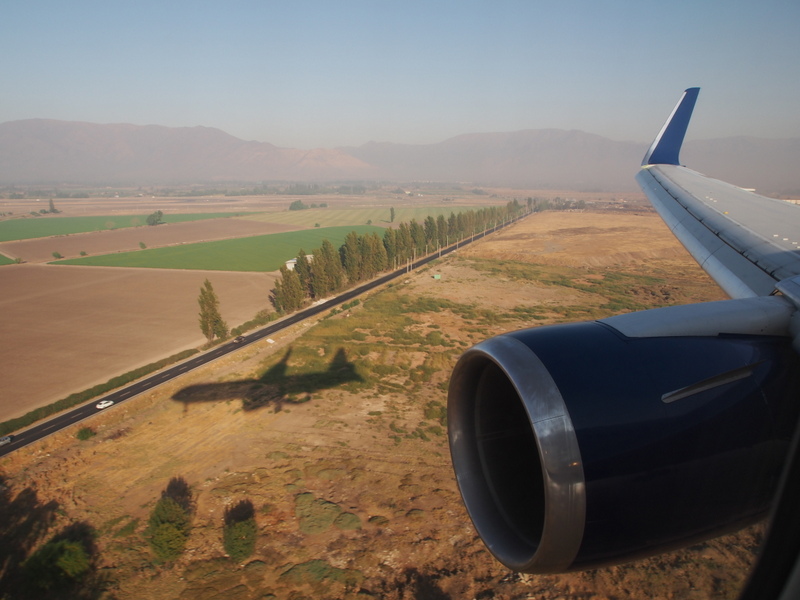
The descent into PUQ was captivating. Much of the land is remarkably flat and the latitude gives the light a nice sunset color quality throughout the afternoon. Chilean Air Force planes share the airport with commercial operations. The light, remote surrounding land, and the air force’s radomes and F-5 fighters parked ready to scramble in bunkered hangers near the end of the runway gives the whole thing a feeling of being at the end of the world.


Once we arrived, it was a simple process to transfer to a large number (I counted about three separate bus companies during a 15 minute wait) of buses operating public service to Puetro Natales, even though I was able to find information on the internet for only a single company with hourly schedules. Basically, my advice for bus travel anywhere in the nation: if a reliable source such as a guidebook states that buses operate the route frequently, don’t worry too much about identifying a particular operator in advance and hop on the first convenient bus.


In Puerto Natales, we stayed in The Tin House, Patagonia, which was clean, had friendly staff, and put out an excellent breakfast to fuel up prior to the first day of hiking.

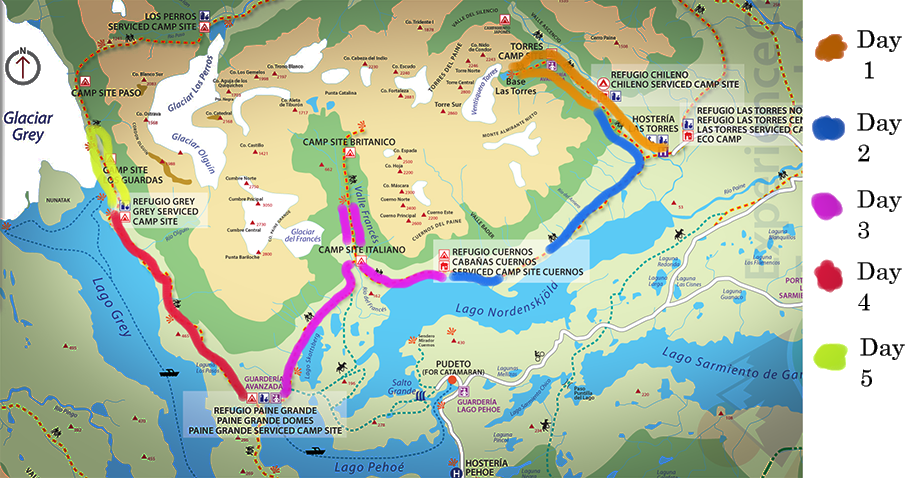
I’ve outlined the route that we chose to hike in Torres del Paine. Basically, we went in at the Hosteria Las Torres entrance, hiked to the Base Las Torres on the first day, stayed at Refugio Chileno the first evening, and worked our way towards Refugio Grey over the next three days, and then on the last morning did as much as we could of the trail ascending along the Grey Glacier towards Camp Dixon before running back to Refugio Grey to catch the boat back to Hosteria Lago Grey and then on to a shuttle to camp headquarters and a bus back to Puerto Natales. One note about taking the boat from Refugio Grey out: it is not guaranteed to run (although they don’t make this obvious from the website or pre-trip communication)/ Instead, they will scrap the trip in about 30 knot winds due to waves and safety issues which would leave you to scramble back to Refugio Paine Grande to catch the much more reliable catamaran at 4:00 pm which would have been a rough hike indeed at that point in the trip.
Along the way we stayed at:
-Refugio Chileno
-Refugio Cuernos
-Refugio Paine Grande
-Refugio Grey
Regarding the refugios: they’re great! Okay, they won’t compare with a Conrad or Ritz Carlson, but you’re camping in a national park and they’ll provide you with a sink for washing dishes, covered cooking and eating space if needed, flush toilets, and booze that is pricey for Chile prices but entirely reasonable by North American standards. Pisco Sours were available for from $4-6 per beverage. Wine, beer, and other drinks were available at comparable prices. After working hard on the trail all day, it’s pretty easy to overindulge, but I speak from experience that one should strive to avoid hiking with a hangover. ;-) If you’re staying in a tent, there’s really no reason to make a reservation: it’s not as if they actually, “reserve,” a space for you, it’s still up to you lay claim to a spot with your gear after arriving. Both Refugio Cuernos and Chileno had significant space restrictions where one might want to be mindful of grabbing a spot, but I’m not sure that I’d want to rush off the trail to snag a spot as opposed to enjoying the scenery on the trail. Refugio Paine Grande and Grey are the most developed. We self-catered the whole trip except for dinner at Refugio which was middling and overpriced relative to
Overall, if I were to do Torres del Paine again, I think we struck the right balance of support and self-sufficiency for our group by staying in tents but camping at the Refugios. Being able to pay for booze you don’t have to carry, a hot shower, and knowing that help is a radio-call away is nice, but it still feels enough like roughing it to make you feel connected to the weather and the land.


 Video of Base Las Torres


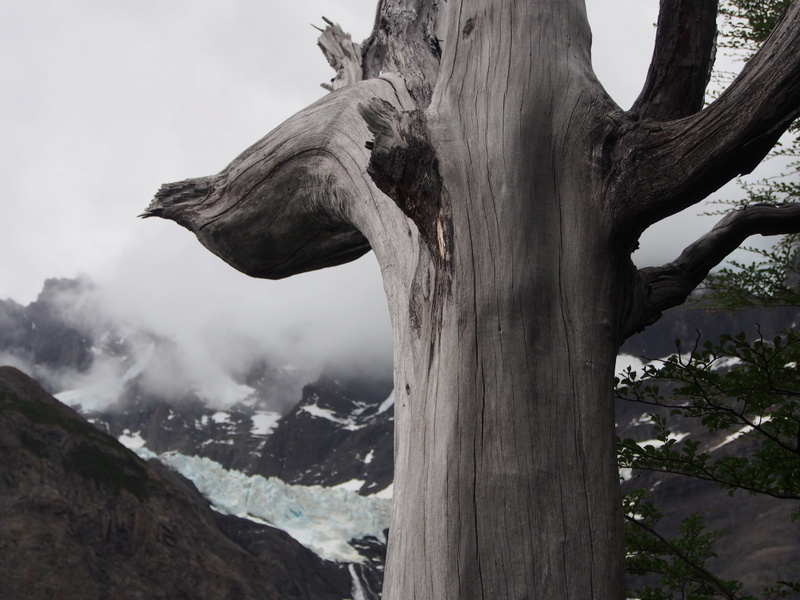

 Video of Falling Glacier!