I'll start off by admitting that I have learnt a LOT from my time spent visiting FlyerTalk. Whereas I thought I knew a lot about the minutiae of travel and air travel in particular, I never imagined I would learn as much as I have.
In particular, the topic of aircraft seats has fascinated me (as it apparently has a lot of people here). Having noted a lack of consistent vocabulary and descriptions around different types of seats, particularly in business- and first-class cabins, I decided to try to make sense of it and codify it to some extent.
To this end, I put together
The 2014 Guide to Lie-Flat Seats in First and Business Class
I also included a lot of photos of the different kinds of seats covered in the article.
If you find anything that isn't clear or needs further clarification, please send me a PM.
With apologies to George Orwell, some lie-flat seats are more equal than others. Indeed, is one airline’s reverse herringbone lie-flat seat more comfortable than another’s backwards-facing lie-flat?
The move to fully lie-flat seats began in 1995 and 1996 when Air France and British Airways introduced seats that converted to fully-flat beds in their respective first-class cabins. The beds were truly horizontal and parallel to the deck, in stark contrast to the recliners used in most planes.
Within a few years, numerous airlines, including American, Cathay Pacific, Japan Airlines, Lufthansa, Qantas, Singapore, and United, installed seats in their first-class cabins that opened up to a fully lie-flat position, making them feel like real beds.
But the real bed race had yet to begin....<SNIP>
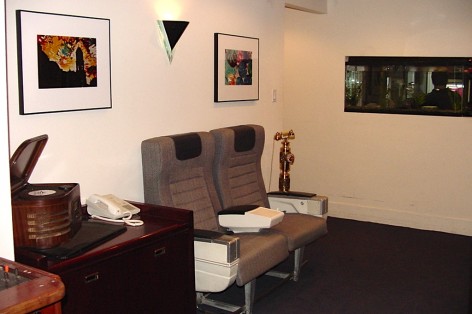
Below an image of our Pan Am first-class seats in our offices.