The South American Altiplano - Exploring Copacabana And Isla Del Sol - continued
After visiting the church, we went to a couple of different tour agents to inquire about the boat rides to Isla del Sol. We quickly realized that each of these agents were basically selling tickets to the exact same boat operator, and prices and times did not vary at all. So we went ahead and purchased our tickets for the 8:30 am departure at 35 Bolivianos each. We decided not to visit the smaller Isla de la Luna since that would mean a very rushed visit to both islands, and we definitely would not be able to hike Isla del Sol or see the historic Inca sites.
Towards the late afternoon, we walked up Cerro Calvario to see the sunset. It was a strenuous 40-minute climb up the mountain, but the views from the top were absolutely worth it. I would say this is a must-do if anybody ever decides to visit Copacabana. A series of small monuments mark the route to the summit, representing the 14 Stations of the Cross, culminating in a long procession of crosses at the very top. There, you are treated to unobstructed views of Lake Titicaca and the entire town below. We stayed until the sun set beyond the horizon, and I must say, this was definitely one of the highlights of the entire trip.
 Hike up Cerro Calvario
 Monuments at the top
 Panorama of Copacabana
 Sunset over Lake Titicaca
 Moon and valley on the way down
The next morning, we headed down to the pier at 8:00 am for the two-hour boat ride to Isla del Sol. As most visitors guides would say, a visit to Copacabana would not be complete without a trip to the sacred Sun Island of the Incas. Unlike the flurry of excitement in town, Isla del Sol is an oasis of tranquility. There are no motor vehicles of any kind, and only a few dusty trails traverse the island from north to south. Donkeys are the single mode of transportation you'll find here.

 On our way to Isla del Sol
 One tree island

Our boat dropped us off at the village of Cha'llapampa on the north end of the island. There was not much to see here besides the Museo de Oro (Gold Museum), where recently discovered artifacts from nearby underwater archaeological sites are on display. Paying the 10 Bolivianos entrance fee also grants you access to the Inca ruins on the northern tip, so it makes sense to go in and take a look if you already plan on visiting the other sites. A few stands near the docks sell sandwiches that are great for a quick lunch if you plan on hiking the 8 kilometers to Yumani.
 Cha'llapampa


Following the trail north takes you past the Sacred Rock, the Inca Table, and the maze-like ruins of Chincana. Afterwards, you head back south, climbing to the highest elevation through the middle of the island. The views from these vantage points are breathtaking, and you can make out the beautiful farming terraces along the steep slopes near Challa. Throughout the island, there are locals who have set up checkpoints to collect tolls from tourists. In all, an extra 30 Bolivianos was spent to hike the length of the island.
 Northern end of Isla del Sol
 Chincana ruins

The terrain of Isla del Sol is harsh and barren, devoid of virtually any large trees, so it can be a strenuous hike under the intense sun. After approximately three hours, we arrived at the southern village of Yumani, where most of the accommodations and restaurants are located. We rested for a bit, taking in the views from above, then descended the ancient Inca Steps down to the docks to wait for our departure time. Be aware that the boat may not be identical to the one you arrived in. However, there should only be one or two boats leaving at the designated time. As long as you show them your ticket and confirm that you're headed back to Copacabana, there shouldn't be a problem.
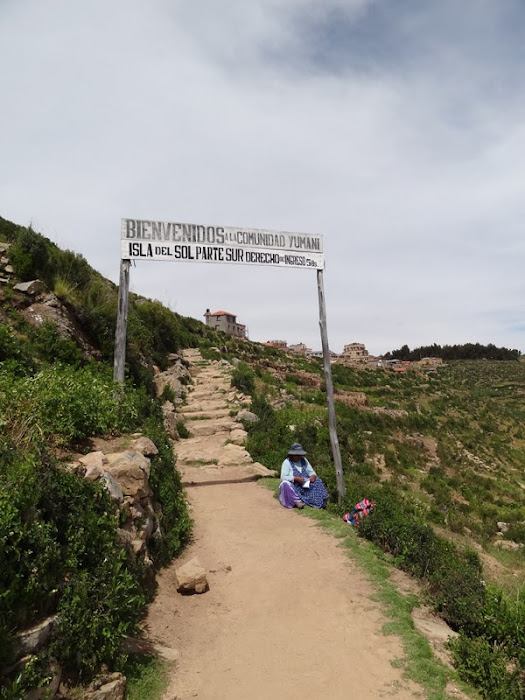 Toll before entering Yumani
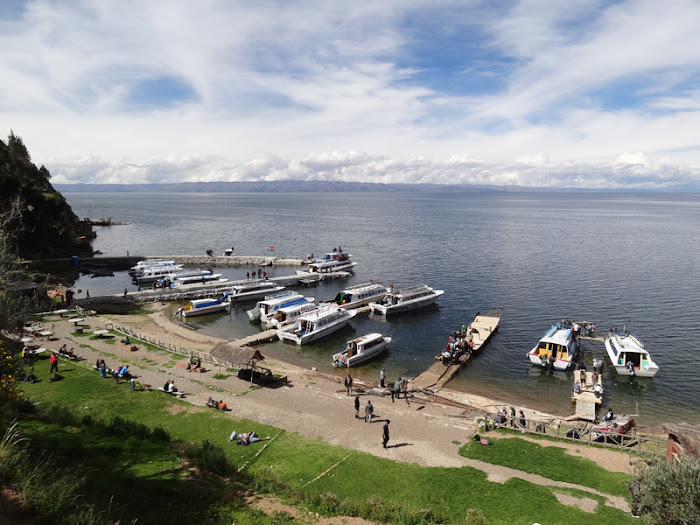 Descending the Inca Steps to the docks

While I enjoyed Isla del Sol, I don't know if I would wholeheartedly recommend a visit to the region just to see it. If you were in Copacabana already, then it would make sense to take a day trip there. The views were beautiful, but the island itself was arid and rocky. Most importantly, I was slightly disappointed with the Inca sites. The Chincana ruins were interesting, but you probably could have walked by the others without even noticing. Finally, the checkpoints felt like nothing more than opportunities to fleece the tourists. While 30 Bolivianos is less than $5 USD, I would have much rather paid that amount up front and not have to be surprised with toll payment after toll payment along the way.
Copacabana, on the other hand, was a beautiful place worthy of an extended visit. This is the sort of idyllic town that made me fall in love with South America. Take a day to stroll through the narrow streets, dip your feet in the chilly waters along the beach, enjoy the famous Lake Titicaca trout in one of the many restaurants, or just relax on a hammock at Hostal Las Olas and breath in the panoramic views.