The South American Altiplano - Exploring Puno - continued
Either way, it was an interesting sight to see. I had read some unfavorable reviews regarding the Uros Islands, claiming it was too touristy and a rip-off, but I found the tour to be informative and the people to be very friendly. Typically, each tour boat lands on a different family's island (there are more than 50 all in close proximity) so that both the number of visitors as well as the profits are evenly distributed among the inhabitants. After a detailed introduction from our guide, we were allowed to explore on our own, take pictures, and buy handicrafts made by the locals.
Walking on the floating islands was a cool experience in and of itself. The reeds sort of squish beneath your feet, and you can definitely sense the ground moving up and down with each step. In addition, the reeds aren't used only as building material, but also as a source of food. The locals eat the bottom portions closest to the roots. I tired a little bite of the juicy white flesh, and it reminded me of jicama, but with very little flavor. One of the coolest things on the island was a little reed house built for guinea pigs (also a source of food).
 Tour guide explaining how the islands are built
 Reed house for guinea pigs
There was an option to ride in one of their reed boats for an additional cost, but there was certainly no pressure to do so, and no one from our tour took the offer. After leaving our family's island, we headed over to the larger main island, which housed the administrative buildings, a small coffee/tea shop, some souvenir stands, and a watch tower. From there, we had a beautiful view of the setting sun over Lake Titicaca. As it got darker, we left the Uros Islands and returned to Puno.
 Traditional reed boat
 Sunset from the Uros Islands
For those who have a little more time, there are tours that visit the other islands in Lake Titicaca. Be aware that they are quite far, and the boat rides agonizingly slow. It can take up to two and a half hours to get to Taquile, and four hours to get to Amantani. I have read good things about the islands, however, and their traditional way of life still seems to be maintained, especially on Amantani. There are no hotels, and the only option for accommodations are home stays with the locals, which is a great way to support the community directly and to also learn about the culture.
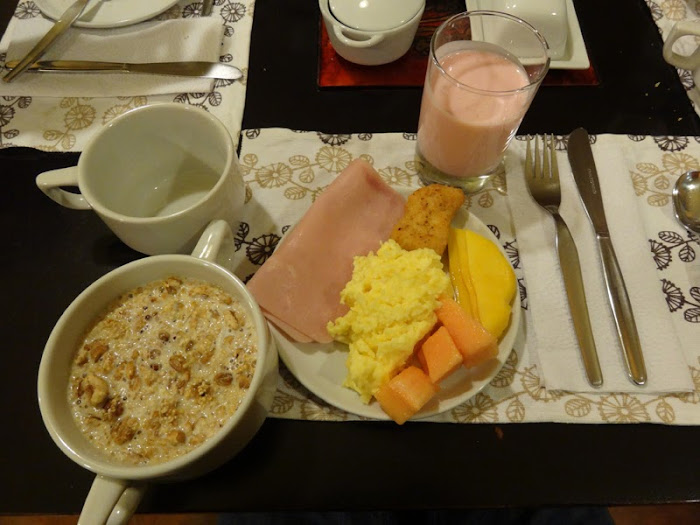
Unfortunately, with only one night in Puno, we didn't have time to do much else. By the time we got back to the hotel, it was already fairly late. I woke up the next morning with a slight headache from the altitude. We headed downstairs early for breakfast. Surprisingly, the spread wasn't half bad, and there was plenty of fresh fruit, cereal, bread, yogurt, and even some hot selections of scrambled eggs and potatoes. Most importantly, they had coca tea! Afterwards, we checked out and waited in the lobby for our taxi to the Puno bus station. From there, we would head across the Peru/Bolivia border and onto Copacabana.
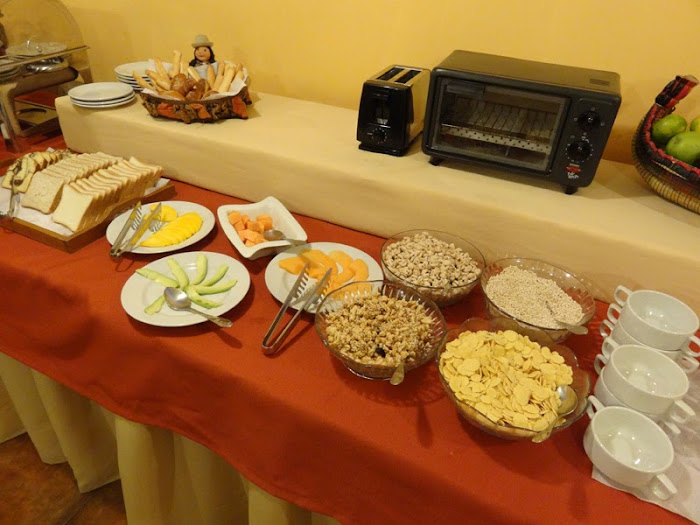 Nice breakfast spread