Though 2 days is a short time to include a full day outside of Lima, I'd mention Paracas National Reserve anyway, so you can evaluate or keep in mind. November is mid spring and there's a chance to get sunny days in the peruvian coast (winter is usually cloudy)
Paracas is a Quechua name, means “raining sand”, though usually the strong winds in that zone are also called paracas (those winds got a lot of sand from the desert). It is located 250km south of Lima. It's a peninsula and a bay, where it is the departure point to reach the Paracas National Reserve. It provides a sanctuary to 74 species of plants that grow in this extremely arid area, and to 216 species of birds, 16 types of mammals, 10 species of reptiles and 193 species of fish. Only protected natural marine area, it covers 3350 square kilometres, 65% of it sea and 35% land and islands.
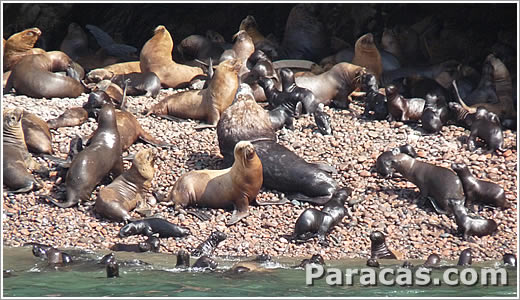
The Paracas National Reserve provides an opportunity to easily watch resident and migratory birds, including flamencos, red-legged cormorants, Inca terns, Humboldt penguins, Guanay cormorant, etc. And Ballestas islands is the home of friendly sea lions. You may take rides on fast boats to get there.
The archaeology also is present at this zone. In 1925 archaeology team reported the find of hundreds of mummy bundles in the Paracas peninsula area, belonging th the Paracas ancient culture (7000BC) and a significant number of skulls that had trepanation marks. There's a little museum with part of this.
http://www.peru.travel/s_ftociudades...&ic=2&ids=1394

This place is called the Cathedral. The "bridge" you see in this picture does not exist anymore. It fell in the last 2007 earthquake.

It still a beautiful beach.