























Is It Time to Start Worrying About Pilot and Cabin Crew Shortages?
 Joe Cortez June 15, 2018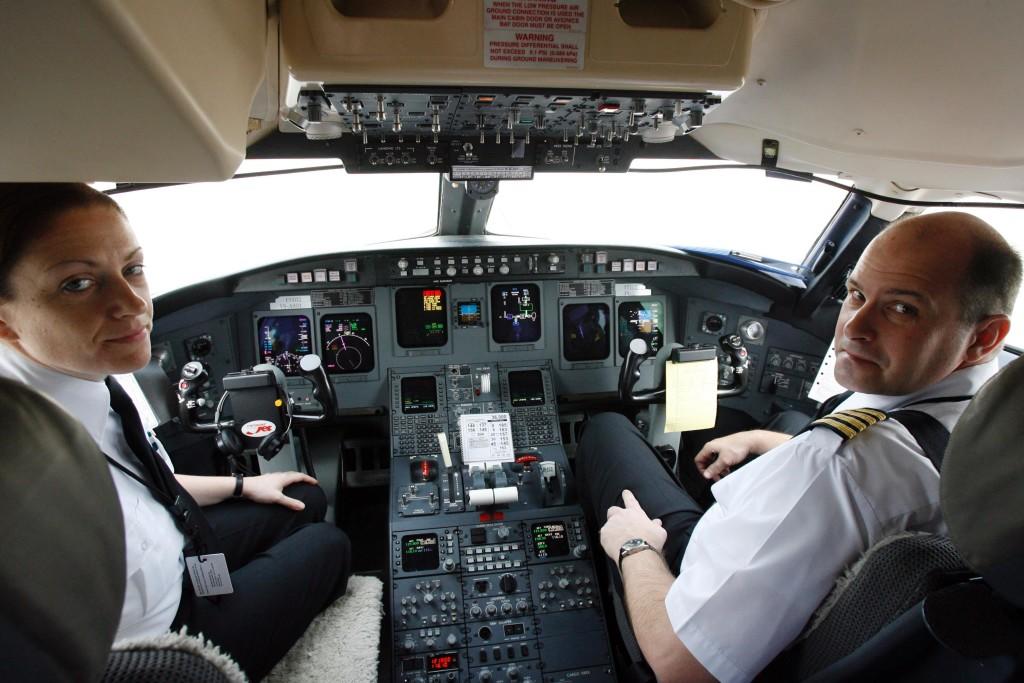
With increasing demand for air travel, global airlines are now feeling the pressure to recruit and train more pilots. Once considered a problem for the Americas and Asia, international carriers are seeing the demand to grow staff from passengers, labor unions and the marketplace.
The pilot crunch will soon become a global problem that all carriers – regardless of size, passenger profile, or region – are working to solve sooner rather than later. Reuters reports airlines are working with record speed to find qualified pilots to take command of their aircraft.
In previous warnings, both Boeing and the Air Line Pilots Association claim new pilots are needed to quickly replace retiring ones. Moreover, passenger demand for new routes is creating new jobs in the front of the cabin. The problem is that there aren’t enough pilots – new or existing – to take the controls of commercial aircraft.
Making things more difficult are the growing influence of pilot labor unions across Europe. Ryanair pilots are organizing by their duty base to collectively bargain for better working requirements, while Air France pilot strikes are a regular occurrence.
To attract more aviators, airlines are bringing their academies in-house to organically grow talent. JetBlue guarantees jobs to those who pass their four-year aviation training program, while Emirates and Qantas invested millions of dollars in their facilities.
But getting new pilots is only part of the problem. At Air Canada, captains and first officers are finding better wages with competing international carriers. Executives for the Montreal-based carrier estimate at least 1,000 Canadian pilots are operating other airlines’ fleets.
Not every airline claims they are feeling the pinch from the estimated 637,000-personnel shortage between now and 2038. International Airlines Group told Reuters they have no trouble attracting new employees, thanks to owning the United Kingdom’s flag carrier, British Airways.
[Photo: Shutterstock]



Just to add to @zarkov505's comment. The other issue is that the pay scale is crap and trying to encourage young people to go the route of aviation as a pilot is not as lucrative as a software developer. Additionally something that people don't consider is that the long term goal of the high paying mainline job can be a bit of a "gamble" since there is not an easy way to guarantee that you will not have some kind of a potential medical issue that arrises later in your 50s and 60s that would remove you from the cockpit. Mean while those same kind of issues won't stop you from regular jobs that don't need a physical every 6 months.
There is no shortage of people who love airplanes, who want to fly, who want to learn to fly, who would learn to fly if they could afford it. In years past, military pilot training trained a lot of them, but the armed forces have cut way back on pilot training. On the civilian pilot training side, the problem is that the cost of pilot training has skyrocketed, mostly because the cost of airplanes suitable for basic pilot training has itself skyrocketed.