























How Qantas is Dealing With Ultra-Long-Haul Flights
 Jeff Edwards July 02, 2018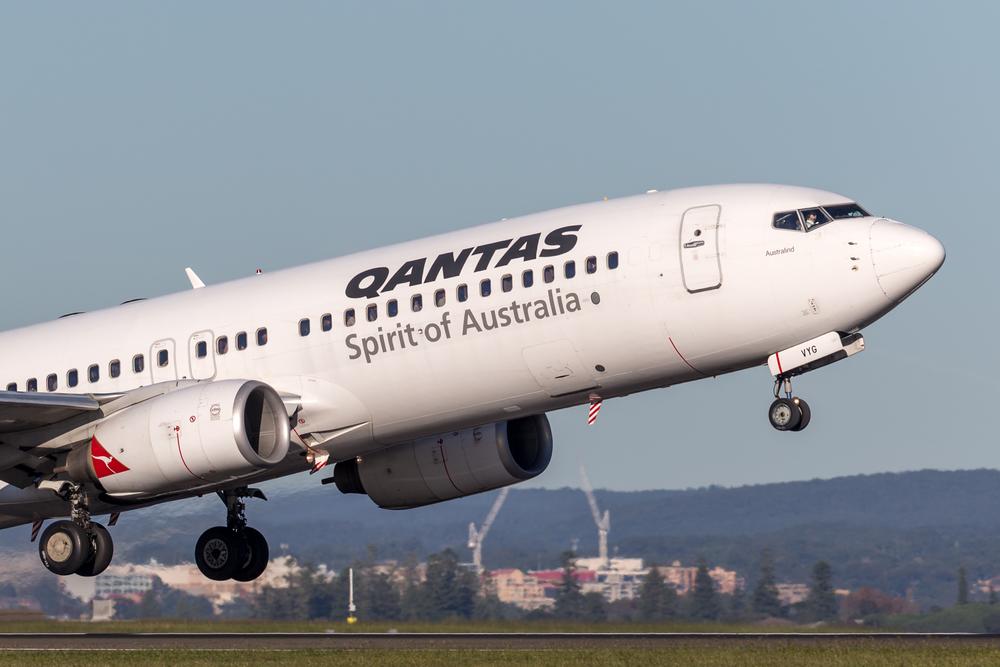
For Qantas Airlines, Project Sunrise is not only about challenging Boeing and Airbus to create aircraft with ultra-long-haul flights in mind, but also designing cabins, lounges, meals and routines to help passengers survive the extended non-stop journeys.
In August of 2017, Qantas issued a challenge to aircraft manufacturers Boeing and Airbus: create faster passenger planes with greater range and better fuel efficiency to help directly connect the densely populated east coast of Australia with the world. The airline’s so-called Project Sunrise plans call for direct non-stop flights connecting Sydney, Melbourne and Brisbane with far-flung destinations including London, Paris, New York, Cape Town and Rio de Janeiro by 2022.
The Australian flag carrier recently launched the second longest commercial route on the planet with service between London Heathrow Airport (LHR) and Perth Airport (PER). While one Zen-like business class passenger managed to stay in his seat without getting up even once for this entire 12 hour 20 minute flight, Qantas CEO Alan Joyce says that Project Sunrise is also about giving passengers healthier options for thriving during marathon flights.
“We’ve partnered with Boeing to ensure our Dreamliners are a comfortable place to spend a long stretch of time,” Joyce explained in his monthly column recently. “We’ve collaborated with sleep and nutrition experts from the Charles Perkins Centre at The University of Sydney to help reduce the impact of jet lag. And our team from Rockpool has created food and drink options – in our lounges and inflight – to support your wellbeing … And the lessons we have learnt and are still learning from the Perth-to-London flight are being applied to Project Sunrise, which sees us working with Boeing and Airbus to develop an aircraft that can fly direct from the east coast of Australia to London or New York. This is the final aviation frontier for Qantas.”
Joyce earned equal parts praise and condemnation earlier this year for suggesting that utilizing the cargo hold for passengers might be a viable option. In fact, the idea might be closer to reality than it at first appeared and the details of the concept have received mostly positive responses from frequent flyers and industry analysts alike.
“Nothing is off the table,” Joyce said at the time. “There’s a lot of ‘out there’ thinking that’s going on.”
Other “out there” ideas on the drawing board reportedly include dedicated onboard exercise and meditation areas, business center/study areas and even a children’s nursery. Working with Boeing, Qantas officials have floated the idea of installing larger lavatories on Dreamliner aircraft to allow passengers to refresh during flights which could reach beyond 20 hours in the air.
[Photo: Shutterstock]



i really wish some of these airline execs would consider more comfortable seating and legroom instead of sardine central. I really believe most passengers would pay a little more for a little more comfort.
What is wrong with an intermediate stop ? Takes possible an extra two hours and a one stop SYD-(EU or LHR) flight does not make much difference. Moreover it is more fuel efficient because such ELH (Extreme Long Haul longer than ULH) flights cost a lot of extra fuel to transport the fuel. And the problem of passenger discomfort is eliminated. Not everybody can afford F, J or even PE tickets.
It's closer to 17 hours.
The legroom and seating on the Qantas Dreamliner is far worse then the A330s or 747s, and yet they expect us to sit there for 20 hours? Why dont ultra long haul flights offer more legroom? We cant keep going backwards in comfort even though we're going forward in technology.
12h & 20m on a 787 between LHR and PER? Really?