I'm joining the thread a bit late, but here's some background. Aviation's simple yet complex. Unless you're on fire, the more altitude you have, the more time you have to handle problems which may come up. The reverse is true -- the closer to the ground you are, the less time you have to react to an emergency and the more critical things become. If you keep that in mind, the separation of radio services will become rather intuitive.
CTAF: Common Traffic Advisory Frequency. One frequency for all things. You’ll find this most often at airports without a tower (untowered). It’s up to the pilots to sort things out among themselves over the radio to keep from bending metal. Now, towered airports where the tower doesn’t operate 24/7 will also go to CTAF operations when the tower is closed. Usually the normal tower frequency becomes CTAF. For normal operations, here’s the sequence that a pilot would have to handle:
ATIS - Automated Terminal Information System. It’s just a recordingusually updated hourly, of current weather conditions plus relevant airport information, such as which approaches and runways are in use, runway/taxiway closures, and birds in the area. This exists to let the controllers worry about aircraft moving around, not having to read the weather conditions to every single aircraft, tying up the frequencies. Each version of the ATIS will be given a phonetic letter, ie: Alpha, Bravo, Charlie, etc. When you first call up ATC, you’ll let them know which letter you heard, so they know you actually bothered to listen to the recording. D-ATIS is Digital ATIS and shows up on the aircraft’s screen in text form rather than having to listen to the recording.
,
.
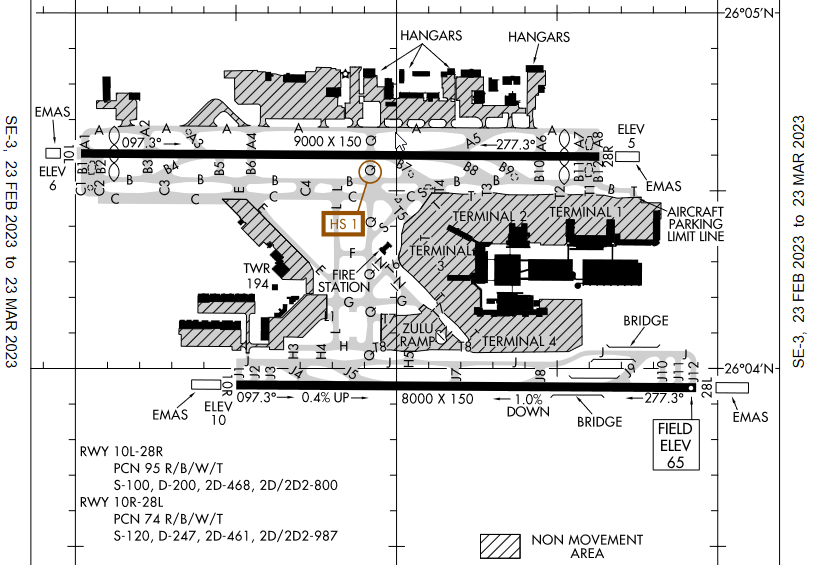
Clearance – At smaller airports, Ground will handle this as well. If you’re flying a flight plan, you need to let ATC know when you’re ready to actually fly it. Flight plans are usually filed in advance. ATC takes those and allocates slots for everyone and adjusts the plans to maximize traffic flow. So, you call them up, they retrieve your plan, and they’ll tell you how they’ve modified your plans. “Clearance, Delta 125 to Atlanta”Ramp – Only at the largest airports. You call them when you’re ready to leave the gate and head for the taxiways. For smaller airports, the ramp is a “non-movement” ie: uncontrolled free-for-all. Sometimes Ground will handle this as a courtesy. “Ramp, American 330 at Gate 31 ready for pushback”Ground – In charge of “movement areas”, usually taxiways. Their #1 job is making sure you don’t get two aircraft nose-to-nose, since most aircraft have no reverse gear. You call them when you’re ready to taxi. “Southwest 444 at [intersection], ready to taxi.” No one, including cars and lawn mowers, does anything in a movement area without getting permission first. See the snip of FLL airport below. Note all of the hashed area is a non-movement (uncontrolled) area.
 Tower – In charge of the runways. To a lesser extent, the traffic pattern above the airport. You call them when you’re ready to take off. They’ll then clear you to take off. “JetBlue 660 ready for Departure.”
Departure – Their job is to get you away from the airport and pointed in the right direction and altitude.
Center – Oversee en-route flights. They’ll hand you off to the next sector or Approach
Tower – In charge of the runways. To a lesser extent, the traffic pattern above the airport. You call them when you’re ready to take off. They’ll then clear you to take off. “JetBlue 660 ready for Departure.”
Departure – Their job is to get you away from the airport and pointed in the right direction and altitude.
Center – Oversee en-route flights. They’ll hand you off to the next sector or Approach
 (D)ATIS – You’re going to need to know the weather at the destination airport, and approach gets cranky if you don’t give them the ATIS letter.
Approach – They guide you to the airport and get you into the sequence.
Tower – Will clear you to land
Ground – Clears and gives directions on how to get to parking. Final parking instructions are usually visual, with a Follow Me truck or ramper waving at you.
(D)ATIS – You’re going to need to know the weather at the destination airport, and approach gets cranky if you don’t give them the ATIS letter.
Approach – They guide you to the airport and get you into the sequence.
Tower – Will clear you to land
Ground – Clears and gives directions on how to get to parking. Final parking instructions are usually visual, with a Follow Me truck or ramper waving at you.
Originally Posted by
gfunkdave
There are a lot of items listed for each feed for my local airport (ORD) on liveatc.net.
Originally Posted by
gfunkdave
- What is meant by the different "facilities" listed? For Approach, for example, it lists NW Feeder, SE Feeder, and W Arrival. I'm assuming the Feeders are for traffic coming in from those directions but what is W Arrival? Traffic seems to tend to arrive from the east.
- Likewise, what is Z arrival?
- What is D-ATIS?
And I guess most of all, if I were interested in a particular flight how would I know which feed to listed for it on? How do you know which runway they are going to be using for it?
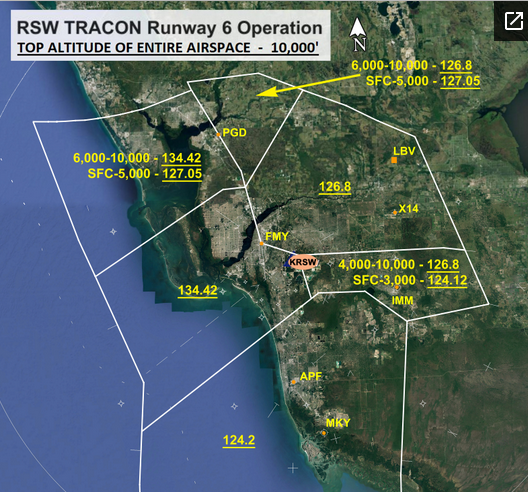
Many airports have multiple frequencies for a particular service, even smaller ones. Here's a map of how multiple approach frequencies work in practice. Note the most NW sector has two different frequencies based on altitude, as that's how the transmitters/antennas are tuned for. These separations are done for technical reasons as well as management reasons. A controller working 124.2 is going to be getting aircraft turned around from whichever direction they're coming from and into the final approach, handing them off to 134.42. A controller managing 134.42 is going to be lining up aircraft for the final approach, one right after another, and handing them off to RSW tower for landing. These frequencies aren't set in stone and change often depending on traffic, technical issues, etc.
The ORD "Z" arrival is a specific instrument approach to do an ILS landing on RWT 10R. It's a very scripted way to get the aircraft lined up and on the ground for that specific runway. I've attached it below.
As far as figuring out which runway a particular aircraft will use isn't straightforward. Typical winds for an area usually determine which runways are preferred, but there are other factors, such as how busy the airport is and ultimately where you're parking at an airport. For example, only certain terminals will have international customs facilities, so it'd make sense to land aircraft on runways near those terminals. Similarly, if you're flying private, the FBO is at the E end of RWY 9C, so it'd make sense to land a smaller plane on one of the RWY 9s rather than RWY 10 and having them taxi forever. You get a feel for what it might be, but there have been plenty of times I got to the destination airport and they gave me a different runway and I'd have to change what I've programmed in.