























Pilots Union Demands Final Secondary Flight Deck Barrier
 Joe Cortez September 09, 2021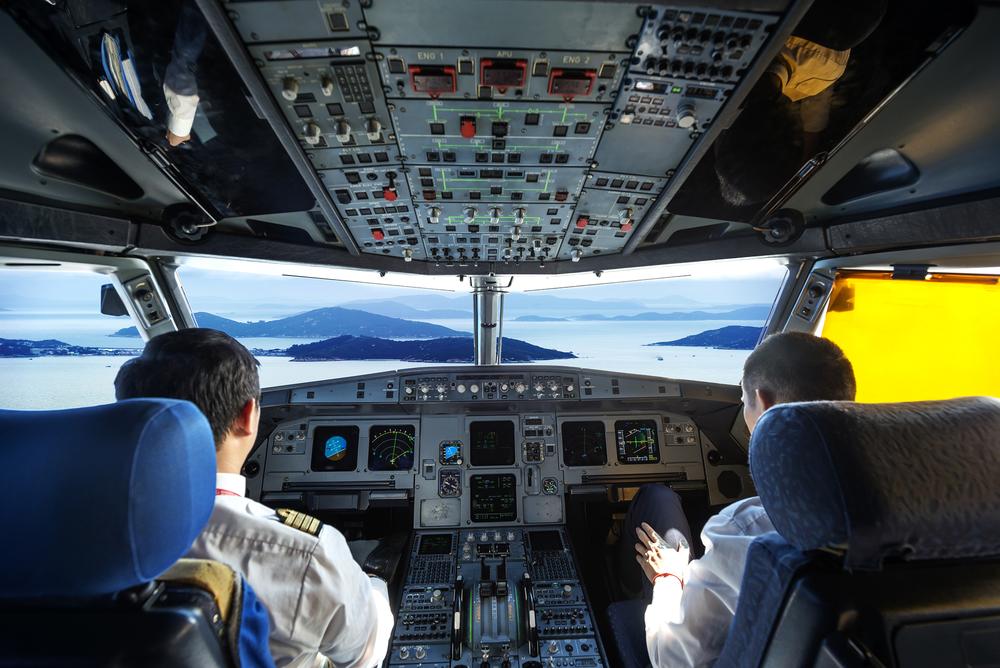
Ahead of the 20th anniversary of the September 11 attacks, the Air Line Pilots Association is demanding the U.S. Department of Transportation follow through with regulation for a secondary flight deck barrier. The secondary barrier requirement was part of the 2018 FAA Reauthorization Bill but has yet to be implemented.
A major airline union is demanding the U.S. Department of Transportation and Federal Aviation Administration follow through on a Congressional requirement for a secondary cockpit barrier. The Air Line Pilots Association is calling on the agencies to push through the final regulation created by the 2018 FAA Reauthorization Act.
Union Says Secondary Barrier Would Save Lives, Prevent Future Hijackings
After the passage of the 2018 reauthorization bill, the FAA created a committee to provide recommendations on creating a secondary cockpit barrier for commercial aircraft. This led to a working group, which issued 21 recommendations on how a secondary barrier should be constructed. Among the recommendations:
- The secondary barrier should be at least partially transparent, so that “situational awareness can be maintained between the passenger cabin and the vestibule area.”
- The FAA should conduct a new safety risk assessment of secondary barrier systems, partially because “Air Carriers security measures have not been updated in some time,” requiring a new review.
- All new aircraft should be built with a secondary barrier once the FAA’s final rule is published.
Despite the work, no action has been taken towards installing secondary barriers on aircraft. The ALPA calls this a major oversight and is calling for immediate action towards additional security for commercial aircraft.
“Issuing the secondary barrier rule would be a powerful and simple way for Administrator Dickson to honor the pilots, flight attendants, passengers, first responders, and other victims who lost their lives on 9/11,” Capt. Joe DePete, ALPA president, said in a press release. “The FAA should stop stalling, follow the law and take immediate steps to improve aviation by implementing this critical, live-saving measure.”
In addition, the ALPA is calling on regulators to change the rules to require cargo aircraft to have hardened doors installed. Because cargo aircraft do not carry passengers, the airframes were not required to install hardened doors after the September 11 attacks. ALPA argues that because cargo carriers frequently “carry non-airline personnel” and fly in the same commercial airspace as passenger jets, they equally present a hijacking danger and should also be fitted with hardened cockpit doors.
Secondary Barrier Among Final Post 9/11 Security Recommendations
The additional secondary barrier is among the last security recommendations that came from the tragic attacks on the World Trade Center and the Pentagon. In the months after the attack, Congress passed legislation creating the Transportation Security Administration, and later the Department of Homeland Security, each tasked with protecting aviation infrastructure.



Where is it supposed to be placed?