























AA and TSA Unveil Tech Solutions to Long Checkpoint Lines
 Jeff Edwards July 07, 2016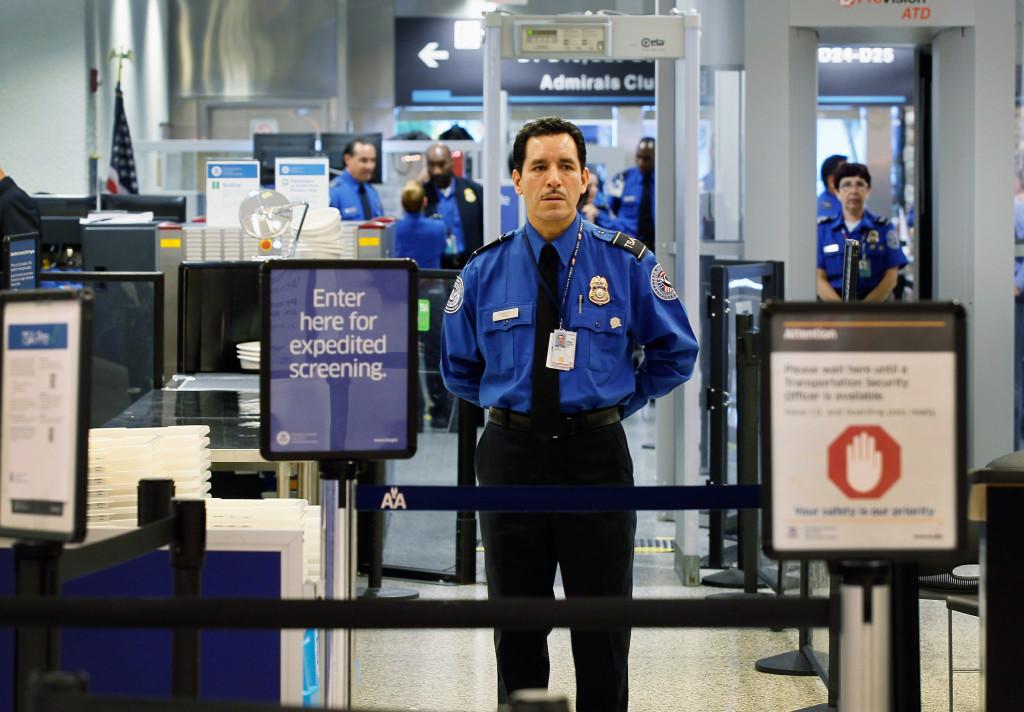
In partnership with the TSA, American Airlines will launch new screening technology at security checkpoints in key hubs this fall.
In an effort to get a handle on long wait times at Transportation Security Administration (TSA) checkpoints at U.S. airports, the world’s largest airline and the TSA are turning to advanced new technologies. American Airlines announced that it will partner with the agency for a pilot program to test screening checkpoints that rely more on automation and less on manpower.
The new screening lines are scheduled to launch at American Airlines hubs at Dallas/Fort Worth International Airport (DFW), Chicago O’Hare International Airport (ORD), Los Angeles International Airport (LAX) and Miami International Airport (MIA) by year’s end. Once installed, the new screening technologies are forecast to cut passenger wait times by nearly 30 percent.
The upgrades include conveyors that automatically return bins to the beginning of the security line – ready for the next passenger. Computers will send bags flagged for additional inspection to a segregated area as a means to keep the security line moving. Radio Frequency Identification (RFID) tags will make it easier for screeners to identify and match luggage to passengers and new cameras will allow TSA agents to see the contents of a bag and the outside of the bag at the same time — ideally speeding up the process of identifying possible security issues.
The updated checkpoints will also make use of some low-tech measures designed to speed up the security process. Bins for personal items will be 25 percent larger than those currently in use.
Additionally, American Airlines TSA checkpoints at Phoenix Sky Harbor International Airport (PHX) will become the first in the US to use 3D CT screening for carry-on bags. The technology has previously only been used for screening checked luggage. Once implemented, it is hoped that the new screening method might allow passengers to pack gels and liquids in carry-on items without issues at the airport.
“We are proud to be working collaboratively with the TSA to support next generation screening technology at five of our hubs this fall,” American Airlines CEO Robert Isom said of the first-of-its-kind test. “These state-of-the-art lanes, along with new detection technology that will be tested in Phoenix, will enhance security effectiveness and efficiency, while improving the customer experience.”
American Airlines officials have been critical of TSA in recent months, complaining that the airline seemed to be doing a great deal to address the long wait times, while the TSA appeared unwilling or unable to deal with the chronic delays. “I checked into Dallas-Fort Worth on the way out here, and we have – it appeared – at least as many American Airlines employees standing out in front of security helping move the lines as there are TSA agents,” American Airlines Chief Executive Doug Parker told reporters in June. “That’s neither right nor sustainable.”
The new partnership seems to have dampened much of the friction between the carrier and the TSA. Both the airline and the Homeland Security agency, however, caution that the test program is only a first step in solving the issues that have plagued U.S. airports in recent months.
“Our foremost priority is the security of the traveling public,” TSA Administrator Peter V. Neffenger said in a statement announcing the first live test of new screening tools. “To ensure that we remain up-to-date in an evolving threat environment, TSA continues to test and deploy state-of-the-art technologies. This collaboration with American Airlines is an important step in enhancing the traveler experience while maintaining effective security.”
[Photo: AP]



Nothing is introduced without new problems. My guess is that until the new bugs are ironed out the initial programme will lead to longer delays. In Melbourne, Australia the state government sought to save money by sacking conductors on trams by introducing a "smart" card. People stuck at entry points with their cards not functioning and a wonderful litany of cock ups. The whole process has cost hundreds of millions of dollars and still causes problems Eighteen months after the Baillieu Government decided to keep myki and less than three weeks before the Metcard system shuts down permanently, there is still no agreement over how much Kamco will be paid for the next seven years to run the system. Kamco's losses on the troubled ticketing system are said to have topped $100 million since 2005. Its Japanese parent company is losing patience, with losses running at more than $100,000 a week.