A “Tragic Week For Aviation”
 Amanda Cyr July 25, 2014
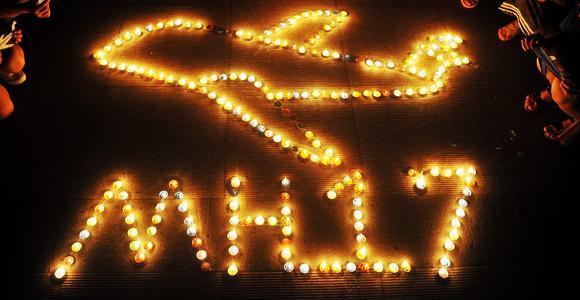
Following the news that Air Algerie Flight AH5017 crashed on Thursday, Tony Tyler, CEO of the International Air Transport Association (IATA), issued a statement describing it as a “tragic week in aviation.” The combined official casualty counts of AH5017, TransAsia Flight GE222 and Malaysia Airlines Flight MH17 is currently 464 — more than double last year’s global total of 210 and already surpassing 2012’s 414, based on figures reported in IATA’s 2013 Safety Performance.
“Despite the events of the past seven days, flying is safe,” Tyler stated. Even prior to this week, however, 2014 was not on track to continue the two years of highly praised safety successes that began in 2012.
While many passengers may experience anxiety when it comes to flying over the next several months, it’s important to remember that the odds of actually being involved in a plane crash are diminutive. One-in-1.2 million flights ends in an accident according to the National Transportation Safety Board (NTSB), and the annual risk of being killed in a plane crash is only one-in-11 million for the average American. The NTSB pulled data from 1983 to 2000 and published findings that show globally, 95.7 percent of people involved in plane crashes survive.
Those statistics don’t hinder the fact that 2014 is shaping up to be the most lethal year for commercial air travel since 2005, when 40 accidents resulted in 1,074 casualties, based on figures from Aviation Safety Network. After 12 accidents, and with five months left to go, there have been 761 casualties in 2014. Since 1946, only six years have seen less than 600 casualties.
There’s an important trend emerging in statistics that reflects an increase in global travel and technological advances in the aviation field. While the number of accidents in 2014 is lower than previous years, the number of fatalities is significant. Crashes are less common than ever, but they are becoming deadlier. The average number of fatalities per accident so far in 2014 is 63.4. Ten years ago, in 2004, it was 13.76.
With over 30 million commercial flights traversing the skies annually and planes’ capabilities constantly improving, flying around the world has never been easier or safer. When asked about the 2012 safety record, pilot, author and blogger Patrick Smith told the New York Times, “Luck is always going to be a part of it.” Is it possible that this has simply been an unlucky week?
By far, 1972 remains the deadliest year in commercial aviation history in terms of fatalities, excluding non-passenger fatalities, with 71 accidents and 2,370 casualties. The worst single month in terms of casualties was August 1985. Including the casualties of Japan Airlines Flight 123, which resulted in 520 deaths and was the deadliest single-aircraft accident in history, 712 passengers and crew lost their lives that month.