























The Real Reason Why You Can’t Have Free WiFi
 Jeff Edwards December 05, 2019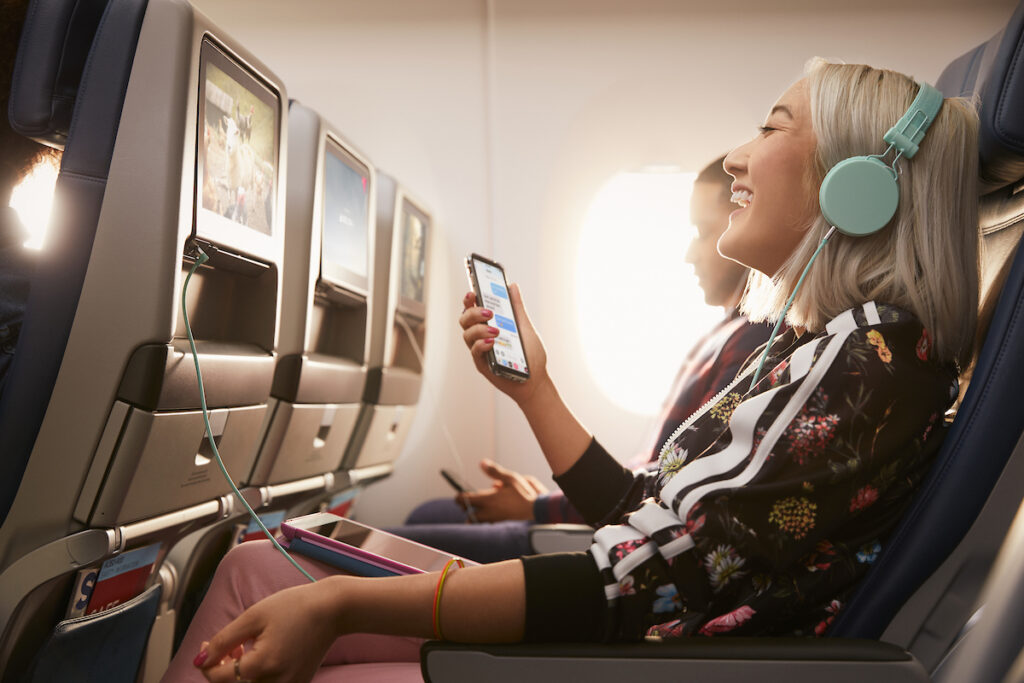
This week, Delta Air Lines CEO Ed Bastian told host David Rubenstein that if it were up to him, Wi-Fi would be free for all passengers. During an interview on “Peer-to-Peer Conversations”, the airline executive said that technical limitations rather than revenue concerns are behind the legacy carrier continuing to charge fees for inflight internet access.
Delta Air Lines chief Ed Bastian wants everyone to have free internet access when flying. The CEO admits that the motive for continuing to charge for inflight Wi-Fi is not entirely based on sound rationale.
“We do charge for it – not for a good reason,” Bastian confessed on the popular Bloomberg program The David Rubenstein Show: Peer-to-Peer Conversations. “I’m a firm believer we need to make Wi-Fi free across all of our services and we’re working towards that…The planes do not have the technical capacity, capability yet – that if we made for free, the system would crash. So, once it gives above a ten percent take rate on board, performance starts to erode.”
Bastian placed the blame for the sluggishness of inflight internet squarely on the shoulders of contractors tasked with developing the technology. He joked that he often referred to Delta’s onboard internet service provider Gogo as “No-go,” but has recently upgraded the firm to the nickname “Slow-go.” Bastian said that he hopes the provider will someday in the future live up to the moniker Gogo.
In September, Bastian echoed similar sentiments, telling attendees of the Skift Global Forum in New York that a two-week trial, in which the carrier offered free Wi-Fi access on domestic flights, left little doubt that free inflight internet is not ready for primetime. The tests, limited to 55 daily North American flights, yielded mixed results.
“There were some successes,” Bastian told the gathered industry insiders. “There were some things we found out that we hoped not to find out, in terms of the work needed until we can go for free.”
Although smaller carriers such as JetBlue have had some success offering free Wi-Fi for all passengers, other big three carriers like United Airlines have faced challenges similar to Delta’s. Earlier this month, indications that United was experimenting with a dynamic Wi-Fi pricing based on demand came to light. The move appears to be a sensible effort to encourage Wi-Fi use when demand is low (and internet speeds are high) and to discourage use when demand is high (and speed is low).
“One of the things I tell people is, we’re closer to the satellites in the sky, why shouldn’t [inflight internet] be faster?” Bastian quipped to Rubenstein. “But, as they remind me, we’re not traveling 500 miles-an-hour as we’re sitting at home with our Wi-Fi broadband access.”




Perhaps I could accept his explanation...except JetBlue already does it.
I think most planes with SAT are using the typical Ku system providing around 30 Mbps. Your average plane with 150 people. Even if everyone was using it at once, that divides up to about 200 Kbps which is fine for regular web surfing. In reality, even free, I bet only half the people would use the system. And you might not get 30 Mbps real world since you may have multiple planes and poor connections. Even at 10%, each person still has 40 Kbps which is plenty.
In answer to the entertainment streaming on airlines: The airlines use onboard servers for entertainment streaming
In communist Cuba, the government intentionally keep the internet super slow so they can charge exorbitant rates for data as well, people think its about censorship but like most things in this world it just boils down to money, some estimates put the gov't monopoly there raking in hundreds of millions of dollars in fees off citizens who have no other option. Sounds like a similar scheme to keep the internet intentionally slow to justify charging a high rate. Same thing the big airlines are doing here, if they really wanted to give faster internet via satellite the technology has been around for a few years already. Free internet means lost ancillary revenues. This reminds me of how its been proven that over the last 10-15 years airlines have also intentionally made boarding slow to make paying for priority boarding more attractive. Make a problem so then there is a paid solution for it.
"Technical limitations". Yes, the people who run the airline are technically limited to making sure they wring every penny out of their customers. This is like the owner of a horse saying there are "technical limitations" as to why deliveries are so slow while everyone else is shipping by truck. Hey Delta - GO SATELLITE.